The Development Forum of the Household Service Robot Industry and the Inauguration Ceremony of the Special Committee for Household Service Robots were held in Shanghai.
On March 12, on the opening day of AWE2026, the Household Service Robot Industry Development Forum and the Inaugural Meeting of the Special Committee for Household Service Robots, hosted by the China Household Electrical Appliances Association, was grandly held at the Shanghai Himalayas Hotel. The theme of this conference was "AI Empowerment: A New Ecosystem for Home 'Robots'". It brought together academic authorities from Tsinghua University, pioneers in the embodied intelligence industry, and leading household appliance enterprises. They in - depth analyzed the technological breakthroughs in the integration of large - scale models and embodied intelligence, decoded the growth logic of the household service robot market, and addressed the core bottlenecks in industrial implementation.
Meanwhile, the Special Committee for Household Service Robots of the China Household Electrical Appliances Association was announced to be established at the meeting, and the first "White Paper on the Development of the Household Service Robot Industry" was released. This marks that cross - track enterprises in household appliances, AI, robots, core components, and new materials have officially entered a new stage of ecological co - construction.
Opportunities Coexist with Challenges, and Scene Applications Have Begun
Currently, the robot industry has become an important entry point for the new round of scientific and technological revolution and industrial transformation. The home scenario, as the ultimate goal of the robot industry, has become the consensus layout direction in the industry.
Zhang Chonghe, the President of the China National Light Industry Council, said in his speech that China is the world's largest robot market and the production base for 55% of the world's robot products. In 2025, the output of service robots reached 18.58 million sets, a year - on - year increase of 16.1%. Products in segmented scenarios such as elderly care, cleaning, and companionship have developed rapidly. Leading household appliance enterprises such as Haier, Hisense, and Midea took the lead in making all - around strategic deployments of service robots around the home scenario, promoting the upgrade of household appliances from single - intelligent terminals to intelligent service carriers. Many robot enterprises have been deeply involved in R & D, constantly exploring the usage requirements of the home scenario, and launching a series of robot products and solutions that closely meet the needs. The coordinated efforts of the household appliance industry and the robot industry have enabled household service robots to move from the laboratory to daily life and from conceptual ideas to practical applications.

Zhang Chonghe, President of the China National Light Industry Council
Ren Xue'an, the Secretary of the Party Committee of the General Manager's Office of China Media Group, said in his speech that in recent years, the China Media Group has created a series of high - quality programs on AI and robots, immersively demonstrating the practical value of household service robots, promoting the rapid transformation of technological achievements, and driving the inclusive development of the industry. The collective appearance and amazing performance of robots at the 2026 Spring Festival Gala of the China Media Group left a deep impression on audiences across the country and even the world. In this round of industrial transformation, the China Media Group is not only a recorder and witness but also a strong participant and promoter. With the energy of a national platform, it has played an unprecedented leading role and cross - circle value. For the long - term, stable, and healthy development of the robot industry, it is necessary to firmly grasp the five core elements of technology, capital, talent, ecosystem, and brand, forming a development pattern of coordinated efforts and closed - loop support. The China Media Group will comprehensively integrate high - quality resources from large and small screens, online and offline, domestic and international. As a national - level brand confirmation platform, a gravitational field for national brand recognition, and an engine for the full - cycle growth of brands, it will empower the development of the industry and enterprises, helping intelligent technology enter thousands of households.
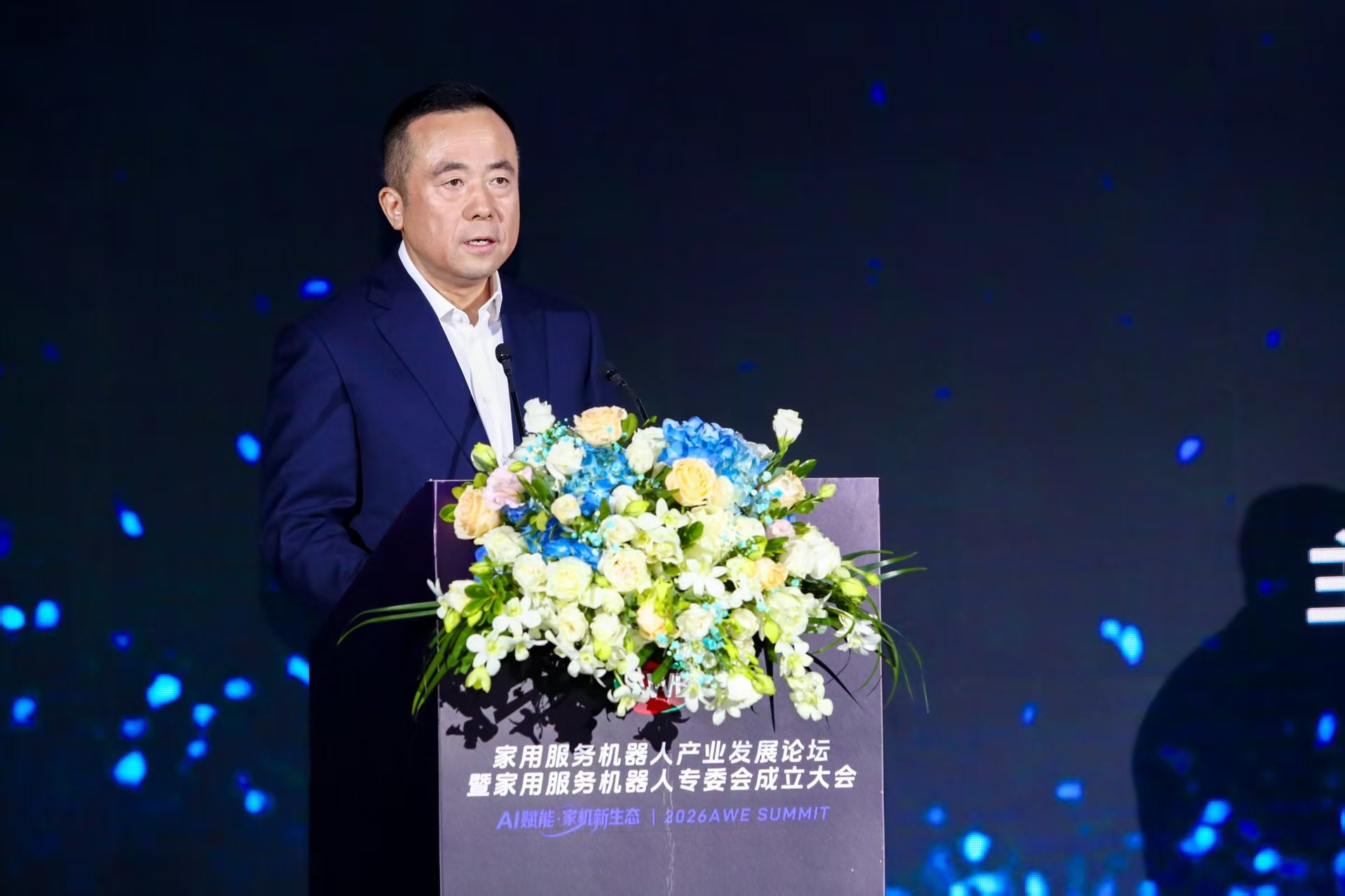
Ren Xue'an, Secretary of the Party Committee of the General Manager's Office of China Media Group
Haier Smart Home has a lot of practices in the robotization of household services and rich experience in scene applications. Shu Hai, the Vice - President of Haier Group and the General Manager of the R & D Platform of Haier Smart Home, said in his keynote speech "Prospects and Practices for the Evolution Direction of Household Appliances in the AI and Robot Era" that the original intention of household appliances was to solve household chores for humans, but there are still some household chores that people have to do themselves. This is because household appliances lack two key abilities: one is the ability to understand the physical world, and the other is the generalization operation ability. To further reduce household chores, the household appliance industry is currently showing two major development trends: one is the AI - enabled household appliances, and the other is the embodied household appliances. Among them, the core feature of AI - enabled household appliances is the possession of active intelligence, which can predict user needs and automatically provide services without explicit instructions, such as Haier's AI Eye series of household appliances. The core feature of embodied household appliances is the possession of spatial intelligence, which can "understand" space, including building environmental models, identifying object relationships, and planning paths, enabling machines to act autonomously in the real world, such as the companion - type, cleaning - specific, and general - purpose robots exhibited by Haier at AWE2026. Among them, the companion - type robot can help people control the smart home appliances in the whole house, follow us around every room, and help us take care of the elderly. The cleaning - specific robot is different from the floor - sweeping robots on the market. It uses tools to clean. It has three tools: a vacuum cleaner, an electric mop, and a gripper. Before cleaning, it will clean up the sundries, such as putting the slippers on the ground in the designated area, and if a child throws toys on the ground, it will put the toys in the storage basket.
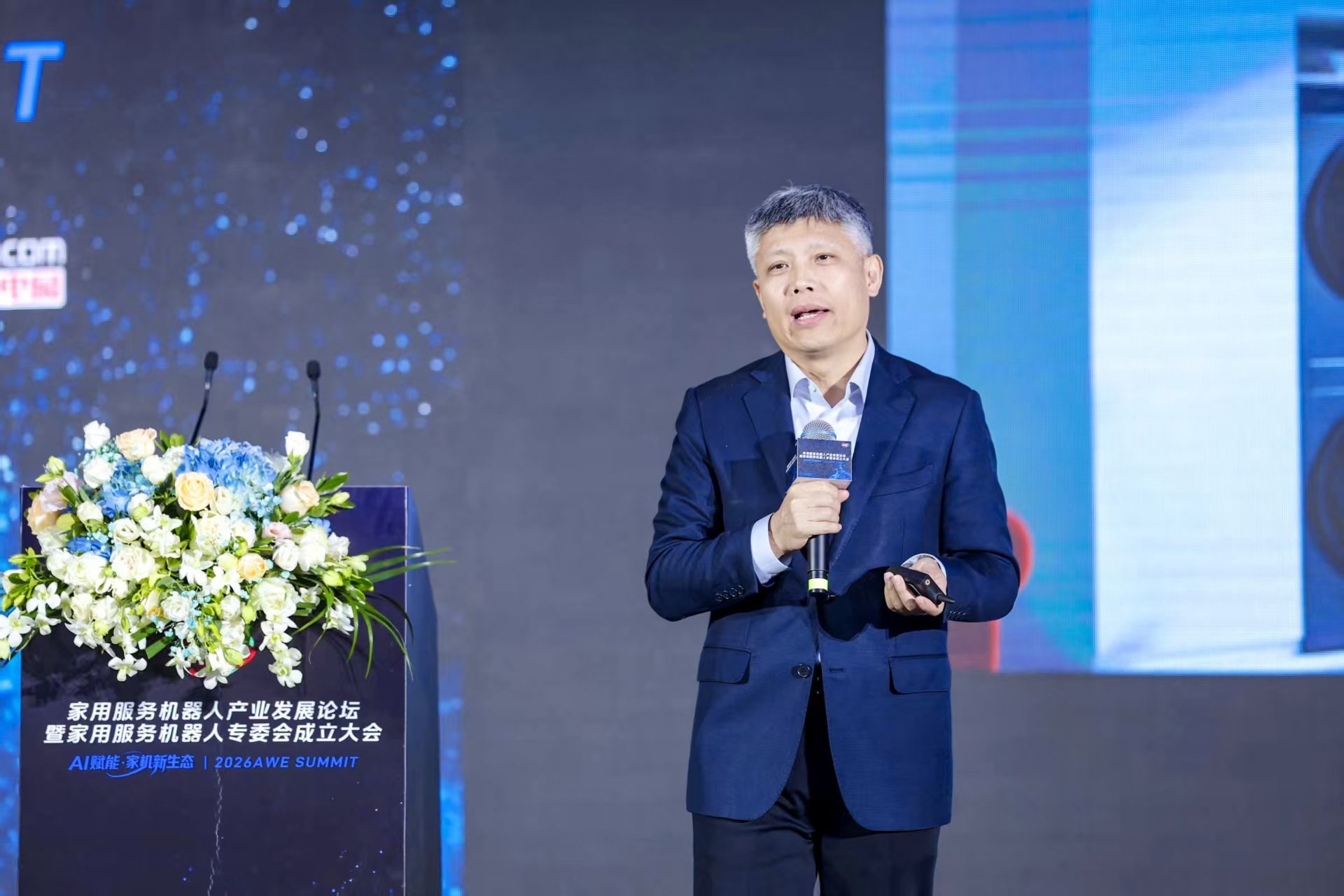
Shu Hai, Vice - President of Haier Group and General Manager of the R & D Platform of Haier Smart Home
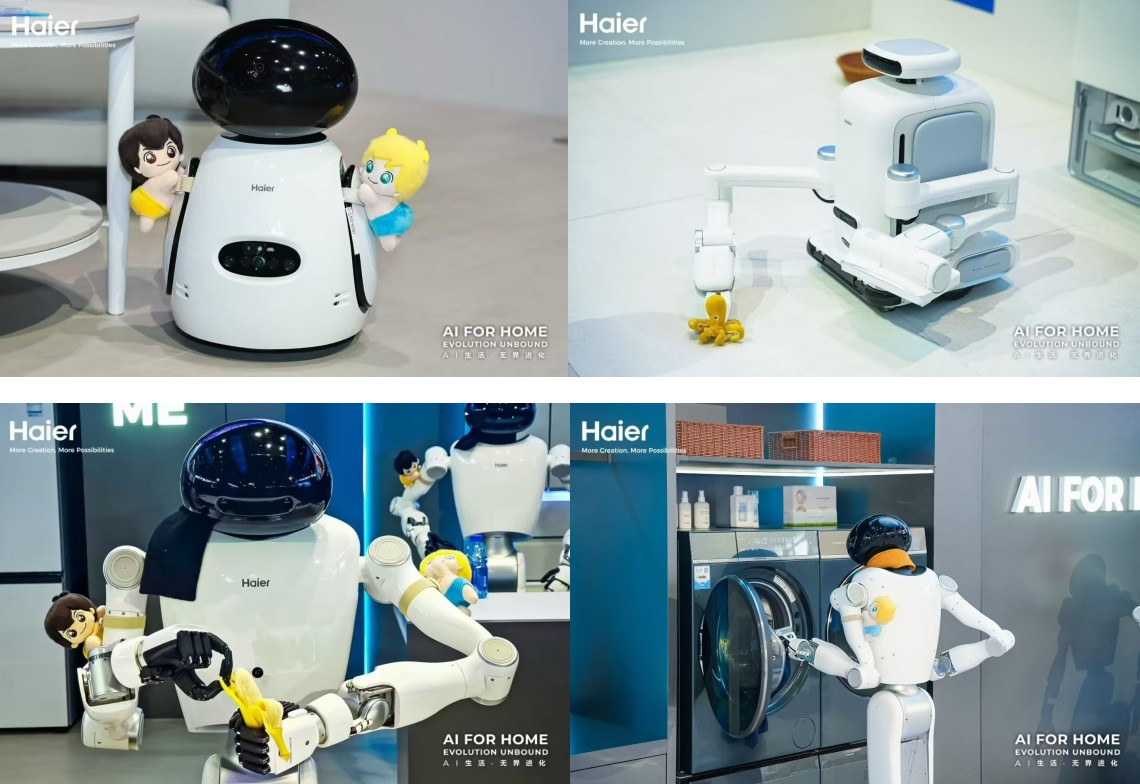
The companion robot (upper left), cleaning - specific robot (upper right), and general - purpose robots (lower left and right) displayed by Haier at the AWE2026 site
The home scenario is complex and diverse. The implementation of humanoid robots cannot be separated from the scenario requirements. If it is separated from the scenario requirements, user pain points, and business logic, even the most advanced technology can only be a "castle in the air". The health - care and companionship scenario provides the broadest stage for the implementation of embodied intelligence technology. Dai Zhihui, the Vice - President of Shanghai Fourier Intelligent Technology Co., Ltd., took the health - care and companionship scenario as an example to introduce the pain points faced by the implementation of humanoid robots and Fourier's solutions. According to him, currently, the implementation of humanoid robots in the home health - care scenario faces three core pain points: first, the technology is out of touch with real needs, and the ease of use, practicality, and emotional companionship value still need to be improved; second, the safety and trust system is not yet perfect, and the standards, privacy, and responsibility boundaries need to be clarified; third, the adaptation to the unstructured home environment is insufficient, and the reliability in real scenarios needs to be enhanced. In the face of the above pain points, Fourier's way to break the situation is to rely on its advantages in the rehabilitation track after ten - year in - depth development, and use the technology, scenario, and user foundation accumulated over the years to solve the industry problems one by one, and promote the large - scale implementation of embodied intelligence in the health - care and companionship scenario. In terms of humanoid robot products, Fourier focuses on building an adaptation system for the health - care and companionship scenario, and for the first time, it launched the third - generation humanoid robot GR - 3 series around the concept of "Care - bot". The GR - 3 ("Cat's Head"), with active interaction intelligence as the core, has up to 55 degrees of freedom throughout the body, supports anthropomorphic motion control, dexterous operation, and full - body remote operation, and continuously explores the implementation in core scenarios such as emotional companionship, rehabilitation training, and hospital area inspection. In terms of building a full - stack R & D platform, Fourier has built a robot technology platform covering core components, body design, and interaction intelligence, and constructed a full - stack technology ecosystem of software - hardware integration centered on interaction, realizing the rapid iteration of technology and scenario - based adaptation.
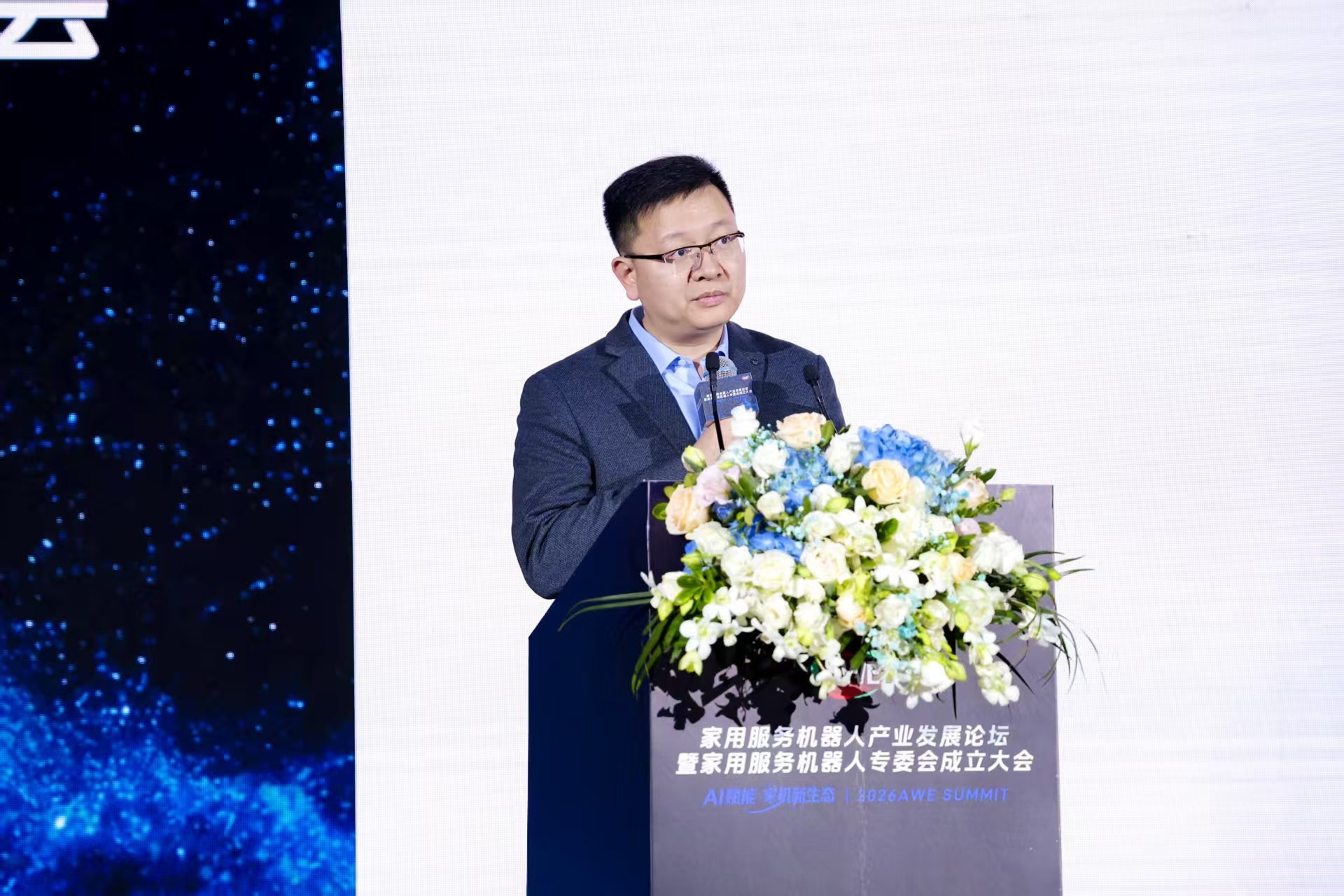
Dai Zhihui, Vice - President of Shanghai Fourier Intelligent Technology Co., Ltd.
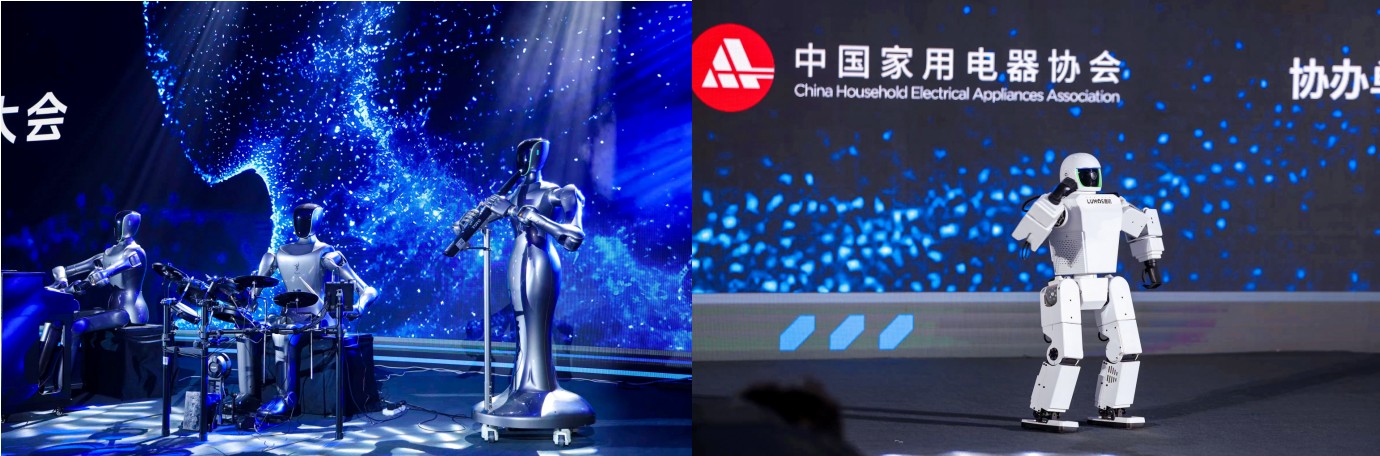
In fact, some progress has been made in the application of household service robots in scenarios. The conference specially set up a Robot LIVE Show session, which became the focus of the whole event.
Hisense demonstrated an unmanned household chore robot, which completed operations such as cooking, making the bed, and handing over a can of cola. The RoboSense robot wearing Meituan delivery clothes completed the service of picking up and delivering express parcels in one continuous shot, including taking the elevator. Luming Technology brought a dance performance of the Luming Xiaoming companion robot and also demonstrated its unique data collection equipment on - site.
The "Hexuan" humanoid robot band incubated by the Robotics Research Institute of Zhejiang University gave a stunning band performance on - site. TCL, Fangtai, and the Zhejiang Humanoid Robot Innovation Center respectively demonstrated what different forms of robots in the home should do. The four - legged robot "Gangbeng" of Zhishen also brought a cute and amusing dance show.
AWE official
However, beneath the prosperous development scene, the household service robot industry still faces many challenges at this stage.
Sun Fuchun, a professor in the Department of Computer Science and Technology at Tsinghua University and the Vice - President of the Chinese Association for Artificial Intelligence, believes that in the "last mile" of implementation, household service robots face five challenges: First, general artificial intelligence (AGI) has not been achieved yet. Currently, most AI performs well in specific fields, and many still require remote control. Actions that humans take for granted, such as pouring water and tying shoelaces, are extremely complex for robots, involving multiple technologies such as high - dimensional joint control, force feedback, and visual reasoning. Only by conquering general artificial intelligence that can handle infinite tasks can robots truly become human "life partners". Second, there is the "Moravec's Paradox" in the physical world - actions that are simple for humans, such as folding clothes and grabbing a cup, are extremely difficult for robots to perform; while tasks that are difficult for humans, such as calculation and playing chess, can be easily handled by robots. Third, there are shortcomings in hardware and integration. Although algorithm models are iterating rapidly, the progress of overall machine design, system integration, and reliability verification is relatively lagging. Fourth, there is a "last mile" problem in data acquisition. Currently, there are still problems such as difficult data collection and a shortage of high - quality data, and scenario - based solutions also need further exploration. Fifth, the problems of safety, ethics, and cost popularization are prominent: If a robot weighing dozens of kilograms malfunctions (such as pinching a child or knocking down an old person), the responsibility definition is not clear; Robots equipped with cameras and sensors operate at home 24 hours a day, posing a risk of data leakage; In addition, the price of high - end companion robots is generally around 10,000 yuan, which is difficult for ordinary families to afford.

Sun Fuchun, a professor in the Department of Computer Science and Technology at Tsinghua University and the Vice - President of the Chinese Association for Artificial Intelligence
The Special Committee for Household Service Robots Is Officially Established
Facing many challenges, the Special Committee for Household Service Robots of the China Household Electrical Appliances Association (hereinafter referred to as the Special Committee for Household Service Robots) came into being. On - site, the establishment ceremony of the Special Committee for Household Service Robots pushed the conference to a climax.
At the meeting, Wan Chunhui, the Deputy Secretary - General of the China Household Electrical Appliances Association, announced that Shu Hai, the Vice - President of Haier Group, would serve as the first - term director of the Special Committee for Household Service Robots, and Haier Robotics would serve as the first - term director unit. Hisense, Fourier, TCL, Wolong Electric Drive, Midea, OPPO - Zhongguang, Changhong, and Fangtai would serve as the first - term deputy director units. It is worth mentioning that Jiang Feng, the Executive President of the China Household Electrical Appliances Association, issued appointment letters to the above - mentioned enterprises and witnessed the important moment of the establishment of the special committee together.
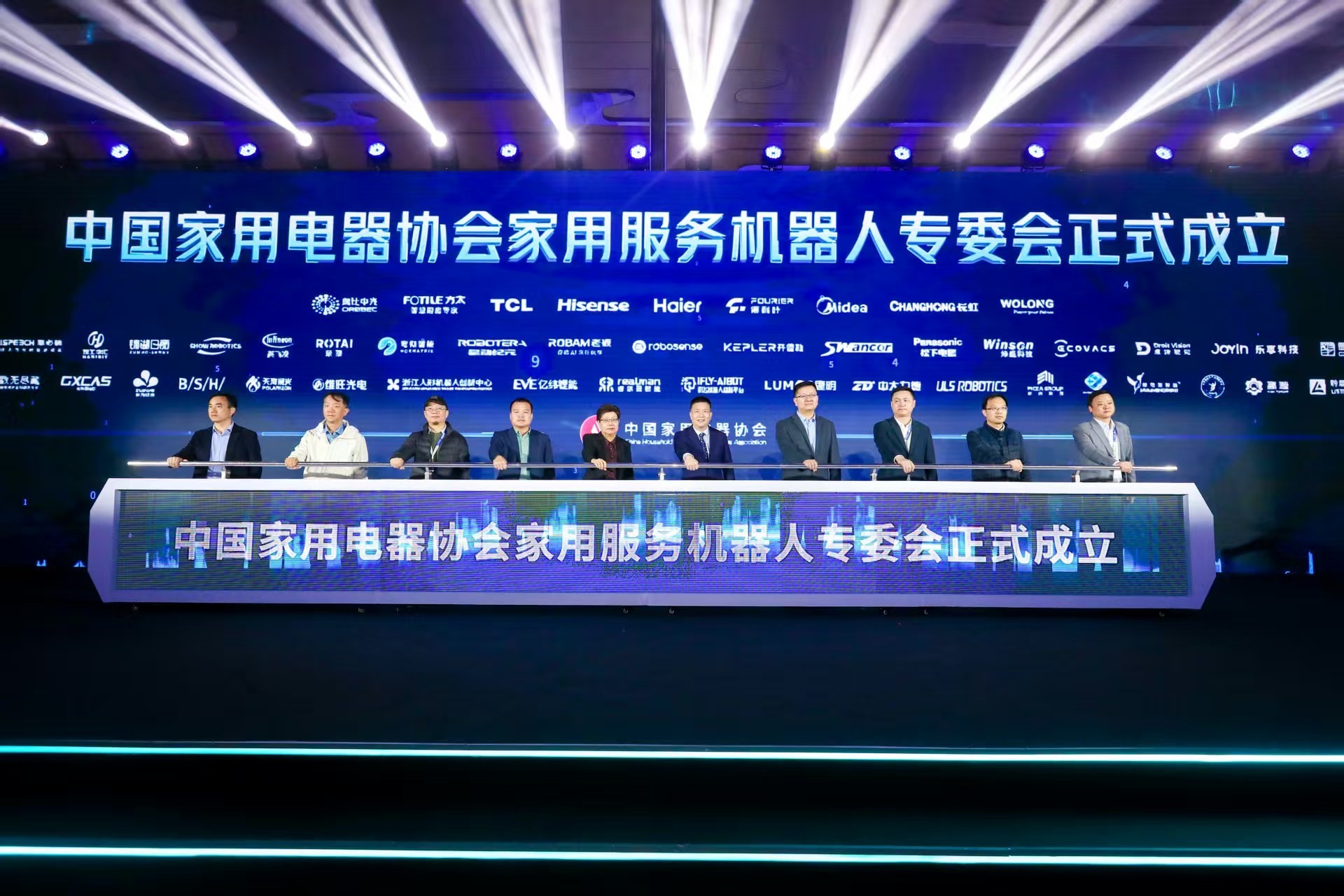
Jiang Feng, the Executive President of the China Household Electrical Appliances Association, poses for a group photo with the director unit and deputy director units of the Special Committee for Household Service Robots
Regarding the background of the establishment of the Special Committee for Household Service Robots and the current participation of enterprises, Wan Chunhui introduced: "In 2025, the robot industry was booming, and the home scenario has been unanimously recognized by all enterprises as the ultimate goal of the robot industry. More and more enterprises have invested a large amount of resources in the layout of the home scenario, from data collection to real - scene training, all exploring around the home scenario. However, we also see that due to the complexity of the home scenario, the industry is facing many common problems such as repeated data collection