Create a sense of bedtime ritual, can the app earn $3 million a month?
Getting a good night's sleep, a simple yet sincere desire, has become a growing concern for many. The diverse forms and strong sales performance of sleep products continuously validate this trend.
Driven by the increasing demand, numerous entrepreneurs have flocked to the sleep industry. For example, a former Google executive founded the sleep technology company NextSense, which launched AI sleep - aiding headphones after raising $16 million in financing. Another example is Sleepal, a hardware brand created by early Xiaomi team members, which focuses on the sleep market. Based on our previous observations, the sleep - aiding sector is evolving towards "more scientific methods" and "more advanced algorithms." In the software realm, the development has progressed from simple white noise to monaural beats that can synchronize brainwaves. On the hardware front, devices collect more data through monitoring and wearables for scientific analysis.
However, when we shift our focus from technological approaches to business performance, we find that Hatch stands out as an exceptional and high - performing player.
In the highly competitive sleep - aiding market, Hatch manages to maintain a monthly revenue of approximately $3 million for its supporting app Hatch Sleep, relying solely on its "simple" lighting devices. It is one of the few products in its category to achieve a monthly revenue in the millions.
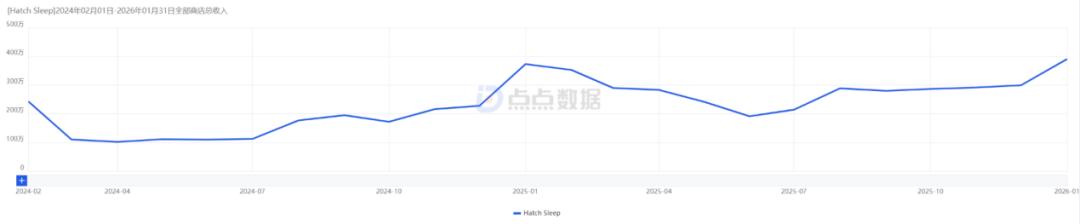
Hatch Sleep has maintained a stable monthly revenue of around $3 million in the past two years | Diandian Data
Two product lines, different audiences, same logic
Hatch's core product is an intelligent lighting device that can change colors and play various sleep - aiding sounds.
Initially targeting the baby sleep - aiding market and later expanding to all age groups, Hatch's core product lines are divided into Hatch Rest (now Hatch Baby, targeting infants and children) and Hatch Restore (targeting adults).
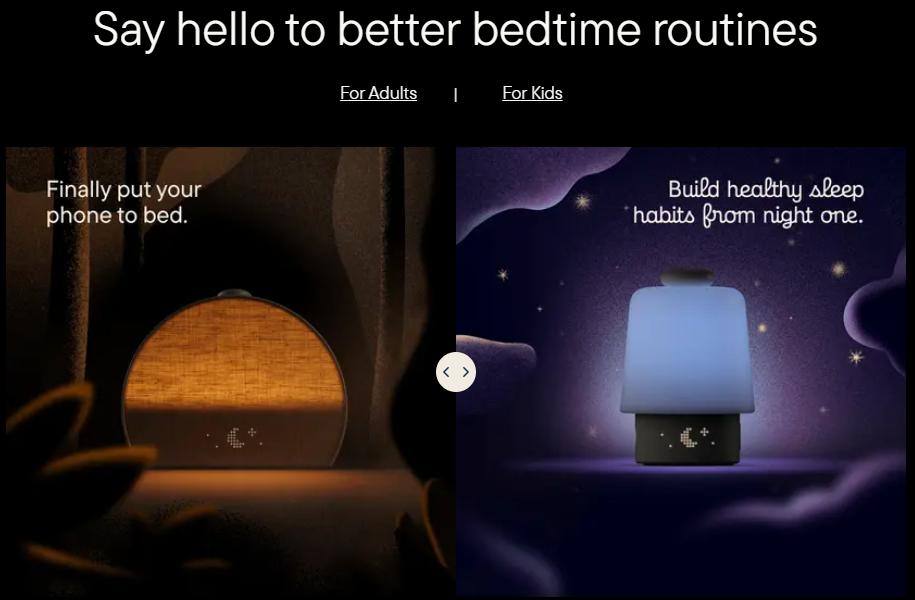
Image source | Hatch
Baby line: A sleep - inducing gadget selling "instant comfort"
In 2016, Hatch launched Hatch Rest, targeting infants. It addressed the pain points of exhausted new parents dealing with crying babies by offering a unique solution.
While other brands use monitoring or wearable devices to track a baby's breathing and oxygen saturation, providing data that may cause parental anxiety, Hatch Sleep integrates seemingly simple functions such as light adjustment, white noise playback, and remote control into a lighting device. It reduces direct contact between the device and the baby, focuses on optimizing the hardware experience, and improves the sleep environment.
These functions are not highly complex or technologically advanced, but Hatch, based on a deep understanding of pain points, solves real problems for new parents. Monitoring and wearable devices mainly show how well and safely a baby sleeps, while Hatch focuses on helping the baby fall asleep smoothly and quickly, relieving parents from exhaustion.
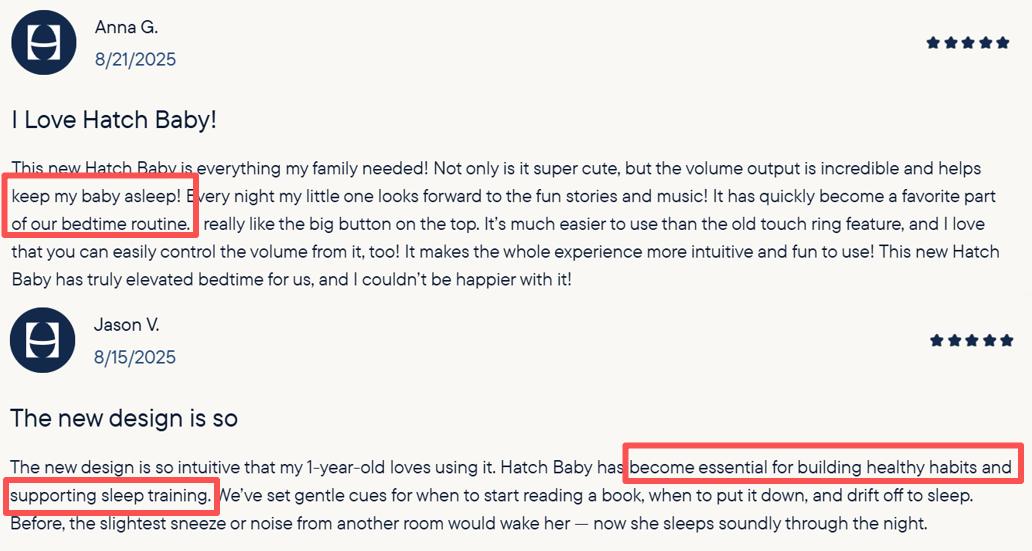
Many parents say that Hatch Rest/Baby is crucial for getting their children to sleep | Image source: Hatch
When the device becomes a nightly necessity, the product transforms from a tool into "a part of life," laying the foundation for future transformation.
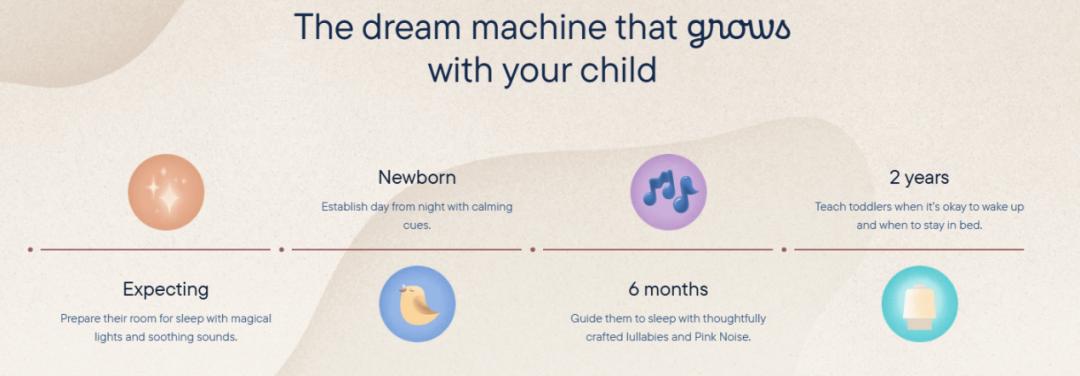
Usage scenarios and time periods of Hatch Rest from pregnancy to a baby adapting to sleep | Image source: Hatch
Adult line: A habit coach for building "sleep rituals"
The baby - targeted market has clear pain points, but as children grow, the need for sleep - inducing products decreases, limiting the product's lifecycle. Meanwhile, after witnessing the effectiveness of Hatch's light and sound for baby sleep, parents naturally hope to benefit from it themselves.
Therefore, Hatch launched Hatch Restore for adults in 2020.
The adult sleep market is also huge, but instant comfort is no longer the main issue. Difficulty falling asleep, poor sleep quality, and hard - to - wake - up problems are the main challenges for adults. Thus, Hatch Restore has shifted its functional design towards more comprehensive "sleep health management."
On top of its existing functions, Hatch Restore adds "Wind Down" (pre - sleep relaxation) and "Wake Up" (morning wake - up) features, simulating the sunrise and sunset with the light's gradual change. Additionally, it enriches the app with hundreds of sleep - aiding sound effects, podcasts, and mindfulness courses. These static audio contents, which were previously abandoned in software, are now incorporated into the lighting device.
Moreover, to address the common issue of "phone - scrolling" that prevents adults from falling asleep, Hatch Restore allows direct control on the device, eliminating the need to open the app and reducing distractions before sleep.
At the 2026 CES, Hatch introduced new products in the Restore series, enhancing the physical buttons and sound effects. The promotion emphasizes the "phone - free" experience, further clarifying the iterative direction of reducing app operation burden and enhancing scene immersion.
Hatch's concept is not "more intelligent" but "more natural."
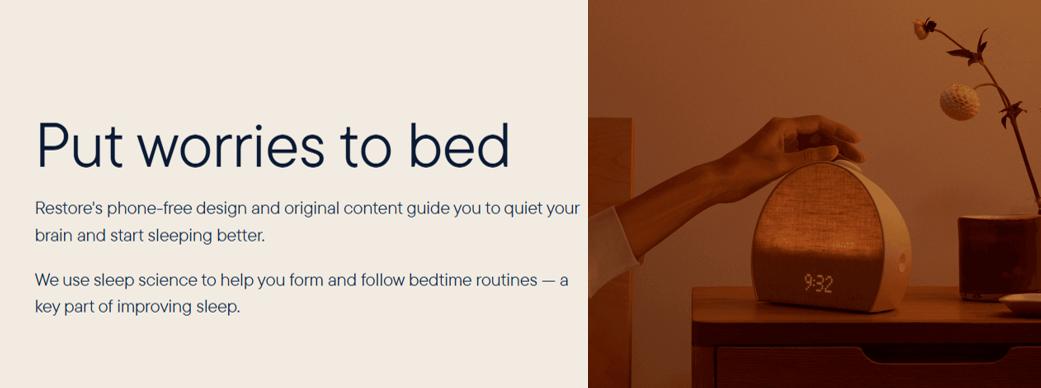
Hatch's new product, Restore 3, priced at $170, emphasizes "phone - free design" in its promotion | Image source: Hatch
According to Ann Crady Weiss, the founder of Hatch, product design focuses on creating a "sleep habit + ritual" experience. Expanding from the baby to the adult market doesn't require acquiring new customers since families that bought Rest are potential Restore users. Internal expansion within the family scenario also reduces the cost of "re - building" the brand.
Currently, Rest and Restore have almost the same functions, with differences mainly in appearance design and some subscription content. Although targeting different audiences, the two product lines share the same technological core of "light and sound environment control." It's evident that Hatch is committed to using the lighting and sound effects of the device, combined with app content, to create a sleep - inducing atmosphere and become an essential part of the user's sleep routine. This is the key to Hatch Sleep's high revenue.
The app is criticized but profitable
With a stable monthly revenue of $3 million, Hatch Sleep stands out in both the hardware - supporting app and the independent sleep - aiding app categories.
Besides understanding the market demand and solving problems, Hatch has also clearly differentiated the pricing of its two product lines.
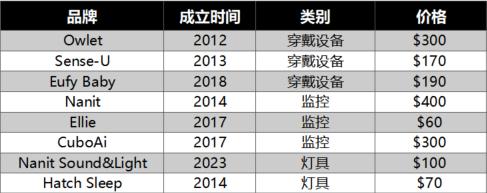
Among baby sleep - aiding products, Hatch Sleep has a relatively low price | Drawn by Baijing Chuhai based on public data
The Hatch Rest series for babies is priced between $70 - $105. As a "comforting gadget" for parenting issues, anxious parents are highly receptive to this price range, making Hatch Rest a "must - have" for North American parenting families.
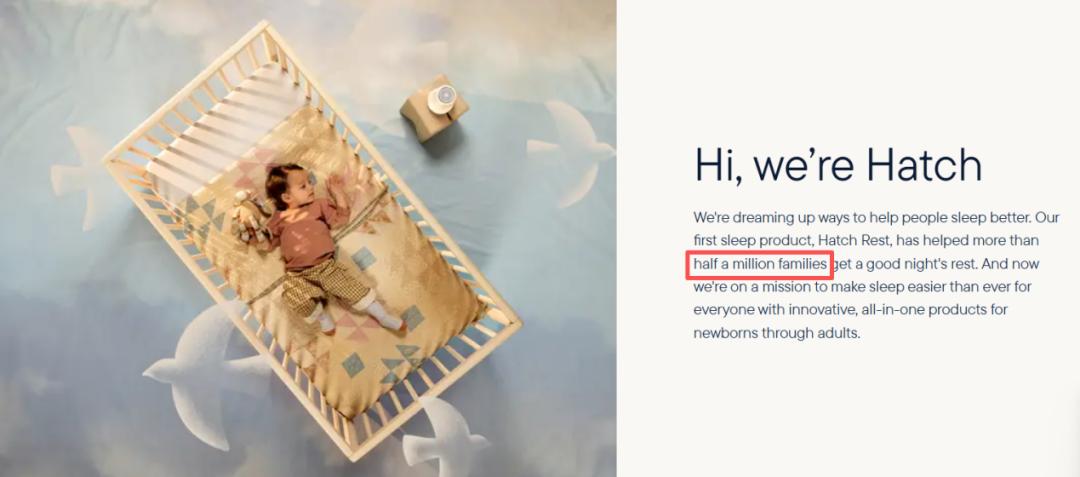
The official website shows that Hatch has helped over 500,000 families | Image source: Hatch
The Hatch Restore series for adults offers a "pre - sleep ritual" and a "wake - up program." Due to its more comprehensive functions and focus on health management, it is priced higher, ranging from $130 - $200. Looking at the revenue changes of its supporting app, Hatch Sleep, which was launched in 2017, started to generate significant revenue after the launch of the adult product line in 2020.
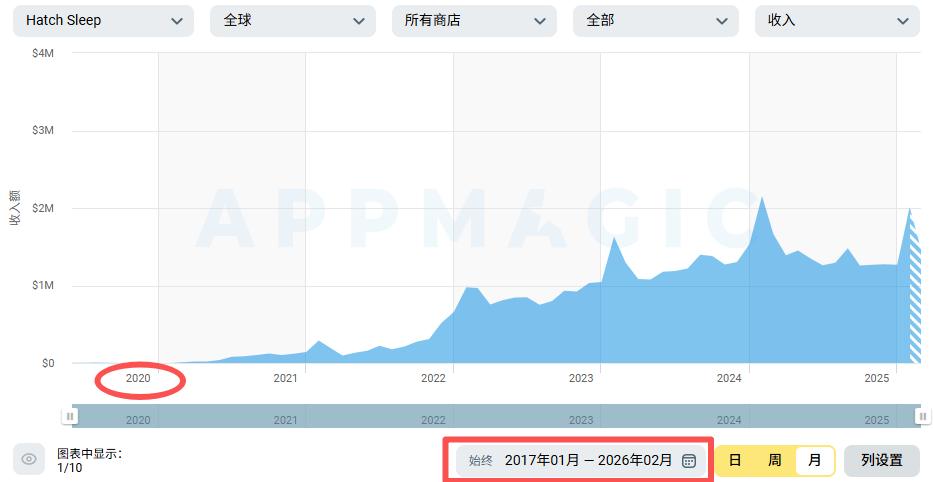
Monthly revenue changes of Hatch Sleep since its launch | Image source: AppMagic | According to data from other third - party platforms, Diandian Data shows a monthly revenue of about $3 million, and SensorTower also shows a monthly revenue of about $3 million.
Hatch Sleep offers two subscription plans: $5 per month and $50 per year.
User reviews indicate that the experience of Hatch Sleep is not perfect, with complaints about complex interface design, difficult operation, and low content update frequency.
However, these issues have not significantly affected the revenue. Many users repeatedly mention "the alarm clock itself is amazing," suggesting that the Hatch lighting device is attractive enough to retain users. Its core value lies in the overall sleep - scene experience rather than an "ultimate app experience," which aligns with the founder's "phone - free design" concept. The app is merely a "payment gateway" to enhance the hardware experience.
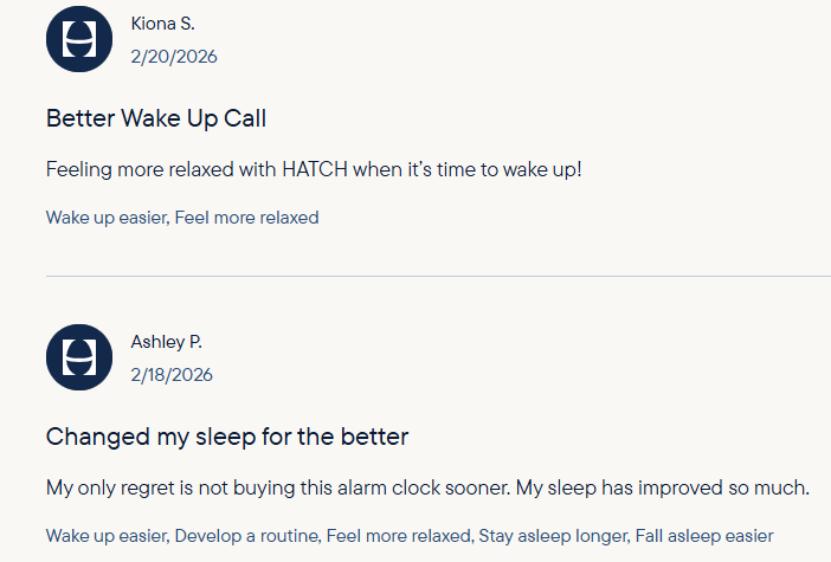
User reviews | Image source: Hatch
Conclusion
Starting from addressing the pain points of new parents in baby sleep - aiding, Hatch Sleep later acquired adult customers, its original potential payers, at a low cost during the pandemic. It serves two groups in the family scenario with the same technology and concept, expanding from simply selling hardware to generating more profitable software revenue.
The app design has its flaws, but it doesn't affect the subscription revenue. On one hand, due to the founder's "phone - free" design, there is little app operation, and it mainly serves as a "recharge portal." Fundamentally, it's the hardware experience that matters. Its competitive advantage doesn't come from technological complexity but from "occupying the sleep process." While many hardware products focus on "how well you sleep," Hatch focuses on "how you fall asleep." Once the dimming lights and soothing sounds become a daily family ritual, the product transforms from a tool into a habitual necessity.
However, the industry is always full of challengers. Recent reports indicate that early Xiaomi team members have entered the market. Beyond light - based sleep - aiding, their product is equipped with multimodal sensors, which can identify a user's heartbeat, chest and abdomen movements, and sleeping posture changes without direct contact. It can distinguish sleep stages (light sleep/deep sleep/REM), monitor snoring, and track time in and out of bed. Additionally, the built - in AI model can adjust the light intensity according to the user's sleep condition. By providing more intuitive data, it shows users how well they sleep. When there are more rituals and an enhanced experience, user loyalty may be at risk.

Sleep - aiding AI Lamp | Sleepal
The data from third - party platforms such as SimilarWeb, Diandian Data, Semrush, and Guangdada may have some deviations from the actual data and is for reference only.
This article is from the WeChat official account "Baijing Chuhai" (ID: baijingapp), written by Lainya and edited by Yin Guanxiao. It is published on 36Kr with permission.