In the Arctic Circle, I hailed a Chinese new energy vehicle.
A blue taxi pulled up in front of the hotel. According to the ride-hailing app Taxifix on my phone, it was a XPeng.
This was hard for me to believe. After all, I was in Tromsø, a small town in Norway, at 69 degrees north latitude, well within the Arctic Circle. To confirm that it was indeed the XPeng I knew, I even went around to the back of the car to take a look. Sure enough, it was.
I thought it was just a chance encounter, a little episode. But soon I realized it wasn't a coincidence at all, because there were so many Chinese new energy vehicles in Norway that they were everywhere on the streets.
That day, I took another taxi, and the car that picked me up was a BYD. During my entire trip, I saw MG and Voyah on the roads of Lofoten, and I saw the NIO House of NIO downstairs of a hotel on Karl Johans Gate, the busiest street in Oslo.
In a foreign land, I seemed to be surrounded by Chinese new energy vehicles. But maybe it was just because I paid too much attention to them?
A series of online data prove that this is not due to the "retinal effect." In 2025, the sales volume of Chinese brand electric vehicles in Norway reached 24,524, accounting for 13.7% of the country's total new car sales, a 3.3 percentage point increase from 2024. In December of the just-passed year, this figure even soared to 17% at one point.
For any Chinese automobile manufacturer, this country on the western side of the Scandinavian Peninsula is no longer just a distant symbol on the map. It is more like a huge, natural testing ground. While the EU's tariff stick is still waving in the air, and while established German and French automakers are still hesitating about their electrification transformation, the Chinese have quietly landed along the North Sea route.
But Norway is different after all. It is not just an ordinary European country. It is an extreme example hatched in a "policy cocoon." In 2025, the proportion of pure electric vehicles in Norway's new car market was as high as 95.9%. By February 2026, this figure even touched the ceiling of 98%. Here, electric vehicles are not an alternative but an absolute mainstream.
A fellow countryman working in the new energy industry in Norway told me, Chinese automakers often regard Norway as the first stop for entering the European market because to "conquer" Europe, they must first understand Norway. And understanding Norway is not just about selling cars. It is also about finding the key to open the entire European market in the most open and most demanding market.
01 The "Super Testing Ground" within the Arctic Circle
Norway's market scale is not large. The country has a population of only 5.5 million, less than a quarter of that of Beijing. But this small market has become a "battleground" for global automotive giants.
Why Norway?
Because Norway is extremely determined to embrace new energy.
Although oil exports are its pillar industry, Norway actually has abundant water and wind resources, producing more electricity than it can consume. Different from oil exports, which can be simply transported away, electricity exports require a power grid. If Norway wants to export its electricity to other European countries, it must pass through the power grid of neighboring Sweden, which results in high "toll fees." In this situation, consuming as much electricity as possible in the country and leaving more oil for export is the option that best suits Norway's economic interests.
In addition, in recent years, the Norwegian government has also intended to get rid of its traditional economic label and hopes to establish an image of a green energy benchmark in the international market to reduce its dependence on the oil economy. For example, it is trying to attract data centers to settle by leveraging green energy and water-cooling resources to become one of the global computing power centers.
Due to the intertwining of multiple factors, in recent years, Norway has become the most radical European country in promoting the development of new energy vehicles. This non-EU country has long adopted a zero-tariff policy for imported new energy vehicles. It was not until 2023 that it began to levy a 25% value-added tax (commonly known as the "luxury tax") on the part of high-priced electric vehicles with a selling price of more than 500,000 kroner.
So, when Chinese automakers choose this place as the first stop for entering the European market, they first feel the "warmth of the North Atlantic Current."
In 2025, BYD became the Chinese brand with the largest market share in Norway's new car market, ranking 10th in the automaker sales list. In June alone, BYD ranked eighth with 754 vehicles sold and a market share of 4.1%, a year-on-year surge of 450%. Its main model, the Sealion 7, sold 604 vehicles, ranking fifth in the entire market and making it into the TOP 5 for the first time. This breakthrough performance proves that Chinese brands are fully capable of establishing a foothold in the mature Nordic market.
XPeng Motors also reaped the fruits of growth in Norway. In 2025, XPeng's sales volume ranked among the top 20 in Norway. In June alone, XPeng sold 346 vehicles, a year-on-year increase of 236%, mainly relying on the G6 and G9 models.
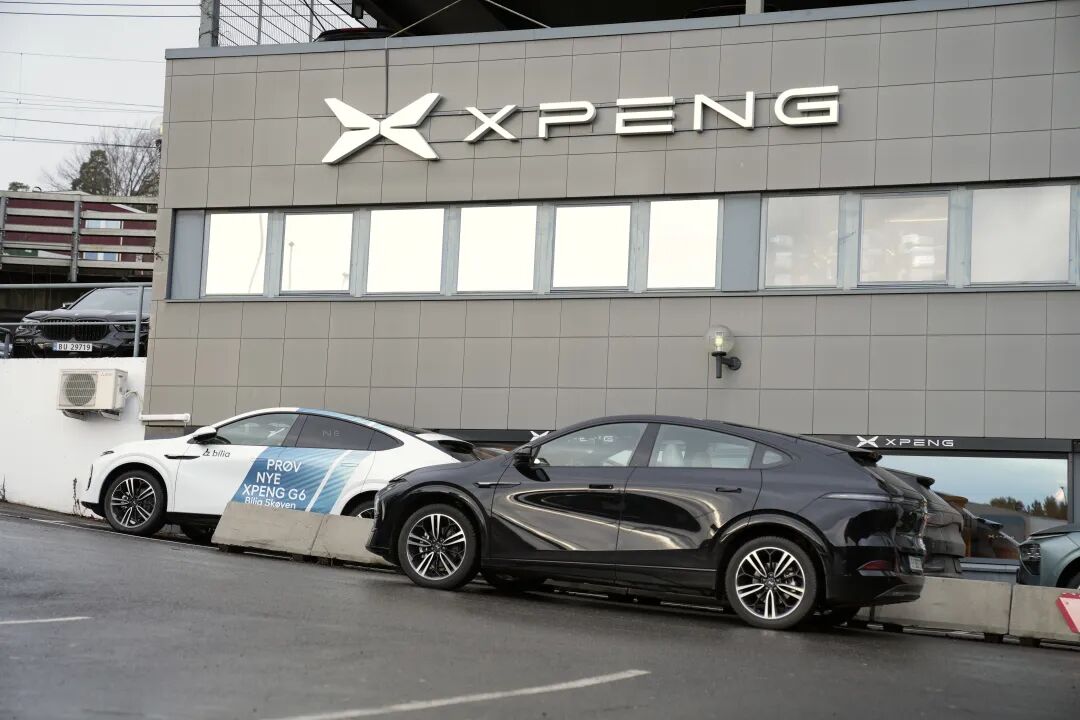
In the work resumption letter after the Spring Festival in 2026, He Xiaopeng summarized XPeng's overseas expansion strategy in eight characters: "Break through with a 'sharp knife' and retain customers with a'red carpet'." He clearly stated that XPeng will focus on markets such as Germany, Norway, Thailand, and France, hoping to double its overseas sales volume in 2026 and sell one million vehicles overseas by 2030, contributing more than 70% of the profits.
He Xiaopeng specifically mentioned: "Our supply chain, manufacturing, logistics, spare parts, and services are moving towards 'global collaboration'. Too many automakers' globalization efforts have failed because they didn't build a good team and their capabilities couldn't keep up, ultimately leading to a decline in quality and reputation. This is the foundation for XPeng's globalization - it can't be superficial; it must be solid."
This "feedback" is real. The reason why Chinese brands were able to capture a 13.7% share in the Norwegian market in 2025 is that they are no longer synonymous with low-priced products. BYD's Tang and NIO's ET7 are not cheap in the local market, but with the stability of their three-electric technologies and the intelligent cockpits that even Nordic minimalists find impressive, they are gradually shedding the early "cheap" label of Chinese cars.
Norwegians even accepted the concept of "software-defined vehicles" earlier than the Chinese. Because of the sparse population and long-distance driving being the norm, assisted driving is not a toy but a necessity. While the Germans are still arguing about whether to impose a speed limit on the highway, in the fjords of Norway, the intelligent driving systems of Chinese cars have been quietly accumulating data and constantly iterating.
02 The Localization Game from "Landing" to "Taking Root"
However, market acceptance does not mean that business will go smoothly. At the beginning of 2026, a subtle change quietly took place in the Norwegian car market.
Since the Norwegian government decided to levy a maximum value-added tax of $5,000 on electric vehicles for the first time starting from January 1, 2026, there was a crazy "rush to buy" wave in the Norwegian market at the end of last year. This led to the pre - emptive over - consumption of market demand at the beginning of this year. But this is only the surface phenomenon. The deeper challenge is that as the policy dividends gradually fade away, Chinese automakers need to truly learn how to operate in Norway.
The question of how to operate is a real problem. Should they adopt the distribution model and "marry" local established distributors, or should they adopt the self - operated model and go deep into the Nordic hinterland?
NIO was the first to try the direct - sales model in Norway. In 2021, Li Bin brought NIO into Norway with high - profile. He brought not only the cars but also the NIO House, which symbolizes the user community. This strategy was very effective in China, but in Norway, it encountered unexpected resistance.
First of all, there is the issue of adaptability. Due to the battery - swapping model, NIO had to set up battery - swapping stations before selling cars. However, building a battery - swapping station in Norway is much more difficult than in China. Whether it is the low efficiency of government approval or the long winter and rainy seasons that prevent construction, these objective reasons have ultimately extended the construction cycle of a battery - swapping station to ten months or even a year.
Secondly, there is the cultural issue. In the new energy vehicle industry in China, NIO is labeled as a user - oriented enterprise. Its wide brand awareness and active fan base have contributed a lot to its success. But in Norway, these foundations hardly exist. Except for a few Chinese people, locals have no knowledge of this brand. Moreover, it adopts a unique battery - swapping model. "Norwegians are very conservative," said a local Chinese person. "Compared with the Chinese, they are very slow to accept new things."
The "NIO House" located on the bustling Karl Johans Gate doesn't seem to attract Norwegians much. Because they live a rather detached life and are more concerned about individual experiences, such as whether the after - sales service can be prompt. This concern is not unfounded. Although this place is not extremely cold, the snowfall in winter is heavy and the vehicle failure rate is high. If the after - sales service is not timely, it will be really difficult.
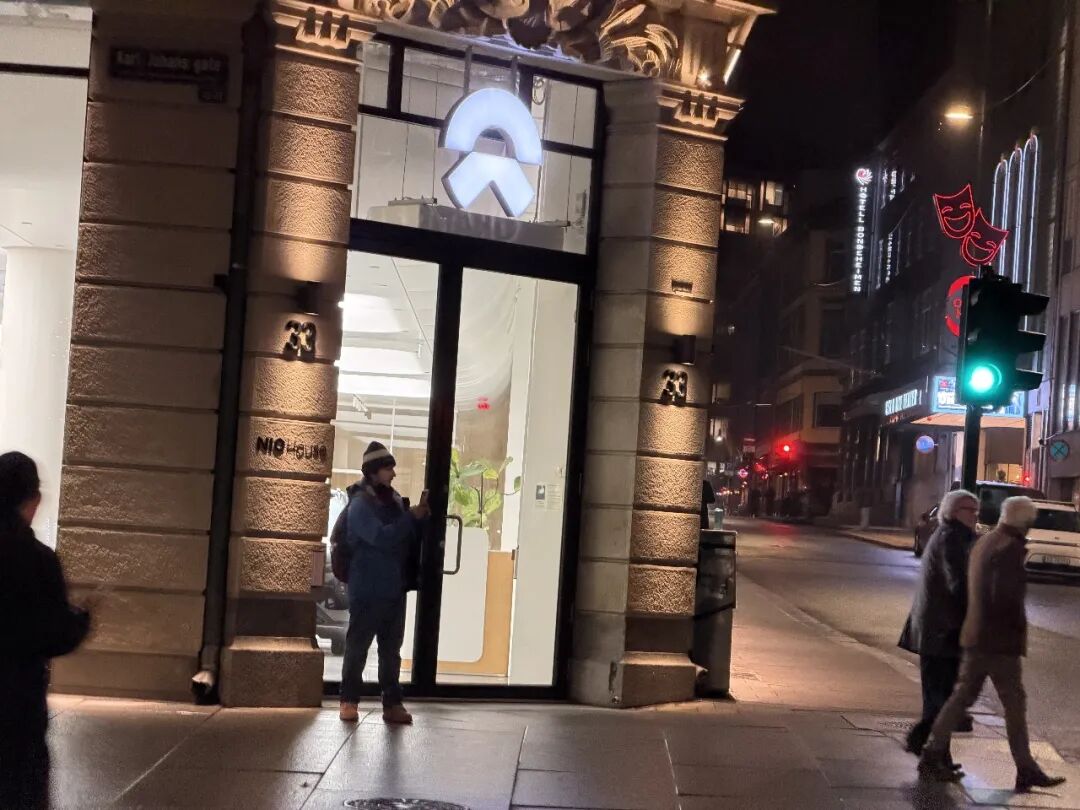
The aforementioned new energy industry insider in Europe told me that when NIO first entered Norway, it built most of its business modules by itself. Since after - sales maintenance was difficult, it reached a cooperation with a local enterprise. However, this maintenance provider also serves several other brands, which means that the service capacity allocated to NIO is limited.
"Norwegians love to complain," he said. Once car owners find that it takes a year to install a snow rack, they will quickly abandon the brand.
Objectively speaking, NIO is very determined to expand overseas. Despite the many challenges mentioned above, the company started from Norway and gradually expanded to Denmark, the Netherlands, and other European countries. Now, there is no problem driving a NIO from Oslo to Copenhagen, the capital of Denmark, while swapping batteries along the way.
However, judging from the latest sales performance, as one of the earliest Chinese new energy automakers to explore the Nordic market, NIO has not reaped the most benefits.
A very real problem is the selling price. The first model NIO brought to Europe was its high - end ES8, which was priced at 700,000 kroner. Obviously, this is a price range that would be taxed after 2023. The subsequent automakers were like taking an open - book exam. They just needed to set the price below 500,000 kroner.
Of course, NIO has also gradually brought more affordable models to Norway, such as the EL6 and the Firefly. In August 2023, NIO became the preferred model for an Oslo taxi company.
Since 2024, NIO has shifted to a more flexible "cooperation + direct - sales" hybrid model in the Nordic region. In some non - core areas, they cooperate with local distributor groups with decades of history, using the existing after - sales network to cover remote areas. In first - tier cities like Oslo, they maintain the direct - sales window to maintain the brand image.
In addition, as I learned, recently, some Chinese after - sales employees have been sent to Norway with work visas. This adjustment has greatly improved their on - site service efficiency.
This "compromise" is actually a more profound "adaptation to local conditions."
BYD has chosen another path. Instead of building a self - operated energy - replenishment network like NIO, it has chosen to deeply integrate into Norway's existing infrastructure, ensuring that its cars can achieve the best charging compatibility on charging piles of any brand. This practical localization strategy has helped BYD quickly open up the Norwegian market.
XPeng Motors is also adjusting its pace. According to the plan, XPeng plans to introduce the Mona series of models into the European market. This model of "co - going global with the Chinese supply chain" is becoming the new normal.
In addition to these leading players, more Chinese brands are also quietly deploying in Norway. In June 2025, Zeekr sold 112 vehicles in Norway, with its main model, the Zeekr 7X, achieving a delivery of 89 vehicles. Hongqi sold 64 vehicles, a year - on - year increase of 178%, and continued to test the high - end electric vehicle market. Although Voyah only sold 28 vehicles, it still maintained a three - digit year - on - year growth. MG sold 475 vehicles in June. Although the year - on - year sales declined, it is still a common Chinese brand on Norwegian streets. Seres also ranked 32nd with 88 vehicles sold in September. The Exlantix of Xingtu made its debut in Norway in June 2025, showing the exploration and breakthrough of Chinese automakers in the high - end pure - electric market in Europe.
Overall, Chinese brands are forming a multi - echelon structure in Norway: BYD, XPeng, and Zeekr form the main camp, with a stable share in monthly sales; Hongqi, Voyah, Xingtu, etc. are in the exploration stage, looking for differentiated positioning and technology implementation paths.
03 Norway, More Than Just Norway
If the early landing was for survival and testing, then in 2026, the layout of Chinese automakers in Norway has a more far - reaching "springboard" significance.
Geographically, Norway is on the "periphery" of Europe, but from a market strategy perspective, it is the "heart" of Europe. Because Norway's market performance has a strong guiding significance.
At the beginning of 2026, the EU and China reached a new consensus on the issue of electric vehicle tariffs - shifting from simply imposing punitive tariffs to introducing a minimum price mechanism. This means that the door for Chinese electric vehicles to enter Europe is not closed, but the threshold has been raised. The previous path of relying on extreme cost - effectiveness to outcompete opponents is no longer feasible. Now, they must provide better products than European local brands at the same price.
And this is exactly what the Norwegian market has been doing in the past few years - forcing Chinese brands to move up the value chain.
Norway has no domestic automobile industry and no burden of trade protectionism. Consumers only recognize good products, but an open market also means fierce competition. Getting a 13.7% share in such a market is much more valuable than in some markets with inflated shares due to policy support. This is a "credit endorsement" tested by demanding consumers.
Therefore, when BYD, NIO, XPeng, etc. stand on the high - point of the Norwegian market and look towards Germany, France, and the Netherlands, they are not just holding a PPT. They have a proven resume of surviving in a mature market with high latitude, high income, and high standards.
In January 2026, the sales data of Chinese brands in 20 European countries showed that MG led with 18,730 vehicles sold, followed closely by Chery with 18,683 vehicles. BYD ranked third with 17,753 vehicles. Leapmotor with 4,146 vehicles and XPeng with 1,697 vehicles also made it into the top five. Behind this report card, the contribution of the Norwegian market is undeniable.
Although the battery giant CATL does not directly sell cars, it plays an "invisible pusher" role in this long - distance expedition. More and more electric vehicles, whether from NIO, XPeng, or European local brands like Volkswagen and BMW, are equipped with CATL's batteries. In 2025, CATL's market share in Europe continued to rise, and the production capacity of its German factory was also steadily released. According to incomplete statistics, one out of every