Leasing has supported a vast expanse of embodied intelligence.
Sure enough, after the Spring Festival Gala, the robots, just like last year, started working overtime.
At this year's Spring Festival Gala, four major robot manufacturers, Unitree Technology, Magic Atom, Galaxy General, and Songyan Power, all took the stage. From martial arts performances to playing with walnuts and picking up glass, the overall fluency and coherence of their movements have been visibly improved compared to before.
With the dual support of grand narratives and the public's curiosity, the robot rental service has become popular again.
Chen Qitai, who is engaged in the robot rental service, told Photon Planet that recently, the rental orders have almost exploded, and there are really not enough robots. They need to schedule according to the order sequence. His company has even added to the contract that five days before the event starts, the agreed event time cannot be changed. If it needs to be changed, a 2,000-yuan change fee must be paid.
The data from Qingtianzu, the robot rental service platform under ZHIYUAN ROBOT, also supports this. The data shows that during the Spring Festival this year (from the first day to the seventh day of the first lunar month), the platform's orders increased by nearly 70% month-on-month.
Obviously, for the robot rental track, the Spring Festival Gala has given enough popularity and expectations. As for whether the industry can seize this opportunity, it is another test question.
After all, the popularity can explode overnight, but the maturity and supply capacity of the industry cannot grow overnight. This still immature track is facing a new round of stress tests after the demand emerges again.
"Seller's show", "Buyer's show"
Although the Spring Festival Gala has refreshed the national audience's perception of the capabilities of robots, the underlying nature of the industry is difficult to change rapidly due to the highlight moments on the stage.
Chen Qitai told Photon Planet that for his company's rental service, even the flagship robots can actually only do four things - stage dance shows, basic action interactions, customized content playback, and accessing Doubao for intelligent voice interactions.
Take an annual meeting as an example. Three robots seem to be involved throughout the process, from greeting guests, to interactive sign-ins, to group photos, and dance performances at the dinner. But all those seemingly diverse skills are essentially extensions and combinations of these four capabilities. "Don't think too much, it's just these four things."
In this regard, the salesperson of Qingtianzu said that if the customer has enough money, they can still buy more capabilities.
Normally, the daily rental price of a robot with dance ability is generally around 5,000 yuan per unit. During peak periods with concentrated demand such as the start of the school term or the Lantern Festival, the price will rise to 8,000 yuan.
The salesperson of Qingtianzu said that if the budget is a little more "relaxed", they can rent the ZHIYUAN Expedition A2 flagship model to act as a commentator and host. Just the rent alone costs at least 11,999 yuan per day.

It is worth mentioning that although supported by AI, even the Expedition A2 needs to prepare a knowledge base in advance. The quality of its explanations and answers depends more on the quality of the knowledge base rather than the "intelligence level" of the robot itself.
Chen Qitai also told Photon Planet not to have too many "romantic" illusions about the actual performance of robots.
"Many of the robot videos you see online now are AI-generated and may not be real. The effect of Unitree at the Spring Festival Gala used motion capture technology and involved a lot of secondary development. The cost is extremely high. It's not that we can't do it, but that all rental companies can't do it."
According to his introduction, if you rent a robot at the normal price, it only includes standardized actions and pre-choreographed dances such as "Dance of Joy" and "Jingle Bells". If you want to customize a dance, you need to pay extra according to the choreography duration and difficulty.
Specifically, for a one-minute dance, it is conservatively estimated that an additional 2,000 yuan per unit is required, and you need to make an appointment in advance. Actions like somersaults are clearly rejected because they may damage the robot.
Moreover, robots at this stage are also difficult to perform overly delicate operations.
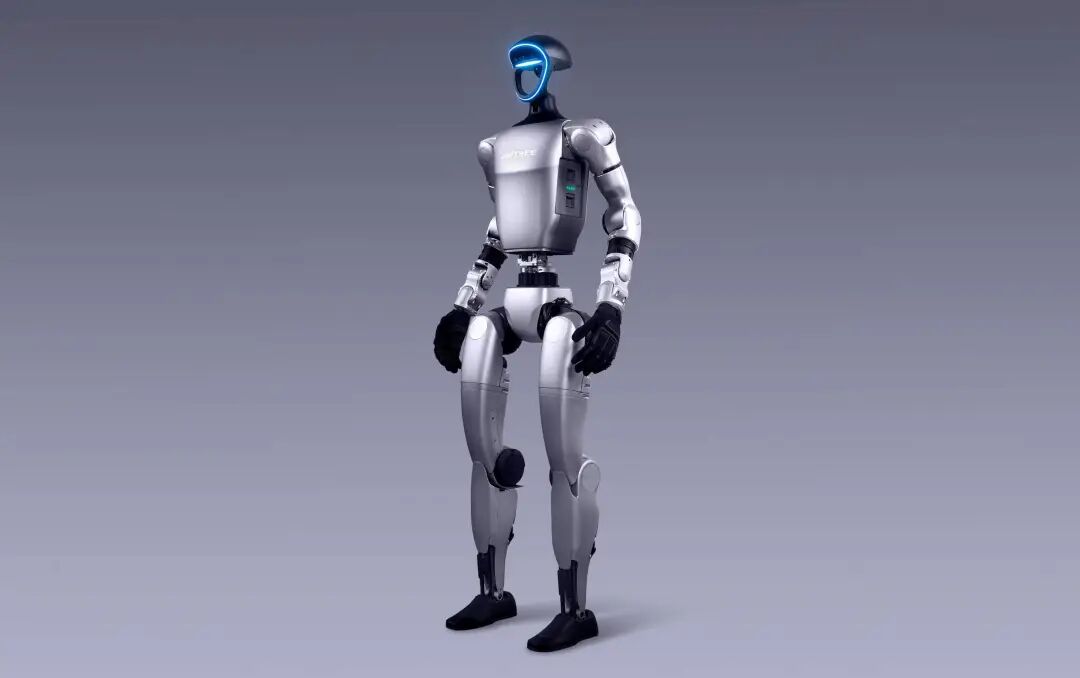
Take the Unitree G1U2 as an example. Its standard configuration is just a "fake hand" - it can dance but cannot perform delicate actions. Although theoretically, it can be equipped with a dexterous hand, Chen Qitai frankly said: "We do not recommend that customers install it. After spending more money, the effect that can be achieved is just barely picking up something, and it's even difficult to distribute flyers."
It is worth mentioning that since the capabilities of leading robots are similar, in the actual process, Chen Qitai found that within the same price range, compared with functional differences, the appearance of the robot seems to have a greater impact on users' choices.
"Unitree is thinner, faceless, and cooler, and is more suitable for performing in clothes; Lingxi is fat, round, and has an interactive face. So for small-scale events, people are more willing to rent one or two Unitrees, which are neat and tidy. For stages that require a large number of robots and pay attention to the grand occasion, Lingxi is relatively more popular."
This means that there may be a huge gap between the most advanced movement and visual performance in the robot industry and the real capabilities of the industry - the Spring Festival Gala is a show, while commercial performances are reality.
Robots, being "held back" by humans
Although the robots on the stage seem to be independent individuals, in the actual rental process, there is almost an engineer behind each robot.
The salesperson of Qingtianzu told Photon Planet that at this stage, for humanoid robots, whether it is playing pre-choreographed actions, on-site control, fault handling, safety control, or battery replacement, all rely on professional technical teachers. Even though group control can be achieved at the technical level, it is still best to have a dedicated person to operate to ensure the performance effect.
Even the most advanced ZHIYUAN Expedition A2 flagship model on the platform cannot do without the "invisible hand" in the background, and the only thing the customer has to do is to enjoy the performance happily.
However, this "peace of mind" is semi-compulsory and comes at a cost.
Some rental service providers pointed out that although all the robots on the platform are insured, they do not encourage customers to operate them personally.
"Using the joystick to control, at most, you can only perform basic operations such as moving forward, backward, left, and right, and simple hand-raising. If you want to perform a more decent performance, you have to spend time learning. The threshold is neither too low nor too high. Take the ZHIYUAN Lingxi X2 as an example. If you want to control the robot to dance, you have to spend time figuring out how to use the Lingchuang platform." The service provider said frankly.
But most of the time, customers' needs are one-time. They just use the robots and leave after the event is over, and they are not willing to invest time in learning subjectively.
And the engineers are also "bundled" with the robots for sale.
According to Chen Qitai, in the robot rental industry, the fees are basically calculated per unit per day, and the transportation, accommodation, and meal expenses of the technical teachers are all borne by the rental party.
The contract he provided shows that the rent covers all service fees such as robot rental for the event, performance content, transportation, installation and debugging, operation training, technical support, and maintenance during the rental period. The only thing not included is the additional fees generated by the special needs of the customer.
Obviously, this is not a "kindness" released by the rental platform, but is already included in the rental fee.
A simple example is that in the rental order, the variables that affect the rent, apart from the model of the robot itself and the rental date, are the rental location - the more remote the location, the higher the price.
This is the peculiarity of the robot rental industry - on the surface, it is a standardized and replicable hardware rental business, but the actual logic is more like a packaged sale of stage equipment and operators.
Different brands and models of robots are just variables, while humans are constants.
In traditional hardware rental industries such as mobile phones and cameras, the scale curve is that the more equipment there is, the larger the scale, and the lower the cost, showing a certain scale effect.
This also holds true for the robot rental track. Chen Qitai told Photon Planet that taking the aforementioned Unitree G1U2 as an example, the official website price is 200,000 yuan per unit, but his purchase price is only 170,000 yuan, and the price of second-hand robots is around 130,000 to 140,000 yuan.
However, compared with the number of robots, the technical personnel who travel with the robots are the more crucial factor in determining the supply capacity of the players.
At present, limited by the production capacity of various robot manufacturers, the supply of robot rental services is slightly insufficient during peak periods. Even if the industry's production capacity increases, the human dimension cannot be replicated on a large scale.
A rental service provider previously revealed that his company currently has nearly 100 robots available for rent, with Unitree and ZHIYUAN each accounting for half. On the one hand, they need to avoid idle personnel and idle robots, and on the other hand, they need to prevent the situation where the orders explode but the personnel cannot keep up. The pressure is imaginable.
The aforementioned robot rental services are largely standardized. Coupled with the necessary accommodation, food, and transportation costs behind the constant of human resources, even if the scale increases, it is difficult for the cost and experience of robot rental to differ significantly from other rental platforms, and the scale effect is not obvious.
This ultimately leads to a divergence in the path of the robot rental track. Platform players such as Qingtianzu rely on the franchise system, allowing franchisees to bear the manpower and scheduling pressure, and operate with a light asset model. The company where Chen Qitai works, on the other hand, chooses to support a small-scale team on its own and focus on price competition in the regional market.
Qingtianzu seems to be more inclined to recommend its own ZHIYUAN robots. Its salesperson said that if you rent ZHIYUAN robots, you can get a 5% discount, while there is no discount for Unitree robots.
At the same time and place, the original single-day price of the Lingxi X2 flagship model is 5,499 yuan. Even after the discount, it still costs 5,224 yuan. Another service provider directly quotes 5,000 yuan, with a minimum of 4,800 yuan. If you rent multiple units at one time, there may even be further discounts on the price.
In a way, this is a bit like the early taxi industry - once a car is called, it's gone, and once an order is taken by another driver, it's also gone. There is no precipitation or buffer between supply and demand, only a series of immediate battles.
Of course, this ceiling is not insurmountable. If the industry continues to develop, players may compete in "secondary development" and performance, strengthening the differentiation of rental services. And robots are also constantly evolving. Maybe, like the current group-controlled robotic dogs, they can operate and schedule multiple robots simultaneously while ensuring the effect, and will no longer be restricted by the human resource chain.
But before that, the industry may have to answer a more realistic question: How long can this "bustle" ignited by the Spring Festival Gala last?
A long slope and sudden snow
At present, the robot rental track is still a rapidly developing industry.
According to media reports, in mid-February, Qingtianzu launched a city partner strategy across the country, trying to reduce costs by establishing a local presence. The original plan was to cover 300 cities and recruit 600 city partners. As of the end of February, the number of applicants had exceeded 16,000.
Obviously, for players, instead of pondering the so-called endgame, it's better to enter the market early and recover the cost while the demand is still strong and profitable. Why not?
But in the long run, how long can this demand last? Is it just a flash in the pan or has it just begun? It is still worth examining.
From the perspective of the industry logic, robot rental essentially belongs to the novelty economy.
On the other side of novelty, of course, is the lack of "freshness".
Whether it was the 3D movies detonated by "Avatar" many years ago, the VR experience halls constantly emerging in shopping malls, or the Apple Vision Pro rental in recent years, it's all the same - the public is amazed the first time, gives a thumbs up the second time, and gradually becomes numb the third and fourth times.
From this perspective, if the current demand path of performances is simply continued, it is only a matter of time before the robot rental track weakens as the public's threshold increases. As for how long it will take, the market will have to answer.
But obviously, the rapidly developing robot track is far from that. As long as the long - term goal is far enough, robots may evolve from "taking the stage" to "taking up jobs". We can even imagine the day when there will be robot cleaners, robot chefs, and even robot massage home services.
On the other hand, for a rapidly growing industry, a temporary ebb in demand may sometimes be a stronger driving force for the industry's progress than a sudden surge in demand.
Even if the robot rental track eventually shrinks, differentiates, or is replaced by a newer business model, it doesn't really matter.
After all, the end of robot rental is not the end of robots.
This article is from the WeChat official account “guangzi0088” (ID: TMTweb), written by Wen Yehao, and is published by 36Kr with authorization.