The Beidou industry to exceed one trillion yuan in five years: Where does the potential come from and how to achieve it?
"The Beidou system may seem far away, but in fact, it's right at our fingertips." At the press conference on economic topics during this year's Two Sessions, Zheng Shanjie, the director of the National Development and Reform Commission, specifically mentioned Beidou.
Zheng Shanjie said that Beidou has been widely used in daily life. "In the future, we will continue to implement the Beidou large - scale application project and strive to push the scale of the Beidou industry to exceed one trillion yuan within five years."
This is not the first time Beidou has made an appearance during this year's Two Sessions.
The achievement of "comprehensively expanding the large - scale application of Beidou" in 2025 was written into the "Government Work Report 2026". Meanwhile, the report also listed "accelerating the development of satellite Internet" as a key task for 2026.
This reminds people of a scene with an O. Henry - style twist at the awarding ceremony of the "China Economic Person of the Year" in 2012.
At that time, the new business landscape was just emerging. New and established entrepreneurs such as Liang Wengen of Sany Heavy Industry, Yu Liang of Vanke, and Lei Jun of Xiaomi took turns on the stage. Jack Ma and Wang Jianlin held different views on "whether e - commerce can account for 50% of the Chinese retail market in 10 years" and even made a 100 - million - yuan bet on the spot.
However, the "Innovation Award for China Economic Person of the Year", which carried the most forward - looking meaning, was not awarded to any chairman or president. Instead, it was the Beidou Satellite Navigation System mission team that lifted the trophy.

On the stage, three representatives in blue uniforms with the national flag printed on their chests held the trophy high with smiles on their faces. This scene was unexpected at that time, but in hindsight, it was actually reasonable.
At this economic event themed "The Mission of the Real Economy", they symbolized a powerful economic engine connecting space and the Earth, about to burst into flames.
In that year, the Beidou - 2 system consisting of 14 satellites was successfully completed, and its service scope expanded from domestic to the Asia - Pacific region. The plan to put it into commercial use the following year was just on the agenda.
Now, the service scope of Beidou has covered the whole world. Even the Beidou industry has become a huge industry with a total output value of over 600 billion yuan.
The frequent mention of Beidou and the setting of a trillion - yuan target during this year's Two Sessions undoubtedly prove that the Beidou industry has reached a new level -
Just as the Big Dipper guides travelers, the trillion - yuan Beidou industry points to a cross - era economic blueprint.
Beidou has integrated into the "capillaries" of economic and social development
Although Beidou provides location services more than one trillion times a day on average, most people may not even think of it once. Unless you are a driver in Chongqing, facing a city famous for its 8D landscape every day, where driving is like an adventure.
Take the underground ring road under Jiefangbei in Chongqing as an example.
Jiefangbei is a famous scenic spot in Chongqing. The underground ring road in this area is 7.5 kilometers long. Seven entrances and exits connect 28 underground garages in the core area of Jiefangbei, with nearly 23,000 parking spaces. The roads criss - cross in space, like a maze.
In the past, drivers had to be extremely vigilant when driving in it. Because mobile phone navigation might not be able to tell which floor they were on, and thus gave wrong suggestions. Once they took a wrong turn, they would face a torturous journey of detouring for more than 40 minutes on a one - way street to get out.
Beidou has changed all this.
Around 2024, Chongqing launched the "5G + Beidou" three - dimensional navigation project in Jiefangbei. 85 sets of Beidou base stations, 18 sets of clock synchronization units, and 552 sets of indoor Beidou antennas were deployed in the "maze", finally achieving full - coverage of indoor Beidou signals in the underground ring road.
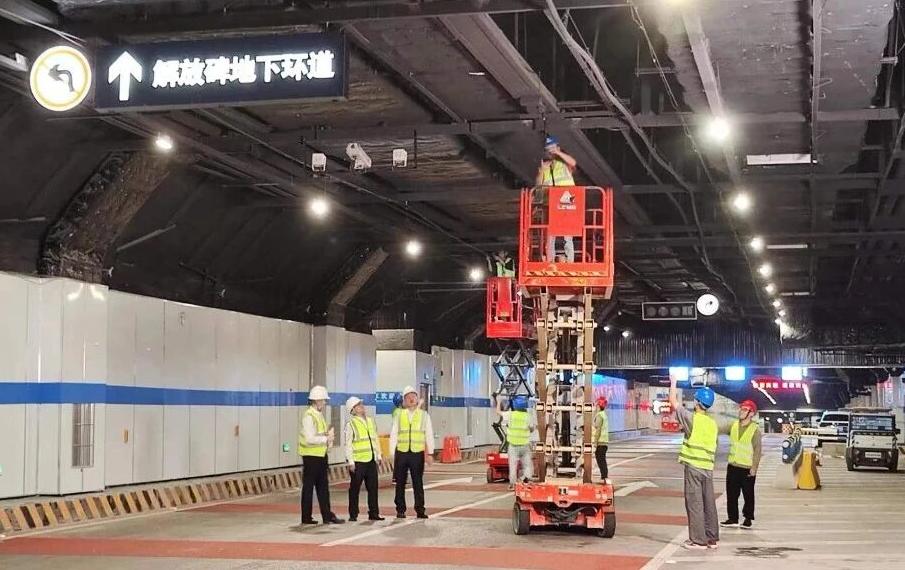
Soon, the navigation became accurate, and the traffic flow became smooth. According to the "People's Posts and Telecommunications News", after the project was completed, the daily traffic volume of the tunnel in the Jiefangbei underground ring road increased by more than six times, from 2,000 vehicles to 12,000 vehicles.
It may be something new to some people that Beidou can improve the efficiency of urban operation. After all, many people's impression of it still remains at the time when all traditional communication means failed during the Wenchuan earthquake, but Beidou sent out the first message about the disaster area without interference.
But for those in charge of urban development, Beidou is increasingly regarded as an important foundation for the orderly operation of the city. Therefore, many cities have specially set up special teams to promote the application of Beidou in multiple fields such as cultural tourism, urban management, and environmental protection.
Among them, Dali in Yunnan can be said to have "integrated" Beidou into the city's fabric.
In scenic spots such as Cangshan, Erhai Lake, Chongsheng Temple, and Dali Ancient City, the "Beidou Companion" conducts scenic spot guidance and vehicle and boat dispatching based on traffic data. In remote areas, the "Cangshan Management Platform" based on Beidou technology monitors the safety of the power grid at all times to prevent forest fires and poaching. In the city, relevant departments have piloted the deployment of 191 sets of Beidou monitoring and sensing devices at key nodes of gas pipelines and main water supply and drainage pipes.
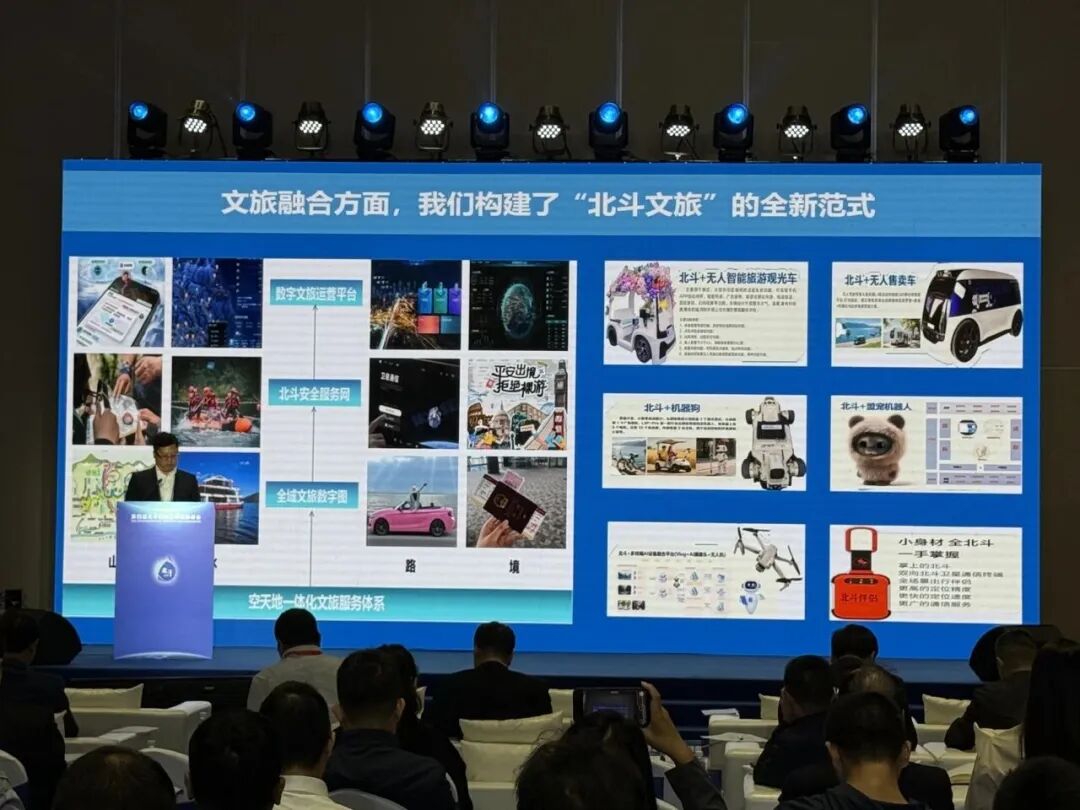
Even outside Chinese cities, Beidou is still everywhere. Currently, Beidou has covered more than 200 countries and regions around the world, and more than 140 of them are enjoying the relevant services and products provided by the Beidou system.
With such a wide application of Beidou, it's no wonder that Wang Yanyan said proudly, "Beidou has, like water and electricity, deeply integrated into the 'capillaries' of economic and social development."
As the secretary - general of the China Satellite Navigation and Positioning Association and the director of the Beidou Large - Scale Application Committee of the association, she observes Beidou very carefully. From the subtle changes in the "capillaries", she found that "the penetration of Beidou into industries is also deepening continuously", and "the high - level attention and active promotion of Beidou applications by many large central state - owned enterprises" have contributed a lot.
A large number of central state - owned enterprises, including the State Grid, Sinopec, and PetroChina, have established Beidou centers. They realize that Beidou is very helpful for their business. For example, the State Grid has deeply applied Beidou to the autonomous inspection of power - transmission drones, with tens of thousands of flights being called up in total, and the operation efficiency has been greatly improved.
However, what is even more anticipated is Sinopec's ingenious use of Beidou. It has sent Beidou to relatively harsh environments such as the Junggar Basin and the Tarim Basin for oil exploration.
Connect the path of domestic production with the bridge of business
One day before the launch of China's first geostationary satellite in 1983, Academician Chen Fangyun, the founder of the national "863" Program, put forward a suggestion to Liu Zhikui of the general - designer's office of the geostationary satellite:
Consider giving full play to the role of the geostationary satellite to serve national defense and the national economy.
Beidou was born to serve the national economy. To some extent, the application of Beidou in various industries today is just a wonderful echo of Academician Chen's suggestion more than 40 years ago.
But delving into the details of history, the wheels of progress never simply roll towards the end. For Academician Chen's original intention to become a reality today, it couldn't have been achieved without the efforts of generations, and the role of the market cannot be ignored.
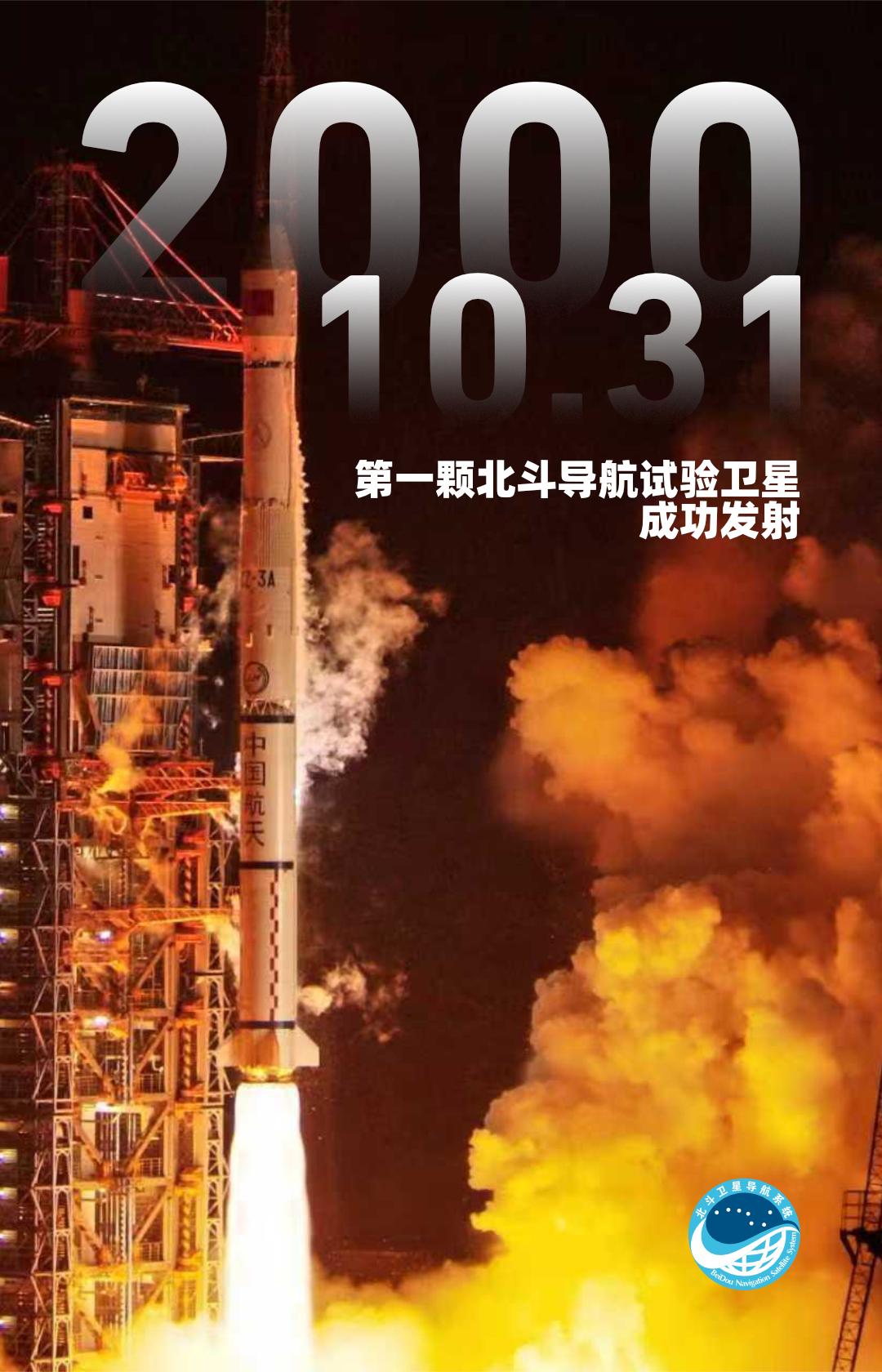
On the night of October 31, 2000, when the first satellite of Beidou - 1 was successfully launched, Zhou Ruxin couldn't sleep all night, constantly recalling what he saw when visiting Qualcomm in the United States in 1997:
It was difficult for dozens of people in China to monitor and track more than 600 trucks. With the assistance of the "double - star positioning technology", Qualcomm could achieve the tracking with only two or three people, and even more meticulously, knowing not only the location but also the fuel level and temperature.
After getting up, Zhou Ruxin and his friends pooled 600,000 yuan to register Beidou Navigation Satellite System Co., Ltd. From the name, it can be seen that he hoped to apply Beidou to the general public.
Zhou Ruxin was prepared for possible resistance, as in the past, only state - owned units participated in Beidou projects. Unexpectedly, although the process was long, it was not too difficult.
The supervisor quite approved of his idea, believing that it was in line with the original intention of "benefiting the public with satellite navigation", and helped him get a chance to talk to the superior. On the phone, Zhou Ruxin presented his blueprint for Beidou to serve the public. Then, the superior leader gave him a chance to make a more comprehensive report to the expert team.
Trust accumulated over time. In December 2003, the Beidou system was officially launched. In 2004, when the time was ripe, the relevant department readily approved the Beidou system to open its services to the public. Beidou Navigation Satellite System Co., Ltd. then obtained the first license for Beidou application services in the country.
Zhou Ruxin's experience was later called "opening the first door to Beidou's public services". From a business perspective, it actually built a bridge of trust between the Beidou team and market forces. It is also this bridge of trust that connects the path of domestic production of Beidou components.
In order to develop better components than imported ones, the Beidou team often joins hands with enterprises to tackle key problems. Although it seems like a good thing, enterprises, especially those with limited funds, often face financial pressure due to the huge investment in pre - research and infrastructure transformation, resulting in a deficit.
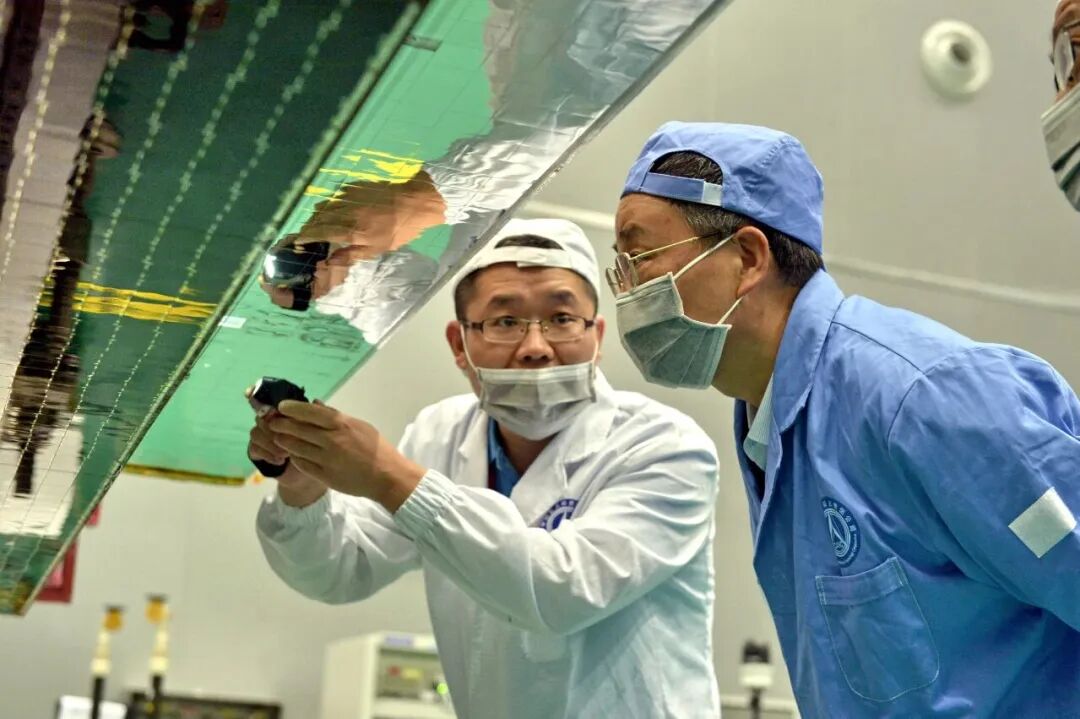
Under heavy pressure, the trust accumulated in the past played a role. On the one hand, Beidou is a national heavy - weight project, and enterprises participating in it have a sense of mission. On the other hand, Beidou's active attitude towards application has also made them believe that enterprises with greatly improved technical strength and product quality after being polished by Beidou will surely start a rapid development like a snow - ball effect.
For example, the Beijing Institute of Microelectronics Technology, which undertook the chip research, advanced a huge amount of funds in the early stage and has now reaped rich rewards. Supported by Beidou products, its annual gross production value soared from 20 million yuan to more than 500 million yuan.
In contrast, foreign manufacturers have seen their status decline sharply as the degree of domestic production increases. The days when they could raise prices at will with key components in hand are gone. Almost every one of them has staged a dramatic story from "unwilling to sell" to "begging to be bought".
The goal of exceeding one trillion yuan is a rational prediction
In the autumn of 2012, the final satellite of the Beidou - 2 constellation was successfully launched. Several main leaders of the Beidou team walked out of the launch command hall and walked along the cement road on the hillside to the hotel where they were staying.
Along the way, they didn't seem to relax at all. The central topic of their discussion was still the construction of the Beidou project. Only this time, the discussion shifted from the successfully - networked Beidou - 2 to the yet - to - start Beidou - 3.
Fourteen years have passed, and the Beidou - 3 they envisioned over and over again has been in operation for more than five years. The far - reaching layout laid back then is fully reflected in the draft outline of the "14th Five - Year Plan" recently released -
In this new blueprint that determines the direction of China's industry in the next five years, Beidou is almost everywhere.
Whether it is the aerospace and low - altitude economy that is required to "accelerate development", the sixth - generation mobile communication that is designated as a "new growth point", or the satellite Internet and the national integrated computing power network that are required to "build national - level infrastructure", Beidou's shadow is hidden behind them.
Take the low - altitude economy as an example.
At present, the specific application of Beidou in the low - altitude field is mainly embedded in urban management links such as fire prevention and disaster relief, and transportation. In the long run, the orderly operation of low - altitude aircraft and other equipment highly depends on the quality and speed of the three - dimensional spatial coordinates provided by Beidou. In other words, whether in the short or long term, cities need to carry out large - scale information - based infrastructure construction to integrate Beidou more deeply into urban governance.
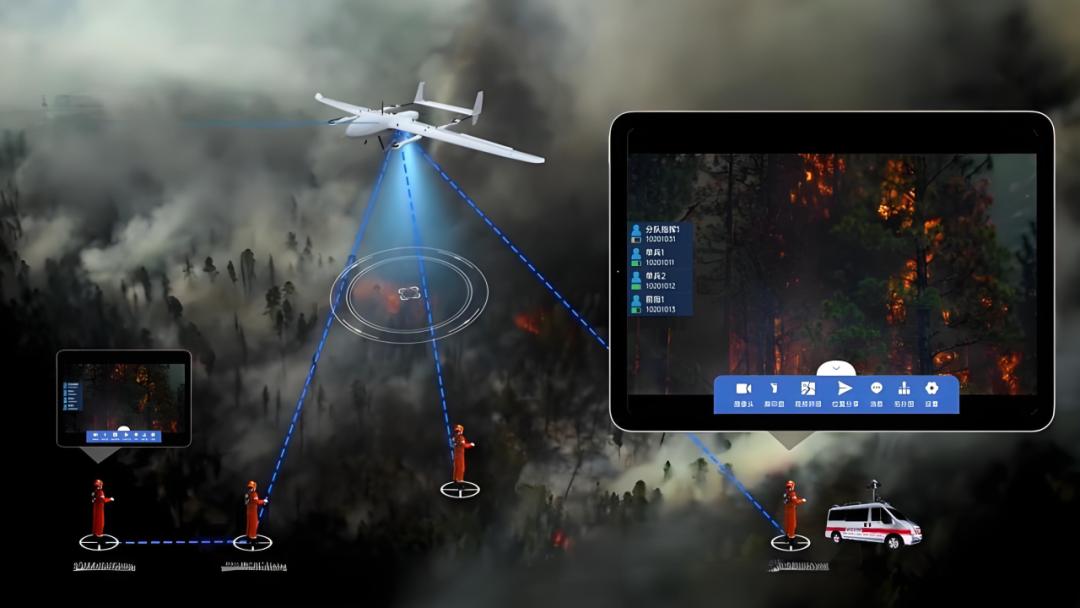
Aerospace almost every link cannot do without Beidou.
Before the launch, the time reference consistency of the launch site measurement and control system, rocket equipment, ground measurement and control stations and other links