Can the next "Didi" emerge in the robot leasing industry?
During this year's Spring Festival Gala, robots from four companies, Unitree Robotics, Magic Atom, Galaxy Universal, and Songyan Power, all made an appearance. They evolved from last year's "Yangge Bots" to a "Steel Legion," stunning audiences nationwide with their diverse skills.
In front of the TV, Lei Yonglin, a rental merchant from Hunan, had his phone ringing off the hook. Many customers specifically asked for the "same models as those in the Spring Festival Gala." All his robot rental slots were booked up before the Lantern Festival.
However, the "rental boom" brought about by the Spring Festival Gala gradually faded as the holiday passed. Mr. Li, a rental merchant in Beijing, has been worried about his six idle robots recently. According to Hongxing News, he only rented out his robots for three days during this year's Spring Festival, while at the same time last year, his rental slots were booked up for half a month, and the daily rental price soared up to 20,000 yuan at its peak.
This can't help but make people wonder why the robot rental frenzy quickly hit rock bottom after the holiday, going from "hard to get a single unit" to "being sold off for a thousand yuan."
Why is robot rental so popular?
On a certain day in the first lunar month at the Wukesong Wanda Plaza in Beijing, a football game was in full swing. Both adults and children crowded around the large stadium, and the mall's footfall increased by nearly 30% compared to normal... What made this game special was that the "players" on the field were not real people but more than a dozen quadruped robot dogs.
Meanwhile, in a Northeast-style restaurant, two robots were performing the Yangge dance in traditional cotton-padded jackets. The restaurant owner said that these two robots were rented from a platform at a daily cost of 1,000 yuan.
It was the "coming-of-age" effect brought about by the Spring Festival Gala that turned robots into a popular attraction that everyone wanted to experience.
The data from robot rental platforms is the most direct evidence of this wave of popularity.
During this year's Spring Festival, data from Qingtianzu, a platform under ZHIYUAN, showed that the number of orders from the first to the seventh day of the lunar new year increased by nearly 70% compared to the previous period. Among them, orders related to festival scenarios such as New Year greetings, temple fair parades, and mall activities accounted for more than 54%, with a month-on-month increase of up to 76%. More notably, about 30% of the users during the Spring Festival were first-time renters, which means that one out of every three orders was placed by a "novice user" who had never rented a robot before.
The self-operated robot rental business on JD.com also saw a significant increase. The transaction volume in January 2026 increased by more than 100% compared to the previous month, and the rental slots for popular models were booked up until mid-March.
The Spring Festival Gala undoubtedly became the turning point from "just for a novelty" to "renting for fun."
Secondly, the significant drop in rental prices has transformed robot rental from a "luxury" into an accessible "fast-moving consumer good."
After last year's Spring Festival, a reporter from Lanjing News found that the daily rental price of a Unitree G1 ranged from 8,000 to 15,000 yuan, and customers had to wait in line for available slots. However, this year, the price system has been almost completely restructured.
In JD.com's self-operated flagship store, the daily rental price of mainstream robot dogs has dropped to as low as 78 yuan, and the rental price of some humanoid robots with on-site engineer services has also fallen to the range of 1,396 to 1,796 yuan.
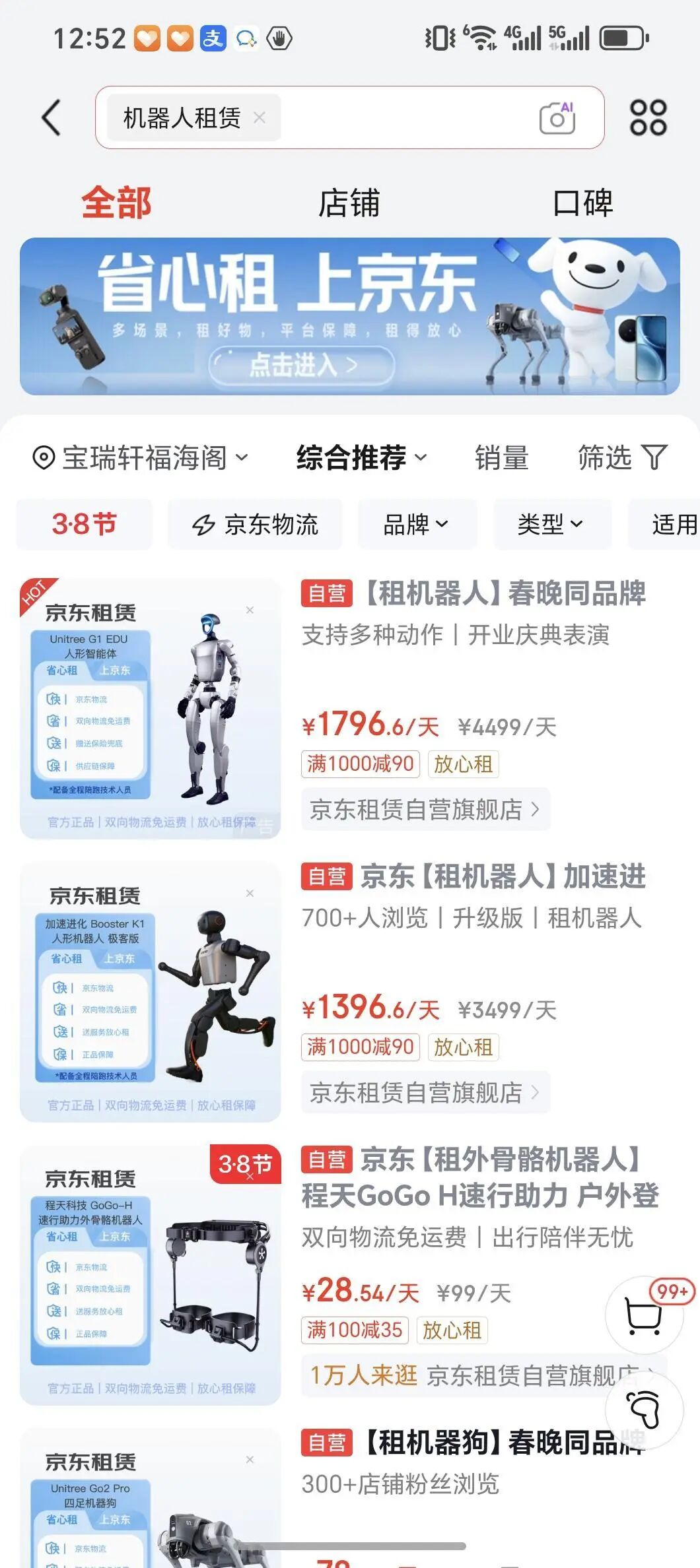
When the price threshold for renting a robot is broken, the rental market naturally opens its doors to ordinary people.
Finally, the "disruptive competition" from platforms and the aggressive entry of capital are pushing the fragmented robot rental business onto a multi-billion-yuan track.
The end of 2025 was a crucial turning point.
In December last year, ZHIYUAN Robotics took the lead in jointly launching the "Qingtianzu" platform, adopting a "shared rental + platform-based scheduling" model. It integrated more than 1,000 devices to improve the product matrix and reached 50 core cities across the country. In the following month, "Wanji Yizu" was launched with great fanfare, and JD.com also increased its investment in self-operated rental services. More than 90% of domestic embodied intelligence brands have settled on JD.com.

After multiple platforms entered the market one after another, some people in the industry believe that the "Didi model" in the robot field is gradually taking shape.
Capital is also highly sensitive. Qingtianzu completed its seed-round financing in January 2026, led by Hillhouse Capital. It exceeded 200,000 users within three weeks of its launch, and more than 16,000 people applied to become city partners during the Spring Festival.
Jiang Qingsong, a partner at ZHIYUAN Robotics, predicted that the scale of the robot rental market in 2026 is expected to soar from 1 billion yuan last year to at least 10 billion yuan. This figure not only reflects the eagerness of capital but also the collective bet of the whole society on the "next big thing."
It can be seen that the boom in robot rental is not accidental but the result of the combined effects of "the explosion of a top IP, the collapse of the price threshold, and the promotion of platforms and capital."
However, in the short term, the current market shows a strong "pulse-like" characteristic. The demand based on novelty and the attention economy may not be very stable. What the market really needs is not robots that only serve as "atmosphere boosters" but those that can be real "productive forces" in daily life.
The "roller coaster" of festival economy
Just after the Lantern Festival, the robot rental information on second-hand trading platforms has become rather delicate.
The most obvious thing is the sharp contrast between the data and the reality.
According to data from the Qingtianzu platform, as of February 12, the number of orders covering the entire Spring Festival holiday had exceeded 1,000. It is estimated that the total number of orders for the whole period will exceed 5,000, and the platform's overall gross merchandise volume (GMV) increased by about 80% compared to the previous period. The robot rental market has witnessed explosive growth.
However, in March, as the demand for year-end parties and temple fairs disappeared, the daily rental price of some performance robots dropped from a peak of 10,000 yuan to about 900 yuan. Even on second-hand trading platforms, some rental merchants are offering the "same model as the Unitree G1 in the Spring Festival Gala, capable of interactive handshakes and dance performances" at a price of only 499 yuan per day, which is almost a fraction of the price at the same time last year.
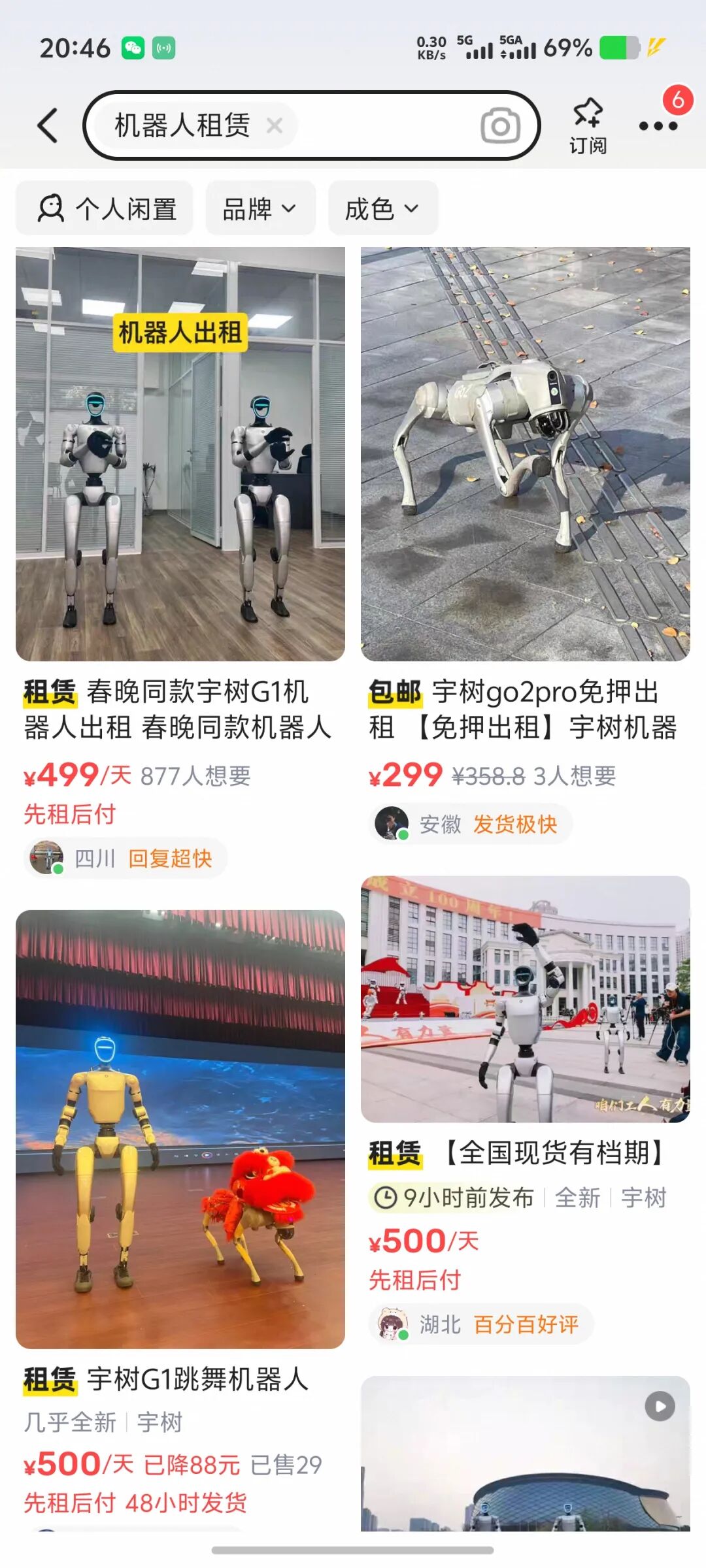
One of the reasons for this vicious situation is the mismatch between supply and demand.
A large number of rental merchants have emerged on Xianyu and Xiaohongshu, including both professional companies and individuals who buy robots and then rent them out. According to CCTV Financial News, more than 1,500 new robot rental companies were established nationwide in 2025, a year-on-year increase of 48.1%. The explosion of supply has come too fast.
When the market demand has not kept up with the rapid growth of the industry, large rental platforms have started to disrupt the market in order to compete for scarce user resources. For example, Qingtianzu launched a "1-yuan flash rental" activity on New Year's Day this year, using the scale effect to directly crush small and medium-sized merchants.

In addition, the low-price strategy of platforms has further intensified the contradiction between supply and demand. Take the ZHIYUAN humanoid robot Lingxi X2 Youth Edition as an example. The market daily rental price is about 5,000 yuan, but on Qingtianzu, the daily rental price is only 3,599 yuan, including the engineer's labor cost and travel expenses.
Guo Tao, an angel investor and a senior artificial intelligence expert, said bluntly that the current sharp drop in robot rental prices is a typical phenomenon of supply-demand mismatch. After the holiday, the demand for various marketing and performance activities has decreased significantly, while the supply that flooded the market before the holiday is still at a high level, so the prices naturally dropped.
What is even more fatal is that the homogenization of performances is accelerating audience fatigue, which naturally drags down the robot rental business.
According to Haixia Daobao, a citizen named Xiao Zeng in Xiamen said that he saw the same robot performance at the same mall during last year's National Day and this year's Spring Festival. Except for the change in the color of the scarf around the robot's neck, there was almost no difference. "I was still very curious when I saw the robot waving its hand last year, but now I don't even bother to take out my phone to record it."
Similarly, some rental merchants in the southwest of Fujian also told Haixia Daobao: "The robots on the market nowadays basically just dance, greet guests, and have simple interactions. They look similar, and their shows are also similar. When customers make a choice, they basically only consider the price and the availability of rental slots. It's very difficult to reflect the technical differences and brand advantages."
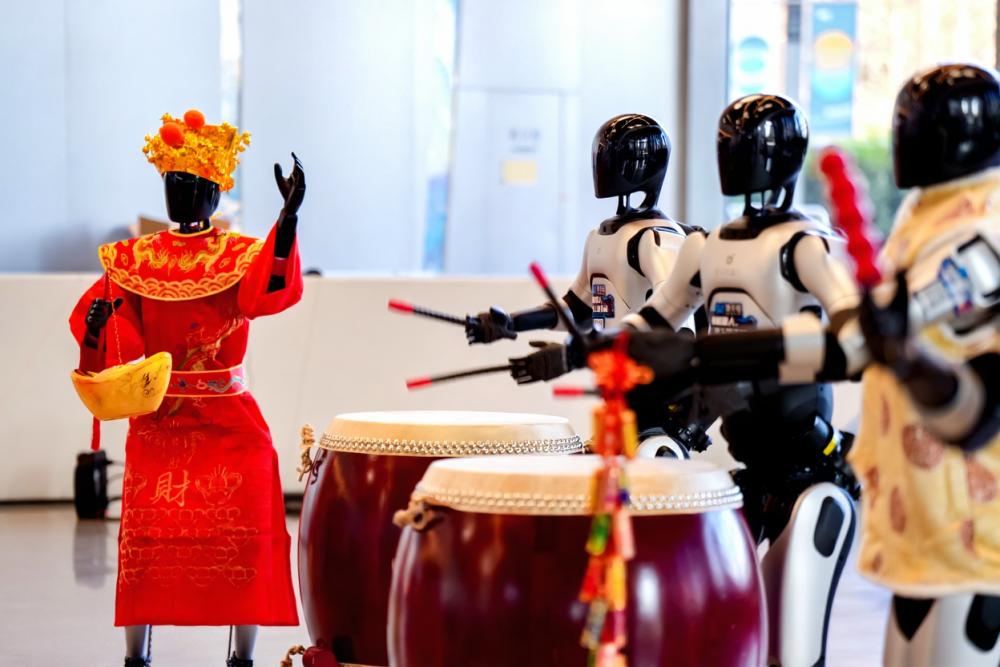
In this regard, the Expert Committee on Information and Communication Economics of the Ministry of Industry and Information Technology has also made the following judgment: The current functions of humanoid robots are mainly for performance. Even in the patrol scenario, it is mainly for show. Performance is a very narrow application scenario with limited growth potential.
When the tide of festival economy recedes, this rental business based on supply-demand mismatch and the attention economy is destined to be trapped in a narrow scenario and make no progress.
How to break out of the "pulse-like" cycle?
The current robot rental industry is undoubtedly at a crossroads.
On the one hand, there is a price war caused by supply-demand mismatch and single application scenarios. On the other hand, there is an imagination space of a multi-billion-yuan market. When the bonus of novelty reaches its peak, for the robot rental business to turn from "traffic" into "loyal customers," it must evolve from a "performance prop" to a "productive tool."
Among them, expanding the application scenarios of rigid demand is the fundamental way to break out of the pulse-like cycle.
Lei Jun, a deputy to the National People's Congress, said during the Two Sessions that efforts should be made to transform humanoid robots from "apprentices" to "full-time workers." By 2027, the average trouble-free working time of robots in specific industrial scenarios should exceed 10,000 hours, and the task success rate should exceed 99%. Their application in intelligent manufacturing should be accelerated.
Currently, some robots have achieved a commercial closed-loop. For example, a humanoid robot under Yuejiang Robotics worked continuously for 14 hours without human assistance and sold 1,000 cups of popcorn independently, verifying a commercial closed-loop with a daily revenue of over 20,000 yuan per unit. In Haicang District, Xiamen, a complete ecosystem with 46 robot companies and an industrial scale of about 29 billion yuan has been formed, focusing on people's livelihood needs such as elderly care and medical surgery.
Only when peers compete not on who has a more natural-dancing robot but on who has a more capable working robot can it force robot companies to shift their R & D focus from flashy performances to solving real problems in production and daily life.
Moreover, a more complete risk guarantee mechanism needs to be established to solve the bottleneck of after-sales service in the rental industry.
According to Lanjing News, the current humanoid robots in the rental market generally come with an 18-month warranty period. This means that the equipment purchased in the first half of 2025 will gradually expire within six months. After the warranty period, the maintenance cost of core components is very high, starting from 3,000 to 4,000 yuan, which is borne entirely by the rental merchants.
Moreover, consumers also face the dilemma of having nowhere to turn for after-sales service after renting a robot. According to People's Daily Online, Xiaoting, a yoga studio owner in Shanghai, paid a 10,000-yuan deposit to rent an intelligent yoga robot. However, after the equipment was put into use, it frequently encountered problems such as system login failures, freezes, and network connection errors. Some members even got an electric shock during the experience. When she decided to return the robot, the manufacturer deducted the maintenance cost from the deposit on the grounds that "the equipment had cracks."
In response, insurance companies are accelerating their layout. For example, PICC Property and Casualty Insurance Co., Ltd. has cooperated with Qingtianzu to provide more than 200 million yuan of insurance for more than 2,000 robots, covering the loss of the robot itself and third-party liability. Ping An Property Insurance has issued the first national "insurance + financial leasing" policy for embodied robots, innovatively covering situations such as product design defects and hacker attacks. CPIC Property Insurance has launched the "Jizhibao" insurance, which supports daily, weekly, and monthly insurance purchases, precisely adapting to various business scenarios.
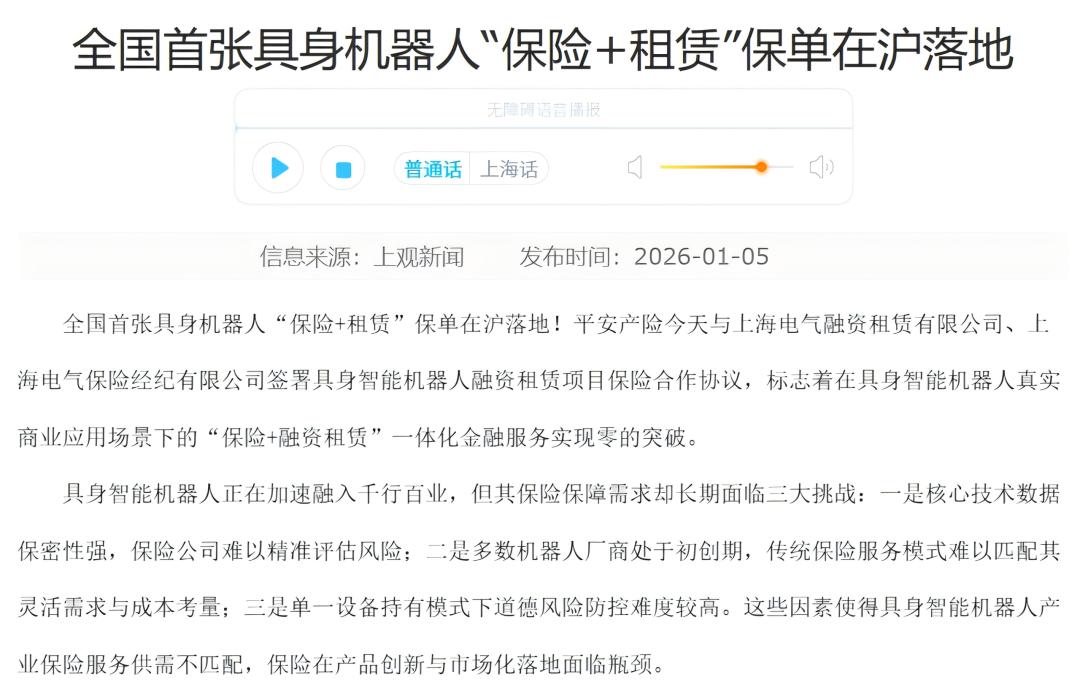
The participation of insurance is freeing rental merchants from the anxiety of "not daring to use, fearing damage, and having difficulty in compensation" and providing consumers with an additional layer of protection when problems occur.
In addition, to cross the watershed of the robot rental industry, the competition dimension must be upgraded from a "price war" to a "service war."
For example, Jiang