A Sober Reflection on the "Lobster Fever": The Survival Rules Amid the AI "Digital Labor" Craze
On March 7th during the Two Sessions, a statement by Gao Wen, an academician of the Chinese Academy of Engineering, revealed the collective anxiety of the public: "Everyone is extremely anxious now, fearing that they won't be able to 'raise lobsters'." The "lobsters" he mentioned refer to the open - source AI agent OpenClaw, which became extremely popular at the beginning of this year. In just a few weeks, its GitHub star count exceeded 240,000. A queue of a thousand people formed downstairs at Tencent's Shenzhen headquarters for the "free lobster installation". Longgang District was the first to introduce the "Ten Measures for the Lobster Industry" support policy, and a new business charging 500 yuan per order for "on - site lobster installation" emerged on second - hand platforms.
Meanwhile, NVIDIA announced the launch of the open - source agent platform NemoClaw for enterprises on the eve of GTC 2026. At an event on March 6th, Jensen Huang described the open - source software OpenClaw as "the most significant software release of the contemporary era". From the policy end to the industrial end, from individual users to multinational giants, a national frenzy around AI autonomous agents is unfolding. However, the Ministry of Industry and Information Technology has issued a warning about its security risks, and over 135,000 instances worldwide have been found exposed on the public network. When AI grows 'hands' capable of operating a computer from being a 'chat assistant', managers need not to chase the trend but a set of calm judgment frameworks. This article provides exactly such a "user manual for lobsters".
The Awakening of Digital Labor and the "OpenClaw Phenomenon"
In the first quarter of 2026, the field of artificial intelligence experienced a leap from a "toy" to a "tool" and then to a "digital employee", with the penetration speed significantly accelerating. The most prominent sign was the explosive popularization of the open - source agent framework OpenClaw. Its core ability lies in that AI can autonomously execute complex cross - platform operational tasks without human intervention - from retrieving information, organizing documents, to filling out forms, sending emails, and executing codes. Users only need to "issue tasks", and the rest of the steps are automatically completed by the system.
This technological feature quickly triggered dual responses from the government and the market. Some institutions began to encourage civil servants and corporate employees to try using such tools, regarding them as an important means to improve administrative efficiency. Meanwhile, domestic Internet giants such as Tencent, Alibaba, and Baidu have followed up, either launching supporting services or providing users with free installation support and one - click cloud deployment, attempting to seize the entry point in the new round of AI popularization process, further fueling this national AI frenzy.
Behind this series of frenzies, a core proposition is reflected: the large language model (LLM) is no longer confined to the chat dialog box but has grown "hands" (Claw) and started to take over the control of the operating system (OS) and multi - terminal communication channels. This AI with 7×24 - hour online, long - term memory, and active execution capabilities is profoundly reconstructing the digital workflow of humans. The high - level attention from the whole society stems from the strong expectation of the productivity explosion that this new type of "digital labor" may bring.
The Theoretical Evolution and Three - Dimensional Classification of AI Agents
From the perspective of the technological development context, this phenomenon is not an accidental mutation. Since ChatGPT sparked public enthusiasm in 2022, the exploration of the boundaries of AI capabilities has never stopped. Early models centered on "dialogue" and were good at generating text but lacked the ability to act; then, "tool - calling" agents represented by function calls emerged, which could operate external APIs under human supervision; and the new - generation products represented by OpenClaw have advanced this ability to the level of "computer automation operation", achieving a leap from "language generation" to "action execution". If the main value of the first two generations of AI lies in information processing, then the core value of this generation of AI points to automated execution. This is a critical node where quantitative change leads to qualitative change, worthy of serious attention from the whole society.
In the academic and engineering circles, according to the depth of interaction with the external world, autonomy, and task - closing ability of agents, the existing AI agents can be divided into the following three evolutionary stages (Table 1).

Table 1 Comparison of the Three - Stage Evolution of AI Agents
1. Conversational Agents
Features and Principles: This is the standard form at the early stage of the large - model explosion (such as the early ChatGPT or DeepSeek). Its core mechanism is "text input - probability prediction - text output". They exist in a closed sandbox and lack the ability to perceive the external world and operation interfaces.
Advantages: The deployment cost is extremely low, the interaction is natural (natural language is the code), and they show extremely high intelligence in cognitive computing fields such as text creation, logical reasoning, and knowledge Q&A.
Disadvantages: There are "information hallucinations" and "action paralysis". They can only give step - by - step suggestions and cannot actually execute operations for users in the physical or digital world. In the human - machine collaboration model, humans are still the ultimate executors of physical or digital actions (Human - as - the - executor), resulting in obvious breakpoints in the business process.
2. Tool - Augmented Agents
Features and Principles: This type introduces the ability to call external tools on the basis of conversational agents. Typical representatives include GPT - 4 that supports the plugin system, various workflow products based on MCP (Model Context Protocol), and the RPA (Robotic Process Automation) and AI integration solutions launched by domestic enterprises. Its working mode is that the model can call external interfaces such as search engines, databases, calendars, and emails during the reasoning process, convert information acquisition and operation instructions into specific API calls, or read data within a specific platform.
Advantages: They can obtain real - time information, expand the boundary of AI's action ability, and achieve a closed - loop for single - point tasks to a certain extent (such as "Check the weather today and write a poem appropriate to the occasion for me"). They perform stably in well - defined workflows, the error rate is relatively controllable, and the hallucination problem is greatly alleviated. At the same time, since each tool call has a clear interface record, auditing and backtracking are also relatively convenient.
Disadvantages: This type of agent still has a strong "passive trigger" attribute. They lack long - term memory and cross - application coordination ability, the workflow is fragmented, and they cannot achieve 7×24 - hour autonomous monitoring and long - range multi - step task planning.
3. All - Weather Autonomous Execution Agents (Represented by OpenClaw)
Features and Principles: This is the latest form that has caused a sensation, marking a new stage in the evolution of agents. OpenClaw not only integrates the cognitive ability of large models but more importantly, it connects the control at the operating system (OS) level and the interfaces of mainstream instant messaging (IM) tools. It has the ability to directly operate the computer graphical interface - by simulating mouse clicks, keyboard inputs, and screen - shot analysis, it can execute tasks on any software interface like a human operator, and it also supports API interface calls. This means that in principle, it can operate any software with a graphical interface, including legacy systems that do not have open APIs. In addition, it also has the abilities of local file processing, system command execution, long - term memory access, and automatic scheduling.
Advantages: The scope of application breaks through the interface limitations and has a high degree of universality. For repetitive and highly regular operation tasks (such as batch data entry, format standardization processing, and cross - system information synchronization), the efficiency improvement is extremely significant. It can also handle long - range and multi - step complex tasks, reducing the dependence on continuous human supervision. For example, when a user issues an instruction on WeChat, QClaw (a local AI assistant developed by Tencent based on OpenClaw) can automatically open the browser in the background to grab data, organize it into an Excel file, send it via email, and then feedback the result to the user on WeChat. It truly realizes "cross - platform closed - loop" and "all - weather online", and truly realizes "asynchronous digital work", breaking the limitations of human working hours.
Disadvantages: First, the security risks are magnified exponentially. When AI's "hallucinations" are translated into actual actions, the risks can be fatal. For example, accidentally deleting core files or incorrectly sending business secrets may occur. The "ClawHavoc" supply - chain poisoning incident that broke out in February 2026 (1,184 malicious skills were implanted, affecting over 130,000 devices) is a profound lesson. Second, the deployment and maintenance thresholds are relatively high. The complex local environment configuration and the stability maintenance under high concurrency currently make it highly dependent on cloud - hosting services such as Tencent Cloud Lightweight Servers to achieve physical isolation and continuous operation.
The Work Applicability Boundary of OpenClaw - like Autonomous Agents: A Judgment Framework Based on "Workflow and Methodology Clarity"
With the wide - spread popularity of OpenClaw, there has been an obvious polarization on social media: one side "deifies" it as a super artifact that can "replace half of a team", while the other side "disenchants" it, believing that it is "unsafe and of limited use".
However, both "deification" and "disenchantment" ignore a key issue. The real threshold for OpenClaw - like agents to exert value does not lie in the complex underlying technical configuration but in whether the users themselves have a clear workflow and a mature methodology. In other words, the applicability of agents in different work scenarios is strictly restricted by task characteristics.
To intuitively understand this restriction, we can evaluate whether a task is suitable for an autonomous agent from four dimensions: the logical predictability of the workflow (P, Predictability), the fault tolerance of failure (F, Fault Tolerance), the degree of digital closure of the environment (C, Digital Closure), and the execution frequency of the task (f). The relationship among the four can be simply expressed as: S = F × P × C × f. Among them, the frequency f is an amplifying factor - the more frequent and repetitive the work is, the more suitable it is to be executed by an agent.
Based on this framework and current industry practices, the following three applicability rules can be summarized (Figure 1).
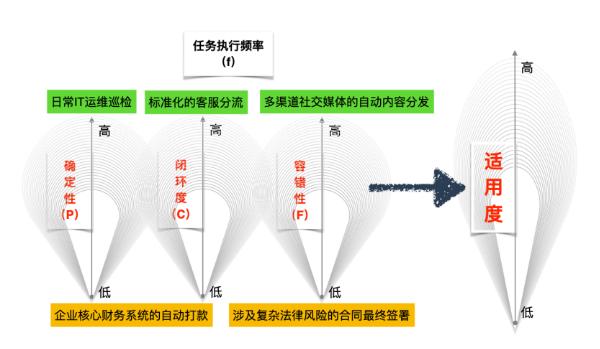
Figure 1 The Work Applicability Boundary of Autonomous Agents
Rule 1: High Predictability × Full Digital Closure = Extremely Suitable
When the logical predictability (P) and the degree of digital closure (C) of the workflow are both high and the risk of failure is controllable, OpenClaw can show disruptive efficiency.
Applicable Scenarios: Daily IT operation and maintenance inspections, standardized customer - service diversion, regular data scraping and report generation of competitors, and automatic content distribution on multi - channel social media.
Academic Explanation: This type of work is essentially "standardized digital labor". With its system - level operation ability, OpenClaw can completely replace human labor to complete the "copy - paste - analyze - send" cycle based on rules, completely eliminating the waiting time of human labor in the process.
Rule 2: High - Risk Sensitivity × Low Fault - Tolerance Space = Extremely Unsuitable
When the fault tolerance of failure (F) approaches zero, even if the task itself seems simple, it should never be completely entrusted to autonomous agents at the current stage.
Unsuitable Scenarios: Automatic payment in the enterprise's core financial system, direct medication execution in medical clinical auxiliary diagnosis, and final signing of contracts involving complex legal risks.
Academic Explanation: The reason is that the underlying mechanism of large language models determines that they cannot achieve 100% logical rigor, and a small probability of hallucination is inevitable. In the dialogue scenario, a hallucination is just an incorrect reply; but in the action scenario, a 1% hallucination may lead to a 100% disaster. Therefore, in such high - risk work, OpenClaw can only return to the role of a "suggestor", and a "Human - in - the - loop" mechanism must be introduced for final review.
Rule 3: Non - Standardized Interaction × Emotional Game = Limited Applicability
When the predictability (P) of the workflow is extremely low and a large amount of tacit knowledge and emotional judgment are required, OpenClaw - like agents are currently difficult to handle. Forcing the introduction of autonomous agents will not only fail to improve efficiency but also cause a "technological backlash".
Unsuitable Scenarios: In - depth business negotiations, psychological counseling interventions, and coordination work that requires combining vague feedback from the offline physical world.
A phenomenon worthy of vigilance is the "pseudo - demand" of low - frequency users: many individual users with extremely low monthly output are eager to build a so - called "personal AI platform". However, due to their lack of a mature work methodology (i.e., P approaches 0), the configuration process is extremely cumbersome, and the final output is meager. Instead, they fall into a negative feedback loop of "more configuration, less output, and double anxiety".
Academic Explanation: In essence, autonomous agents are "efficiency amplifiers" - they can only amplify existing mature processes and cannot create workflows out of thin air. The perception ability of OpenClaw is limited to digital screens and API interfaces. Facing the unstructured real - world environment containing micro - expressions, tone hints, and complex interpersonal games, its logical deduction ability often fails.
Self - Examination: Practice the Methods First, Don't Rush to Chase Tools
The greatest inspiration brought by the "OpenClaw phenomenon" is not only that AI has the ability to act autonomously but also that it acts like a mirror, reflecting the shortcomings of human work models.
Facing powerful autonomous agents, mature organizations and individuals should stop "deifying" or "fearing" and turn to rational "self - examination". Before introducing OpenClaw, one must first ask oneself a core question: "Do I really have repetitive work worth systematizing?"
If not, the top priority is to first refine the work methodology and clarify the business logic instead of blindly chasing new tools. If so, and it can be clearly disassembled into a logical closed - loop, then autonomous agents represented by OpenClaw can truly create exponential value for you. In the future era of human - machine collaboration, it belongs to those "digital workflow architects" who are both good at creation and defining processes.
Conclusion and Outlook
The "OpenClaw phenomenon" is not a short - term technological following but an important milestone in the transition of human society to the "Human - AI Co - native" era. From dialogue to tools and then to all - weather autonomous execution, AI agents are reshaping the definition of "labor". However, through the analysis of applicability rules, we can see that OpenClaw cannot directly "take over" all work. Its emergence actually forces humans from being "tedious digital executors" to higher - dimensional roles - designers (Designer) of digital workflows and final reviewers (Auditor) of risks.
At the same time, technological applicability is not only a functional issue but also an organizational issue. The introduction of autonomous operation agents requires organizations to have corresponding data governance specifications, authority management systems, and operation auditing mechanisms. If an organization's basic informatization construction is not yet perfect, rashly introducing high - level agents may not only fail to exert advantages but also cause new problems such as data security and process chaos. The difficulties encountered by some grass - roots government departments and small and medium - sized enterprises in the promotion are partly due to this.
More importantly, the "OpenClaw phenomenon" is not only an efficiency revolution at the technical level but also quietly touches the labor structure, power distribution, and institutional ecology of the whole society. From the perspective of the Sociotechnical Systems Theory, the popularization of autonomous agents is giving rise to structural tensions at least at three levels.
First, the impact of cross - industry occupational substitution. In the past, the occupational substitution caused by each round of technological revolution usually had clear industry boundaries: mechanization impacted blue - collar physical labor, and early automation