China's "SparkLink" Enters the Fray: Finally, Someone Is Rewriting the Rules of Bluetooth and Wi-Fi
Not long ago, Zhengjie Bureau concluded its trip to the 2026 Mobile World Congress (MWC). After returning to China, a subtle observation has always lingered in our minds.
On the booths of Chinese exhibitors, what is being displayed is no longer just smartphones, base station equipment, or consumer electronic products, but rather deeper - level technical standards and communication protocols.
Among them, a wireless short - range communication technology called "NearLink" is attracting the attention of global telecom operators, automobile manufacturers, and industrial enterprises with performance indicators that surpass traditional Bluetooth and Wi - Fi.
With a latency of 0.3 milliseconds and a reliability of 99.999%, not far away, the information on hundreds of electronic table cards is being refreshed synchronously, and the whole process is as natural as breathing.
This system does not use any wireless protocols dominated by Europe and the United States, but is completely based on China's independent research and development.
Today, we are already used to being surrounded by various wireless transmission technologies dominated by the West: Bluetooth, Wi - Fi, WLAN. They are all very useful now, but why does China still develop "NearLink"?
This trip to Barcelona has allowed us to see more technological battles in the shadows.
01 The "Spare Tire" Forced Out by a List
All legends have a painful starting point. The starting point of NearLink was May 15, 2019.
That was when the U.S. Department of Commerce first included Huawei in the "Entity List". What happened in the following days made many Chinese communication engineers lose sleep at night - the Bluetooth Special Interest Group, the Wi - Fi Alliance, the SD Association, the USB Implementers Forum... These international organizations that once boasted of "technology being borderless" successively made the same decision:
To suspend Huawei's membership.
Huawei's name disappeared from the official website, and its technology authorization was unilaterally cut off. However, in the following days, these alliances quietly restored Huawei's membership.
"Removed in the morning and restored in the evening". Although it seemingly alleviated the contradiction, it also made many Chinese communication technology manufacturers led by Huawei feel terrified:
The "passport" given by others can be taken back at any time. What if it happens again?
It was in such fear that a "spare tire" project that originally lay in the laboratory was pushed to the forefront and finally named NearLink, a rather romantic name.

Traditional wireless short - range technologies were born in the 1990s and were designed to connect computers, mobile phones, and headphones.
However, they are increasingly falling short today: autonomous driving requires microsecond - level response, factory robots need precise synchronization, and smart homes may connect hundreds of devices.
Therefore, Huawei launched a new project in the early days: to design a wireless short - range communication protocol that is inherently oriented towards the future, with extremely high speed, extremely low latency, a large number of connections, and extremely strong anti - interference ability.
Of course, it was just "technology reserve", a "Plan B" to guard against contingencies.
However, in the environment at that time, the world did not recognize China's communication standards, and the relevant technologies lacked commercialization opportunities. It was not until after the blockade that NearLink, the "benchwarmer", was pushed onto the stage.
There was no high - profile technology release and no long - term market education. In September 2020, under the leadership of the Ministry of Industry and Information Technology, the NearLink Alliance was established.
Huawei, ZTE, China Mobile, China Electronics Technology Group Corporation, China Academy of Information and Communications Technology, Lenovo, Changan, Gree, Midea... A long list that covers almost half of China's ICT and manufacturing industries.
The chairman of the alliance is Zhang Xiaogang, the former president of the International Organization for Standardization (ISO), and the director of the expert committee is Wu Hequan, an academician of the Chinese Academy of Engineering.
They reached a solemn consensus:
China should define the rules on its own.
02 "Revenge" with Extreme Performance
If NearLink were just a "copy" of Bluetooth or Wi - Fi, this story would be mediocre.
NearLink's ambition is to "surpass".
Traditional wireless technologies are like a road, and devices are like vehicles. They need to "compete" for access rights, which is prone to congestion and collisions.
The traditional upgrade path is to widen the channels. From Bluetooth 4.2 to 5.2, and from Wi - Fi 5 to Wi - Fi 7, their upgrade ideas are to widen the road and upgrade it to a highway.
Then the question arises: Will there be no traffic jams on a highway?
NearLink's design idea is to build an "intelligent overpass". It introduces polar code technology from 5G and a centralized scheduling architecture, with a "traffic control center" to uniformly direct the passage of each device, which fundamentally avoids conflicts.
And this architecture also brings almost "terrifying" performance indicators:
First, it has extremely low latency: The one - way air - interface latency of NearLink's SLB (Basic Access Technology) mode can be as low as 20 microseconds, which is 1/30 of that of traditional Bluetooth and 1/10 of that of Wi - Fi.
This means that from the moment a command is issued to the moment it is executed, the human brain can no longer perceive the delay.
Second, it has extremely high reliability: The transmission reliability is as high as 99.999%, and the anti - interference ability is 7dB stronger than traditional technologies. Even in an industrial workshop with roaring motors and a complex electromagnetic environment, the signal can be as stable as an optical fiber.
It also supports a massive number of concurrent signals: It can support a maximum of 4,096 devices to form a network simultaneously (SLB mode), which is more than 10 times the connection capacity of Bluetooth. This is sufficient to support the real - time collaboration of all sensors and robots in many smart factories today.
What is more practically significant is the power consumption: The energy consumption is only 60% of that of Bluetooth, and the receiving sensitivity is improved by about 7dB under the same power consumption.
What are the benefits? Your music - listening headphones can play for a few more hours, and your wireless gaming mouse can be charged once every few weeks.

These are not just theoretical parameters but have empirical evidence.
In the smart factory jointly built by Huawei and Haier, NearLink technology successfully achieved millisecond - level synchronous control of 100 devices, increasing the overall production line efficiency by 20%. In Huawei's own Songshan Lake Factory pilot project, the NearLink gateway also enabled more than 100 robotic arms to achieve wireless collaboration, replacing the traditional CAN bus. While reducing the wiring cost by 80%, it increased the production efficiency by 25%.
In the smart port scenario of Tianjin Port, NearLink technology is also used for the ultra - high - definition video wireless backhaul of port crane spreaders, replacing the wired cables that were prone to damage due to frequent mechanical movements and achieving high - speed and stable wireless video monitoring.
In the currently most - watched intelligent vehicle field, the "waiting" experience of traditional Bluetooth car keys (where the owner waits beside the car for a response) has been widely criticized. NearLink has improved the positioning accuracy of the owner's wireless key to the decimeter level through the "phase - difference ranging + time - of - flight" fusion algorithm, enabling seamless unlocking and locking.
Currently, many mainstream automobile manufacturers such as BYD and Changan Avita have planned to integrate NearLink technology into core functions such as in - vehicle systems and keyless entry.

On the consumer side, the replacement of domestic standards is more intuitive. The audio latency of TWS (True Wireless Stereo) headphones has been a long - standing problem for Bluetooth technology, and out - of - sync game audio and video are common.
The NearLink audio solution has directly reduced the full - link latency from 150 - 200 milliseconds of Bluetooth to less than 20 milliseconds, and the human ear can no longer perceive the delay.
China's standards are not just for strategic stockpiling but are strategic weapons. The narrative of domestic replacement for NearLink relies on hard power.
03 From 80 to 1,200
Of course, technological breakthrough is just the first step.
For a technology to be noticed is the key to commercialization and standard - setting.
Bluetooth and Wi - Fi have been in global use for more than two decades and have established a "Sun - Never - Sets Empire" with hundreds of billions of devices and penetration into every corner of the world.
As a newly emerged challenger, what can NearLink do to convince everyone to replace their devices and use its technology?
Joining forces to expand the market is the right approach, which is why the alliance was established.

To encourage more enterprises and communication providers to use NearLink, most of the devices equipped with NearLink now adopt a "dual - mode" design: NearLink chips support dual - mode communication of Bluetooth/NearLink. When upgrading the device, only the original communication module needs to be replaced, without changing the overall hardware architecture.
This "divide - and - conquer" strategy allows NearLink to be chosen by more enterprises.
One of the key turning points was the integration of HarmonyOS. In August 2023, at the Huawei Developer Conference, NearLink was officially integrated into the HarmonyOS ecosystem.
Subsequently, a batch of "NearLink - native" products emerged: In September 2023, the world's first NearLink terminal product, the Huawei M - Pencil (3rd generation), was unveiled; the Huawei FreeBuds Pro 3 became the first TWS headphones to support NearLink; NearLink mice, keyboards, gamepads and other peripherals were successively launched...

Driven by leading enterprises such as Huawei, an industrial chain covering chips, modules, terminals, testing, and certification has quietly taken shape in China.
By 2025, the number of members of the NearLink Alliance had exploded from the initial 80 to more than 1,200. There were more than 20 commercially available chips, over 200 listed products, and the cumulative chip shipments exceeded 100 million.
Now, this alliance of 1,200 members has set its sights on the global market.
04 From Chinese Standard to Global Standard
On May 29, 2025, the headquarters of the International Telecommunication Union (ITU) in Geneva, Switzerland, issued an announcement: China's original NearLink wireless short - range communication technology was officially included in the global wireless access technology standard system.
This means that NearLink has obtained an international official "ID card" and has the qualification basis for global promotion and application.
This also makes the Bluetooth and Wi - Fi alliances, which have long been dominated by European and American enterprises, feel terrified. After all, they have formed strong technological and patent barriers, and the entry of NearLink has put pressure on them as they fear losing their market share.
This pressure is increasing over time. Currently, the remote control standards of the National Radio and Television Administration and the China Video Industry Association have both adopted NearLink technology. The recognition of the national team is a strong endorsement.
In the international market, the alliance is also promoting NearLink's SLE/SLB to become an international IEEE standard, covering all scenarios of consumer electronics, industrial Internet, and Internet of Vehicles.
In August 2025, SparkLink Japan was officially established in Nagoya. In October of the same year, the NearLink Alliance held the NearLink European Forum in Spain, attracting more than 60 representatives of European enterprises, technical experts, and university scholars to participate. They exchanged views on the application potential of NearLink in European advantageous industries such as intelligent vehicles and industrial control.
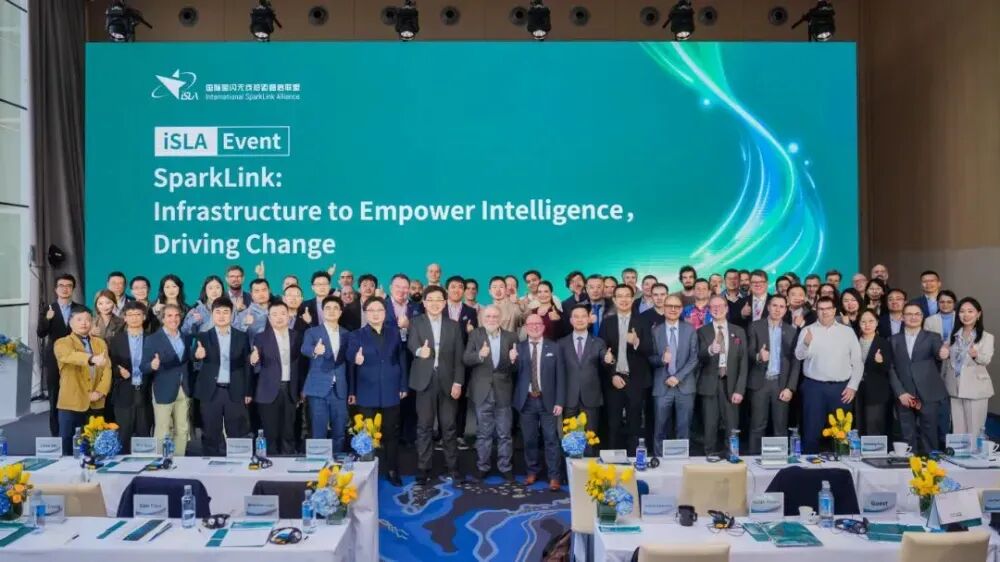
In March 2026, during the MWC in Barcelona, the NearLink Forum hosted by the International NearLink Alliance once again became the focus.
Under the chairmanship of Thomas Jäger, the senior vice - president of Dekra, guests from Yinji Technology, Runhe Software, the Strategic Committee of the European Intelligent Transport Systems Association, and the Spanish Intelligent Transport Systems Association gathered together to fully understand NearLink technology. Meanwhile, the NearLink European Partner Program was officially launched.

During the exhibition, Bosai Digital Technology released a new - generation NearLink wireless screen mirroring device that was completely independently developed, which can achieve seamless connection between multiple terminals and lossless transmission of ultra - high - definition images.
The efficient and smooth experience without any lag, screen freezing, or delay attracted partners, industry customers, and technical experts from different countries around the world to stop and communicate.

The wireless screen mirroring product of Bosai Digital Technology
It is worth noting that Jordi Borras, the CEO of the automotive safety system company ("Automotive Safety SL"), specifically stated that his company has completed a software interface integration demonstration based on NXP microcontrollers and NearLink chips, and called on European automobile manufacturers to open up cooperation and jointly explore scenarios for technology implementation...
The barriers of rules can be broken by better