The "Two Sessions" mentioned it, and multiple companies are about to go public. The brain-computer interface industry is on fire.
The brain-computer interface is "boiling"!
On March 5th, in the government work report released at the Fourth Session of the 14th National People's Congress, it was clearly stated that in 2026, China will cultivate and strengthen emerging industries and future industries, and specifically named the brain-computer interface as one of the future industries to be supported. This statement places the brain-computer interface at the forefront of the country's strategic emerging industries, and it is expected to receive more policy support and resource investment to promote its technological innovation and industrialization process.
Affected by this, the stocks of brain-computer interface concept in the Hong Kong stock market rose across the board, with the highest increase even exceeding 20%, repeating the grand occasion of the first A-share trading day at the beginning of this year. At that time, affected by Elon Musk's announcement that his company Neuralink will mass-produce brain-computer interface devices in 2026, domestic brain-computer interface concept stocks soared collectively.
Of course, concept stocks are just concept stocks. There is still no "real" brain-computer interface listed company globally. However, at the beginning of this year, two leading domestic brain-computer interface companies successively announced their plans to go public. With the strong support of current policies, the possibility of China getting the world's "first brain-computer interface stock" is rising sharply.
During the German Chancellor's visit, Hangzhou's "Six Little Dragons" - Strong Brain Technology rushes for IPO on the Hong Kong Stock Exchange
Strong Brain Technology was the first to spread IPO rumors. At the end of January, according to media reports, Strong Brain Technology submitted an IPO application to the Hong Kong Stock Exchange in a confidential form. Before that, this company, one of Hangzhou's "Six Little Dragons", had just completed a huge financing of 2 billion yuan, breaking the domestic financing record in the brain-computer interface field.
Even globally, this financing of Strong Brain Technology is quite remarkable. It is the second-largest financing in the brain-computer interface field after Neuralink.
Public information shows that since its establishment in 2015, Strong Brain Technology has completed six rounds of financing. It completed the angel round and Pre-A round of financing in 2016, and then completed the A round of financing in 2019, pushing the company's valuation to 400 million US dollars. Since 2025, the concept of brain-computer interface has become extremely popular, and Strong Brain Technology completed financing continuously in a short period of time, becoming one of the biggest beneficiaries of this wave of brain-computer interface fever in China.
On February 26th, during the visit of German Chancellor Merz to China and his stay in Hangzhou, Strong Brain Technology was also invited to attend as a representative enterprise in the brain-computer interface field, which was quite prestigious.
As a representative of non-invasive brain-computer interfaces in China and the first Chinese team selected into the Harvard Innovation Lab, the solution of Strong Brain Technology also represents the previous choice direction in China.
At that time, the maturity of brain-computer interface technology was limited, and there was no successful precedent of implanting invasive brain-computer interfaces like Neuralink. Generally, the acceptance of invasive brain-computer interfaces was limited. Non-invasive brain-computer interfaces can collect electroencephalogram signals through head-mounted devices or body surface sensors, avoiding the risk of craniotomy, so it was reasonable for it to become the first choice at that time.
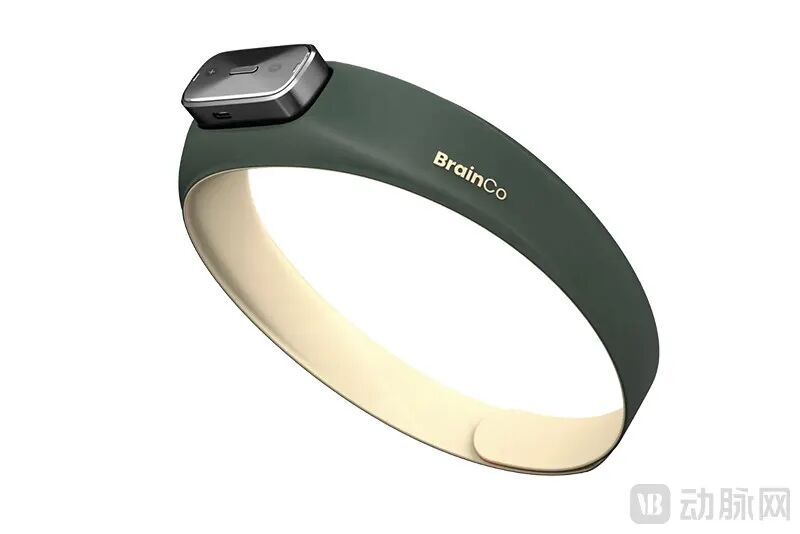
Strong Brain Technology's multi-functional sleep aid device (Picture from the official website of Strong Brain Technology)
In comparison, the technical threshold of non-invasive brain-computer interfaces is relatively low, and it has a strong consumer attribute. Currently, Strong Brain Technology's non-invasive brain-computer interfaces are widely used in multiple fields such as medical rehabilitation, health management, and education. However, its application in medicine mainly focuses on improving sleep, reducing stress, and attention training, with a relatively obvious consumer health attribute.
In addition, Strong Brain Technology has further expanded the application scenarios of brain-computer interfaces. Since its establishment, it has continuously developed intelligent bionic hands and intelligent lower limbs and has obtained FDA certification. Through years of accumulation, it has achieved technological breakthroughs in this field and successfully developed the world's first mass-produced intuitive control intelligent bionic hand last year.
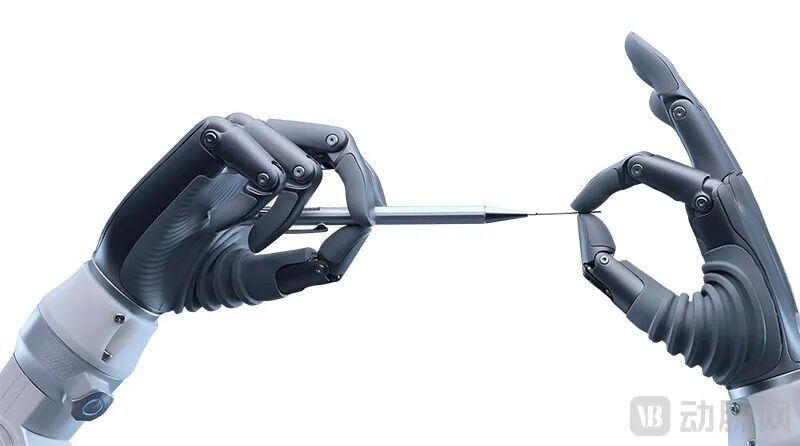
Strong Brain Technology's intelligent bionic hand (Picture from the official website of Strong Brain Technology)
In the promotional video, Strong Brain Technology's products can not only easily pick up and then crush an egg with great force but also instantly switch to a gentle mode to pick up the fragile eggshell. The whole process does not require manual intervention and is completely completed autonomously by the force control of the tactile bionic hand, showing that it has operational flexibility comparable to that of humans.
From the video, Strong Brain Technology's intelligent bionic hand can accurately capture the user's electromyographic and neural signals, realize the coordinated operation of five fingers, and help upper limb disabled people regain fine motor ability.
Strong Brain Technology hopes that its brain-computer interface can improve the conditions of 10 million patients suffering from brain diseases such as autism, ADHD, Alzheimer's disease, and insomnia. In the next 5 - 10 years, it aims to help 1 million limb - disabled people restore their daily lives by wearing neuro - controlled prostheses. It also hopes that ordinary people can directly interact with the world through brain - computer interface devices with their minds and experience the future of human - machine integration.
Currently, Strong Brain Technology's products have been widely launched and have achieved large - scale revenue. Considering that most brain - computer interface companies are still in the clinical stage, this undoubtedly adds more chips to its IPO.
Compared with invasive brain - computer interfaces, non - invasive brain - computer interfaces obviously have inherent deficiencies in receiving brain signals. Under the current technical conditions, the health functions it can achieve are relatively limited. In the recently released the first domestic "Expert Consensus on the Clinical Application of Non - Invasive Brain - Computer Interfaces in Neural Rehabilitation", only the application scenario of "brain - computer interface combined with functional electrical stimulation or rehabilitation robots for the treatment of moderate to severe upper limb motor dysfunction after stroke" has obvious benefits, and it is recommended to be carried out routinely. It is worth noting that this is exactly the field where Strong Brain Technology's intelligent bionic hand can play a role.
However, precisely because the application threshold is not high, it has broad application potential in the consumer field. If it can be combined with specific application scenarios (such as brain - computer interface + intelligent prosthetics), its value should not be underestimated. In addition, with the continuous development of technology, once non - invasive brain - computer interfaces break through the threshold in brain signal reception, the future is promising.
The first implantation of a brain - computer interface, Borui Kang's IPO on the Science and Technology Innovation Board showcases its "hard - tech" content
Following Strong Brain Technology, Borui Kang, a leading domestic company in invasive brain - computer interfaces, also submitted an IPO counseling record to the Shanghai Securities Regulatory Bureau at the beginning of February.
Different from non - invasive brain - computer interfaces, both semi - invasive and invasive brain - computer interfaces require invasive surgeries on the brain for implantation, which are extremely risky and require a high technical threshold. It is only in the past one or two years that these two types of brain - computer interfaces have achieved significant breakthroughs.
Borui Kang is one of the leading domestic companies in invasive brain - computer interfaces and was established as early as 2011. Its core founders are from the Tsinghua University Neural Engineering Laboratory, which ranks among the top in the world in the field of brain - computer interfaces.
According to public information, Borui Kang has strong R & D capabilities. It has obtained 17 technical patents and 9 software copyrights, and has undertaken or participated in the "Weak Information Collection Technology and Product Development in Brain - Computer Interfaces" project of the 12th Five - Year Plan for Science and Technology Support of the state and the "Key Technologies and Clinical Application Research on Neural Regulation and Intelligent Rehabilitation of Alzheimer's Disease" project of the 13th Five - Year Plan for Key R & D of the Ministry of Science and Technology.
However, what really made Borui Kang well - known was in 2023. In October of that year, its brain - computer interface product NEO completed the first implantation at Xuanwu Hospital of Capital Medical University. A patient who had been paralyzed in all four limbs for more than a decade was able to grab a water bottle with "intention" and drink water independently after the surgery. This is also considered the world's first wireless minimally invasive brain - computer interface implantation.
Different from Nueralink, Borui Kang's system belongs to a semi - invasive brain - computer interface. Its electrodes are placed on the dura mater between the skull and the cerebral cortex. This solution hopes to balance the performance and trauma of the brain - computer interface. Although the signal collection is not as good as that of fully invasive interfaces, it only requires minimally invasive surgery and does not damage brain cells. At the same time, the implant can also be powered wirelessly through an external device, achieving a balance between minimally invasive and long - term use.
In the first implantation at Xuanwu Hospital, the patient was discharged home 10 days after the surgery.
Subsequently, Borui Kang successively carried out feasibility tests at Beijing Tiantan Hospital, Shanghai Huashan Hospital, Jiangsu Provincial People's Hospital, etc., and achieved remarkable results. As of December 2025, 32 patients with cervical spinal cord injuries had completed the NEO implantation surgery in 11 hospitals across the country. According to the information disclosed at its clinical trial summary meeting, all patients successfully achieved home - based brain - controlled grasping assistance and rehabilitation training, achieving 100% compliance at the main clinical endpoints.
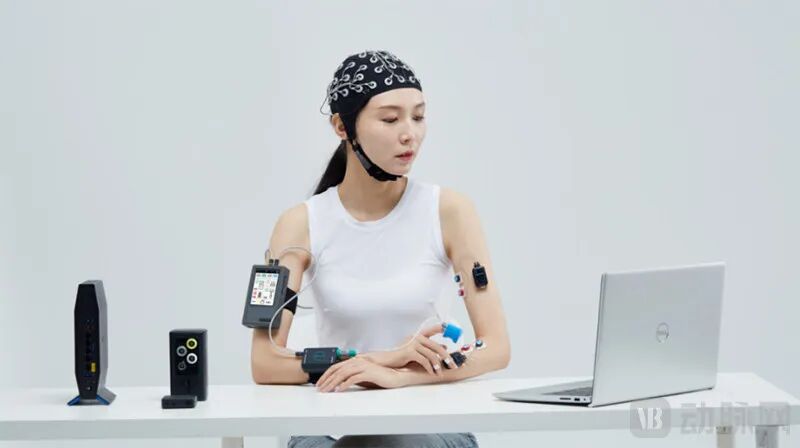
Borui Kang's independently developed NeuroHUB multi - modal research platform (Picture from the official website of Borui Kang)
In August 2024, Borui Kang's "implantable brain acquisition and stimulation system" entered the special review process for innovative medical devices of the National Medical Products Administration, becoming the first brain - computer interface product in China to enter this process. In addition, Borui Kang's transcranial electrical stimulator and electroencephalograph have also obtained medical device registration certificates, which are mainly used for neural regulation, rehabilitation treatment assistance, and brain function monitoring and evaluation.
The products can not only be widely used in scientific research fields such as neuroscience, psychology, human factors engineering, kinematics, and management but also in clinical medical fields such as clinical neurological disease diagnosis, treatment, and rehabilitation engineering. The R & D achievements and technical strength have been widely recognized by experts in the fields of domestic and international neural engineering and clinical medicine.
As a star enterprise in invasive brain - computer interfaces in China, Borui Kang has always been favored by the capital market. In December 2015, Borui Kang completed an angel round of financing of 12 million yuan, being one of the early domestic brain - computer interface companies to complete financing. In March 2018, it completed a Pre - A round of financing of 30 million yuan. After that, Borui Kang successively completed multiple rounds of financing, and well - known institutions such as Sequoia Capital China, Songhe Capital, Huakong Fund, Pudong Venture Capital, and Baidu Ventures have joined.
In 2025, Borui Kang was rumored to have completed a D + round of financing, with a post - investment valuation reaching 3.5 - 4 billion yuan. After that, Borui Kang submitted an application for listing counseling, aiming at the Science and Technology Innovation Board.
Generally speaking, the Science and Technology Innovation Board requires enterprises to have core technologies with independent intellectual property rights, and the corresponding regulations that the technologies are at the international or domestic leading level make it the first choice for "hard - tech" enterprises to go public at present. Borui Kang's choice to strive for listing on the Science and Technology Innovation Board may, to a certain extent, also represent its confidence in its technical strength.
The "Two Sessions" set the tone for one of the future industries, and a record - breaking investment boom is coming
The rush for IPOs by Strong Brain Technology and Borui Kang has added another fire to the already hot domestic brain - computer interface market.
Public information shows that in the past one or two years, the primary market in the brain - computer interface field has become increasingly popular. In 2025, there were a total of 26 financing events in the brain - computer interface field, with a total financing amount of 1.778 billion yuan. Among them, there were more than 6 financing events with an amount exceeding 100 million yuan, and the financing amount record has been continuously refreshed. Compared with the 7 financing events and a financing scale of 230 million yuan in 2024, there has been a significant increase.
Since the beginning of this year, affected by various favorable factors, the enthusiasm in the primary market of the brain - computer interface has not diminished. According to incomplete statistics, in just over two months at the beginning of the year, 10 financing events have been completed in the domestic brain - computer interface field, and the financing amounts are generally large. According to this trend, the annual financing scale is expected to reach a new historical high.
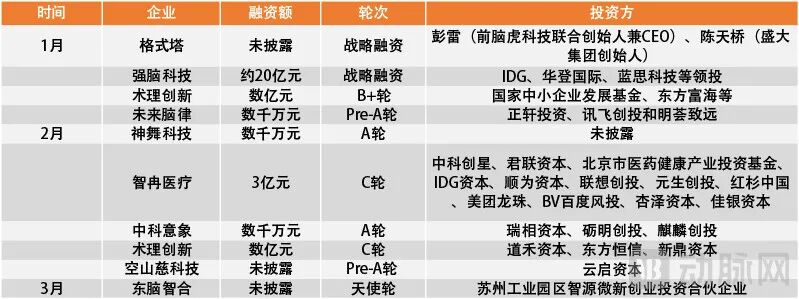
Incomplete statistics of domestic brain - computer interface financing events in 2026
In addition to the rapid progress in financing, the brain - computer interface has also received strong support from policies. On January 1, 2026, the "Terminology for Medical Devices Using Brain - Computer Interface Technology" officially came into effect. This standard, formulated in the second half of 2025, is China's first brain - computer interface medical device standard, which will lay the foundation for the high - quality development of the brain - computer interface medical device industry.
On this basis, the National Medical Products Administration has also issued an announcement, determining the formulation plans for two recommended medical device industry standards: "Reliability Verification Method for Invasive Devices of Medical Devices Using Brain - Computer Interface Technology" and "Paradigm Design and Application Specification for Medical Devices Using Brain - Computer Interface Technology: Motor Function Reconstruction".
On March 2nd, the Ministry of Science and Technology, the Financial Regulatory Administration, the Ministry of Industry and Information Technology, and the National Intellectual Property Administration jointly issued the 'Several Opinions on Accelerating the High - Quality Development of Science and Technology Insurance to Strongly Support High - Level Scientific and Technological Self - Reliance and Self - Improvement', guiding insurance funds to invest in the field of scientific and technological innovation, and clearly encouraging the development of exclusive science and technology insurance products in fields such as brain - computer interfaces and artificial intelligence, and establishing a special risk reserve system. This policy arrangement is interpreted by the industry as "the state pays for the capital's trial - and - error" - allowing investors to dare to bet on technologies that may fail but will change the world once successful.
Of course, what has attracted the most attention is that at the Fourth Session of the 14th National People's Congress recently, the brain - computer interface was written into the government work report again and was clearly listed as one of the future industries to be cultivated and developed for the first time, ranking alongside quantum technology and embodied intelligence. This provides the highest - level policy endorsement for the entire industry, indicating that the state will increase its efforts in scientific and technological research and industrial support in this field.
These supports are crucial for promoting the development of the domestic brain - computer interface industry and