MWC2026 is over. Here are three things we've observed happening in the industry.
The annual Mobile World Congress (MWC) has always been regarded as the "barometer" of the global communications industry.
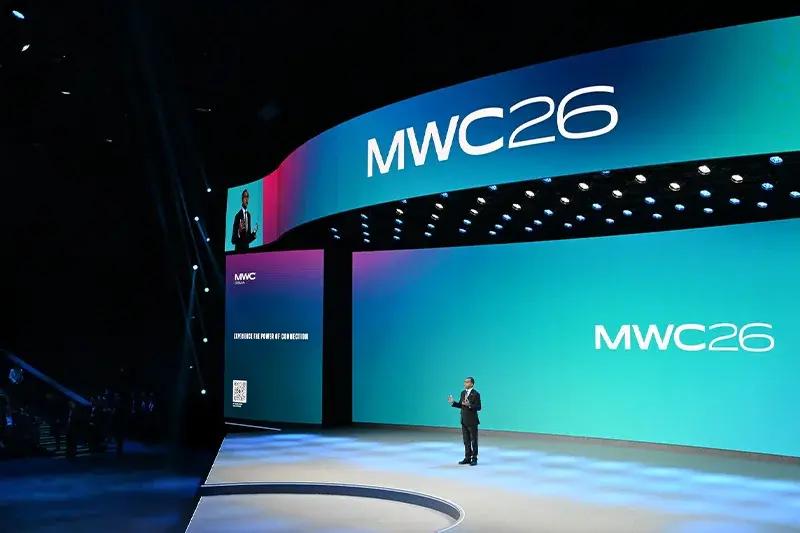
The theme of this year's conference is set as "The IQ Era", which means "A New Era of Intelligent Connectivity". This theme runs through almost all exhibition areas - from network architecture and computing infrastructure to terminal devices and robot systems. AI has evolved from an "application - layer capability" to a new foundation for the communications industry.
In the exhibition hall, Huawei showcased the Atlas 950 SuperPoD Super - node Computing System, which made its overseas debut for the first time; telecom giants China Mobile, China Unicom, and China Telecom collectively demonstrated AI - driven autonomous driving networks; Qualcomm and MediaTek released a new generation of AI - native connectivity chips; and mobile phone manufacturers attempted to integrate AI Agents into terminal systems.
Meanwhile, more and more companies that were originally "not part of the communications industry" have begun to take center stage at the MWC.
Alibaba brought AI glasses based on Tongyi Qianwen Qwen, attempting to turn large - scale models directly into portable intelligent terminals; iFlytek demonstrated AI glasses for real - time captioning and voice translation; Lenovo launched the AI Workmate desktop assistant with a robotic arm; and Google focused on demonstrating the AI experience after the integration of Gemini and the Android ecosystem.
Even robot companies have started to appear at the communications exhibition. Chinese companies such as Unitree and Zhipu demonstrated humanoid robots that can complete task coordination through cloud - based large - scale models. They are more like "mobile AI terminals".
When communication devices, AI computing power, intelligent terminals, and robot systems appear on the same stage simultaneously, it can be seen that a fundamental transformation is taking place in the communications industry.
If the MWC in the past decade was a conference about "connectivity", then in Barcelona this year, the core question being discussed has become something else: What will the communication network look like when AI becomes a basic capability?
AI - Native: The "Operating System" Revolution in the Communications Industry
In the past, AI was more of an "add - on capability" in the communications industry. Telecom operators used AI for traffic prediction and machine learning to optimize network parameters, and device manufacturers also used algorithms to assist in operation and maintenance and scheduling. However, these applications basically remained in the peripheral systems of the network and did not change the architecture of the communication network itself.
The biggest change at MWC 2026 is that AI has begun to be incorporated into the underlying design of the network architecture.
At this year's conference, Huawei also released an AI - Native network framework for the communications industry and launched a new AI - based operation and maintenance system to achieve automatic scheduling and real - time optimization of network resources. Meanwhile, Huawei also proposed the concept of AI - Centric Network, hoping to unify the scheduling of computing power, network, and storage resources through AI, thereby promoting the evolution of telecom operator networks towards intelligent systems.
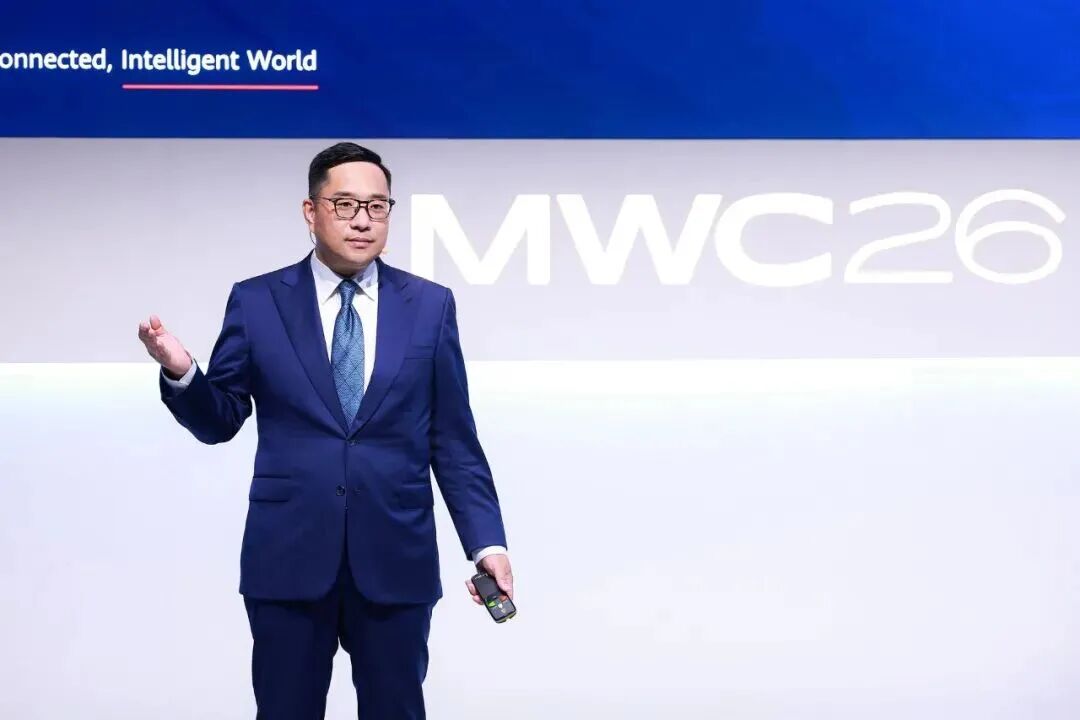
Compared with traditional communication networks, the biggest difference of AI - native networks is that they no longer rely on a large number of manual rules. Instead, they continuously learn network data through large - scale models to achieve automatic optimization.
Alongside AI - native networks, another frequently mentioned concept is Autonomous Driving Network.
In the traditional network operation and maintenance mode, once a network problem occurs, engineers need to locate the fault through the monitoring system and then conduct a step - by - step investigation. In the autonomous driving network architecture, AI can analyze the network status in real - time and automatically complete diagnosis and optimization. For example, when the network traffic in a certain area suddenly increases, the system can automatically adjust spectrum resources or base station loads to avoid network congestion.
This change means that the operating logic of communication networks is shifting from a rule - driven system to a learning - driven system.
In addition to the network layer, AI - nativization is also reflected in computing infrastructure. At this year's MWC, Huawei made its overseas debut of the Atlas 950 SuperPoD Super - node System, an AI data center solution. This system can connect up to 8192 Ascend NPUs through a high - speed interconnection architecture, forming a unified large - scale computing cluster to support the training and inference of large - scale models with trillions of parameters.
Compared with traditional AI servers, SuperPoD is more like a "super - node computing architecture". Through a high - speed optical interconnection network, a large number of computing nodes can work together like a giant computer, providing underlying computing power support for AI networks and large - scale model applications.
Looking at this system in the context of the overall technological trends in the communications industry, it points to a greater change: Communication networks, AI computing power, and data centers are gradually converging.
Meanwhile, AI - nativization is also changing the form of terminal devices. At MWC 2026, several mobile phone manufacturers demonstrated new AI - enabled terminal forms. Honor showcased a conceptual Robot Phone, exploring new forms of mobile phones through AI - based automatic tracking and scene recognition technology; Xiaomi further strengthened its "full - ecosystem strategy for people, cars, and homes" at the conference. The new generation of flagship mobile phones focused on upgrading AI imaging capabilities and promoted AI collaboration between mobile phones, cars, and smart home devices through HyperOS; vivo's new - generation flagship mobile phones focused on enhancing video shooting and AI algorithm capabilities.
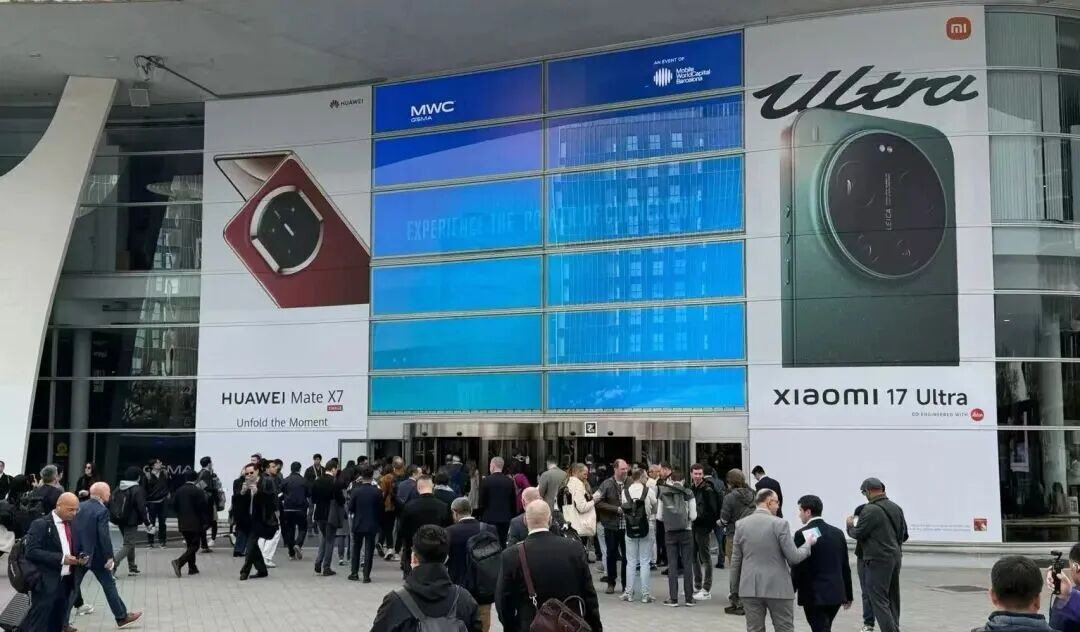
From the perspective of the demonstration direction, the AI competition among mobile phone manufacturers is no longer just about the improvement of single - point functions but is gradually evolving into a competition of systematic capabilities around the device ecosystem.
Another notable change is: Internet companies and AI platform providers are starting to enter the core stage of the communications conference in large numbers. If mobile phone manufacturers are trying to embed AI capabilities into terminal systems, then Internet companies are exploring new AI device entry points.
The most eye - catching one comes from Alibaba. Alibaba's Tongyi Qianwen Qwen demonstrated AI glasses for the consumer market for the first time at the MWC. This device supports voice interaction, real - time translation, image recognition, and AI task execution. It is considered an important attempt by Alibaba in the field of AI terminals. It will be launched in the Chinese market first and is planned to be gradually introduced to the global market.
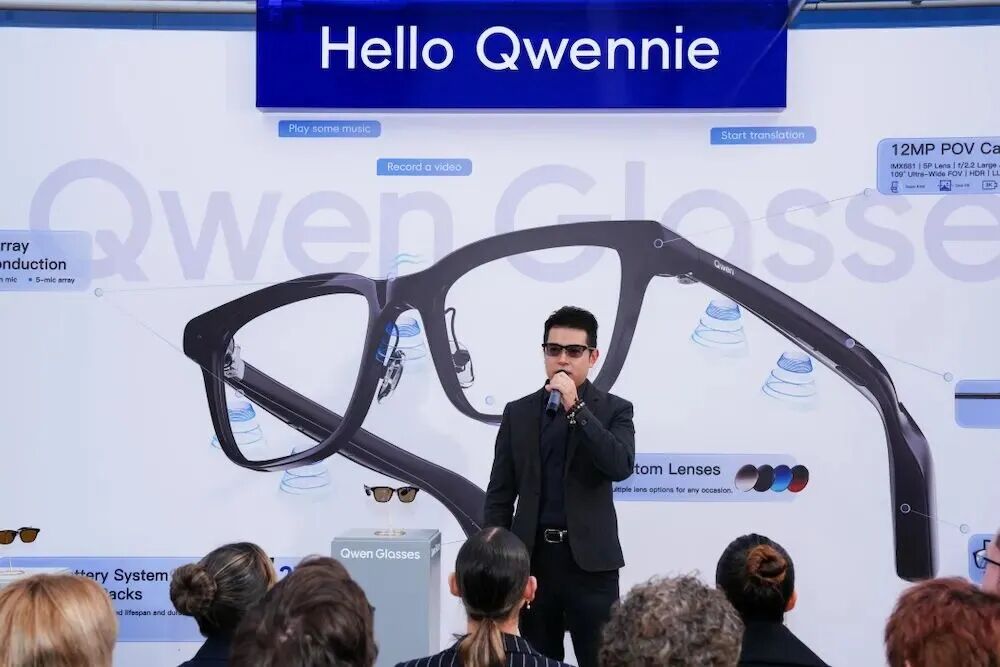
In terms of product form, these AI glasses are not simply smart hardware but are more like a new type of AI Agent terminal. Users can interact with the device through voice, allowing AI to complete translation, search, photo recognition, and even task processing. As the capabilities of large - scale models continue to improve, these devices are likely to become the next - generation AI entry point after mobile phones.
iFlytek also demonstrated several AI hardware devices at the conference, including AI translation glasses for cross - language communication scenarios. This device can generate real - time captions during user conversations and output translated voices through the built - in speaker, making cross - language communication more natural.
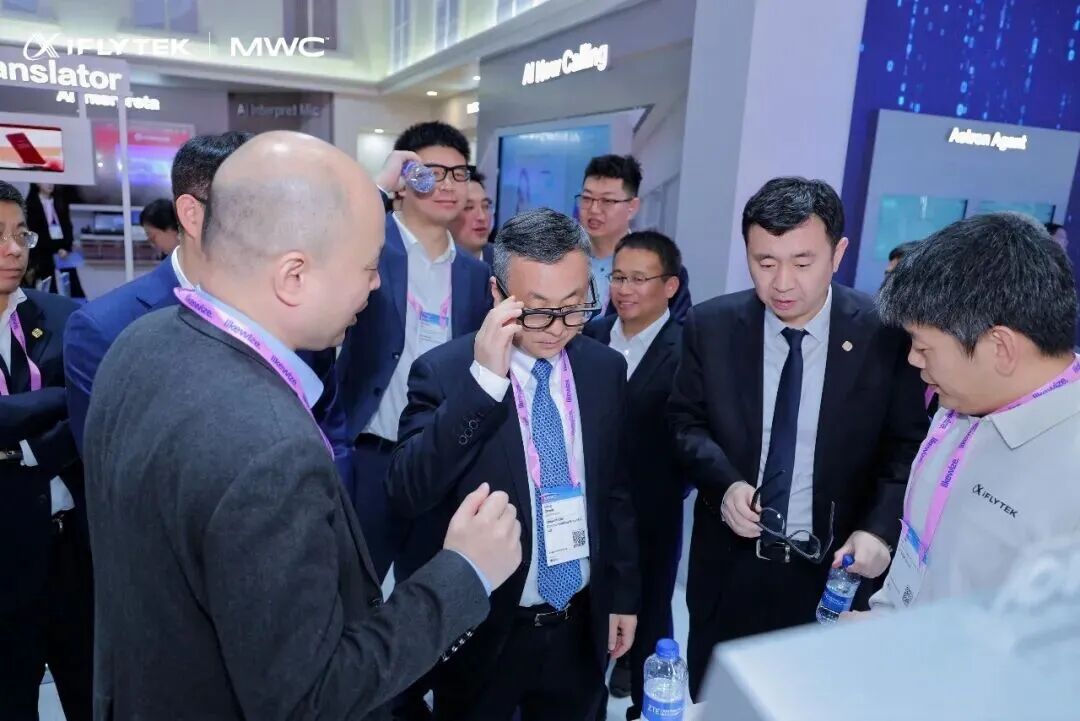
Against the backdrop of the continuous enhancement of AI large - scale model capabilities, capabilities such as translation, meeting records, and real - time captioning are becoming important implementation directions for AI hardware.
Meanwhile, Google also focused on demonstrating the upgrade of AI capabilities in the Android ecosystem at the MWC, including more system functions based on generative AI and the collaborative experience between AI and Android devices. Google demonstrated through on - site demonstrations how the Android system uses AI to help users complete searches, content generation, and multi - device collaborative operations, thereby strengthening Android's positioning as an AI platform.
From an ecological perspective, Google's strategy is very clear: through the Gemini large - scale model and the Android system, it embeds AI capabilities into the entire device ecosystem, creating a unified AI experience from mobile phones, tablets to XR devices.
Meanwhile, Lenovo demonstrated its attempt at an AI terminal ecosystem at the conference. For example, the AI Workmate concept device, which is a desktop AI assistant with a robotic arm and a screen, can help users organize documents, generate reports, and even project content through voice interaction.
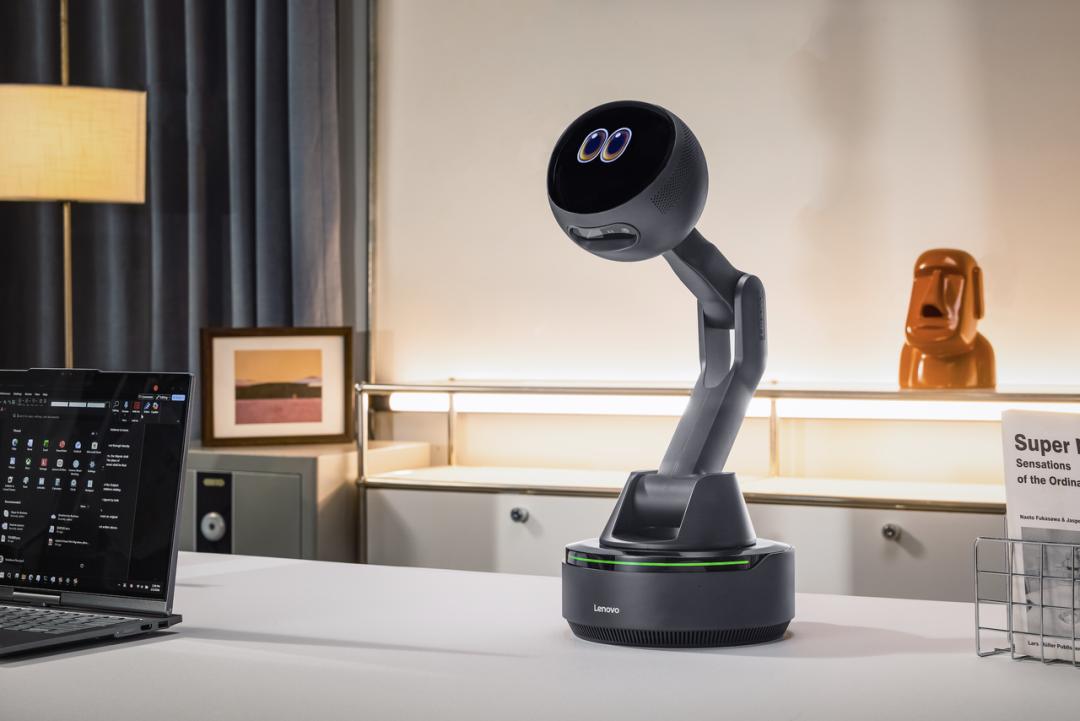
Lenovo also previously released an "environmental intelligence system" called Qira. This system can learn user behavior and provide proactive AI services across different devices. In the future, this system will be deployed in multiple device series such as ThinkPad and Yoga.
From a technical path perspective, Lenovo hopes to connect PCs, mobile phones, and smart devices into a unified AI environment through the combination of AI operating system + multi - terminal collaboration.
In addition to Internet companies and terminal manufacturers, chip companies are also promoting the in - depth integration of AI and communications. For example, Qualcomm released a new Wi - Fi 8 chip, the FastConnect 8800, at the MWC. One of its core upgrades is the addition of an AI engine to the network chip for real - time optimization of network performance and device connectivity.
MediaTek proposed at the conference that it will deeply integrate AI into the future 6G network and edge computing system and demonstrated the technical roadmap for AI - driven mobile devices, smart glasses, and data centers. AI is becoming the new "central capability" of the communications industry. Internet companies provide large - scale models and application ecosystems, chip companies provide AI computing power and connectivity, device manufacturers build intelligent network infrastructure, and terminal manufacturers are responsible for bringing AI into users' daily lives.
In this new industrial structure, the communication network is no longer just a pipeline for connecting devices but has become the underlying platform for the operation of AI systems.
6G and Space - Air Integration: The Next Leap in Communication Infrastructure
If the AI - native network represents a software - layer revolution in the communication system, then 6G and the space - air - ground integrated network represent the next hardware upgrade of communication infrastructure.
At MWC 2026, discussions about 6G have gradually shifted from concepts to technical roadmaps. Compared with 5G, the goal of 6G is not just faster speeds but the construction of a brand - new communication system.
One important direction is Integrated Sensing and Communication (ISAC).
In traditional communication systems, the core function of the network is to transmit data. In the future 6G network, the communication network will also assume the function of environmental sensing. For example, it can identify the position of objects through wireless signal reflection, monitor traffic conditions, and even analyze environmental changes.
In other words, the future communication network will not only be an information channel but also the world's largest sensing system.
Meanwhile, the spatial structure of the communication network is also changing. In the past, the network mainly relied on ground - based base stations. However, with the development of low - orbit satellite technology, space - air - ground integration has gradually become a new development direction.
This network system consists of three parts: the ground communication network, high - altitude communication platforms, and low - orbit satellite networks.
Together, they form a global communication system. Low - orbit satellites can provide wide - area connectivity, high - altitude platforms can cover areas that ground base stations cannot reach, and urban dense areas still rely on the ground network.
At MWC 2026, several companies demonstrated relevant technologies. For example, telecom operators such as China Mobile, China Unicom, and China Telecom collaborated with device manufacturers to promote research on 5G - Advanced and 6G and explored the space - air - ground integrated network architecture.
Meanwhile, the GSMA also announced the promotion of the Open Telco AI project to accelerate the standardization of AI technology in the communications industry.
However, this multi - layer network system also brings a new problem: a sharp increase in network complexity. Real - time coordination is required between the ground network, satellite network, and edge computing nodes. If it still relies on manual management, it is almost impossible to achieve efficient operation. Therefore, in the 6G technical roadmap, AI once again becomes a key capability.
Through real - time analysis of network data by AI models, the system can automatically schedule resources between satellites, base stations, and edge nodes. For example, when the communication demand in a certain area surges, the system can automatically schedule satellite resources to supplement.
It can be said that without AI, it is difficult to truly realize the 6G network.
AI + Communication: The Next Round of Industrial Competition is Taking Shape
When AI becomes the underlying capability of the communication network, the logic of industrial competition is also changing.
In the past, competition in the communications industry mainly focused on device technology and spectrum resources. In the era of AI - native communication, the dimensions of competition are expanding to computing power, algorithms, and ecosystems.
For device manufacturers, AI capabilities are becoming a new core competitiveness. Companies such as Huawei, ZTE, and China Information and Communication Technology Group are integrating AI technology into network devices and operation and maintenance systems, thereby promoting the upgrade of communication devices to intelligent infrastructure.
The role of telecom operators may also change. For a long time, telecom operators have mainly obtained revenue by providing network connectivity. However, in the AI - native network environment, telecom operators may become important platforms for AI services.
For example, by deploying edge computing nodes, telecom operators can provide low - latency AI services; by opening up network capabilities, they can also become providers of AI application platforms.
Meanwhile, some new AI hardware companies have also begun to enter the communication ecosystem. For example, AI translation device companies, AR projection device manufacturers, and intelligent terminal companies are all exploring new scenarios for the combination of AI and communication.
The most futuristic display comes from the robotics field. At this year's MWC, humanoid robots began to appear frequently. Several Chinese robot companies demonstrated humanoid robot products on - site. For example, Unitree and Zhipu Robotics demonstrated humanoid robot systems with autonomous walking and interaction capabilities. Some robots can even complete complex tasks through cloud - based AI models.
