OpenClaw has become extremely popular, marking a civilizational leap from superintelligence to AI organizations.
When OpenClaw can automatically fix code and book hotels, when the Qianwen AI glasses completely break away from the dependence on mobile phones, and when a partner of Y Combinator asserts that the agency economy is reshaping the software market.
The AI revolution in 2026 is no longer just an upgrade of auxiliary tools, but a complete reshuffle of the identities of economic participants.
From the explosion of individual agents to the rise of multi - agent clusters, from human decision - making to agent selection, there is a fundamental question behind this revolution: When AI starts to have an identity, permissions, payment capabilities, and can even independently participate in economic activities, what exactly is left of human core value?
Agents enabled by technology gain the ability to conduct independent economic behaviors. The market structure will shift from person - to - person to agent - to - agent. This is not only a change in efficiency but also a reallocation of property rights and decision - making power.
The demise of work is not the end but the starting point
The cruelest truth in the workplace in 2026 is that your competitor has never been AI, but an ordinary person who can use AI to turn themselves into a one - person company.
OpenClaw is like Jarvis with hands, turning humans from executors into hands - off bosses.
OpenClaw (formerly Clawdbot), created by Peter Steinberger, the founder of PSPDFKit, is no longer just a nerdy advisor that can only answer questions. It is a digital employee that can directly take over the computer to perform tasks. By sending instructions via Telegram/WhatsApp, it can automatically organize files, fix code bugs, book flights and restaurants, and even call and communicate using voice AI.
The popularity of OpenClaw is not just a technological news. When humans degrade from executors to goal - setters, the definition of work is completely broken down.

According to the comprehensive information from Tianyancha media, Peter's ultimate goal is even more crazy: to enable AI to complete the full - process autonomous operation of compilation - execution - verification, and complete 600 code submissions in a day. From then on, humans will degrade from writing code to setting KPIs for AI.
Back in China, the Qianwen AI glasses have broken the dependence on mobile phones, and the physical world has started an autonomous closed - loop.
Comprehensive information from Tianyancha media shows that the Qianwen AI glasses unveiled at the MWC in 2026 are equipped with the Snapdragon AR1 chip, completely getting rid of the shackles of mobile phones. Say "book a four - star hotel near the subway in Shanghai tonight", and it can directly call Fliggy to complete the reservation and payment. When running, it will actively ask if you need to order a drink, meeting real - time scenario needs. This native AI hardware that can handle things independently marks that AI is moving from the cloud to the physical world. The APP era initiated by Steve Jobs is being reshaped by the ability to handle things with a single sentence.
This is not a prediction but a reality that is happening.
When AI can perceive the physical world, make autonomous decisions and execute, "talking instead of doing" has become the new normal. Work is facing demise and reconstruction. From screwing screws to giving instructions, humans are degrading into goal - setters.
In 2026, we can imagine that when the essence of work is broken down and AI can run the entire production line, what is left for humans?
Traditional work is being disassembled into two layers: goal - setting and execution. AI is responsible for execution, and humans are responsible for setting goals, monitoring progress, and handling exceptions.
But if AI can actively summarize briefings, warn of task changes, and even seek human confirmation when the uncertainty is high, will humans completely degrade into question - asking machines?
It can be said that AI is now completing the leap from a cognitive tool to an economic entity. In the past, when we discussed AI replacing work, in essence, it was about replacing labor. Now, agents have become economic nodes, which means they start to have needs, make choices, and influence the market flow. This has become two completely different dimensions of change.
The birth of the new client: When agents become buyers, who is the market designed for?
When AI starts to make choices for people, the underlying logic of the economic system is experiencing a structural shock. The agency economy means that AI agents have become new buyers in the software market.
A partner of Y Combinator has observed that a parallel economic system is taking shape: AI agents are no longer just tools but new buyers of developer tools. For example, when a user asks in ChatGPT how to send an email, the model recommends Resend by default only because its document structure is more friendly to AI. Product competition has shifted from being human - friendly to agent - friendly.
The case of Resend is highly representative: by optimizing its documentation, it has become the default recommendation of ChatGPT, and its customer conversion rate has soared. Product competition has shifted from being human - friendly to agent - friendly. Documentation is becoming the new front - end. The success of a tool no longer depends on how beautiful its interface is, but on how clear its API is and how directly executable its examples are.
Basically, it can be said that the decision - making power has shifted from humans choosing tools to agents choosing tools. And the deeper change lies in the transfer of decision - making power. CEOs who don't understand technology are starting to use OpenClaw to automate the entire business process; infrastructure companies like Agent Mail specialize in providing email interfaces for AI that won't be blocked by risk control. When agents obtain payment permissions, the industry standard is shifting from KYC (Know Your Customer) to KYA (Know Your Agent). AI is no longer just a tool but an economic entity with an identity, permissions, and payment capabilities.
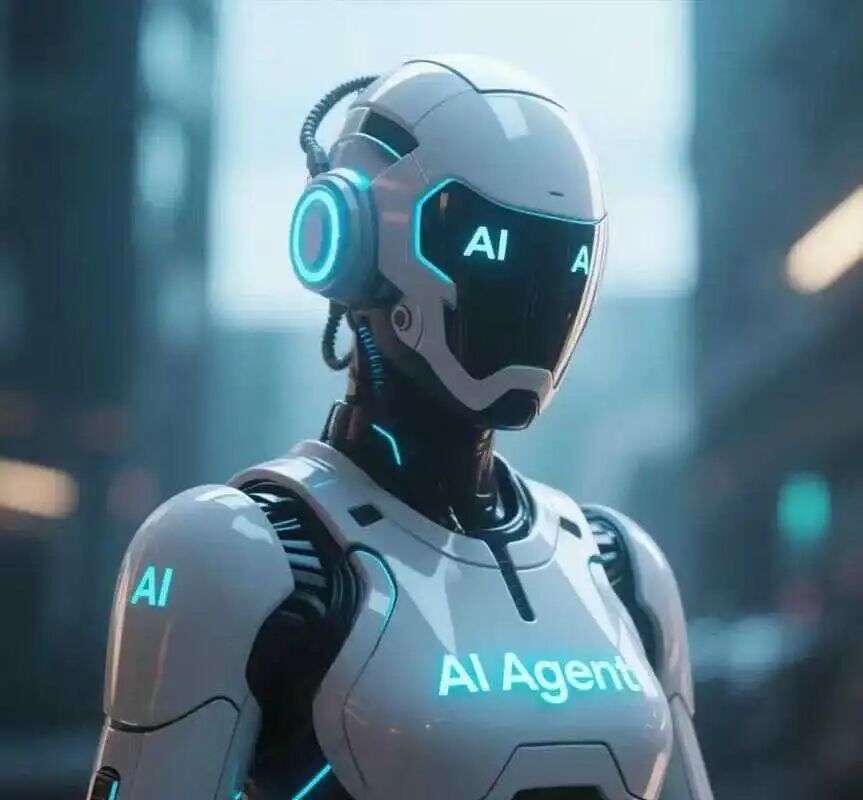
This is a typical process of platforming a two - sided market. The agent economy is forming a three - layer architecture of agent - infrastructure - service: the bottom layer consists of infrastructure such as identity, payment, and communication (e.g., Agent Mail); the middle layer is the capability orchestration layer (e.g., OpenClaw); the upper layer is vertical scenario services.
Entrepreneurs must rethink: For whom are you designing the interface of your product? The human eye or the agent's parser?
Comprehensive information from Tianyancha media shows that the selection mechanism of agents is still in its early stage, but it has revealed a key signal: clear, structured, and parsable documentation is the first golden track in the agency economy. Supabase has become the default database choice because of its clear documentation; Minify has been upgraded from a developer experience tool to a necessity because it can optimize the agent parsing ability of API documentation.
It can almost be judged that in the future, whoever can reduce the friction cost of agents will win the market.
Collective intelligence: The civilization leap from super - intelligence to AI organizations
In 2026, the imagination of AI has shifted from pursuing a centralized super - intelligence to building collective intelligence through division of labor and cooperation.
In the era of Agent Swarm, 100 AIs explore in parallel, and the efficiency is increased by 5 - 8 times.
The Kimi K2.5 Agent Swarm can simultaneously dispatch 100 professional AIs to work in parallel through the Power parallel reinforcement learning technology: without presetting roles, only by inputting the goal, the system automatically generates a group of agents for extensive exploration, and finally the Synthesizer converges the conclusions. In the academic paper writing demo, the whole process of retrieval, clustering, writing, and integration is automatically completed, and the efficiency is increased by 5 - 8 times.
This marks that AI has been upgraded from working alone to an organized intelligent society.
The hybrid architecture for specific operations is that Cloud Agent Teams are responsible for execution, Agent Swarm is responsible for exploration, and Deep Research is responsible for verification. Cloud Agent Teams are coordinated by a leader agent and are suitable for complex tasks with clear roles (such as the whole process of cross - border e - commerce marketing); Kimi Agent Swarm has no preset roles and is suitable for extensive exploration (such as academic literature retrieval and competitor analysis); Deep Research continuously narrows the scope and verifies the conclusions step by step, and is suitable for in - depth research (such as academic paper writing).
This marks a fundamental shift in the imagination of AI: from pursuing a centralized super - intelligence to building collective intelligence through division of labor and cooperation.
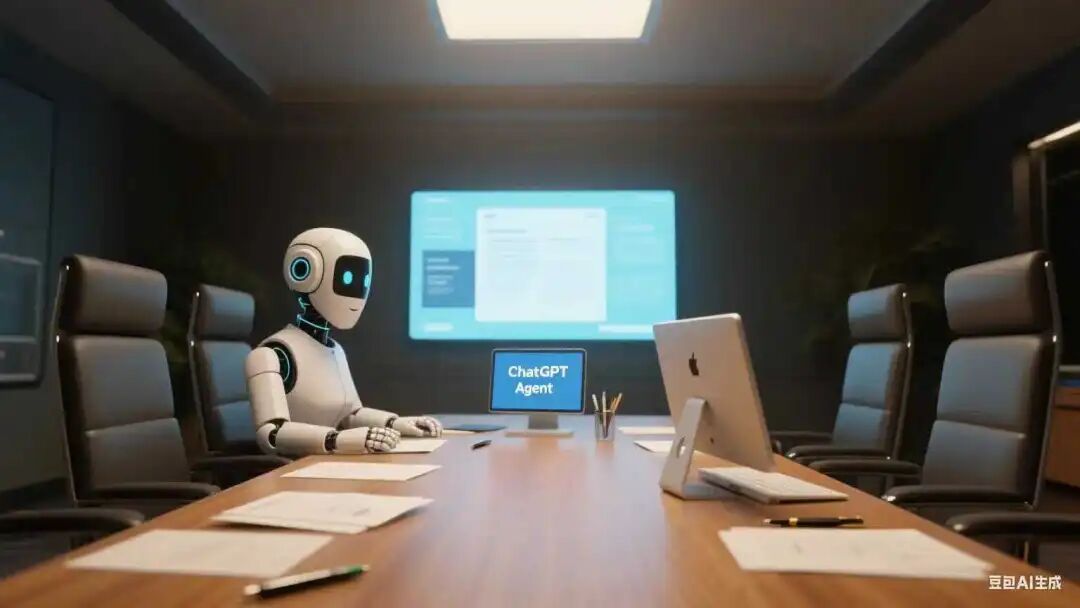
Just as the progress of human civilization comes from the collaborative network rather than all - powerful individuals, the future form of intelligence will be a society of intelligent agents collaborating with each other. For example, Cloud Agent Teams are responsible for accurately executing established tasks, Agent Swarm is responsible for exploring the unknown, and Deep Research is responsible for in - depth verification. The three are integrated to form a hybrid architecture.
The integration of the three forms a hybrid architecture that takes into account both the breadth of exploration and the accuracy of conclusions: the organizational design ability of AI is becoming the new core competitiveness. This conforms to the modular theory in organizational economics - when the system complexity exceeds the critical point, modular division of labor is more effective than centralized optimization. The core competitiveness of AI is shifting from model ability to organizational design, that is, how to arrange the collaborative structure of different agents.
When the core competitiveness of AI shifts from model ability to organizational design, what is left for us? In fact, in this AI revolution, humans are not completely powerless.
For example, the ability to ask questions has shifted from step - driven to goal - driven. With the maturity of the fully automated toolchain, the workflow has shifted from being driven by human steps to humans setting goals and AI disassembling and executing. Experienced users are more inclined to let AI execute, but will intervene at key nodes.
When the uncertainty is high, AI will actively seek human confirmation. The role of humans is migrating upwards to become decision - makers, question - askers, and integrators. The framework of value judgment is that AI can optimize the process, but cannot define what is good. When AI can automatically generate papers, design products, and optimize the supply chain, the core value of humans shifts to defining standards. What is good research? What is a good user experience? What is a sustainable business model? AI can execute, but cannot judge the meaning of execution.
Tianyancha's comprehensive media analysis points out that the concept of the soul file proposed by OpenClaw is becoming the core trump card of humans. This is a set of core values and behavioral guidelines that determine the tone, style, decision - making logic of AI, and even how to make choices in conflicts. It is the personality setting of AI and the ultimate control of humans over AI.
Indeed, when AI runs the entire production line, the value anchor of humans is hidden in the concept of the soul file of OpenClaw: that set of core value guidelines that determine how AI interacts with you and how to make choices in conflicts. When applications become lighter and models tend to be the same, personal memory and value framework become the new core assets.
More fundamentally, humans only have three trump cards left: the ability to ask questions, the framework of value judgment, and the ultimate power to define the soul file. Agents can execute goals, but cannot define what goals are worth pursuing; they can optimize processes, but cannot judge whether the processes are ethical; they can simulate preferences, but cannot create new value dimensions.
Conclusion
The AI revolution in 2026 is not a doomsday prophecy of human replacement, but a reconstruction of the identities of economic participants.
For developers, whether they can design an efficient and low - cost multi - agent architecture to adapt to different business scenarios has become the key to making a difference; for enterprises, whether they can understand the logic of the agency economy and shift from being human - friendly to agent - friendly determines their survival; for ordinary people, there is no need to worry about the prompt skills of a single AI, but to learn to issue goal instructions to multi - agent systems and use AI clusters to complete complex tasks.
When the core competitiveness of AI shifts from model ability to organizational design, the core value of humans has never been so clear: we are not the opponents of AI, but its designers, definers, and ultimate controllers. The ultimate answer to this revolution may be hidden in Peter Steinberger's words: The evolution of AI is not to make it more like humans, but to make it understand humans better.
This is not a doomsday prophecy but a civilization upgrade. When AI becomes an economic participant, the real scarce resource has never been computing power or data, but the meta - ability of humans to define what is important. The winners in the agent era are not those who know the most about technology, but those who know how to establish a "principal - agent" relationship with AI, who are brave enough to let AI execute and can inject human judgment at key nodes.
The future economic landscape is a hybrid intelligent ecosystem composed of humans and agents. What we need to do is to quickly learn to be a qualified goal - setter in this new ecosystem.
This article is from the WeChat official account "LingTai LT" (ID: LingTai_LT), written by Zhang Qi and edited by Hu Zhanjia. It is published by 36Kr with authorization.