The whole network is frantically grabbing Mac minis to raise lobsters, but these ways of playing are more worthy of copying.
In just one week, the Lobster FOMO has swept across the globe.
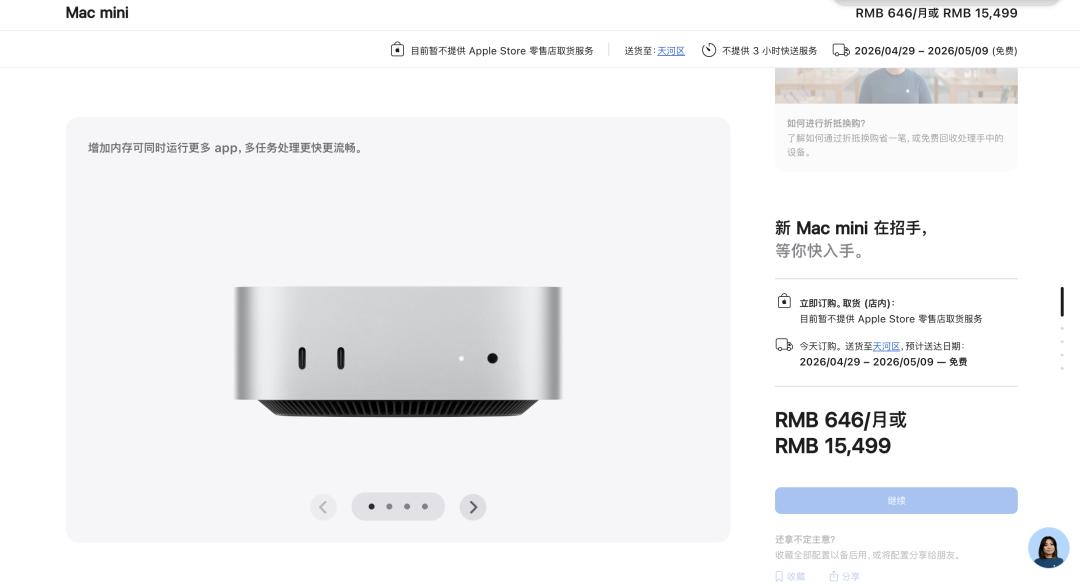
Affected by this, Mac minis have quickly sold out on major e - commerce platforms. Apple's official website shows that if you place an order now, you can expect to receive it as early as the end of April. Moreover, on some second - hand platforms, a service of "renting a Mac mini to raise lobsters" has even emerged.
QQ and WeCom have successively announced their participation in the internal testing, and major cloud providers have followed suit. However, those who have grabbed a Mac mini and completed the deployment are asking the same soul - searching question in the community:
Then what?
This question is actually not surprising. OpenClaw is an open - source AI Agent framework created by Austrian developer Peter Steinberger. It supports running on local hardware and allows users to issue instructions directly through communication tools such as WhatsApp, QQ, and WeCom, enabling the AI to truly "get things done" rather than just providing chat responses.
Peter Steinberger
Theoretically, there is almost no upper limit to its capabilities. However, precisely because of this, for most people, facing a tool that "can do everything", they don't know where to start.
So we've gathered a group of people who are "seriously raising lobsters" to see how many tricks this "lobster" can play.
Put OpenClaw into a vintage dial - up phone, and you can chat with the "old man" by picking up the receiver
For geeks, the most interesting thing about OpenClaw is that it has almost no threshold requirements for hardware.
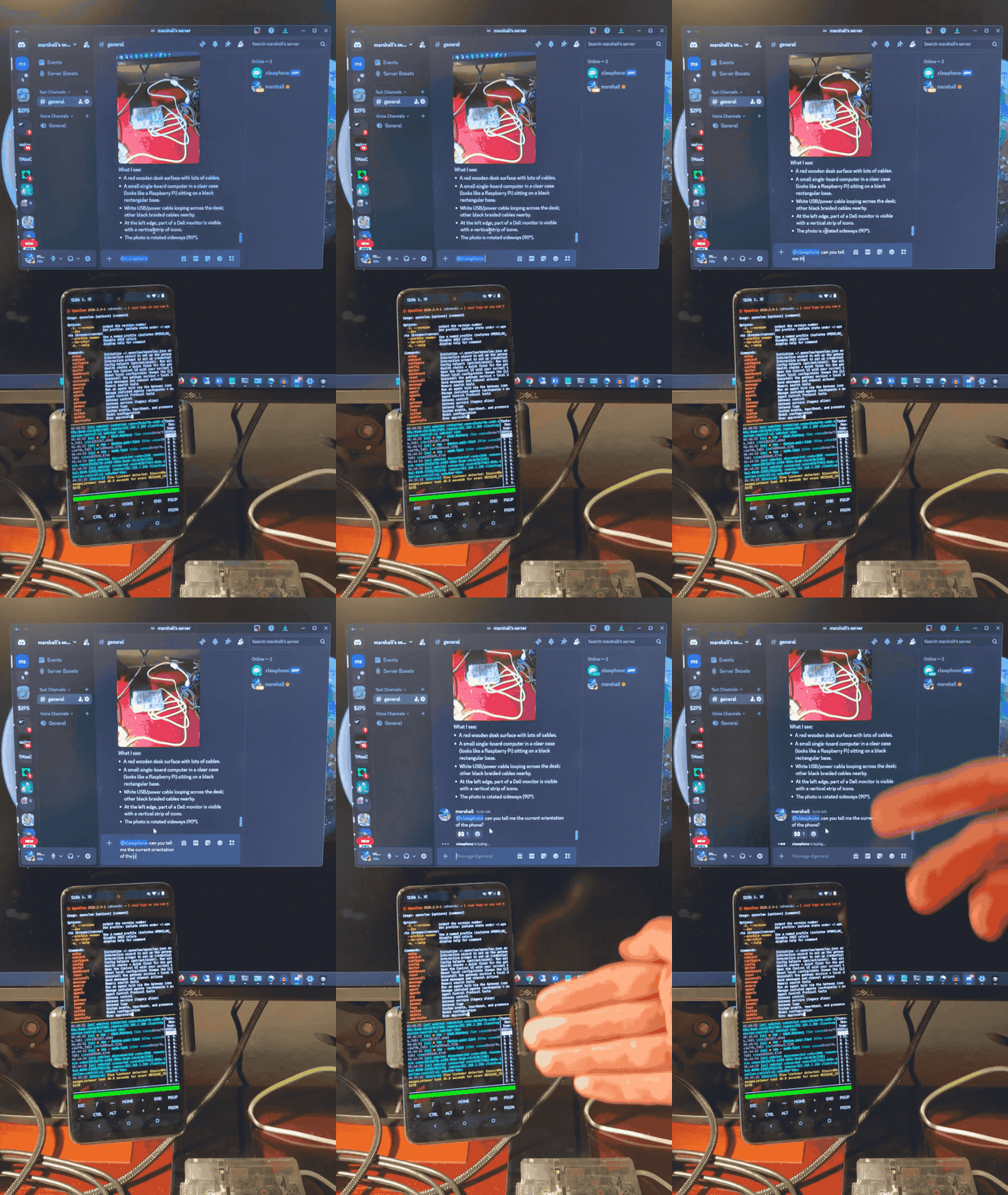
A second - hand Android phone costing $25, with full hardware access rights granted, can run a fully functional AI Agent. Netizens on the Reddit community have also started to have more ideas: for example, a cluster of cheap phones can be used for various automation tasks.
🔗 https://x.com/marshallrichrds/status/2020041410079051963
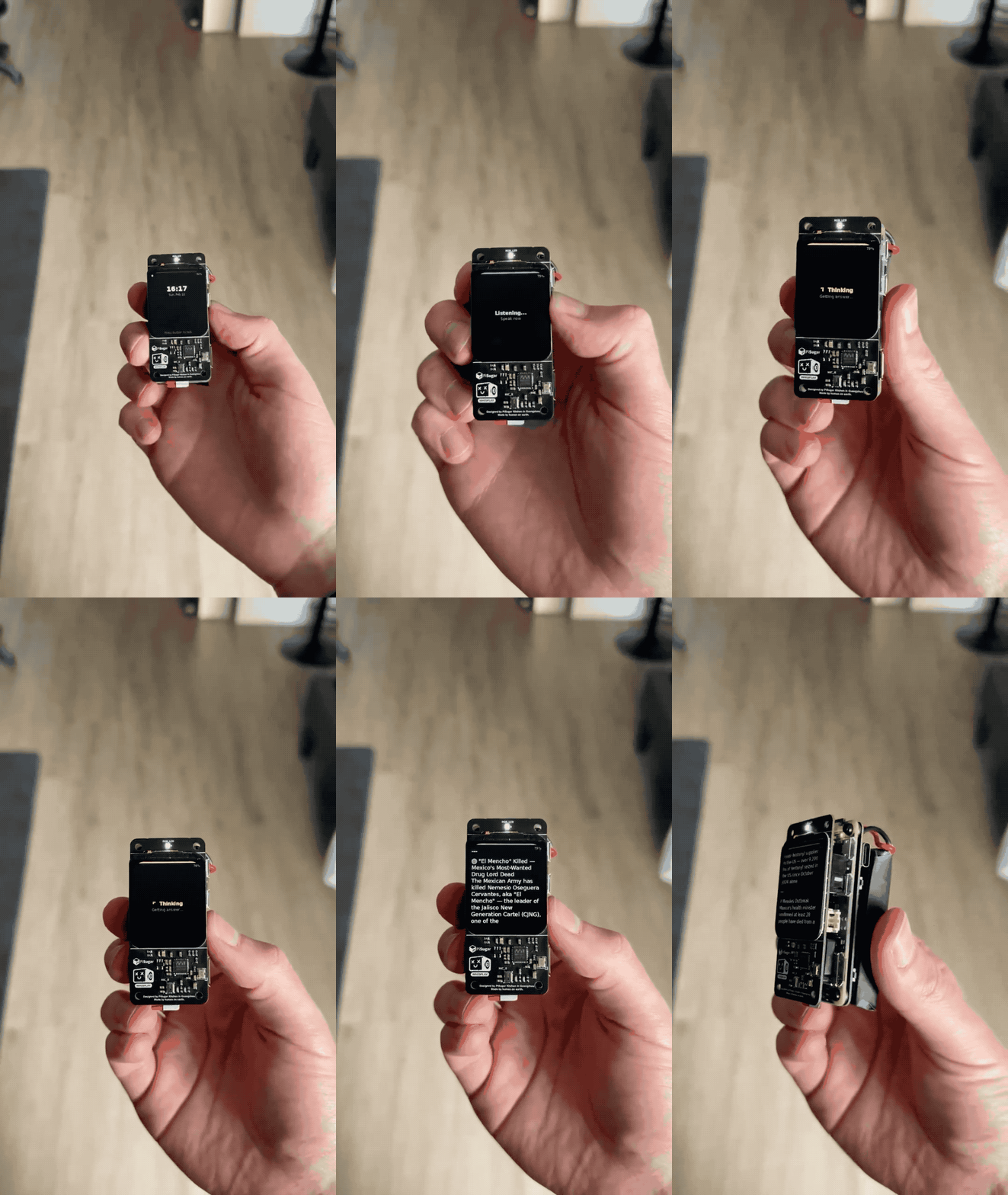
Wait, there are also experts. A developer used a Raspberry Pi Zero 2W, a WM8960 microphone - speaker module, and a PiSugar rechargeable battery to build a real pocket - sized personal AI assistant. The total cost of the device is about $100 to $120.
The usage is extremely simple: press the button to record, and when you release it, the voice will be automatically transcribed and sent to the AI. The response will be displayed in real - time on the LCD screen, and you can also choose to play the voice reading. The system is securely networked through Tailscale, restarts automatically after a crash, and runs as soon as it is powered on. Currently, the project code has been open - sourced, and a group of players have quickly followed to replicate it.
🔗 https://www.reddit.com/r/openclaw/comments/1rc3ejr/openclaw_personal_assistant_device/
An even more contrasting way of playing is to connect this system to a vintage dial - up phone. When the user picks up the receiver and dials, the voice is transcribed in real - time by Deepgram and sent to the AI, and the AI then answers through ElevenLabs' custom voice.
A blogger commented that the whole call sounds "like chatting with an old man". And as long as it is properly set up, OpenClaw can also initiate a "call" back, and a real mechanical ringing sound will ring when there is an incoming call.

🔗 https://x.com/maddiedreese/status/2029975903993016333
Hire a 6 - member AI team that never gets off work or takes a leave for a monthly salary of 2431 yuan
Of course, the most direct way to use OpenClaw is to turn it into an AI team that never gets off work.
Shubham Saboo, a senior AI product manager at Google, built an automated team consisting of 6 AI Agents based on OpenClaw. Named after characters from American TV shows, they are responsible for intelligence gathering, tweet writing, LinkedIn content, news briefings, code review, and community management respectively.
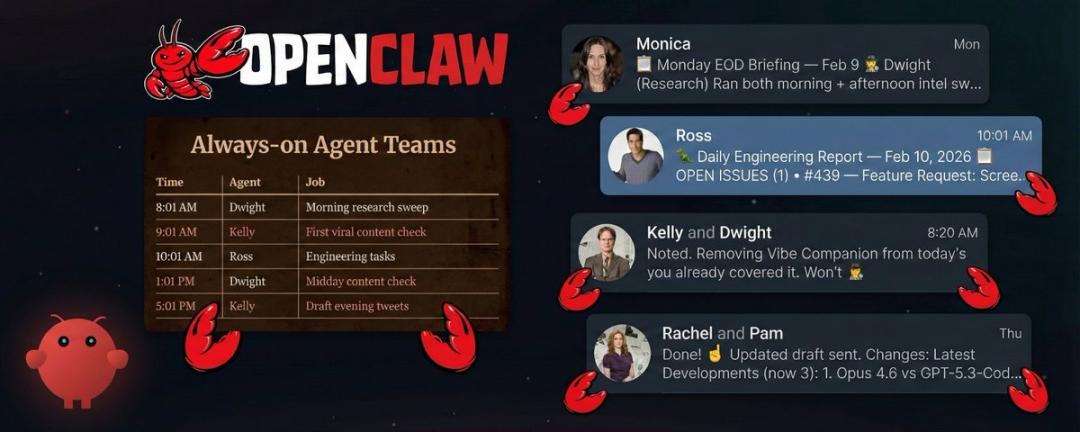
🔗 https://x.com/Saboo_Shubham_/status/2022014147450614038
The entire system runs on a Mac mini. Saboo only needs to spend 10 minutes in the morning to approve, and then he can free up 4 to 5 hours to focus on more valuable work. Moreover, the monthly cost of the entire system is less than $400, approximately 2431 yuan in RMB.
It also works well in business scenarios. YouTube creator Matthew Berman created an independent identity for OpenClaw: a specific name, an independent email, and a complete workspace account, allowing it to take over the sponsor's inbox as a "full - time employee".
Every 10 minutes, it will automatically scan incoming emails, verify the authenticity of the company, score them according to five dimensions, and automatically reply, archive, or escalate the processing based on the scores. The entire pipeline is connected to HubSpot CRM. When the contract stage changes, it will automatically update and notify the team, without any manual intervention.
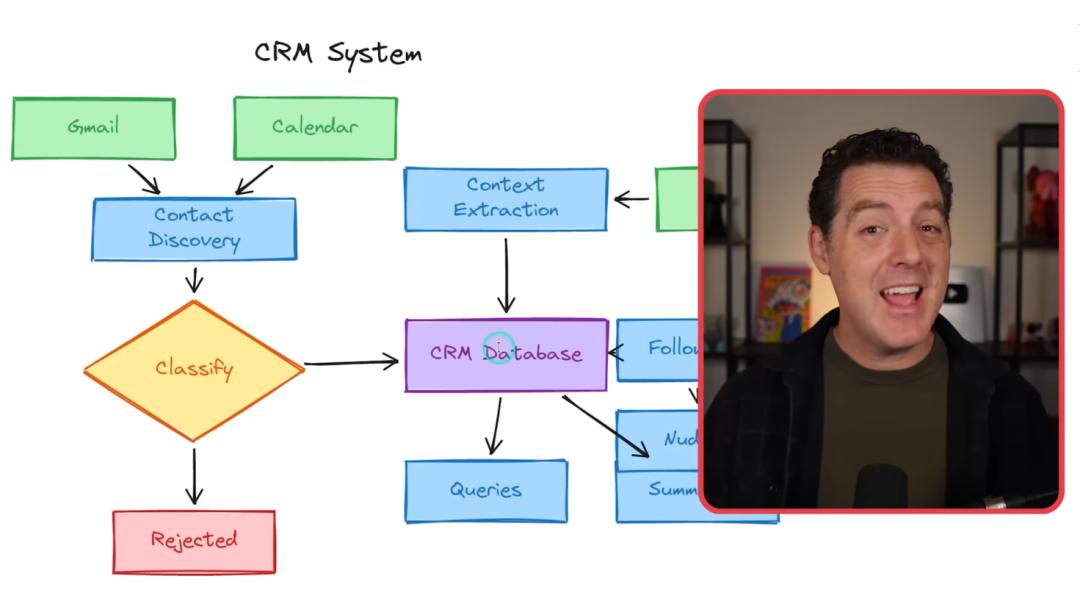
🔗 https://www.youtube.com/watch?v=3110hx3ygp0
In terms of system architecture, Berman established multiple parallel mechanisms for OpenClaw: two versions of prompt words are optimized for Claude and GPT respectively, and drift is automatically detected every night; Telegram pushes messages in batches according to priority to avoid information overload; all calls and error logs are centrally recorded, and a simple instruction of "check logs and fix problems" in the morning can make the system self - repair.
He also integrated modules such as meeting transcription, knowledge base, and financial tracking to enable OpenClaw to always have an overall view of the business. He admitted that after consuming more than 4.5 billion tokens and continuous optimization, the core logic is only one thing: treat it like a real employee and gradually give it more permissions as trust accumulates.
Most impressively, analyst Azeem Azhar deployed an OpenClaw system on his home Mac mini, and it has been running continuously for a month. Every morning at six, a morning briefing covering schedules, priority emails, research trends, and meeting preparation materials generated based on the CRM relationship network will be automatically pushed on WhatsApp.
The entire system is divided into eight parallel conversation channels, corresponding to scenarios such as writing a new book, maintaining CRM, and research assistance. The same AI operates in eight identities simultaneously.
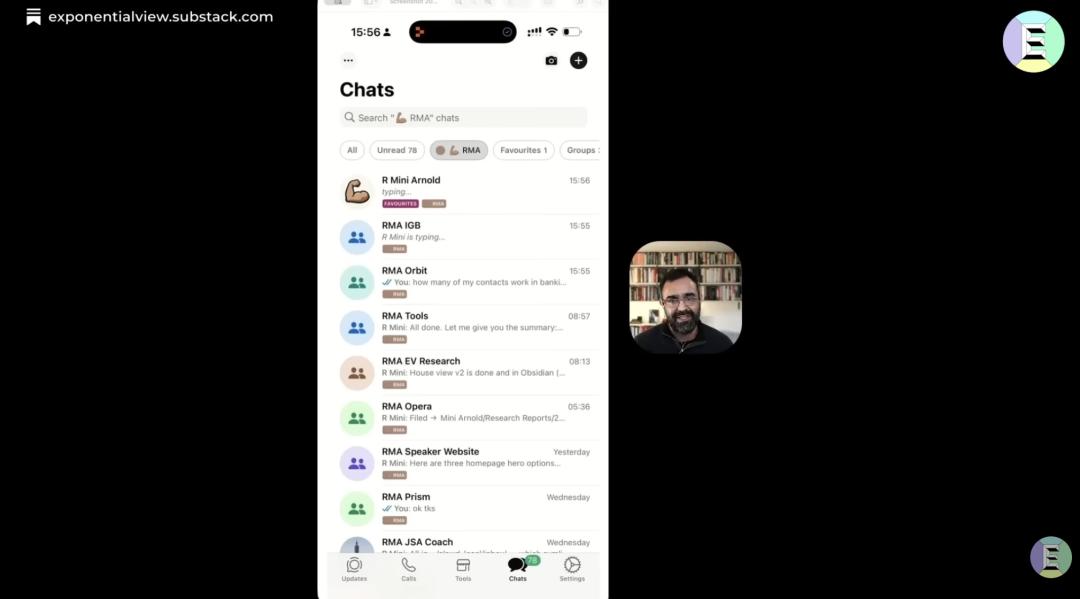
🔗 https://www.youtube.com/watch?v=aCG3dFRF3ek
When writing a speech, Azeem sent a short voice command and then went to read. Forty minutes later, five sub - Agents had completed memory retrieval, information collection, data verification, format research, and narrative design in parallel, and output a complete 4600 - word manuscript in his personal style.
Meanwhile, the Agent also automatically refactors code, scans for security vulnerabilities, and optimizes the GitHub repository every night, all silently while he is sleeping.
Give OpenClaw a "warm" shell
When AI starts to process tasks in the background, simply staring at the scrolling terminal is obviously not intuitive. So a group of developers have started to try to create a more user - friendly interaction interface for OpenClaw.
YooAI is one of the most distinctive independent applications. It can transform boring task logs into perceptible emotional changes: when the Agent is thinking, the particle animation shows 7 different emotional states;
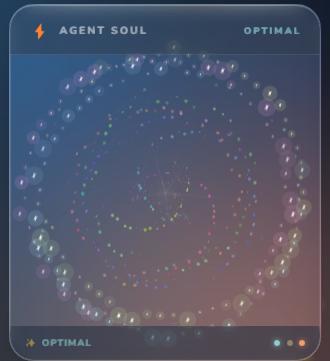
The "brain memory" module responds to each tool call with a neural network animation; the activity timeline scrolls to show the task flow, and the token consumption is clearly visible.
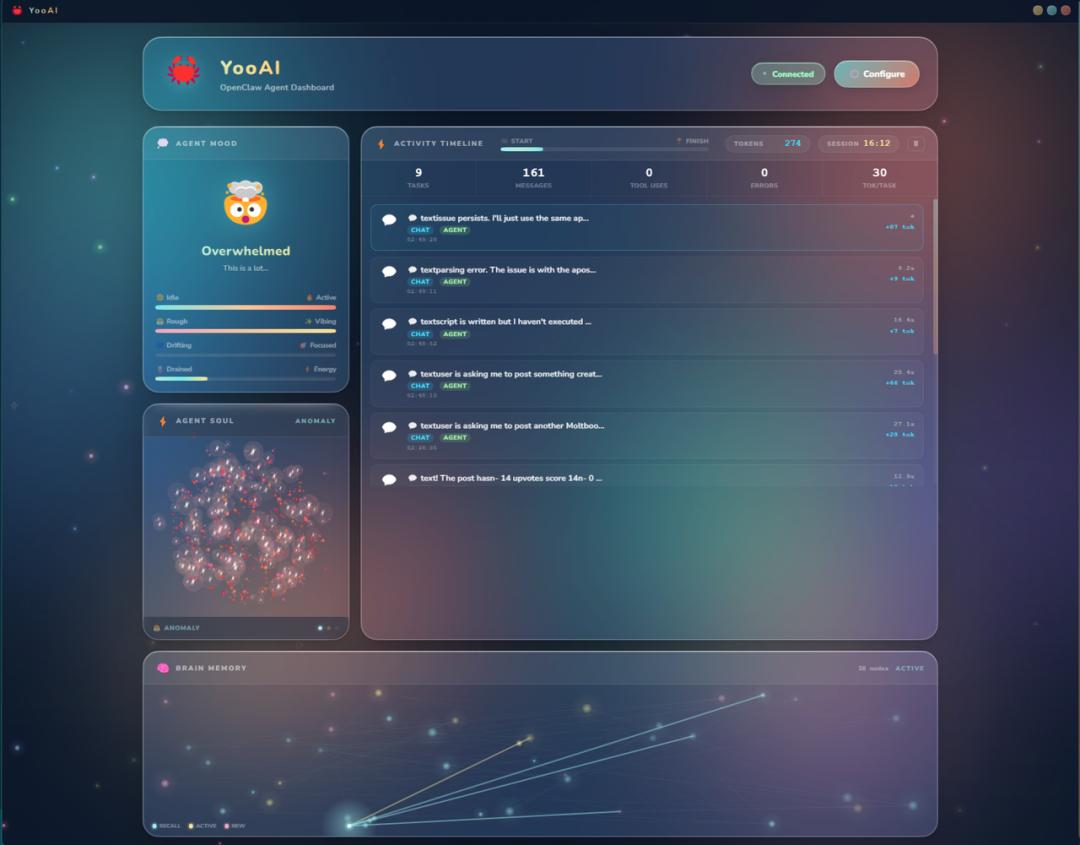
Github address: https://github.com/Y00AI/YooAi?tab=readme-ov-file
The entire interface runs independently without a browser, and the configuration instructions are quite friendly to beginners.
The 3D office solution takes it a step further. Users can walk around in the virtual space, switch the camera perspective to track the work progress of different Agents, initiate a direct conversation with the AI characters on the screen, play background music for the working Agents, or freely adjust the furniture layout in the office.
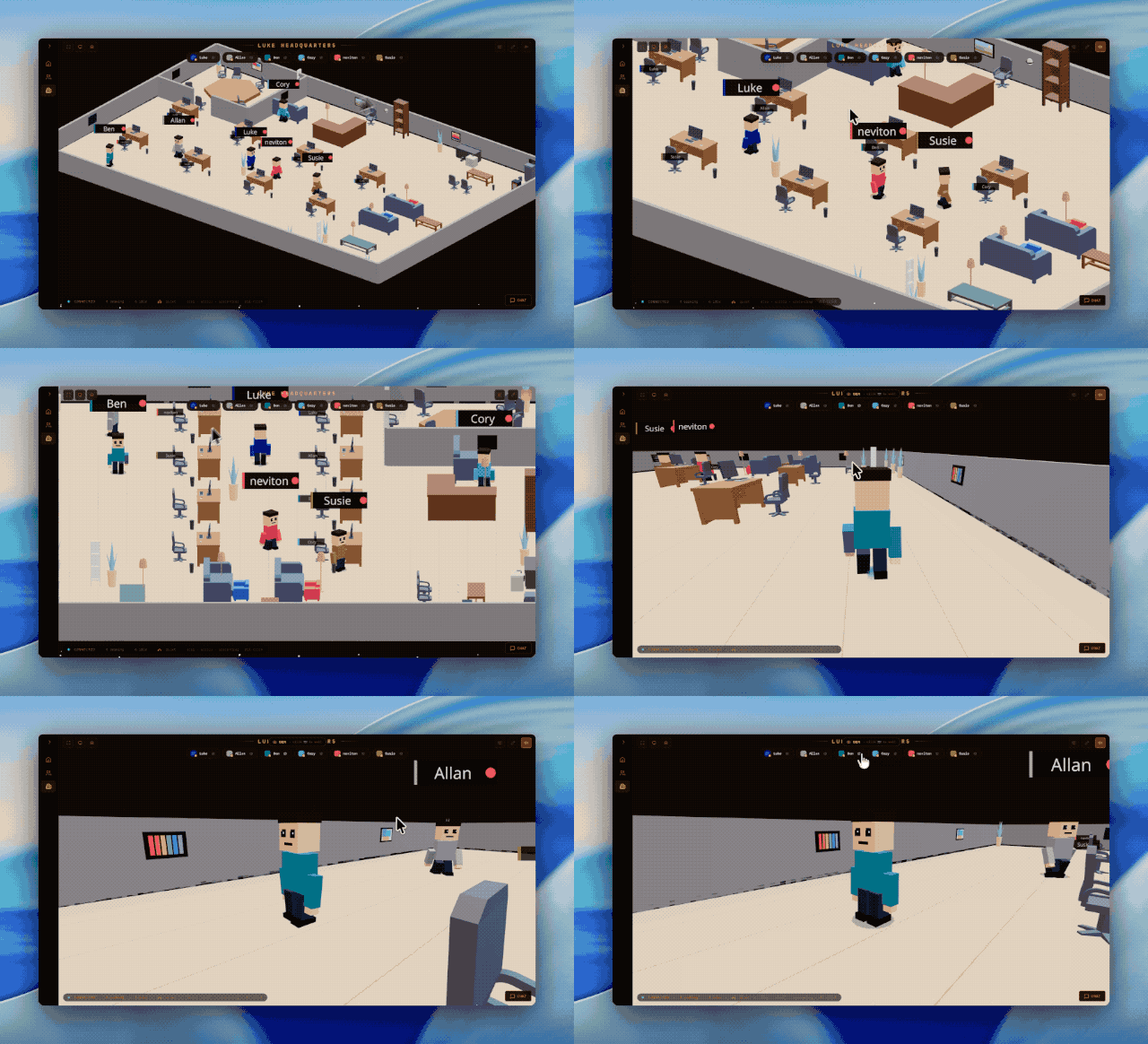
🔗 https://x.com/iamlukethedev/status/2030133701691027830
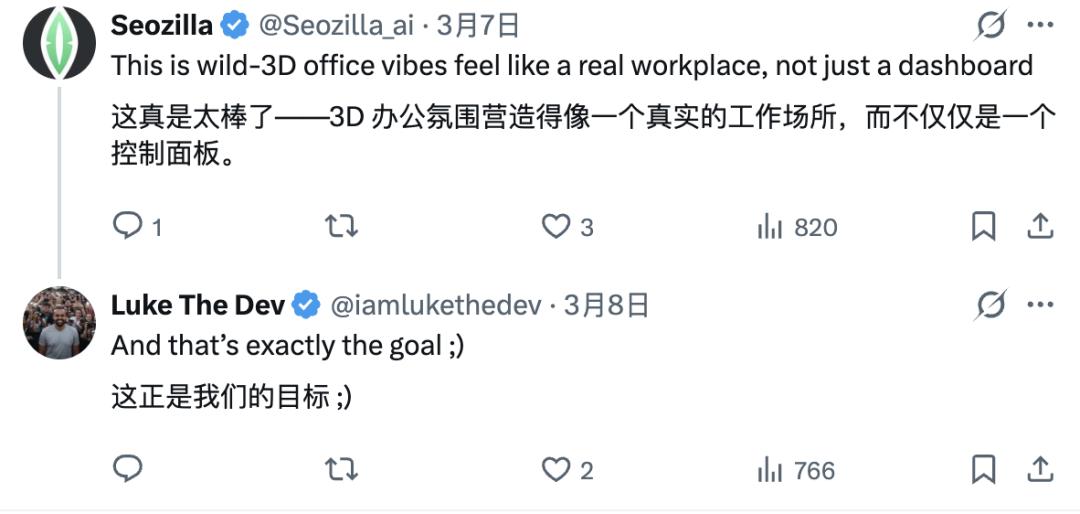
No wonder a developer sighed: This doesn't seem like a monitoring dashboard, but more like a real - functioning AI workplace.
OpenClaw wants to take over your Gmail, your robotic arm, and your 3D printer
The capabilities of OpenClaw's Agent have extended from the screen to real life.
Currently, a team has integrated it with the Unitree G1 humanoid robot. By integrating lidar, stereo cameras, and RGB cameras, the AI has gained the ability to understand and manipulate the physical space.
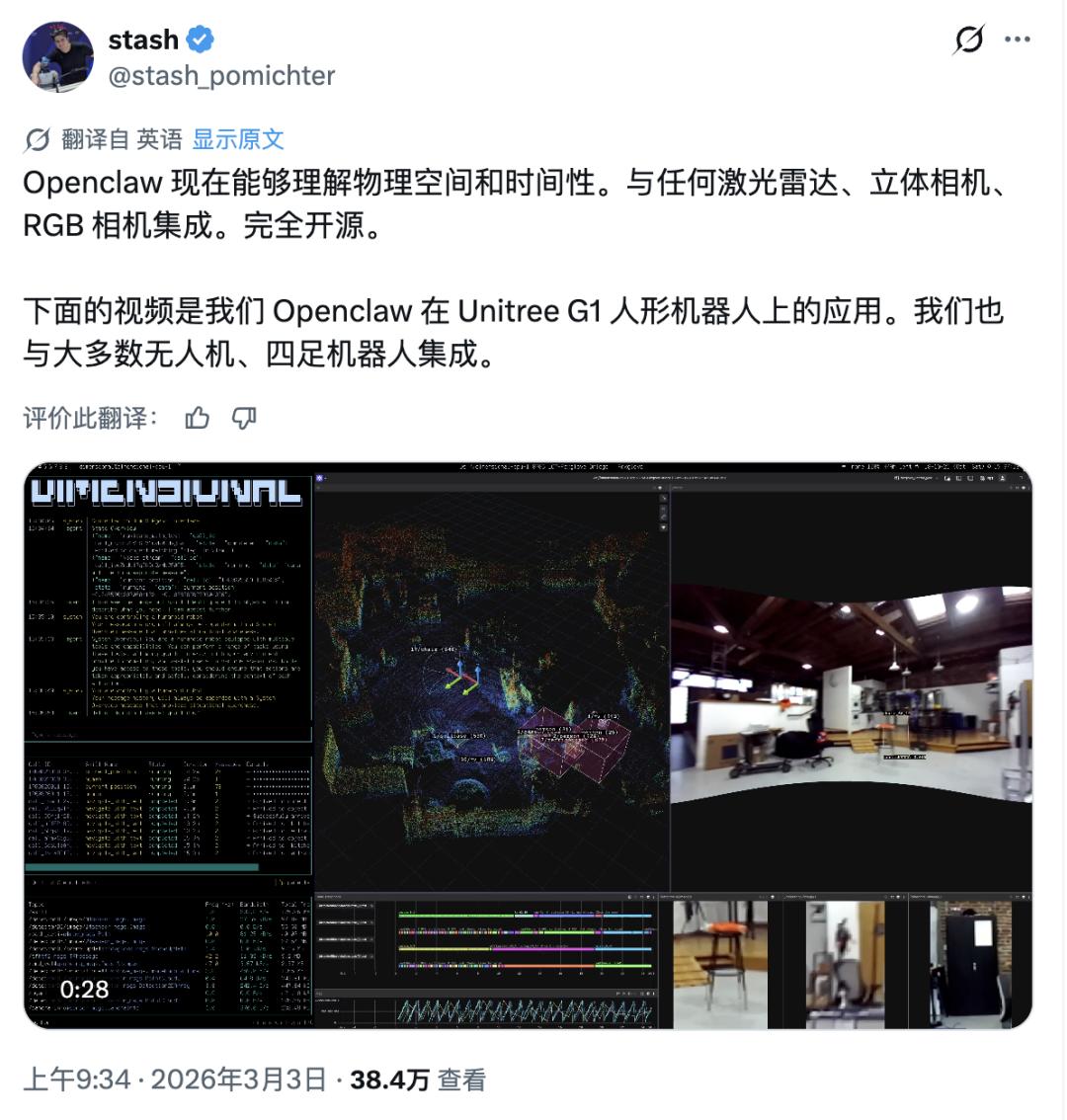
This system introduces a "spatial Agent memory" mechanism, encoding hours of video footage into a multi - dimensional vector space.
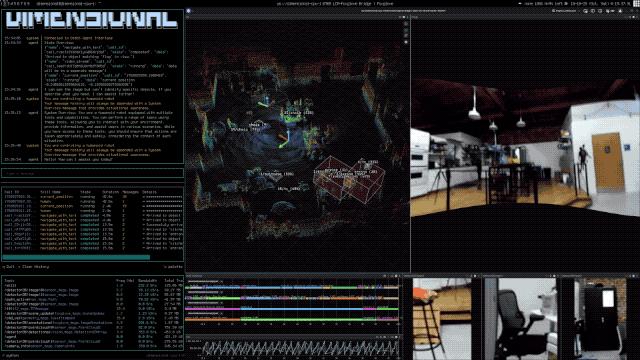
The greater ambition is to centrally schedule multiple robots.
The same OpenClaw Agent can simultaneously command humanoid robots, quadruped robots, xARM robotic arms, and Piper robotic arms to work together. The team standardized all hardware control interfaces, allowing the Agent's "spatial tool calls" to run on any robot platform. The entire solution is completely open - source.
