Will the 100-hour energy storage purchased by Google for $1 billion reshape the energy storage roadmap for AIDC?
Can Rusty Iron Reduce Energy Storage Costs by 70%?
During the Spring Festival, a piece of news from Google's data center project suddenly went viral.
Google announced that it will deploy an iron-air battery energy storage system with a capacity of 300 megawatts/30 gigawatt-hours (GWh) at its new data center in Minnesota, USA.

The picture shows a schematic diagram of the clean energy system of Google's Minnesota data center. Source: Fast Company
Why is this project so eye-catching?
First of all, of course, there are three huge numbers - an investment of $1 billion, an ultra-long discharge capacity of 100 hours, and a total capacity of up to 30 million kilowatt-hours (30 GWh).
This means that this will be the world's largest battery energy storage project. What's more concerning is its cost.
Let's do a simple calculation. The cost of this project is about $33.33/kWh.
What does $33 mean?
Let's make a horizontal comparison with the current mainstream energy storage solutions:
Compared with lithium battery energy storage systems: According to the statistics of Bloomberg New Energy Finance (BNEF), the average cost of lithium battery systems for grid energy storage in 2025 is about $125 - $165/kWh. The iron-air battery is more than 70% cheaper directly;
Compared with Tesla's Megapack: Currently, the price of Megapack is about $280 - $327/kWh. The cost of Google's project is only 1/10 of it.
Compared with energy storage in China: The most mature and cost - controlled lithium battery energy storage systems in China currently have a price range of about $70 - $97/kWh.
Form Energy even made a bold statement: Its long - term commercial goal in the future is $20/kWh.
Although this project currently seems more like an experimental pilot, the signal it releases is still enough to make the entire lithium battery industry chain feel uneasy:
In the AIDC (AI data center) scenario where the energy storage demand is growing the fastest and the requirements for energy stability are the most demanding, when developers pursue "long - term power supply" to the extreme, will the future energy storage technology roadmap really bypass lithium batteries and shift fundamentally towards a cheaper and more durable direction?
01 A Google Order Makes the Energy Storage Industry Talk about "Iron"
Let's take a closer look at this project, which is called one of the world's largest battery projects. There are three main participants: Google is responsible for paying, the US utility company Xcel Energy is responsible for installation and grid connection, and Form Energy is responsible for providing iron - air technology.
Data shows that Form Energy was founded in 2017 and is headquartered in Massachusetts, USA. It was founded by Mateo Jaramillo, the former head of Tesla's energy business. Since its establishment, the company has raised more than $1.2 billion, and its investors include Breakthrough Energy Ventures supported by Bill Gates.
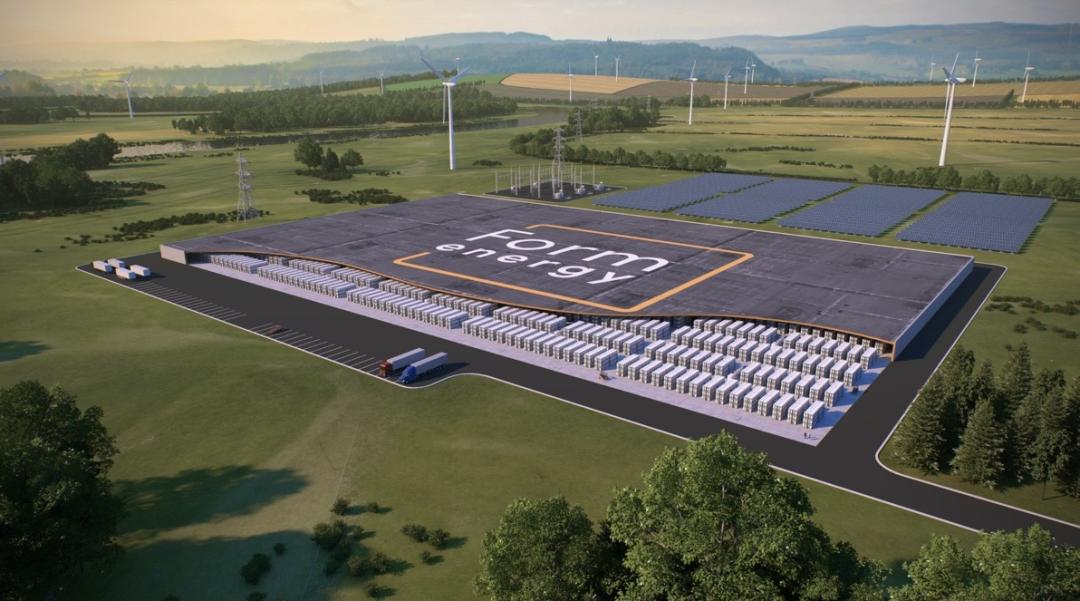
The picture is from Form energy
It should be noted that Form Energy's approach is different from that of traditional battery companies.
Lithium battery companies usually pursue higher energy density and faster charging speed, while Form Energy's goal is something else: large - scale energy storage at extremely low cost.
Focusing on this project, in addition to the energy storage system, 1400 megawatts of wind power and 200 megawatts of photovoltaic power will also be equipped to provide power for the data center together.
In the energy storage industry, what really attracts attention is not power, but "time".
In the past decade, grid energy storage has been almost completely dominated by lithium - ion batteries, but the energy storage time of most systems is only 4 to 8 hours.
This kind of energy storage can solve the power fluctuations within a day, but it is difficult to cope with the power generation troughs that last for several days.
And this is exactly the problem Google is facing.
With the surge in the demand for artificial intelligence computing power, the power consumption of data centers of large technology companies is increasing rapidly. At the same time, these companies are also committed to achieving the goal of 24/7 carbon - free energy.
The problem is that wind power and solar energy do not generate electricity stably according to the needs of data centers.
When there are cloudy days or no wind for several consecutive days, the output of renewable energy may decrease significantly. In the past, the power grid usually relied on natural gas power plants to supplement power in such cases. But for technology companies pursuing a low - carbon energy structure, this solution is obviously not ideal.
Therefore, the energy industry has begun to look for new solutions:
A battery that can store electricity for several days.
The iron - air battery has re - entered the spotlight in this context.
But in fact, as early as last July, the iron - air battery developed by the Dutch startup Ore Energy, which can store energy for more than 100 hours, was successfully connected to the power grid system of Delft University of Technology in the Netherlands, becoming the world's first grid - connected iron - air battery.
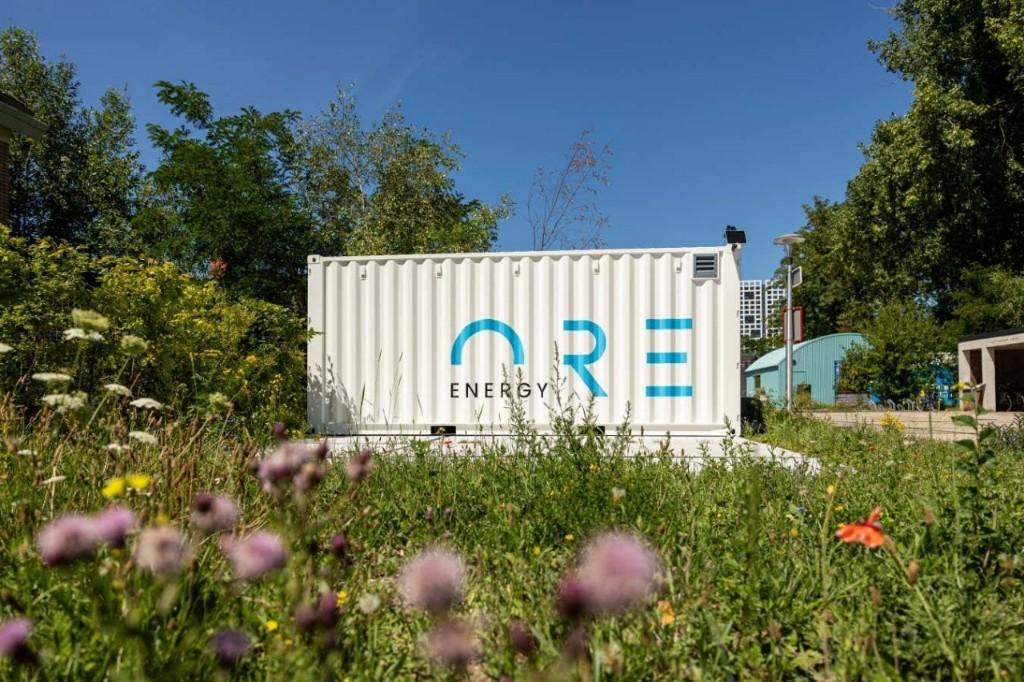
The iron - air battery system is placed in a standard 12 - meter container. Picture source: The website of New Scientist magazine in the UK
At that time, foreign media reported that Form Energy was also promoting a similar project and planned to deploy the technology in New England and the Midwest first.
In addition, research reports show that 100 - hour energy storage can enable data centers to maintain continuous power supply for several days without relying on gas power generation when encountering continuous cloudy days or insufficient wind, which is crucial for the goal of "24/7 clean power".
Different from traditional diesel generators or gas backup power supplies, iron - air energy storage does not require fuel replenishment and has almost no emissions during operation, which can fundamentally reduce the carbon emissions and operational pollution of data centers.
Therefore, we can be sure that the global demand for energy has long been forcing battery companies to develop more technological options.
So, will lithium batteries be replaced by iron - air batteries? Will iron - air batteries change the pattern of the energy storage industry?
02 Why Has a "Rusty" Battery Been Rediscovered?
If you want to answer the above two questions, you first need to understand the working principle of the iron - air battery -
When the battery discharges, iron reacts with oxygen in the air to form iron oxide, that is, rust, and at the same time releases electrons to generate current; when the battery is charged, the current flows in the opposite direction, reducing iron oxide back to metallic iron.
In other words, this battery is actually controlling the "rusting - derusting" cycle of iron.
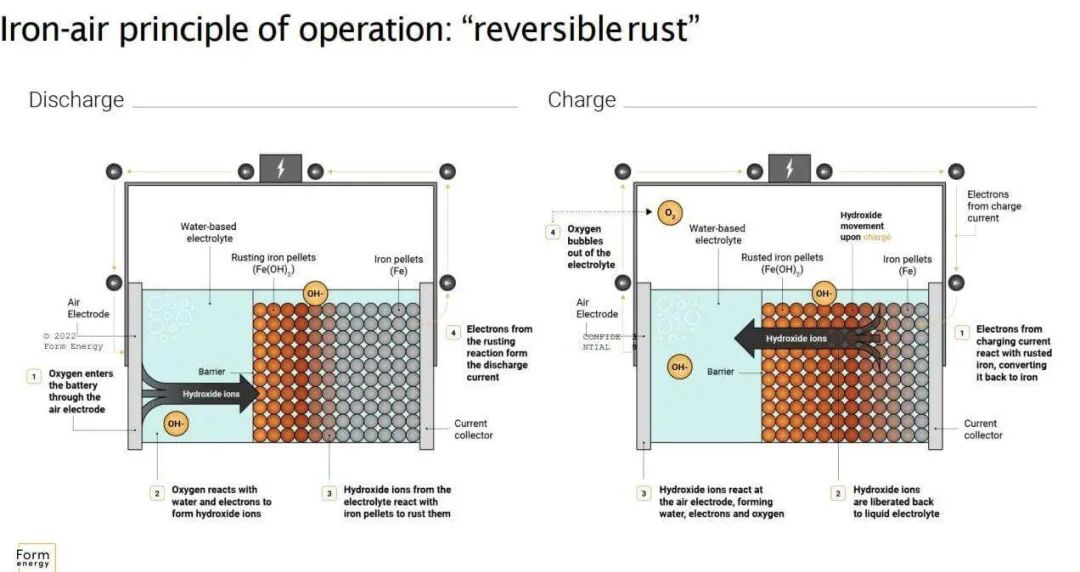
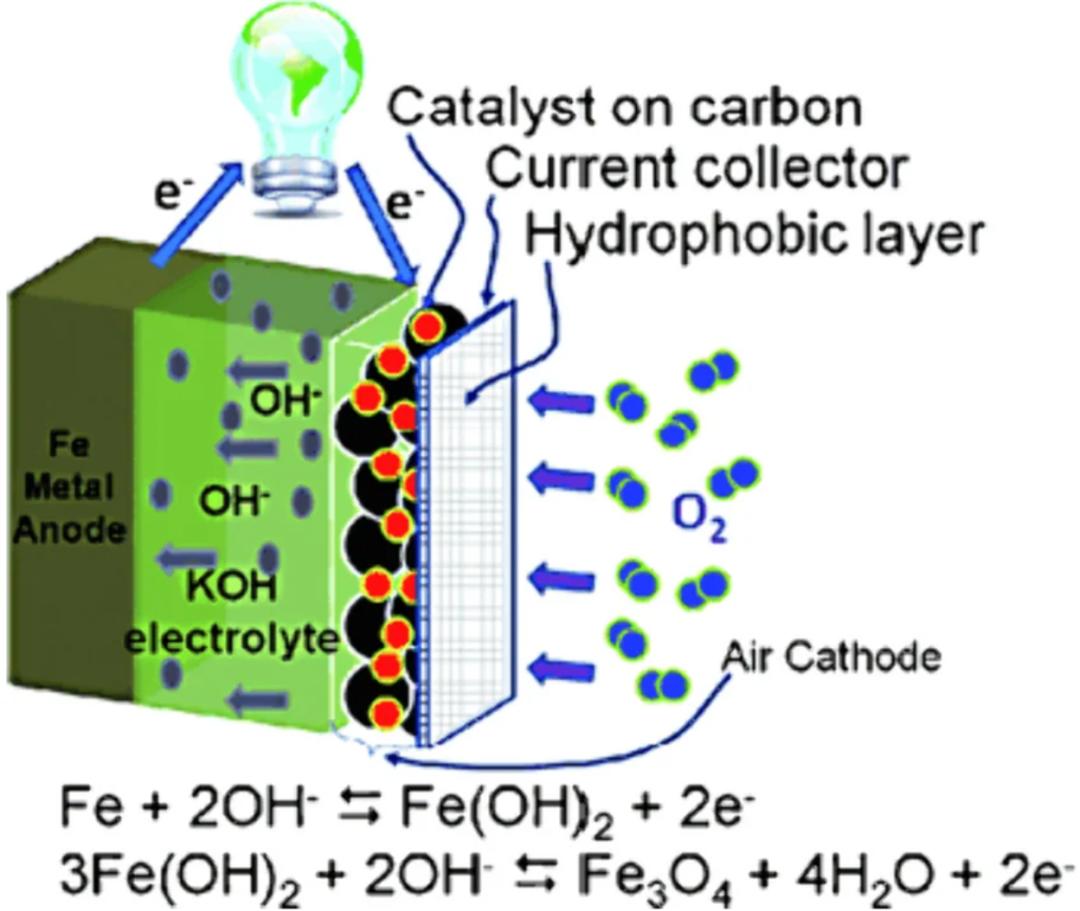
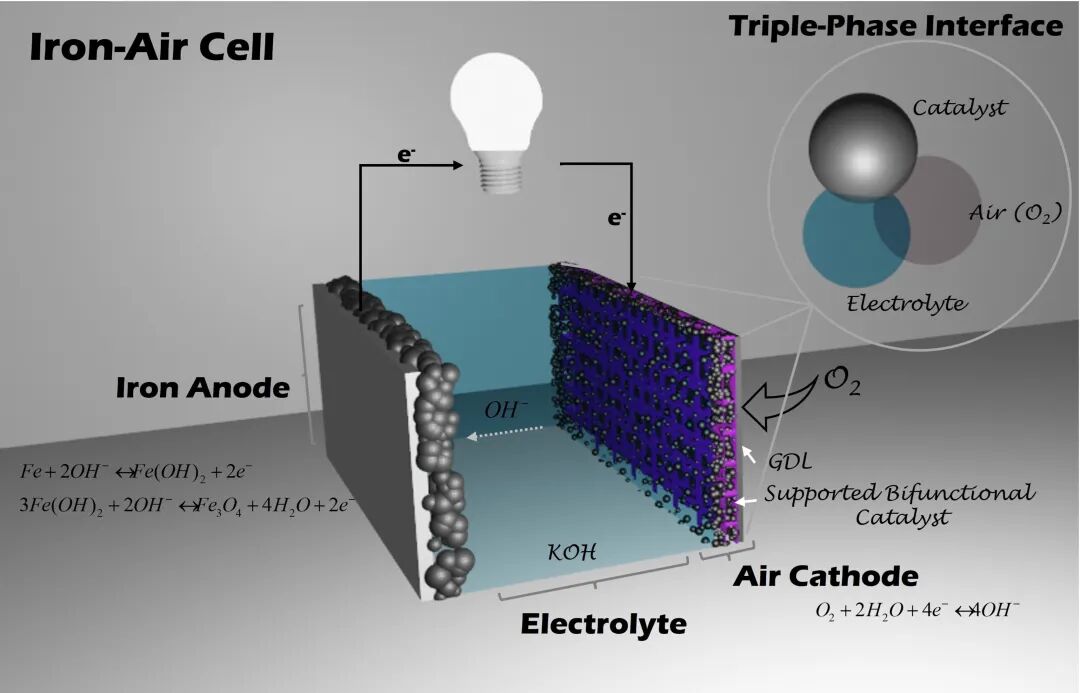
The picture shows the structural diagram of the iron - air battery module. The picture is from Form energy
As we all know, iron is one of the most abundant metals on Earth, and its price is much lower than that of battery materials such as lithium, nickel, or cobalt. Form Energy has said that its long - term goal is to reduce the energy storage cost to about one - tenth of that of lithium batteries.
But this technology also has obvious shortcomings.
First is the efficiency problem.
The industry generally believes that the round - trip efficiency of iron - air batteries is only 40% - 50%, significantly lower than that of lithium batteries, which is over 80%.
Second is the energy density.
The iron - air battery is very large in volume, so it is almost impossible to be used in electric vehicles or consumer electronic devices.
And the industrialization maturity still needs to be verified.
Although Form Energy's FC1 factory has started trial production and plans to reach an annual production scale of 500 MW in 2028, large - scale mass production, quality stability, long - term cycle life, etc. still need to be verified.
Finally, there is the complexity of operation and maintenance.
Gas management, thermal control, and humidity control are the unique operation and maintenance challenges of the iron - air battery system. A new operation and maintenance system still needs to be established for the large - scale application of this new technology.
This is why many energy analysts believe that it will not replace lithium batteries but will play a different role in the energy storage system.
A professional once said: "In the future, the power grid is likely to use multiple battery technologies at the same time. Lithium batteries are responsible for short - term energy storage, while iron - air batteries may be responsible for power supply for several consecutive days."
03 Will Iron - Air Batteries Impact the Lithium Battery Industry?
After Google announced this order, the most common question in the market was:
Will iron - air batteries become an alternative technology to lithium batteries?
At present, most industry insiders give a negative answer.
The reason is that the two types of batteries solve different problems.
The advantages of lithium batteries lie in high power density, high efficiency, and fast response speed, so they are very suitable for scenarios such as electric vehicles, consumer electronics, and grid frequency regulation. The advantages of iron - air batteries lie in extremely long energy storage time and low cost potential, making them more suitable for grid - level energy storage.
In a sense, the two are more like complementary relationships.
In fact, in the global energy storage technology competition, the iron - air battery is just one of many routes. Currently promising long - term energy storage technologies also include flow batteries, compressed air energy storage, and hydrogen energy storage.
Flow batteries expand the energy storage capacity by storing electrolyte, and there have been many commercial projects in China and Europe; compressed air energy storage uses underground caves to store gas for power generation, and there are also large - scale demonstration power plants in Germany and China; while hydrogen energy storage is considered to be able to achieve longer - term energy storage.
Compared with these technologies, the advantages of iron - air batteries are simple structure, cheap materials, and the ability to be directly connected to the power grid like traditional batteries.
The reaction of the capital market also shows a similar judgment.
After Google announced the purchase of iron - air batteries, Alphabet's stock price only fluctuated slightly during the trading that day, without obvious rise or fall. The stock prices of companies in the lithium battery industry chain also did not change significantly.
Some investment institutions believe that this just shows that the market does not regard iron - air batteries as a replacement for lithium batteries. On the contrary, with the development of renewable energy, electric vehicles, and artificial intelligence computing power, the energy storage scale required by the future power grid may be dozens of times that of today.
In this context, the emergence of new technologies often means the expansion of the market, rather than stock competition.
On the other hand, through this project, we can also perceive that the global demand for energy is showing a comprehensive increase in multiple factors such as discharge duration and cost control.
Although the 30 GWh project is the largest iron - air battery plan to date, reports from multiple market research institutions point out that the global energy storage market as a whole is growing significantly.
Large - scale European reports predict that by 2030, the installed capacity of battery energy storage systems will reach about 80 GW, including both short - term energy storage systems and more long - term energy storage technologies.
This shows that the demand for multi - technology routes in the energy storage market is growing rapidly, and the cooperation between Google and Form Energy also reflects the industry's actual attention to the "multi - day energy storage" niche technology route.
In the energy community forum Reddit, some industry insiders and energy engineers have made detailed calculations on the economic efficiency of this project.
Some users estimated based on public data that if Google pays $1 billion for the 30 GWh energy storage system, the corresponding system cost is about $30 - $35/kWh.
In contrast, the comprehensive cost of current grid - level lithium battery energy storage systems is usually over $100/kWh. From this perspective, iron - air batteries may indeed have significant cost advantages in long - term energy storage scenarios.
But some commentators also point out that this advantage does not come without a price.
The energy efficiency of iron - air batteries is significantly lower than that of lithium batteries. Their round - trip efficiency is usually only 50% - 70%, while the efficiency of lithium - ion batteries is usually over 90%. This means that in the case of storing the same amount of electricity, iron - air batteries need to consume more input power.
Some people also propose that from the perspective of system economics, the premise for iron - air batteries to be truly competitive is that the energy storage time is long enough. If the energy storage time is only a dozen hours, lithium batteries still have more advantages; but when the energy storage demand reaches tens of hours or even several days, the low - cost structure of iron - air batteries begins to show its advantages.
The iron - air battery technology still makes industry insiders skeptical beyond the cost factor.
It can be seen that what this project subverts the industry is not the technology replacement, but more importantly, it provides a new option.
Foreign media also reported and evaluated it like this: Google's project