From iBeer to AI Agent: Creation Remains Unchanged
In 2008, when the App Store was first launched, an app called iBeer quickly topped the paid app chart.
Today, the functionality of iBeer seems simple and even a bit absurd. It displays an animated image of a glass of beer on the screen. Using the iPhone's gravity sensor, as the user lifts the phone, it simulates the effect of the beer being "drunk".
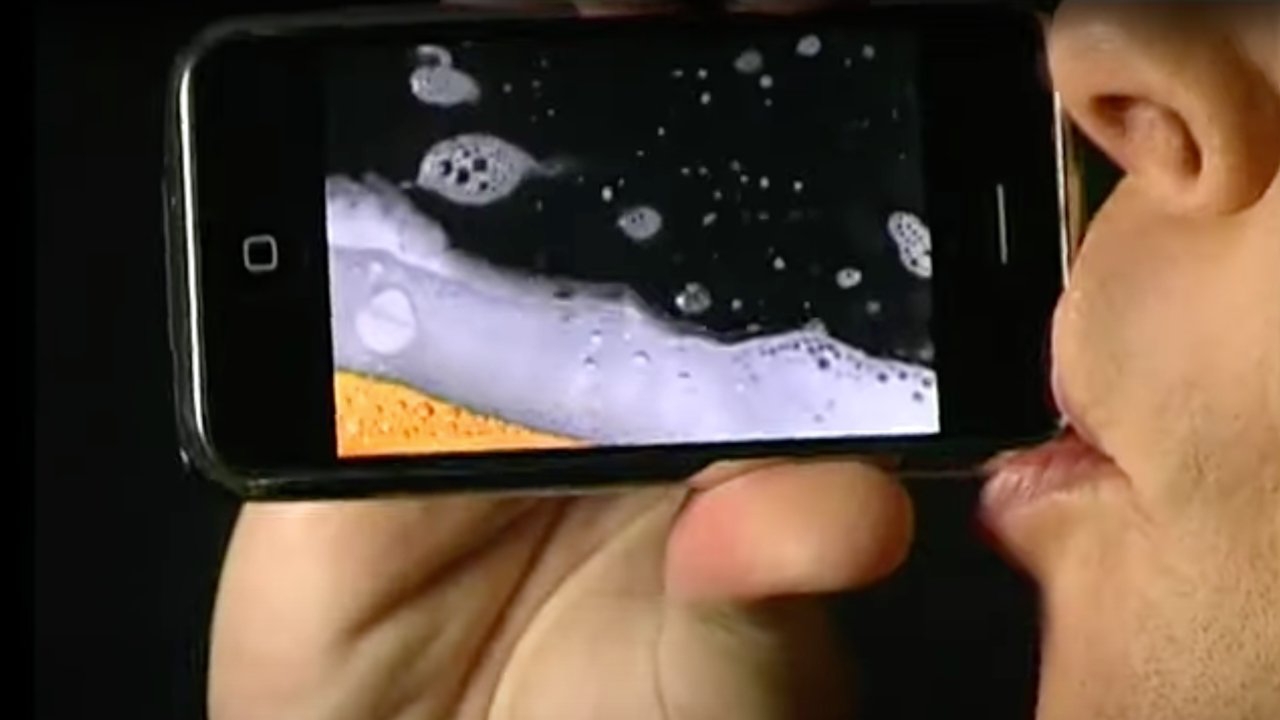
For the first batch of iPhone users, iBeer visually demonstrated how the gravity sensor worked. It could be used as a little trick in social situations and had a usage value of about 5 minutes. It was priced at one dollar.
However, this simple app ultimately achieved sales of millions of dollars. Of course, compared with the subsequent booming mobile - internet revolution, iBeer was at most a "small success". But it proved the great potential of the App Store as a business model. Before that, only software developed by large companies, which was complex in scale and had specific application scenarios, could achieve large - scale sales in the market. Independent developers often had to work out of passion.
It was from iBeer that the concept of "independent development" gradually became popular. Developers sold and distributed apps through the App Store, while users bought and evaluated apps through it. This established a positive feedback loop between user demand and product supply, which later triggered the mobile - internet revolution.
18 years later, app development has become a highly competitive field.
There are now millions of apps on the App Store, and thousands of new apps are submitted every day. It has become extremely difficult for any new app to gain a foothold on the iPhone. Moreover, users' time and attention for consuming apps have been fully exploited. In this context of "competing for existing attention", many product innovations have become a burden to users.
The positive loop between function delivery and user demand has gradually failed. Many apps with simple and convenient designs often struggle to attract users. The competition between different products has become a zero - sum or even negative - sum game of involution. Even many independent works with excellent user experiences find it difficult to resist the ecological siege of giants.
Currently, the consensus in the independent development circle is that for an app to succeed, it needs to at least make it onto the TOP 100 list to complete the initial cold start. The probability of success is not high, and most apps are mercilessly eliminated in the first - round selection.
Even if an app completes the cold start through Product Hunt or SEO, it is still a difficult problem for most apps to retain users and establish long - term usage habits and user relationships.
Especially after AI tools have been deeply integrated into the development workflow, the efficiency of developing new apps seems to have improved. However, developers now have to think about a new problem: how to ensure that apps do not fall into the trap of low - quality and homogenization while using AI for development.
In fact, the significance of AI for independent development should not be just "speeding up" to produce more apps. Instead, it should create a new, faster, more flexible, and more demand - oriented application form. Current development assistance tools have proven that AI can free us from heavy coding work and help us find a broader product perspective to address neglected needs.
This will be the main theme of product innovation in the AI era and the only way to break through the current competition in app development.
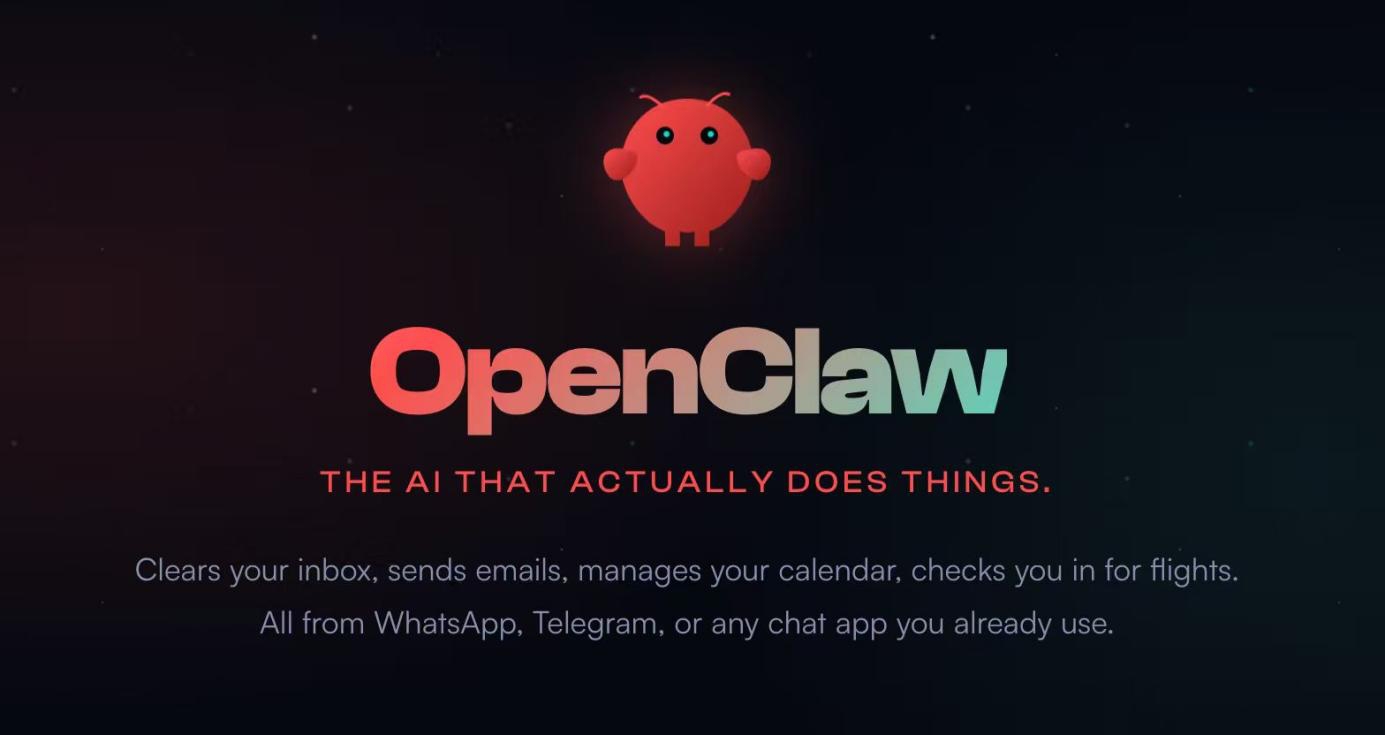
Actually, at the beginning of 2026, we witnessed the emergence of OpenClaw.
OpenClaw is an AI Agent that can perform active learning and skill building. It runs on local devices, and users can interact with it through chat tools. It can actively analyze user needs, build skills, and schedule various APIs and other AI tools on the computer to complete tasks. It also has a longer context understanding and long - term memory ability, providing a personalized experience.
The emergence of OpenClaw is not only because it is a general - purpose and proactive AI execution tool, providing a more ideal interface for us to operate AI. More importantly, it brings new possibilities to the internet ecosystem where "attention and usage time have been exhausted".
This was the biggest problem in the early application of AI: the degree of automation was insufficient, and it was difficult to achieve positive iteration. In many cases, users still had to invest a lot of effort in writing prompts to solve a problem. When the AI did not give the desired result, this effort would instantly become a sunk cost, and users had to start all over again.
Now, the success of OpenClaw shows us the possibility of building an application that "helps users reduce usage time". At the beginning of 2026, Apple's newly released Xcode 26.3 also unlocked the ability of agentic coding, and developers can now directly use AI Agents for development in Xcode.
Both developers and users are standing at the door of this transformation, about to embrace this efficiency revolution.
Last year, we organized the LET’S VISION 2025 Apple Ecosystem Conference without any preset restrictions. The topics discussed ranged from spatial computing to large AI models. 52 speakers and workshop tutors, together with thousands of participants, tried to find a way out for mobile development in the post - large - model era.
This year, we believe that the most important keyword for LET’S VISION 2026 is still "creation", creating new things, even if their initial value is not obvious.
Just as at the beginning of the App Store, products like iBeer, which had little "practicality", achieved initial success. Products in the AI era also need new and breakthrough ideas. And just as the emergence of OpenClaw has changed the mindset that "the value of an app is to consume time".
We don't want to create replicated cases. Instead, we hope to ignite naive inspiration and creativity and find the next "small success" in the AI era.
In the past two years, in Apple's AI blueprint, they do not want AI to provide a closed and monopolistic product experience with existing hardware and software. Instead, they hope to replicate the success of the App Store ecosystem and give opportunities to developers. Just as behind the success of the App Store in 2008 was that iPhoneOS provided the most mature and user - friendly development kit to all developers.
This year, we have gathered the top forces on the global Apple platform. With the three core components of conference, exhibition, and annual awards, we have prepared LET’S VISION 2026 with the theme of "Born to create, Powered by AI". The conference will be held at the Shanghai Caohejing Conference Center from March 28th to 29th, 2026. The event site covers an area of nearly 3,000 square meters and is expected to attract 3,000 - 5,000 participants. At that time, excellent teams, brands, and investment institutions from the global Apple platform will gather together to jointly explore innovation opportunities and business prospects in the AI wave.
For more details, please visit the official website: https://letsvision.swiftgg.team