The mystery surrounding the screen of Samsung's new phone has uncovered the chaotic situation in the industry.
Samsung mobile phones may have been "duped" by their own screen supply chain, but their honesty also reveals a fact that the entire industry is reluctant to face.
Recently, media reports showed that Samsung sent a message stating that some previous content about the Galaxy S26 series models was untrue. The series of products did not use the rumored native 10-bit display screens. In fact, they still used 8-bit panels.
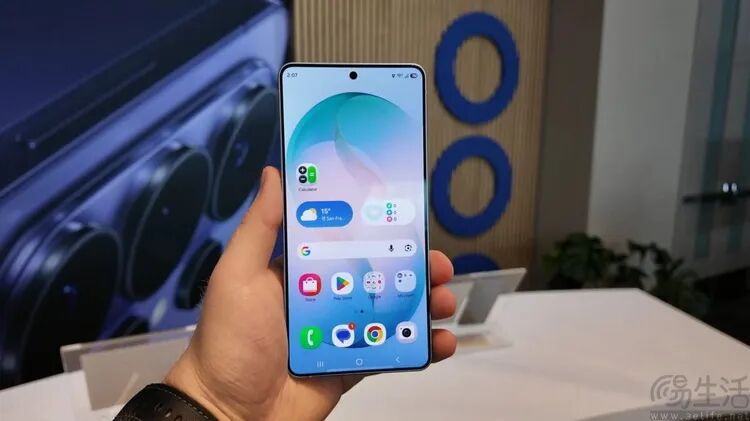
As soon as this news came out, there was an uproar on the Internet. The reason is simple. On the one hand, as we all know, almost all domestic Android mobile phones have long claimed to use "10-bit panels", and Samsung may be the only one that still dares to claim to use 8-bit panels.
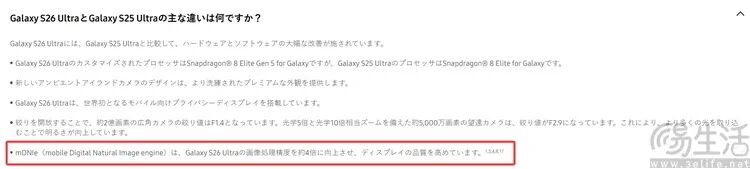
On the other hand, even Samsung, in its previous promotional copy for the Galaxy S26 series, actually had various details hinting that its display effect had been upgraded to 10-bit. For example, on the Japanese official website, it can be found that there is a statement saying that "the Mobile Digital Natural Image Engine (mDNIe) has quadrupled the image processing accuracy." And the difference in the number of color gamuts between an 8-bit panel and a 10-bit panel is exactly four times.
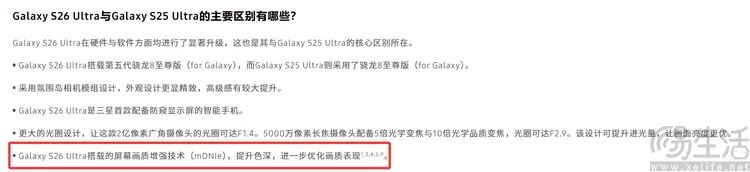
Interestingly, on the Samsung China official website, similar statements are obviously blurred.
So, what is the truth of the matter? Based on the current information from all parties, the most likely possibility is that the Galaxy S26 series uses a screen panel with native 8-bit color gamut, but its system color processing link has been upgraded to 10-bit. Through screen modulation technologies such as FRC dithering, the 8-bit panel can "be compatible" with 10-bit color signals, making it look closer to the effect of a 10-bit panel.
The test results from overseas users can further prove this point. When playing back the same 10-bit picture, the previous-generation Samsung models that only support 8-bit in both software and hardware showed obvious color banding, but the Galaxy S26 series can perfectly display 10-bit images, with a significant improvement in visual experience compared to the previous generation.
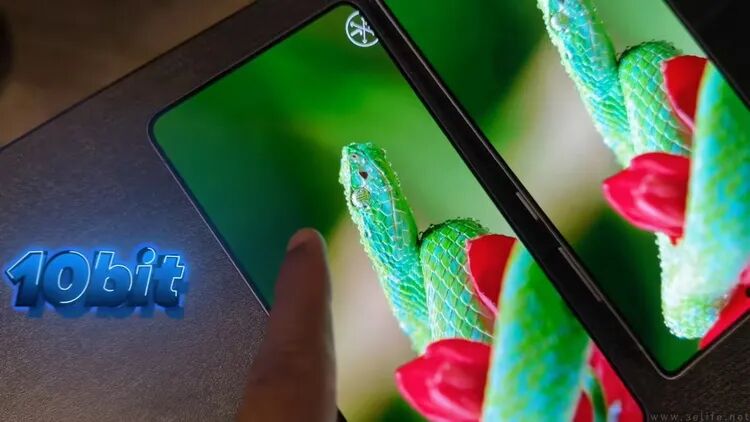
Users' actual tests show that the panel of Samsung's new phone can display a 10-bit effect.
So, at this point, we can basically draw a conclusion. That is, the screen panel of the Samsung Galaxy S26 series is most likely still an 8-bit native hardware specification, but its software and internal screen control circuit have been upgraded to 10-bit, enabling the panel to achieve a display effect close to 10-bit.
Put simply, this is the so-called "8-bit dithering to 10-bit". It's just that out of technical rigor, Samsung still chooses to disclose the native hardware specification of the screen, rather than simply stating that the new phone "uses 10-bit display technology" or "supports 1.07 billion color display".
Seeing this, friends who are familiar with relevant technologies and manufacturers' promotions may realize that Samsung may be worried that some users will "be nitpicky". But on the other hand, for Samsung's competitors, those other mobile phone manufacturers that blatantly write "10-bit screen" on their official websites, do they really use native 10-bit screen panels?
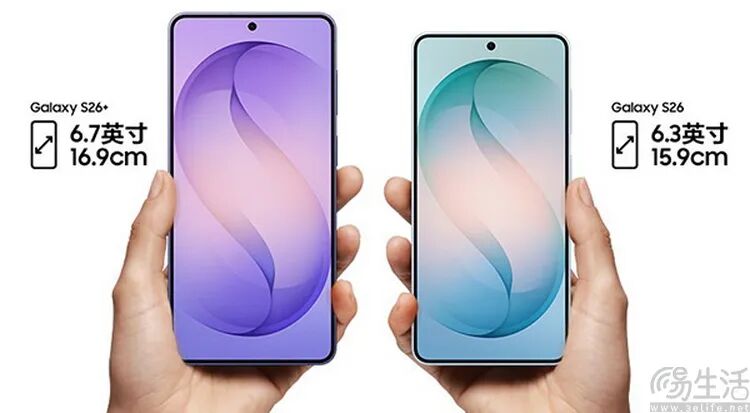
Regarding this point, from the current official websites of other mobile phone manufacturers, we haven't seen other models with similar statements to Samsung's for the time being. But as long as you know two "small things", you can understand this matter clearly.
Firstly, if a mobile phone manufacturer doesn't use a "native (hardware) 10-bit panel", they definitely won't claim to be "native". At most, they will only say "supports 1.07 billion colors" or "has a 10-bit panel". So you can think that any product that doesn't mention "native" 10-bit can be reasonably suspected to be 8-bit + FRC.
Secondly, if it is a native 10-bit panel, FRC may be added to achieve an "equivalent" 12-bit color display. However, it is almost impossible for an 8-bit panel to be transformed into a 12-bit panel through post-processing algorithms and modulation. So if you see some models (or other display devices) claiming to support "12-bit" or "68 billion colors", you can basically assume that they are at least native 10-bit hardware, and may even be the "noble" native 12-bit panel.
Understanding these two points, and then looking back at the current mobile phone industry, which devices really claim to be "native 10-bit", and how many products are "vague" in their descriptions of screen color gamut? I believe you can quickly see through the fog.
This article is from the WeChat official account "3eLife" (ID: IT-3eLife), author: 3eLife Editor. Reposted by 36Kr with permission.