AI "Rewrites" ZTE
On the evening of March 6, ZTE released its 2025 annual financial report. The company achieved a total operating revenue of 133.896 billion yuan for the full year, representing a year-on-year increase of 10.38%, returning to the fast growth track.
Beneath the performance figures, the real transformation is hidden in the business structure. The company's full-year revenue from computing power business rose by roughly 150% year on year, and its share in the total revenue climbed to 24.6%. Specifically, revenue from servers and storage increased by over 200% year on year, and revenue from data center products grew by 50% year on year. The government and enterprise business doubled its scale, hitting 37.222 billion yuan.
Over the past year, the entire ICT industry has been talking about AI, and ZTE has delivered an answer sheet focused on "deliverables". As can be seen from the financial report, the company has completed the initial capital accumulation and technical foundation construction required for AI transformation. At this year's MWC Barcelona, its full-scenario AI product matrix has further outlined a closed business loop ranging from "computing power infrastructure" to "end-user applications".
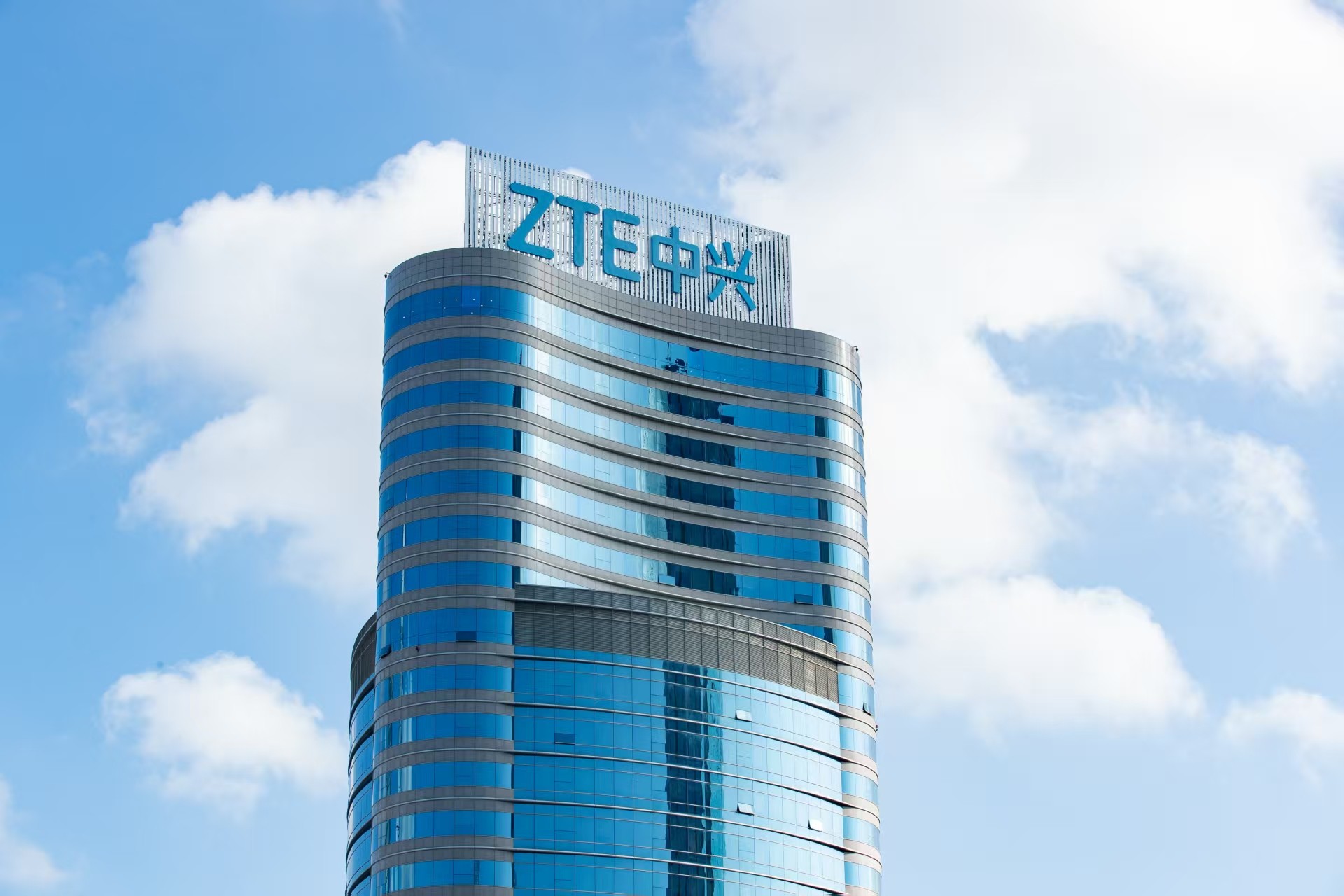
The other side of the coin also deserves attention. In 2025, ZTE's net profit attributable to shareholders was 5.62 billion yuan, down 33.3% year on year, and its gross margin also came under pressure. The profit decline is mainly affected by the dual impacts of industry cycle shift and business structure adjustment.
For one thing, capital expenditure of telecom operators has entered a contraction period. Last year, the total capital expenditure of the three major telecom operators fell by about 20% from the peak in 2023, and the decline in 5G investment exceeded 40%, which directly affected the company's revenue from traditional network equipment.
For another, global storage chip prices kept rising, and the supply-demand imbalance of DRAM and NAND Flash directly pushed up the hardware cost of computing power equipment. Midstream equipment vendors are facing dual pressures of rising upstream costs and strong bargaining power from downstream clients, and the entire industry is generally challenged by shrinking gross margins.
Facing such a cycle, ZTE's choice is to increase R&D investment. Its full-year R&D expenditure reached 22.76 billion yuan, accounting for about 17.0% of total revenue, which was invested in key technologies such as computing-native architecture and non-inductive migration.
AI-Native: End Products Complete "Species Evolution"
At the MWC exhibition in Barcelona, a mobile phone was surrounded by Chinese and foreign media and audiences queuing up for experience. A tester spoke to the phone: "Help me book a ride, reserve a hotel, and then pick the best local restaurant to order a meal." A few seconds later, the phone automatically opened the ride-hailing app to set the destination, switched to the hotel platform to complete price comparison and booking, and finally opened the review app to filter restaurants — the whole process required no manual operation, and the software ran automatically in the background.
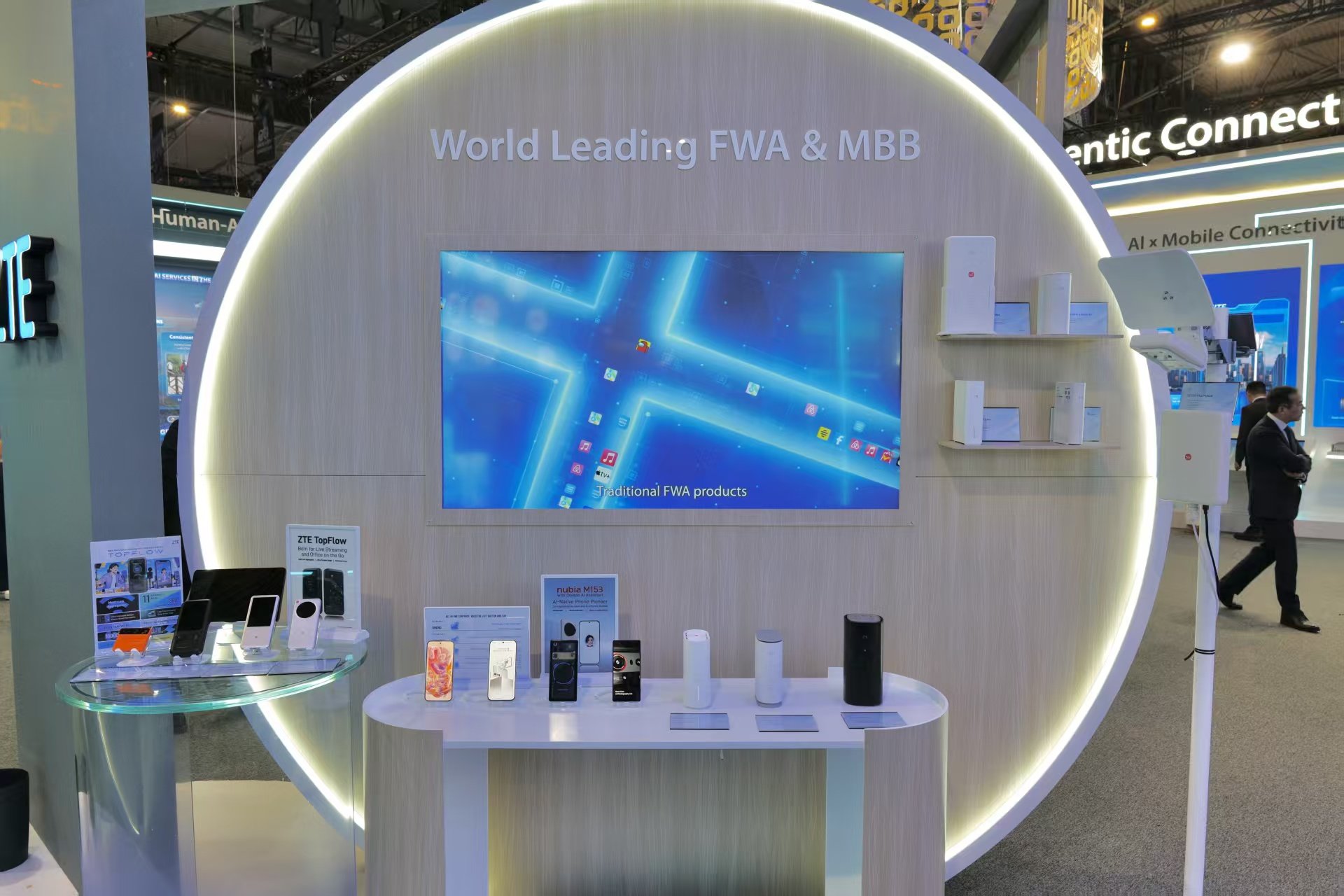
This phone is exactly the nubia M153 co-developed by ZTE and Doubao under ByteDance. In the words of Ni Fei, President of ZTE's Terminal Business Division, behind this "autonomous driving"-like intelligent experience, multiple technologies including end-side large models, OS-level API opening, and privacy computing are integrated, which tests a technology company's control over hardware and software integration capabilities.
For a long time in the past, most of the AI features mentioned by mobile phone vendors were in-app functions, such as AI beauty, AI translation, and AI image editing. But the breakthrough of nubia M153 lies in that it transforms AI from a "tool" to an "Agent". Users no longer need to learn how to operate apps, they only need to tell AI what they want, and the rest will be completed by the system-level intelligent agent.
The reason why mobile phones become the preferred carrier for AI agents is that they have the most sensors, the most frequent interaction scenarios, and the richest application ecosystem. It is the first entry point for everyone to access AI, and the bridgehead for AI capabilities to sink from the cloud to users' fingertips. ZTE chose to launch the system-level intelligent agent mobile phone at this node, targeting the trend that AI will evolve from "passive response" to "active service".
ZTE's layout of AI terminals is not limited to mobile phones. At the MWC booth, an AI pet named iMoochi also caught people's attention. It has five different personalities, can yawn, feel hungry, get happy when being petted, and even has its own "life rhythm".

iMoochi targets the emotional companionship track, providing users with a "fur kid" that requires no feeding, never gets sick, and can offer emotional value 24 hours a day. This product currently has five members with different personalities: Hopami, Mimiu, Cynomi, Mogogo and Morin. The supporting APP can manage the device, check the companionship diary, and learn about its "mood".
As the number of urban people living alone continues to rise and emotional connection becomes a scarce resource, the launch of iMoochi points to a judgment — the end point of AI is not necessarily a smarter tool, but also could be a warmer companion.
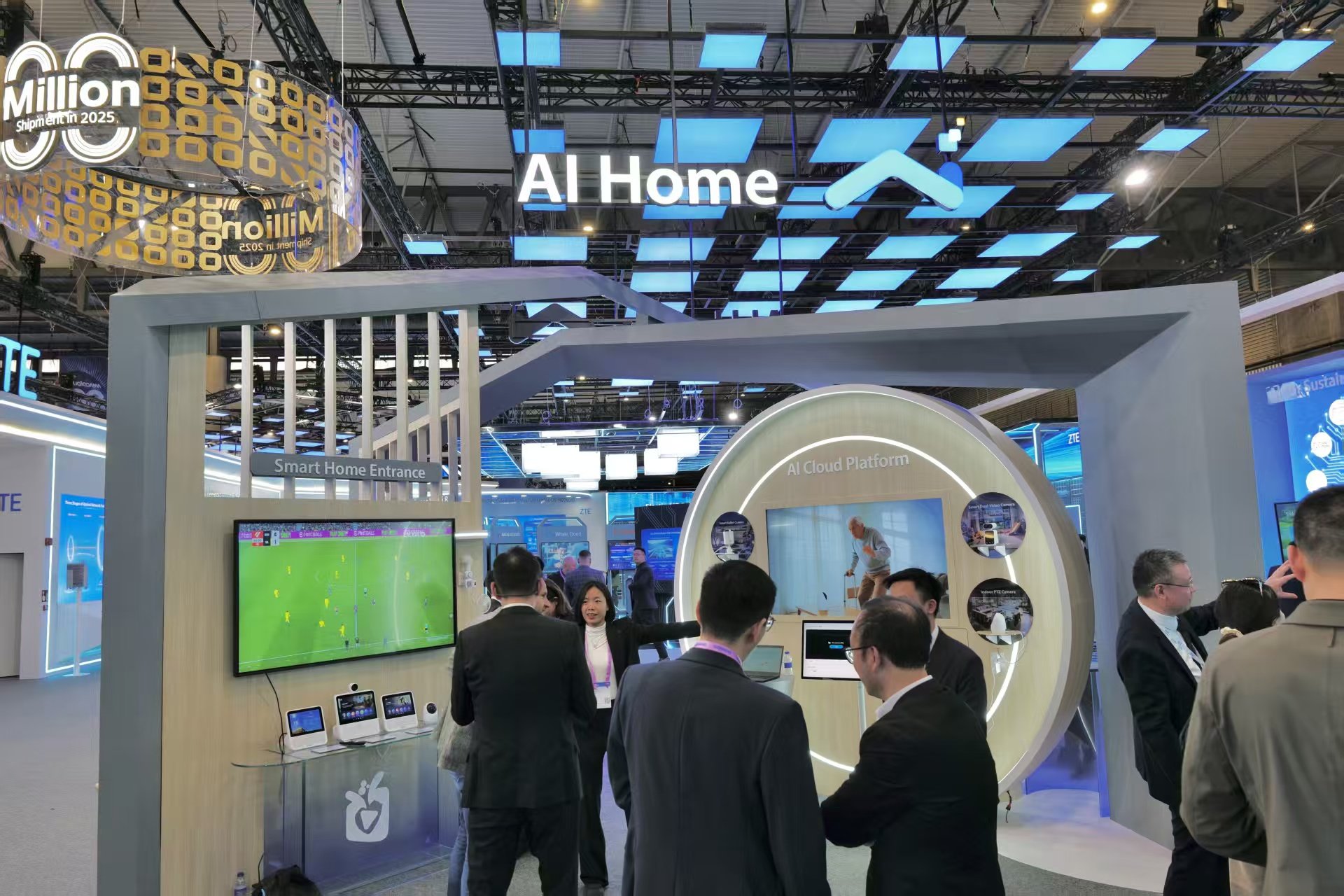
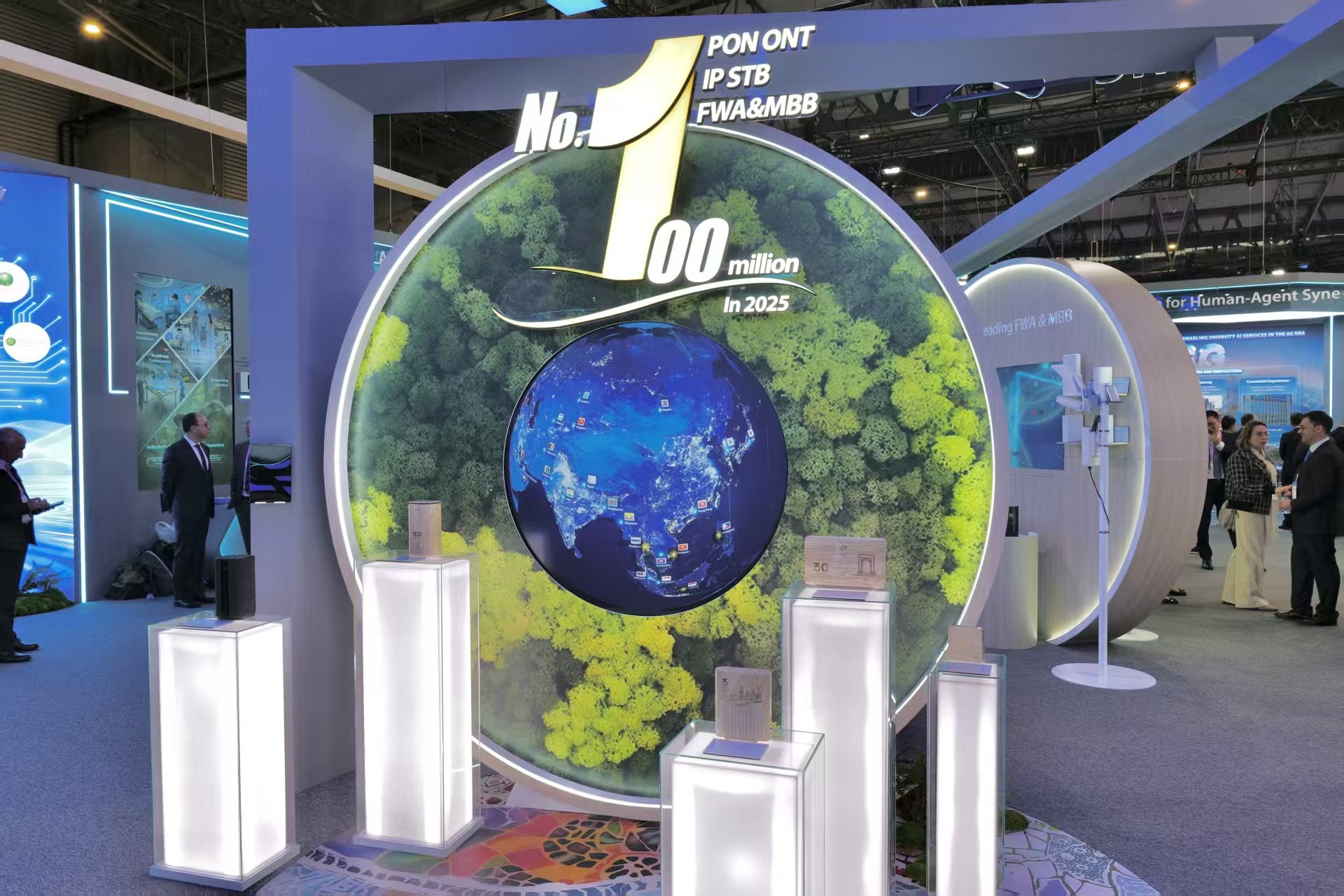
The AI mid-screen series covering home scenarios undertakes another role. By integrating capabilities of entertainment, communication, security and whole-house intelligent control, it becomes the hub of home intelligence. In 2025, the sales volume of ZTE's smart mid-screens has exceeded 1 million units, the cumulative shipment of FTTR products surpassed 30 million sets, and Wi-Fi 7 home terminals firmly rank in the top tier of the industry. These figures mean ZTE has enough user touchpoints to support the implementation of the AI ecosystem.
AI mobile phones, AI pets and AI mid-screens, the three types of products outline ZTE's AI map for its terminal business: taking mobile phones as the core entry, expanding emotional companionship scenarios with AI pets, and covering home intelligent spaces with AI mid-screens. By connecting personal and home scenarios through terminals of different forms, ZTE is trying to build a multi-terminal, multi-space AI interaction system.
Computing Power Product Revenue Grows by Over 150%: The Underlying "TCO Logic"
The most eye-catching figure in the financial report comes from computing power products: in 2025, the computing power business achieved leapfrog growth, with full-year revenue rising by roughly 150% year on year, accounting for nearly 25% of the total revenue.
The direct driving force for this growth is that ZTE has seized the opportunity of leading internet companies and industry clients increasing their investment in intelligent computing. The outbreak of large AI models is reshaping the demand for global digital infrastructure — whether it is operator networks, cloud computing centers, or enterprise-level computing facilities, all are entering an "AI-native" cycle.
The reason why clients firmly choose ZTE is hidden in TCO (Total Cost of Ownership).
At the chip layer, the self-developed chipset allows ZTE to carry out customized optimization at the device level, reduce dependence on high-cost external components, control hardware costs from the source, and compress costs as much as possible in the cycle of rising storage prices.
At the algorithm layer, ZTE's continuous optimization on key algorithms enables the same hardware to deliver higher performance. The GigaMIMO technology improves the experience of edge users several times through AI integration, which relies on precise channel scheduling by algorithms instead of piling up antennas. The embedded AI Radio can reduce power amplifier energy consumption by about 40%, which directly translates to electricity cost savings for clients.
At the architecture layer, ZTE's launched high-efficiency orthogonal architecture super node supports 32 to 128 GPUs per cabinet, with an "all-zero-cable" design inside the cabinet, which not only improves integration, but also reduces failure points and maintenance costs. Based on a single cabinet, clusters ranging from 100-card scale to 10,000-card scale can be flexibly built, so that clients do not need to pay for long-term demand at one time, and can expand capacity on demand and make investment in phases.
At the delivery layer, ZTE's service network covering more than 160 countries and regions means clients do not need to build local support teams repeatedly when deploying globally. In 2025, ZTE's international market revenue reached 44.16 billion yuan, up 12.4% year on year. This delivery network itself is a cost advantage, the intelligent computing center construction of overseas operators and global deployment of multinational enterprises can all reuse the existing channels and service system.
At the standard layer, in-depth participation in the formulation of standards such as high-speed interconnection allows ZTE to maintain compatibility in the iteration of new-generation technologies and reduce clients' migration costs. In the Wi-Fi 7 field, ZTE has deployed more than 110 core patents worldwide, and its number of IEEE 802.11bn proposals ranks top 4 globally.
This set of capability portfolio has been verified at the product level. The AIR MAX solution empowers wireless networks and core networks through AI, realizing intelligent network operation and maintenance and improving traffic value. Up to now, AIR Engine has been deployed in more than 150,000 sites around the world, and its intelligent capabilities such as wireless energy saving and fault management have reached the top level of the industry in TMF's autonomous network rating.
Up to now, ZTE has built more than 500 green data centers around the world, landed 10,000-card level intelligent computing centers, and its intelligent computing servers have entered the core scenarios of leading enterprises in domestic internet, telecom, finance and power industries. Together with more than 1,000 partners, it has created a number of intelligent benchmarks in fields such as industrial manufacturing and urban governance.
Behind the explosive growth of computing power is the "TCO logic" that ZTE has proved feasible. Its accumulation in five dimensions including chips, algorithms, architecture, delivery and standards exactly responds to the cost proposition that clients care most about.
A Re-evaluation of "Full-Stack Competitiveness"
After "shifting track" to AI, how should the market re-evaluate ZTE? In the short term, it is a fact that profitability is under pressure. But in the long run, the real value anchor lies in: when the evolution of AI technology enters a new stage of "system capability competition", what irreplaceable moats does ZTE have?
The first moat is end-to-end integration capability. Compared with pure software companies, ZTE's AI advantage lies in its depth of "reaching down to the chip base and perceiving up to scenario applications". From base stations to mobile phones, from cloud to terminals, from networks to chips — this reconstruction of "underlying logic" means that when AI applications require hardware-software integration optimization, ZTE can realize full-link tuning from the underlying instruction set to the upper-layer business logic.
The GigaMIMO technology improves the experience of edge users several times through AI integration, proving that ZTE is not developing an isolated AI, but building a digital intelligent base that can "perceive, think and self-operate". The embedded AI Radio reduces energy consumption by nearly 40%, which relies on the extreme optimization of power amplifier scheduling by AI instead of more expensive components.
The second moat is global implementation capability. ZTE's business covers more than 160 countries and regions around the world, and it has accumulated rich overseas experience and local service capabilities. When AI applications enter the stage of global competition, this "implementation capability" is becoming a scarce resource. No matter deploying intelligent computing centers for overseas operators, or promoting AI terminals to the global market, ZTE's global network is an important leverage for its AI strategy.
Communication network is the foundation of AI construction, "computing power without network is an information island". What ZTE is doing now is exactly converting the coverage advantage of communication networks into the delivery advantage of AI services.
The third moat is the extreme pursuit of TCO. The current competition in the AI industry has evolved from "whether it can be built" to "whether it can be used well". Clients no longer pay for peak computing power, but pay for the comprehensive benefits of the full life cycle. ZTE's 40+ years of accumulated capabilities in five dimensions: chips, algorithms, architecture, delivery and standards, all point to the same goal: turning AI from a "luxury good" into an "infrastructure", so that clients can afford to use it, use it well, and use it sustainably.
At the current point, ZTE is at a critical stage of transformation between old and new growth drivers. Traditional network business contributes stable cash flow, AI computing power business contributes rapid growth, while profitability is under structural pressure during the transition period. This is a stage that every enterprise trying to go through the cycle must experience.
But the market may need to look at this pressure from a new perspective: when a company is willing to exchange short-term profits for long-term system capability construction, this kind of investment itself is a bet on the future competition landscape.