AI Solves Pain Points of Zero Platform in Simple and Fragmented Labor Transactions, LinShe Seeks Seed Round Financing
Zhuhai Moonlit Dome Technology Co., Ltd. has created the first AI-driven neighborhood micro-service C2C integrated service platform in China. It pioneered the AI scenario-based empowerment model for full social participation. The core products, the LinShe mini-program and APP, have completed the development of core functions and small-scale testing. The independently developed AMCP hybrid task cognitive planning architecture has obtained intellectual property layout. The project has officially launched a seed round of financing, and the first phase plans to be implemented in Jinwan District, Zhuhai to create a demonstration benchmark.
Industry pain points are prominent, and the demand for low-threshold services is urgent
With the acceleration of urbanization, the phenomenon of community atomization has intensified. Although the scale of China's Internet community service market reached 345.5 billion yuan in 2025, the industry shows obvious structural contradictions. The focus of competition has shifted from standardized high-value services to the competition of the matching efficiency of non-standardized low-value neighborhood micro-services supply and demand.
Data shows that there are 210 million flexible employees in the country. More than 84% of college students are willing to use fragmented time to realize lightweight labor monetization, but they cannot be matched due to the high threshold and fixed time requirements of traditional part-time job platforms. The high-frequency micro-needs of 250 million urban households in the country, such as picking up express deliveries on behalf of others and temporary escort services, are ignored by mainstream platforms due to low unit prices and non-standardization, and have long been in a state of "demand exists but no channels". At the same time, the lack of trust guarantee, chaotic pricing, and lack of supervision in neighborhood transactions further restrict the large-scale development of community micro-services. The high non-standardization of content services and the mismatch between supply and demand have become the core bottlenecks in the industry's development. Against this background, the AI-driven neighborhood micro-service C2C platform launched by LinShe takes the full low-threshold social participation as the core concept and solves the matching pain points between community labor and micro-needs from the source.
Pioneering AI full-process empowerment to build a new benchmark for community services
LinShe systematically expounds the core concept of AI scenario-based empowerment for neighborhood micro-services for the first time. This concept is based on low threshold, high trust, and strong matching, and emphasizes providing full-process credit endorsement, pricing reference, and performance guarantee for neighborhood micro-labor through in-depth scenario-based customization of mature commercial AI technologies, aiming to build a replicable and iterative community micro-service transaction methodology and trust system. The LinShe team said: "We are committed to building a 'flexible employment and convenient service infrastructure' at the community level, providing lightweight social participation tools for the public, activating idle community labor, and reconstructing the connection between neighbors."
The team further explained the core vision: "We not only develop AI intelligent service tools, but also build the underlying infrastructure for grass-roots community services in the digital economy through technological empowerment." Under this concept, the mission of AI technology is to lower the participation threshold rather than replace manual labor, so that everyone with time and ability can participate in community services, and every micro-need can be efficiently met. The feedback from an internal test user confirms this value: "The platform automatically plans the order-taking time according to the class schedule, allowing one-click order-taking and leaving a full record, making it simple and reassuring to monetize fragmented time."
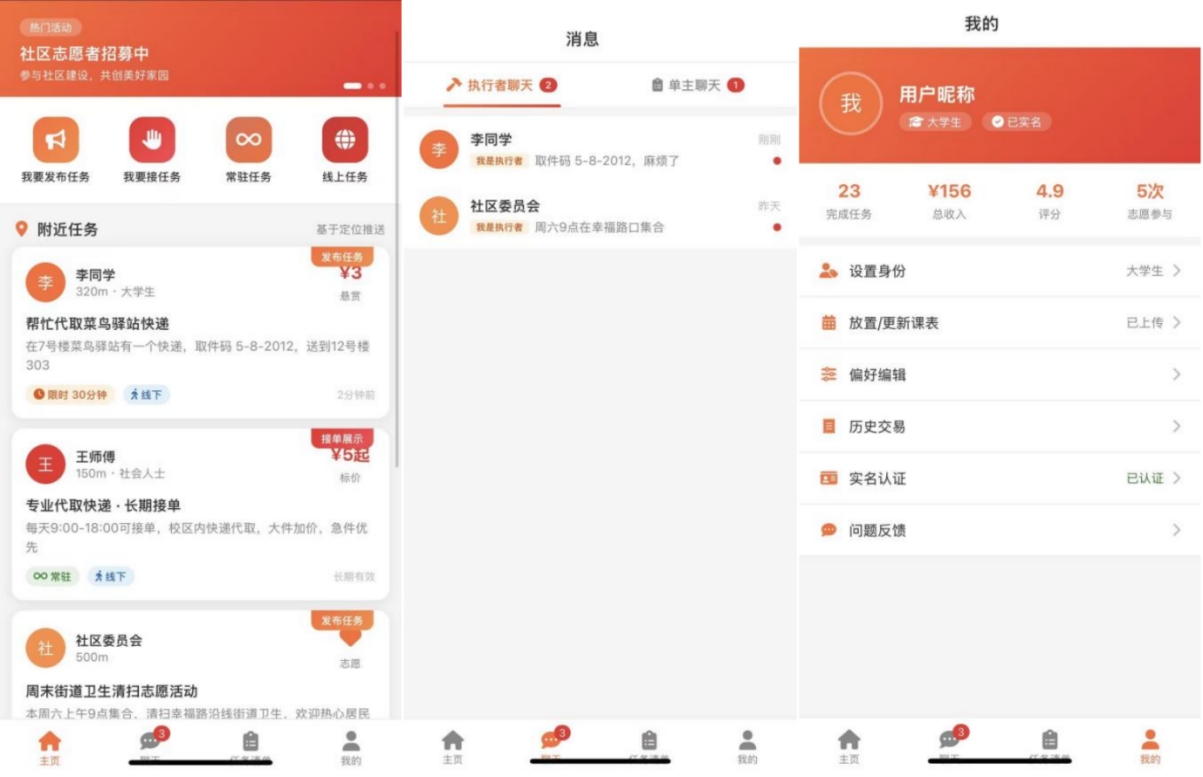
As the practical carrier of the concept, the LinShe platform is equipped with the independently developed AMCP hybrid task cognitive planning architecture, which integrates vector databases, deep learning, and RAG algorithms. It has four core functions: AI intelligent pricing and compliance review, intelligent time/task planning, real-time AI auxiliary guidance, on-chain evidence storage, and intelligent arbitration. At the same time, it supports lightweight operations such as one-click WeChat login, class schedule upload, and preference customization, serving the ultimate goal of "activating full social participation and building a warm neighborhood community".
Supported by a professional team, technical strength is verified
The establishment of LinShe stems from a keen insight into the market gap - there is a lack of an AI-empowered integrated service platform that can effectively match neighborhood micro-needs and adapt to fragmented labor in the market. The core team consists of experts from the fields of the Internet, artificial intelligence, and community governance, with rich experience in technology development and scenario implementation. At the same time, it jointly establishes an advisory network with experts from universities, community service centers, and legal institutions, forming a three-wheel drive model of technology + scenario + compliance to ensure that the product is highly compatible with user needs and grass-roots governance needs. The project completed the full process from concept verification, technology development to small-scale testing in a short period after its launch. The automatic order-taking accuracy of the AMCP architecture reached 82%, and the platform functions and transaction models have received positive feedback from users and community institutions in the pilot area.
Vast market space, launching a seed round of financing
According to industry reports, in 2025, the potential annual transaction scale of the sub-field of China's community micro-services exceeded 200 billion yuan. With the addition of needs such as flexible employment and community second-hand transactions, the overall market scale exceeded one trillion yuan. The neighborhood micro-service C2C track is still in a blank state, providing broad development opportunities for technology innovation enterprises.
LinShe has officially launched a seed round of financing, with a planned financing of 400,000 yuan this time. The funds will be mainly used for pilot operation and market promotion in Jinwan District, Zhuhai, as well as platform technology maintenance and compliance optimization. The company plans to accelerate the pilot implementation and product iteration through this round of financing, quickly accumulate core users, run through the single-region profit model, consolidate its leading position in technology and model in the field of AI-driven neighborhood micro-services, and gradually achieve large-scale replication across the country in the future to build a benchmark platform in the domestic community micro-service and full social participation track.