A major achievement from the Tongyan Institute: A set of strategies enables humanoid robots to learn backflips and breakdancing with an accuracy rate of over 90%.
This year, humanoid robots once again became the focus on the Spring Festival Gala stage.
Compared with last year's wobbly yangge dance performance, Unitree's humanoid robots can now smoothly complete a series of performances such as martial arts, nunchaku, and drunken boxing. Their smooth operations have amazed the entire internet and made the public truly feel the progress of humanoid robot technology.
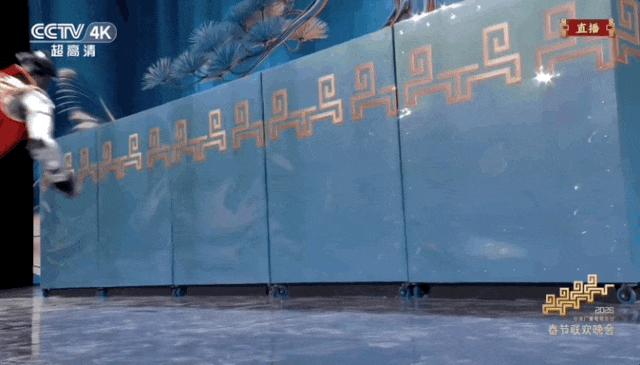
As the locomotion ability of humanoid robots continues to break through, some key technologies supporting these extreme actions are also beginning to surface.
Recently, the Beijing Institute of General Artificial Intelligence (BIGAI) released and open - sourced the new - generation general locomotion framework for humanoid robots, OmniXtreme.
This framework enables robots to complete a variety of high - dynamic actions, including backflips, Thomas spins, and martial arts kicks, through a unified strategy, and has achieved a success rate of over 90% on real robots.
This achievement proposes a new training path: instead of training strategies for each action separately, the robot masters a whole class of extreme locomotion abilities through the combination of generative models and reinforcement learning.
Jia Baoxiong, a researcher at BIGAI, said in an interview with Zhidx: "In the past, many robot control models needed to repeatedly adjust parameters for individual actions. The core goal of OmniXtreme is to find a unified strategy that allows robots to learn and generalize different types of extreme actions."
01. From "Grandma Robot" to "Martial God": The Leap in Humanoid Robot Locomotion Ability
The popularity of this wave of humanoid robots can be traced back to the 2024 Peking University Spring Sports Meeting. At that time, the robots in the student phalanx of the School of Artificial Intelligence at Peking University had slow gaits and stiff movements, and were jokingly called "Grandma Robots" by netizens.
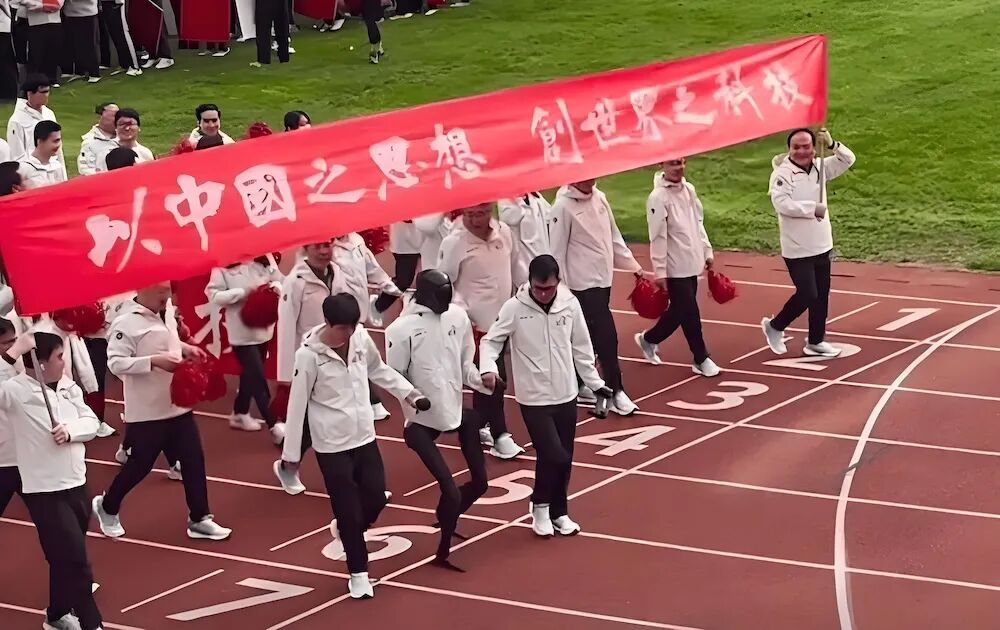
In April 2024, the student phalanx of the School of Artificial Intelligence at the Peking University Spring Sports Meeting
In the following two years, the locomotion control ability of humanoid robots iterated rapidly.
At the 2025 Spring Festival Gala of the Year of the Snake, robots could already complete dance actions such as yangge, but the overall actions were still rather mechanical. In August of the same year, at the First World Humanoid Robot Games, the BIGAI team won the championship in the single - robot dance competition with a dance performance that combined tango, tai chi, and cha - cha.
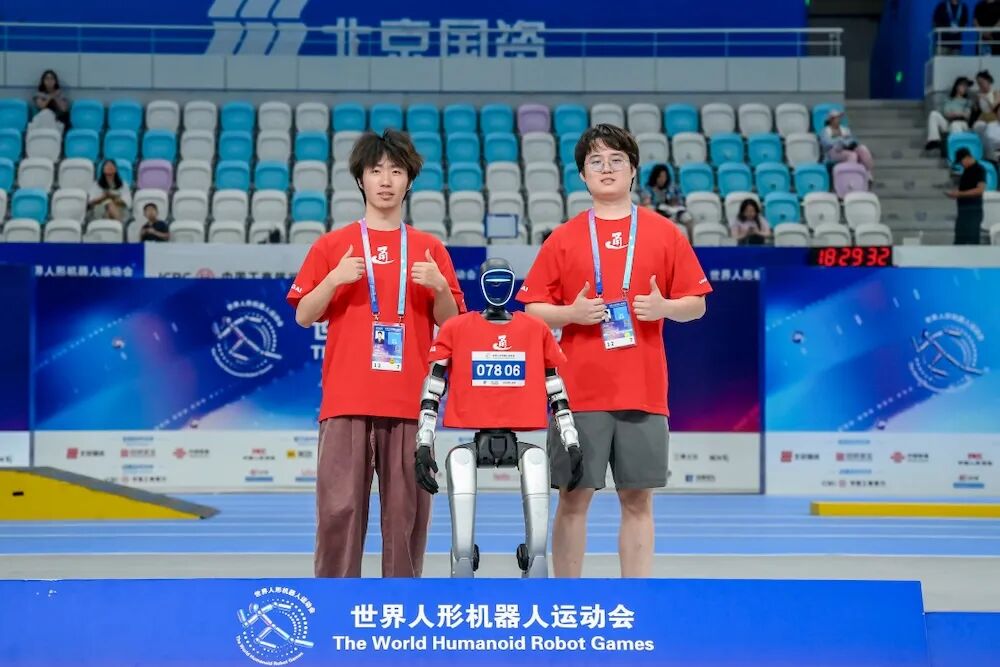
In August 2025, BIGAI won the championship in the single - robot dance competition at the First World Humanoid Robot Games
By the 2026 Spring Festival Gala, the robots in the program "Wu Bot" completed martial arts actions, and their locomotion ability further broke through.
In Jia Baoxiong's view, behind this change is a "technological breakthrough." When describing this process to Zhidx, he used the term "breaking the dimensional wall". He also added: "Previously, robots were mostly confined to laboratories or scientific research demonstrations, and few people thought they could achieve what they can do now. But with the rapid iteration of algorithms and hardware, we have gradually accepted that robots can not only dance but also complete many difficult actions."
02. Completing Extreme Actions with One Algorithm: OmniXtreme Solves the "Multi - Action Control Problem"
Enabling robots to complete high - dynamic actions such as somersaults, handstands, and breakdancing has always been a challenge in the field of robot control.
In recent years, reinforcement learning has become the mainstream technical route. Through large - scale simulation training, robots can gradually learn complex actions. However, as the types of actions increase, the system often faces new problems - the more actions there are, the lower the control accuracy becomes.
OmniXtreme aims to solve this problem. This framework adopts a two - stage learning mechanism.
In the first stage, the research team first trains multiple "expert strategies" for different actions, and then uses generative modeling methods to fuse these expert abilities into a unified strategy. This process borrows the Flow Matching technology in generative models, enabling the system to learn the "action distribution" rather than simple action mappings.
Jia Baoxiong used an analogy to explain this process: "You can think of it as first letting the robot imitate the actions of many top dancers, and then continuously adjusting through reinforcement learning on this basis to enable it to stably complete these actions in the real environment."
Compared with traditional reinforcement learning, which needs to continuously approximate the target action through the reward function, the generative model can establish a more complete action representation from the beginning, and thus has better generalization ability in multi - action scenarios.
03. Crossing Sim2Real: Humanoid Robots Learn to Do Somersaults in the Real World
In humanoid robot research, Sim2Real (simulation to reality) has always been a core challenge. Many actions can be completed in the simulation environment, but often fail when deployed on real robots.
The second - stage training of OmniXtreme focuses on solving this problem. The research team added a large number of real physical factors during the reinforcement learning process, such as:
• Modeling of motor torque - speed relationship
• Braking power limitation
• Battery energy transfer model
• More realistic physical simulation of actuators
These designs significantly improve the executability of the strategy on real robots. Jia Baoxiong told Zhidx that in the past, many teams needed to connect to the host through a network cable for control during deployment, while the goal of OmniXtreme is to achieve full on - board operation.
"The real difficulty lies not only in the algorithm itself but also in model inference efficiency and hardware adaptation. If these problems are solved, combined with a stable control model, the current real - world deployment effect can be achieved." Experimental results show that in real - robot tests, the success rate of this method in various high - dynamic action tasks is over 90%.
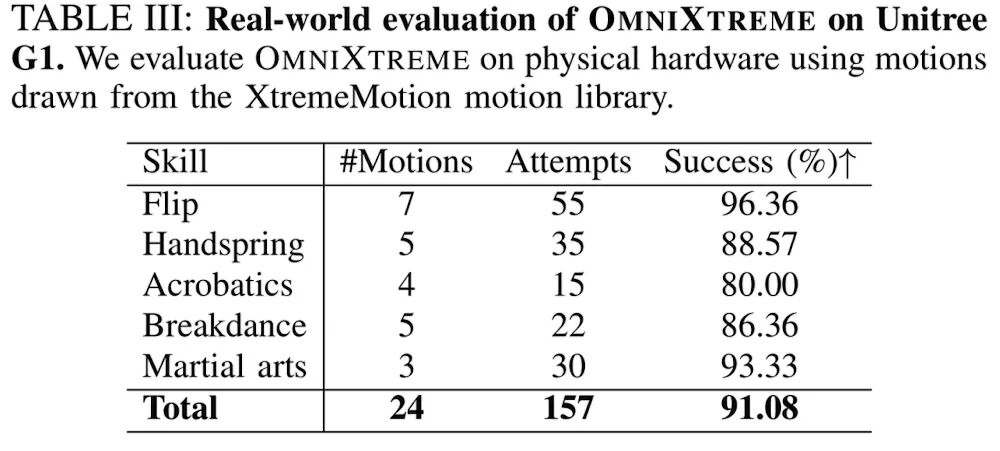
Success rate of real - robot deployment
In the view of many people, actions such as somersaults and dancing seem more like "showing off skills" and have little to do with practical applications. In response, Jia Baoxiong gave another explanation: "From a scientific research perspective, if a robot can complete these extreme actions, it can usually also handle work scenarios that humans can do."
He compared this process to "strengthening one's physique first" and added: "If a robot can master the control ability of human extreme sports, it will actually be easier to perform tasks in industrial, service, and other scenarios."
Therefore, extreme sports ability is often regarded as an "upper - limit test" of robot control ability.
04. Enterprises Build Bodies, Research Institutes Develop Brains: A R & D Path for Humanoid Robots Emerges
It is worth mentioning that the main authors of this research are all joint - training doctoral students from the Talent Training Program of the General Artificial Intelligence Collaborative Research Cooperation Body of the Beijing Institute of General Artificial Intelligence (referred to as the "General Program").
In terms of the R & D model, BIGAI adopts a division - of - labor and cooperation path: Enterprises are responsible for the robot body, and the research institute is responsible for the core intelligent algorithm. For example, BIGAI cooperates with Unitree Robotics to build an Embodied Intelligence Joint Laboratory for collaborative research.
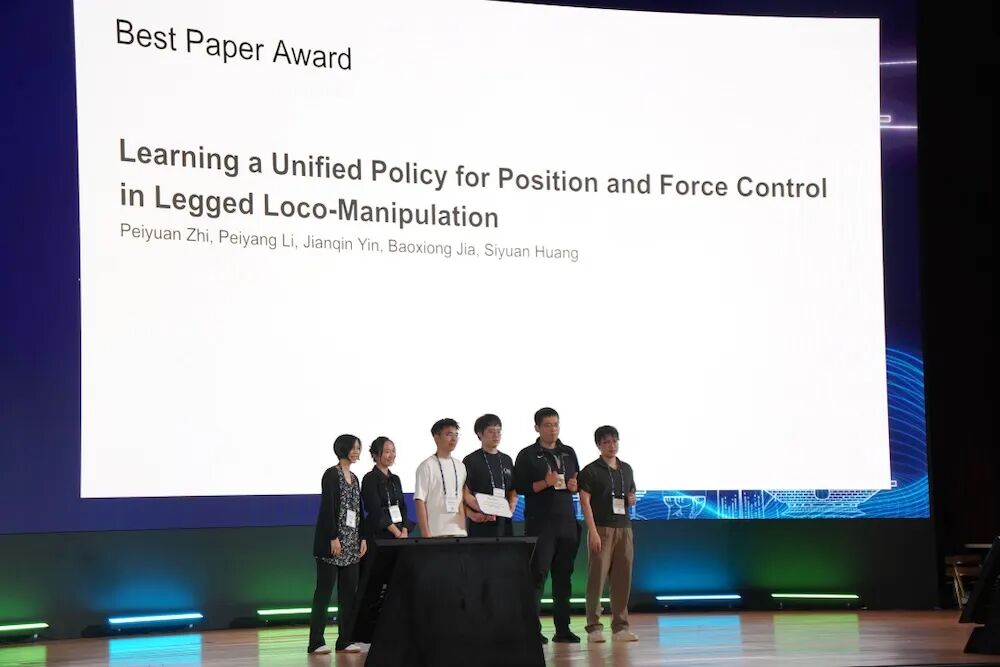
In September 2025, BIGAI won the Outstanding Paper Award at the International Conference on Robot Learning (CoRL)
Jia Baoxiong introduced that many technological breakthroughs actually come from the communication between engineers of both sides. "Some gaps between simulation and reality were discovered after discussions between us and hardware engineers."
In terms of industrialization, BIGAI has also incubated the embodied intelligence startup Delta Intelligence. Through the technological capabilities accumulated by BIGAI, Delta Intelligence explores the practical applications of humanoid robots in scenarios such as industrial manufacturing, inspection, and home appliances. Currently, relevant technologies are being tested in scenarios such as power grid inspection and automobile manufacturing.
Supporting this path is also BIGAI's talent mechanism. The R & D team of OmniXtreme mainly comes from the doctoral student training program of the "General Program" at BIGAI. This program is jointly carried out by BIGAI and many universities across the country, and has trained more than 300 doctoral students in the field of artificial intelligence.
Jia Baoxiong introduced that currently about 10 to 20 doctoral students in the team are involved in humanoid robot research. "Many students not only develop algorithms at the research institute but also go to enterprises to solve real - world problems with engineers."
05. Conclusion: The Next Step is to Make Robots Truly Enter Real Life
In Jia Baoxiong's view, there are two directions for humanoid robots to advance simultaneously in the next step.
On the one hand, technology will continue to challenge more difficult actions, such as parkour and movement in complex environments. On the other hand, robots also need to gradually enter real - life scenarios.
"In the future, robots may not only participate in competitions like now but also become assistants in daily life," he said.
When locomotion ability, perception ability, and autonomous decision - making ability are gradually integrated, humanoid robots may only need one last "breakthrough" to truly enter the real world.
This article is from the WeChat official account "Zhidx" (ID: zhidxcom), author: Jiang Yu, editor: Mo Ying. Republished by 36Kr with authorization.