The richest woman in her 20s-30s is born.
Author/Wang Lu
Report/PEdaily of the Investment Community
The wealth creation by AI is astonishing.
In the newly released "Hurun Global Rich List", Lucy Guo made it onto the list with a fortune of 9 billion yuan, becoming the world's richest self - made female among those born in the 1990s.
Her story is a microcosm of this wave of AI: She co - founded Scale AI 10 years ago. Even though she left the company long ago, she has made it into the top 1% of the world's richest people thanks to the wildly inflated equity in her hands.
Taking a broader view, a grander wealth picture is unfolding: More and more female entrepreneurs are rising strongly in the AI track, becoming the new protagonists in the spotlight. Beyond the limelight, another path to financial freedom has also been opened up. A group of young engineers, researchers, and even interns in AI companies have achieved a life - changing leap in just a few years.
At 31, the World's Youngest Female Billionaire
The growth story of a girl born in the 1990s is slowly unfolding.
In 1994, Lucy Guo was born into a Chinese - American family in San Francisco. Her parents are electronic engineers. Like most Chinese parents, they believed that studying hard was the right way and were very strict with her education. Tutoring, competitions, and abacus practice were all on the agenda.
She also showed her geek talent early on. As a teenager, she taught herself programming and sold virtual items online, earning her first pot of gold. Later, she was admitted to Carnegie Mellon University to study computer science. However, fate soon opened another door for her - after receiving the Thiel Fellowship, she made a bold decision: to drop out of school and start a business.
In 2016, she co - founded the artificial intelligence company Scale AI with Alexandr Wang. This company later became one of the most eye - catching unicorns in the AI infrastructure track.
However, when the company was booming, Lucy Guo chose to leave. The reason is not complicated. The two founders gradually had differences in the company's development direction: Alexandr Wang focused more on sales and customer expansion, hoping to quickly expand the business scale; while Lucy Guo believed that the company should invest more energy in the product and the team itself. The differences were hard to reconcile, and she finally withdrew from the daily operations.
Fortunately, she did one crucial thing right: She held on to about 6% of her shares firmly. With subsequent financing dilutions, this proportion dropped below 5%.
By 2025, when Meta acquired about 49% of Scale AI's shares, the valuation of Lucy Guo's shares soared to about $1.25 billion, making her one of the top 1% of the world's richest people.
After leaving Scale, Lucy first ventured into VC and founded a venture capital firm, Backend Capital, which focuses on early - stage startup investments. One of the most successful investments of this firm was a six - figure bet on the financial software company Ramp in 2020 - the company is currently valued at $32 billion. After that, she personally founded the creator economy platform Passes and quickly secured over $65 million in financing.
Facing the sudden wealth and attention, this young entrepreneur seems quite calm: "To be honest, I still feel like that little girl. My life hasn't changed much after getting rich."
They Are Rising
Lucy Guo is by no means an isolated case. Taking a broader view, more and more female founders are rising.
Looking at the Hurun list, the name of another Chinese woman born in the 1990s also catches the eye - Shuo Wang from Northeast China. There is a subtle overlap with Lucy Guo's trajectory. She also dropped out of the Massachusetts Institute of Technology (MIT) and returned to Beijing to try her hand at entrepreneurship.
In early 2019, with a keen insight into the trend of remote work, she founded the human resources technology company Deel. In the changing situation in the following years, this company hit the pain points of global employment, and its valuation soared to $17.3 billion (about 120 billion yuan). Now, at 36, Shuo Wang and Lucy Guo are on the "Hurun Global Rich List" together.
The 00s - born women are also making a strong impact. A few months ago, an AI startup called Axiom Math caused a stir in Silicon Valley. The founder is 24 - year - old Carina Hong from Guangzhou.
This 00s - born girl with the halo of a "genius girl" has a perfect resume: She was a regular winner in the Olympic Math competitions in high school. She entered MIT at 17 and won honors such as the Morgan Prize. Then she became a Rhodes Scholar and went to the University of Oxford to pursue a master's degree in neuroscience. She is also pursuing a dual doctorate in mathematics and law at Stanford University.
However, when the academic path seemed bright, Carina Hong made a decision that surprised the outside world: She dropped out of Stanford to start a business full - time.
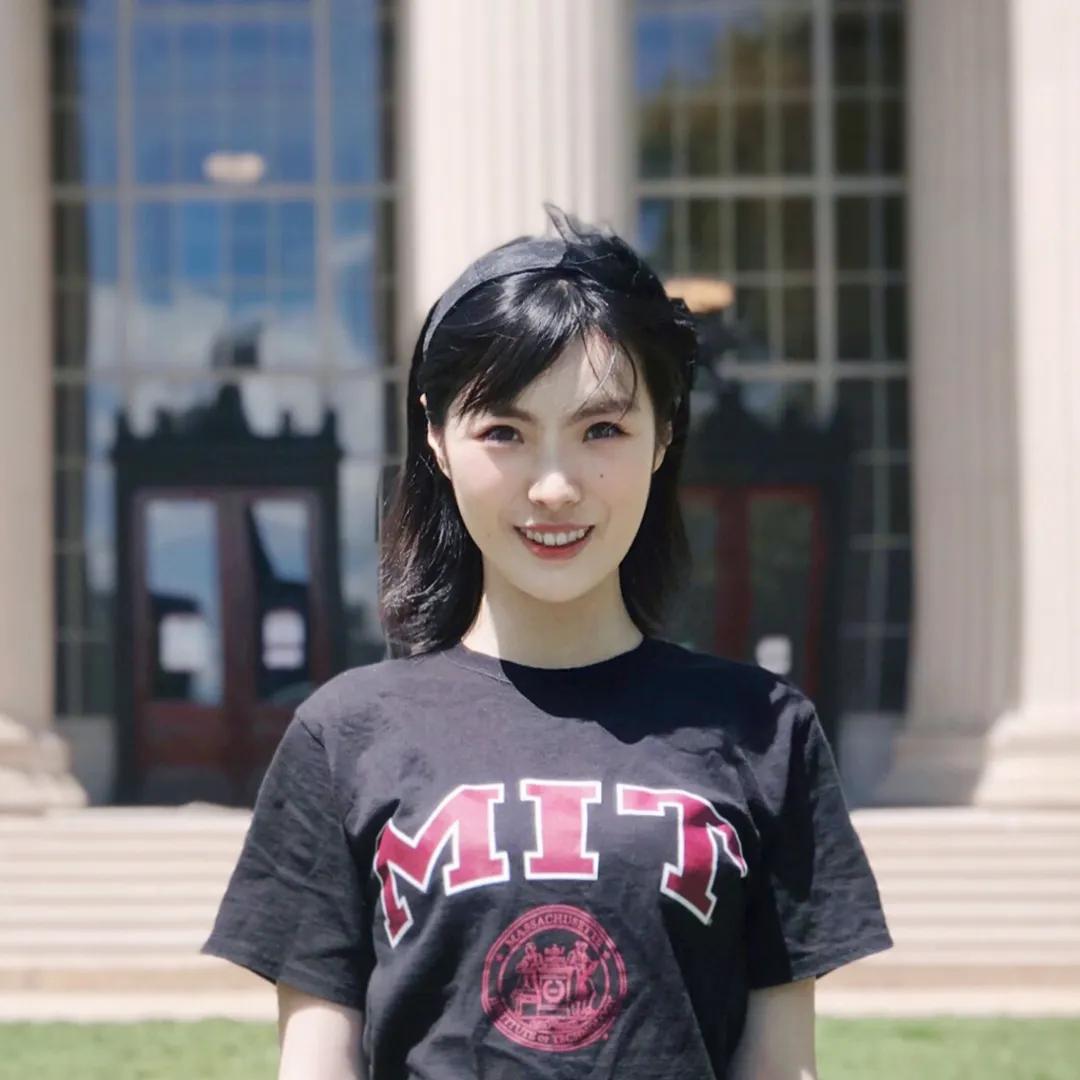
(Photo source: Massachusetts Institute of Technology)
The Axiom Math she founded is committed to using AI to solve extremely complex mathematical problems. Just a few months after its establishment and when the product is still in the early stage, Axiom Math has achieved a valuation of over $300 million and completed a $64 million seed - round financing. More dramatically, Carina Hong successfully persuaded Ken Ono, a world - class mathematician and a professor at Emory University, to resign from his tenured position and join her team full - time.
Carina Hong's journey may have just begun, but the wave of deep - tech initiated by Chinese women has already converged into a sea in the broader business landscape.
A set of data is quite meaningful: There are 285 self - made women on the "Hurun Global Rich List 2026", and China dominates with a 75% share.
Behind this is a clear and far - reaching business context.
In the past three decades, the previous generation of Chinese female entrepreneurs completed their initial wealth accumulation in traditional industries. From Luxshare Precision led by Wang Lichun, to Lens Technology built by Zhou Qunfei, and to Longfor Group founded by Wu Yajun, they have carved out a significant share in traditional fields such as manufacturing and real estate with their amazing resilience and execution ability, and written the wealth legend of Chinese women.
Now, the baton has been quietly passed. The new generation of female entrepreneurs often have top - notch academic backgrounds and are familiar with cutting - edge science. Armed with code and computing power, they are entering the most core hard - tech arena in the world.
AI Produces Young Billionaires
One has to admit that the wealth - creation wave of AI is more powerful than ever.
Looking back at this wave of large - model development, the wealth path of employees is being rewritten. Compared with Internet companies, these AI enterprises generally allocate a larger proportion of equity to ordinary employees.
A typical example is Zhipu. According to the prospectus, as of the end of June 2025, the company had 883 employees, and 452 of them held shares, accounting for 51.2%. In other words, in Zhipu, one out of every two employees is a shareholder.
As early as 2021, the company established two employee shareholding platforms, "Huihui" and "Zhideng", which together hold 16.55% of the company's shares. Among them, "Huihui" covers 426 current and former employees; "Zhideng" includes some employees and 16 full - time interns who serve as algorithm consultants. The wide coverage of equity incentives is rare.
Based on Zhipu's current market value, if we exclude the two executives in "Huihui", the average book value of shares held by the remaining 424 employees is about 35 million yuan.
A similar story also happened to MiniMax.
This AI up - and - comer, which has been established for less than five years, currently has about 385 full - time employees. Almost all employees in technical, product, marketing, and functional positions hold shares. The prospectus shows that the average age of the company's employees is only 29, and R & D personnel account for more than 70%. Among them, 363 ordinary employees hold about 3.41% of the total shares after the IPO.
The financial report shows that in the fiscal year 2025, MiniMax's employee salary expenditure reached $84.3 million (about 580 million yuan), and the total number of employees that year was 428. Calculated, the average salary per employee was close to 1.35 million yuan.
Looking back at the mobile Internet era, for ordinary employees to achieve a wealth leap through stock options, they often had to accompany the company through a long cycle of 8 to 10 years, go through multiple rounds of reshuffling, and wait for the company to go public. However, in the AI track, this cycle has been significantly compressed. With the rapid aggregation of capital, technology, and talent, the value of the equity in the hands of early employees has increased several times or even dozens of times in just two or three years.
As the wave sweeps in, those in it become lucky ones. AI has not only changed the world but also reopened the wealth imagination space for ordinary people at an unprecedented speed.
This article is from the WeChat official account "Investment Community", author: Wang Lu, reprinted by 36Kr with permission.