BYD is playing a big game.
After watching BYD's press conference, car owners who picked up their cars at the beginning of this year are probably starting to regret it.
The content of this press conference can be described as a powerful move. The main content can be summarized into two points:
Firstly, the second - generation Blade Battery and Megawatt Flash Charge 2.0. The battery can be charged from 10% to 97% in as little as nine minutes. In an experimental environment of minus 30 degrees, it only takes about ten - plus minutes to charge from 20% to 97%.
Compared with last year's Megawatt Flash Charge with a peak power of 1000kW, Flash Charge 2.0 has increased this figure to 1500kW, getting very close to the goal of equal charging and refueling speeds.
Secondly, BYD's attitude has changed from "not building a single charging station" to "building 20,000 stations". At the press conference, Wang Chuanfu promised to build 20,000 flash - charging stations by the end of the year.
To attract more users to place orders, BYD also announced that it will give new car owners an additional one - year free flash - charging privilege, with both electricity and service fees waived. This makes old car owners even more heartbroken.

With an unprecedented technology release and unconventional construction methods, BYD's ambition is visibly expanding.
Charging as fast as refueling
As BYD's flagship product, the first - generation Blade Battery uses CTP (Cell to Pack) design, skipping the module and directly integrating the battery cells into the battery pack. This significantly improves the volumetric energy density, giving lithium iron phosphate a comeback.
The energy density of the second - generation Blade Battery has only increased by 5%, which seems to indicate that the energy density of lithium iron phosphate has basically reached its limit. However, the charging speed of less than ten minutes is undoubtedly the biggest highlight after the upgrade.
The fast - charging performance and energy density of lithium batteries are a pair of contradictions. Fast charging means that lithium ions in the positive electrode need to move quickly to the negative electrode in a very short time. High - energy - density batteries make the positive and negative electrode materials thick and solid, making it difficult for lithium ions to move quickly.
This is also one of the reasons why, under the same chemical system, high energy density will inevitably sacrifice fast - charging performance.
At the same time, battery charging is a process that starts fast and then slows down. The charging speed is fast at low battery levels, and it will significantly decrease during the trickle - charging stage at the end. Sometimes, the time to charge from 0 to 80% is even shorter than that from 80% to full.
To put it simply, the movement of lithium ions from the positive electrode to the negative electrode is like people looking for parking spaces. It's easy to find a parking space when the parking lot is empty, but it becomes difficult when 80% of the spaces are occupied.
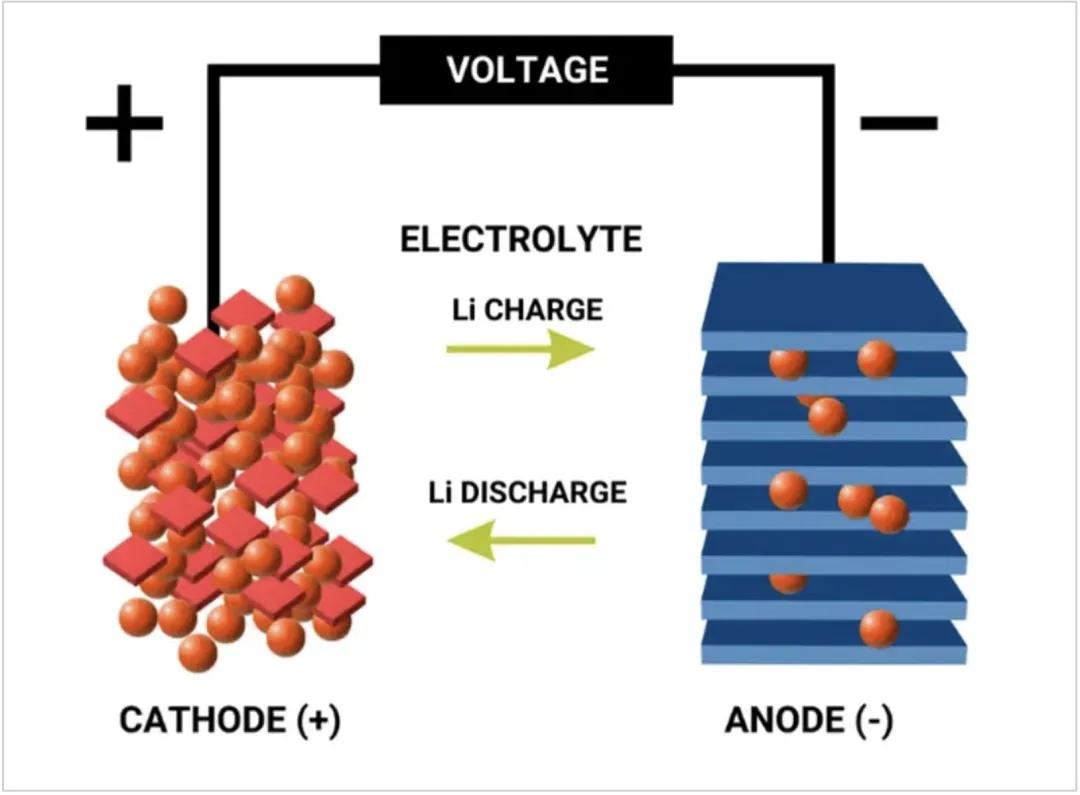
The moving direction of lithium ions during the charging and discharging process
Therefore, most car companies measure the charging speed based on "10% - 80%". However, BYD's test benchmark is that it takes 5 minutes to charge from 10% to 70% and 9 minutes to charge from 10% to 97%, which is highly valuable.
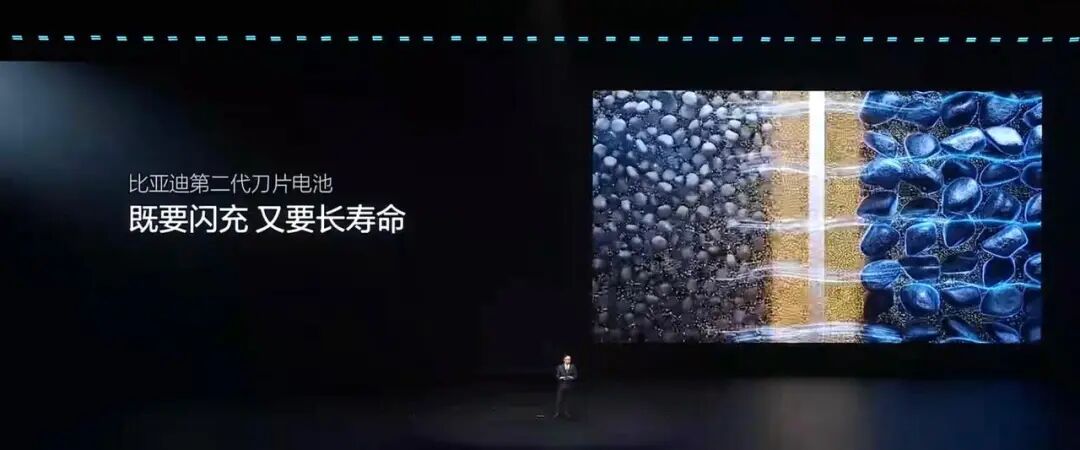
BYD's second - generation Blade Battery
The flash - charging device with a single - gun peak power of 1500kW looks a bit like science fiction.
All along, the biggest bottleneck in the expansion of high - power charging networks has been the grid capacity.
China has the world's largest power generation installed capacity, exceeding 3800GWh. However, it is still struggling to cope with millions of megawatt flash - charging piles.
BYD has also done the math. According to the existing 4.8 million public charging guns, if their power reaches the megawatt level, the impact on the power grid will be devastating.
BYD's solution is to promote "Photovoltaic - Energy Storage - Charging Integration". That is, the flash - charging stations are equipped with energy storage systems and photovoltaic power supplementary devices. They can store electricity in advance. The energy storage system can act as a buffer for the power grid and also serve as a power amplifier to achieve ultra - high - power electricity output.
Similar to peak - shaving and valley - filling, it charges during the low - load period of the power grid and discharges during the high - load period. In this way, as long as there is enough electricity in the "reservoir", there will be no current - splitting situation even when multiple cars are charging simultaneously.
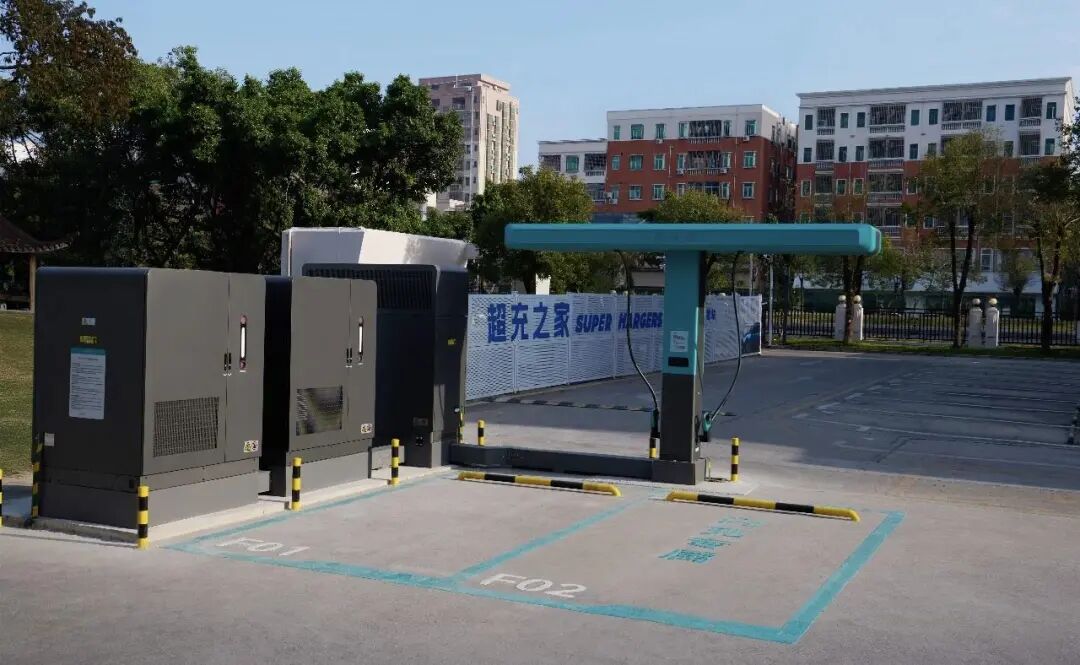
BYD's flash - charging station
Once the flash - charging piles are widely deployed, the pressure will be on the battery - swapping groups. As for BYD's actions, old car owners should be used to them.
Still for high - end positioning
The combination of "second - generation Blade Battery + Megawatt Flash Charge" may also be related to BYD's strategic direction in the automotive business.
In the past few years, BYD's automotive business has had a problem: it is invincible in the 100,000 - 200,000 yuan market, but has not made large - scale breakthroughs in the market above 200,000 yuan. This press conference may also be aimed at this goal.
There are ten models in the first batch to be equipped with the new Blade Battery: Four of them are high - end models from Yangwang and Denza, and BYD brand models include Seal 07, Sea Lion 06, Song Ultra, and a large SUV, Tang. Their starting prices are all above 150,000 yuan.
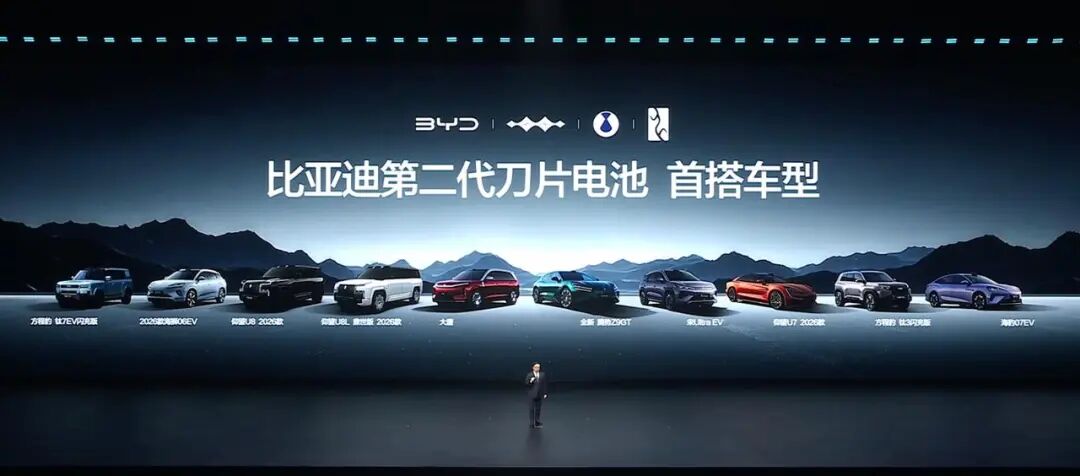
This is in line with BYD's consistent approach. Technologies such as Tian Shen Zhi Yan, Yi San Fang, and Yi Si Fang have been successively implemented. Without exception, the best technologies are reserved for flagship models, and mature technologies are used in other models.
Specifically for the new technologies released this time, the second - generation Blade Battery may be widely popularized, but it's hard to say about the flash - charging experience.
The reason is that the prerequisite for megawatt - level charging speed is to achieve both ultra - high voltage and ultra - large current (P = U * I). Although the battery technology is available and the flash - charging stations are built, if the vehicle does not have the corresponding high - voltage architecture, the power of the flash - charging piles cannot be fully utilized.
In the era of the 400V architecture, to increase the charging power, the vehicle's wiring harness needs to be thickened to reduce the internal resistance and achieve a larger charging current. As the current increases, the heat will increase sharply, so the fast - charging power is mostly limited to within 150kW.
In the stage of the partial 800V architecture, the battery is upgraded to 800V, while the motor and air - conditioner remain at 400V. The 800V high - voltage electricity must be stepped down through a DC/DC converter before it can be supplied to the motor and air - conditioner.
In this case, although the charging speed is fast, there is energy conversion loss, and the problem is not fundamentally solved.
Currently, the high - end car market has basically entered the full - domain 800V/kV architecture, which can achieve megawatt - level flash charging without sacrificing efficiency.
Since the release of the e - platform 3.0 Evo in 2024, some BYD models have been upgraded to the full - domain 800V architecture. Last year's Super e - platform features a full - domain 1000V architecture, with the Han L and Tang L being the first models. It seems that all these are laying the foundation for the large - scale promotion of flash - charging stations this year.
However, the full - domain high - voltage architecture also means an increase in vehicle cost, which objectively makes it difficult to cover all price ranges. In other words, BYD's approach is more like using the charging experience to exchange for orders of high - priced cars.
Greater ambition
Research institution Bernstein said in a report in January that the market has ignored the value of BYD as the "world's second - largest battery manufacturer". In simple terms, the market is still valuing BYD as an automobile company.
BYD's business structure is very complex. In addition to the automotive business, BYD also has many business segments such as batteries, photovoltaics, and semiconductors. In this press conference, BYD is actually more like an energy company.
The flash - charging station based on the Photovoltaic - Energy Storage - Charging Integration design actually realizes an energy closed - loop: Photovoltaic power generation - Energy storage system stores electricity - Flash - charging pile charges electric vehicles. With the cooperation of the three, the energy - replenishment cost is greatly optimized.
BYD is also the most suitable company to do this. On the one hand, BYD not only produces battery cells but also controls the entire chain from energy - storage battery cells to system integration. In theory, its cost - control level will be better than that of its competitors.
On the other hand, BYD is the world's largest new - energy vehicle manufacturer. With a large sales volume, it is easier to realize the utilization and popularization of flash - charging stations and recover the investment cost more quickly.
Based on the vertically - integrated business model, the more BYD's flash - charging vehicles are sold, the more likely it is to promote the growth of the energy - storage business.
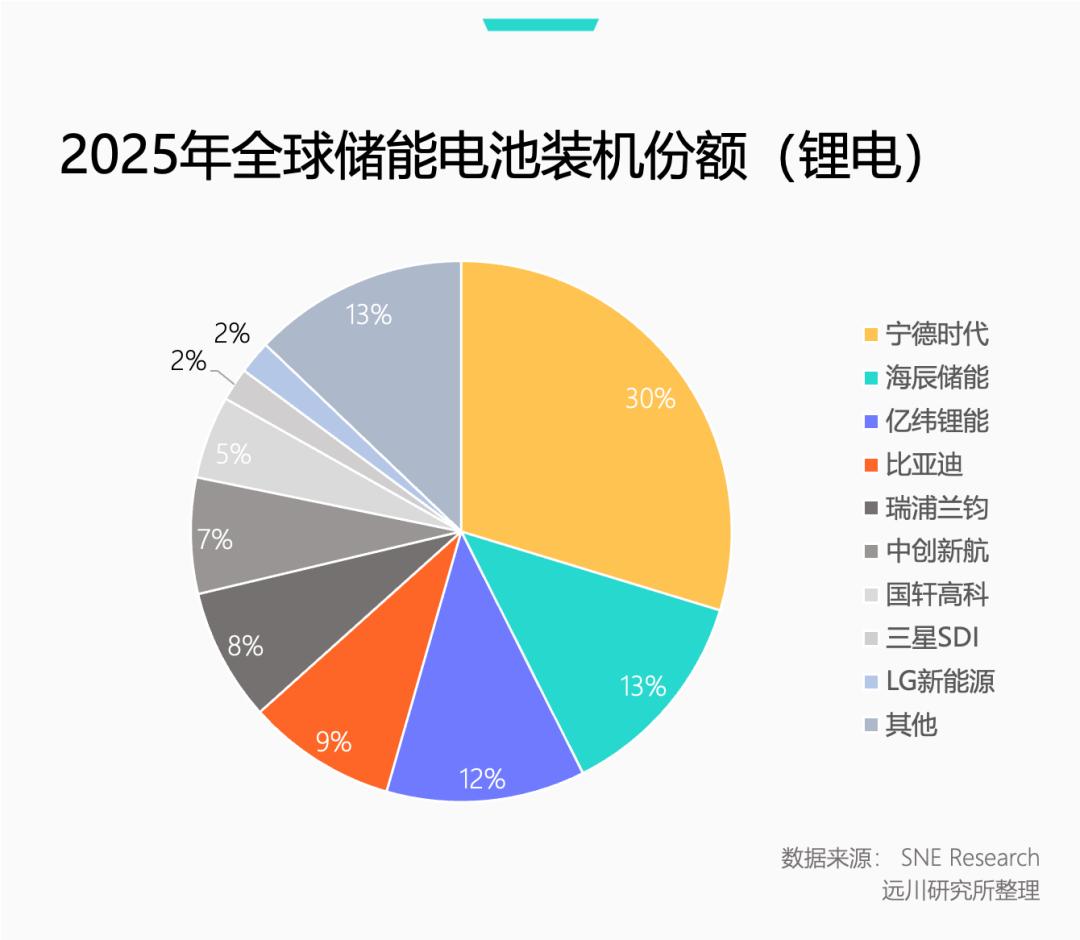
In terms of market share, BYD is the world's second - largest power - battery supplier, second only to CATL. However, there is still a significant gap between the two in the energy - storage field.
Last year, the global energy - storage battery installed capacity was 550GWh, with a growth rate 2.5 times that of the power - battery market. Chinese companies occupied the top seven positions, and CATL led the way with a 30% share.
Therefore, in the current trend of large - battery and large - fuel - tank vehicles, BYD, which used to not build charging stations, has started to capture the market. The strategy of the "Flash - Charging Station within a Station" has a straightforward purpose: Cooperate with existing public charging stations, bring its own equipment, and replace ordinary charging piles with BYD's flash - charging piles.
Interestingly, in the automotive industry, the company with the most similar business structure to BYD is actually Tesla.
In 2021, Tesla released its first impact report (2020), which began with the statement: Tesla's mission is to accelerate the world's transition to sustainable energy. To this end, it set a ten - year goal to increase the sales volume of electric vehicles to 20 million and the energy - storage deployment to 1500GWh by 2030.
Tesla not only produces cars but also (has been trying) to produce battery cells by itself. Energy - storage batteries and photovoltaics are also important business segments of Tesla.
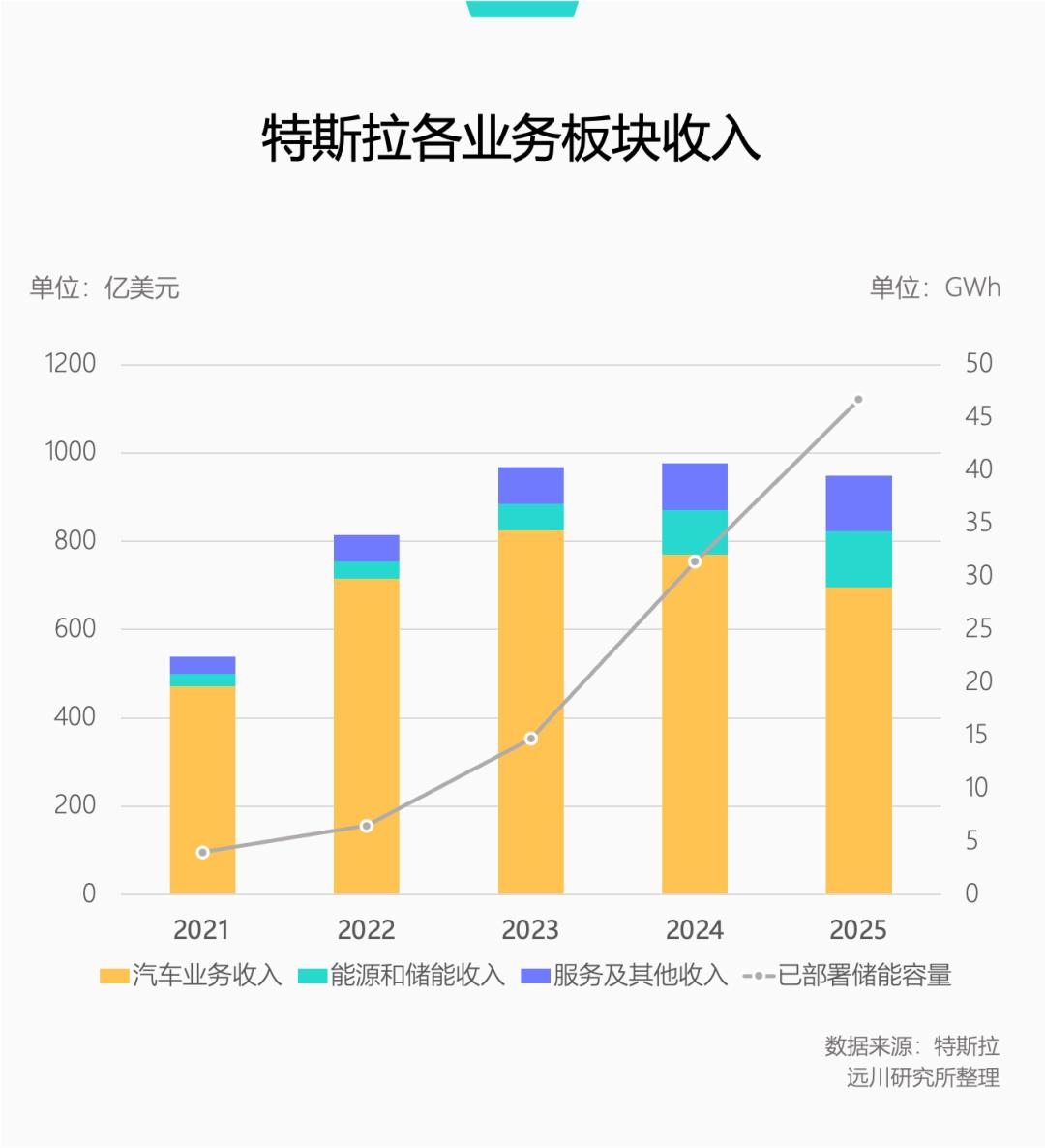
However, with the discontinuation of the Model S/X and the launch of the autonomous vehicle CyberCab, Tesla's focus is shifting entirely to the artificial - intelligence sector centered around autonomous driving and robots.
Perhaps the goal of becoming a sustainable energy company can only be achieved by BYD.
Editor: Li Motian
This article is from the WeChat official account "Yuanchuan Technology Review" (ID: kechuangych). Author: Xu Shanshan. Republished by 36Kr with permission.