200,000 human brain cells were forced by scientists to play Doom.
In recent years, scientists have been exploring a brand - new technological path between biology and computers: building "biological computers" with living neurons. Recently, a remarkable experiment has once again brought this field into the spotlight - human neurons cultured in the laboratory have learned to operate the first - person shooter game "DOOM". Although these neurons are still far from the level of real human players, researchers believe that this marks that biological computing is gradually moving from proof - of - concept to practical application.
This research is mainly promoted by the Australian company Cortical Labs. As early as 2021, the team demonstrated an experimental system called DishBrain: researchers cultured about 800,000 human neurons on a microelectrode array. This array can both send electrical signals to neurons and record their activities. Through this two - way interface, neurons can receive "sensory information" from the game and output "action instructions" in the form of electrical signals.
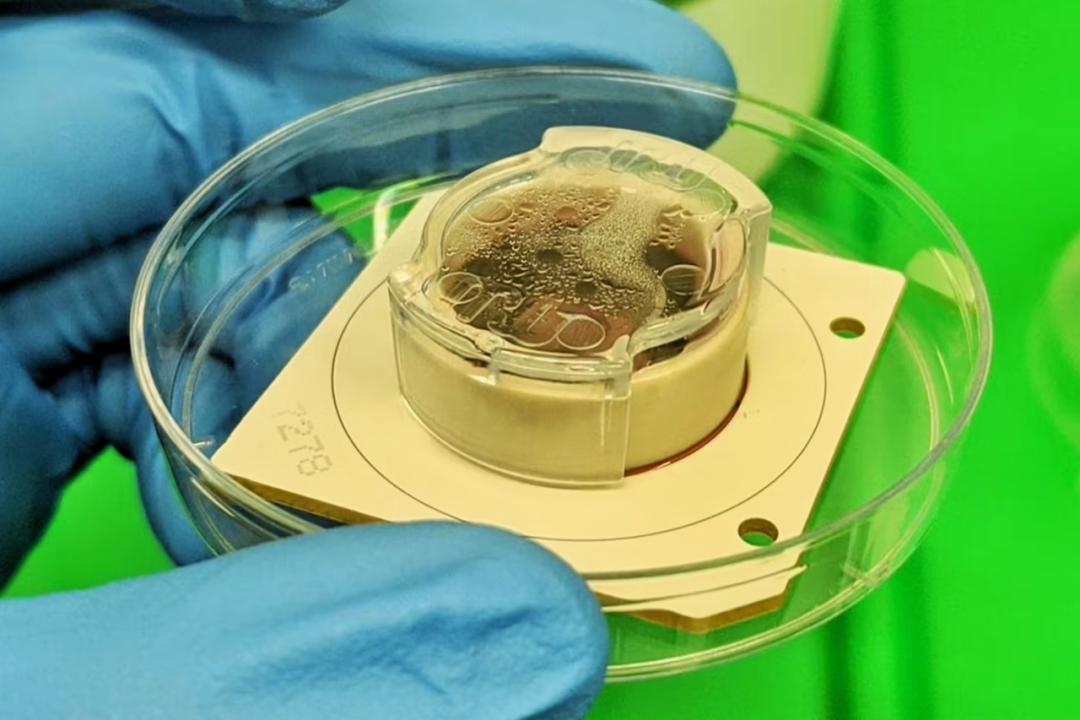
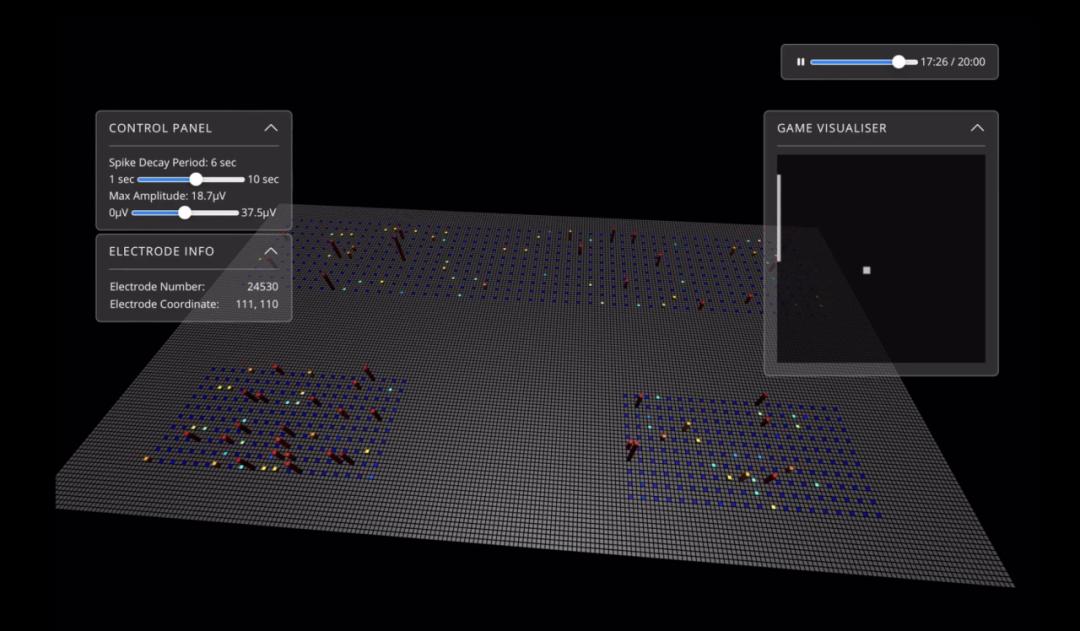
The DishBrain system developed by Cortical Labs (top); Through DishBrain, artificially cultured neurons can play the classic game "Pong" (bottom). — Cortical Labs
In the experiment at that time, neurons were trained to play the classic game "Pong". The system would convert the position of the ball on the screen into different electrical stimulation signals. For example, when the ball moved upward, the upper area of the array would be stimulated, and when it moved downward, the lower area would be stimulated. The neural network gradually formed activity patterns after continuously receiving feedback, and these patterns would be interpreted as instructions to control the movement of the paddle. After long - term training, these neurons were able to hit the ball back to a certain extent.
This achievement is already quite astonishing, but it still belongs to a relatively simple input - output system. "Pong" is a two - dimensional game with very straightforward rules: the position of the ball can be almost linearly mapped to the moving direction of the paddle. For neural networks, this is an environment where it is relatively easy to establish a mapping relationship.
However, the research team soon realized that if biological computers really have potential value, they must be able to handle more complex situations. So they upgraded their target to a classic game often used in the technology circle to test device performance: "DOOM".

"DOOM" is completely different from "Pong". It is a three - dimensional (accurately 2.5D) environment that includes complex spaces, enemies, weapons, movement, and attack and other behaviors. Players need to make real - time decisions in constantly changing visual scenarios. This environment is closer to the perception - action cycle in the real world.
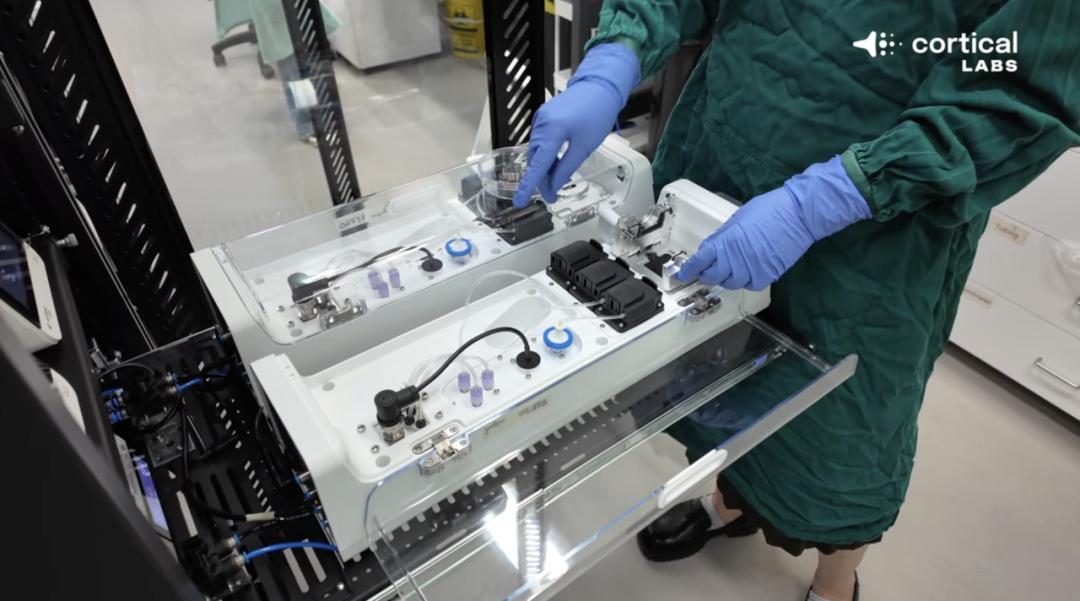
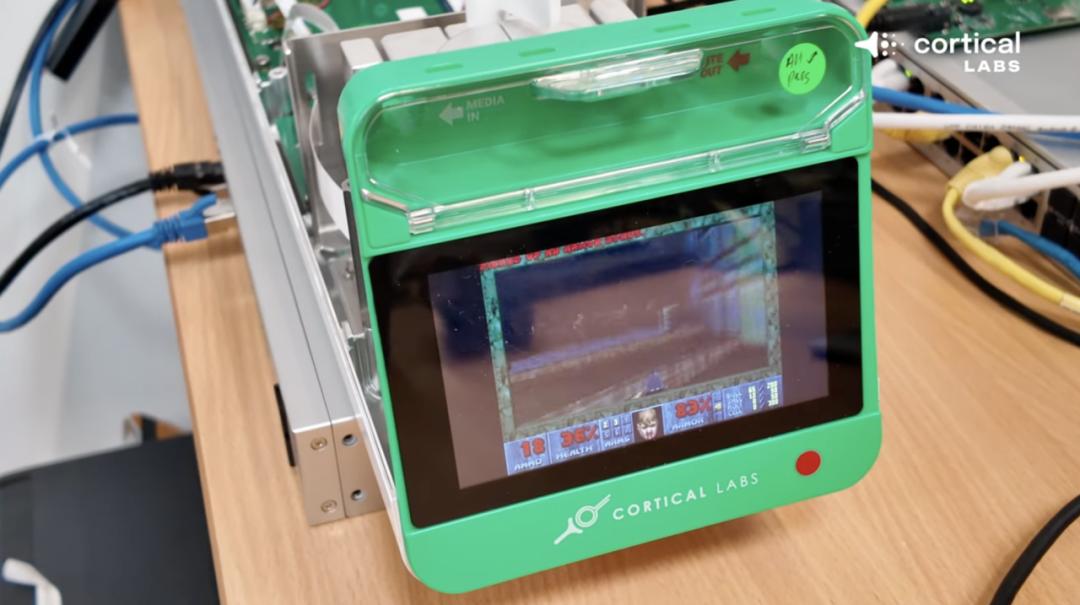
To achieve this goal, Cortical Labs developed a new - generation neural computing platform, CL1. Compared with the early systems, the biggest change in CL1 lies in its software interface: researchers opened the system to an interface that can be programmed in Python, making it easier for developers to control the neural network.
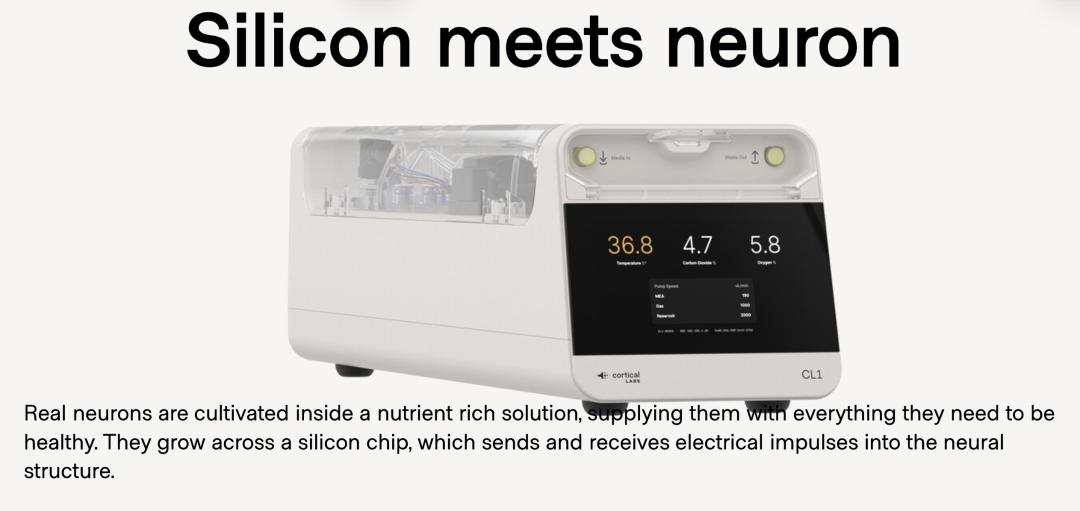
The CL1 platform launched by Cortical Labs
This change greatly lowered the experimental threshold. An independent developer named Sean Cole, who had almost no experience in biological computing before, only took about a week to successfully make the neuron system run the open - source version of "DOOM", Freedoom.
The key challenge lies in that these neurons have no eyes and cannot really "see" the screen. Researchers must convert visual information into electrical signal patterns. For example, when an enemy appears on the left side of the game screen, the electrodes on the left side of the array will stimulate the corresponding neurons, simulating a "sensory input". Neurons respond to the stimulation and generate different firing patterns. The system then interprets these firing patterns as action instructions, such as moving, rotating, or shooting.
The number of neurons used in the experiment was about 200,000, far less than the approximately 86 billion neurons in the human brain. But even so, these neurons were still able to show some adaptive behaviors. They could search for enemies, shoot, and turn. Although they often "died", researchers observed that the activity patterns of neurons would gradually change with feedback, showing signs of learning.
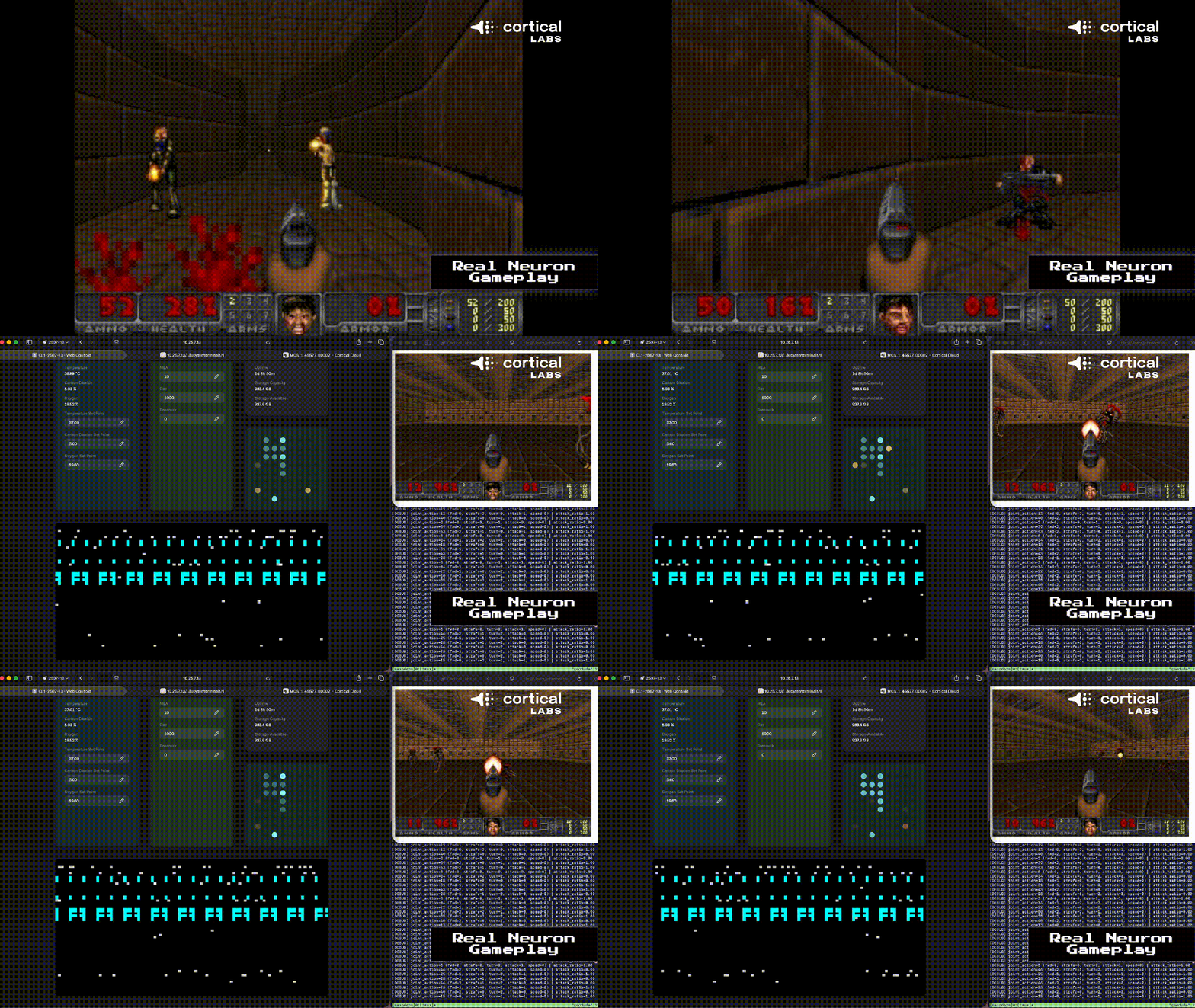
Cortical Labs demonstrates human neurons playing "DOOM" on the CL1 platform
Brett Kagan, a scientist at Cortical Labs, described this achievement as an important milestone, because it shows that biological neural networks can perform real - time goal - oriented learning. In other words, these neurons are not simply passively responding to stimuli, but are constantly adjusting their own activity patterns to better adapt to the environment.
Nevertheless, researchers also emphasized that there is still a huge gap between the current system and a real brain. First, these neurons do not have consciousness and do not know that they are "playing a game". They are just responding to electrical stimuli. Second, scientists still do not fully understand how the neural network forms behavioral strategies in this environment.
Steve Furber, a computer engineer at the University of Manchester in the UK, pointed out that although getting neurons to play "DOOM" is a significant progress, we still don't know how neurons "understand the task". Without a visual system and a real body, how these cells extract information from electrical stimuli and form behavioral patterns is still an important scientific question.
However, from the perspective of technological development, this ability itself already has potential significance. Andrew Adamatzky, a computer scientist at the University of the West of England, believes that the "DOOM" experiment shows that biological nervous systems can handle complex, uncertain, and real - time changing environments, which are exactly the challenges that future biological computers must face.
Some other researchers regard this kind of experiment as a prelude to robot control technology. Yoshikatsu Hayashi, a neuroscientist at the University of Reading, pointed out that getting neurons to control game characters in a virtual environment is actually similar to the task of controlling a robot arm in the future. For example, a biological computer may learn how to grasp objects through tactile signals.
In addition to controlling robots, this technology may also bring another advantage: energy efficiency. Modern artificial intelligence models usually rely on huge computing resources and energy consumption, while neurons themselves are a highly efficient information - processing system. Theoretically, biological computers may be more energy - efficient than traditional silicon chips in some tasks.
However, the development of this field has also triggered some ethical discussions. As the scale of experiments expands, people may start to worry about the status of laboratory - cultured neurons. For example, if more complex neural tissues are cultured in the future, will they have some form of consciousness? Do new ethical norms need to be established?
At present, these concerns remain at the theoretical level. Researchers emphasized that the neurons used in the current experiment are just simple cell networks without consciousness or self - experience. They are more like a special material, a biological substrate capable of processing information.
Even so, the leap from "Pong" to "DOOM" still has symbolic meaning. There is a famous joke in the tech circle: "For any device, people will eventually ask - can it run 'DOOM'?" For decades, people have run this game on various devices, from calculators to tractors, and then to ATMs.
Now, there is one more device on this list - a biological computer driven by living human neurons.
Reference sources
Kagan, B. J., Kitchen, A. C., Tran, N. T., Habibollahi, F., Khajehnejad, M., Parker, B. J., Bhat, A., Rollo, B., Razi, A., & Friston, K. J. (2022). In vitro neurons learn and exhibit sentience when embodied in a simulated game - world. Neuron, 110(23), 3952 - 3969.e8.
https://www.newscientist.com/article/2517389 - human - brain - cells - on - a - chip - learned - to - play - doom - in - a - week
https://www.popsci.com/technology/human - brain - cell - computer - plays - doom/
https://corticallabs.com/
https://www.youtube.com/watch?v=yRV8fSw6HaE
This article is from the WeChat official account "Neural Reality" (ID: neureality), author: NR NR. Republished by 36Kr with permission.