The OpenClaw robot detonated Skynet and first gained world memory. Skynet has been "open-sourced" on GitHub.
Just now, the global open - source robotics community was set ablaze by a piece of news about X!
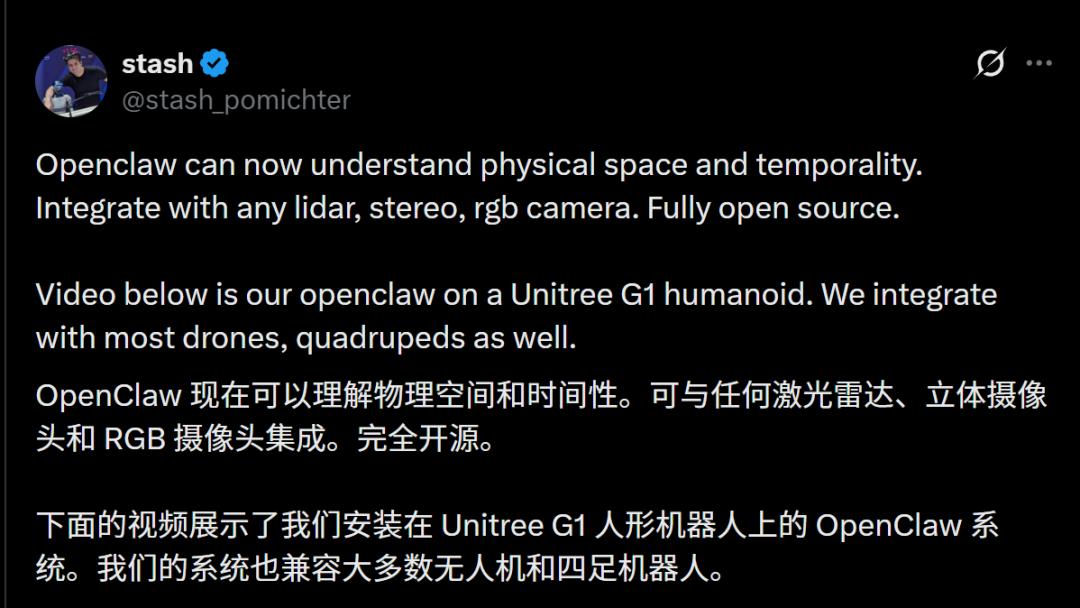
A Unitree humanoid robot equipped with OpenClaw is moving in a room. Its eyes consist of LiDAR, binocular cameras, and RGB cameras. The data from these sensors is fed into a system.
Then, something unprecedented in the history of robotics happened - this Unitree robot began to understand space and time!
It not only knows the locations of rooms, people, and objects but also what happens and when.
The team calls this ability Spatial Agent Memory. That is to say, from now on, robots have the "world memory" ability!
It is the globally popular project OpenClaw that has brought this ability to the robot world.
As soon as this achievement was announced, it was immediately reposted by Peter Steinberger, the father of OpenClaw.
This marks a milestone breakthrough in embodied intelligence: OpenClaw has officially mastered the ability to perceive physical space and time.
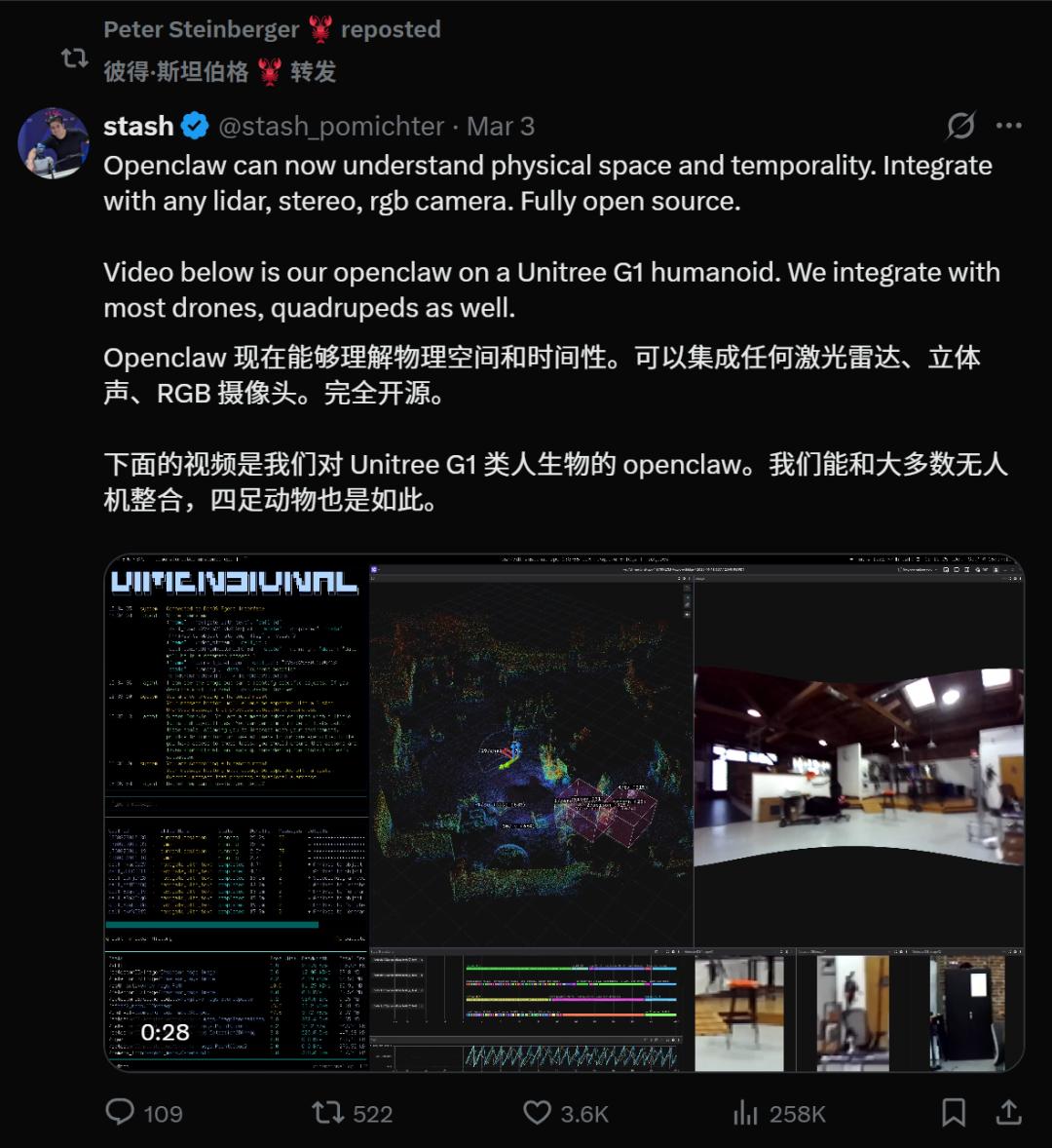
Has Skynet just gone open - source?
As soon as the project was released, netizens in the comment section went wild.
They quickly split into two camps. One camp was extremely excited: Open - source robots have finally gained spatio - temporal perception, which is a huge breakthrough in edge AI!
It can be said that this is exactly the much - dreamed - of breakthrough in embodied intelligence!
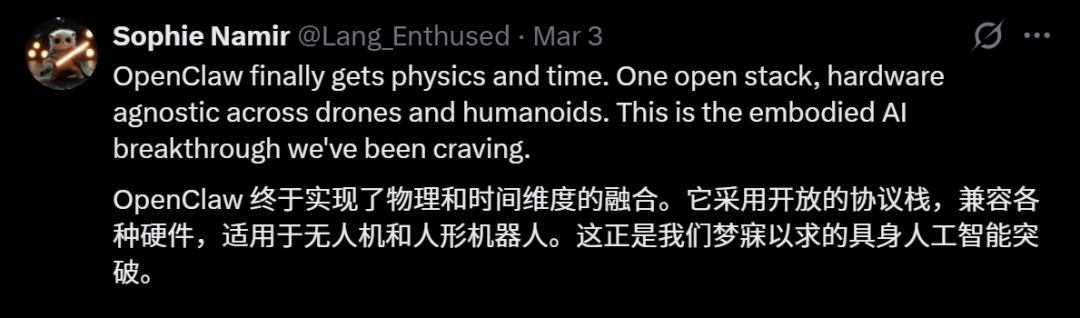

The other camp began to worry: If robots can have spatial perception, isn't it like Skynet has just created a repository on GitHub?

If a robot can accurately analyze the living patterns of everyone in the house, know who goes to the kitchen most often, and know when to take out the trash, this kind of "omniscient" surveillance ability is truly chilling in the absence of an ethical framework!

Some even said it's time to take military orders.

Moreover, the most exciting thing is that all of this is completely open - source!
Although in this video, OpenClaw is directly installed on the Unitree robot, this system is actually completely hardware - independent.
You can integrate it with any LiDAR, stereo camera, or RGB camera.
It can be installed not only on humanoid robots like the Unitree G1 but also integrated with most drones and quadruped robot dogs.
Even in theory, we can completely transform a robot using the LiDAR on an old iPhone.

In short, any hardware that can run OpenClaw can immediately gain spatio - temporal perception.
It does not rely on ROS (Robot Operating System) and supports full dynamic obstacle avoidance and SLAM (Simultaneous Localization and Mapping).
Open - source robots are approaching the Skynet moment
If one day, the robot in your home suddenly tells you, "You left your car keys on the kitchen table last night," you may just think it's very intelligent.
But if it continues, "A stranger came to your home at 8 p.m. last Monday," or even, "You spend an average of 47 minutes in the kitchen every day," would you feel a little creepy?
You'll realize that this robot has been observing you and even remembering everything about you!
The most shocking thing is that these are not simple video replays but come from a new ability: the combined memory of space, time, and semantics.
The robot is not just recording images but building a world model!
Why were previous robots not very smart?
In contrast, why did previous robots seem less intelligent?
The reason is that, first, LLMs only have static memory. They only remember the training data but don't remember where you put your keys five minutes ago.
Second, there is a lack of spatial understanding. They may be proficient in the world of language but have difficulty understanding "the kitchen is on the left of the living room" in the physical world.
Additionally, traditional RAG can only search for text, while robots are faced with a vast amount of video streams and depth data.
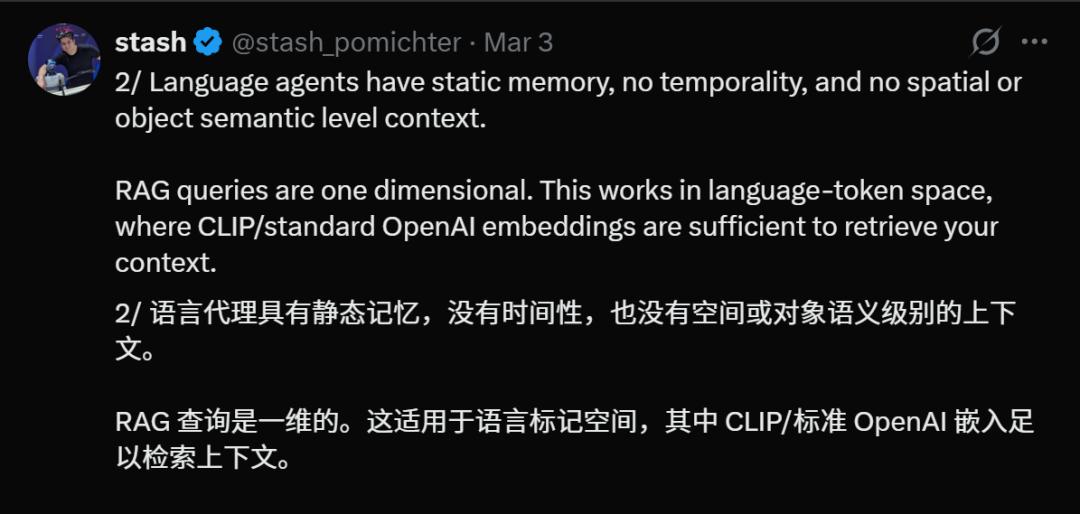
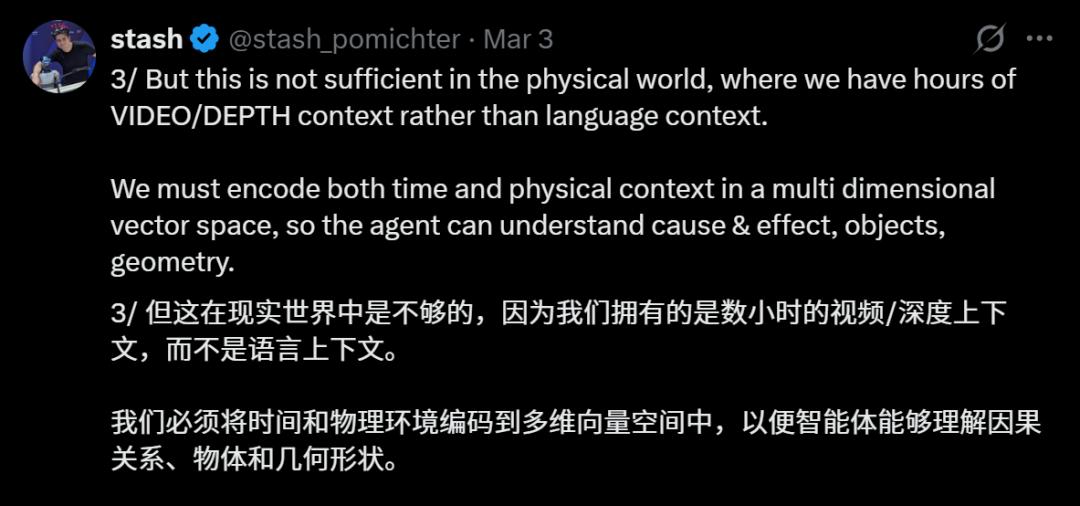
Hundreds of hours of videos, depth maps, three - dimensional spaces, object positions, and time changes mean that robots are faced with a data flood from the real world.
However, this team did something very bold.
The SpatialRAG black technology equips robots with a 3D cloud brain
They brought out their secret weapon - Spatial Agent Memory and SpatialRAG.
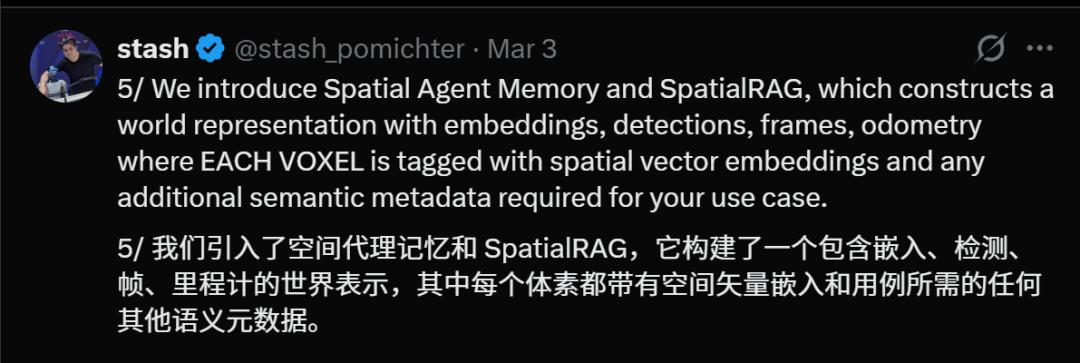
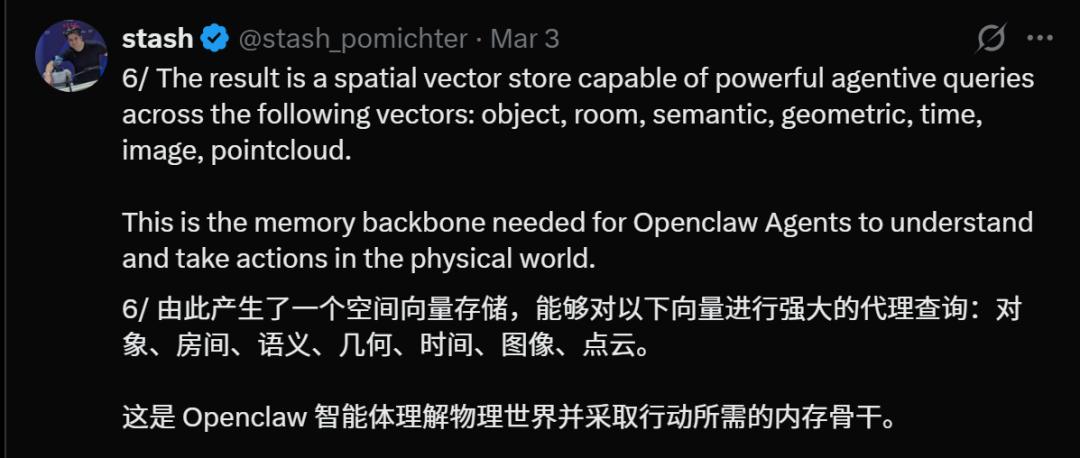
The core logic of this system is very advanced: it combines videos, radar detections, frame images, and odometry to build a voxelized world.
Each small spatial cube (voxel) is marked with a spatial vector embedding and a semantic label. As a result, the robot's brain becomes a multi - dimensional vector repository containing objects, rooms, geometry, time, images, and point clouds.
It can be said that this is the memory framework needed for robots to understand the physical world.
Relying on this system, robots can search in multiple dimensions such as object, room, semantic, geometry, time, image, and point cloud, and thus have a complete spatial memory for the first time.
Therefore, now it can answer these thought - provoking questions.
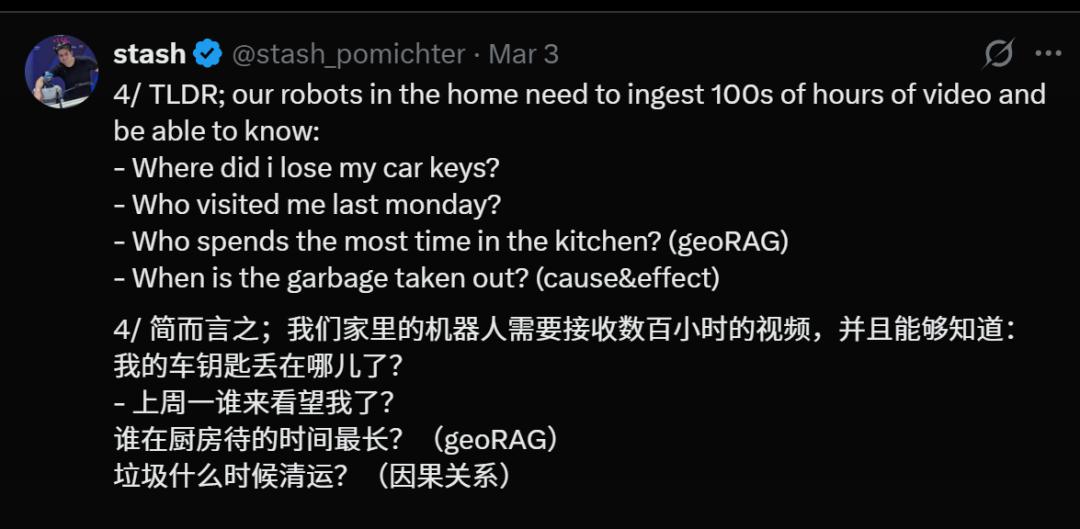
For example, "Where did I lose my keys?", "Who came to my home last Monday?", "Who spends the most time in the kitchen?", "When should the trash be taken out?"
Netizens' doubts: Is it the arrival of Skynet or an old man's stroll?
As soon as this achievement was announced, the comment section exploded.
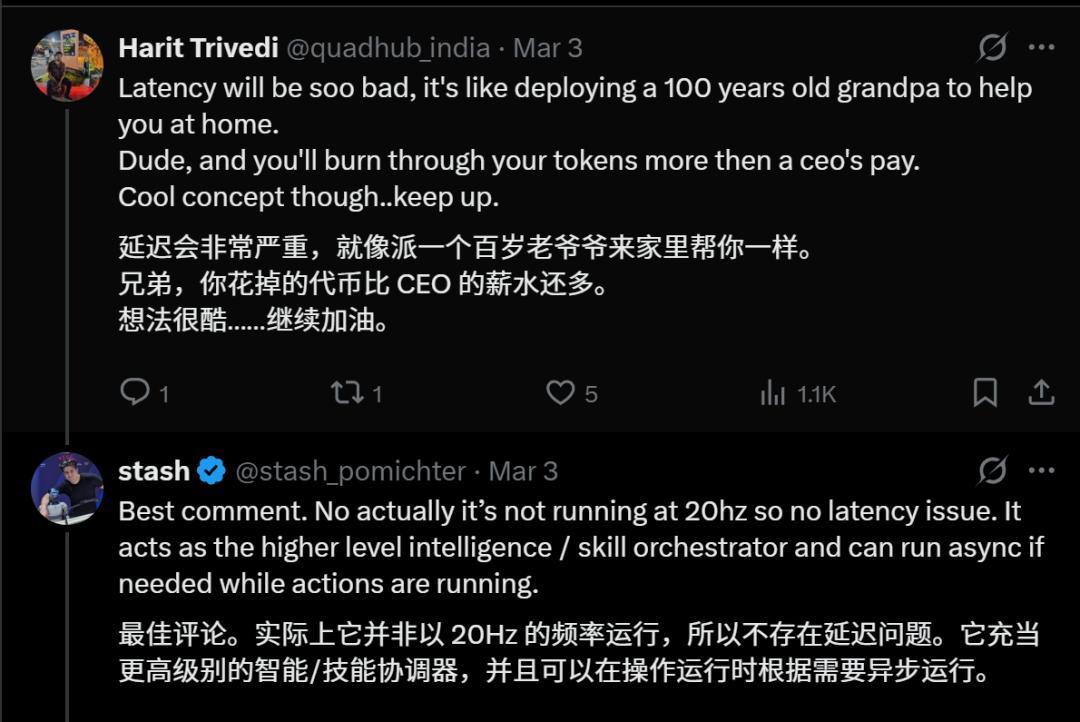
Some skeptical people joked that the delay must be unbearable. Is it like sending a 100 - year - old grandpa to do housework for me?
But the technical team quickly refuted, saying, "No, it doesn't run real - time control at 20Hz. It is a high - level intelligent coordinator. It is responsible for command, and the action execution can be asynchronous without any lag!"
Some also questioned: Why not use a dedicated ML model but instead use LLM and Cron, which are like Rube Goldberg machines?
In response, the developers were very honest: "It's easy to install an LLM on hardware, but maintaining a continuous physical context of what happened when and where is the most difficult."
What OpenClaw provides is not just an input interface but a complete set of agent infrastructure: sub - agent orchestration, MCP (Multi - Point Collaboration Protocol) processing, tool security auditing, and a plugin system.
This makes it more suitable than the native Claude code to be the "prefrontal lobe" of robots.

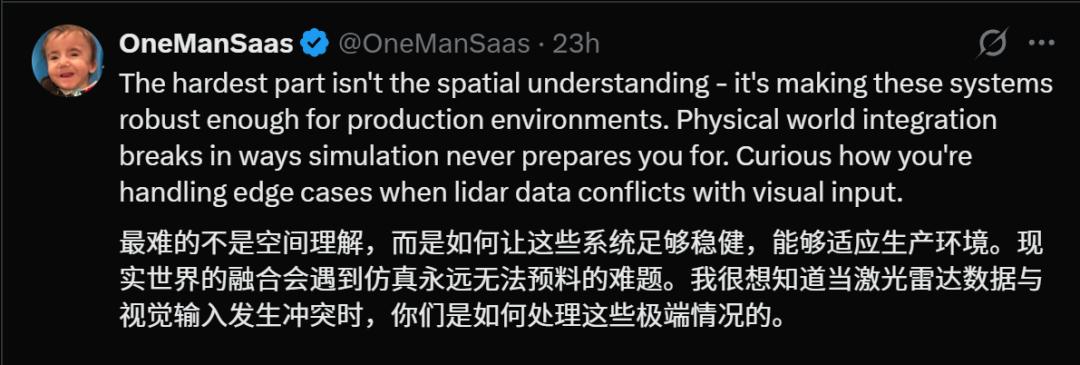
Additionally, in the comment section, a robot engineer said something very realistic: The most difficult part is not spatial understanding but making the system run stably in the real world.
Problems in the real world include sensor conflicts, lighting changes, dynamic obstacles, data noise, and hardware failures, which you will never face in the simulation world.
The last mile of embodied intelligence
Many people say that "embodiment" is the key to consciousness. This attempt tells us that it's not difficult to put an LLM on hardware, but the difficult part is to make it generate a lasting physical context across time and space.
When a robot begins to understand causality