Dialogue with SONG Gang, the person in charge of Qianwen AI hardware: AI office work will become a must-have for AI glasses
How to define Alibaba's AI hardware strategy in one sentence, or what are the differences from other manufacturers?
"It enables users to get things done with AI." Song Gang, the person in charge of Qianwen AI hardware, answered decisively.
Alibaba has just won a great victory. During the Spring Festival, the "one - sentence order" feature made Qianwen well - known across the country. The DAU of the Qianwen App soared to over 73 million, and the MAU exceeded 200 million, making it the world's third - largest AI application. This was also the first time many users experienced "getting things done with AI".
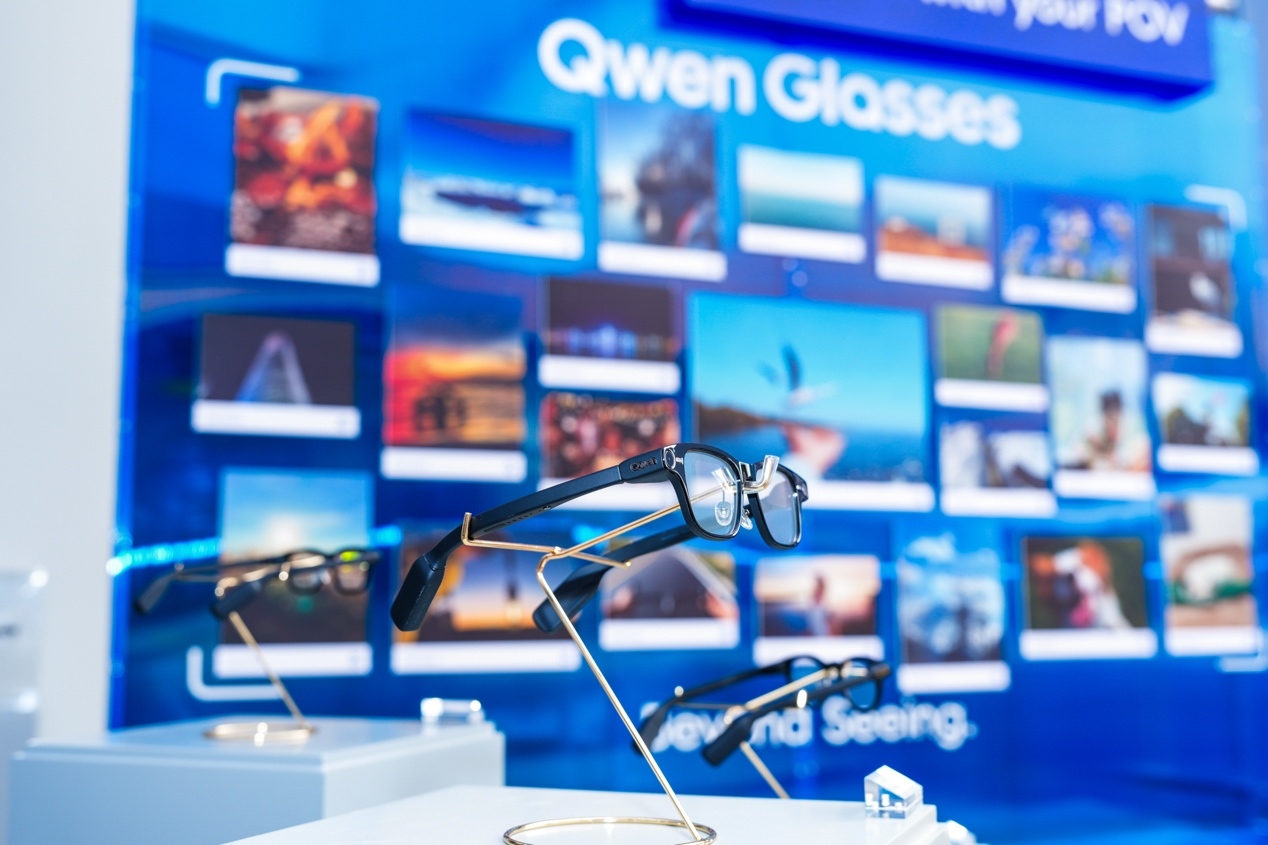
For the Qianwen AI hardware team, which was intensively developing a new generation of AI glasses at that time, this battle was quite inspiring.
During the Spring Festival, over 4 million new users aged over 60 placed takeaway orders through Qianwen. Most of them live in third - and fourth - tier cities and had never used takeaway apps before. Now, with AI, they completed the experience with just one sentence.
"We never expected that the demand for placing orders with AI would be so high and so strong," Song Gang said. He believes this reflects huge user demand. He led the Qianwen AI hardware team to quickly adjust the strategy, giving higher priority to some "must - have" scenarios such as ordering takeaways and hailing taxis.
By the end of March, functions like ordering takeaways and hailing taxis will be gradually launched on Qianwen AI glasses.
In the past decade, AI glasses have had their glorious moments of concept explosion and capital enthusiasm, but they have also suffered from the silence of technological bottlenecks and the long process of market education. Even now, AI glasses are still in the early stage of technological development, and problems such as battery life, weight, and heat dissipation have not been well solved.
However, this does not prevent large companies from attaching importance to and looking forward to the next AI entry point.
Song Gang firmly stated that 2026 will be a crucial turning point for this field, and the explosion of AI glasses is coming soon. Compared with mobile phones, the ability to get things done may be a more essential scenario for AI glasses.
In 2025, Meta shipped about 7 million pairs of glasses. This year, the number is expected to reach 17 million. The development of domestic AI glasses started a bit later, but the trend is similar. When AI hardware becomes popular, it means that AI hardware can gain more understanding of users' context and preferences, which will be the key to the success or failure of the AI hardware experience.
Now, the Qianwen AI hardware team focuses most on the number of interaction rounds, which reflects the frequency of helping users solve problems. "After the Quark Glasses S1 was launched, the number of user interactions increased by about six times compared with third - party AI assistant apps," Song Gang gave an example.
An example the Qianwen team encountered was that an AI self - media person drove home for the Spring Festival with AI glasses. When he saw new scenery, historical sites, or things he didn't know during the journey, he habitually asked the glasses. When he got home, he was surprised to find that he had interacted with the AI glasses more than 200 times.
However, different large companies have different strategic definitions and expectations for the AI entry point, which determines the different forms of their respective products.
Alibaba is not the earliest player in this category, but it is clearly a rising star advancing at high speed. In early 2025, the AI glasses project was initiated. Just 10 months later, the Quark AI glasses were launched, and even established a one - year lead in some fields.
Song Gang said that the Agent function, simply put, getting things done with AI, will be the biggest difference in Alibaba's AI hardware. All product definitions and plans will give way to this top - level goal.
The Quark Glasses S1 takes the high - end route directly. Priced at 3,799 yuan, it uses Qualcomm AR1 and BES2800 dual - flagship chips, a rare dual - optical - engine design in the industry, and a waveguide display solution with high - refractive - index lenses and coating technology. Each feature is the top - level configuration in the industry.
The reason for such a choice is that based on Alibaba's strategic definition of AI hardware, Alibaba aims to not sacrifice the experience of AI's essential scenarios and at the same time become a consumer electronic product that can be worn all day long in daily life.
For this reason, Qianwen AI glasses choose a complex hot - swappable battery design to achieve 24 - hour battery life. "We believe that the battery - swapping problem must be solved. It's not suitable to take off the glasses for charging. You can't even stand it for a minute when you take them off," Song Gang said.
In 2026, Alibaba is still in a hurry to embrace the storm of the AI era. In early March, it completed a round of consolidation of AI hardware and model brands, unifying them under the name "Qianwen".
Alibaba's AI is now further concentrating its efforts to face the AI battle in 2026.
At the globally famous consumer electronics event MWC, Qwen's booth stood side by side with Meta, another leading brand of AI glasses, on both sides of the outdoor exhibition area. Qwen also launched a new generation of Qianwen AI glasses, the G1 and S1, marking Alibaba's official entry into the AI hardware field on a global scale.
Among them, the G1 takes the fashionable and lightweight route. Currently, the lowest price after purchase is 1,997 yuan, which lowers the threshold for experience. The S1 continues with the flagship configuration. Both models will be fully connected to the Qianwen App in the future and will have the ability to order takeaways and hail taxis.
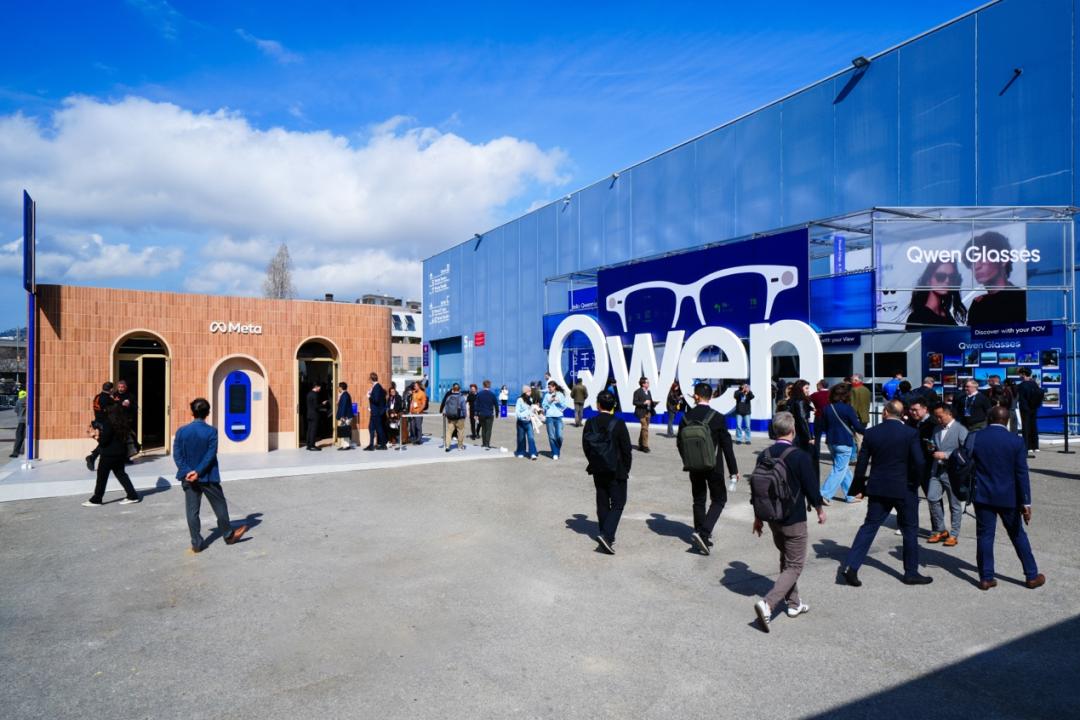
The Quark AI glasses and the Qianwen AI glasses are supported by the same set of algorithms, software, and hardware teams. The subsequent glasses series will be consistent with the global brand, named "Qianwen (Qwen)". The already - launched Quark glasses will have the same function updates as the Qianwen glasses and will also implement more capabilities of the Qianwen AI assistant in the future.
This means that Alibaba's AI hardware strategy has entered the next stage.
In addition to the new - generation glasses, we exclusively reported a few days ago that Qianwen will launch many new product categories, including AI rings and AI earphones.
Why did they choose these categories? Song Gang said that the logic of expanding hardware categories is to make up for what AI glasses cannot do. For example, an AI ring can monitor users' health data and control the glasses through pinching and other operations. AI earphones can provide an AI hardware option for people who don't wear glasses.
"We believe that AI glasses are the center of the new - generation human - machine interaction revolution and the entry - level device for AI. They will be more imaginative than mobile phones," Song Gang said. When AI changes from passive response to active response, it can take on the important task of the next - generation AI entry - level device.
The following is a Q&A between Song Gang, the person in charge of Qianwen AI hardware, and media such as "Intelligent Emergence", edited and organized:
From mobile phones to glasses, the number of interactions with AI increases by 6 times
"Intelligent Emergence": Qianwen has just announced that it will launch products such as AI rings and AI earphones. It hasn't been long since you launched AI glasses. What logic does Qianwen follow when developing new product categories, and how to reconstruct these categories based on AI?
Song Gang: When developing these products, the core is to see how to rely on and expand the capabilities of the AI assistant. For example, for bracelets and rings, we consider their linkage with glasses, so they need to have operability, not just for physical sign monitoring. Even for physical sign monitoring, we hope it is multi - modal input, and the monitoring dimensions should be convenient for the back - end AI algorithm to process.
To put it simply, we have already planned what these hardware products will do in the future when we are making them.
In essence, it is the AI capabilities that drive the hardware, rather than the hardware defining the scenarios.
Media: For example, rings can enter the health scenario, and earphones can enter the office scenario. What are Qianwen's advantages in these fields?
Song Gang: Actually, the original Qianwen AI assistant has already accumulated capabilities equivalent to those of a chief physician in a top - level hospital. However, when we launch hardware such as rings, it's not just for vertical health monitoring. The more core purpose is to expand the AI's understanding of "people".
We regard health data as a "physical state". By capturing this information, the AI assistant can understand the user's "context" and thus provide more accurate personalized services.
As for earphones, they are similar to glasses without a display, providing another option for users who are not used to wearing glasses.
We chose rings instead of watches because rings can interact well with glasses. They solve the pain point that users (especially introverts) are reluctant to wake up AI loudly in public. Users can directly interact with the AI with a "one - key press".
Mobile phones and glasses are definitely the most important ports now. In terms of AIOS, it has covered most scenarios. Rings and earphones are supplementary. These different hardware form layouts are all for adapting to different people and scenarios, building an all - around AI entry point.
"Intelligent Emergence": There is a view in the industry that in the AI era, the proportion of software defining hardware will increase, and even the development of product categories will be driven by the development stage of the model. What do you think of this trend?
Song Gang: I think the development of hardware has reached a relative bottleneck. From now on, its development will be more driven by AI. And behind AI - driven development is the drive of scenarios and users' real needs.
In the past, when we talked about intelligence, it was actually artificial intelligence. For example, mobile phones still need people to operate, set alarms, and remind themselves. It's not the machine that makes choices, but people operating by themselves.
We believe that in the future, proactive intelligence should be the real intelligence of machines. Machines remind themselves and then drive you to make decisions. This is what you call "driving hardware in reverse".
Media: Regarding the performance of the first - generation AI glasses, in terms of sales volume, user retention, and usage time, if the full score is 100, what score would you give internally?
Song Gang: We can see that compared with third - party AI assistant apps, the number of user interactions with AI glasses has increased by about six times, which is a very significant improvement.
Now the sample data is still in the early stage, but the interaction index is very crucial. This index determines that every time the AI is woken up, it means it has helped the user solve a problem.
When using a mobile phone, you have to pick it up to start interacting, while glasses are worn on the face and can be interacted with at any time. This makes people make different decisions. AI glasses make it easier to decide to interact with voice and can be woken up at any time.
Media: Can it be understood that sales volume and return rate are not the top - priority factors in Qianwen AI hardware's future decision - making?
Song Gang: We should not ignore what traditional hardware has, and we should even do better. You can see that the state, completeness, and quality of our hardware are definitely higher than the industry average. In addition, we should make more breakthroughs in interaction.
"Intelligent Emergence": Currently, AI glasses and other hardware are still in the early stage. The market has doubts about their popularization speed and shipment volume. For example, the Quark S1 is priced at 3,799 yuan, which is the price of a mid - range mobile phone. Why is Alibaba aggressively promoting AI glasses at this time? Isn't it too early?
Song Gang: It's not too early to enter the market now; instead, it's just the right time. The annual sales volume of overseas leading products has reached 7 million, which are all landmark milestones. It is expected that the domestic sales volume will also exceed 2 million this year. The inflection point of market growth has appeared.
In fact, we entered the field of AI glasses a bit late, but we are more efficient. We overtook others in terms of experience in just one year, and it may be difficult for other hardware to surpass us within a year.
We think the inflection point of the industry's explosion will come earlier this year, and 2026 will see a complete explosion.
Getting things done with one sentence is a must - have for AI glasses
Media: The Quark glasses, whether it's the dual - optical - engine design, the dual - chip design, or the hot - swappable battery design, have a complex architecture. In a sense, it is a very bold design. What judgment supported the team to make such a bold design scheme at that time?
Song Gang: Our original intention of design was to make these glasses wearable all day long in daily life. This is different from Meta's design concept. They focus more on the sunglasses form, while there are more users of prescription lenses in China. We need to adapt to domestic scenarios and user preferences.
To achieve all - day wearing, we must solve the problems of aesthetics, comfort, and battery life. We believe that it's not suitable to take off the glasses for charging. Users may not be able to stand it for even a minute, so battery swapping is a problem that must be solved.
For this reason, we made many innovations in comfort. We adopted titanium - alloy soft - and - hard - corner integrated injection - molded temple arms like traditional glasses, adapting to different head circumferences through elasticity. We also designed a unique hinge, achieving elastic and finger - positioning design in a very small space.
These bold designs are all to make it more like an ordinary pair of glasses and truly be worn by users in daily life.
Media: This is a key difference between you and other Internet manufacturers. Can it be understood that in the future, AI hardware forms such as earphones and rings will follow the logic of "AI defining hardware"?
Song Gang: Yes, AI hardware should not follow the definition idea of traditional hardware. Instead, it should be the other way around: first clarify what scenarios users need and how AI can assist people in these scenarios, and then deduce what the hardware should be like.
For example, the reason we firmly choose to make AI glasses with a display is to carry Alibaba's existing advantageous scenarios such as navigation, teleprompter, and translation, allowing AI to quickly enter practical applications. Our strategy determines what we are making today.
Now, we are fully committed to the "Qianwen" brand to accelerate AI iteration. "Getting things done with one sentence" is a real must - have scenario for glasses to connect the ecosystem and solve users' pain points.
Media: Can you explain the sentence "It is a real must - have for glasses"?
Song Gang: The core of "getting things done with one sentence" lies in human - machine interaction. We believe that the main battlefield of this generation of interaction revolution is on the glasses, because they can more smoothly receive multi - modal information such as voice and vision.
In contrast, there is a physical distance between mobile phones and people, and they cannot be always online. You have to take out the phone before using it.
Therefore, the interaction revolution from voice to vision to multi - modality is more suitable to be realized on glasses. Even if the mobile phone has the corresponding AIOS capabilities, in terms of experience logic, this "getting things done with one sentence" model is naturally more suitable for glasses.
"Intelligent Emergence": So what are the must - have scenarios?
Song Gang: Must - have scenarios are those that can only be realized by wearing