A Tsinghua University doctoral graduate has just raised another 1 billion yuan.
We are witnessing the booming scene of embodied intelligence.
The investment community has learned that Giga Vision has announced the completion of a nearly 1 billion yuan Pre-B round of financing. The lineup of investors is quite luxurious, including top chip and automotive industry capitals such as SMIC Juyuan, Pukeko Investment, Linxin Capital, Xingyuan Capital, and Wanlin International, as well as heavyweight state-owned platforms and well-known financial institutions such as CICC Capital, Suzhou Venture Capital Group, Huaqiang Capital, Yangtze River Capital, Optics Valley Venture Capital, Xishan State-owned Investment, Jinyu Maowu, Xinding Capital, Nuohui Investment, Caixin Capital, Zhangke Yaokun, and Chengzhu Investment. Among them, CICC Capital, Huaqiang Capital, Caixin Capital, Zhangke Yaokun and other old shareholders have continued to make substantial oversubscribed investments.
Thus, another round of financing in the field of embodied intelligence has emerged. At first glance, Giga Vision may seem a bit unfamiliar, but behind it stands a big name in the industry - Huang Guan, a doctor from Tsinghua University. He has previously worked at Horizon Robotics and Jianzhi Robotics, and has also had work experiences at Microsoft Research Asia and Samsung China Research Institute. In just three years, he has led Giga Vision to rapidly rise as a leading enterprise in embodied base models and general-purpose robots.
At this moment, the financing situation in the Chinese embodied intelligence track is obvious to all. However, the more prosperous it is, the more we need to think calmly: where is the next stage of embodied intelligence heading?
Led by a Tsinghua Doctor
Building the OpenAI of the Physical World
Looking back, Huang Guan was among the first batch of people in China to enter the artificial intelligence industry.
Back in 2009, Huang Guan was admitted to the Department of Automation at Huazhong University of Science and Technology. After graduating from his undergraduate program, he entered the Institute of Automation of the Chinese Academy of Sciences to pursue a master's degree with the top score in professional courses, focusing on pattern recognition and artificial intelligence research. Subsequently, he became a doctor in the Department of Automation at Tsinghua University.
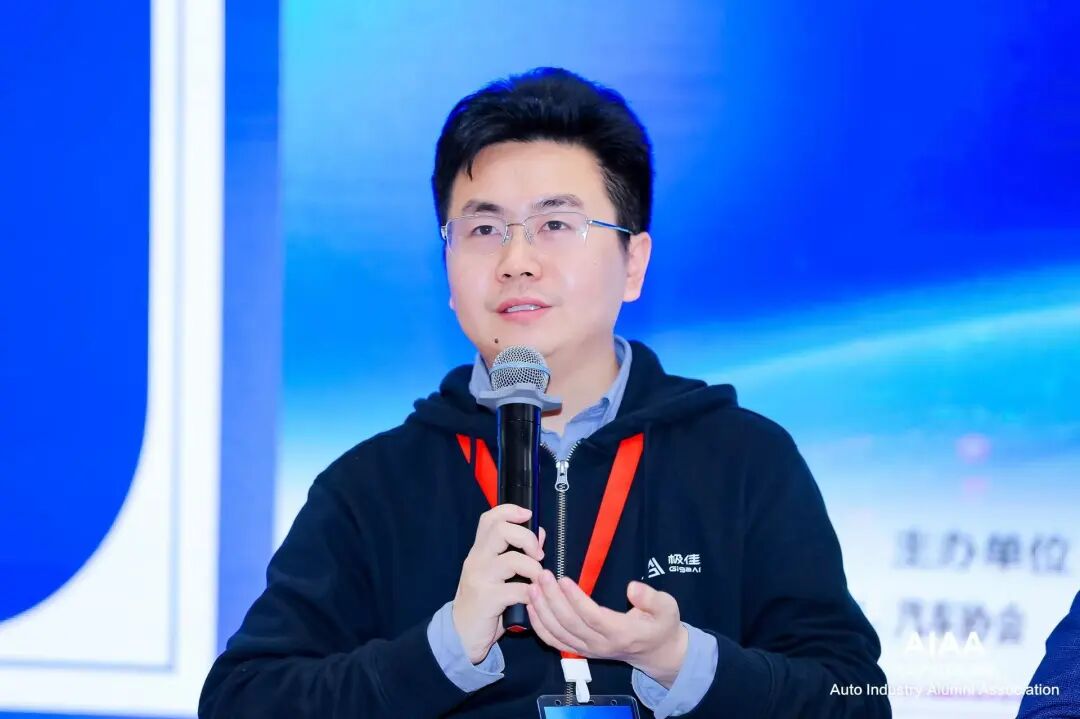
During this period, Huang Guan interned at Microsoft Research Asia and worked with technical experts such as He Kaiming and Sun Jian. In 2016, he joined Horizon Robotics, responsible for the visual perception direction. He led the creation of the world's largest face recognition dataset at that time, WebFace260M, and led the team to win championships in multiple global visual AI competitions and achieve large-scale industrial implementation. Later, Huang Guan participated in the establishment of Jianzhi Robotics as a partner and developed the BEV series of models widely recognized in the industry with the team.
It can be found that the difference between Huang Guan and most AI entrepreneurs is that he has rich experience in technological innovation, industrial implementation, and continuous entrepreneurship in the field of physical AI.
Until June 2023, Huang Guan embarked on a new entrepreneurial journey and officially founded Giga Vision. Although the initial team only had more than a dozen people, this core team had experienced the development process of physical AI in the past decade, including CV, autonomous driving, embodied base models, and world models.
Among them, Zhu Zheng, the co-founder and chief scientist, graduated with a doctorate from the Institute of Automation of the Chinese Academy of Sciences in 2019 and then conducted postdoctoral research at the Department of Automation at Tsinghua University; Sun Shaoyan, the co-founder, was formerly the director of Alibaba Cloud and the general manager of the data closed-loop product line at Horizon Robotics; Mao Jiming, the partner and vice president of engineering, was formerly an architect at Baidu and Yingche and was in charge of the simulation technology of Baidu Apollo.
In the eyes of the outside world, this is an AI "dream team" - with both full-stack physical AI technology accumulation and more than 20 years of leading implementation experience with a cumulative amount of over 3 billion. Therefore, Giga Vision has focused on general intelligence in the physical world from the beginning, systematically laying out the future development path of physical AI from both software and hardware aspects, and quickly growing into a leading enterprise in embodied base models and general-purpose robots.

Specifically, Giga Vision's product matrix includes the GigaBrain series of embodied base models, the world model platform GigaWorld, and the general embodied ontology Maker, thus forming a four-in-one system of "embodied base model - world model - native ontology - generalized scenario", which is more like the "OpenAI of the physical world".
Among them, the powerful model capabilities are undoubtedly the key to Giga Vision's rapid rise. The company has successively released the GigaBrain-0 technical report and open-sourced basic models such as GigaBrain-0 and GigaBrain-0.1, achieving the world's leading real-machine effects for long-range and complex tasks. It is worth mentioning that in the world's largest real-machine evaluation competition at present, the open-source model GigaBrain-0.1 has surpassed many models such as Pi0.5 and ranked first in the world.
However, while the embodied base models are constantly making breakthroughs, they also face some new challenges. Huang Guan has repeatedly emphasized that there are two key problems with the current VLA-dominated embodied base models: one is the low efficiency of the model architecture, and the other is the low efficiency of real data collection.
The world model has become the key path to solve these dilemmas, achieving "data amplification" by generating high-fidelity, controllable, and diverse embodied interaction data. "The rapid development of the world model provides an unprecedented, pioneering, and essential solution to the problems of model architecture and data sources."
Therefore, Giga Vision has become the first company in China to layout the world model. In terms of model architecture, the GigaBrain-0.5M* released by the company is the world's first embodied base model that realizes efficient learning and self-evolution based on the world model through reinforcement learning.
At the same time, Giga Vision has also witnessed a milestone moment - GigaWorld-Policy was officially unveiled recently, comprehensively surpassing the mainstream "world - action model WA" in terms of inference efficiency and performance.
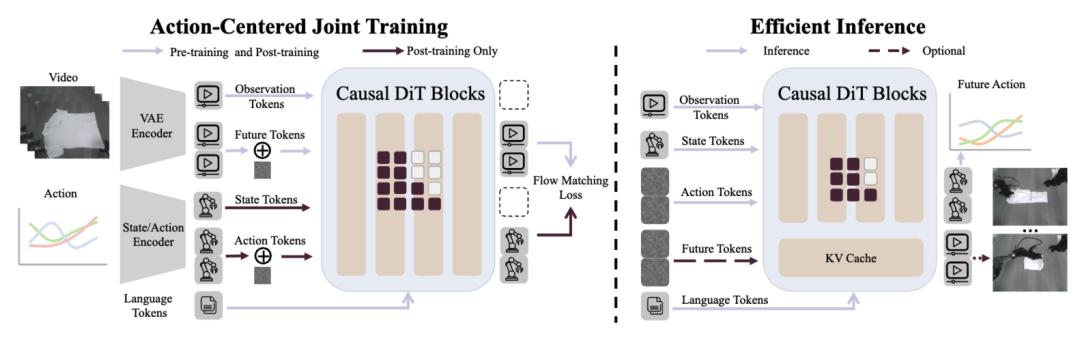
Why GigaWorld-Policy? Different from the traditional WA architecture that relies on an inefficient and lengthy video prediction link, GigaWorld-Policy's action-centered model paradigm breaks through the cross-modal coupling bottleneck and achieves a leapfrog improvement in inference efficiency at the architectural level.
Moreover, GigaWorld-Policy has built a hierarchical and efficient training pipeline, aiming to maximize the value of video data in embodied action training and enable the model to complete the learning of embodied operation strategies with less data and in a shorter time.
The actual measurement data shows that GigaWorld-Policy has achieved a tenfold improvement in inference speed and training efficiency, and the task success rate has also increased by 30%, which marks that the field of embodied intelligence has entered a new era driven by the world model.
Relying on this, Giga Vision is moving towards becoming the "OpenAI of the physical world".
Assembling a Luxurious Team of Investors
Even Huawei Has Invested
Throughout its development, Giga Vision has left a deep impression on the venture capital circle.
As early as its establishment, Giga Vision received tens of millions of yuan in seed-round financing from Chentao Capital. Since then, it has started a non-stop financing rhythm. In September 2024, it completed nearly 50 million yuan in consecutive angel and angel+ rounds of financing, invested by institutions such as BAIC Capital, MiraclePlus, Huamin Investment, Longding Investment, Qingzhi Capital, and PKSHA Algorithm Fund.
At that time, Mao Shengbo, a partner at MiraclePlus, said: "The world model is the key to realizing intelligent agents in the physical world such as autonomous driving and robots, and it is also very important for content creation in the virtual space. Giga Vision is one of the earliest teams in China to start laying out the world model. It is also one of the few teams in China that have top-level technical accumulations in areas such as CV, autonomous driving, and large models, as well as rich industrial, commercial, and entrepreneurial experiences."
Then in August 2025, Giga Vision announced the completion of consecutive Pre-A and Pre-A+ rounds of financing worth hundreds of millions of yuan. The Pre-A round was led by Guozhong Capital, with Zifeng Capital and the old shareholder PKSHA Algorithm Fund following up; the Pre-A+ round was invested by CICC Capital, Guangzhou Venture Capital, Yicun Songling, and Huaqiang Capital.
As the leading investor, Shi Xin, the executive general manager of Guozhong Capital, once said that Giga Vision is a leader in the field of world models and embodied intelligence in China. It not only started the technical layout and innovation leadership in this field earliest but also quickly achieved large-scale industrial implementation. "We are looking forward to the ChatGPT moment in the physical world, and we are even more looking forward to Giga Vision leading the ChatGPT moment in China's physical world."
Soon, Huawei also made a move - in November of the same year, Giga Vision completed a new round of A1-round financing worth hundreds of millions of yuan, jointly invested by Huawei Hubble and Huakong Fund. When talking about this round of financing, Huang Guan once said bluntly: "Huawei has listed the world model as the top of the ten technological trends in the future intelligent world in 2035, which is also the underlying logic for investing in Giga Vision." In addition to the investment, Huawei has also promoted strategic cooperation with Giga Vision from multiple business lines.
One month later, Giga Vision completed a 200 million yuan A2-round financing, led by Fortune Capital and jointly led by the old shareholder Huakong Fund. Well-known institutions such as Shoufa Venture Capital, Puyao Xinyie, Caixin Capital, Huajin Capital, Zhangke Yaokun, and Fuzhuo Venture Capital followed up, and the old shareholder Hedinggong Capital oversubscribed. This means that within just three months, Giga Vision has continuously completed four rounds of A-round series financing totaling 500 million yuan.
The latest event is the emergence of this nearly 1 billion yuan Pre-B round of financing, and investors have cast their crucial votes with real money. Among them, industrial capitals such as SMIC Juyuan and Xingyuan Capital have provided broad space for Giga Vision's strategic layout and industrial expansion; the entry of state-owned platforms such as CICC Capital, Suzhou Venture Capital Group, and Yangtze River Capital is undoubtedly a manifestation of long-term capital and ecological support; in addition, a number of leading financial institutions have continued to increase their investments, which is also a recognition of Giga Vision's industry status.
With the gathering of investors, a super dark horse in the field of embodied intelligence has quietly emerged.
The Soul Search of Chinese Robots
How to Enter All Industries
At the beginning of 2026, the bustling scene of the Chinese embodied intelligence industry is vividly in sight.
On the one hand, four humanoid robots made a group appearance at the Spring Festival Gala of the Year of the Horse, competing for splendor in the program; on the other hand, companies are lining up to announce financing, and a single-round financing scale of 1 billion yuan has even become the standard. Under such a grand occasion, a watershed has also quietly emerged.
More and more signs indicate that the industry is beginning to show an obvious "Matthew effect" - funds, resources, talents, etc. are all gathering towards leading enterprises. This also means that in the second half of the embodied intelligence era, a value reevaluation is taking place, and the industry is shifting from "technology demonstration" to "practical application". The only criterion for staying in the game will be "practicality".
Undoubtedly, the hardware capabilities of domestic embodied intelligence entities have made significant progress, and the supply chain has become increasingly mature. However, the general cognitive and decision-making abilities of embodied intelligence are insufficient, making it difficult to handle complex problems in the real world. As a result, "practicality" is out of the question.
Therefore, there is a key logic here: the essence of the competition in the second half of the industry is actually the competition of basic models and model evolution capabilities. Only by continuously evolving the embodied base models can the ability to execute tasks in complex real environments be improved, and can general-purpose robots truly enter all industries and households.

For example, Giga Vision's GigaBrain series of models have been applied to a series of high-difficulty, long-range embodied tasks. Whether it is delicate and dexterous operations such as making coffee, folding clothes, and organizing toilet paper, long-range tasks that require multi-step coordination such as cleaning the desktop and pouring drinks, or complex behaviors involving a combination of movement and operation such as moving boxes and picking up clothes, they can all be completed stably and efficiently.
The newly released GigaWorld-Policy has achieved a good balance on the "success rate - inference speed" trade-off curve. In the evaluation covering four typical tasks such as grasping, assembly, and organization, the average success rate has reached over 85%. Compared with mainstream WA models such as Motus and Cosmos Policy (with a success rate of about 50% - 55%), the absolute value of the success rate has increased by more than 30%.
At the same time, compared with the inference speed of Motus and Cosmos Policy, GigaWorld-Policy has achieved a tenfold speed increase. This breakthrough is crucial: only with an efficient execution speed can robots effectively handle dynamic environmental interference and execution errors.
Obviously, GigaWorld-Policy makes the application of the world model in robot strategy learning more practical and provides a new answer for the real-time and efficient control of robots in real scenarios.
Of course, the development of embodied base models also requires the coordination of native ontologies. In November 2025, Giga Vision released the new-generation full-stack self-developed physical AGI native ontology Maker H01, which has made many pioneering and innovative designs in aspects such as human-machine collaboration, cost-effectiveness, function priority, and data priority.
It is reported that at present, Maker H01 has started large-scale mass production and delivery, targeting multiple scenarios such as data collection, industry, services, and households. At the same time, Giga Vision will also release more native ontologies suitable for different scenarios in 2026, aiming to achieve a delivery volume of thousands of ontologies throughout the year.
In terms of scenarios, Giga Vision focuses on building general-purpose robots for high-value and highly generalized scenarios based on embodied base models. It has currently reached close cooperation with leading customers in multiple scenarios such as automobile manufacturing, 3C electronics, warehousing and logistics, guided tours, and household services.
Historical experience shows that the birth of any cross-era technology is accompanied by numerous disputes and challenges. The same is true for embodied intelligence. Only by going through the test of time can we reach the other shore.
As Huang Guan once said, someone has to drive technological progress. "For entrepreneurs, the most important thing is to find their inner passion. Only by truly loving the cause they are engaged in can they persevere and forge ahead in the face of challenges."