After two days of visiting MWC, these 10 new tech products are the most worth paying attention to.
Text by | Qiu Xiaofen
Edited by | Su Jianxun
From March 2nd to 5th, 2026, the 2026 Mobile World Congress (MWC 2026) was held in Barcelona, Spain, attracting a cumulative total of over 2,900 exhibitors from 219 countries and regions.
Among them, more than 350 Chinese companies participated in the exhibition this year, showing a significant increase compared to last year. Chinese companies became the absolute protagonists at the exhibition. At the most exposed exhibition entrances, passageways, and even at Barcelona Airport, banner ads of Chinese companies could be seen almost everywhere.
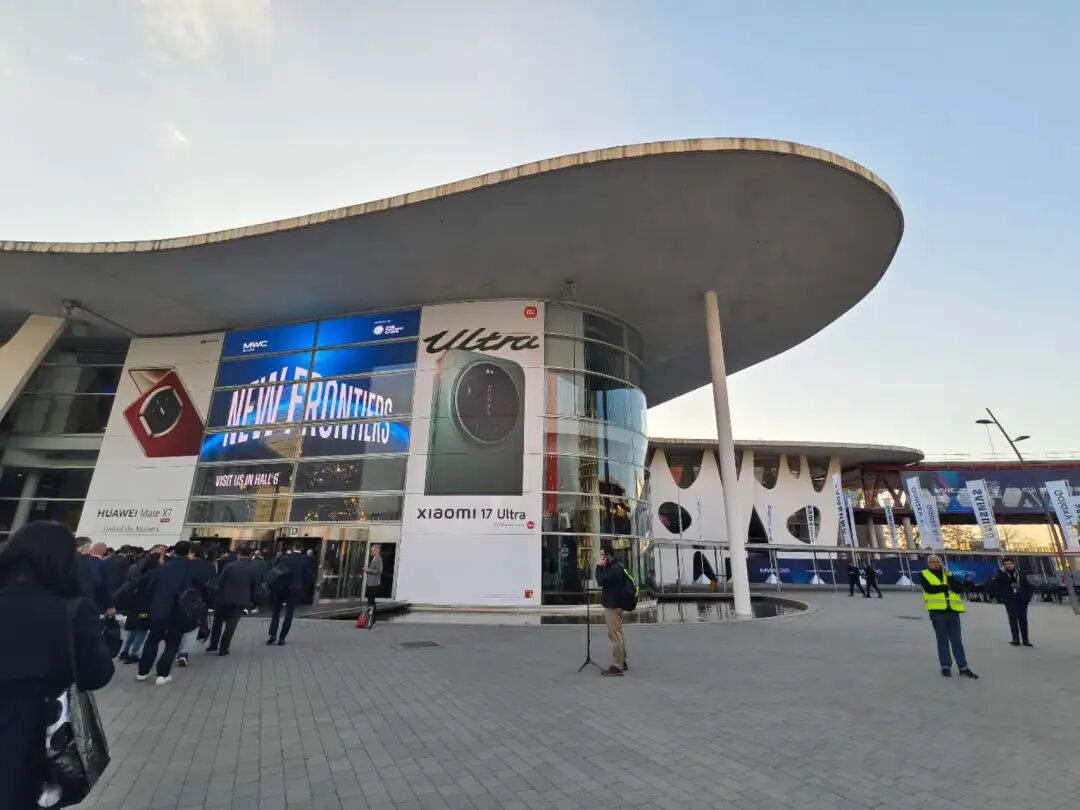
△ At the main entrance of the MWC exhibition hall, the banner ads of Huawei and Xiaomi face each other. Photographed by "Intelligence Emergence".
This time, the core theme of MWC 2026 is The IQ Era (Intelligent New Era), and AI is the absolute protagonist at this exhibition.
Walking through the seven exhibition halls, it can be found that there has been a major explosion of edge-side AI this year. Different AI capabilities and applications have penetrated into mobile phones, PCs, and a large number of wearable devices. Meanwhile, the development pace of AI infrastructure has also accelerated. 6G is no longer just a concept but is gradually moving towards pre-commercialization...
Recently, the "Intelligence Emergence" team also went to the front line in Barcelona and sorted out ten technological products that we believe are the most worthy of attention and can best represent future development trends.
Xiaomi VGT Concept Car: Chinese Cars Drive into "Gran Turismo"
At this MWC, the VGT concept car at Xiaomi's booth was surrounded by audiences. Xiaomi is also the first Chinese car brand invited to participate in the VGT project.
Lu Weibing, a partner of Xiaomi Group, told "Intelligence Emergence" that the VGT concept car is not an imagination divorced from physical laws but has a certain engineering foundation and should conform to principles including aerodynamics.
For example, the core design concept of this concept car is "shaped by the wind", aiming to achieve extreme aerodynamic performance through the body itself without adding additional aerodynamic kits. In addition, it is also equipped with Xiaomi's self-developed 900V silicon carbide platform, supporting nearly 1,900 horsepower.
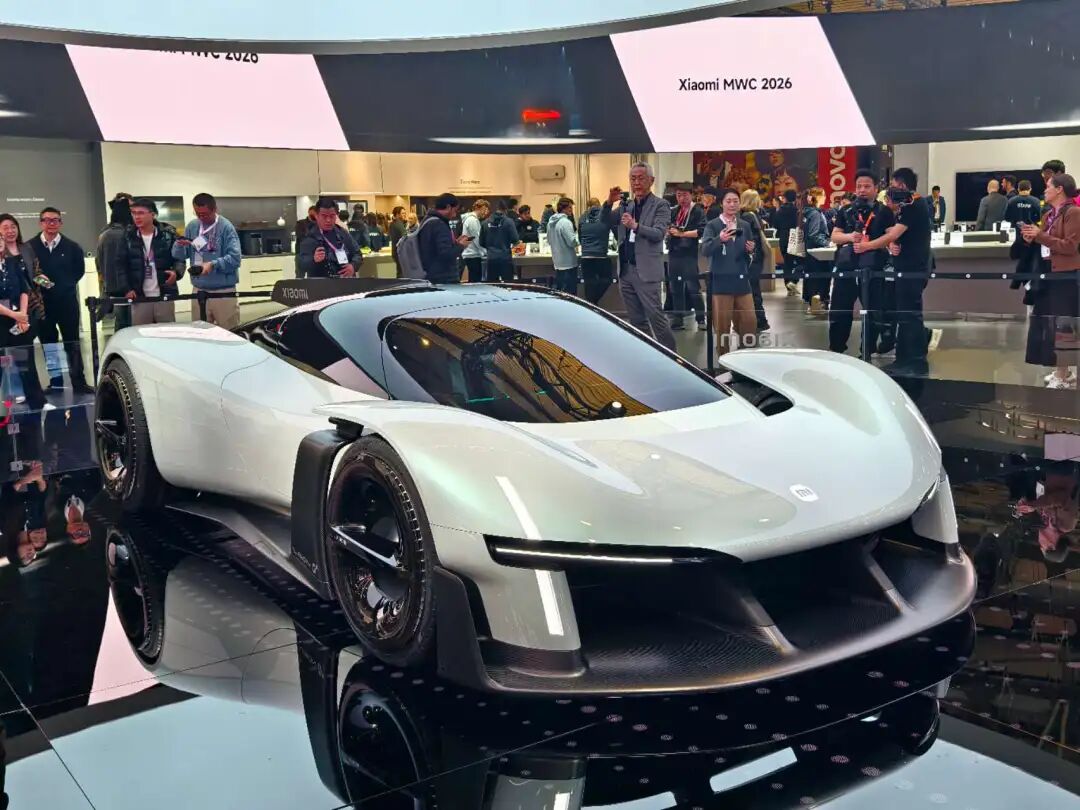
△ Xiaomi VGT concept car. Photographed by "Intelligence Emergence".
In the past, traditional racing cars relied on humans to perceive the vehicle, but on the Xiaomi VGT concept car, the situation is the opposite. The car is equipped with the Xiaomi Pulse intelligent assistant and the HyperVision system, which can adjust the display interface in real-time according to the driving mode (such as on the track or on the road), achieving a seamless connection in Xiaomi's "full ecosystem of people, cars, and homes".
(Note from "Intelligence Emergence": VGT (Vision Gran Turismo) is a project initiated by the popular racing game "Gran Turismo" on Sony PS, inviting global car companies to design future supercar concept cars for the virtual world in "Gran Turismo".)
Honor Robot Phone: Put a Gimbal Camera into a Mobile Phone
The most popular product at Honor's booth this time is the Robot Phone. With this product, Honor broke the past design of mobile phones as "black squares" and incorporated a micro-camera and a gimbal system.
This is not easy. One of the biggest technical challenges of the Robot Phone lies in space. To fit a gimbal camera into the limited back panel of the phone, the micro-motor must simultaneously meet the requirements of high strength and light weight. For this reason, Honor applied the high-performance materials used in folding-screen phones to the core components of the motor in the Robt Phone and used simulation technology on the phone to optimize the structure of each part.
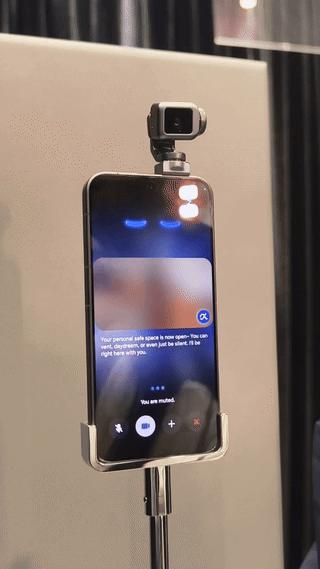
△ Honor Robot Phone. Photographed by "Intelligence Emergence".
With the help of the 4DoF (degrees of freedom) gimbal system, the Robot Phone can rotate like a human neck, following the shooting object and changing the shooting position in real-time.
This camera has super anti-shake ability and 200 million pixels. It also cooperates with the German imaging equipment brand ARRI in terms of color science and movie vision.
Of course, the Robot Phone is not just a shooting tool. With the support of Honor's large AI model, the phone's camera can also sense the environment and change its posture according to environmental changes and scenarios, just like a partner with emotional perception.
Lenovo AI Work Mate: A Work Partner + Digital Billboard
At this MWC, Lenovo exhibited a large number of native AI hardware, but the most eye-catching one is the Lenovo AI Work Mate. It is like a "work partner" who is always by your side and understands what you are doing.
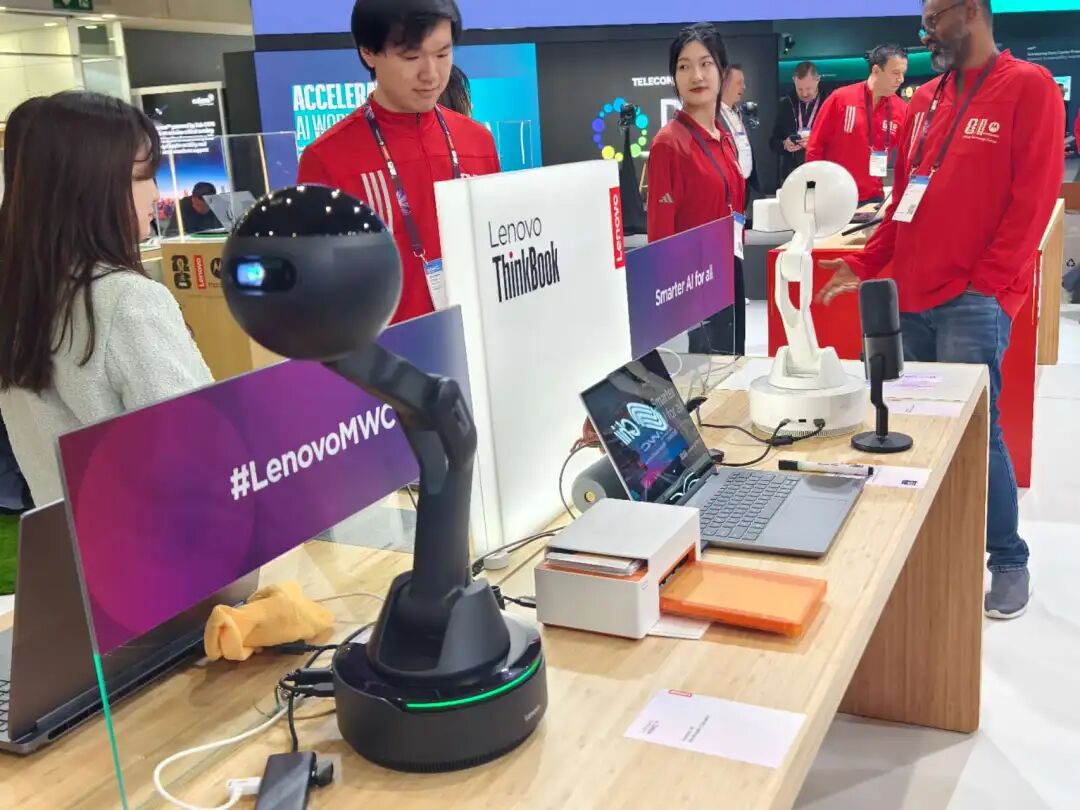
△ Lenovo AI Work Mate. Photographed by "Intelligence Emergence".
For example, when you are in a meeting, it helps you identify key points and organize to-do lists; when you are reading a document, it helps you extract key information; when you are making a PPT, it can quickly organize scattered materials into a clear structure, allowing you to output plans more efficiently.
What's more special is that the Lenovo AI Work Mate concept machine can also bring information out of the screen and project meeting points, task lists, data comparisons, and other content onto the desktop or wall, like a small electronic billboard.
According to the on-site staff, the Lenovo AI Work Mate is also exploring a new "virtual-real fusion" work mode. For example, actions such as signing on paper and handwritten annotations in the physical world can be directly digitized, eliminating the cumbersome steps of taking photos, scanning, uploading, and then organizing.

△ The "virtual-real fusion" work mode of Lenovo AI Work Mate.
The AI Work Mate is not an isolated desktop device. It can form a multi-device linkage with terminals such as computers. When processing the main task on a PC, the AI Work Mate serves as a side workbench, continuously providing context assistance, reminders, and organization.
Huawei U6GHz Product Suite: Pave a Highway for 6G
The U6GHz is a "golden frequency band" and is the core resource for mobile network expansion and upgrading in the next decade. It can be understood as the key "highway" for the future deployment of 5G-A and 6G.
During MWC 2026, Huawei targeted 6G and released a series of products and solutions related to U6GHz.
Huawei launched the "AAU serialized product matrix". The biggest breakthrough is that compared with traditional antennas, which may only have dozens of transmitting and receiving units, the AUU integrates 256 units, like miniature flashlights.
In the AUU, Huawei also added a digital-analog hybrid intelligent beamforming algorithm. This algorithm can control these 256 miniature flashlights to work together, aggregating into a super-strong signal spotlight.

△ Huawei's booth.
This combination of dense antenna units and algorithms overcomes the inherent shortcoming of high loss in the U6GHz frequency band, enabling U6GHz to have a propagation distance and coverage effect similar to the current mainstream C-band (about 3.5GHz) of 5G.
Of course, considering that a large number of future AI applications will occur indoors and the problem of wall penetration loss in the U6GHz frequency band, Huawei also released U6GHz small base station products, allowing AI applications in future rooms to also use the "golden frequency band".
Transsion Modular Phone: Disassemble the Phone like Lego
In Transsion's modular phone, all modules of the phone can be decoupled. You can remove the wireless communication module, microphone module, two 3000mAh battery modules, and an entire camera module through magnetic suction points. What's left is a phone with a thickness of only 4.9 millimeters, thinner than the iPhone 17 air.
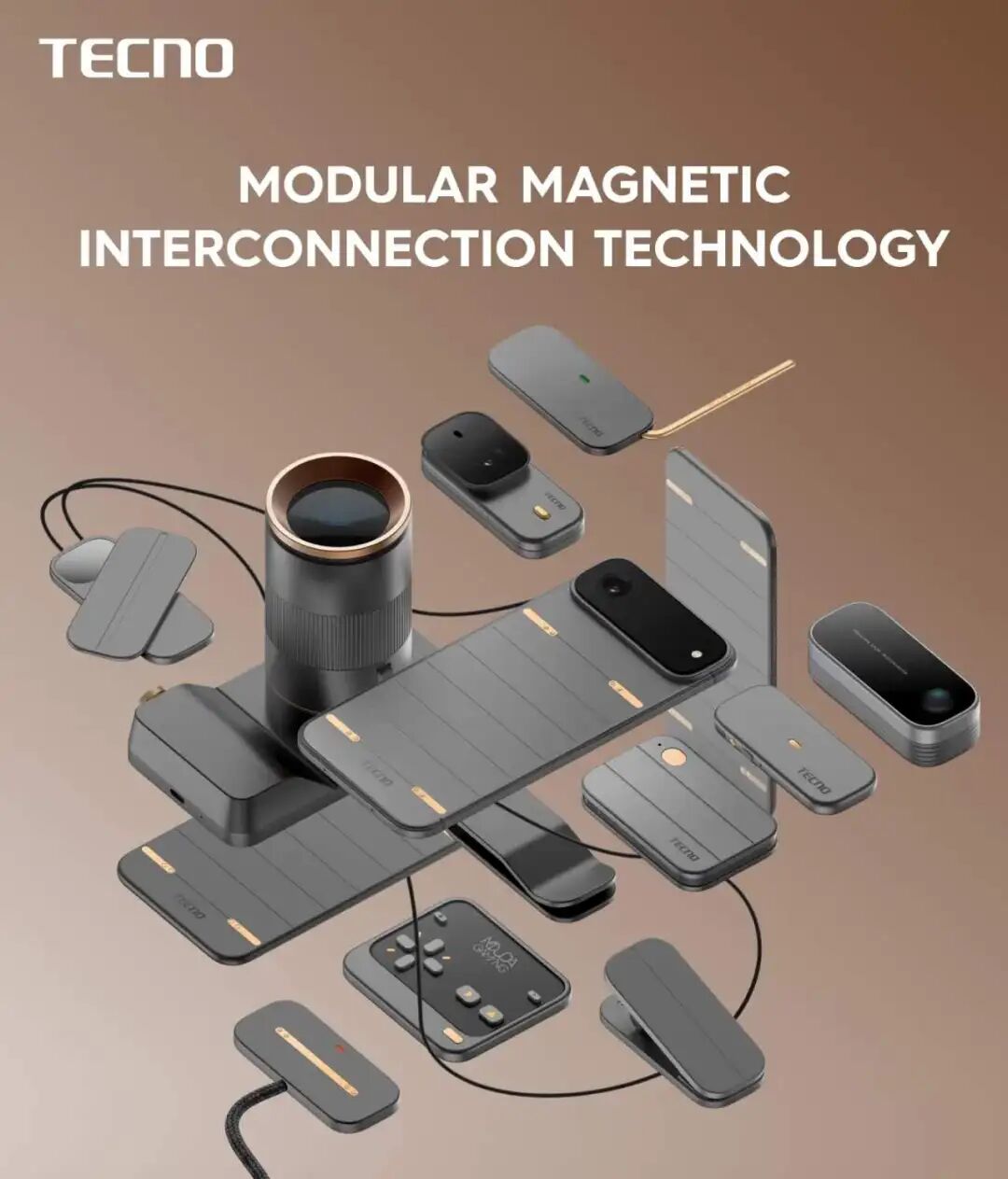
△ Different detachable modules of the Transsion modular phone. Images from public channels.
This design also makes the phone highly playable. For example, you can remove the microphone module or camera and clip it on your collar to serve as a lapel microphone or action camera. You can even install the camera on the front or back of the phone at any position to change the shooting position.
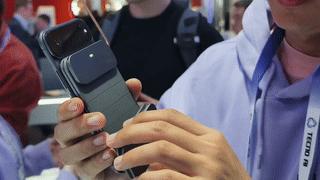
△ Assembly of the Transsion modular phone. Photographed by "Intelligence Emergence".
A staff member at Transsion's booth told "Intelligence Emergence" that the consideration behind this design is to address the pain points of users when changing phones. Most people change their phones for a single reason, such as insufficient battery or poor photo-taking function. Modularity allows users to only replace a specific part or upgrade the core module, significantly reducing long-term usage costs and electronic waste.
Meta: AI Glasses with Color Display and Micro Gestures
Meta's booth is in a special location, outdoors between Hall 3 and Hall 5, but it still can't stop the enthusiasm of the audience queuing up. According to the personal experience of "Intelligence Emergence", you have to queue for at least five minutes to have an experience.
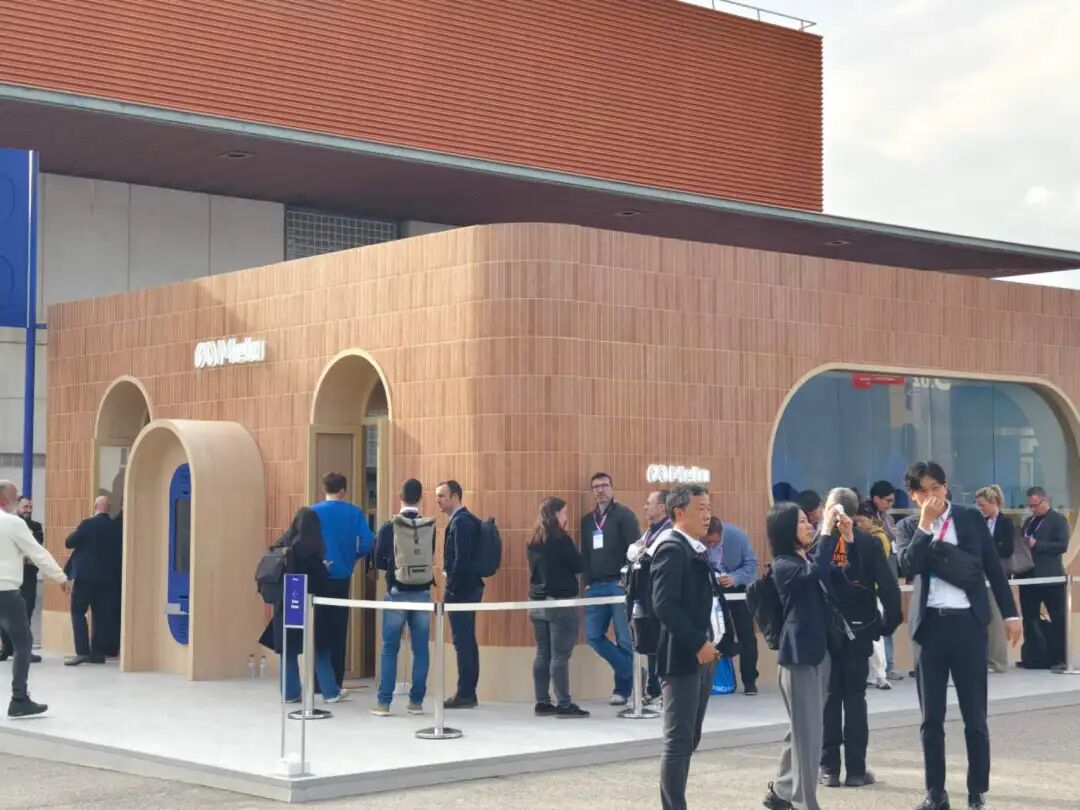
△ There is a continuous stream of queuing audiences outside Meta's booth. Photographed by "Intelligence Emergence".
This time, Meta exhibited the Meta Ray-Ban Display (with a screen) that it newly released at the Meta Connect conference a few months ago. This is also Meta's first AI glasses with a display function. Although these glasses have only a single-eye display and a small Fov, they can display in color, no longer just the previous single green display, and can be clearly seen even outdoors in bright light.
With the support of Llama 3, users only need to say "Hey Meta, look and tell me...", and the glasses can see the real world through the camera and provide real-time explanations or translations.

△ Audiences experiencing the gesture interaction function of the Ray-Ban Meta Display. Photographed by "Intelligence Emergence".
However, the biggest highlight of these AI glasses is the accompanying electromyography bracelet (Meta Neural Band). When wearing the AI glasses, you no longer need to swipe on the temples of the glasses. The bracelet can directly locate hand movements by capturing changes in muscle current, and you can even control the glasses with your hands in your pockets.
The gesture interaction is also very interesting, such as pinching, swiping, clicking, tapping the index finger with the thumb, or using the "OK gesture" to flip to adjust the volume, etc.
Iflytek: AI Glasses that Can "Recognize Lips"
At this MWC, Iflytek exhibited its first AI glasses, targeting the translation scenario. However, the most special function of these glasses is that when you are in a high-noise exhibition or cocktail party, the built-in lip movement recognition multi-modal noise reduction solution in these glasses will play a big role.
Specifically, this solution captures the lip movements of the speaker through the camera and combines the bone conduction microphone to capture the wearer's voice. It then fuses the audio and video information, enabling the glasses to accurately lock onto the target speaker in a noisy background, increasing the accuracy of voice recognition and translation by more than 50%.
These glasses are also a capable "accompanying super assistant" and can automatically and intelligently generate meeting minutes with pictures, text, and sound after the conversation.
