The last fig leaf of niche mobile phones may be torn off in 2027.
In the niche mobile phone market, what kind of selling points are most likely to make money? The answer is probably "environmental protection" and "privacy protection".
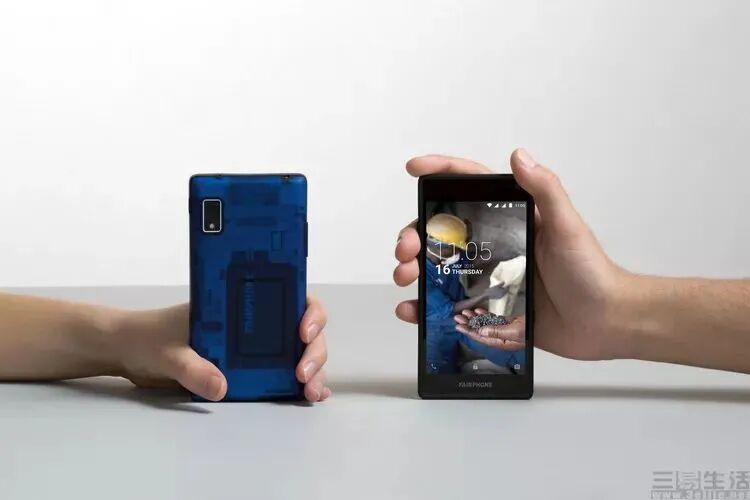
Because pursuing "environmental protection" means using plastic bodies, widely circulated knock - off phone chips, and small - capacity old - style batteries for the sake of "repairability".
To achieve "privacy protection", it means that manufacturers can justifiably not pre - install Google services (saving licensing fees), not use mainstream hardware (under the pretext of getting rid of the control of large manufacturers), and at the same time, sell products at high prices with low - cost designs.
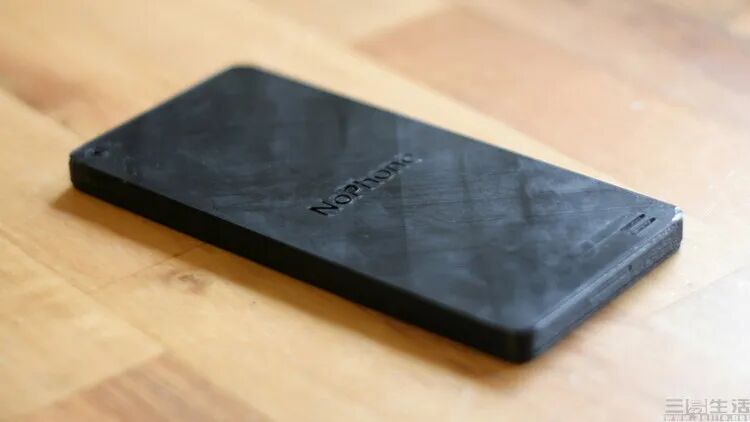
So, are there really users who will simply pay for these selling points? There probably are. Otherwise, we wouldn't see some niche manufacturers using them as selling points and still surviving with poor hardware configurations.
But is this a kind of "political correctness", or just an excuse to cover up the lack of innovation and sell low - end configurations at high prices? Do those niche brands that claim to be "environmentally friendly" and "privacy - protecting" really believe in their own claims? No one knows for sure.
However, whether we know or not doesn't matter, because their good days are probably coming to an end.
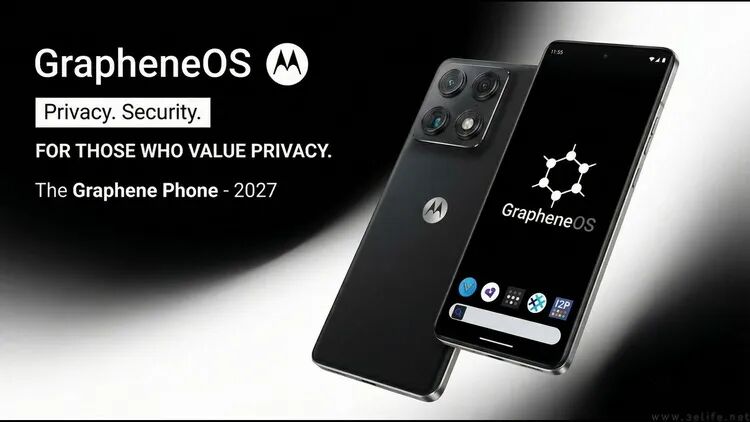
Recently, Motorola announced a cooperation with GrapheneOS. Starting from 2027, Motorola will launch new mobile phones equipped with this operating system, focusing on "privacy and security". This news is likely to mean the complete collapse of the plans of some small manufacturers for "privacy - protected mobile phones".
Why do we say so? First, we need to know what GrapheneOS is. In fact, it is a non - profit, open - source operating system project operated in the form of a foundation. Its biggest feature is that it attaches great importance to user privacy protection and is even regarded as the most authoritative "privacy - protection system" for mobile phones at present.
To achieve this, Graphene OS has done the following work:
By default, memory address randomization is enabled to completely block the possibility of memory vulnerabilities being exploited.
It enforces memory isolation between the baseband and the main CPU, preventing hackers from invading the main system through the network.
The system has an anti - tampering signature. It conducts a mandatory verification at startup, and the system cannot boot if it is infected with a virus.
It is mandatory to bind the security chip on the device, using hardware for memory encryption, secure boot, and IO isolation.
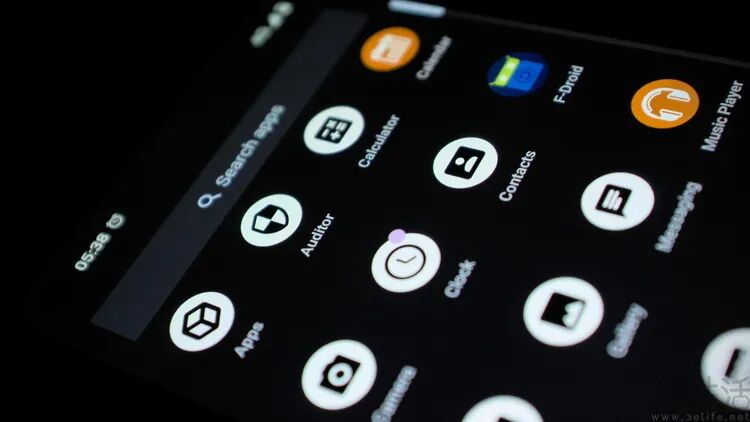
By default, it does not come with Google services and only pre - installs basic applications such as phone, SMS, camera, and files.
All permissions can be precisely switched according to scenarios. When the phone is locked, it automatically disconnects the USB, camera, and various sensors.
It comes with an anti - tracking browser. By default, it enables ad blocking, disables cookies, and turns off fingerprint services.
It promises long - term security updates, ensures full - code open source, and allows any user to audit the code.
It's not hard to find that GrapheneOS is indeed worthy of being regarded as the "safest mobile phone system" at present. After its cooperation with a large manufacturer like Motorola, it is naturally seen as the clarion call for the demise of "privacy - protected mobile phones" from small manufacturers. After all, GrapheneOS has a good security reputation, and Motorola, as a large manufacturer, has supply - chain advantages. The products of their cooperation are expected to be "both secure and cost - effective".
Some friends may ask, can only Motorola use this system, and can't small manufacturers use it? Since it is non - profit open - source code, can't small manufacturers also do the adaptation?
Actually, they can't. This brings us to one of the underlying features of GranpheneOS, which is that from its inception, it has followed a technical route of "binding" with the special hardware of large manufacturers.
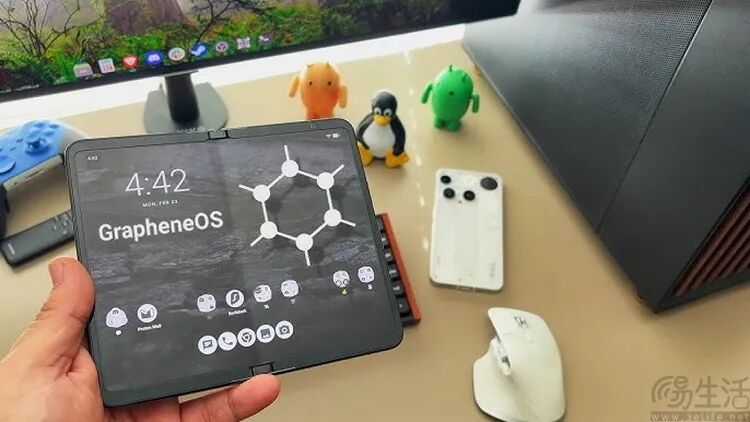
GrapheneOS is forcibly bound to specific security hardware, making it unusable for small manufacturers without technical capabilities.
Before cooperating with Motorola, GranpheneOS was long the "exclusive optional system" for Google Pixel series models. This is because it is adapted to the Titan M hardware security chip of Pixel phones. If you use other brands and chips, you can't use GranpheneOS, or more precisely, many of its security features will become ineffective.
For this reason, GranpheneOS has, from the very beginning, "isolated" itself from those small manufacturers that only use "privacy protection" as a selling point but actually lack core technical capabilities. Although we don't know if its developers chose this path to deliberately express their disgust with the niche mobile phone market's practice of using privacy as a selling point and selling low - end products at high prices. But one thing is certain: when the "privacy - protection system" with the best reputation in the industry cooperates with a large manufacturer, it's definitely not a bad thing for users.
[The pictures in this article are from the Internet]
This article is from the WeChat official account "3eLife" (ID: IT - 3eLife). Author: 3eLife. Republished by 36Kr with authorization.