MWC 2026 On-site: Striking Barcelona and the Home-field Moment of Chinese Technology
Barcelona, March 3rd —— In the morning, there were more special police officers at the Fira Gran Via exhibition hall. Many bus routes were suspended, and taxis outside the station lined up in a long queue.
This was not an ordinary morning rush hour but a strike and protest against the MWC (Mobile World Congress). Some local residents straightforwardly said, "We want to block the MWC."
The reason was that they complained that during the exhibition, more than 100,000 global media, technology companies, and related visitors flooded in, squeezing local transportation resources, driving up prices, and making the city "no longer belong to the residents."
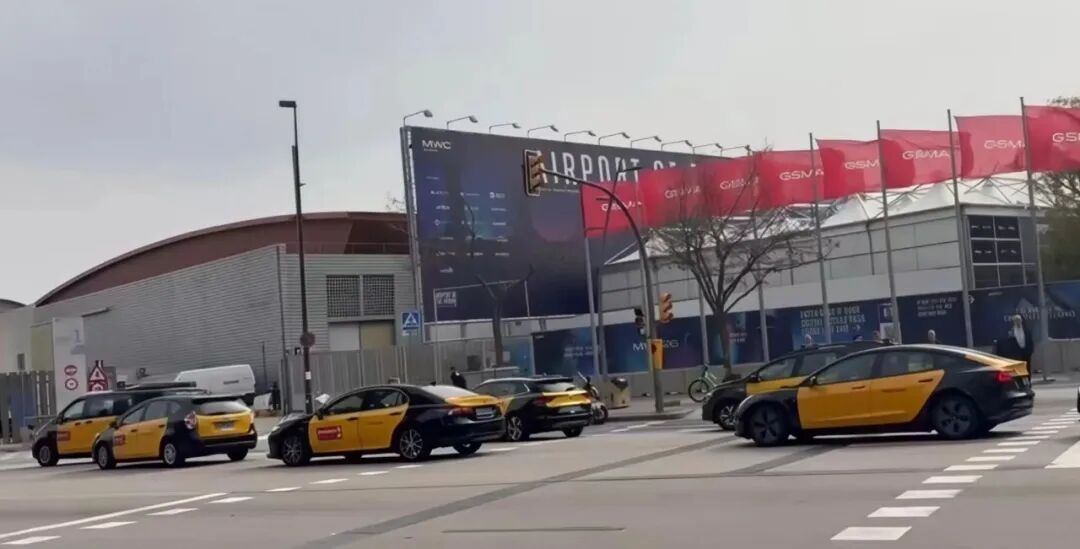
Bus routes in Barcelona were suspended, and taxis outside the station lined up in a long queue
However, after in - depth conversation, the owner of a local restaurant revealed the reason for the anxiety: "Most of those strikers are local residents whose houses have been demolished. The money from the Barcelona government for the exhibition - related demolition and renovation has been spent by them. They don't hate technology; they just want to ask the government for money and live off others."
Different from the negativity outside the venue, inside the exhibition hall, there were continuous cheers in the technology industry. And the most dazzling and subversive force came from across the ocean —— China.
The number of people at the Chinese companies' booths still exceeded that of South Korean and American companies. Although European companies occupied a large area, their influence was not strong.
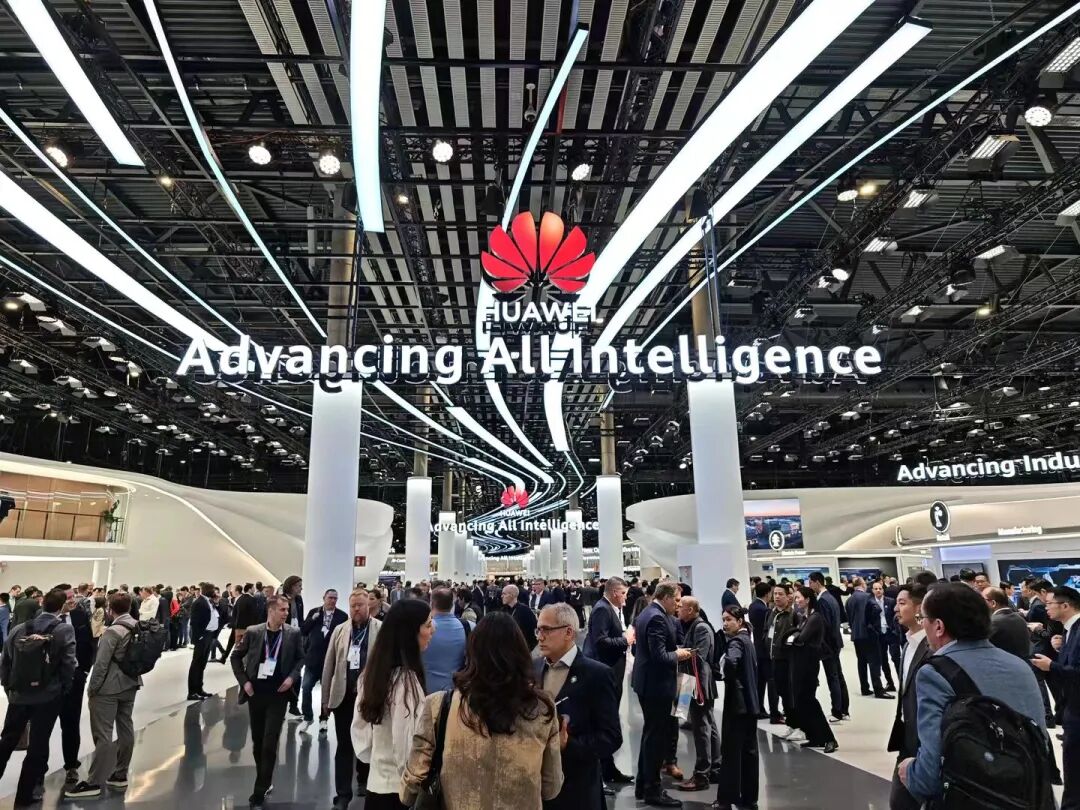
On the second day of the Barcelona exhibition, the Huawei exhibition hall was still crowded with overseas media
This temperature difference seemed like a metaphor: on one side was the anxiety and internal strife of the old European continent towards change, and on the other side was the emerging force redefining the future with amazing inclusiveness and a sense of the future.
Lenovo, Infinite Scenarios
My journey to explore the exhibition halls started at the Lenovo booth, which was still crowded with people. The center of the crowd was a seemingly "restless" device —— the Legion Go Fold concept handheld game console.
"Look, it can be folded like this to become a vertical screen."
Alex, a well - known product manager at Lenovo, pinched the edge of the device and gently pulled it. The handheld console split into two, presenting a dual - screen form with one screen above the other.
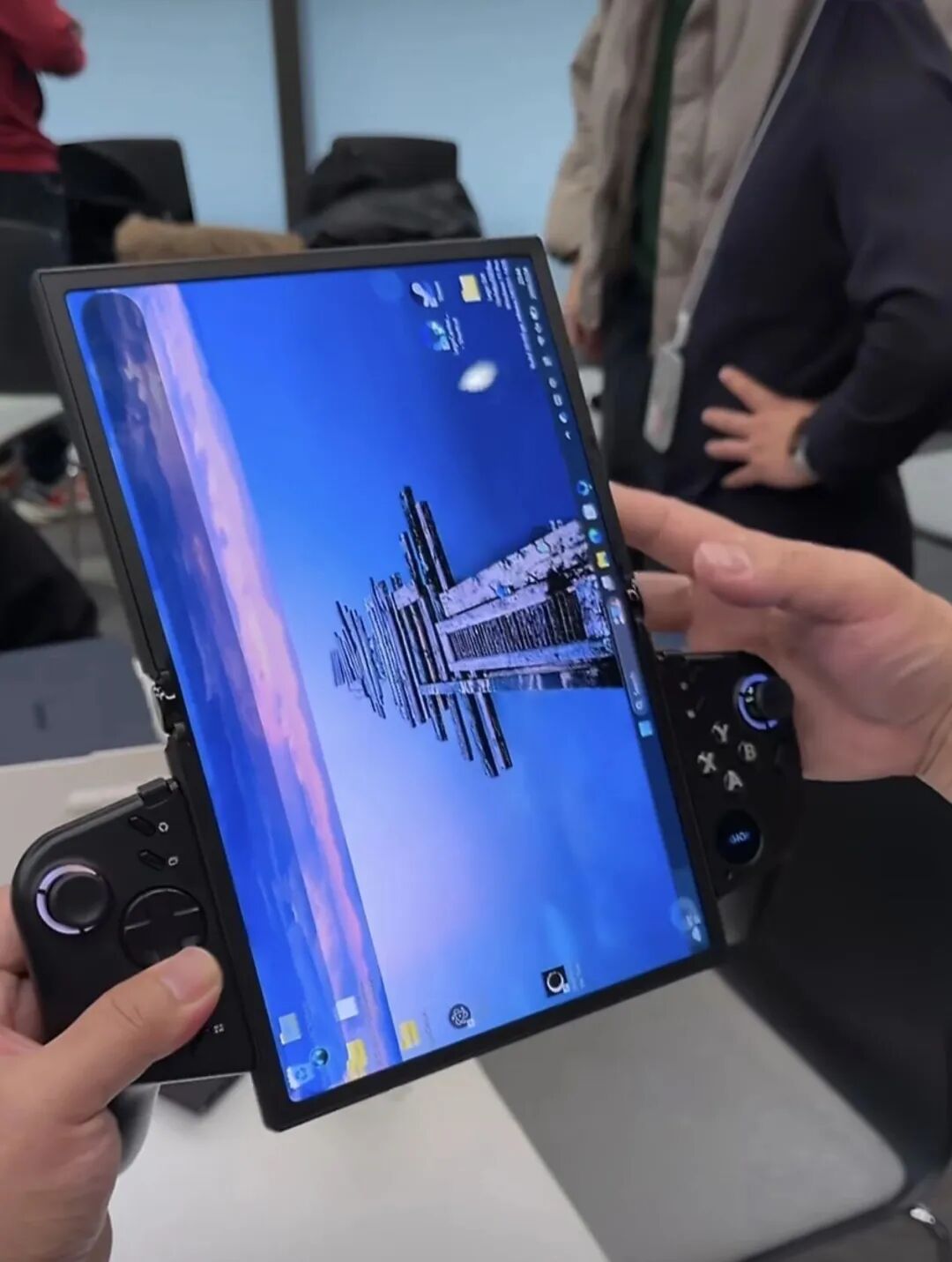
The Legion Go Fold that can have a dual - screen form with one screen above the other
"Imagine that you play 'Black Myth: Wukong' on the lower screen, and the map and strategy are displayed in real - time on the upper screen. Isn't the problem solved?"
This was not only an innovation in the game form but also a subversion of the human - machine interaction logic: detachable magnetic handles, a 1080P OLED 165Hz high - refresh screen optimized for battery life, and up to four mode switches (standard handheld, vertical split - screen, horizontal full - screen, extended desktop)... Every detail pointed to a core:
To create a seamless and immersive experience for hardcore gamers.
When trying it out on - site, the solid workmanship and smooth display effect were amazing. When asked to compare it with the currently popular Switch 2, Alex smiled confidently and said, "This one should be better."
From a PC giant to a pioneer in the handheld game console form, Lenovo announced with this concept product:
The future of portable devices lies in the integration of scenarios, infinite imagination, and being better.
Behind this was the strong endowment of the Chinese supply chain and an innovative spirit of "Why not?"
With a Phone in Hand, You're Zhang Yimou
If Lenovo was redefining the form of "playing," then the vivo booth just a few steps away was redefining the boundary of "seeing."
The star here was the vivo X300 Ultra, which was about to be released in China, and the amazing second - generation 400mm Zeiss teleconverter.
"The teleconversion range has been increased by 30% to 40% compared to the previous generation," a vivo product manager pointed to the "small cannon" on the back of the phone and introduced it to Zhengjieju.
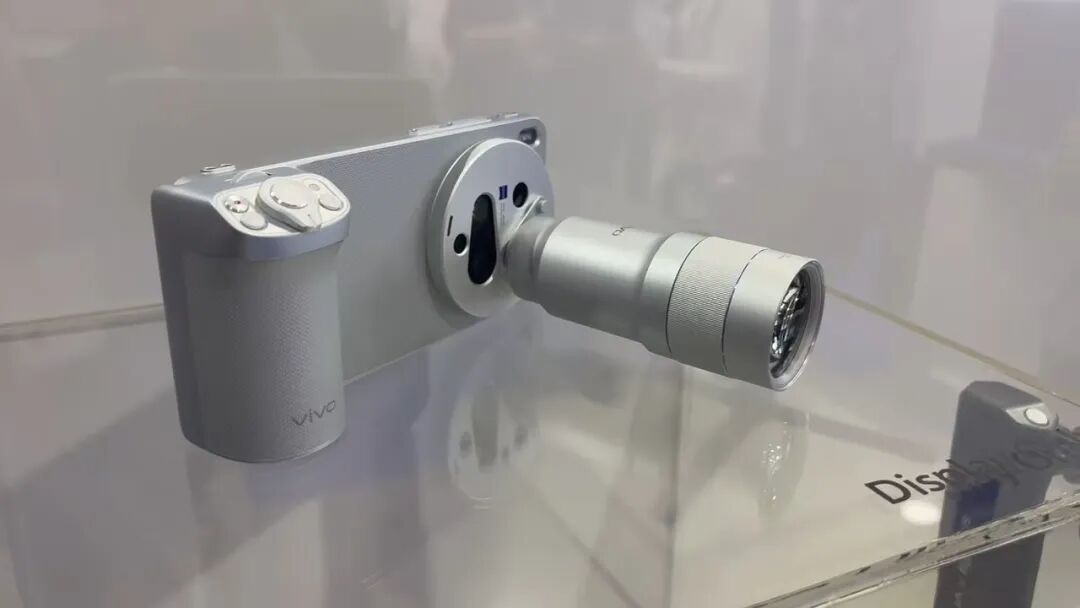
The vivo X300 Ultra equipped with a 400mm Zeiss teleconverter
What was amazing was the on - site video demonstration: the engineer placed the phone on a delicate slide rail. Through the slight translation of the lens, the monitor showed real - time camera - movement pictures with a movie - level "breathing feeling."
After switching to the professional Log mode, the dynamic range and color depth of the picture were comparable to those of a professional movie camera.
"Our lens is from Zeiss," the engineer's confidence was the guarantee of top - quality images.
Among the on - looking crowd, many foreign media couldn't help but exclaim. A foreign technology media person said beside the camera, "This is no longer just a phone. It can make you Steven Spielberg."
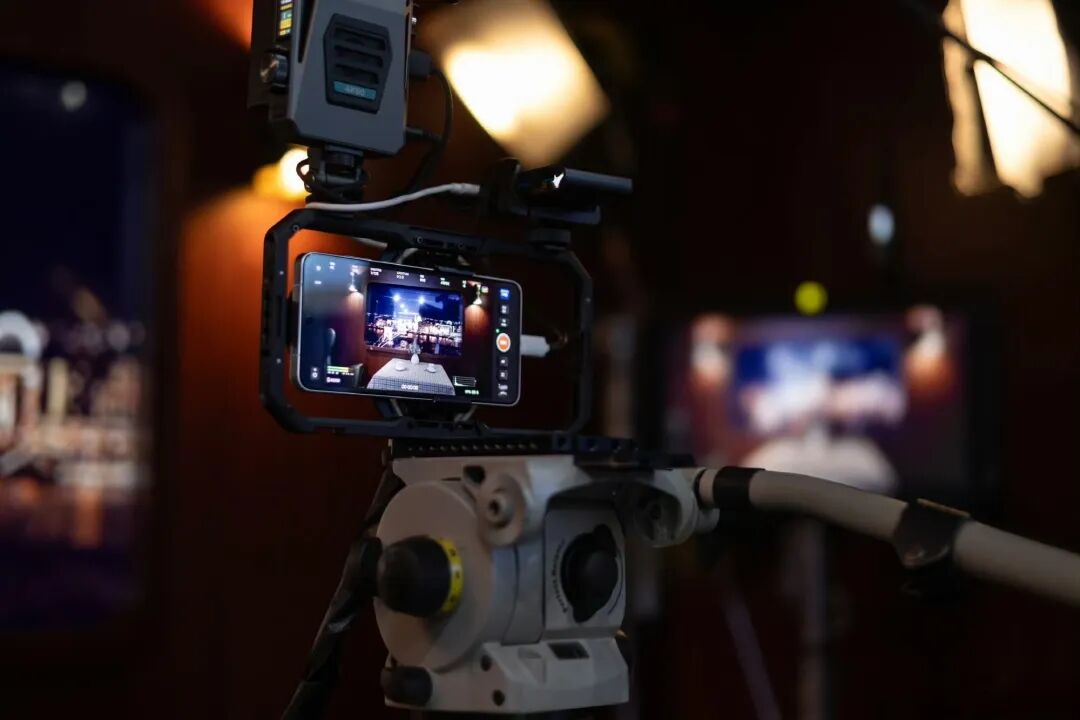
The professional Log mode of the vivo X300 Ultra
The vivo X300 Ultra was equipped with dual 200 - megapixel full - size sensors. From the 35mm humanistic main camera to the 85mm portrait telephoto lens, none was a filler.
Combined with the exclusive cage and teleconverter, it formed a complete mobile imaging workstation. From the "concert magic weapon" to the "imaging Thanos," vivo's overseas expansion this time carried the ambition to challenge the professional field.
This ability to deeply integrate cutting - edge optics, mechanical structure, and computational photography was the proof that Chinese technology companies had changed from followers to definers.
TCL, Beyond Screens
Passing through the bustling central exhibition area, I came to TCL's imposing exhibition hall.
As a giant with product lines spanning multiple fields such as mobile phones, screens, and tablets, TCL had a large number of hardware devices this time, from mobile phones to AR glasses, then to tablets and PCs. Screens were everywhere.
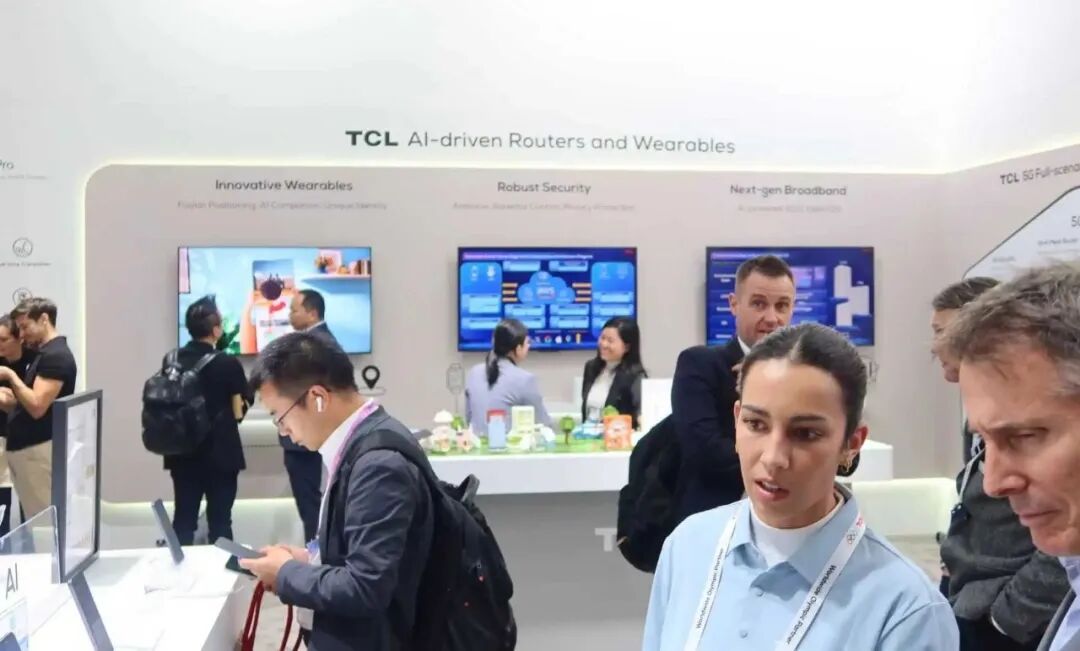
In the TCL venue, screens are everywhere
In a corner of the booth, I experienced TCL's latest smart glasses.
They were very stylish in design and very light in overall weight. By gently touching the temple of the glasses, they could be connected to the mobile phone to achieve basic functions such as information prompts and navigation guidance. This product represented TCL's understanding of consumer - level smart wearables: lightweight, fashionable, and seamlessly integrated into life.
When Zhengjieju walked to the Thunderbird Innovation area in the same exhibition hall, the appearance of the products suddenly changed.
Thunderbird Innovation's glasses were not low - key and fashionable but a fanatical pursuit of the ultimate immersive experience. The AR glasses brought by Thunderbird Innovation this time were designed in the shapes of Batman and the Joker and were one of the most popular products among hardcore technology enthusiasts on - site.
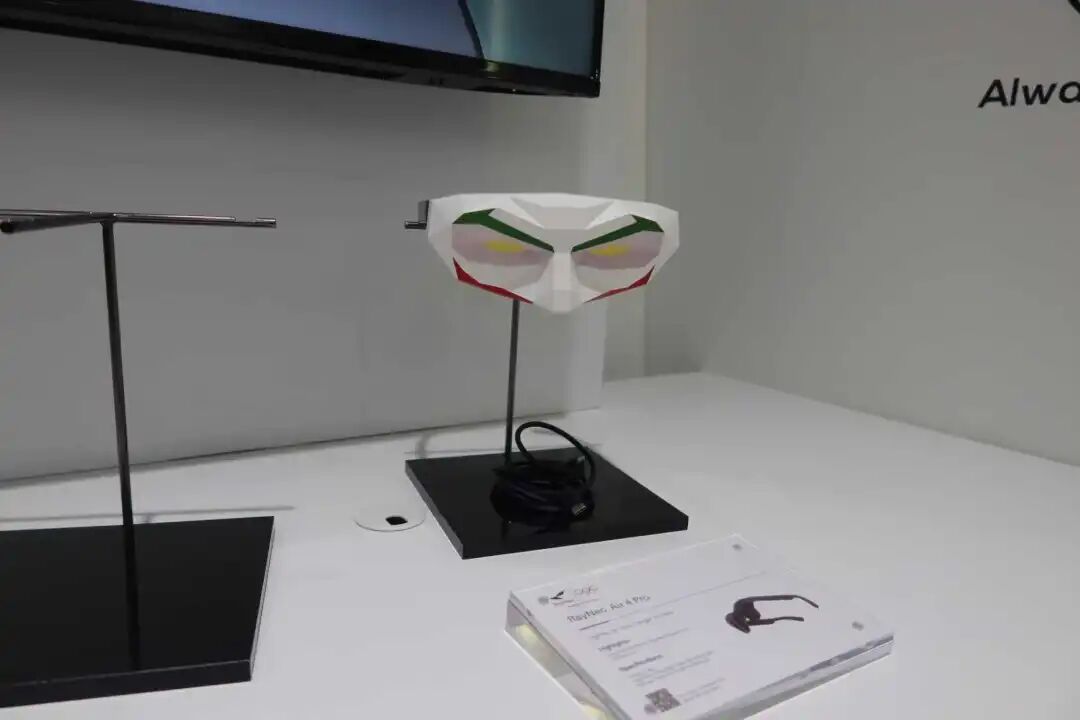
The Thunderbird Air 4 Pro in the shape of the Joker
"You should be able to see a huge screen when you wear this."
A staff member of Thunderbird Innovation handed over a pair of glasses with a sci - fi appearance. After I put them on, I couldn't help but exclaim "Wow" —— a virtual giant screen equivalent to more than 100 inches instantly unfolded in front of my eyes, with full colors and clear details.
"It is not affected by light," the staff member pointed to the light - blocking eye mask on the glasses and said, "Even outdoors during the day, you can have a cinema - level viewing experience."
What was even more shocking was the auditory part.
"This audio system is a collaboration with the Danish Bang & Olufsen. The audio - visual experience should be the best in the world," the on - site staff member added.
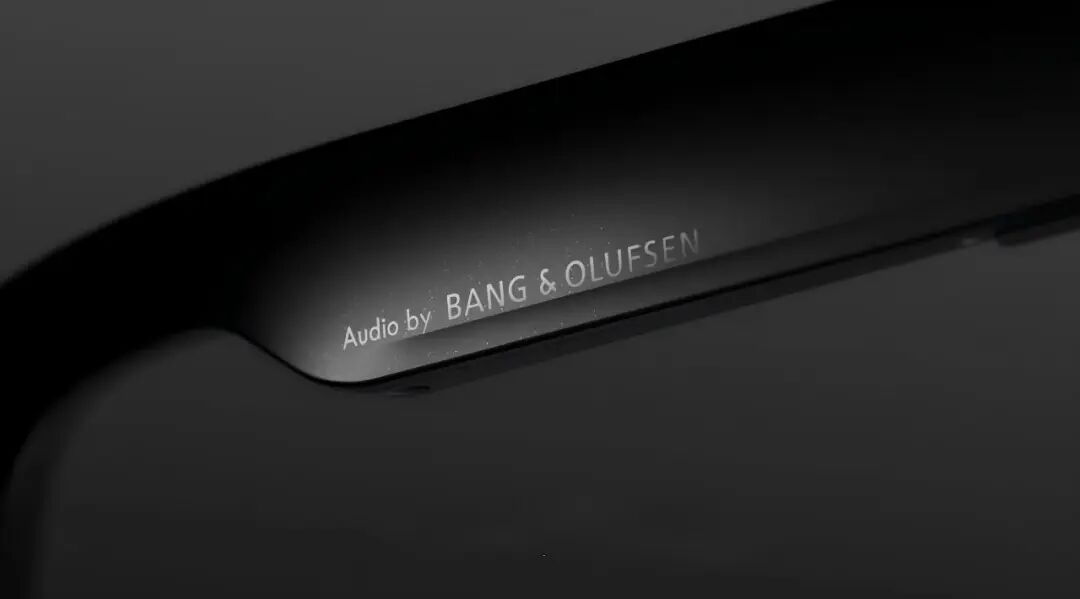
With the support of TCL and B&O, Thunderbird Innovation offers the top - notch audio - visual experience
By connecting to a laptop or a game console via cable, these glasses can turn into a private mobile cinema or a game giant screen. "You can play and enjoy it anywhere, on the toilet or in the bedroom," the staff member said with a smile.
When asked if it could be connected to a PS5 in the car, he answered affirmatively, "Yes." Thunderbird Innovation defined its position with this product:
To provide users who pursue the ultimate experience with a window to escape the limitations of physical space.
This in - depth exploration and ultimate optimization of diverse experience scenarios also demonstrated the strong execution ability of Chinese enterprises to become the world's best in niche markets from the side.
Qwen, Seamlessly Integrated into Technological Life
In the "glasses" field, the product closest to life was Qwen, located at the entrance of Hall 3 on - site, opposite the giant META.
The Qwen booth was adjacent to the exhibition areas of technology giants Google and Meta and was larger in area, forming a "tripartite confrontation" situation. The lengths of the queues for experience were similar, showing a "tit - for - tat" situation.
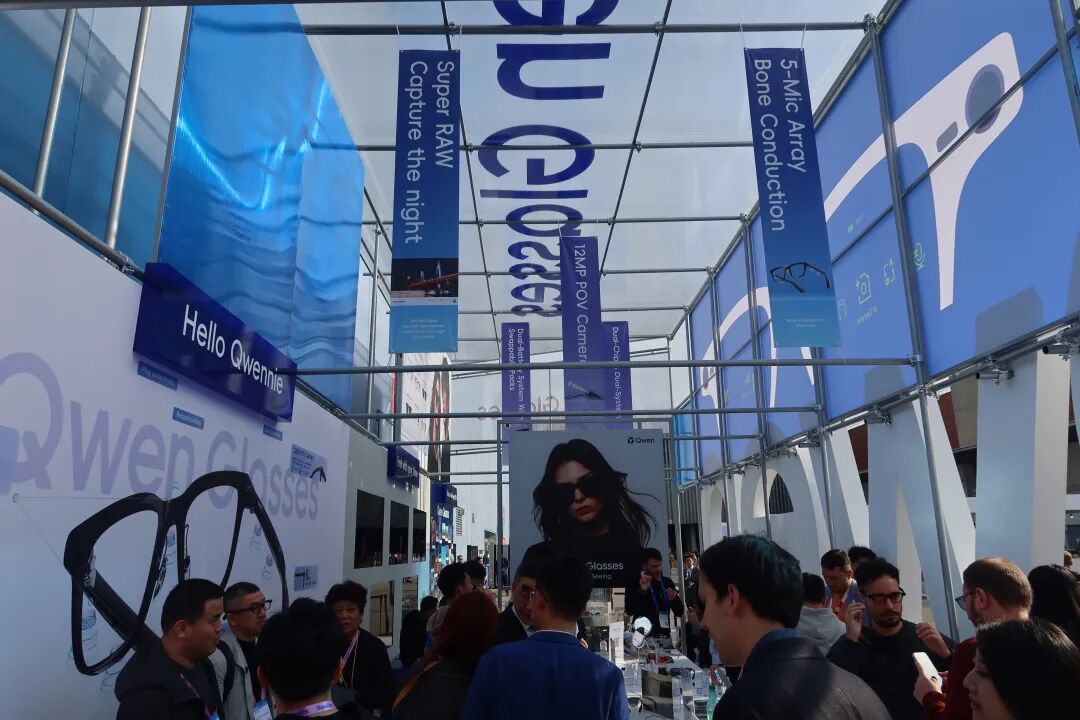
The Qwen booth
Qwen brought the global premiere of its AI glasses this time.
I tried on the "S1 Tortoise - shell Style." With a call of "Hello, Qwen," the real world in front of me was overlaid with a layer of intelligent information.
It could provide real - time translation in up to 80 languages, record life at any time, play music, and had achieved "visual Q&A" through the camera:
"Tell me about Meta." When I said this sentence facing the Meta booth across, the glasses quickly captured the image and generated an answer. More amazingly, as I turned my head, the recognition perspective also changed in real - time, as if there was a tour guide standing beside me.
"It's very light, only about 40 grams, and the wearing feeling is similar to that of ordinary glasses," the on - site technician emphasized.
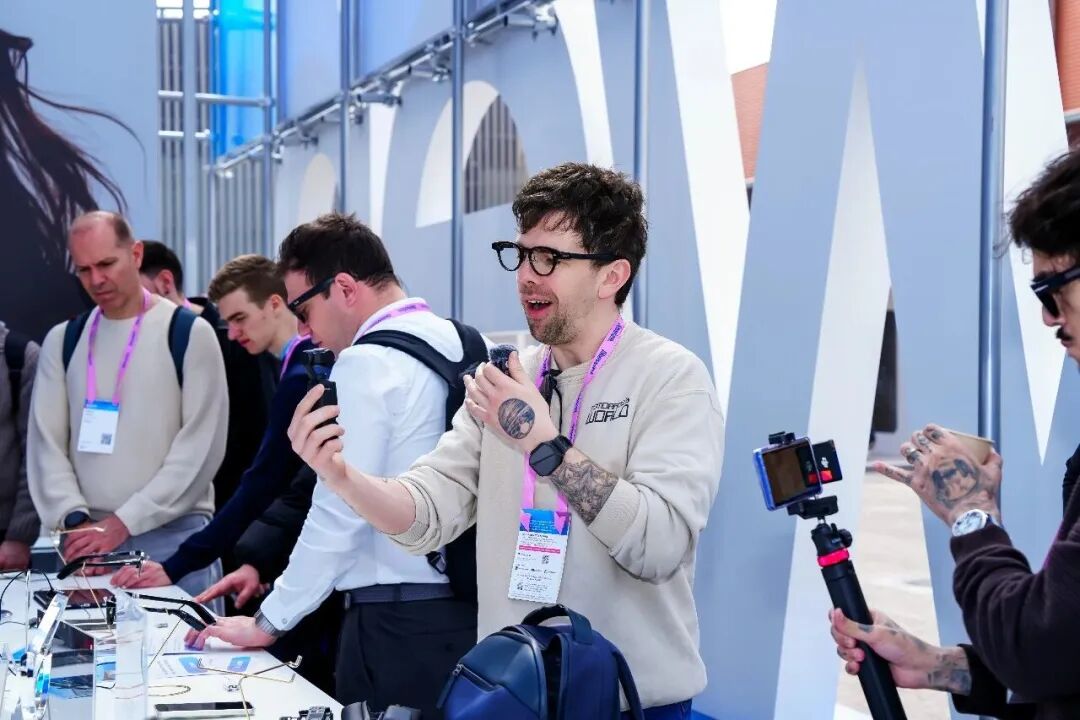
Overseas media personnel trying on Qwen AI glasses
The core of these glasses was their deep integration into the entire Alibaba ecosystem such as Alipay, Gaode, and Taobao.
This meant that users could complete operations such as ordering takeaways, taking taxis, and booking hotels with just one sentence. Through the Qwen large - scale model, these glasses could infinitely expand the mobile phone screen right in front of the user's eyes.
While Europe was staging strikes and protests against the technology exhibition, Chinese technology companies had already packed a new way of future life into a pair of glasses.
Final Observations and Reflections
At around 6 p.m. local time, Zhengjieju ended today's exploration. Outside the exhibition hall, there were various inconveniences, complaints, and conservatism in the old continent, while inside the hall, there was the enthusiasm, creativity, and inclusiveness of the new forces.
This strong contrast might be a side - view of "why China can rise and why Europe is in decline."
Europe's dilemma lies in its glorious history and heavy welfare system, which make it stumble and full of concerns when facing the drastic social reconstruction brought about by the technological revolution.
Any progress may touch the vested interests and trigger street politics.

China, as a civilization with a long history but always maintaining a "youthful spirit," has shown a future - oriented inclusiveness.
Lenovo, vivo, TCL, Thunderbird Innovation, Qwen... What they displayed was not only products but also a