Automobile manufacturers collectively offer a super-long 7-year loan.
At the beginning of 2026, a new term entered the automotive market - a seven - year low - interest long - term loan. Tesla fired the first shot. Since it first introduced the seven - year low - interest long - term loan plan on January 6th, various automakers have followed suit. This "financial war" marks that the Chinese automotive market has officially evolved from competing on "price" to competing on "leverage". Facing this long - term financial tool, consumers must carefully consider their actual needs: If you plan to keep a car for more than 10 years, a seven - year loan is an option to reduce cash - flow pressure; but if you want to change your car in 3 - 4 years, it's best not to touch the seven - year loan, because the money from selling the car at that time may not be enough to pay off the bank's remaining balance.
01
Is the long - term loan cost - effective?
BYD, which has been sitting firmly at the top of the domestic new - energy vehicle market for many years, was no exception in the face of the long - term loans launched by its peers. On February 25th, BYD's Ocean Network officially announced the launch of a seven - year low - interest long - term loan, but this move seemed a bit sudden. Several salespeople at a BYD 4S store in Beijing told Caixin Weekly that they didn't know the details. They were not clear about how it would be implemented and what the interest rate would be. They only knew that the down payment was at least 33% of the invoiced price.
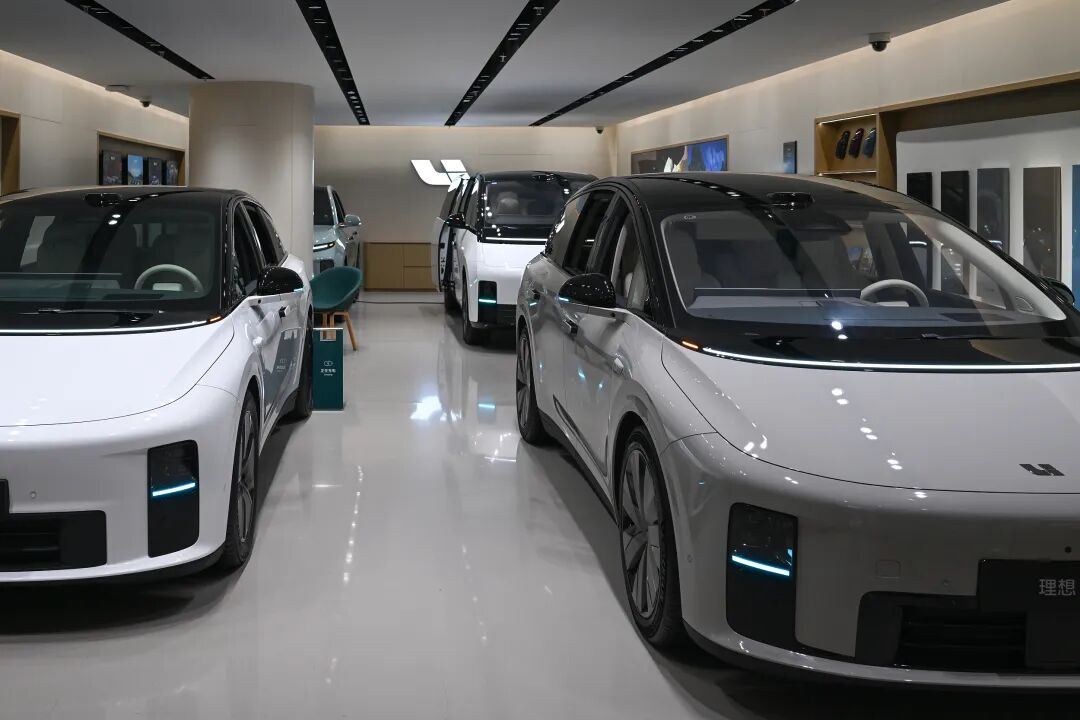
The models offering low - interest long - term loan plans are basically the main sales models of each brand. For example, Fangchengbao offers a seven - year long - term loan for the Titanium 7 and Leopard 8. Among them, the sales of the Titanium 7 have accounted for nearly 80% of the brand's total sales in the past five months; Tesla covers the Model 3, Model Y, and Model YL, its three main models; brands like Li Auto, XPeng, and IM Motors cover their entire model line - ups.
Judging from the currently announced long - term loan plans, there are significant differences between different manufacturers. Some manufacturers' seven - year plans can achieve "0 down payment", such as Voyah, Jetour, GAC Aion, and GAC Hyper. Some individual models of other manufacturers can enjoy interest - free periods in the first few years. For example, the Li Auto i8 and MEGA can enjoy 0 interest for the first three years within a limited time; the GAC Hyper HT and GT also have 0 interest for the first three years.
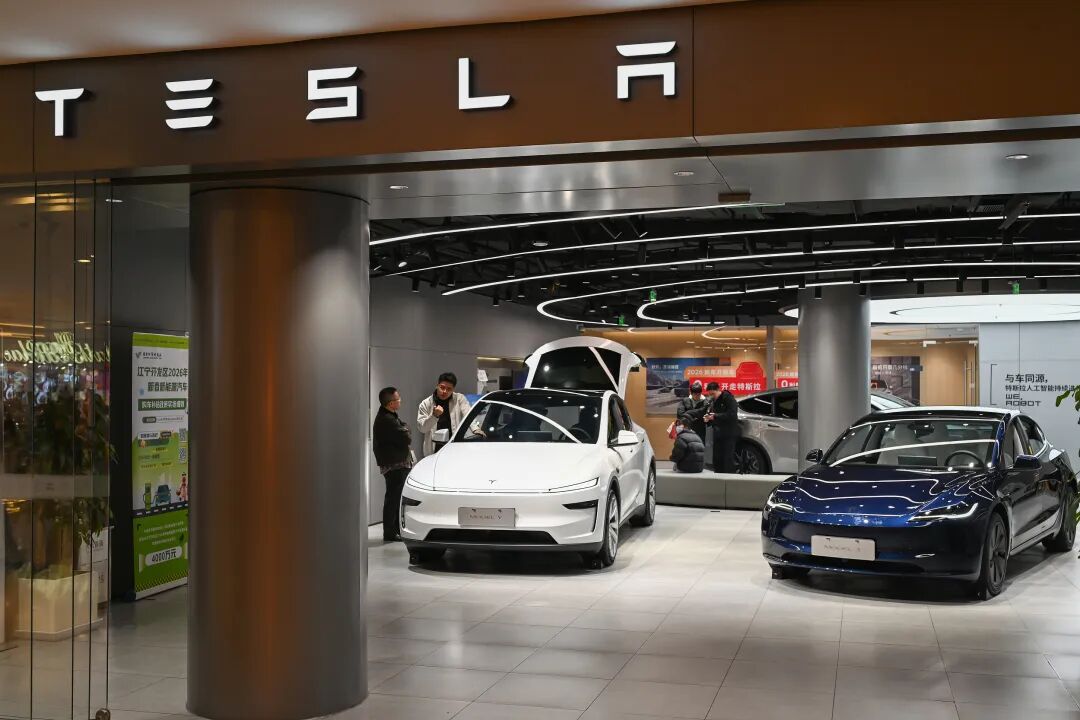
Overall, the down - payment ratio of most manufacturers starts at 15%. In terms of the interest rate, the annual interest rate of the seven - year low - interest long - term loan is concentrated between 0.49% and 2.5%. Most of the financial plans provided by manufacturers come from third - party financial institutions, and a few cooperate with banks, such as Tesla and NIO. Dongfeng Nissan and GAC Toyota are the most special, directly extending the low - interest loan term to eight years.
Regarding the long - term loan plan, what consumers care most about is whether it is cost - effective.
According to a rough calculation using the "financial calculator" in the Li Auto App, assuming you buy the Li L6 Pro version with a guide price of 249,800 yuan, for a seven - year (84 - installment) loan with a minimum down payment of 15% (37,470 yuan), the loan amount is 212,330 yuan. With an annual interest rate of 2.50%, the total interest is 37,166 yuan, and the estimated monthly payment is 2,971 yuan. If calculated according to the plan of the Bank of China with an annual interest rate of 1.99% and the same 15% down payment, the total interest for a 60 - installment loan is 21,148 yuan, and the estimated monthly payment is 3,892 yuan. Without considering early repayment, the seven - year long - term loan will cost about 16,000 yuan more than the five - year loan.
The long - term loan plan is not cost - saving. Its greatest advantage is the low monthly payment, which reduces the monthly repayment pressure, but the large number of repayment installments results in a higher total price.
02
Why are automakers eyeing long - term loans?
In the past few years, an effective way for automakers to stimulate sales was to directly provide various subsidies. As the purchase price for consumers decreased, sales naturally increased.
However, in December last year, the State Administration for Market Regulation issued an announcement soliciting public opinions on the Compliance Guidelines for Price Behaviors in the Automotive Industry (Draft for Comment) (hereinafter referred to as the "Guidelines"), targeting behaviors such as non - standard price marking, price fraud, and irrational competition in the automotive production and sales fields, which seriously disrupted the market order. The "Guidelines" sounded an alarm for the price war in the automotive market, and each automaker immediately issued a statement in response.
Some analysts believe that the most crucial significance of the "Guidelines" is to deny the legitimacy of "dumping below cost" from a regulatory perspective, which is equivalent to setting a clear red line for the price war, with strong deterrence and operability.
Caixin Weekly visited the stores of several automakers that have launched long - term loan plans and found that many models no longer offer cash subsidies. The official guide price or the "fixed price" of the vehicle is the actual selling price. However, there are still some preferential activities such as discounts on optional equipment and free optional equipment, which are suitable for users with personalized needs. Generally speaking, compared with direct cash subsidies and price cuts in the past, the intensity has been greatly reduced.
Since January 1, 2026, the vehicle purchase tax for new - energy vehicles has changed from "full exemption" to "half exemption". Automakers hope to use some financial means to make up for the impact of the policy adjustment and continue to stimulate consumers.
Although most automakers have set a clear deadline for their long - term loan plans (mostly by the end of March 2026), they are actually in a wait - and - see state. The so - called deadline is not the end of the long - term loan plan but the adjustment node of the specific policy.
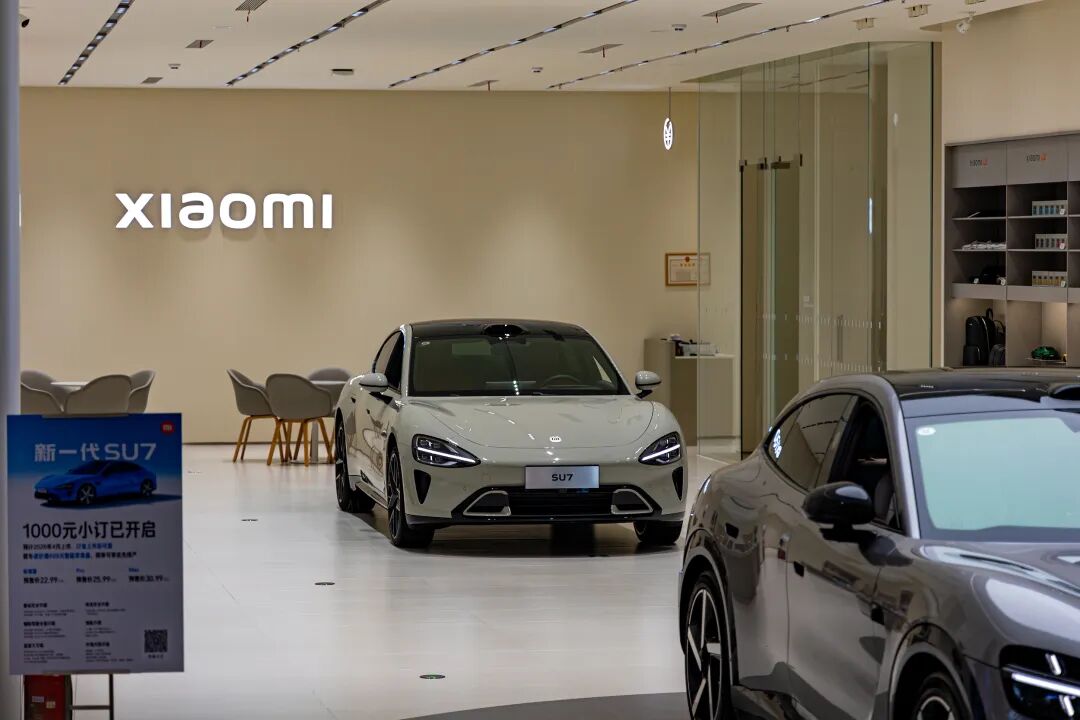
A salesperson from Xiaomi Auto told Caixin Weekly that the Xiaomi YU 7 offers two seven - year low - interest plans. Plan A requires a down payment of 99,900 yuan with an annual interest rate of 0.8%; Plan B requires a down payment of 49,900 yuan with an annual interest rate of 0.99%, provided that the order is placed before 24:00 on February 28th. In March, the annual interest rates of the above two plans were raised to 1.33% and 1.99% respectively.
Not only Xiaomi, but also manufacturers such as Tesla, XPeng, NIO, and Voyah basically follow this approach and will adjust the down - payment ratio and annual interest rate later.
More importantly, there is a policy orientation behind the long - term loan. In March 2025, the National Financial Regulatory Administration issued the Notice on Developing Consumer Finance to Boost Consumption, which proposed that "for customers with long - term consumption needs, the term of commercial bank loans for personal consumption can be temporarily extended from no more than five years to no more than seven years." The essence of automakers' launch of long - term loan plans is to respond to the national call to stimulate consumption.
03
Most are financial leases
The emergence of long - term loans has sparked intense discussions among consumers. Some people believe that it has indeed lowered the threshold for car - buying and reduced the repayment pressure, making it suitable for those with long - term plans. However, some also think that if one needs a seven - year loan to afford a car, it may indicate that it is beyond one's financial capacity, which is an irrational consumption behavior.
Different from the previous five - year car loans, which were mostly bank loans, most of the current long - term loan products on the market are in cooperation with third - party financial institutions. For example, Xiaomi Auto's cooperation partners are Shanghai Xiaomi Financial Leasing and Shanghai Changtu Financial Leasing; Li Auto's cooperation partners are Yixin Group and Tianxiada Financial Leasing; the cooperation partners of BYD's sub - brands are Fudi Financial Leasing.
Financial leasing is a common model in automotive financial services. It is divided into the direct lease model and the sale - and - leaseback model. In the former, the vehicle is registered under the name of the financial institution, while in the latter, it is registered under the name of the consumer. It should be noted that the essence of financial leasing is "leasing". Although the vehicle is registered under the consumer's name, the ownership still belongs to the financial institution. In the vehicle management system, it is usually noted as "financial leasing" or "mortgage registration". Before the rent is paid off and the mortgage is released, the consumer cannot transfer the vehicle privately.
Currently, the financial plans provided by manufacturers are relatively transparent. For example, Li Auto clearly states in its App that for the financial leasing products provided by Yixin Group, the vehicle is registered under the user's name, and the consumer will obtain the vehicle ownership according to the agreement after the lease term expires; for the financial leasing products provided by Tianxiada, the vehicle is registered under the name of Tianxiada Financial Leasing's subsidiary, and the consumer will obtain the vehicle ownership according to the agreement after the lease term expires.
Some financial institutions require the mortgage of the vehicle registration certificate (green book), such as the cooperation partners of Xiaomi Auto and Fangchengbao. A Fangchengbao salesperson said that if you choose the seven - year long - term loan plan, the vehicle is registered under the owner's name, but the ownership belongs to Fudi Financial Leasing Company, and you also need to mortgage the green book. "In the last installment of the repayment, you also need to pay a 1 - yuan purchase option fee to Fudi Financial Leasing, and then go through the vehicle mortgage release procedures to fully obtain the ownership."
Since the vehicle is mortgaged, some manufacturers will charge relevant fees when it comes to vehicle change registration. For example, the charging standard of XPeng Auto's financial leasing cooperation partner clearly states that the fee for color - change registration is 120 yuan per order, and there is an additional "urgent service fee" of 50 yuan per order for urgent cases.
Like the traditional bank loan model, the financial leasing model also allows early repayment. Caixin Weekly learned through interviews that most third - party financial institutions require that early repayment can be made after 1 - 3 years, but a higher penalty will be charged for early repayment compared to the bank loan model.
In addition, the approval for long - term loans is more strict. After all, a longer repayment period will also multiply the risks for financial institutions. A Tesla salesperson said that the review for a five - year loan is relatively easy, while a seven - year loan has higher requirements for personal qualifications.
Although long - term loans are a hot topic at present, Caixin Weekly found that salespeople generally do not actively promote long - term loan plans. Usually, they only provide this option when consumers ask, and some salespeople even do not recommend long - term loans. "The longer the loan term, the higher the interest rate," said a car salesperson. The vast majority of consumers also do not choose long - term loan plans and still prefer the traditional bank loan model.
Another thing to note for new - energy vehicles is the vehicle's resale value. The 2025 China Vehicle Resale Value Report released by the China Automobile Dealers Association shows that in 2025, in the top 5 or top 10 of the three - year resale value rankings of various vehicle segments, the vast majority are still fuel - powered vehicles.
The update and iteration speed of new - energy vehicles is comparable to that of smartphones. Choosing a long - term loan plan may result in the situation where the consumer wants to trade in the vehicle before the loan is paid off. At this time, the remaining principal of the loan may be much higher than the vehicle's residual value.
Lawyers remind consumers that when choosing the financial leasing model, they must pay attention to the contract terms, clarify all the costs associated with "financial leasing", the ownership of the vehicle, and relevant default regulations. In addition, consumers also need to fully evaluate their repayment ability, be cautious about excessive leverage, and act within their means.
This article is from the WeChat official account "Caixin Weekly", author: Dong Xue, editor: Shi Ye. Republished by 36Kr with permission.