Apple Releases Two New MacBook Models: AI Performance Breaks Records, Most Powerful Display Priced at $25,000
Mac Family Bundle
As expected, Apple has just launched the latest M5 Pro/Max MacBook Pro and a bunch of Mac updates through the methods of "direct listing on the official website" + "press release".
Compared with the "annoying" iPhone 17e released yesterday, the newly launched MacBook Pro has fewer exciting elements.
After all, the only difference between it and the M5 MacBook Pro tested by ifanr last year is that the processor has two new specifications, M5 Pro and M5 Max. There are no other changes.
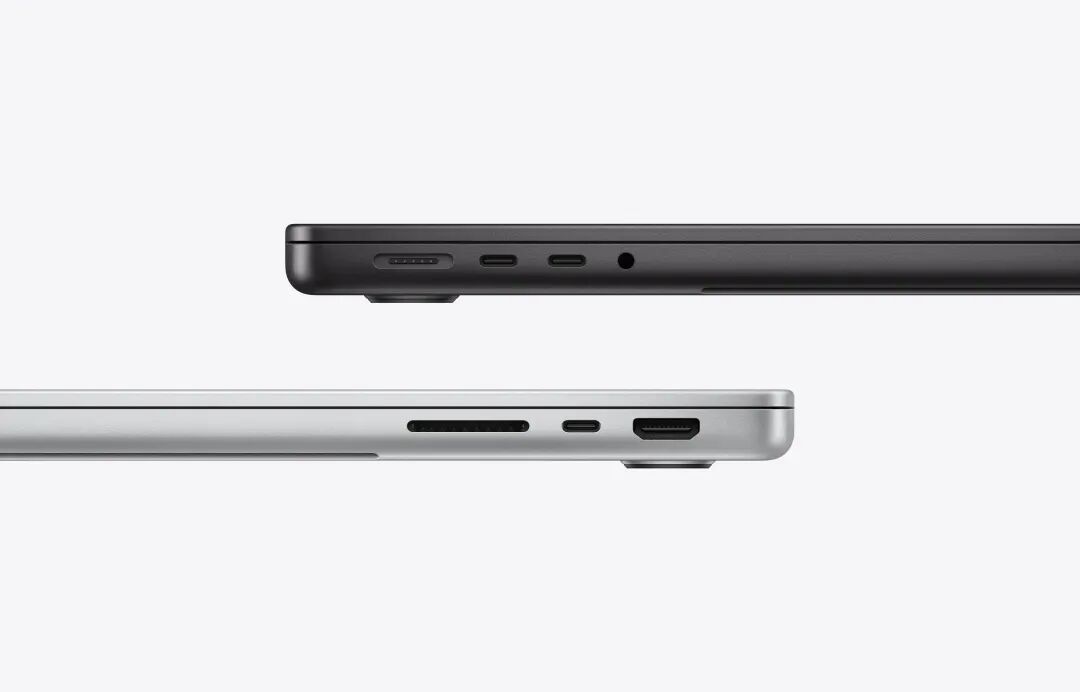
▲ Image | Apple
The M5 Pro and M5 Max processors this time do have some qualities that can impress people.
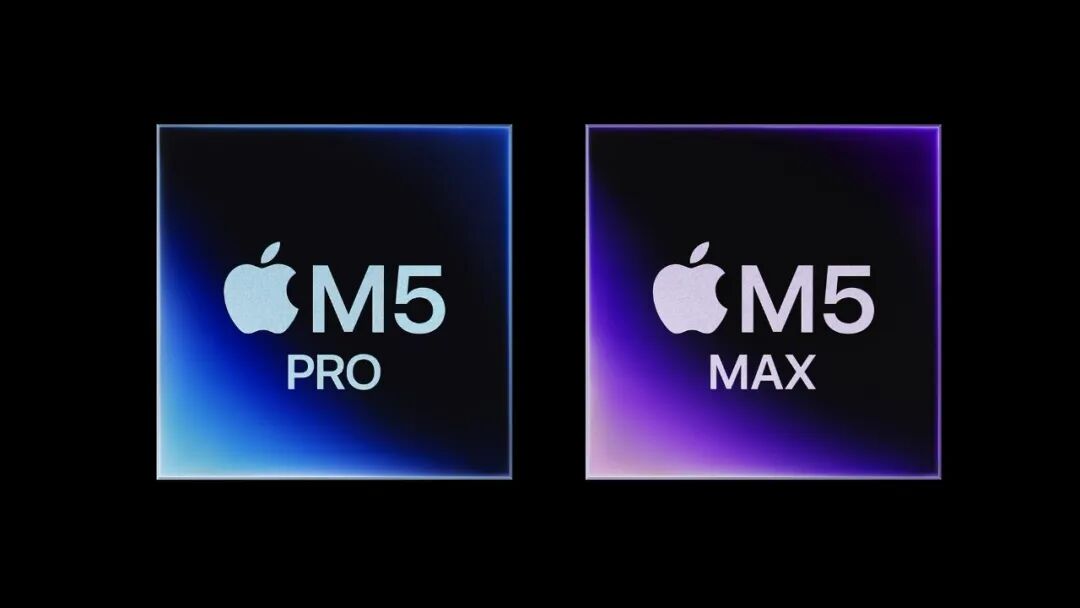
The most significant difference between the M5 Pro/Max and the standard M5 is, of course, the number of cores.
According to ifanr's review of the standard M5 processor last year, even the M5 with just 10+10 cores can catch up with the "behemoth" M1 Max of that year in many applications that require local computing power.
Undoubtedly, the larger-scale M5 Pro and M5 Max will become the performance benchmarks in the Mac family in 2026.
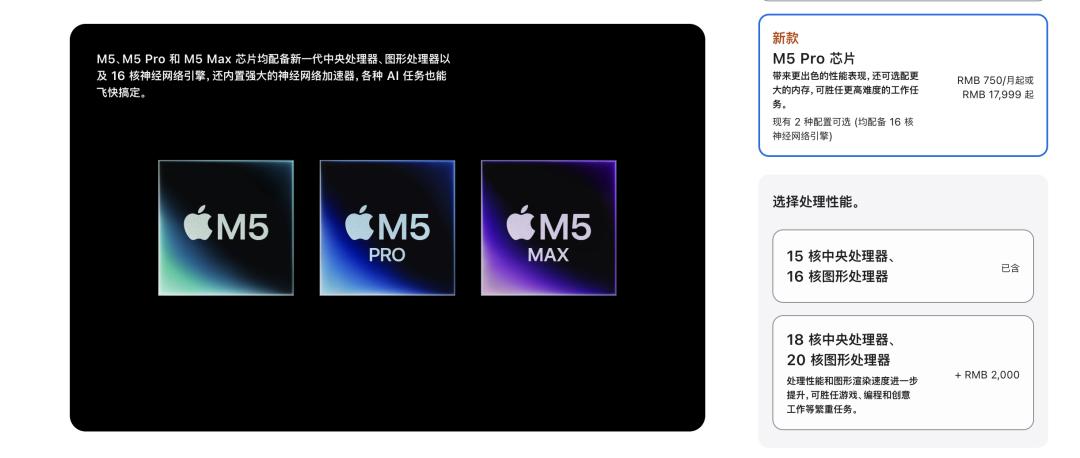
Currently, we can see that the starting configuration of the M5 Pro is a 15-core CPU + 16-core GPU, and the highest optional configuration is a combination of 18-core CPU + 20-core GPU:
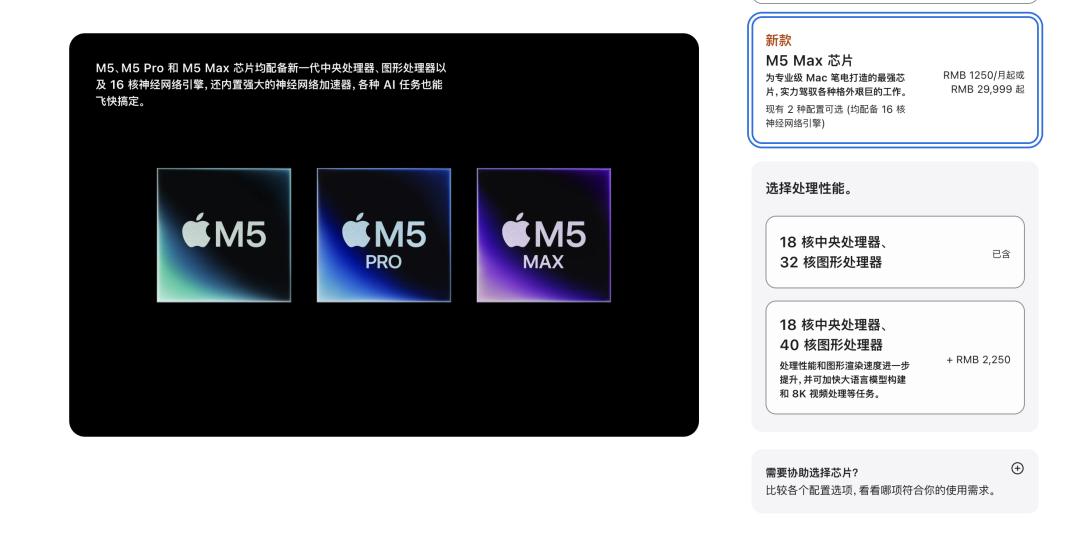
The core configuration of the M5 Max starts from 18-core CPU + 32-core GPU and reaches a maximum of 18-core CPU + 40-core GPU.
Given the progress of the N3P process this time, it is not a dream for the performance on both ends to reach new heights:
Meanwhile, the scale of the neural network accelerator in the M5 family this time should not be underestimated either.
On last year's standard M5, Apple built a "new-generation neural network accelerator" into each GPU core, which achieved good results for local AI tools like Msty Studio and VidHex:
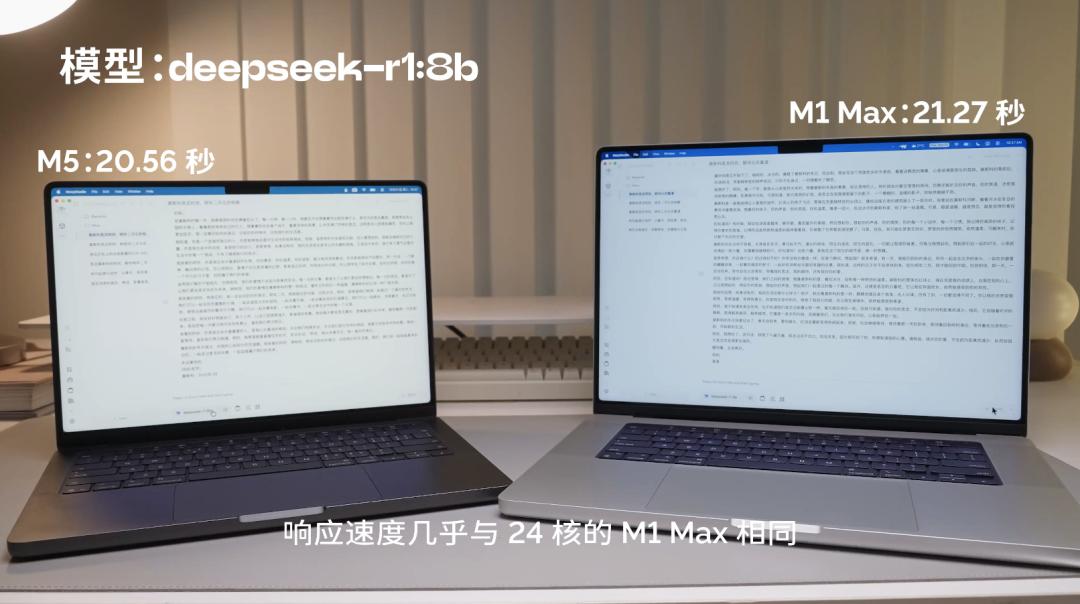
▲ Testing the response speed of the first token using the same command in Msty Studio
After applying the same neural network accelerator to the more massive GPU cores of the M5 Pro and M5 Max, its performance in local machine learning and AI acceleration will only be more outstanding -
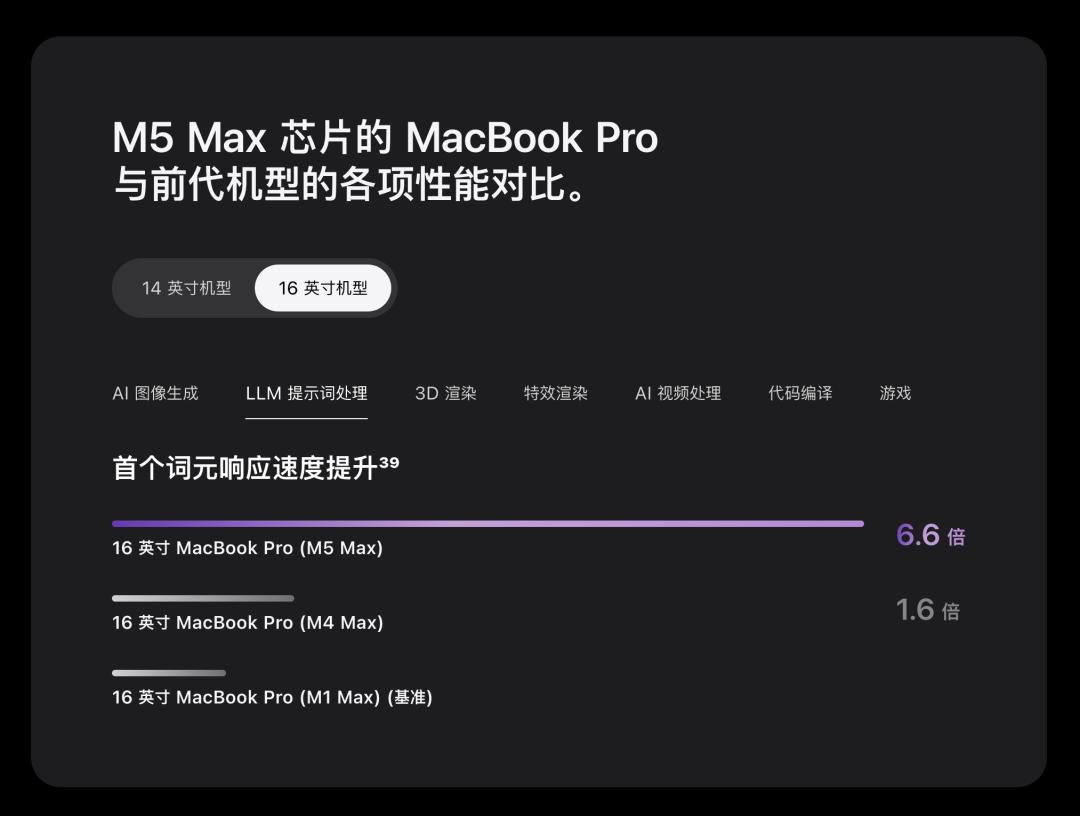
According to Apple's introduction, the M5 Pro can achieve a 6.9-fold improvement in LLM prompts "compared to the M1 Pro", and the M5 Max has achieved a 6.6-fold leap compared to the M1 Max:
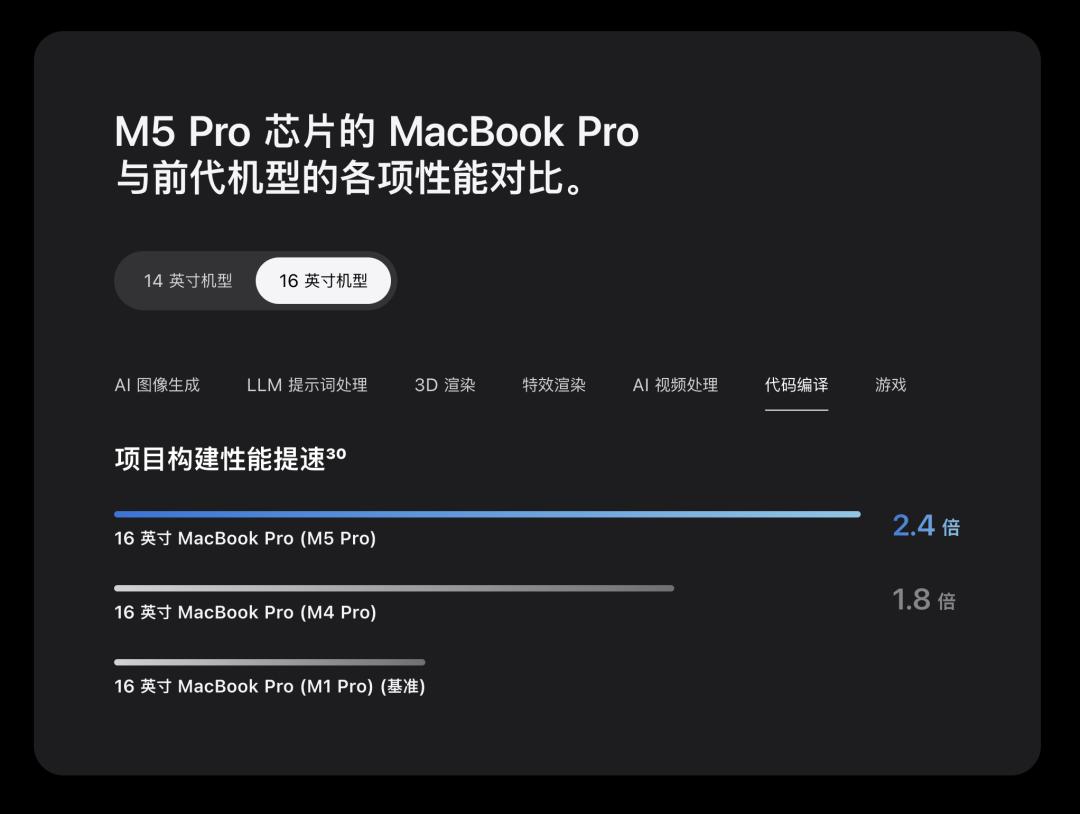
At the same time, we can also see that in the code compilation scenario, the M5 Pro not only has nearly a 2.5-fold improvement compared to the M1, but its performance has also improved by about 25% compared to the M4 Pro:
This level of improvement cannot be achieved simply by piling up the GPU scale or blindly increasing the frequency. The TSMC N3P process and the improved architecture design have both contributed a lot.
At the same time, a "new integrated architecture" is applied for the first time on this year's M5 Pro/Max, which can "integrate two chips into a single SoC" -
As expected, this is the TSMC SoIC - MH process mentioned in previous leaks, which allows processor units of different architectures to be arranged more flexibly on the wafer.
MacBook Air: Speed Up!
In addition, it's not just the MacBook Pro that has received a processor upgrade this time. The MacBook Air, which hasn't been updated for more than half a year, has finally got a processor upgrade.
As planned, the MacBook Air has been upgraded from the M4 to the M5, with two scales of 10+8 cores and 10+10 cores, and still offers three memory options of 16GB, 24GB, and 32GB:
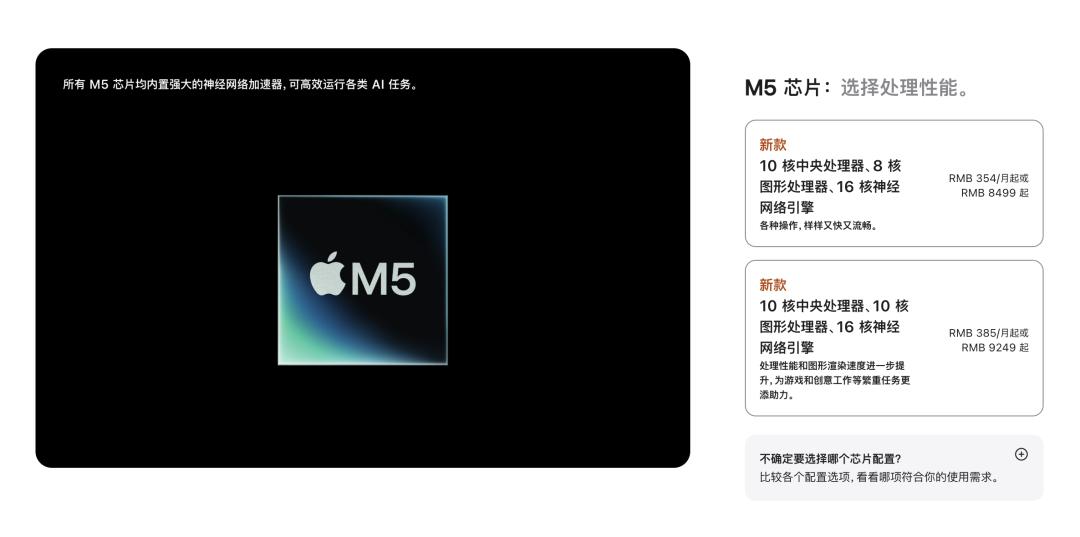
The most important good news is that the starting configuration of the hard drive of this generation of MacBook Air has reached 512GB, with a starting price of 8,499 yuan (13 - inch).
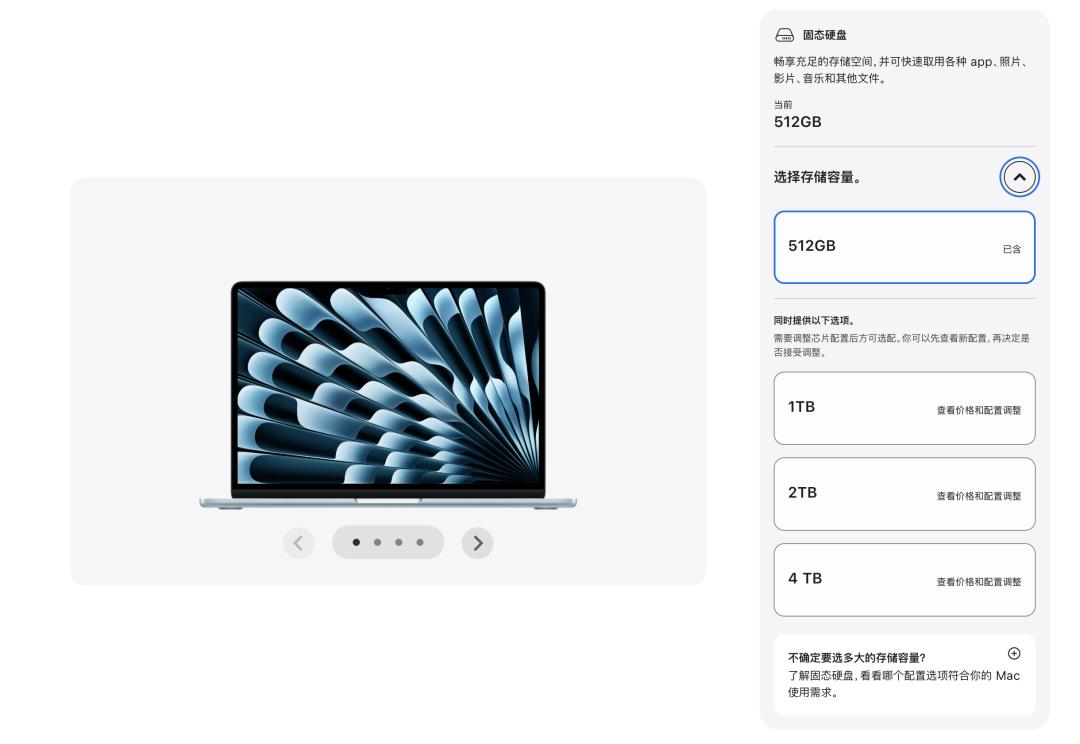
Finally, Apple has paid attention to the "hard drive speed - drop" problem that has existed in the past few years. According to the official website, the new - version MacBook Air has replaced the SSD, and the read - write speed has tripled.
Apple Displays: Shadow Clone!
The Studio Display, which hasn't been updated for a full five years, has finally been reborn this spring, and it has even "possessed" its big brother, the Pro Display XDR -
Yes, you read that right. The Pro Display XDR is no longer available. Now, only the Studio Display and Studio Display XDR are left on the official website:
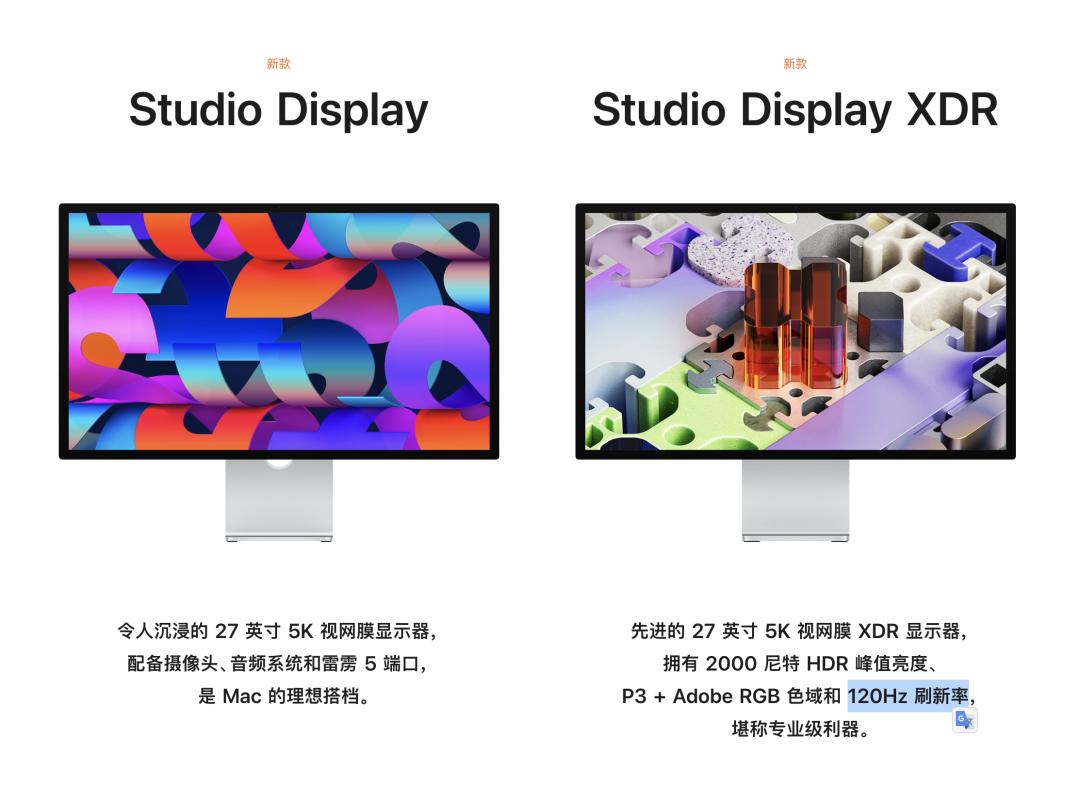
As predicted, the new model uses the high - refresh 5K panel (or something similar) that LG showed at CES before, enabling the Studio Display XDR to unlock the ProMotion capability.
However, the strict hierarchy tradition cannot be abandoned. Although the Studio Display XDR has been updated to a 120Hz refresh rate, the new Studio Display still has a 60Hz refresh rate.
But 5K 120Hz is by no means an easy parameter, so much so that Apple's official website itself has to indicate:
When Mac models equipped with M1, M1 Pro, M1 Max, M1 Ultra, M2, and M3 chips are used with the Studio Display XDR, the maximum refresh rate is 60Hz.
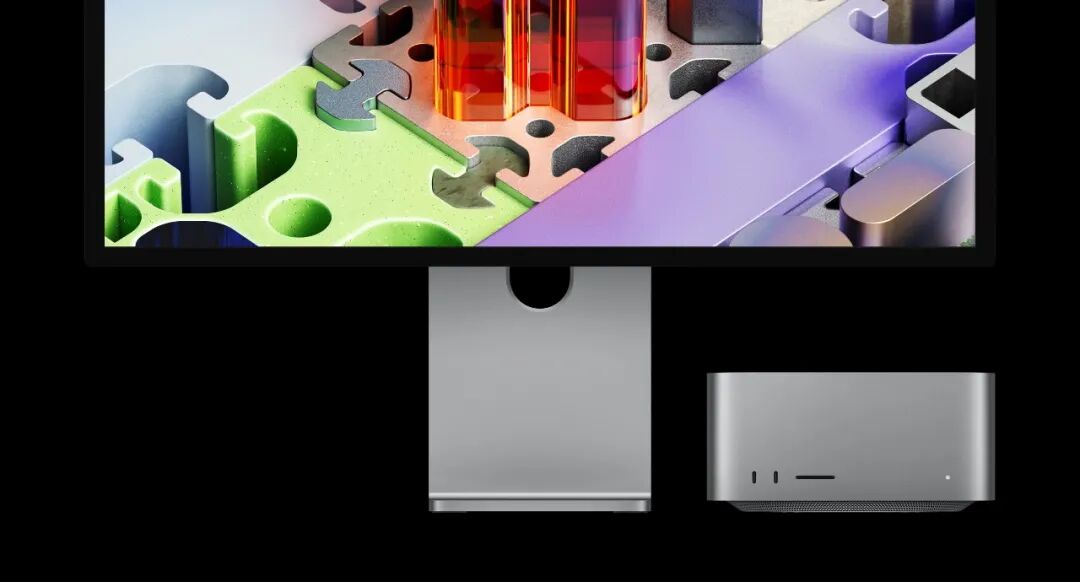
In terms of software, the Studio Display XDR also brings something new: DICOM medical image calibration. According to the official website's introduction:
Apple has released a new DICOM medical image preset and a medical image calibrator, enabling radiologists to view diagnostic images directly on the Studio Display XDR, providing a multi - functional alternative to single - purpose medical image displays and supporting seamless display mode switching.
Remember the backlit board on the hospital wall used to view CT scans? Now, the Studio Display XDR can help doctors with its peak HDR brightness of 2000 nits:
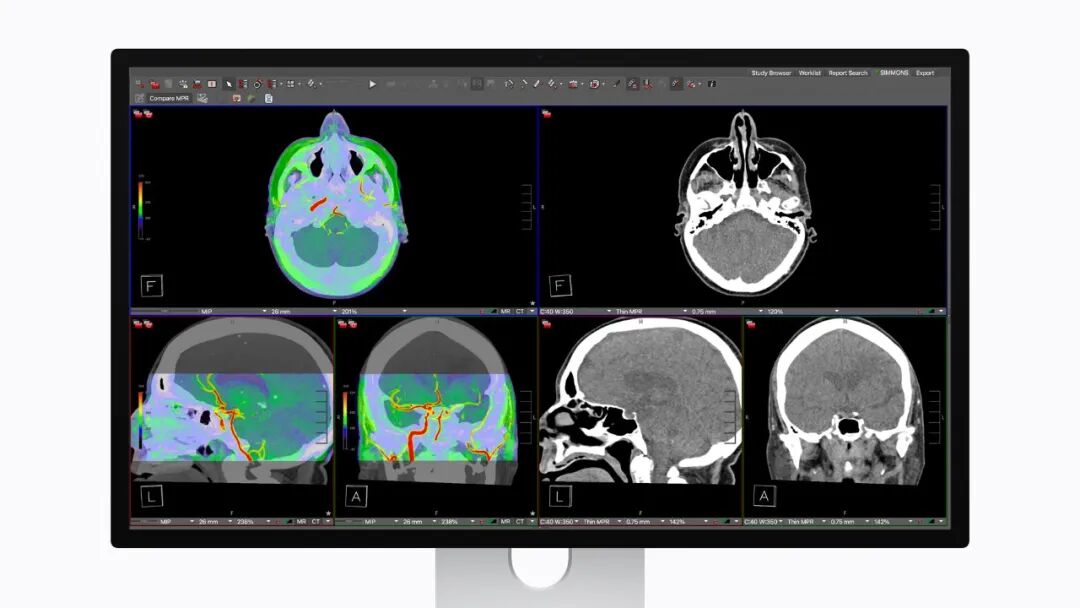
The starting prices of the new - version Studio Display XDR and Studio Display are 24,999 yuan and 11,999 yuan respectively.
Storage Prices: Still Rising!
Regarding the unavoidable topic in 2026, the various storage specifications of the new Mac product family also deserve closer attention from everyone.
Taking the most representative MacBook Pro as an example, the M5 Pro/Max processors still offer a total of five optional memory specifications: 24GB, 36GB, 48GB, 64GB, and 128GB.
But just like the problem faced by the previous - generation M4 Pro/Max, the memory of the M5 Pro/Max is still seriously "split - sold".
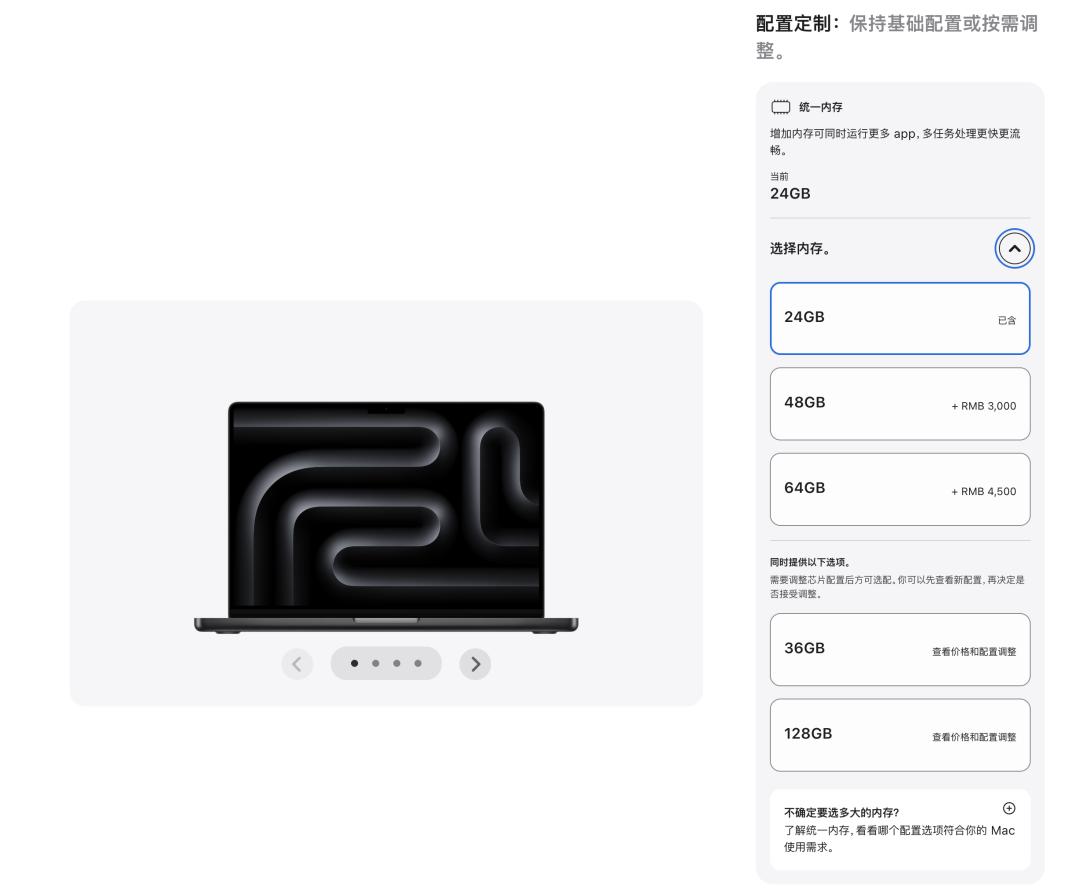
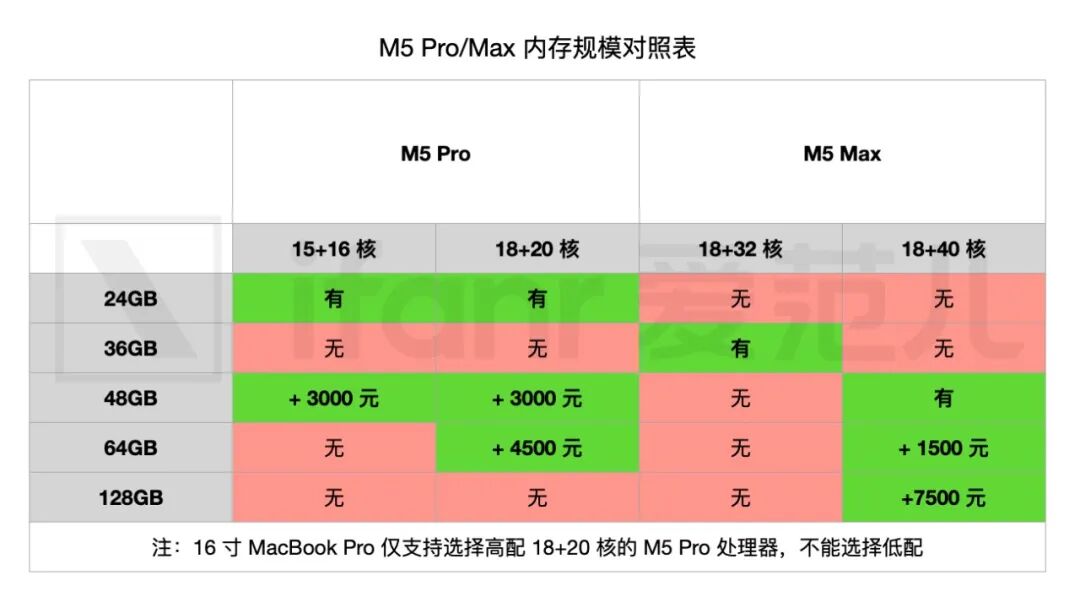
In other words, the basic 15+16 - core M5 Pro only has two specifications of 24GB and 48GB to choose from. If you want to upgrade to 36GB of memory, you have to pay an additional 2000 yuan to choose the 18+20 - core version.
To make it more intuitive for everyone, we have made this comparison table to help you understand:
Compared with the split unified memory, the hard drive of the new MacBook Pro is much simpler. It still has the familiar combination of 1TB, 2TB, 4TB, and 8TB, and the previous 512GB option has been cancelled:
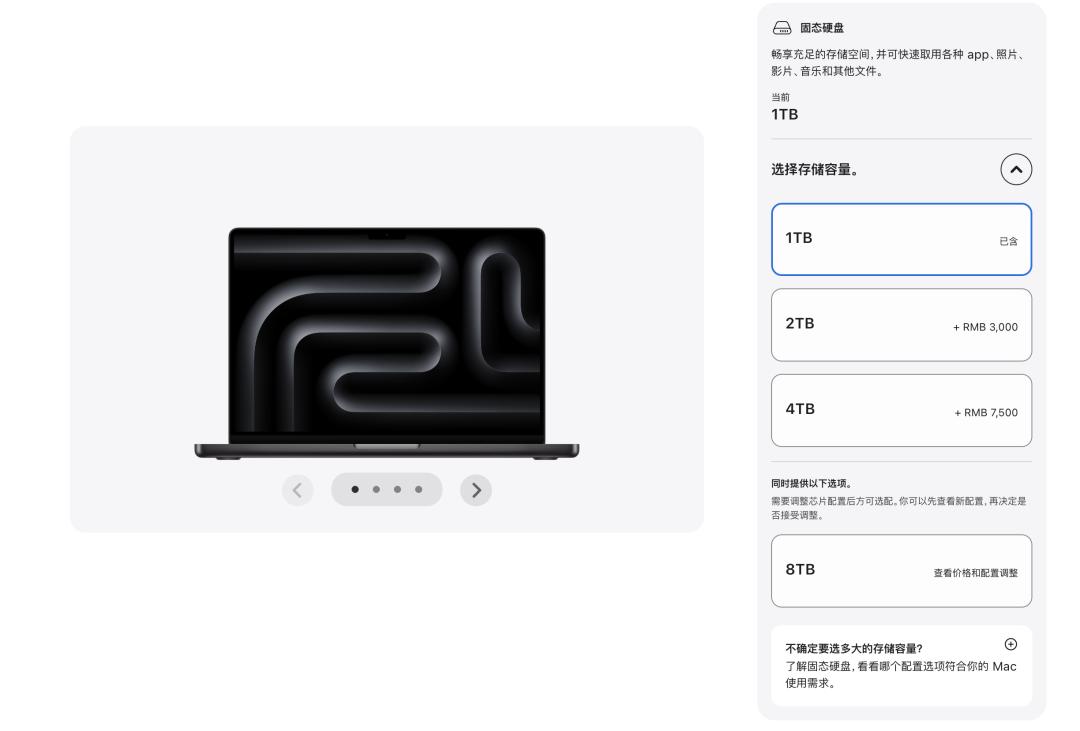
Apple may be able to "increase the quantity without increasing the price" on the relatively smaller iPhone 17e. But for the MacBook Pro, which starts at 512GB and goes up to 8TB, the storage price pressure is still not to be underestimated.
Interestingly, on the pre - order page of Apple's official website, there are still options to purchase Final Cut Pro and Logic Pro outright.
At the top, Apple only lists the Apple Creator Studio service in a small, unobtrusive line:
