Nine embodied AI industry leaders discuss: What challenges were encountered in mass production last year, and what bottlenecks still exist for implementation this year?
After the Spring Festival Gala, the two major domestic technology trends in 2026 have become clear:
The AI (large model) battle among tech giants, and the embodied (robot) battle among startup teams.
Among them, the more exciting and industry - talked - about one is, of course, the latter, the battle of embodied robots. Especially 2026 is becoming a crucial year for embodied robots to move from "mass production" to "real - world applications".
Just within the first week of this year, there have been five large - scale financings. Qianxun Intelligence had two rounds of financing totaling nearly 2 billion yuan, Zhipingfang raised over 1 billion yuan in its Series B financing, Yinhe Tongyong secured 2.5 billion yuan in its Series A+ financing, Songyan Power raised nearly 1 billion yuan in its Series B financing, and Youliqi had a 300 - million - yuan equity financing.
After this round of capital injection, at least seven unicorn companies worth over 10 billion yuan have emerged in the domestic embodied intelligence track: Unitree, Zhipai, Yinhe Tongyong, Xinghaitu, Zhipingfang, Zibianliang, Qianxun Intelligence.
However, after the first wave of mass - production attempts of embodied robots and when the market enthusiasm is reignited, the entire industry needs to reflect on:
What problems were exposed during the first wave of mass production of embodied robots in 2025?
In 2026, under the new wave of embodied robot applications, what are the definite bottlenecks and trends?
Regarding these two questions that are crucial to the future development of the embodied robot industry, I heard a very valuable dialogue at the recent Standardization Annual Conference on Humanoid Robots and Embodied Intelligence. The participants in this dialogue are all practitioners from leading domestic institutions in the field of embodiment -
Wang Zhongyuan, the dean of the Beijing Academy of Artificial Intelligence, Chen Jianyu, the founder of Xingdong Jiyuan, Gao Jiyang, the founder of Xinghaitu, Wang Yu, a professor at Tsinghua University, Wang Qian, the founder of Zibianliang Robot, Zhao Tongyang, the founder of Zhongqing Robot, Xu Jincheng, the founder of Pacini, Cheng Hao, the founder of Acceleration Evolution, and Ding Wenchao, the chief scientist of Tashizhihang.
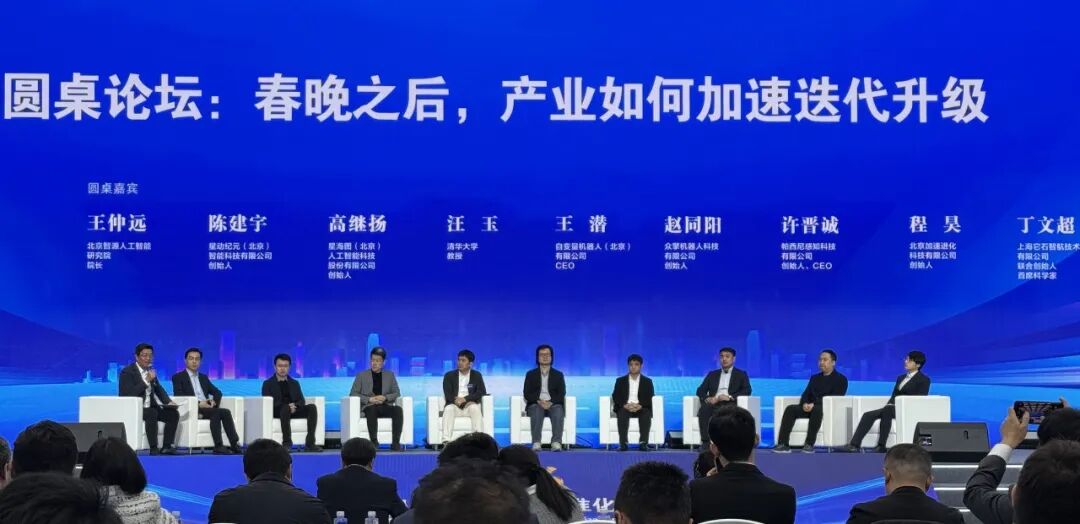
From the in - depth discussions of these nine practitioners from leading embodied robot institutions, we found some answers to the above two questions.
01 Mass Production of Embodied Robots: N "Consistency" Challenges
Question: What is the most difficult "bone to crack" in the mass - production process of embodied robots?
Chen Jianyu: In the mass - production process, we think there are two major problems:
First, the "consistency" problem.
Since the robot production chain is very long, from the supply chain and components to the whole machine, system, and algorithm, each link may have some small variables that affect consistency.
For example, we once encountered such a problem:
Among the humanoid robots produced in the same batch, several of them always walked poorly. After a long - term investigation, we found that the workers did not do a good job in applying glue during the motor assembly process for these robots. This kind of problem is not uncommon in the actual production environment.
Later, our solution was to set up multiple checkpoints and gates to eliminate risks layer by layer.
Second, since products like embodied robots are very new, we often cannot anticipate all problems in advance, especially during our small - scale internal testing, there may be problems that we haven't considered.
For example, we had a product on the market. It had no problems for a while. Later, a major customer bought a large quantity and used it for a long time in a heavy - use scenario. During their use, some problems that we never expected occurred.
Such problems are currently unavoidable, but we can do two things:
First, rapid iteration. Once a problem occurs, quickly find a way to analyze and solve it;
Second, create an "error log" of experience and keep accumulating to avoid similar problems in the future.
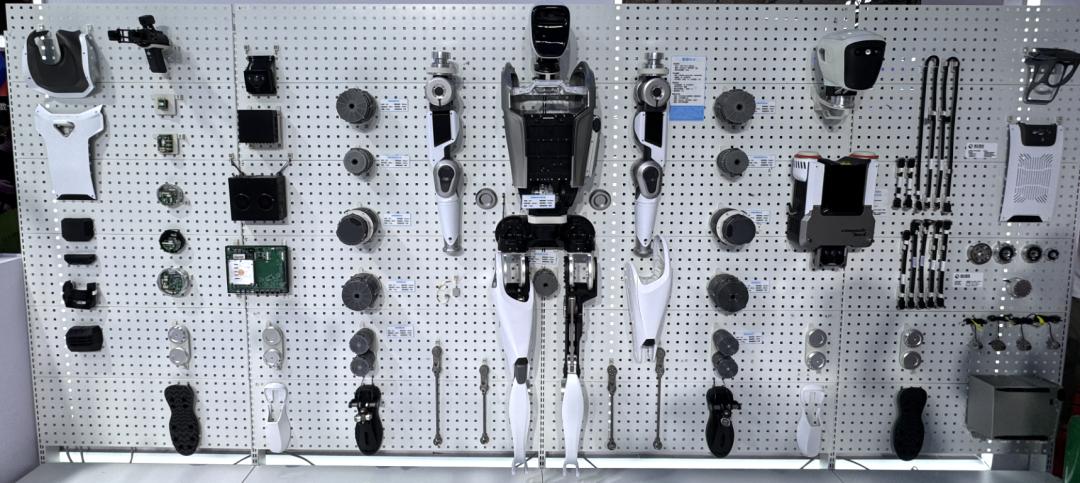
Gao Jiyang: The linkage between the whole machine and intelligence is a very important issue.
We can ensure a certain degree of consistency through production and process. However, we finally found that there are still slight differences between each robot. After adding the basic model, these slight differences will be magnified.
This requires a calibration process to calibrate various sensors and mechanical structures in the whole machine in a unified mathematical space and complete the linkage with the model.
Based on this, not only the whole machine can be mass - produced, but also the intelligence has a mass - production process. The linkage in the middle depends on calibration, which is a relatively unique problem in the mass - production process of robots or embodied intelligence.
Wang Qian: What the two of you mentioned are the parts that we can control. In our own production and calibration, there is still a part that we cannot control, which is the supply - chain problem.
I was particularly impressed that once we had a motor that always had some irregular and unpredictable damage. We were very confused at that time because our peers using the same motor did not encounter such problems.
Later, we found that because the working conditions we used were different. Our peers used relatively common working conditions, and the supplier optimized well for those conditions. Although our working conditions were also within the calibrated range of the supplier, the supplier may have been a bit lazy and did not do a good job in testing and optimization for our conditions.
This also highlights the importance of standardization work. If we have a set of comprehensive standards to standardize this kind of situation, we can avoid such problems.
But at present, it is still inevitable to take some detours. We still need to keep accumulating, use and test in various environments, including mass - production, to expose these problems. This is a development process of the industrial chain.
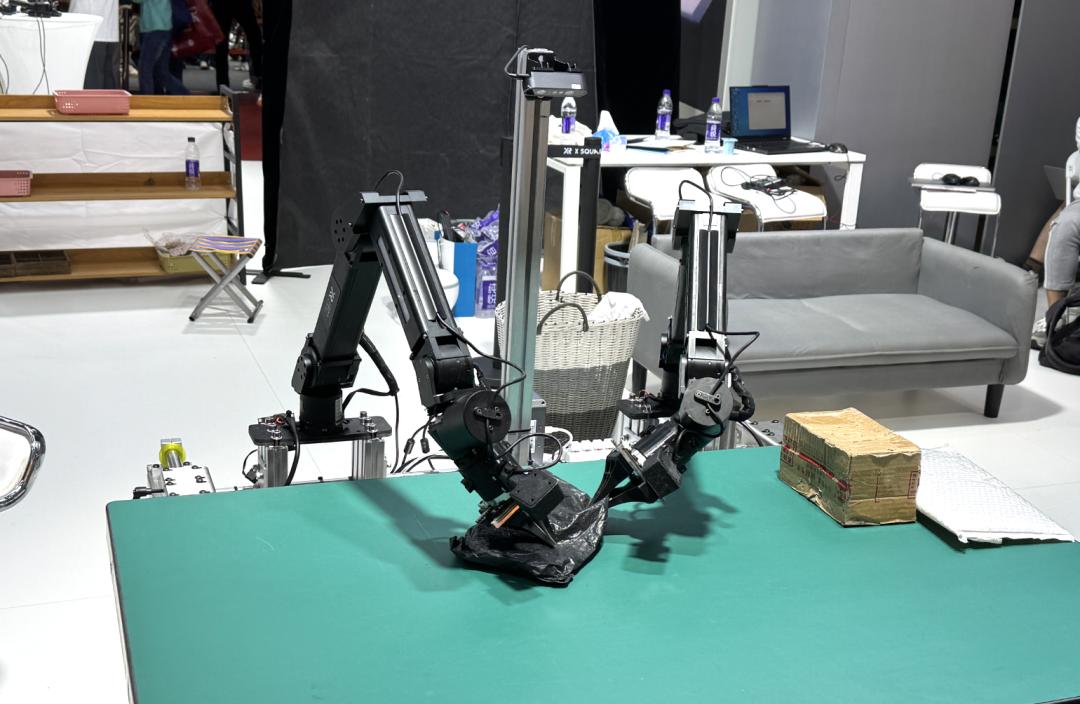
Zhao Tongyang: First, we need to have a clear definition of mass production.
From last year to now, the shipment volume of humanoid robots in the scale of thousands is only considered "small - scale trial production" compared with the automotive industry.
Compared with the century - old automotive industry, the stage that robots are currently in is far from the mass - production stage. This is a fact.
Among them, the development of the supply chain is also far from reaching the mass - production stage.
For cars, from tires, reducers to glass, steering wheels, each component has dozens or even hundreds of mature suppliers after nearly a century of development. However, the robot industry, especially the humanoid robot industry, has only developed rapidly in the past two or three years.
Looking at the suppliers of robots, there are not many options at present, and the quality is still in the exploration stage.
In addition, this industry is still in a stage of rapid development. The product iteration is very fast, which makes everyone dare not fully engage in the production and manufacturing of molds.
Due to the rapid development of the industry, a product may only have a competitive edge for 1 - 2 years. If an enterprise stocks up hundreds of thousands of products, it may be eliminated in the next round of competition, resulting in a large amount of inventory. This makes both us and the supply - chain manufacturers dare not carry out large - scale product mass production, which leads to a bit of stagnation in the entire supply chain.
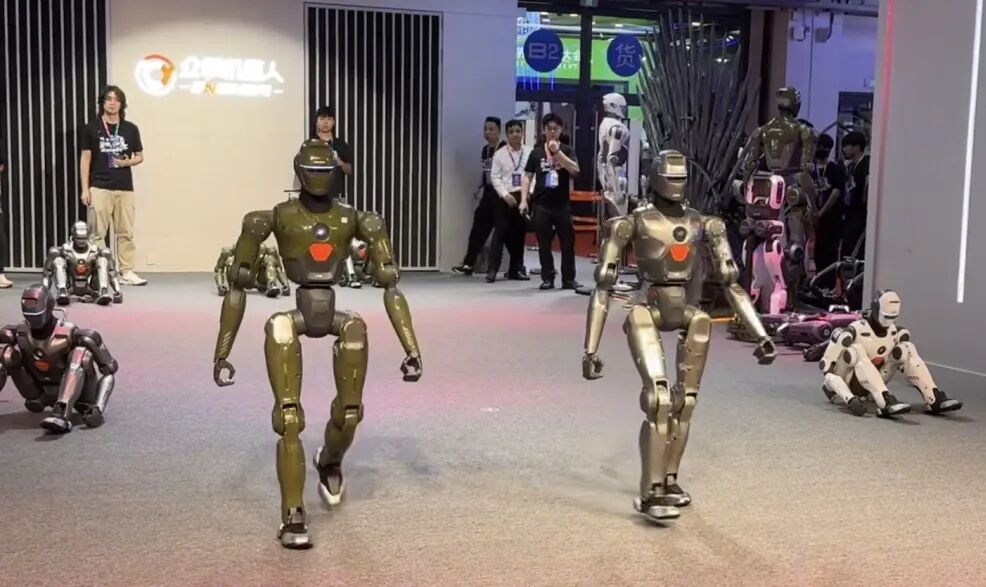
In addition, the standard requirements for small - sized humanoid robots and large - sized humanoid robots are also different. The small - sized humanoid robots do not have particularly high requirements for mechanical strength in terms of movement ability. However, large - sized humanoid robots need to jump and run, withstand an acceleration of 10g - 20g, and ensure that the gears do not break, which requires slow verification from simulation to design.
Some things cannot even be simulated or designed, but can only be tested. These are all problems that our entire industry needs to solve at this stage.
Ding Wenchao: Many of the problems mentioned are about the consistency of joints and control. The problem we encountered is how to ensure the consistency of the coordination between the "brain", "cerebellum", and the body.
For example, when a robot is sent for operation, all kinds of dynamic performance throughout the robot's life cycle, including force - touch perception, are dynamically changing. However, what the enterprise releases is actually the "body + model". How to ensure the consistency and mass - producibility of the "brain" is actually the problem we are currently solving.
This problem is not only a hardware problem. Many training and data - use skills at the "brain" level can be added to enable the robot to maintain the generalization ability of the model throughout its life cycle, no matter what kind of wear and aging it encounters.
02 Application of Embodied Robots: How to Build the "Brain" in 2026?
Question: In 2026, to enable robots to truly have generalization ability and play a role in various scenarios, what aspects need to be broken through?
Wang Zhongyuan: In the past few years, the reason why robots have received such high attention is not only because of the development of hardware but also because of the breakthroughs in artificial intelligence, especially large models, which have brought new variables to embodied intelligence.
Compared with traditional large models, embodied intelligence needs to be coupled with hardware. Unlike in the pure digital world where large models can directly play a role, embodied intelligence requires both an improvement in model capabilities and reliance on hardware, which makes it more complex.
Embodied intelligence still lacks high - quality data at present. This requires that in addition to obtaining data from the Internet simulation environment, real - machine data must be obtained.
Of course, how to obtain this real - machine data in a high - quality and standardized way is something that the standards committee can focus on promoting.
Looking forward to the future, especially this year, I think it can be divided into two parts:
First, from the perspective of actual enterprise applications, I believe that it will still mainly focus on VLM+VLA or pure VLA, and conduct data - closed - loop refinement in specific scenarios;
Second, from a scientific research perspective, the focus will be on the world model to promote the next - generation embodied intelligence model with real generalization ability.
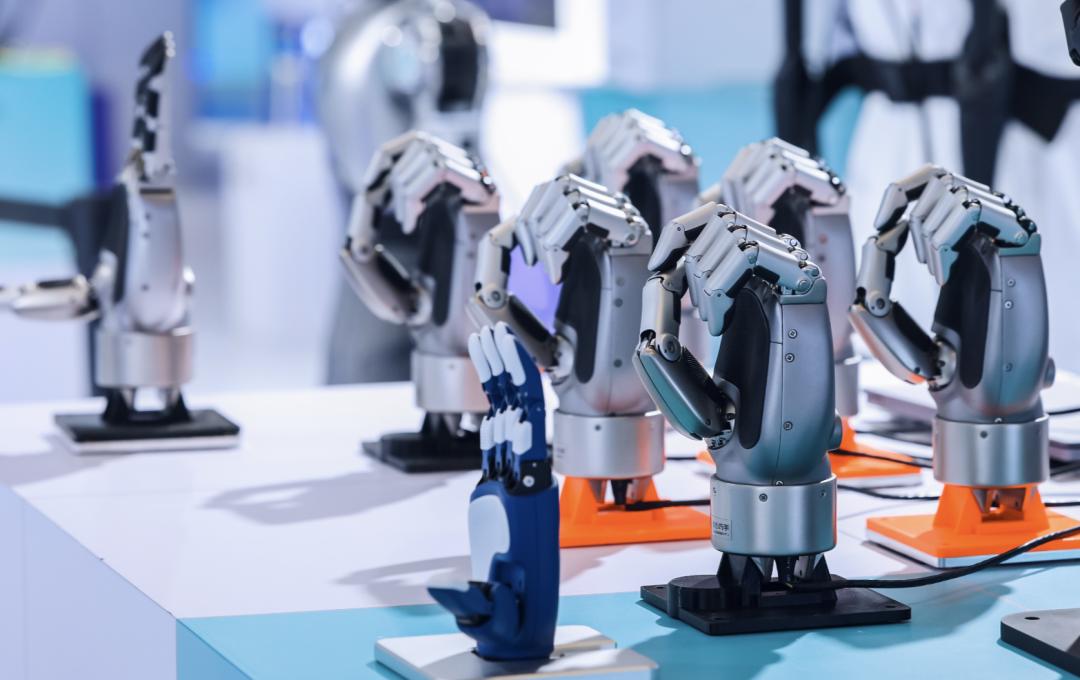
Chen Jianyu: In 2026, we have two priorities:
First, data - closed loop.
After the development in the past two years, some paradigms of end - to - end VLA models have begun to be standardized. At this time, improving data quality has become the most efficient way to improve model capabilities.
Second, improvement of model paradigms.
The current standard VLA models are mainly based on the imitation - learning paradigm. How to build a better model for robots to understand the physical world and help robots complete various tasks in the physical world better, more generally, and more precisely also requires exploration of paradigms.
Gao Jiyang: Currently, looking at the "brain" of robots, it is mainly divided into three parts:
The form of data, how to do pre - training, and how to do post - training.
For pre - training, everyone was doing VLA last year. This year, there is an obvious trend towards the world model, which is a definite trend;
For post - training, last year it was mainly SFT imitation - learning fine - tuning. This year, it is clearly moving towards reinforcement learning;
In terms of data form, there are very rich data forms in embodied intelligence. From traditional tele - operation data to UMI data, and recently our cooperation with NVIDIA based on the EgoScale framework, which uses POV data to observe how one's own hands move without wearing any other auxiliary equipment, also has good pre - training results.
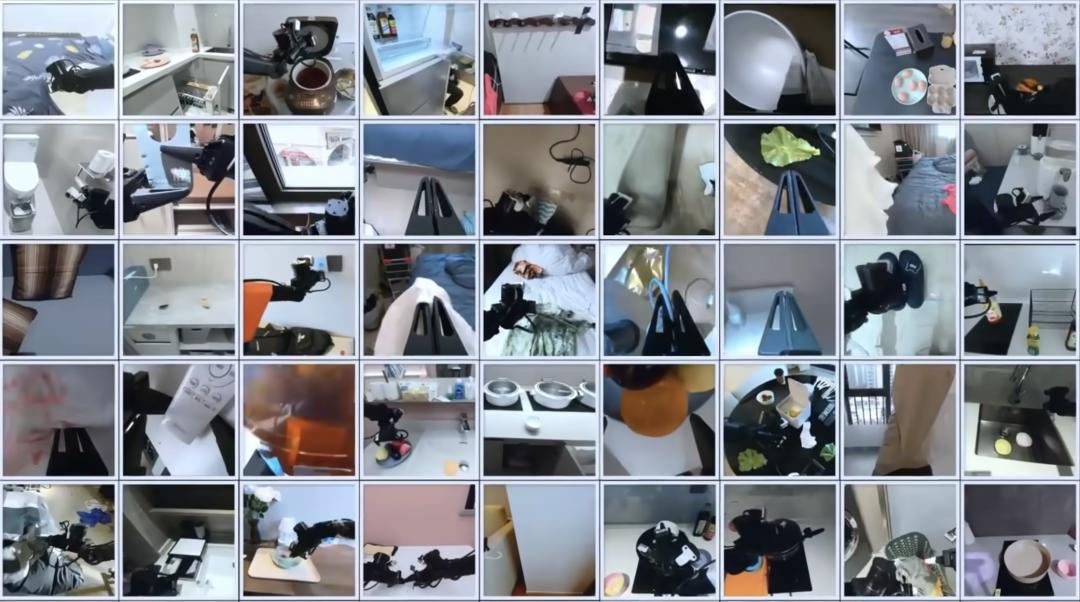
These three aspects will be prominently reflected this year.
Wang Yu: From the perspective of algorithm development, post - training is moving from SFT to IL (imitation learning) and RL (reinforcement learning).
Currently, how to do reinforcement learning, especially how to efficiently use the existing computing power for reinforcement learning, is an issue to be considered in the cloud.
On the edge side, how to enable robots to further improve the accuracy of specific tasks from 70% - 80% to 99% or even 100% through real - machine reinforcement learning is the key breakthrough this year.
In addition, for embodied data, both the "quantity" and "quality" of data are important.
Especially regarding the "quality" of data, we can see that when doing real - machine reinforcement learning, how to recycle the poorly - processed data in the actual scenario and add it to the typical data so that the robot can continuously learn from what it does poorly is a key issue.
Wang Qian: The model architecture itself is a major direction.
Two years ago, many people were still working on small models for single - point tasks. Last year, people started to work on VLA. This year, people are starting to work on the world model.
Overall, it is developing in a more unified and all - around direction.
However, looking at the output of the model, there are output actions and predictions of