2028, the "line of life and death" for humanoid robots
During the just - passed Spring Festival, the most talked - about thing was probably the robot actor legion at the Spring Festival Gala of the Year of the Horse, which was more numerous and more appealing than human actors.
The performance of Chinese robot companies at the Spring Festival Gala gave foreign media a sense of "cultural shock" to some extent.
Compared with the almost radical efforts in China to bring robots into the public eye, foreign competitors are more focused on getting robots into production lines first.
For example, the South Korean Hyundai Group, which spent a large amount of money to acquire Boston Dynamics back then, officially announced that the Atlas robot unveiled at this year's CES will officially start working in factories in 2028, two years from now.
Coincidentally, the world's richest man, Elon Musk, has also set the official sales time of the Optimus robot for the end of 2027.
Will 2028 be the decisive moment for the currently popular humanoid robots?
01 The Bet on "2028"
At the CES in January this year, Euisun Chung, the Executive Chairman of Hyundai Motor, brought Boston Dynamics' Atlas onto the stage. This is not the first time he has used robots as a calling card for the Hyundai Group. At the CES in 2022, he brought the robot dog Spot, which was more like a technology show.
Four years later, the atmosphere is completely different.
This time, Hyundai Motor has given a clear time node:
In 2028, Atlas will officially undertake automobile assembly tasks.
It's not about "exploring" or "planning to test"; it's about actual workstations on the assembly line.
To achieve this goal, since Hyundai acquired Boston Dynamics for over $1.1 billion in 2021, it has cumulatively invested billions of dollars in its robot business.
This 2028 time node is becoming a reference coordinate for the entire industry.
Atlas' technical specifications are quite outstanding among this generation of humanoid robots. Its 50 - kilogram payload capacity means it is one of the few robots currently capable of truly handling heavy - duty automobile manufacturing scenarios.
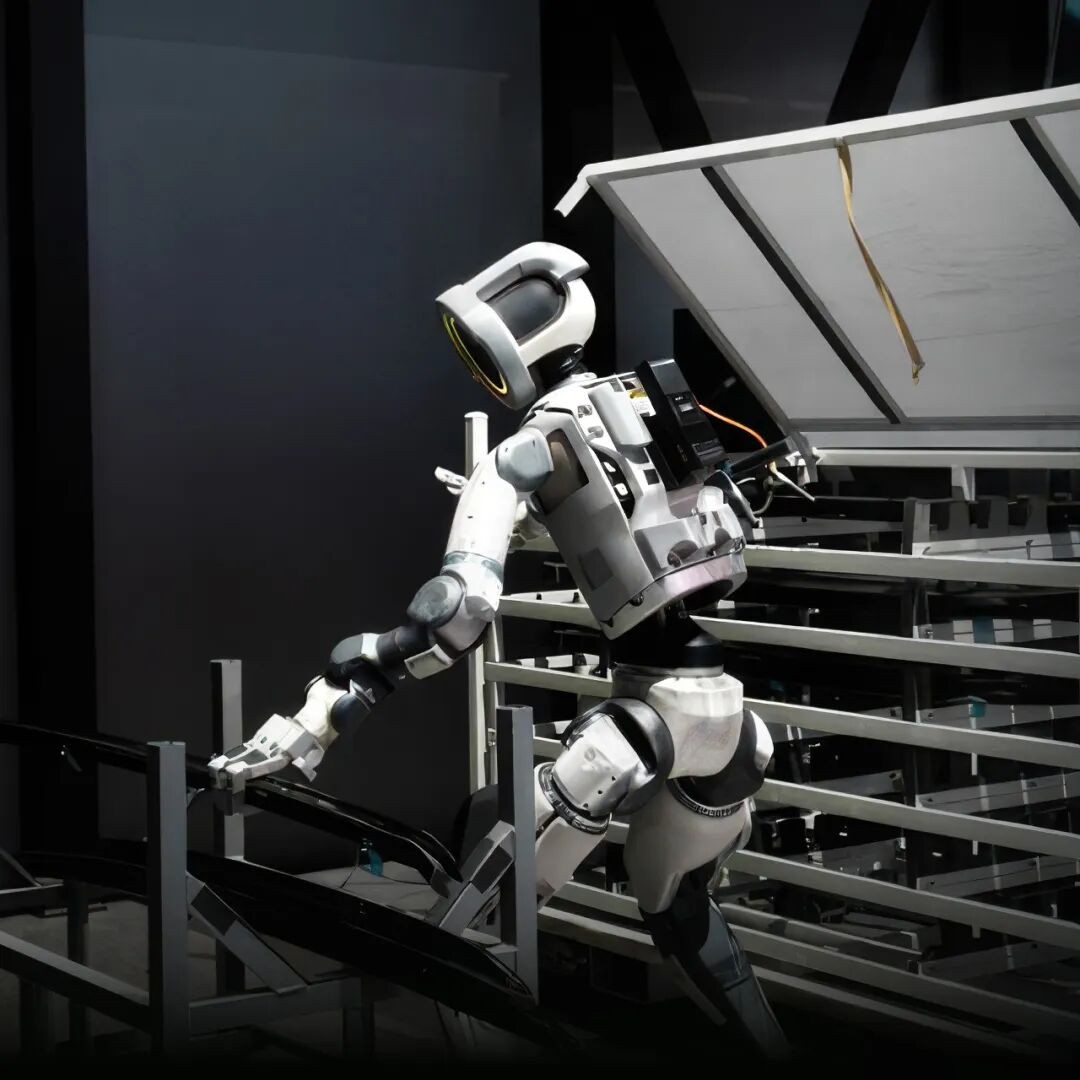
The usage scenarios of Atlas demonstrated by Hyundai at CES | Image source: Hyundai
Among similar competitors, whether it's Figure 02 from Figure AI or Digit from Agility Robotics, their payload capacities are only around 20 kilograms.
James Hong, an analyst at Macquarie Securities Korea, commented that Hyundai Motor "has the right conditions and a management team that knows how to execute" — the keyword in this statement is not "technology" but "execution".
On the other hand, Elon Musk of Tesla has stated that sales of Optimus to the public will start at the end of 2027.
He also said at the Davos Forum in February this year that Optimus will become "the first von Neumann machine" capable of building a civilization on any habitable planet on its own.
It's still the typical grand ambition of Musk.
02 It Looks Good on the Surface
There is a detail worth highlighting.
Atlas has started being delivered to Hyundai Motor this year. It has integrated Google Gemini's AI capabilities and won the Best Robot Award at CES. It is not just an exhibit on a booth but a system that is already performing tasks in a real - world environment.
What about Musk's Optimus? So far, its most well - known "public performance" is still limited to the videos shot by Tesla itself, and it has never had an undisputed fully autonomous public demonstration.
Kang Hee - jin, an analyst at Samsung Securities, noticed a "notable omission" — in Tesla's recent relevant statements, there is no mention of a specific timeline for factory deployment at all, despite Musk's previous promises.
Her judgment is that "either full autonomy is further away than Tesla expected, or humanoid robots may not be suitable for industrial use in the near future".
It's not that it can't be achieved technically, but the rhythm of commercialization is far more complex than the timeline in the PPT.
Of course, the Tesla camp also has its own logic.
The target price of Optimus is between $20,000 and $30,000, aiming for the mass market; while Atlas is priced at over $1.3 million for enterprise - level users, targeting industrial customers.
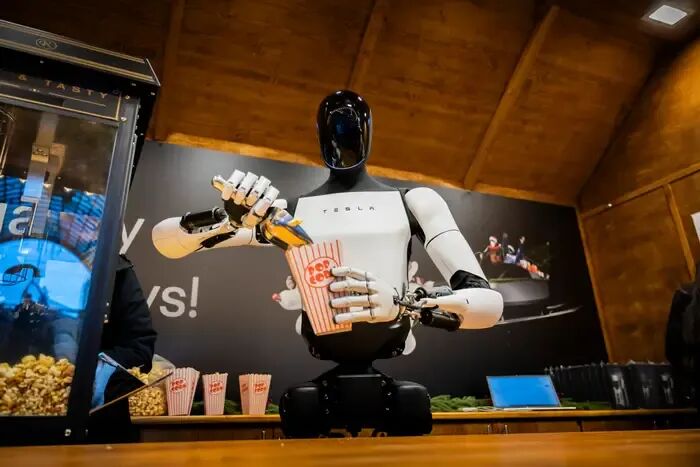
Musk's Optimus is targeting a broader market | Image source: BI
This is not a competition between two products for the same market but two completely different business philosophies betting on different futures.
TaeYong Choi, an analyst at DS Investment & Securities, provided a more optimistic perspective — "Even if Tesla produces 10 million humanoid robots annually by 2030, it won't be enough to meet global demand. The market needs a large - scale second - place player to fill the gap." The underlying meaning of this logic is that the competition between Atlas and Optimus is not necessarily a zero - sum game.
However, the premise for this perspective to hold is that both companies can truly get their robots onto production lines.
03 Musk's Vision and Reality
Rodney Brooks, a roboticist at MIT and the founder of Roomba, called the concept of using humanoid robots as general assistants "pure fantasy thinking". Harsh as it may sound, there is solid technical logic behind it.
The difficulty with humanoid robots has never been about "being able to stand up and walk" — Boston Dynamics solved this problem a decade ago. The real challenge lies in "generalization ability in unstructured environments", that is, when a robot leaves the specifically trained scenario and faces an unfamiliar way of item placement, a slightly different ground slope, or a sudden disturbance, can it still complete the task?
No company has provided a convincing answer to this question so far.
Hyundai Motor has chosen the strategy of "starting narrow and then expanding". It deploys Atlas in its own automobile factories, which are relatively controllable, repeatable, and standardized environments. After making the robot perform well in this specific scenario, it will then consider expansion.
This path is steady, but it also means that the dream of "general - purpose" will have to be postponed for a long time.
Tesla's approach is more radical. Musk wants a truly general - purpose robot that can enter the kitchen, act as a nanny, and build cities on Mars.
There is no doubt that the commercial value of this vision is huge. However, every grand vision needs to be supported by countless ordinary execution steps, and Tesla's history of "unfulfilled long - term promises" in this regard is making it increasingly difficult for investors to be patient.
Meanwhile, Tesla's own fundamentals are not in an easy situation.
Sales data from the Chinese market shows that the retail sales of the Model series dropped from nearly 40,000 units in January 2024 to less than 19,000 units in January 2026, a decline of over 54% in two years. To maintain its market share, Tesla has extended its ultra - low - interest financing plan twice.
With its core business under pressure, the resources and time window available for Optimus are not unlimited.
04 The Overlooked Third Force
All discussions about Atlas and Optimus have intentionally or unintentionally bypassed a larger variable — China.
In 2025, 90% of the globally shipped humanoid robots were from Chinese manufacturers, with a total of about 13,000 units, and the price was aggressively set below $15,000. This scale makes the competition between Atlas and Optimus seem, to some extent, like a debate between two high - end players on who has a better - tailored suit, while the factory next door has already mass - produced and sold products to the entire market.
The story of Atlas vs Optimus may not be the real main line of this battle from the very beginning.
Of course, there is still a performance gap at present.
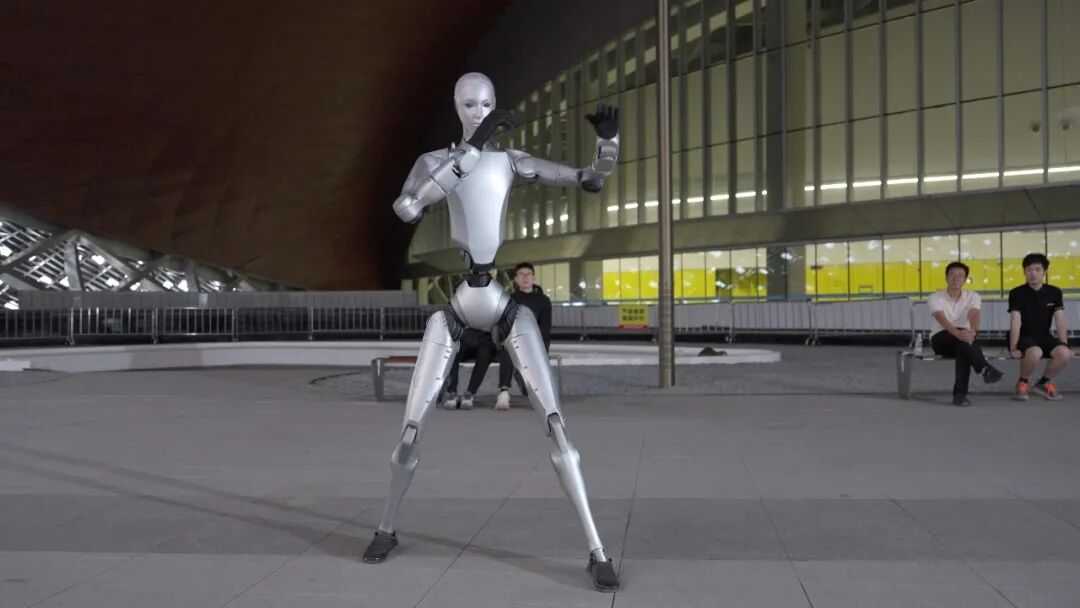
The H2 robot of Unitree | Image source: Unitree Robotics
Chinese manufacturers still have a generational gap with Boston Dynamics in terms of robustness, payload capacity, and autonomous ability in complex scenarios. However, history has given us enough hints on how long this gap will last. The Chinese manufacturing industry caught up in the electric vehicle field in less than a decade, and there is no reason for humanoid robots to be slower.
In 2028, if everything goes as planned, Atlas will be working on Hyundai Motor's assembly line. That will be the first real milestone in the industrialization process of humanoid robots.
But by that time, Optimus may not be the only one eyeing the market.
*Image source: Hyundai
This article is from the WeChat official account “GeekPark” (ID: geekpark), author: Hualin Dance King. It is published by 36Kr with permission.