Preview of MWC26: The Journey of 6G Begins, AI Empowers All, We Are Standing at the Starting Point of a New Era of Intelligent Connectivity
In the city of Barcelona, Spain, caressed by the Mediterranean sea breeze, the 2026 Mobile World Congress (MWC) has entered its 20th year of being held here.
Over the past two decades, MWC has gradually evolved from an initial platform for defining mobile network standards and showcasing smartphone technologies into a comprehensive technology event that is fully connected and forward - looking in terms of technology. Here, the world has witnessed the leap from 3G to 4G and the commercial integration of 5G and AI.
This year, we will witness a brand - new era.
The theme of MWC 2026 is set as “The IQ Era”, which means “The New Era of Intelligent Connectivity”. This theme indicates a historical turning point in the communication industry: Artificial intelligence is comprehensively penetrating the communication industry and becoming the core force in reshaping communication infrastructure.
John Hoffman, the CEO of the Global System for Mobile Communications Association (GSMA), said, “Today's MWC is no longer just a gathering within the telecommunications industry. It has become a global technology platform centered around connectivity, with full participation from various industries.”
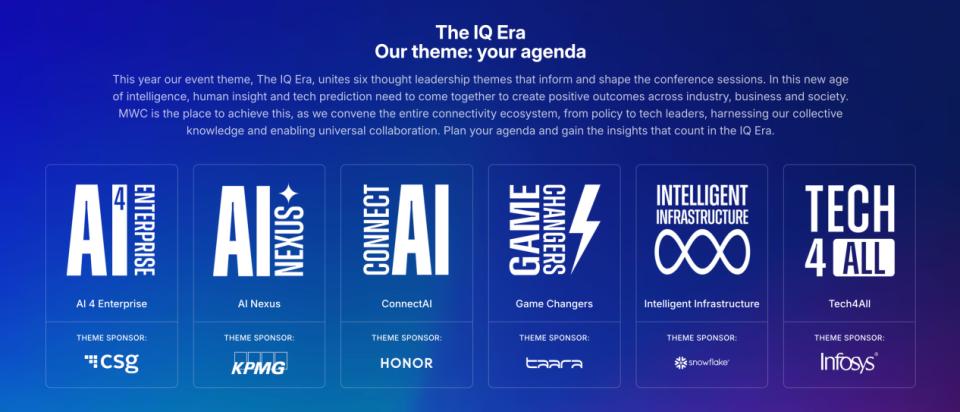
This exhibition will revolve around six core themes: Intelligent Infrastructure, ConnectAI, AI 4 Enterprise, AI Nexus, Tech4All, and Game Changers. These six themes are like six main threads, weaving a blueprint for the future intelligent society. From the reconstruction of underlying infrastructure, to the intelligent evolution of terminal devices, and then to the full penetration of enterprise - level applications.
MWC 2026 attempts to answer a fundamental question: What kind of future will we face when AI is deeply integrated with communication technologies?
01
The Unveiling of 6G: The Technological Leap from 5G - A to Next - Generation Communication
In the past two years' MWC, the focus of industry discussions mainly centered on the commercial implementation of 5G - Advanced (5G - A). As a crucial stage in the evolution from 5G to 6G, 5G - A has made significant progress in improving network performance, reducing latency, and increasing connection density.
However, with the arrival of 2026, the industry's attention has started to look beyond 5G - A towards the more distant 6G horizon. Whether MWC 2026 will determine the technological evolution path of 6G will be one of the most important highlights of the exhibition.
According to the latest report “Vision 2040: Future Spectrum Needs” released by GSMA, around 2030, global 6G will start commercial deployment. The report predicts that by 2040, there may be 5 billion 6G connections globally, accounting for about half of all mobile connections. Countries such as China, Japan, South Korea, the United States, Europe, India, Vietnam, and the Gulf Cooperation Council (GCC) will become popular regions for 6G development.
This timeline means that from now until 2030, we will enter a crucial window period for formulating 6G technical standards, planning spectrum, and verifying key technologies.
At MWC 2026, the technological evolution path of 6G is expected to become clearer. As a vane of the communication industry, MWC has always been an important stage for the game of technical standards. This year, core players in the industrial chain, including Qualcomm, China Mobile, China Unicom, China Telecom, and mainstream European operators, will all give their own definitions and visions of 6G at the conference. Behind the competition for this “right of definition” is a strategic layout for the right to speak in the communication industry in the next decade.
From a technical perspective, what revolutionary changes will 6G bring? First, in terms of performance indicators, 6G will achieve a ten - to - hundred - fold improvement compared to 5G. The peak transmission rate is expected to reach 1Tbps, the user - plane latency will be reduced to less than 0.1 milliseconds, and the connection density will exceed tens of millions of devices per square kilometer. These figures represent not only quantitative changes but also qualitative ones - application scenarios such as holographic communication, digital twin, and immersive XR will move from concepts to reality.
Second, 6G will break the boundary between communication and perception, realizing the integration of communication and perception. This means that future communication networks will not only be data - transmission pipelines but also have the capabilities of environmental perception, target recognition, and precise positioning.
Imagine what kind of changes will occur in autonomous driving, intelligent manufacturing, and smart cities when base stations can provide both high - speed network connections and millimeter - level environmental perception?
More importantly, 6G will build an all - domain coverage network integrating “space, air, land, and sea”. If 5G mainly solves the problem of ground coverage, then 6G will extend the communication network to space, the ocean, and the air. Low - orbit satellite constellations, high - altitude platforms (HAPS), and drone relays will be deeply integrated with ground cellular networks, truly achieving “ubiquitous” connectivity. This is of great significance for scenarios such as remote area coverage, emergency communication, and ocean navigation.
At MWC 2026, we are expected to see the first demonstration of key 6G technology prototypes. Cutting - edge technologies such as terahertz (THz) communication, reconfigurable intelligent surface (RIS), AI - native network architecture, and quantum communication may all be presented in the form of demos. In particular, the integration of AI and 6G will be the focus of discussions. The future 6G network will no longer be a static and pre - set architecture but an “intelligent life form” with self - learning, self - optimization, and self - evolution capabilities.
The role of Chinese forces in the 6G era is particularly worthy of attention. China has established a globally leading network infrastructure and user scale in the 5G era, and this advantage is extending to 6G. The stances of China's three major operators at MWC 2026 not only concern the selection of technical routes but also reflect China's right to speak in the next communication era. At the same time, equipment manufacturers such as Huawei and ZTE will play key roles in 6G standard setting. MWC 2026 will be an important stage for all parties to showcase their 6G technology reserves and seek industrial alliances.
The transition from 5G - A to 6G is not only a generational change in technology but also a leap in the communication paradigm. If 5G opened the golden age of the mobile Internet, then 6G will open a brand - new era of “intelligent interconnection of all things and digital twin”. At MWC 2026, we may see the outline of this future picture clearly for the first time.
02
AI Nexus and Robot Phone: The Agent - based Revolution of Intelligent Terminals

If 6G represents the future of connection technologies, then AI Nexus represents the future of terminal devices.
Among the six themes of MWC 2026, the concept of “AI Nexus” is particularly eye - catching. It implies a new form of device - the smartphone is evolving from a passive - response tool to an active - service intelligent agent.
The major progress announced by Google before the exhibition provides a strong footnote for this trend.
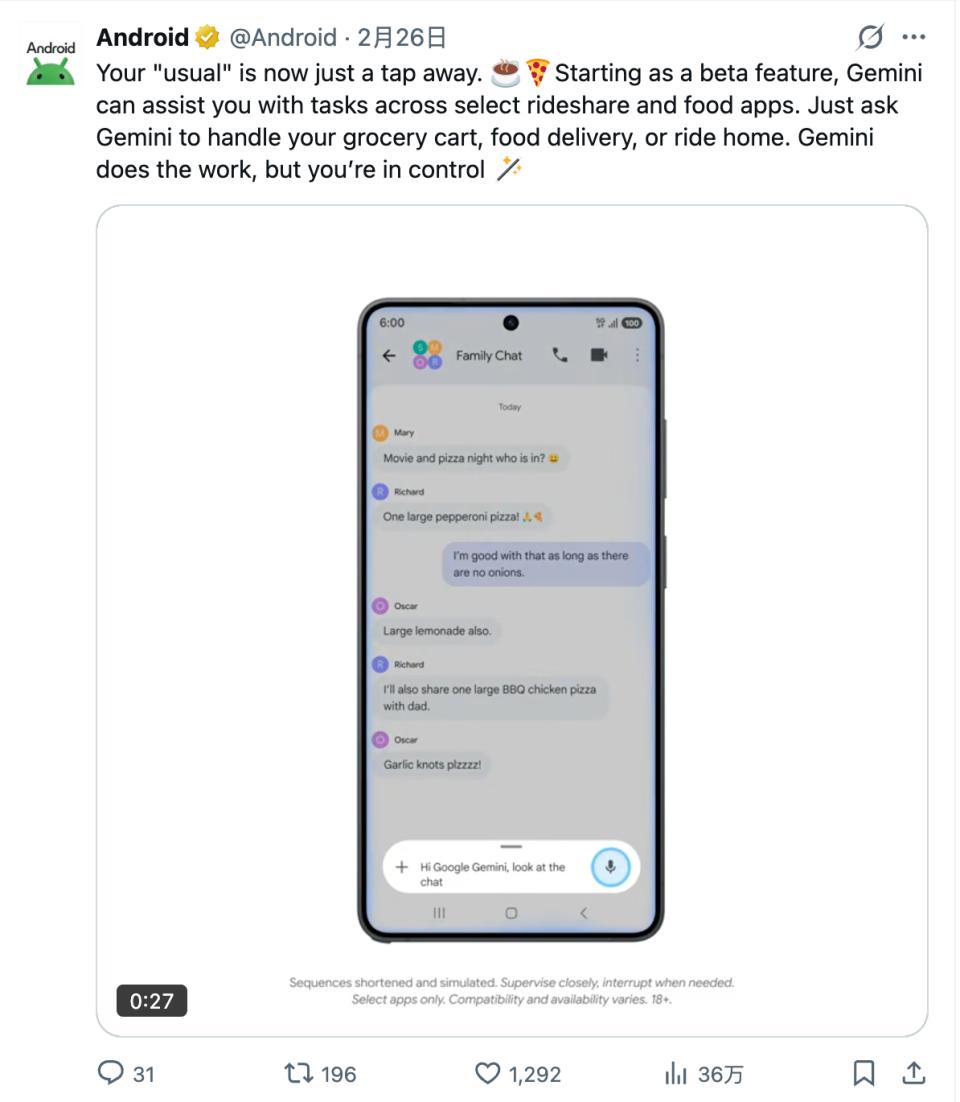
Gemini will have the ability to operate the phone actively, which means that the AI assistant is no longer just a chatbot that answers questions but an intelligent agent that can truly understand user intentions and autonomously execute complex tasks. When you say to your phone, “Help me book a table at my regular pizza place for lunch and order the usual three items”, Gemini will be able to automatically open the food - ordering app, select the store, menu, and complete the payment without the user having to operate step by step. This “autopilot” - style interaction experience is redefining the boundary of the human - machine relationship.
In the domestic market, products such as the “Doubao Phone” launched by ByteDance also point in the direction of AI agents. These products attempt to deeply integrate large - model capabilities into the operating system's underlying layer, making AI the “soul” of the phone rather than an “application”. From passive response to active service, from single - function to scenario - integrated, and from human - machine interaction to human - to - human interaction, so far, this evolutionary path of AI phones has been recognized by most participants in the industry.
MWC 2026 will be an important test field for this evolutionary direction.
We look forward to seeing more technical demonstrations and commercial solutions related to AI agents at the exhibition. For example, the cross - application intelligent scheduling ability - how can AI break down the barriers between applications to achieve free data flow and seamless task connection? Another example is the collaboration between edge - side AI and cloud - side AI. How can the optimal configuration of computing power be achieved while protecting privacy? Also, the ability of personalized learning and adaptation - how can AI become more and more understanding of the user and truly become a “personalized assistant” rather than a “general tool”?
However, the most eye - catching terminal innovation at this year's MWC may not be the traditional mobile phone but the Robot Phone and the first humanoid robot to be released by Honor. This layout is of symbolic significance - it indicates that mobile phone manufacturers are breaking through traditional boundaries and expanding into the broader fields of AI and robotics.
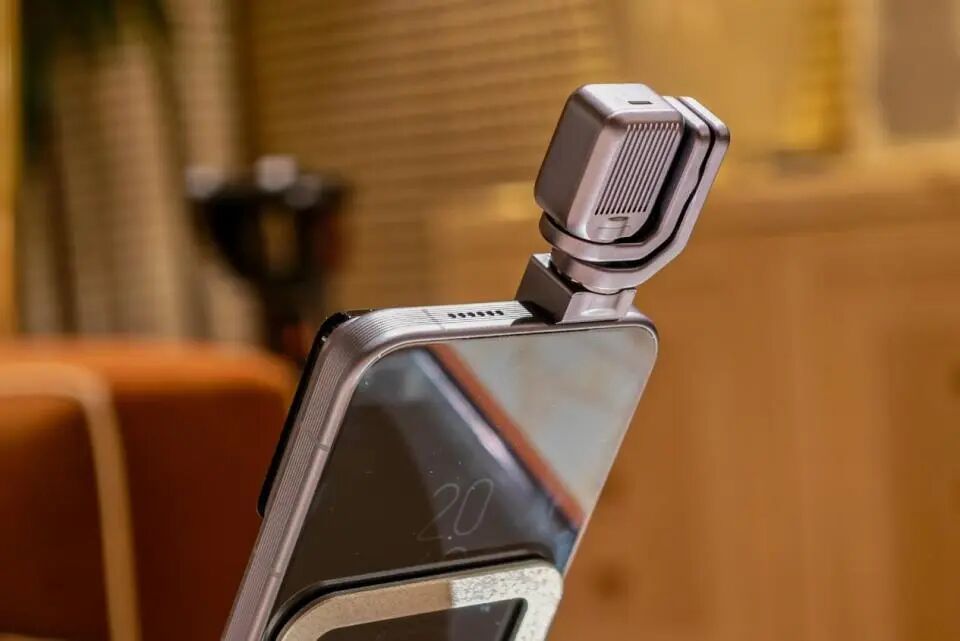
Honor's ROBOT PHONE is a groundbreaking product. This AI - concept smartphone, which made its first appearance on October 15, 2025, is hailed as the world's first “phone robot”. It is equipped with a robot pan - tilt, which can be unfolded with one key during use to perform tasks such as automatic composition and target following. This is not only a physical expansion of the phone's form but also transforms the phone from a communication tool into an intelligent agent with physical action capabilities. When you are shooting a video, the ROBOT PHONE can automatically track moving targets; when you are having a video call, it can automatically adjust the angle to keep you in the center of the frame. This “active service” ability is the hardware manifestation of the AI agent concept.
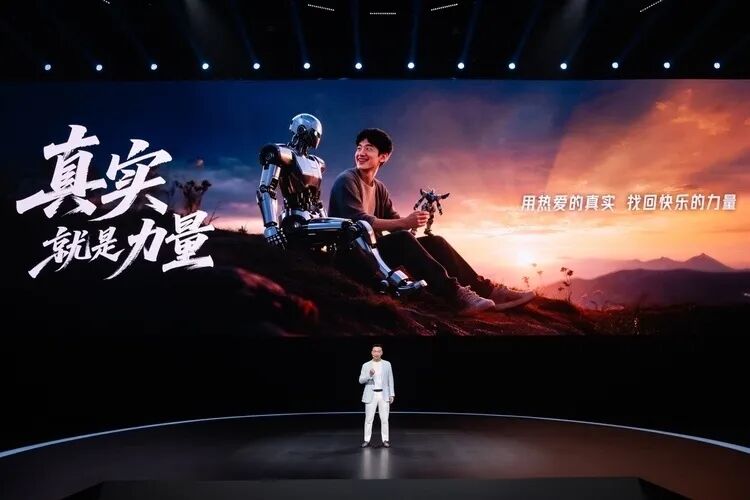
More excitingly, Honor will release a humanoid robot at MWC 2026. This is the first time a product has been officially unveiled since Honor announced its entry into the robotics field in May last year.
The transformation of mobile phone manufacturers into the fields of AI and robotics is not simply a diversification of business but an inevitable extension of technological accumulation.
Modern smartphones are themselves sophisticated devices integrating many advanced technologies: high - performance computing chips, multi - modal sensors, AI algorithms, precision manufacturing, and supply - chain management... These capabilities can be naturally transferred to the robotics field. In particular, technologies such as AI vision, motion control, and voice interaction, with the experience accumulated on mobile phones, can be directly applied to the perception and decision - making systems of robots.
From an industry perspective, the entry of mobile phone manufacturers into the robotics field has multiple values.
The most important significance is that it opens up a new growth curve for the already crowded mobile phone industry. Against the backdrop of the slowdown in the global smartphone market, robotics represents a potential market worth trillions.
At the same time, it accelerates the popularization of service - type robots. Mobile phone manufacturers have a large user base, a mature channel system, and strong brand influence, which can quickly promote robot products to the consumer market.
In addition, it is promoting the physical implementation of AI technology. The capabilities of large models are no longer limited to the cloud and the screen but enter the real world through the physical form of robots, truly becoming “tangible”.
Honor is not an isolated case. Vivo, another smartphone manufacturer, announced the establishment of a robotics lab last year, and Xiaomi earlier announced its embodied intelligence VLA model, Xiaomi - Robotics - 0. These layouts indicate that leading mobile phone manufacturers are preparing for the “post - smartphone era”. Future competition will no longer be limited to single mobile phones but will expand to the entire AIoT ecosystem, including smart homes, wearable devices, cars, and robots.
At MWC 2026, we look forward to seeing more technical details about AI agents and robots. For example, what capabilities will Honor's humanoid robot demonstrate? How will it collaborate with other devices such as mobile phones and smart homes? What are its application scenarios? These questions will be answered in Barcelona.
More importantly, we will see the collective thinking of the entire industry about the “next - generation intelligent terminal” - when mobile phones evolve into agents and agents acquire physical forms, how will the relationship between humans and technology be reconstructed?
03
Space Communication: The Infinite Extension of Connectivity Boundaries
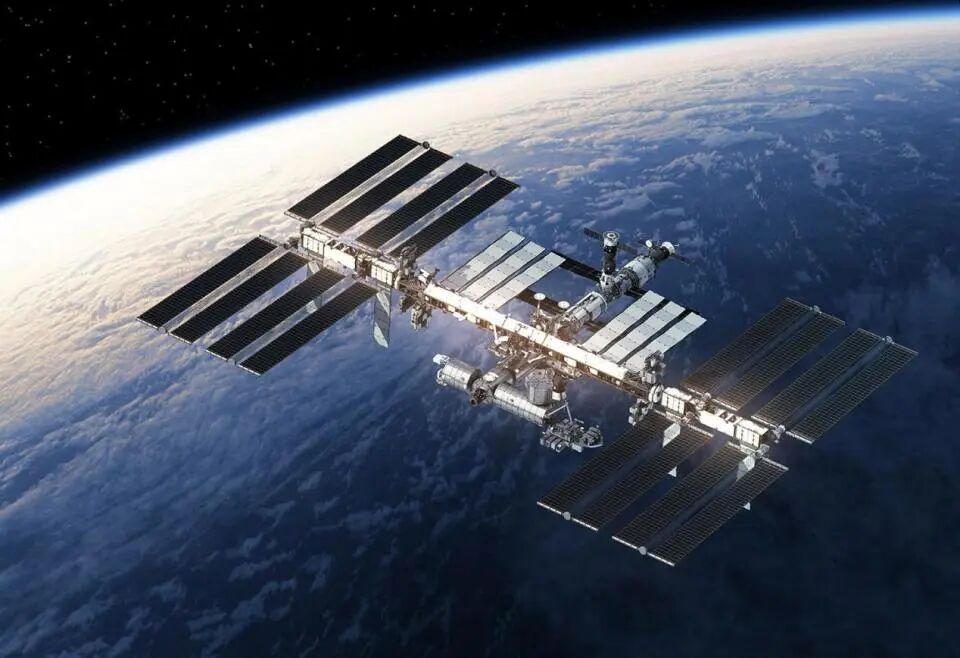
MWC 2026 has included space communication in its official theme for the first time. Under the framework of “Intelligent Infrastructure”, cutting - edge topics such as space communication, NTN (Non - Terrestrial Network), and quantum - ready data centers are placed at the core. This marks that the communication industry is shifting from “full - ground coverage” to “space - air integration” and from two - dimensional coverage to three - dimensional coverage.
The official statement of GSMA clearly outlines this vision: “From 5G Advanced and private networks to satellites, NTN, and quantum data centers, we will demonstrate how AI - driven, automated infrastructure can improve efficiency, scalability, and resilience. This transformation can not only unleash new industrial potential but also accelerate the process of data - driven decision - making.”
The keywords in this statement are “AI - driven” and “automation”. Future infrastructure will not only be a connection pipeline but also an organism with intelligent decision - making capabilities.
The commercialization process of space communication is accelerating. Low - orbit satellite projects represented by SpaceX's Starlink, Amazon's Project Kuiper, and OneWeb have proven the feasibility and commercial value of satellite Internet.
At MWC 2026