After suffering a huge loss of 180 billion, the world's fourth-largest automaker wants to re-enter the game with China's new energy vehicle startups.
Not long ago, the Stellantis Group released its full - year financial results for 2025. As expected, it was an epic financial disaster -
The net loss for the whole of last year reached a staggering 22.3 billion euros, equivalent to approximately 180 billion yuan in RMB.
A simple estimate shows that it's equivalent to a daily net loss of nearly 500 million yuan last year. Among the traditional automotive giants that have announced their full - year results, Stellantis' loss margin has "topped the world." It was still profitable to the tune of 5.52 billion euros last year.
Although it was caused by non - conventional factors, the continuous decline in profits and business losses have also put this once most profitable automaker in a huge survival crisis.
On the same day that Stellantis released its financial report, Bloomberg reported that Stellantis is considering expanding its joint - venture scope with Leapmotor. It plans to adopt the battery and electric drive technologies of this Chinese partner to reduce the development costs of mainstream European brands such as Fiat, Opel, and Peugeot.
From "sales cooperation" to "technology sharing," the Stellantis Group is going to leverage the mysterious power from the East.
01 Strategic Clearance
The full - year net loss of 22.3 billion euros, approximately 180 billion yuan, marks the first annual loss since the merger and establishment of the Stellantis Group. Carlos Tavares, the former CEO of Stellantis, also resigned because of this.
Behind such a huge loss, the core reason is the same as that of Ford's annual loss before. It is due to the adjustment of the electrification strategy and a one - time provision for a huge asset impairment.
The former handed in a dismal annual performance with a huge loss of 8.2 billion dollars after making a special item provision of about 19.5 billion dollars. The same goes for Stellantis. The full reset of the strategy led to a one - time special expenditure of up to 25.4 billion euros.
Moreover, 20 days before the release of this financial report, it announced a huge transformation expenditure provision of 26 billion dollars (about 22.2 billion euros).
Among them, 14.7 billion euros were used to adjust the pure - electric vehicle model plan and adapt to the new US emission regulations, including halting the production of the RAM 1500 pure - electric pickup in the US and postponing several electric vehicle projects of Alfa Romeo.
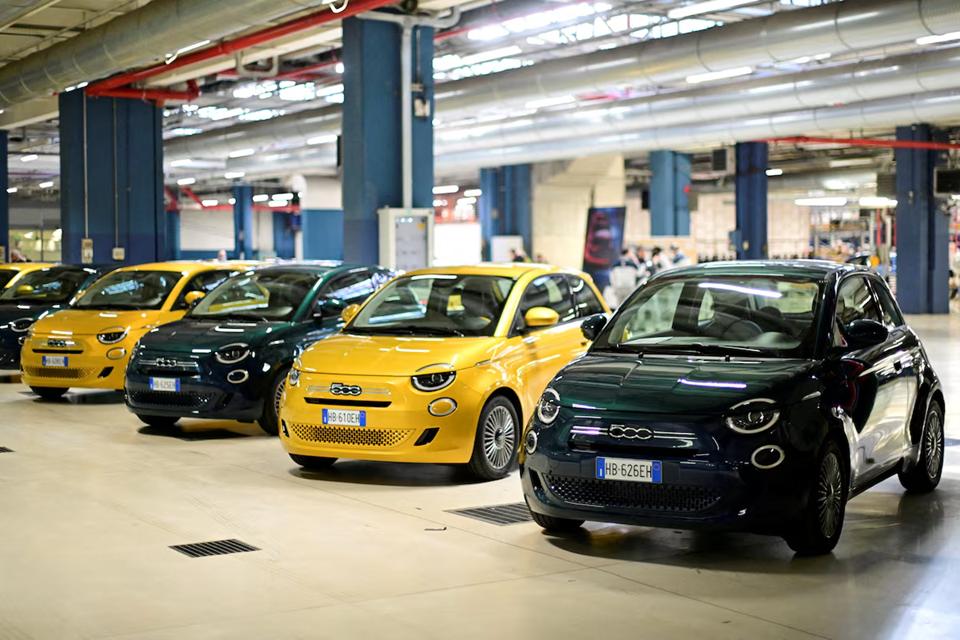
2.1 billion euros were related to the adjustment of the electric vehicle supply chain scale. Previously, Stellantis announced the divestiture of a 49% stake in NextStar Energy, a Canadian battery - manufacturing joint venture with LG Energy Solution, which was fully taken over by LG Energy Solution. Another 5.4 billion euros were used to fill quality loopholes and cover layoff costs. Among them, 4.1 billion euros were due to the change in the contract warranty estimate caused by rising inflation and deteriorating quality, and 1.3 billion euros were related to the layoff costs in the expanded European region.
It's no surprise that it has handed in such a report card.
Antonio Filosa, the newly appointed CEO of the Stellantis Group, also said that the full - year results in 2025 reflected the costs in two aspects. "Our full - year results in 2025 reflect the costs incurred due to overestimating the speed of the energy transition and the need to adjust the business to enable customers to freely choose from a full range of electric, hybrid, and internal combustion engine technologies."
It also means that if the impact of the restructuring is excluded, although the real operating situation of Stellantis is better than the book figures, the situation is still not optimistic. Let's look at some core data. In 2025, the annual sales volume of the Stellantis Group was 5.417 million vehicles, a slight increase of 1% compared with last year, still ranking fourth globally. The full - year net revenue was 153.5 billion euros, a 2% decline compared with 156.8 billion euros in 2024.
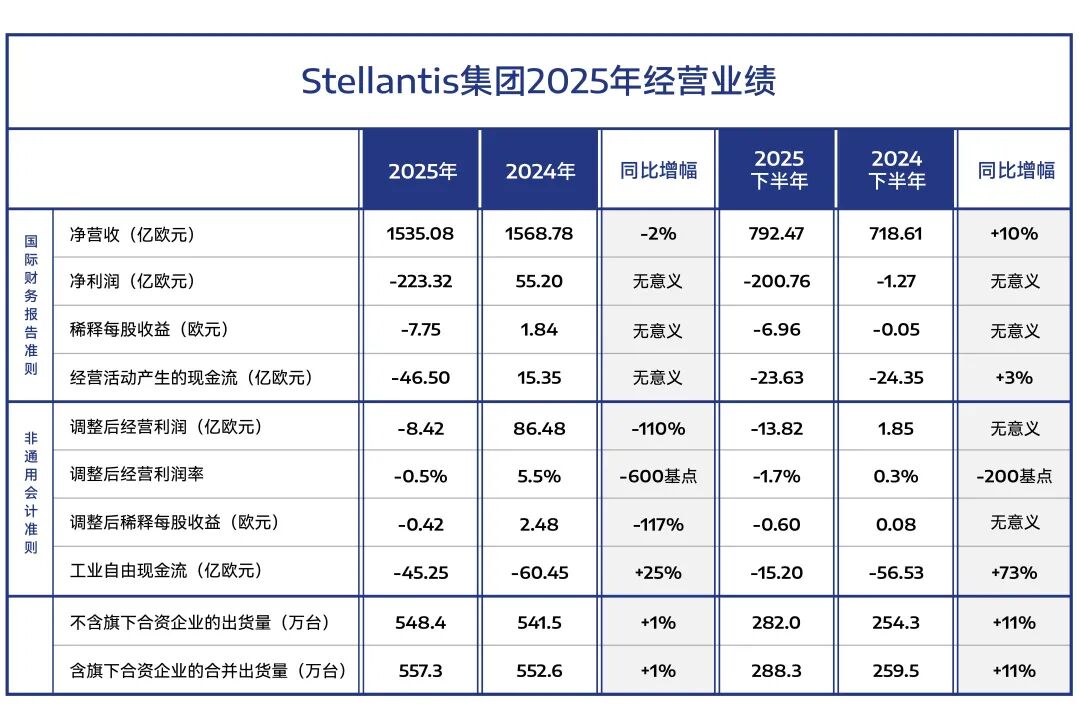
Stellantis explained that in the first half of the year, foreign exchange factors suppressed revenues, and the decline in new car prices pulled down the overall revenue.
In addition, even the adjusted operating profit was in the red, with a loss of 842 million euros, a sharp drop of 110% year - on - year. The corresponding profit margin also plummeted from 5.5% to - 0.5%.
It's not hard to see that compared with the previous year, the profitability in 2025 has significantly declined. The cash flow from operating activities was a negative 4.65 billion euros, while it was a positive 1.53 billion euros last year.
However, Stellantis remains optimistic. "In the second half of the year, we saw initial positive signs, including the initial results of quality improvement efforts, the successful launch of new product lines, and the resumption of sales growth."
Judging from the data, there were indeed obvious signs of recovery in Stellantis' operations in the second half of 2025. The net revenue in the second half of the year reached 79.247 billion euros, a year - on - year increase of 10%. The global comprehensive shipment volume was 2.82 million vehicles, a year - on - year increase of 11%. Among them, the North American market contributed the largest increment, with an additional 231,000 vehicles, a year - on - year increase of 39%.
Stellantis also reiterated its full - year forecast for 2026, expecting all financial indicators to gradually improve. Sales are expected to achieve a mid - single - digit percentage increase. In terms of sales profit margin, the company plans to achieve a low - single - digit adjusted operating profit margin.
02 Relying on Domestic New - Energy Automakers
Judging from the book figures, Stellantis has undoubtedly experienced "the most painful year." For a giant with an annual revenue of over 150 billion euros, the real key is not the annual profit or loss but the success of the transformation.
This time, Stellantis has set its sights on the East again.
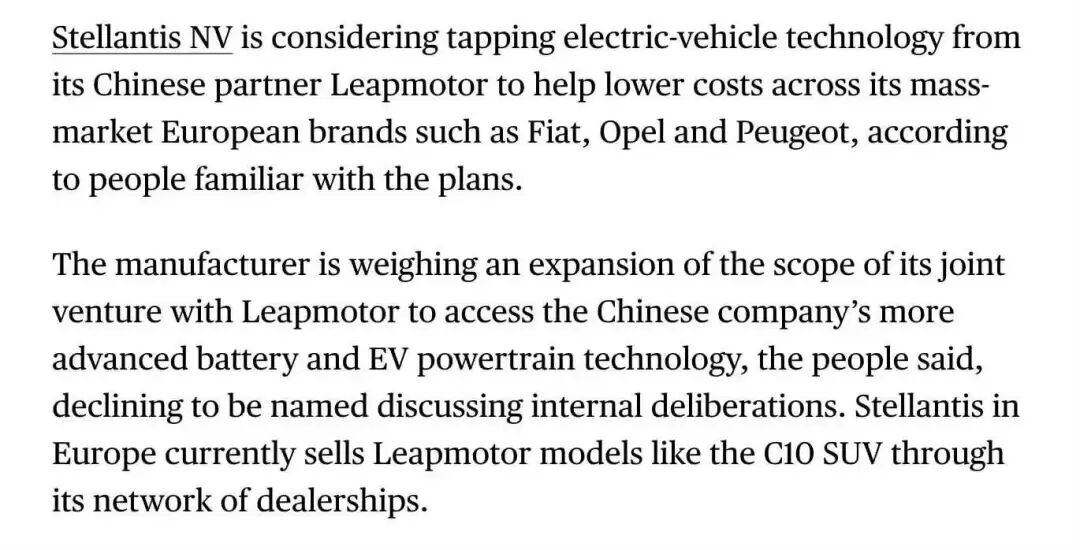
According to Bloomberg, Stellantis is evaluating the expansion of its joint - venture scope with Leapmotor to obtain its more advanced battery and electric powertrain technologies and reduce the costs of its European mass - market brands (such as Fiat, Opel, and Peugeot). The negotiations are still in the early stage, but both sides plan to reach an agreement this year.
Two years ago, Stellantis acquired a 20% stake in Leapmotor for 1.5 billion euros and also established Leapmotor International B.V. to help Leapmotor sell its cars in Europe.
In the initial plan, Leapmotor and Stellantis established a joint - venture company overseas, with Stellantis holding a controlling stake. Leapmotor would use Stellantis' dealer network and factories for production and sales, while Stellantis would use Leapmotor's products to capture the market.
Now, Leapmotor has started selling models such as the C10 through Stellantis' European distribution network. Official data shows that in 2025, Leapmotor's cumulative exports exceeded 67,000 units, making it the champion in overseas sales among new - energy vehicle startups, especially with 30,000 units sold in Europe.
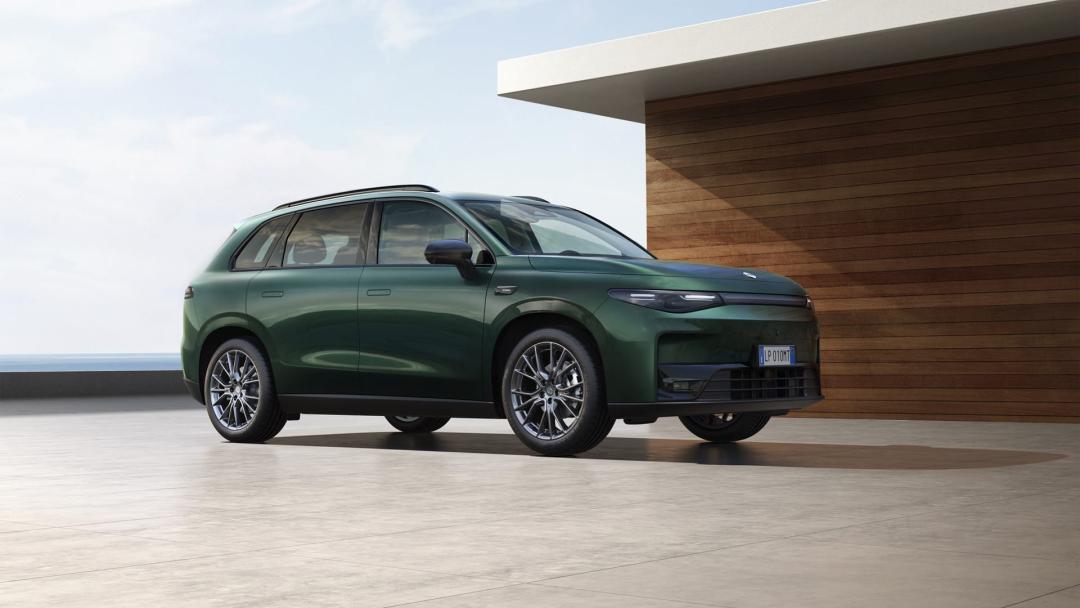
Now, with the news of deepening cooperation, if the agreement is reached, Leapmotor's technology may directly enter Stellantis' own - brand product line. This will be the first time that a mainstream Western automaker relies on the vehicle technology of a Chinese company to enhance the product strength of its European domestic models.
It may also mean that for Stellantis, these models of Leapmotor are no longer "supplementary products." They are very likely to become the core force to compete with Volkswagen's ID series and Renault's electric vehicles in Europe. There may even be range - extended "French cars."
After all, Xin Tianshu, the CEO of Leapmotor International, once said that the two sides are "evaluating various opportunities to utilize each other's technologies" and specifically mentioned Leapmotor's range - extended (REx) technology, which can effectively solve the range anxiety of European users and meet the low - carbon requirements at the same time.
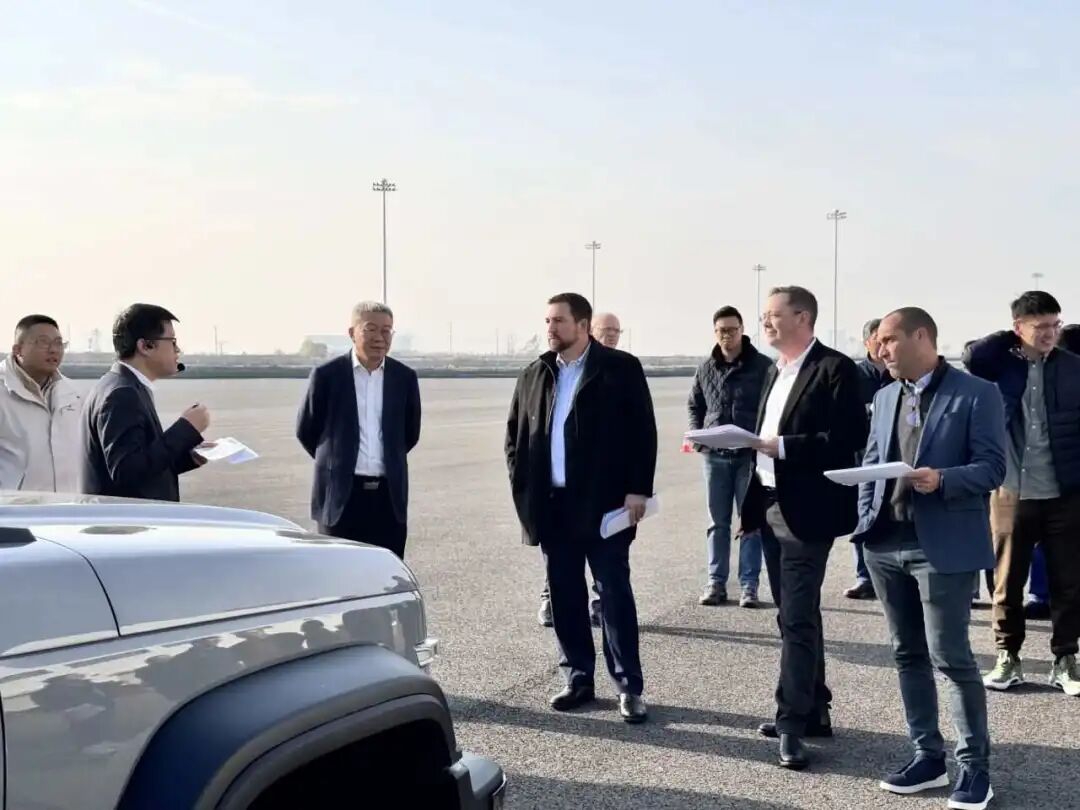
Not only Leapmotor, but a few months ago, it was reported that the Stellantis Group was in contact with the Dongfeng Group for in - depth cooperation. The purpose is to cooperate with Mengshi under Dongfeng and apply Mengshi's technology to JEEP. That's why the senior management of Stellantis visited the Dongfeng Group at the end of last year for discussions.
Besides leveraging the mysterious power from the East, Stellantis has started to adjust its electrification strategy. This huge loss of 22.3 billion euros is more like an active strategic clearance.
At the product level, Stellantis is re - introducing the Hemi V8 engine for its Ram pickup brand. It plans to increase the production of the Hemi engine by 100,000 units in 2026 for high - performance models such as the Ram 1500 SRT TRX. The focus is also shifting to fuel/hybrid, and it is even re - introducing the diesel engine. It plans to re - equip the Opel Astra and Peugeot 308 with diesel engines in Europe and launch a hybrid version of the Fiat 500.
In 2026, models such as the Jeep Cherokee and Dodge Charger SIXPACK will be launched in the North American market, re - entering the mid - size SUV and internal combustion engine - powered segments.
Antonio Filosa also emphasized that in the future, Stellantis will still stay at the forefront of electric vehicle R & D, but the pace of electrification transformation will be "led by market demand rather than subjective planning," and it will no longer pursue radical transformation goals.
Can Stellantis, which has learned from its pain, keep up with the market rhythm?
This article is from the WeChat official account "SuperEV - Lab" (ID: SuperEV - Lab), author: Wang Lei, Wang Lei. Reposted by 36Kr with authorization.