The low-price competition has lost focus, and assisted driving needs to return to rationality.
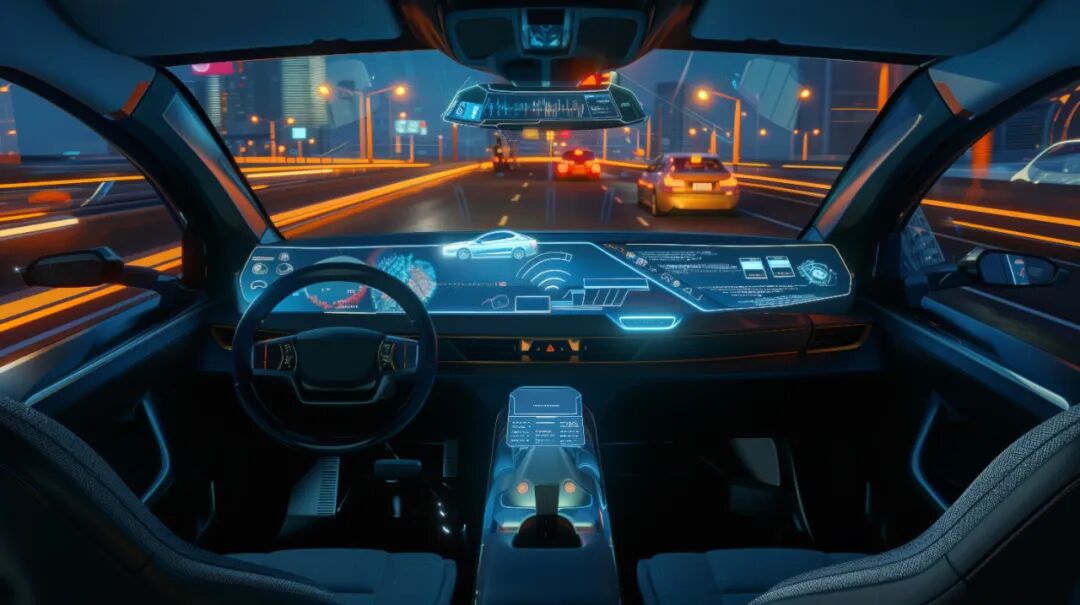
In 2025, the slogan of "equal access to intelligent driving" resounded throughout the industry, becoming the most prominent voice in the sector for the whole year.
However, it cannot be denied that the development of intelligent assisted driving has begun to shift from the pursuit of large - scale popularization to a more rational track focusing on safety and user experience. Especially as the technology penetrates into the mainstream market of 100,000 - level vehicles, the "high - order intelligent assisted driving", once exclusive to luxury models, is accelerating its way into ordinary households. We have to start examining the functional bottom - line in this wave of popularization.
In the past few years, with the maturity of third - party solutions, high - order assisted driving has entered a stage of mass - production explosion. Amid the hustle and bustle of competition in the industry, it is inevitable that there have been some disorderly aspects. For example, the number of project orders has become the core indicator for promotion, while the delivery scale and quality have been overshadowed. Price has become a key bargaining chip for automakers in the game and a sharp weapon for suppliers to seize the market, but quality and experience are often avoided in discussions.
While "cost competition" has accelerated the popularization of technology, it has also inevitably planted concerns in consumers' minds. When the "equal access to intelligent driving" evolves into a price war, are safety margins, system consistency, and extreme scenario verification being compressed?
[Unified model foundation: the safety chassis of assisted driving]
In the past, stacking up physical components built the first line of defense for safety. However, as the end - to - end large - model has become the "brain" of intelligent assisted driving, the concept of safety margin has extended to "data scale" and "model architecture".
Tesla CEO Elon Musk predicts that about 10 billion miles of training data are needed to achieve safe and unsupervised autonomous driving. The differences in these data scales directly affect the generalization ability and the coverage density of extreme scenarios. It is widely believed in the industry that those extremely low - probability but fatal scenarios, such as suddenly appearing pedestrians, irregular construction, and extreme weather, can never be fully reproduced through simulation. They can only be "encountered" and learned from through a large amount of real - world driving mileage.
Leading enterprises in the field of assisted driving have accumulated a certain amount of data. Tesla disclosed at the end of 2025 that the cumulative driving mileage of its intelligent assisted driving system had exceeded 11 billion kilometers. In the same year, Huawei's Qiankun assisted driving system achieved a driving mileage of 5.4 billion kilometers, with 2.12 million collision avoidances and 330 million assisted parking operations.
After obtaining a large amount of data, how can we organize these data to maximize their safety value? Facing this question, different paths have emerged in the industry.
Among some automakers, due to a large number of vehicle models and complex hardware, the data is highly fragmented and has to be split for training multiple sub - models. This model not only has low parameter sharing efficiency but also makes it difficult for the model to form in - depth cognitive abilities. When facing long - tail scenarios, it often fails to conduct multi - step reasoning and prediction.
In contrast, the path of "continuous reinforcement of a single model" builds a structural safety margin. For example, DeepRoute.ai relies on the same set of base models to empower different business lines such as assisted driving and Robotaxi. Extreme game - theory scenarios encountered in the Robotaxi business can instantly optimize the performance of mass - produced assisted driving vehicles. Meanwhile, a large amount of data from mass - produced vehicles can continuously strengthen the generalization ability of the base model and enhance the performance of Robotaxi.
It is worth mentioning that from SUVs to MPVs, DeepRoute.ai's solution has been adapted to more than a dozen vehicle models, empowering popular models such as Wei brand's Gaoshan, Tank 500, and Geely Galaxy M9, demonstrating its mature platform compatibility. As more cooperative vehicles join the data collection matrix, the evolution speed driven by real - world data is a competitive barrier that cannot be replicated by simulation tests, forming an insurmountable advantage.
At the same time, the advantages of this architecture are further magnified through the VLA (Visual - Language - Action) model. DeepRoute.ai adopts the VLA model and introduces a language model on the basis of end - to - end technology, which has the ability of "thinking chain", enabling the system to make decisions like an experienced driver. This also largely solves the "black - box" problem of traditional end - to - end models.
Of course, the design of model architecture and data closed - loop is the safety cornerstone of assisted driving. Meanwhile, strict control and high - level standards in product delivery and hardware design are also indispensable parts for the reliability of assisted driving products.
[The industry is moving from "availability" to "safety"]
In the project delivery industry, balancing quantity and quality has always been a difficult problem. Especially in the early stage of large - scale mass production in the current industry, some companies are keen to promote that they have secured orders for hundreds of vehicle models. However, in fact, this cannot measure the maturity of technology, let alone guarantee product reliability.
Wolfgang Bernhart, a partner at Roland Berger, pointed out that the development cycle of Chinese automakers is 24 to 40 months, much shorter than the 48 to 60 months in Europe. This rapid development has brought about scale growth, making Europe seem sluggish. At the same time, this "fast - paced" development has also become a deeper source of anxiety.
Some practical problems have gradually emerged: the experience gap caused by calibration deviations between different vehicle models, safety blind spots due to incomplete scenario coverage, the fluke mentality of compressing the testing process to meet the delivery schedule, and the lowering of standards due to the dilution of testing and verification resources. Are these problems being covered up by the scale?
Facing the trade - off between data and safety, Zhou Guang, CEO of DeepRoute.ai, has clearly stated that the company does not pursue the number of cooperative vehicle models. Instead, it aims to "select a few suitable vehicle models and make them into best - sellers". DeepRoute.ai chooses to deeply cooperate with a small number of leading automakers, promotes multi - model cooperation with a unified architecture, and concentrates resources on technology refinement to ensure the consistency of core experience and safety.
Based on this strategy, the company focuses on core customers such as Great Wall and Geely, jointly defines products and conducts in - depth debugging to achieve the perfect adaptation of assisted driving functions to vehicle models.
As of now, more than 200,000 mass - produced vehicles equipped with DeepRoute.ai's urban NOA system have been delivered. In October 2025, its market share among third - party urban NOA suppliers was close to 40%, forming a tripartite confrontation with Huawei and Momenta. This achievement does not come from the accumulation of project orders but from the firm commitment to safety and consistency.
For the intelligent assisted driving industry, quantity expansion without safety is meaningless. As the person in charge of DeepRoute.ai said, in the past, the focus was on "availability", but in 2026, the key lies in "usability and safety".
The so - called "a large number of project orders" represents possibilities but may not necessarily translate into real value. Without a real - world data closed - loop and a unified technical foundation, the more projects there are, the more diluted the system may become, ultimately weakening users' sense of security.
[Low price is not a moat; safety and stability are]
In the intelligent driving industry, a low price is not a problem if there is sufficient scale to spread the cost. However, when the price is squeezed to the point where there is no profit margin and there are not enough mass - produced vehicles to share the cost, the often - invisible but crucial safety margin is usually the first to be sacrificed.
It should be noted that the maturity of intelligent assisted driving technology depends on the coordinated refinement of hardware and software and the scale effect and technological accumulation of core components such as chips and sensors. This requires long - term investment in capital and human resources and cannot be achieved simply by cost - cutting.
In the past few years, in order to blindly meet the cost - reduction demand, a popular trend in the industry was to "carve on a jujube pit", that is, to achieve integrated parking and driving functions and even high - speed NOA on chips with extremely low computing power. This thinking still persists today. For example, urban assisted driving has also been applied to chips with a computing power of more than 100 TOPs.
However, industry practice has repeatedly proven that in the assisted driving industry, the path of only providing products without considering user experience will not work. Most of the cramped configurations are eventually abandoned by consumers because they "sacrifice" the upper limit of user experience.
Regarding this phenomenon, Zhou Guang, CEO of DeepRoute.ai, said that in 2026, the key to market competition will focus on two core aspects: "cost reduction" and "experience improvement". The core idea is "scale - based cost reduction" rather than material - based cost reduction. With the progress towards the goal of delivering one million vehicles, DeepRoute.ai will enter a full - speed acceleration phase in the intelligent driving track, spreading the high R & D costs across each vehicle. Thus, on the premise of ensuring reasonable profits, it can provide competitive "safe and low - cost" solutions for automakers.
Only on a large enough mass - production base can continuous technological investment and strict safety standards be maintained. In the field of assisted driving, leading enterprises are continuously increasing their self - research efforts. Since 2019, Huawei has invested more than 50 billion yuan in the intelligent vehicle field. In 2025, Tesla's operating expenses reached 12.7 billion US dollars, a year - on - year increase of 23%, with a considerable part of it being invested in autonomous driving R & D. In 2026, Tesla also plans to increase its capital expenditure to more than 20 billion US dollars for building new factories and expanding AI training computing power.
When the low - price strategy masks the necessity of such technological investment, the industry is prone to fall into a dangerous cognitive bias, equating "low price" with "strong engineering ability". However, without sufficient scale support, the so - called low - cost solutions cannot spread the rigid R & D expenditure at the bottom level. Eventually, they can only "make up" for it by sacrificing safety margins. Once a large number of extreme accidents occur, the high recall cost will completely break through the so - called cost advantage.
According to data from the State Administration for Market Regulation, as of September 2025, a total of 3,230 vehicle recalls had been carried out in China, involving 120 million vehicles. In 2024 alone, as many as 2.5561 million vehicles were recalled due to problems with the assisted driving system, accounting for 23% of the total number of recalls for that year. These shocking figures are the real - world costs paid for the low - price strategy of "no scale, no safety".
What is even more worthy of vigilance is that this kind of low - price war that fails to distinguish between "offering discounts" and "sacrificing safety" not only harms the profits of enterprises themselves but also damages the user trust pool of the entire intelligent assisted driving industry. Once consumers lose confidence in the technology, the development foundation of the industry will be shaken.
Facing this situation, the industry needs to return to rationality and pragmatism. Ultimately, the competition in intelligent driving is about balancing scale, cost, and safety. Only on a large enough mass - production base can the high R & D investment be spread, and strict safety standards can be implemented. Those short - sighted practices of bypassing scale and compressing costs will eventually be proven wrong by the market. Only by taking scale as the foundation and safety as the premise can the industry truly develop steadily in the long run.
This article is from the WeChat official account "36Kr Auto", published by 36Kr with authorization.