This high-precision metal 3D printing company completed two rounds of financing in a row after shipping 100,000 units last year and reducing printing costs by 80% | First reported by 36Kr
Author: Ou Xue
Editor: Yuan Silai
Yingke learned that Yunyao Shenwei (Jiangsu) Technology Co., Ltd. (hereinafter referred to as "Yunyao Shenwei"), a high - precision micron - level metal 3D printing enterprise, has completed tens of millions of yuan in angel round and Pre - A round financing.
Its angel round investors are Sequoia China Seed Fund, Shenzhen High - tech Investment Group, and Plug and Play China. The Pre - A round financing was led by Boyuan Capital, with Lanjun Capital participating. The funds are mainly used for the iterative R & D of core technologies, capacity improvement, team expansion, and market development.
Founded in 2021, Yunyao Shenwei has its headquarters and R & D and production base in Taicang, Suzhou, Jiangsu. It is a technology enterprise focusing on metal 3D printing, providing a full - set of solutions covering the R & D of equipment and product printing for the full size (conventional and ultra - high - precision metal printing) of metal 3D printing.
Yingke learned that the company's core team comes from the Fraunhofer Institute for Laser Technology (Fraunhofer ILT) in Germany, which is the birthplace of the mainstream metal 3D printing technology, Laser Powder Bed Fusion (LPBF/SLM). The company's founder, Shen Liyaowei, studied under Dr. Meiners, the inventor of this technology, and has been engaged in relevant R & D work at the institute for nearly a decade. He has been in charge of the design projects of several industry - leading conventional metal printing equipment and has accumulated rich experience in metal printing equipment, software, and processes.
Currently, non - metal 3D printing has blossomed in fields such as consumer electronics, fashion aesthetics, and automotive interiors, thanks to its diverse technologies and an increasingly mature industrial chain. However, in the industrial sector, where high - strength and high - reliability requirements are more crucial, metal 3D printing still needs further promotion.
The core bottleneck lies first in the issue of precision. Although current technologies are constantly advancing, when printing fine structures or large - size parts, it is still difficult to meet the tolerance requirements and excellent surface quality requirements for high - precision assembly, which directly results in the difficulty of using printed parts directly as final functional components.
"Metal printing only completes the blank. The real 'embroidery' work is mainly in the subsequent steps," Shen Liyaowei, the founder of Yunyao Shenwei, revealed to Yingke. The chain reaction caused by insufficient precision is a long and costly post - processing process, which is regarded by the industry as a huge "hidden cost black hole."
Due to problems such as rough surfaces and insufficient precision, metal parts must go through a series of complex post - processing procedures after printing. The cost is mainly concentrated in surface finishing processes such as grinding and polishing. More notably, currently, a large number of post - processing steps still rely on manual operation. This not only means high labor costs but also brings problems such as personnel fatigue caused by repetitive work, fluctuating efficiency, and difficulty in ensuring quality consistency.
The founding team of Yunyao Shenwei believes that for metal 3D printing to achieve true mass production, the precision and surface quality of the original printing must be improved. Only when the precision is close to net - shape forming and post - processing is no longer a long - term "handicraft workshop" - style labor can metal additive manufacturing compete directly with traditional precision machining in terms of cost and efficiency, thus further opening the door to large - scale industrial applications.
Against this background, Yunyao Shenwei established a differentiated development path at the beginning of its establishment: focusing on micron - level high - precision metal 3D printing and aiming for the world's highest - precision printing results. Compared with the tolerance level of 100 - 200 microns in traditional conventional metal printing, the company can improve the typical printing precision to 2 - 10 microns, optimize the typical surface roughness (Ra value) to about 0.8 microns, and achieve support - free forming of various structures with an angle of more than 10 degrees. This means that micron - level metal - printed parts hardly need CNC machining, thereby effectively reducing costs.
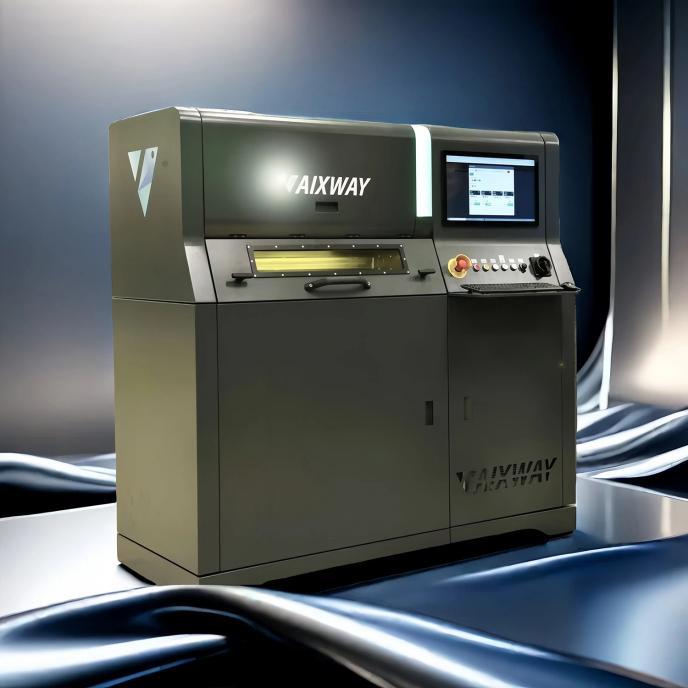
Yunyao Shenwei's micron - level metal 3D printing equipment (Source: the enterprise)
High precision often means low efficiency - this is a common problem faced by the current precision metal printing industry.
"In the past, our high - precision printing used a static small laser spot, resulting in low efficiency. The dynamic focusing technology we developed can intelligently adjust the size of the laser spot in real - time," Yin Yijun, the co - founder of Yunyao Shenwei, further introduced. "When printing fine structures, we use an ultra - small spot (less than 20 microns) to ensure precision; when printing non - fine areas, we switch to a larger spot to improve efficiency."
It is reported that this technology can increase the production efficiency of parts by up to 80%, making it possible to achieve mass production of high - precision parts.
Currently, Yunyao Shenwei's technology has been successfully applied in the medical and consumer electronics fields, serving hundreds of customers, and is further expanding into emerging fields such as embodied robots, providing a new solution for the intelligent manufacturing of precision components.
For example, the fingers of humanoid robots have extremely limited space but need to accommodate multiple functions such as driving, transmission, and sensing. Traditional subtractive manufacturing often faces the dilemma of "the tool cannot reach and the structure cannot be made" when dealing with such tiny and complex components. High - precision metal printing breaks through this physical limitation, enabling the integration of complex internal sensing structures and elastomer beams in a very small space, and the integrated forming of complex internal oil and circuit channels and elastomer structures, making microscopic force - sense perception possible.
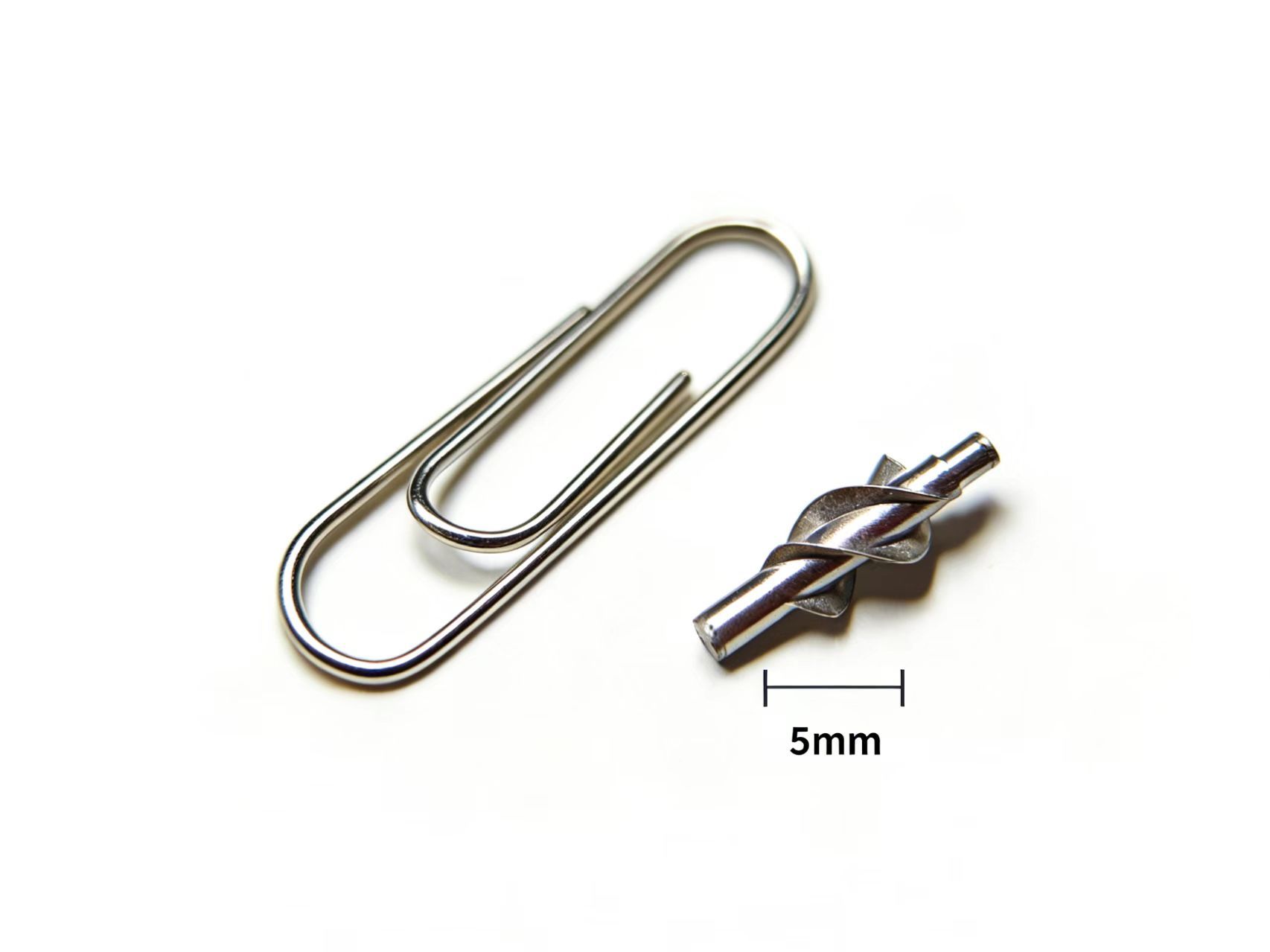
The transmission pump printed by Yunyao Shenwei (Source: the enterprise)
In 2025, Yunyao Shenwei successfully shipped a batch of precision metal - printed parts, achieved break - even, and had an annual growth rate of over 50%. It shipped over 100,000 high - precision components in the medical and consumer electronics industries, verifying its core ability of stable mass production and laying a solid foundation for expansion into areas such as embodied intelligence.
"We hope to achieve an annual shipment of over one million pieces in three years," Yin Yijun, the deputy general manager of Yunyao Shenwei, said. "We firmly believe that high - precision printing technology can effectively promote 3D printing to achieve large - scale industrial production."