The Changes and Constants of Ctrip
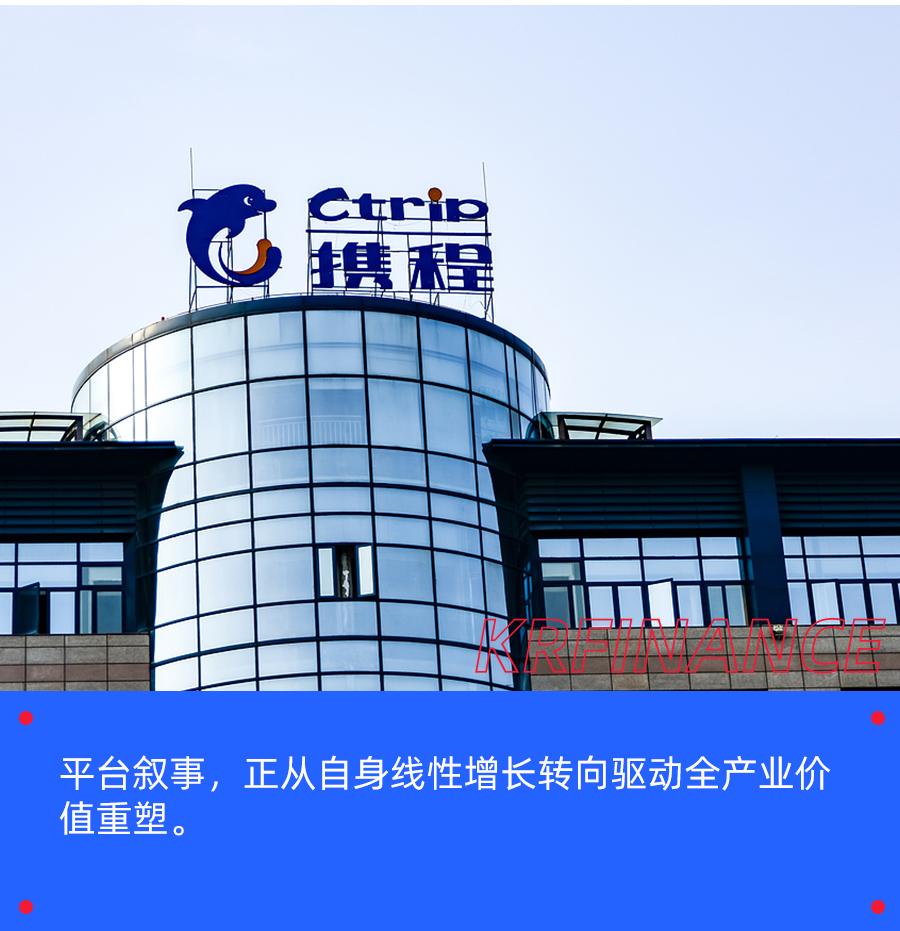
On February 26th, Ctrip Group released its 2025 performance announcement. Throughout last year, the group achieved a net revenue of 62.4 billion yuan, and its net profit excluding investment income reached 13.4 billion yuan. While the market is accustomed to exploring the linear trajectory of growth and decline from figures such as revenue and net profit, this report reveals a more profound trend: at a time when the traffic dividend has peaked and the industry's competitive landscape has become relatively stable, leading platforms are undergoing a profound transformation in their roles.
The obvious "changes" are clearly visible: the core narrative of the platform is shifting from pursuing linear growth in its own transaction volume to driving the value reshaping of the entire cultural and tourism industry chain; its strategic reach is extending from focusing on first - tier cities to the vast county - level and lower - tier markets; and its profit - making logic is upgrading from relying on traffic matching to obtaining more sustainable returns through technological empowerment, operational support, and ecological co - construction.
However, beneath the surface of these changes, there runs a persistent "unchanged" main line: as a hub connecting hundreds of millions of consumers and a large number of supply - side entities, the fundamental value of the platform always lies in solving information asymmetry and improving industrial efficiency.
In the past, this value was mainly realized through aggregating traffic and simplifying transactions. Now, under the grand proposition of industrial upgrading, this value is being continued and magnified through more in - depth, comprehensive, and complex empowerment.
Ctrip's official data shows that in the past year, more than 50,000 new jobs were created in the markets covered by the platform, with over half of them located in second - tier and lower - tier cities. This subtle change in data is the best illustration of this "staying the course amidst changes".
It indicates that the competition among platforms has entered a new stage, shifting from dividing the existing market share to jointly expanding the market and benefiting a wider range of ecological participants.
Industrial Empowerment: From Traffic Harvesting to Ecological Irrigation
As the era of "enclosing land" in the Internet comes to an end, the value logic of the platform economy is being re - evaluated.
For the online travel industry, the "matching" value of simply connecting supply and demand has reached its peak. In the next stage of the industry, the core issue lies in how to transform the massive user demand into tangible improvements in quality and efficiency for the supply side, especially small and medium - sized hotels, travel agencies, and county - level scenic spots across the country.
This requires the platform to play a more complex role: not only as a market, but also as a toolbox, a coach, and an ecological architect.
Leading platforms represented by Ctrip have clearly shifted their strategic focus from pursuing linear growth in their own GMV (Gross Merchandise Volume) to driving the value reshaping of the entire industry chain.
This transformation is specifically reflected in three dimensions: digital infrastructure construction in lower - tier markets, operational empowerment of small and medium - sized merchants, and bridging the service gap with cutting - edge technologies.
The future growth poles of the domestic cultural and tourism industry lie in the vast third - and fourth - tier cities and county - level areas. These places are rich in unique natural landscapes and authentic cultural experiences, but have long been trapped by the digital divide, becoming "sleeping treasures". Low online visibility, simple product information, inconsistent service standards, and limited payment methods make it difficult for even the best - quality products to reach a wider market.
The platform's empowerment starts with systematically solving these infrastructure problems. By the end of 2025, Ctrip had jointly invested in and cooperated in the operation of more than 130 scenic spots. According to its plan, this is far more than just launching a booking entrance. It involves in - depth work such as intelligent ticketing systems, dynamic pricing strategies, and the design and introduction of secondary consumption projects like cruises and campsites.
For example, by deploying smart ticket machines supporting more than 16 languages in 241 scenic spots, Ctrip enables scenic spots to provide native - language services for global tourists at a very low cost, breaking one of the biggest barriers to inbound tourism.
At the same time, the platform's deeper - level empowerment lies in the continuous input of operational methodologies.
Previously, many county - level tourist destinations relied heavily on ticket revenue, with a single - source income structure. Through user - consumption data analysis, the platform can not only accurately attract traffic but also guide scenic spots in product combination and consumption route design, promoting them to shift from one - time ticket revenue to comprehensive consumption scenarios covering catering, accommodation, and experiences.
In essence, this is effectively extending the mature operational experience from first - tier markets to regional tourism through digital tools, helping regional tourism complete a paradigm shift from resource - dependence to operation - driven development.
For more scattered and non - standard micro - businesses such as homestays and farmhouses, Ctrip reduces their digitalization threshold through functions like "flexible packaging", promoting the penetration of operational capabilities into the capillary vessels of the cultural and tourism industry supply chain.
Currently, more than 3,900 hotels and scenic spots in second - and third - tier cities have joined the above - mentioned system. When tourists book a hotel, they can add nearby tickets, car rentals, or special experiences with one click. This not only increases the average customer spend but, more importantly, connects numerous isolated small merchants into an attractive collective scenario. Through the platform's standard service and credit system, it solves the long - standing problems of information asymmetry and non - standard services in lower - tier markets, generally raising the bottom line of regional tourism supply.
This empowerment brings not only an increase in order volume but also the "hematopoietic" ability of the county - level economy. When the platform exports standardized service capabilities such as multi - language support and intelligent ticketing to county - level scenic spots, local practitioners no longer need to hire scarce foreign - language talents at high salaries to receive foreign tourists. Instead, they can use the platform's tools to upgrade their services.
Meanwhile, with the deepening of the trend of "large groups splitting into small groups", there are already 2,548 travel agencies registered in second - tier and lower - tier cities on the Ctrip platform, accounting for as much as 72.8%. This means that more tourism revenue remains in the lower - tier markets instead of being taken away by large wholesalers in first - tier cities.
This "decentralized" supply - chain layout may also become an effective way to address regional development imbalances.
The Transformation Toolbox for Small and Medium - Sized Merchants: From "Selling Beds" to "Selling Experiences"
The vitality of the industry is rooted in the healthy development of every micro - entity. Hotels and travel agencies are the largest and most anxious groups in the cultural and tourism industry chain for transformation. Single - property hotels lack product design capabilities and brand premiums; traditional travel agencies are trapped in the "low - cost shopping tour" model, with meager profits and talent losses.
The empowerment of hotels by OTA platforms is shifting from providing "beds" to designing "experiences".
In 2025, in first - tier cities, through Ctrip's "calendar room package" model, which bundles guest rooms with in - hotel services such as dining and SPA, the average nightly revenue per hotel room increased by about 10% year - on - year.
For a wider range of small and medium - sized hotels, the key to empowerment lies in stimulating their local characteristics. The digital tools and data insights provided by Ctrip help them explore the local culture, cuisine, and lifestyle, creating unique "hotel +" products. Thus, they can transform from homogeneous accommodation providers to providers of differentiated experiences.
The platform's empowerment of travel agencies is even more revolutionary, directly changing the industry's human - capital structure.
In the past, the "zero - negative tour fee" model forced tour guides to become salespersons, damaging the tourist experience and the industry's reputation. The "large - group - to - small - group" transformation promoted by Ctrip, through products such as customized tours and private groups, has shifted the market competition towards service and experience.
From the data, this shift has had a dual positive effect: on the demand side, the per - capita consumption of small - group products on the Ctrip platform has increased by 80%, and the travel duration has increased by 13%, indicating that the market is willing to pay for high - quality services. On the supply side, the platform has guided 3,500 small and medium - sized travel agencies to upgrade their services, directly creating more than 50,000 new jobs, with more than half of them located in second - tier and lower - tier cities.
It is worth noting that the new model has created a demand for composite talents such as "driver - tour guides". In 2025, the number of such positions increased by more than 20,000 nationwide.
This means that the industry's labor force is upgrading from "assembly - line workers" providing standardized explanations to "travel planners" providing personalized services, which is the most solid micro - foundation for the improvement of industrial value.
While empowering, the platform also takes on the role of a referee to maintain a fair competitive environment.
Taking Ctrip as an example, in 2025, the platform upgraded its measures to deal with malicious negative reviews, identified more than 6,000 types of inappropriate behaviors, and optimized the rating labels. For example, the threshold for the "Excellent Hotel" label was lowered from 4.8 points to 4.7 points.
This governance reduces the reputation - loss cost of small and medium - sized merchants caused by malicious competition, enabling them to truly focus on improving service quality instead of getting caught up in endless "brush - order" or "anti - negative - review" internal strife.
Technological Inclusiveness: A "Digital Ecosystem" is Taking Shape in Domestic Cultural and Tourism
Previous experiments in many industries have proven that true empowerment should be replicable and scalable, and technology is the key lever to achieve inclusiveness. In the cultural and tourism industry, which heavily relies on information and communication, artificial intelligence is clearly becoming the core infrastructure for platforms to empower the industry and connect domestic and overseas markets.
Facing the blue ocean of inbound tourism and the natural barrier of language, Ctrip's investment shows its determination. According to its official information, technology is a key part of the annual investment of about 1 billion yuan in relevant fields. Ctrip's self - developed large - language model for the tourism vertical accurately translates the product information of more than 8,000 partners into 25 languages and adds 63,000 new ticket types available for foreign tourists to book.
This is not just translation but in - depth optimization for tourism scenarios - it can accurately handle complex refund and change policies, eliminating the decision - making concerns of overseas tourists due to "not understanding".
In the service - fulfillment process, AI enables "borderless communication". In online consultations, AI can complete real - time multi - language translation within 5 seconds; the telephone system can provide simultaneous interpretation.
These technologies turn the high - cost multi - language customer - service capabilities into standardized services that can be easily accessed with one click, significantly reducing the threshold for small and medium - sized merchants to receive global customers. The data shows that in 2025, nearly 70,000 domestic merchants received inbound - tourism orders through Ctrip's overseas platform for the first time, including more than 63,000 hotels. This clearly demonstrates the power of technological inclusiveness.
In addition to technological tools, OTA platforms are also building a trust chain through heavy investment.
Taking Ctrip as an example, in 2025, it invested 2.9 billion yuan in service guarantees, including a major - disaster guarantee fund, a global SOS platform (covering 27 medical - assistance institutions and 1 million medical institutions), and 7x24 - hour multi - language customer service.
This "heavy - asset" service investment, seemingly a cost, actually provides a credit guarantee for the platform to empower the industry: because the platform provides a safety net, small and medium - sized merchants dare to accept complex international orders; because tourists know they can get effective rescue in case of difficulties, they dare to explore non - standard niche destinations.
This sense of security is a soft form of empowerment that cannot be replaced by technological tools.
Looking at Ctrip's practices of digital infrastructure construction in lower - tier markets, operational empowerment of small and medium - sized merchants, and bridging the global service gap with technology, a clear path has emerged: the value center of the platform is undergoing a profound "anchor - point shift" - from transaction volume to ecological value.
What "changes" are the strategies, methods, and focuses. The platform must become more "heavy", investing real money to build digital infrastructure, exporting mature operational methodologies, researching and developing inclusive cutting - edge technologies, and even acting as a "referee" to maintain a fair market environment. Its profit source is increasingly reflected as the return for providing these large - scale and complex "heavy services".
What "remains unchanged" is its core mission as a market organizer and efficiency improver. The standard for measuring its success is no longer just the figures on the financial statements, but more importantly, whether it makes small and medium - sized merchants on the platform more competitive and viable, whether it revitalizes the once "sleeping" tourism resources with new economic and cultural values, and whether it ultimately provides consumers with a richer, more reassuring, and more in - depth travel experience.
Traffic brings immediate transactions, but only continuous value - empowerment can cultivate a prosperous ecosystem. From "harvesting" to "irrigating", from "matching" to "empowering", Ctrip's "changes and constants" are not only a strategic choice for one enterprise but also reflect the collective value reconstruction that the platform economy must complete in the process of crossing cycles and moving towards high - quality development. Its future may not lie in how much it takes from the ecosystem, but in what it ignites and nourishes for this ecosystem.