2026, The Eve of China's Commercial Space Takeoff
In December 2025, at the moment when the Zhuque-3 rocket ignited and took off, the engineers at Landspace closely watched the screen. The rocket successfully entered orbit, but during the return phase, the first stage deviated from the landing point by about 40 meters and crashed at the edge of the recovery site.
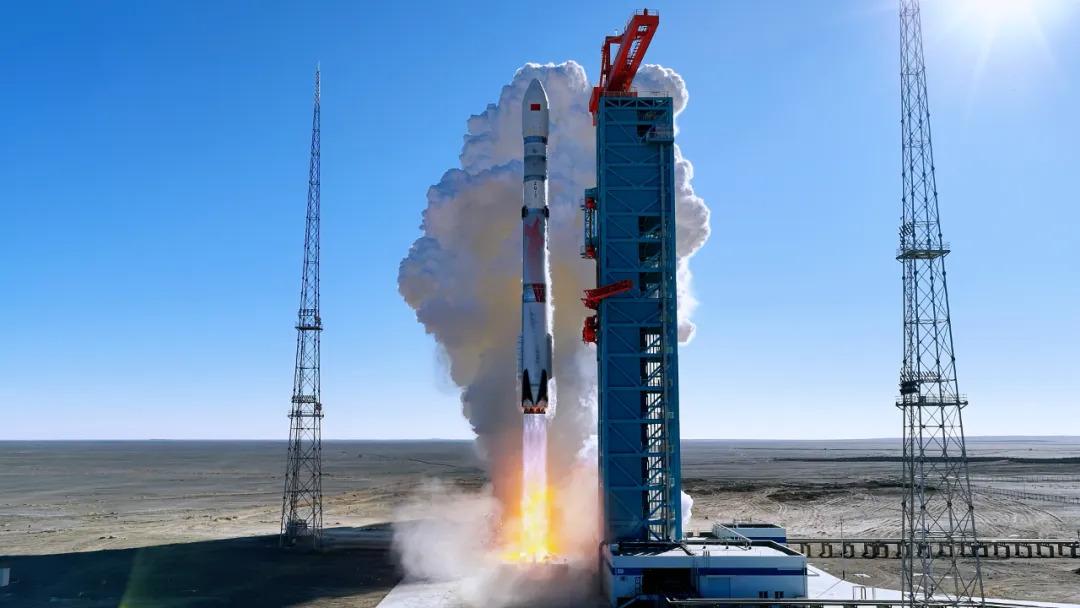
The recovery failed. However, this "failure" precisely marks that China's commercial space industry is trying to cross a crucial threshold: from one-way launches to reusable rockets.
Behind this threshold lies an even greater turning point. In 2026, China's commercial space industry stood at a historic inflection point.
Policy Breakthrough: From "Groping for Stones" to "Following the Map"
The landmark event at the inflection point was the "Action Plan for Promoting the High-quality and Safe Development of Commercial Space (2025 - 2027)" issued by the China National Space Administration in November 2025. This document clearly stated for the first time that commercial space enterprises can independently apply for frequency and orbital resources and undertake national space missions.
Industry insiders gave a straightforward assessment: the institutional obstacles have been cleared.
In the past, the commercial space industry was regarded as a "supplementary force" to the national space program. Now, it is clearly defined as an "important part" of the national space system - a fundamental change in status. Undertaking multiple missions such as technological innovation, market expansion, and industrial promotion means that commercial space enterprises finally have an official "name."
The capital market responded even more directly.
In 2025, the commercial space track raised nearly 20 billion yuan in cumulative financing, a year-on-year increase of 32%. The IPO processes of leading enterprises such as Landspace and CAS Space accelerated, and many institutions predicted that 2026 would see a wave of listings of commercial space enterprises. The Shanghai Stock Exchange revised the listing rules for the Science and Technology Innovation Board, clearly supporting commercial space enterprises with "key core technologies and high market recognition" to accelerate their listings.
More than 20 provincial-level regions have introduced industrial policies related to the commercial space industry. In November of the same year, the Commercial Space Department of the China National Space Administration was officially established, marking the first time that the commercial space industry has an independent management department. The National Venture Capital Guidance Fund was also officially launched, with a total scale of 100 billion yuan, focusing on hard technology fields such as aerospace.
However, what really made the industry nervous was a battle for "space resources."
In January this year, China submitted application materials for the orbits and frequencies of 203,000 satellites to the International Telecommunication Union (ITU), dozens of times the total number of previous applications. Behind this figure lies a cruel fact: the low Earth orbit can accommodate a maximum of about 175,000 satellites, and the total global application volume has far exceeded the limit.
Under the ITU's "first-come, first-served" rule, the competition for frequency and orbital resources has entered a white-hot stage. The pre-emptive positioning for the industrial landscape in the next decade has already begun.
Interestingly, the confidence for this "seat-grabbing" game comes from the substantial improvement in launch capabilities.
In 2025, China completed 92 space launches, a record high. Among them, 50 were commercial launches, accounting for 54%, and 311 commercial satellites were sent into orbit, accounting for 84%. The successful launches of private rockets such as Ceres-1 and Hyperbola-1 have proven that commercial space enterprises have the ability to conduct large-scale launches.
At the beginning of 2026, this momentum remained strong.
On January 19, the Long March 12 carrier rocket successfully sent the 19th group of low-orbit satellites of the satellite internet into the scheduled orbit at the Hainan Commercial Space Launch Site; the Lihong-1 vehicle completed its first suborbital flight test; the Ceres-1 sea-launched version Y7 carrier rocket expanded the Tianqi constellation in a "one rocket, four satellites" mode.
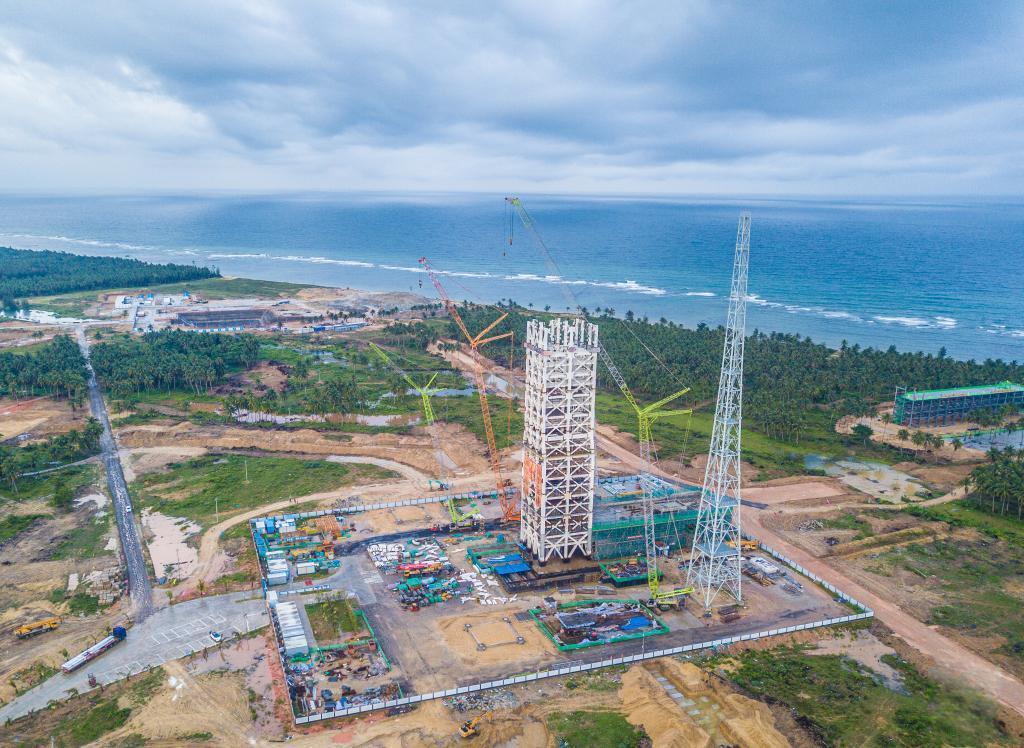
Judging from the annual data, the commercial space industry is indeed "taking off." However, after the policy breakthrough, the real test has just begun.
Industrial Implementation: From "Building Rockets" to "Building an Ecosystem"
Let's go back to the "failed" recovery of the Zhuque-3.
The reusable rocket technology is regarded as the key to reducing costs and increasing efficiency in the space industry and moving towards large-scale operations. The cost of the first-stage rocket accounts for more than 70%. If it can be recovered and reused, the launch cost can be significantly reduced. This was Landspace's first attempt at recovering a rocket after orbit insertion. Although the recovery failed, it was an important step in China's practical exploration of reusable rockets.
The difficulty of this "last step" far exceeds expectations.
At Landspace's intelligent manufacturing base in Jiaxing, Zhejiang, another kind of "acceleration" is taking place: the automated three-dimensional storage system has reduced the parts outbound time from 3 minutes to 30 seconds.
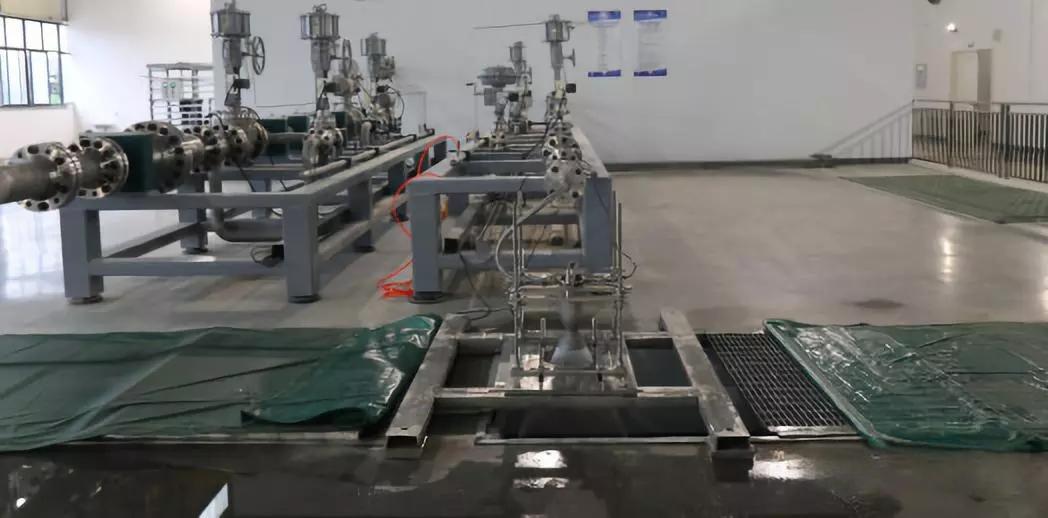
Don't underestimate this "30 seconds." Behind it is an increasingly mature and independently controllable supply chain system. The development of the Zhuque-3 requires more than 100,000 parts and the cooperation of more than 600 suppliers across the country, covering fields such as new materials and precision manufacturing. The reduction from "3 minutes" to "30 seconds" means a qualitative change in the response speed and collaborative efficiency of the entire supply chain.
As a typical representative of new productive forces, the commercial space industry is promoting innovation across the entire industry chain, outlining an industrial ecosystem picture of "satellites in the sky, rockets on land, ships on the sea, and supply chains on the ground."
The main construction of the second phase of the Hainan Commercial Space Launch Site is more than half completed and is expected to enter the equipment installation and commissioning stage after the Spring Festival. The third and fourth launch pads are specially designed to launch rockets with larger diameters and thrusts. It is expected that the four launch pads can achieve an annual launch capacity of more than 60 times. Hainan has attracted more than 700 space enterprises to settle, initially forming a collaborative ecosystem of rocket, satellite, and data chains. Since 2025, Wenchang has received more than one million tourists.
Yizhuang in Beijing has gathered more than 180 commercial space enterprises, with a concentration of commercial rocket enterprises reaching 75% of the national total, forming an industrial chain covering carrier rockets, satellite manufacturing, and aerospace new materials. The "Rocket Street" integrates the existing industrial resources in Yizhuang, enabling the industrial ecosystem to achieve "upstairs and downstairs are upstream and downstream."
The value of this "industrial agglomeration" lies in the improvement of collaborative efficiency and the reduction of innovation costs. When an engineer from a rocket enterprise can "go downstairs" to find a materials supplier to discuss technological improvements, the iteration speed of the entire industry will accelerate.
However, the imagination space of the commercial space industry goes far beyond "building rockets" itself.
On January 12, the Lihong-1 completed its suborbital flight test, and the seeds of space radiation-induced mutant roses carried in the return capsule were successfully recovered. The space environment has opened up a new path for cultivating new varieties with stronger disease resistance, longer flowering periods, and unique flower colors. Satellite remote sensing is helping with precision agriculture; space breeding and biomedical research and development are being carried out in the microgravity environment of space - the application scenarios are constantly expanding.
A new format of space tourism is also budding. On January 22, Transformer Company publicly displayed the commercial manned spacecraft "Transformer No. 1." The pre-sale price of the tickets is 3 million yuan per ticket, and more than a dozen paying tourists have already signed up. In 2028, this spacecraft can send passengers to the "Kármán line" at an altitude of 100 km to experience 5 - 10 minutes of weightlessness.
However, what is really booming faster is the low-altitude economy scenario.
According to the prediction of the Civil Aviation Administration of China, the market scale will reach 1.5 trillion yuan in 2025 and is expected to exceed 3.5 trillion yuan in 2035. Drone delivery, air taxis, and emergency rescue - the opening up of low-altitude airspace is giving birth to new business models.
Meituan's drones have been deployed in 6 cities including Shenzhen, Shanghai, Beijing, Hong Kong, and Dubai, completing more than 700,000 deliveries in total. The average delivery time in Shenzhen is 12 - 15 minutes. EHang's EH216 - S has obtained all four necessary certificates and has become the world's first compliant unmanned manned aircraft for commercial operation. In July 2025, Volant Aero signed a large order worth 1.75 billion US dollars to purchase 500 eVTOLs for air taxi services in Southeast Asia.
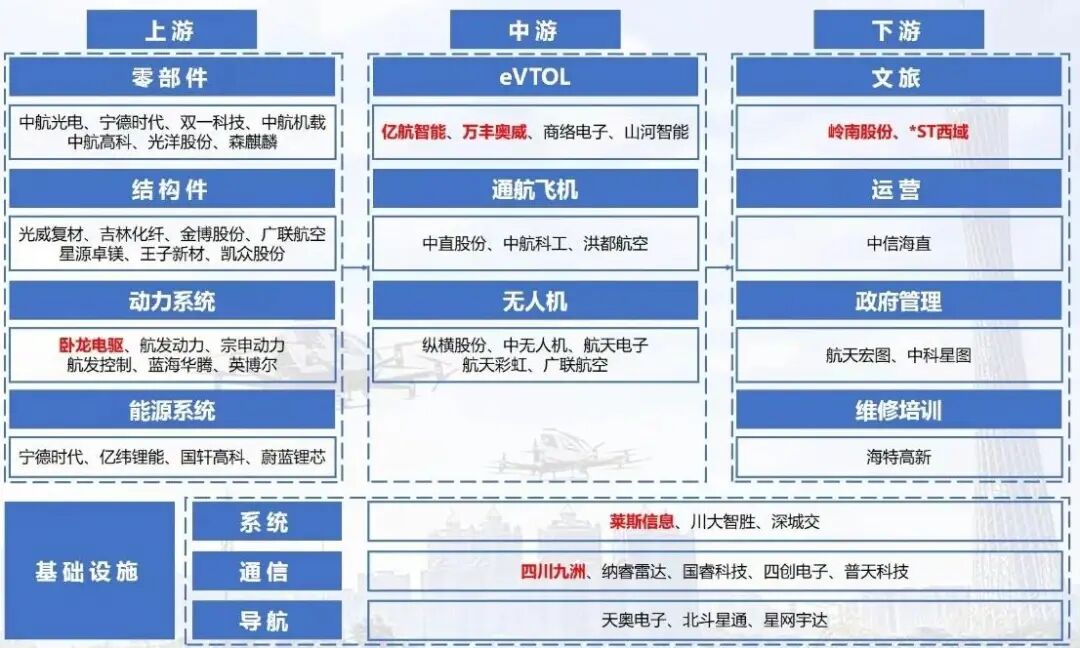
The boom in the low-altitude economy is fundamentally due to the superposition and resonance of policy, technology, and demand.
In the past, the approval process for low-altitude airspace was complex and costly, and most of the airspace was in a "frozen" state. Now, with the advancement of the airspace classification management reform, more and more low-altitude airspace is being released. At the same time, the improvement of battery energy density, the maturity of autonomous driving algorithms, and the improvement of communication and navigation systems have enabled low-altitude flight to move from "concept verification" to "commercial application."
From this perspective, the boom in the low-altitude economy has its internal logic: the combined result of airspace management reform and the improvement of technological maturity.
Investment Judgment: Between Hot Money and Calmness
The investment opportunities in the commercial space industry in 2026 are concentrated in four directions:
First, the domestic large aircraft industry chain. From engines, avionics systems to composite materials, every breakthrough in domestic production means market growth. Core enterprises in the industry chain such as AVIC Engine, AVIC Electronics, and AVIC Electromechanical have begun to benefit from the increasing production of the C919. The aviation manufacturing industry has high technological barriers, long certification cycles, and strong customer stickiness. Once a company enters the supply chain system, it can obtain long-term and stable orders.
Second, the infrastructure of the low-altitude economy. eVTOL manufacturing, low-altitude flight management systems, airspace monitoring equipment, and takeoff and landing station construction - this is a trillion-level market starting from scratch, which requires a large amount of infrastructure investment. Referring to the development of the civil aviation industry, infrastructure construction often precedes the explosion of application scenarios. Those who can pre - layout the "water, electricity, and coal" of the low-altitude economy will gain an advantage in future competition.
Third, the application end of the satellite internet. Although launching rockets and networking satellites are important, the real commercial value lies in applications - vehicle networking, the Internet of Things, maritime communication, and emergency rescue. The logic of the satellite internet is similar to the popularization of 4G and 5G networks: after the infrastructure is built, the applications and services based on the network are the real money-making directions.
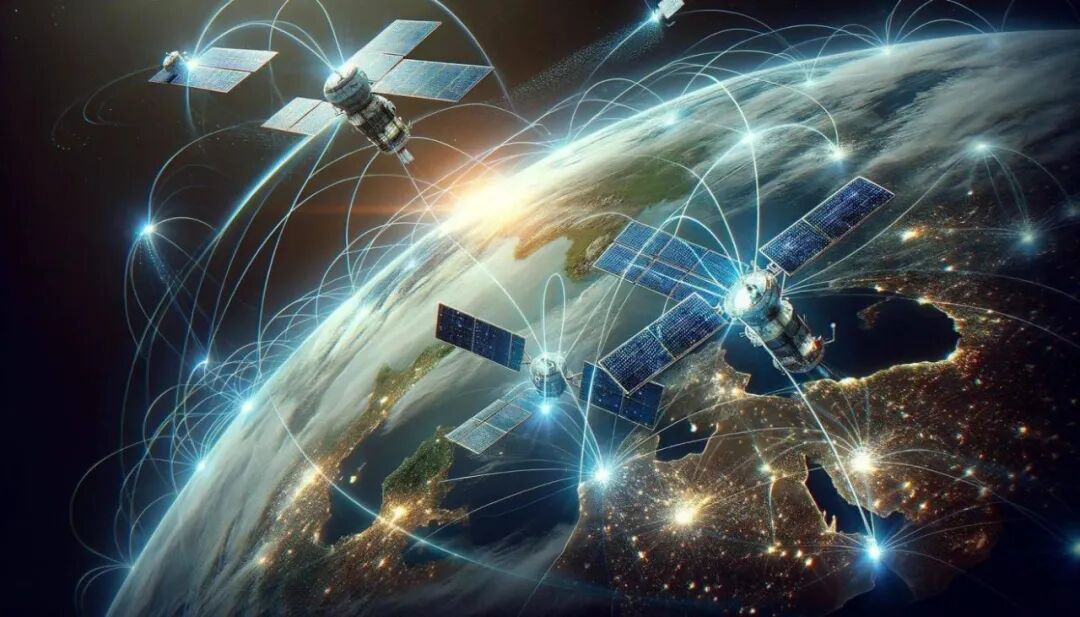
In the future, these 203,000 satellites will profoundly change our lives: ordinary mobile phones can directly connect to satellites in signal - blind areas such as the ocean, deep mountains, and deserts; autonomous driving can obtain all - weather high - precision positioning support; in case of disasters that paralyze the ground network, the satellite network can become the last "lifeline" for emergency communication.
Fourth, green aviation. Electric aircraft, hydrogen - powered aircraft, and sustainable aviation fuels - under the "dual carbon" goal, the green transformation of the aviation industry has become a global consensus. The International Air Transport Association has committed to achieving net - zero carbon emissions by 2050. This is a track with high technological barriers, strong policy support, and considerable long - term returns.
However, risks cannot be ignored.
Fast technological iteration and long profit cycles are the two core risks in the commercial space industry. The logic of this track is completely different from that of the Internet. It is impossible to quickly expand the scale by "burning money for growth." Every rocket launch and every aircraft delivery requires strict testing and certification. It often takes several years or even more than a decade from R & D to mass production.
In addition, the progress of policy implementation, the stability of the international supply chain, and the over - valuation of the market may all affect investment returns. The valuation of commercial space enterprises needs to find a balance between "technological advancement" and "commercial feasibility." An overly high valuation may over - draw the future growth space, while an overly low valuation may not reflect the value of technological innovation.
Anyway, in 2026, China's commercial space industry is changing from being "out of reach" to being a "profitable business that can be calculated."
The rise of the industry is just around the corner. When the first stage of the Zhuque - 3 crashed 40 meters away from the landing point, the engineers were already analyzing the data and preparing for the next attempt. This rhythm of "trying again after failure" may be the real norm in the commercial space industry.