During the Spring Festival, robots are busier than humans. The rental fee of ten thousand yuan is gone forever.
During the Spring Festival in 2026, robots were “busier” than humans.
The dazzling performances of robots on the Spring Festival Gala stage have once again boosted the popularity of the robot rental market. The orders on the platforms soared, and the consulting calls kept coming in. Festival-related scenarios have become the core of the demand. However, a reporter from Star Market Daily found in an investigation that recently, in sharp contrast to the booming demand, the rental prices of robots are still far from reaching last year's “sky-high prices of ten thousand yuan”. An increase in quantity and a decrease in price have become the prominent features of the current market.
With the explosion of demand, the industry landscape of the robot rental market has also witnessed new changes. Platform-based players have entered the market in a high-profile manner, pushing the once chaotic “free-for-all” market towards standardized competition. Moreover, consumers' mentality of “just having a taste of novelty” has also cast doubt on the sustainability of this business.
After the boom subsides, how far can the robot rental market really go?
Robots' Popularity Soars During Spring Festival: More Inquiries and Surge in Orders
“After the Spring Festival Gala drove the robots to become popular again, there have been more people inquiring about our rental services,” a staff member of a robot rental company told a reporter from Star Market Daily. Customers usually choose two or three humanoid robots and a few robotic dogs to achieve the best on-site effects.
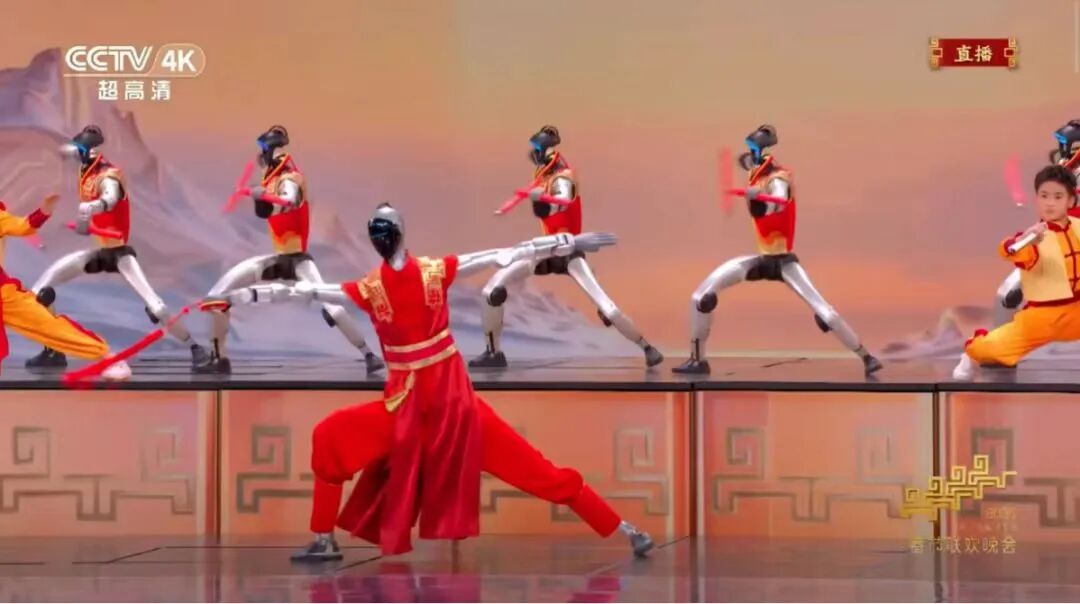
On the stage of the 2026 Spring Festival Gala, four companies, Unitree Technology, Magic Atom, Galaxy General, and Songyan Power, presented their robots collectively. From martial arts performances to skit interactions, the complexity and coordination of the robots' movements have been significantly improved compared to last year. While bringing many surprises to the audience, they have also sparked another wave of robot fever.
Data from Qingtianzu, a robot rental service platform, shows that during this Spring Festival (from the first to the seventh day of the first lunar month), the platform's orders increased by nearly 70% compared with the previous period. In terms of rental purposes, the demand for entertainment performances was the strongest, accounting for 34%. Commercial marketing accounted for 31%, educational and cultural tourism functions accounted for 19%, and life events and emotional consumption accounted for 16%. Qingtianzu previously estimated that by the end of the Spring Festival holiday, the cumulative number of orders on the platform was expected to exceed 5,000.
Looking at specific scenarios, festival-related demand has become the core driving force. Qingtianzu revealed that orders related to festival scenarios such as “New Year greetings, temple fair and lantern festival parades, and shopping mall Spring Festival activities” accounted for more than 54%, with a month-on-month increase of more than 76%, becoming the core driving force for robot rental demand during the Spring Festival.
Li Yiyan, CEO of Qingtianzu, said, “The Spring Festival is the most important emotional node in China and also an important window for robots to enter real-life scenarios. This year, we have clearly felt that robots are no longer just for stage shows or technological symbols. Instead, they are starting to be integrated into specific applications such as New Year greeting interactions, shopping mall activities, and cultural and tourism parades.”
It is worth noting that despite the booming demand, the rental prices of robots have not skyrocketed as they did last year. An increase in quantity and a decrease in price have become the main theme of the market.
Several staff members of rental companies told a reporter from Star Market Daily that currently, the daily rental price of mainstream humanoid robots generally ranges from 3,000 yuan to 5,000 yuan, which is less than one-third of the price after last year's Spring Festival.
A staff member of a rental company told a reporter from Star Market Daily that taking the Unitree G1 - EDU2 dancing robot as an example, “The daily rental price is 3,000 yuan. The official dances are free. If you want to develop customized dances separately, it will cost an additional 500 yuan per robot. The operator's fee is 500 yuan per person.”
He further told the reporter that during the peak period from the Spring Festival to the Lantern Festival, the rental price of each humanoid robot will temporarily increase by 1,000 yuan and will return to the original price after the Lantern Festival.
Meanwhile, since most rental companies currently have sufficient robot reserves, there has not been an overall situation of supply falling short of demand as there was after last year's Spring Festival. According to a reporter from Star Market Daily, although reservations in advance are still required, some rental companies still have available schedules within a week recently.
Regarding this phenomenon, Yu Yiran, Managing Director of CIC Consulting, analyzed in an interview with a reporter from Star Market Daily that “an increase in quantity and a decrease in price” is essentially the result of the current market supply and demand, and the market is entering a more accessible cultivation period.
“From the supply side, with the improvement of the maturity of its industrial chain, the decline in prices and the release of production capacity have jointly promoted the continuous improvement of market supply. At the same time, the key costs of core components and other factors have gradually decreased. Coupled with the improvement of the automation level on the manufacturing side, there is further room for the depreciation, maintenance, and capital costs of the whole machine to decline, thus exerting structural downward pressure on rental prices,” Yu Yiran said.
The Rise of Rental Platforms: From a “Free - for - All” Market to Standardized Competition
This Spring Festival, another change is also worth noting. The establishment of robot rental platforms is accelerating the transformation of the market from a past “free - for - all” market to platform - based competition.
On December 22, 2025, Zhiyuan Robot launched the “Qingtianzu” open - style rental platform, adopting the “shared rental + platform - based scheduling” model. Its slogan is to make robot rental as convenient as “shared power banks”. Less than a month later, the “Wanjiyi Rent” platform also made a high - profile debut, claiming to break the industry pain points of “heavy - asset procurement and high - threshold use” of robots. JD also launched a robot rental service, and its turnover of the rental business increased by more than 100% month - on - month in January this year.
With the successive entry of multiple platforms, some voices in the outside world believe that the “Didi model” in the robot industry is gradually taking shape. However, for countless scattered small and medium - sized rental enterprises, this wave of platform - based development is a “dimensionality - reduction strike”.
This impact is first reflected in the overwhelming advantage on the supply side. Limited by procurement costs, most small and medium - sized rental enterprises can only purchase a small number of popular models at their own expense. The choices they can offer to customers are often concentrated on a few popular products such as Unitree robots.
A reporter from Star Market Daily noticed that Qingtianzu has currently integrated the models of seven embodied intelligence manufacturers, including Zhiyuan, Accelerated Evolution, Unitree Technology, Lingchu, and Zhujidongli, with prices ranging from tens of thousands of yuan to thousands of yuan. Users can flexibly screen according to their budgets and scenarios. This “one - stop shopping” experience is beyond the reach of scattered merchants.
In addition, platforms can establish more complete service standards. From customized development, professional operation to fault repair, platforms have the resource advantages that small and medium - sized rental merchants can hardly match, thanks to their backing by robot enterprises. For example, PICC Property and Casualty has reached a cooperation with Qingtianzu to launch customized risk protection for robots, including protection for the loss of the robot body and liability protection for third - party economic compensation.
More importantly, platforms are reshaping the industry's cost structure through the economies of scale. It is reported that Qingtianzu can currently dispatch more than 3,000 robots, and its service network covers more than 100 cities across the country. This also means that the platform can reduce cross - provincial transportation costs through regional scheduling and lower operation and maintenance expenses through centralized procurement. These cost advantages will ultimately be transformed into price competitiveness, further squeezing the living space of small and medium - sized merchants.
It is worth noting that Yu Yiran, Managing Director of CIC Consulting, told a reporter from Star Market Daily that the entry of platform - based players can bring the robot rental market into a more standardized and transparent stage.
“For small and medium - sized rental merchants, the downward shift of the industry price center and the intensification of competition may bring certain operational pressure in the short term. However, in the long run, platform - based development is also reshaping the value - acquisition mode,” Yu Yiran believes. “Overall, platform - based development will accelerate the industry reshuffle and promote the market competition to gradually upgrade from 'equipment supply competition' to 'comprehensive service and delivery ability competition', which is conducive to the more standardized and sustainable development of the industry.”
How Long Can the Rental Business of “Selling Novelty” Last?
From “doing the yangko dance” on the 2025 Spring Festival Gala to “performing martial arts and making dumplings” on the 2026 Spring Festival Gala, robots have achieved a technological leap in one year and have changed from “rare guests” to “regulars” on the stage.
However, behind the glory on the stage, a deeper problem lies in front of the industry. Is the current booming rental demand a sustainable market or just a passing fad of “selling novelty”?
Some consumers frankly told a reporter from Star Market Daily, “I thought it was very novel to see a robot wave its hand last year, but now I won't deliberately take out my phone to record it.” This subtle change in mentality is exactly the hidden worry that the robot rental market must face. When the audience's sense of novelty gradually fades, how can the rental market achieve sustainable development?
There are also voices in the market saying that so far, the robot rental business is essentially a “novelty - seeking” business. Whether it is for attracting customers in shopping malls, corporate annual meetings, or adding fun to weddings, the core value of robots lies in their rarity and novelty rather than practicality and efficiency. This demand structure determines its fragility. Once robots become ubiquitous, the customer - attracting effect will be greatly reduced.
Yu Yiran told a reporter from Star Market Daily that to achieve long - term healthy development, the robot performance rental industry needs to gradually shift from being “novelty - driven” to “sustainable - value - driven”. The key lies in the coordinated breakthroughs in three aspects: technological maturity, reduction of comprehensive costs, and innovation of business models.
At the technical level, the core is to improve the system stability and the autonomous execution ability in complex environments. The industry needs to accelerate the engineering implementation of “brain - cerebellum coordination” to enable robots to achieve stable, safe, and repeatable action performances in complex and interfering environments and form a continuous optimization closed - loop of “data feedback - model iteration - skill reuse”, thereby reducing the dependence on high - intensity manual intervention.
From the cost perspective, the robot industry needs to reduce the delivery costs, including costs for choreography, training, and operation and maintenance, and avoid high - intensity manual intervention. For business models, it is necessary to avoid price wars. The core is to make customers continuously pay for the deliverable effects and hassle - free services, rather than just the rental of the machines.
This article is from the WeChat official account “Star Market Daily”. Author: Li Jiayi. Republished by 36Kr with permission.