A post-90s "North Drifter" with a debt of 500,000 yuan turns things around in Hengdian through short dramas.
Near the Spring Festival in January, Du Cheng still started filming a new movie.
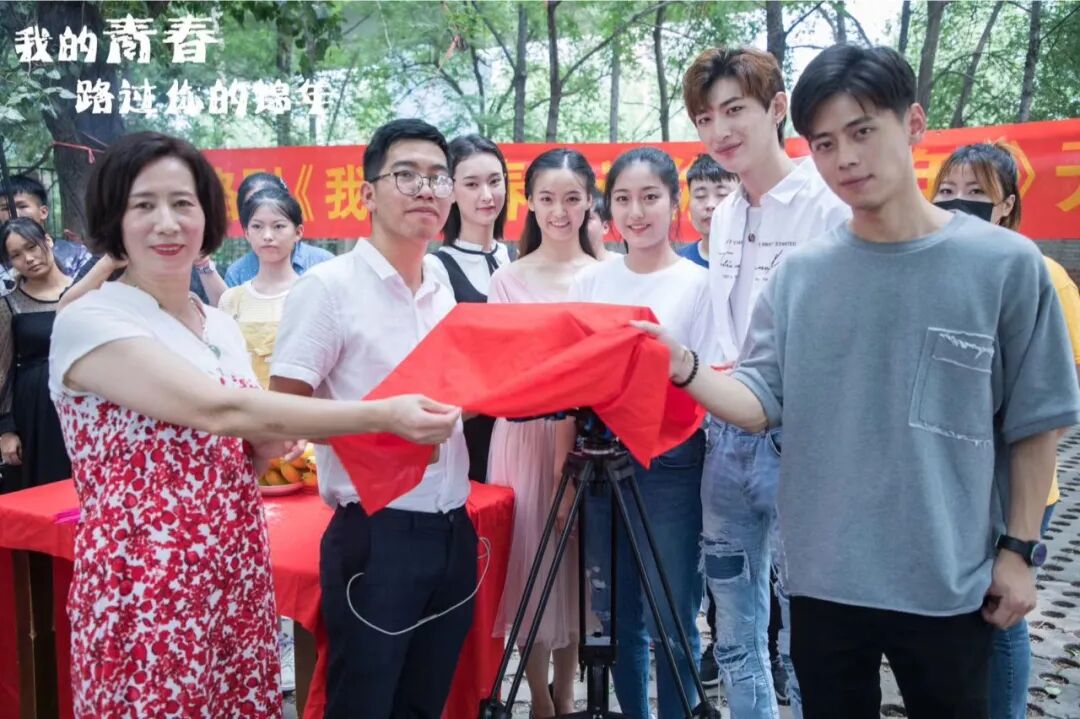
This is his dream. The movie is adapted from the novel "My Youth Passed by Your Splendid Years" he wrote in 2018. The novel had previously been adapted into an online big movie, an online drama, and a short drama. This time, it's taking the next step - shooting a theatrical movie. Going back to the day five years ago when he was forced to leave Beijing with a debt of 500,000 yuan, he couldn't even imagine it.
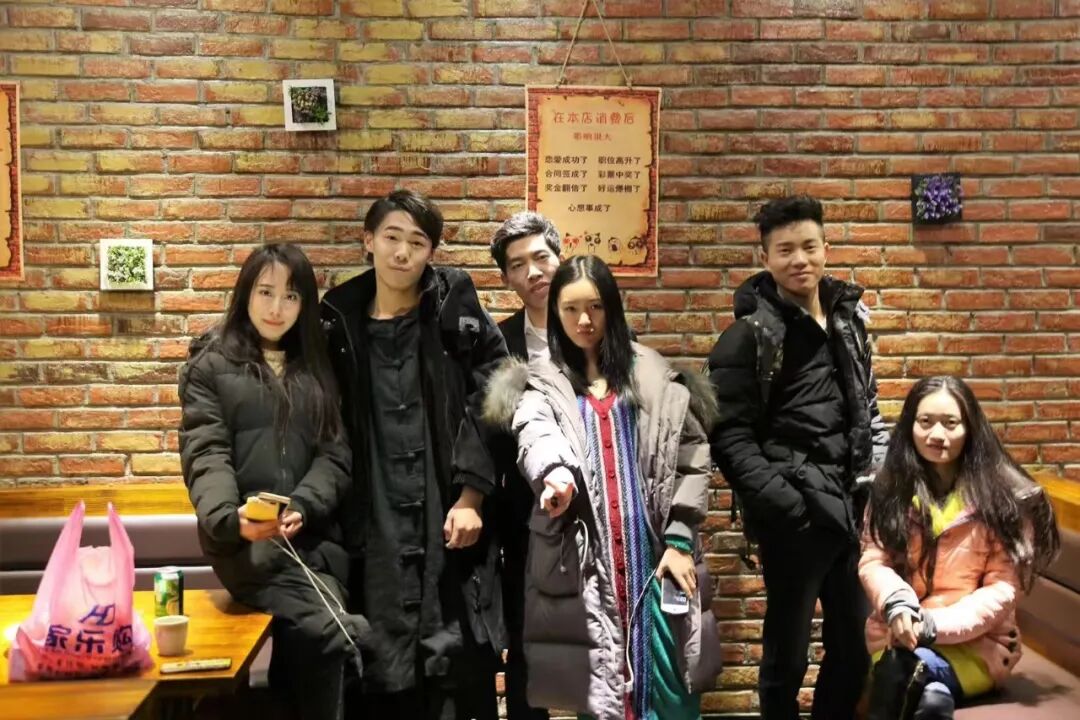
In the dream - making film and television industry, some rely on capital, some rely on talent, while Du Cheng forged a path out of the "mud" by sheer perseverance. Born in 1991 in a village in Mingguang City, Anhui Province, the hometown of Zhu Yuanzhang, his family's financial condition was limited, but he always had a dream in the arts since childhood. During his studies at Anhui University of Science and Technology, he published many poems. At that time, he considered himself a "promising post - 90s poet". After graduating in 2012, despite his father's opposition, he gave up his teaching job and embarked on the "North Drifting" journey with a passion for literature and movies.
However, reality gave him a heavy blow: he was cheated out of money by a "fake film crew", driven away by urban management when setting up a street stall, and barely made a living by pasting phone screens. In order to make a movie, he exhausted all his resources, crowdfunded, and borrowed money. Although his work was finally released with great difficulty, it didn't bring much economic gain. What followed was a heavy blow to his life: a hasty marriage and divorce, raising his daughter alone, and being burdened with a debt of 500,000 yuan.
In 2021, he left Beijing and went south to Hengdian. In this town known as the "Oriental Hollywood", he caught the wave of the short - drama boom. He transformed from film and television production to copyright distribution. With a highly cost - effective "buy - out" strategy and a tenacious pursuit of all channels, he successfully seized the growth dividends of short - drama platforms like Hongguo, and staged a comeback in life. In 2025, he distributed nearly 150 short dramas, with an annual revenue of nearly 500,000 yuan. He completely paid off his debts and even had the confidence to invest in a theatrical movie.
Du Cheng's story is a grass - roots entrepreneurship history full of resilience, and also a microcosm of the rapid development of China's short - drama industry in recent years, reflecting how an emerging industry can change and influence the fates of millions of ordinary people.
The following is Du Cheng's account (edited and abridged):
Surviving by Pasting Phone Screens
I'm Du Cheng, born in Mingguang, Anhui in 1991, the place where Zhu Yuanzhang was born. I majored in Chinese in college. I loved writing poems at that time, served as the president of the literature club, and my works were also published in "Poetry Magazine". In college, I watched "Beijing Love Story" written, directed, and starred by Chen Sicheng. I was very yearning for Beijing and was determined to make a career there.
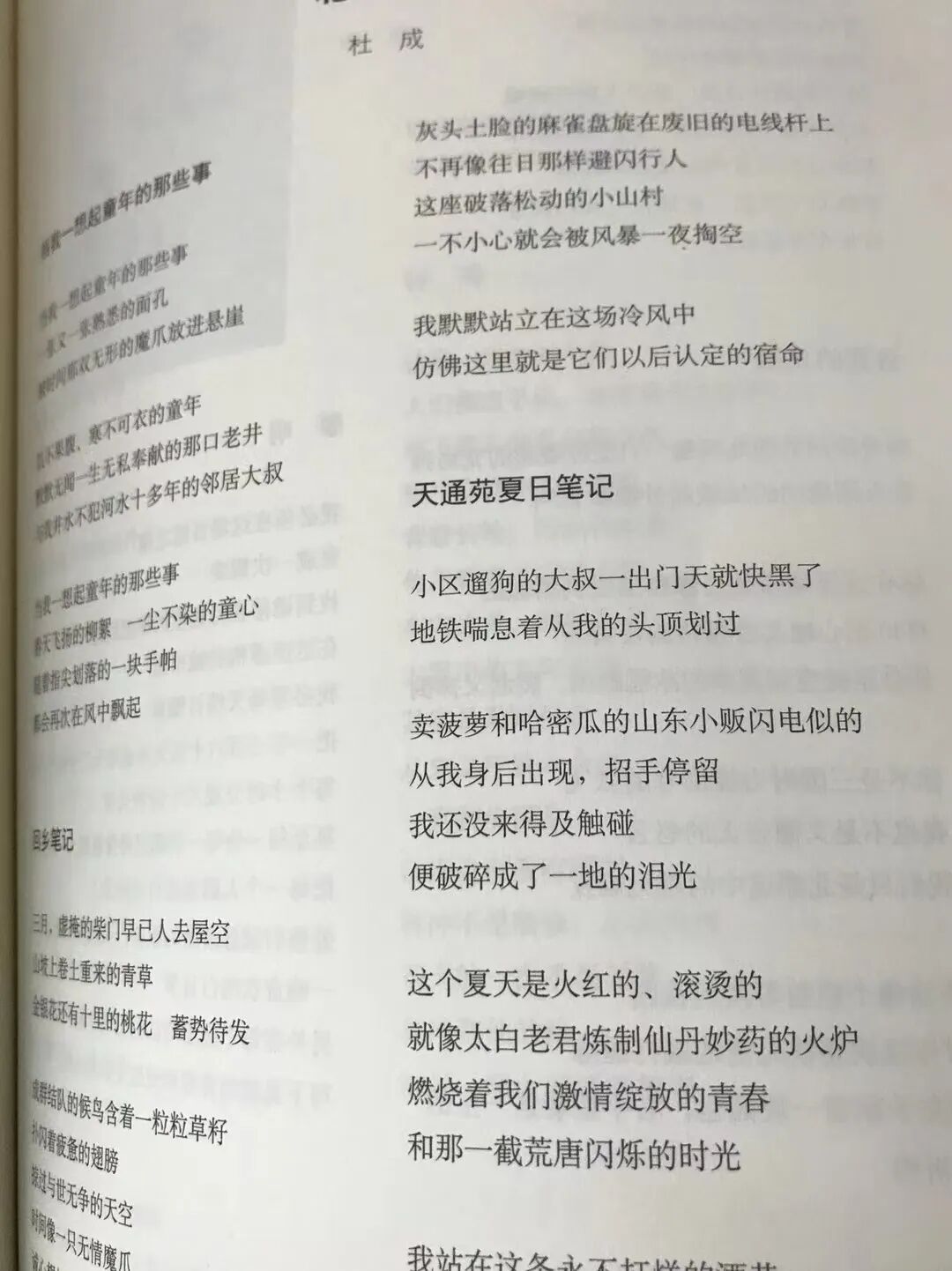
Right after graduation, I and my classmates were recommended by the school principal to intern at a primary school in Hengdian, Jinhua, Zhejiang. It was my first time in Hengdian. The conditions were very tough at that time. The dormitory in the private school was even built with wooden walls, and I didn't feel safe sleeping at night.
After about a month of internship, I saw a recruitment notice for group actors online - with a monthly salary of 5,000 to 10,000 yuan and accommodation and meals provided. I told my classmate that I was going to Beijing to be an actor. He laughed at me and said it was a joke for someone like me to be an actor. I was not convinced and still took all my belongings, 500 yuan, and took a more than ten - hour train to Beijing.
It turned out to be a fraudulent company. They asked for clothing fees, confidentiality fees, and training fees. At first, they asked for two or three thousand yuan. Later, seeing that I had no money, they asked how much I had. I only had 113 yuan left on me, and finally, 100 yuan was cheated from me. That night, I realized something was wrong - many boys and girls said they came to be "extras", but after paying the money, they couldn't get any acting opportunities, and some couldn't even get their salaries.
After being cheated, I faced setbacks everywhere in Beijing. First, I went to find a buddy who worked as a security guard at Peking University. He had bought my poetry collection. He advised me to be a security guard, but maybe I spoke too arrogantly during the interview and offended the security team leader, so I didn't succeed. Later, I started setting up street stalls, selling socks, fruits, potatoes, and tea. I even handed out flyers and delivered takeaways, but I couldn't earn much money. In winter, I couldn't even afford a down jacket, only a vest. I set up a stall at the subway entrance and my hands and feet were numb from the cold.
What really allowed me to survive in Beijing was pasting phone screens.
In the winter of 2012 at Tiantongyuan Subway Station, I met a young man from Inner Mongolia named Zhang Fei who was pasting phone screens. He earned hundreds of yuan in an hour. At that time, I was setting up a stall next to him selling phone cases and only sold a few a day. At first, I asked him for advice, but he was reluctant to teach me. Until one day, a man suddenly kicked over our stalls, saying that we were encroaching on his territory. I immediately stood up and stopped him with Zhang Fei. Seeing that we were determined, the man left.
Later, Zhang Fei was willing to let me watch and learn from him. Three days later, I set up my own stall on an overpass. Pasting phone screens seems simple, but it's actually not easy. At that time, we used three - layer phone screens and needed to scrape them with an 11 - numbered surgical blade. Once, I scratched a customer's brand - new phone, and the customer called the police. I was really scared at that time. The police came and said it was a civil dispute and not under their jurisdiction. Later, I went to the mall to buy a phone case for the customer and pasted a new screen, and the matter was settled.
The cost of phone screens is very low, at most 5 to 10 yuan, so the profit is quite good. I could earn a little over 10,000 yuan a month at most, and at least 6,000 to 7,000 yuan. In 2013, I even opened a phone accessory store of more than ten square meters.
I think the most important thing in doing business is sincerity. I often gave away dust plugs and phone cases to customers as a discount. If the pasted screen had bubbles, I would clean it for free or replace it. This kind of "self - sacrificing" sincerity laid an important foundation for my later life.
Click on the cover to subscribe to the annual magazine
An Indestructible Dream
A customer who worked as a screenwriter in a film and television company gave me a book called "Screenwriting: Step by Step". He asked me to be his "ghostwriter" to write a script, paying me but not giving me credit. At that time, I was writing my first long - length novel "My Youth Passed by Your Splendid Years", so I refused. After finishing writing, I approached several publishers, and they all said that since I had no fame, I could only publish it at my own expense, which would cost tens of thousands of yuan. I didn't have that much money, so I put it aside for the time being.
2016 was a turning point. Another customer who I pasted phone screens for was a "group leader". He took me to some regular film crews to be an extra. I went to the crew of "The Way of the Mother" directed by Guo Jingyu and worked there for three days. That was my first real contact with a regular film crew. Gradually, an idea came to me: If I adapted my novel into a movie and released it like Guo Jingming and Han Han did, and directed it myself, would it be a different life?
First, I needed to write the script. I read the book "Screenwriting: Step by Step" so many times that the cover fell off. I also went to Hengdian to be an extra for more than a month to understand the production and on - site shooting.
After finishing the script, the biggest problem was money. I originally wanted to crowdfund, but I only raised more than 3,000 yuan on the crowdfunding platform. I was very frustrated and posted a status on my WeChat Moments. Unexpectedly, an old customer named Li Junling saw it and contacted me voluntarily, saying that she and her younger brother were willing to invest 100,000 yuan.
I had pasted phone screens downstairs of Li Junling's house for two years, and she always came to me to paste screens. She was 20 years older than me, born in 1972, and mainly engaged in agency bookkeeping and financial management. I called her Sister Li. Because I was serious about pasting screens and had a good service attitude, she thought I was reliable and was willing to trust me. At that time, I told her that if the first movie was successful, we could all make money. If it wasn't, we could at least gain some fame. In fact, I had no idea how to make money from movies. I just wanted to be a director because I thought the crew would listen to the director, which was very fulfilling.
It was a complete makeshift crew. To save money, I got venue sponsorship from my alma mater and hired a cheap photographer and makeup artist in Hengdian for four or five hundred yuan a day. After shooting, I found that all the money was spent, and there was no money left for post - production editing. I made money while asking a fellow - townsman to help me edit part - time. He spent more than half a year in his spare time doing a rough edit. Later, because the pictures weren't color - adjusted, it didn't pass the review of the video platform.
I complained on my WeChat Moments, which attracted Lao Tian, the apprentice of Director Jia Zhangke. He was very generous and came all the way from Yuncheng, Shanxi to Beijing without charging a single cent. He stayed at my place for 7 days and helped adjust the film to the classic color tone like "The Lost Tomb", and then it passed the review of iQiyi.
On October 8, 2017, the online movie "My Youth Passed by Your Splendid Years" was released on iQiyi. Although I only earned a few thousand yuan in the end, I thought at least I had taken the first step.
After making the movie, I spent another two years publishing the novel. In June 2018, "My Youth Passed by Your Splendid Years" was officially published, and a second edition came out the next year. I held more than a dozen book - signing events, but publishing the book didn't make much money either. I got a small amount of royalties each time it was printed, only a few thousand yuan each time. Over the years, I only sold a few tens of thousands of yuan worth of books. I wanted to follow the path of combining literature and business like Guo Jingming and Han Han, but the reality was harsh, and I could only make a living by pasting phone screens part - time.
My career was not going well, and my family also underwent a major change. In 2018, I got married in a hurry to my ex - wife after knowing her for less than three months. The money for buying a house and the betrothal gifts were all borrowed. During the pandemic, I had no income for a long time. The credit card debts, consumer loans, and the mortgage for the house in Anhui added up to a debt of up to 500,000 yuan. At the most difficult time, I couldn't even take out 100 yuan. Finally, in 2021, my ex - wife went back to Jiangxi, and we divorced by agreement.
I thought I had been in Beijing for almost ten years, but I didn't make any money and my family was broken. My mind was full of painful memories, and it was meaningless to stay there any longer. So I gave up my dream of achieving a great career in Beijing and went south to Hengdian. The school where I interned in 2012 was near the Ming and Qing Palaces in Hengdian. After going around in a circle, I was back at the "starting point". Maybe this is the arrangement of fate.
A "Comeback"
Actually, what prompted me to come to Hengdian was not only to escape from emotional problems but also because the film and television production cost here is low. It's very convenient to find people, equipment, and studios, and the network circle is also better for getting business.
I had been exposed to short dramas early on. In 2020, Baidu had a short - drama app called "Fanle", which promised a guaranteed payment of more than 10,000 yuan per episode. I went to shoot for it, but the business closed soon after. Later, Jiuzhou also asked me to shoot. I shot 34 episodes of "The Wealthy Son - in - Law", but I didn't earn much money. I found that if we were the production contractor, the platform would be the one making money in the end, and we had to advance money for shooting. We had to hand in the film within 15 days. If we didn't, we had to pay a penalty of 150,000 yuan. We couldn't make money and even had to pay the platform. It was really not cost - effective.
I resolutely transformed into distribution. During my time as a director, although I didn't have much money, I always entertained my friends when they came to Hengdian. I was willing to give up immediate interests and valued long - term cooperation, so I accumulated a good network. Many dramas, after their first - round broadcasts on the platform and getting back the cost, the producers didn't care about the second - round copyrights. I would buy these second - round copyrights.
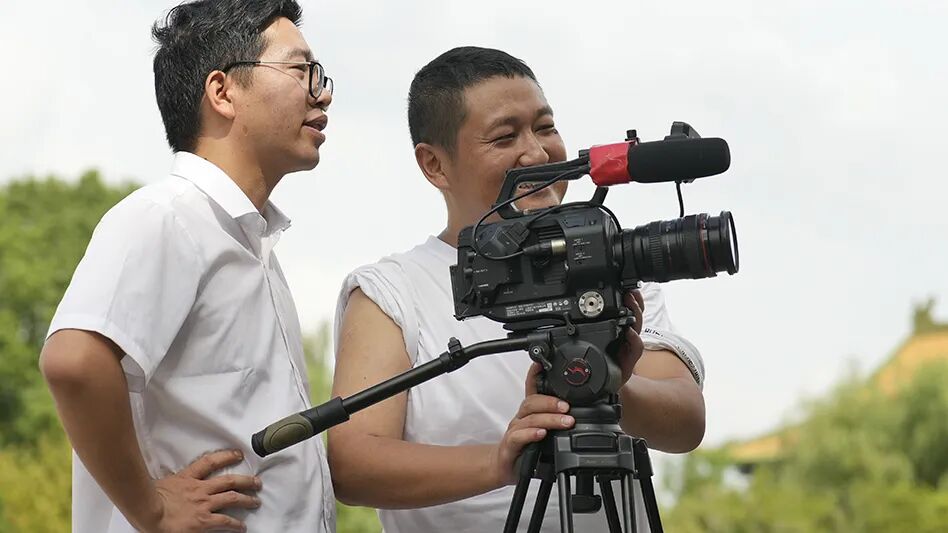
I have a secret weapon when buying dramas: while others wait for the platform to review and release the drama before making the payment, I dare to pay in one lump sum to buy out the rights as long as I confirm the contract, get the finished film, and the poster materials.
In terms of channels, I opened them up one by one myself. Some were established through exchanges with iQiyi, Youku, and Tencent. Some were recommended by friends. For channels like IPTV and Meituan, I bought the contact information from a young man in Jiangsu with an 88 - yuan red envelope and then negotiated successfully. Hongguo is now my most important channel. For dramas bought out for a few thousand to tens of thousands of yuan, I can sometimes get more than 20 times the return.
One of my proudest things last year was distributing 150 dramas. This data is quite good among the distribution companies in Hengdian.