With annual sales of 27 million vehicles, China's automotive industry claims another world championship.
In 2025, the total global sales of Chinese automakers reached 27 million vehicles, defeating the Japanese automakers who had dominated this list for over 20 years for the first time and winning another world champion title!
Why "another"?
Because in 2025, China exported 8.32 million vehicles, firmly holding the world champion position. Sorry, it was also Japan (4.21 million vehicles) that was surpassed for the third consecutive year.
Before having time to celebrate for 2025, nine automakers have already announced their overseas sales targets for 2026:
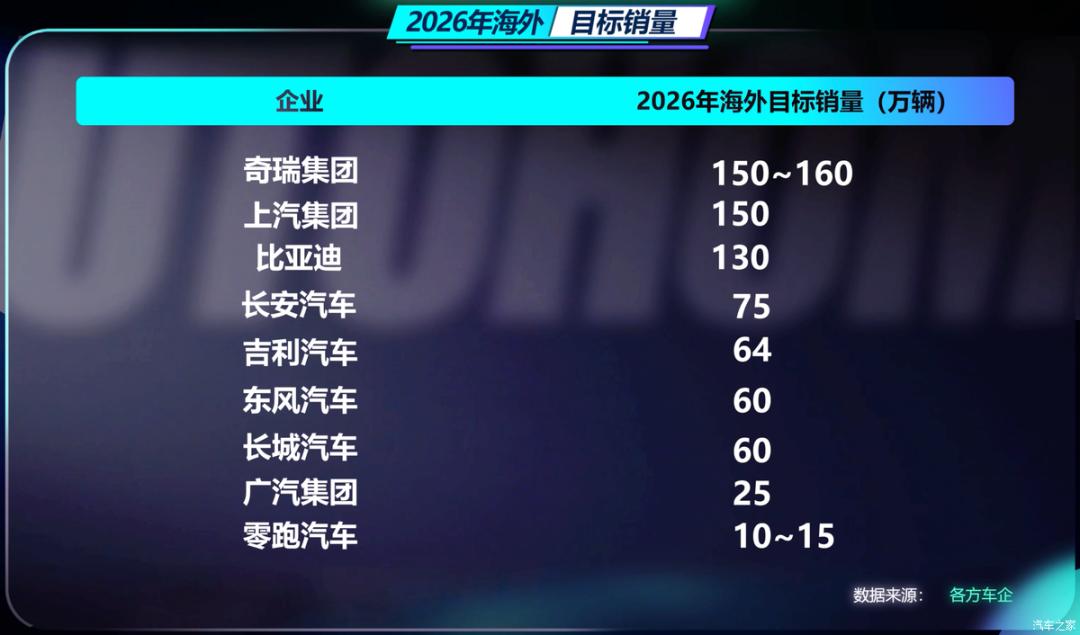
The highest targets are set by Chery and SAIC, both aiming for 1.5 million vehicles; BYD is not far behind, targeting 1.3 million vehicles; Changan aims for 750,000 vehicles, Geely 640,000 vehicles, Dongfeng and Great Wall both 600,000 vehicles, and GAC 250,000 vehicles.
Leapmotor is the only new - force automaker brave enough to announce an export target, aiming for 100,000 - 150,000 vehicles.
Adding to this, there are automakers like BAIC, which exported over 500,000 vehicles in 2025, and XPeng, which exported over 40,000 vehicles, that haven't announced their targets. It seems almost certain that China's automobile export volume in 2026 will exceed that of 2025.
Are these automakers getting carried away? How can they achieve their overseas targets? Today, let's have a chat about it.
A 30% increase? Not in the top ranks
After seeing the performance of Chinese automakers in the past year, you won't think their export targets are exaggerated.
In 2025, the overseas sales of Chery, SAIC, and BYD all exceeded 1 million vehicles.
Chery sold 1.34 million vehicles overseas, nearly half of the company's total sales, ranking first in China's automaker export volume for the 23rd consecutive year, with a growth rate of 17%.
When it comes to the growth rate, BYD really shines. With a little effort, it achieved a 145% growth!
It only took BYD four years to go from having almost negligible overseas sales to selling over a million vehicles a year.
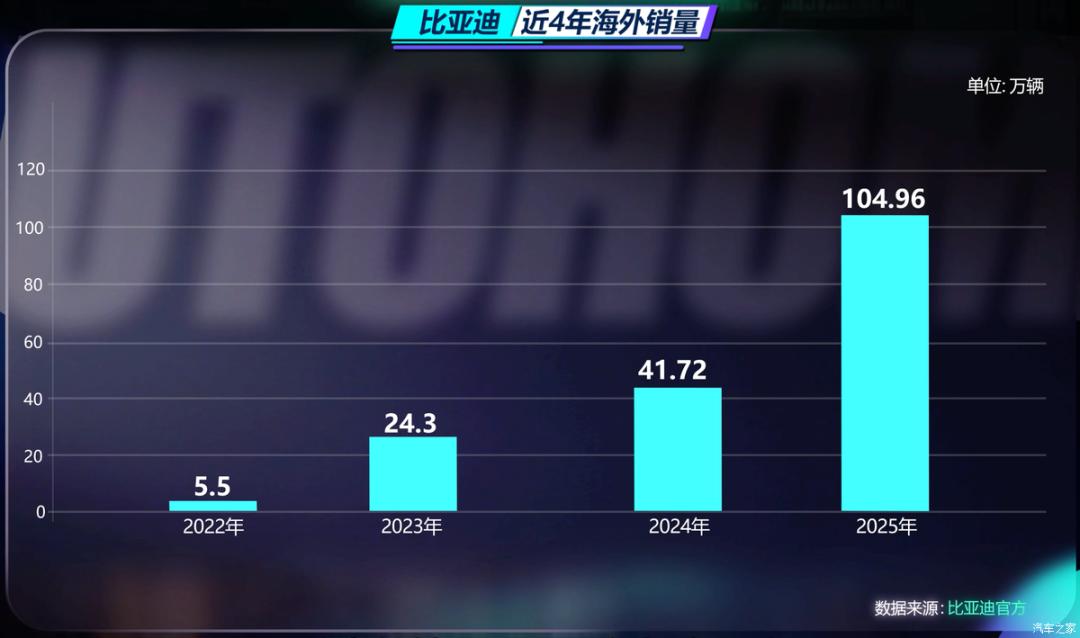
Not only the above - mentioned automakers, but in 2025, a large number of Chinese automakers such as Changan, Geely, Great Wall, and GAC all witnessed double - digit growth overseas. A 30% growth rate couldn't even make it into the top ranks.
After all, in 2025, China's automobile export volume increased by 29.9% year - on - year. In December alone, China's automobile export volume reached as high as 994,000 vehicles, a year - on - year surge of 73.2%.
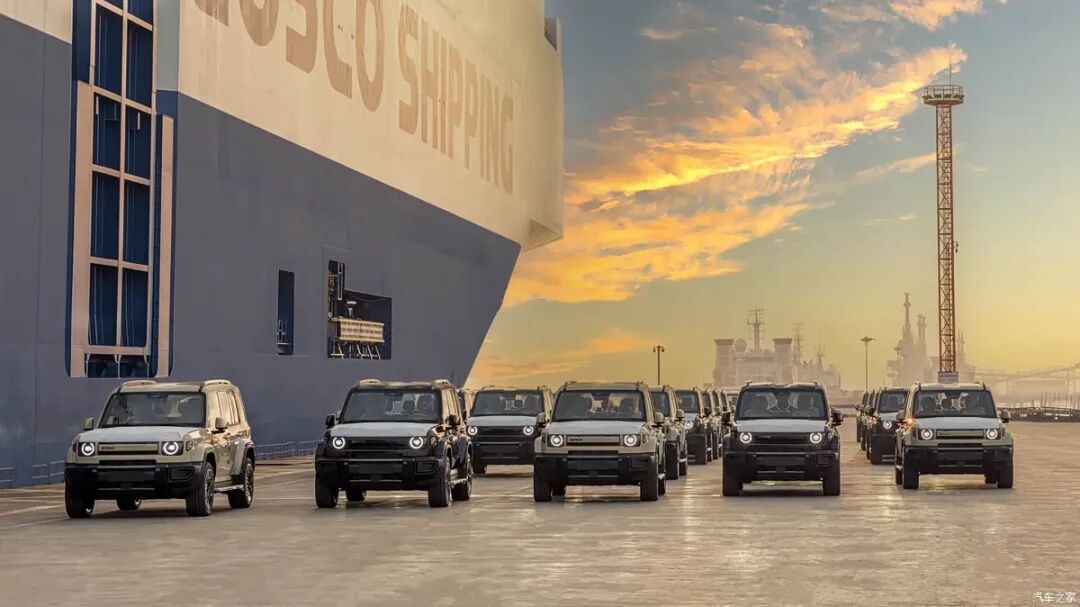
Some insiders from BYD also said privately when talking about the new - year target of 1.3 million vehicles in 2026: It's quite conservative.
Even overseas institutions think so. Bloomberg reported: "There is no difficulty in achieving this target." Goldman Sachs said that BYD's overseas sales in 2026 can "at least" reach the targets of Chery and SAIC - 1.5 million vehicles.
Judging from this momentum, are you also more confident about the overseas targets of Chinese automakers?
Don't get too excited yet. There's more good news!
Zero - emission regulations make Europe and the US look awkward
What's more remarkable than the total export volume is that in 2025, China's new - energy vehicle export volume reached 3.43 million vehicles, a year - on - year surge of 70%.
In the past few years, more and more consumers in countries and regions around the world have been attracted to electric vehicles.
Let's not even mention those small Nordic countries. Even in major developed countries, the favorability towards new - energy vehicles is getting higher and higher.
In 2025, the sales of plug - in hybrid vehicles in Australia increased by 130.9%, directly pushing the market share of Chinese vehicles to 20.4%, ranking second. Among the top ten local automobile brands, three are Chinese brands.
In 2025, the market share of electric vehicles in the European market reached a record high of 19%. Germany produced a total of 1.67 million electric passenger cars, a year - on - year increase of 23%, setting a new record and ranking second in the world.
How good is this second - place ranking in the world? Well... it's probably just a little more than one - tenth of China's.
Meanwhile, those overseas automotive giants are not very capable in the field of new - energy vehicles.
On February 6th, Stellantis announced a comprehensive strategic contraction and restructuring of its electric - vehicle business, which is expected to result in a non - cash loss of up to 22.2 billion euros.
Volkswagen, Mercedes - Benz, etc. have also postponed the target of achieving a 50% share of zero - emission vehicle sales.
Even the EU had to postpone the carbon - reduction targets previously imposed on automakers. Otherwise, European automakers might face a total fine of 4.2 billion euros, which is about 34.5 billion yuan.

In 2025, even Tesla, the "mentor" of China's new - force automakers, saw its sales decline for the second consecutive year, and the decline rate continued to widen.
What to do when your own people are not up to the task? There are two ways:
First, subsidies. At the beginning of 2026, the German government announced that the one - year - suspended subsidy for electric vehicles is back, with a maximum subsidy of 6,000 euros, equivalent to nearly 60,000 yuan.
Some Canadian government officials privately said that they are also considering resuming the purchase subsidy for electric - vehicle consumers, with a maximum subsidy of 5,000 Canadian dollars, which is about 25,000 yuan.
What's the second way? Ask the Chinese for help!
Good news keeps coming for Chinese cars
At the beginning of 2026, good news about Chinese cars going global has never stopped.
In 2025, the sales of Chinese cars in Europe reached 811,000 vehicles, and the market share rose to 6.1%.
In January, China and the EU reached a consensus on the price commitment for Chinese - made pure - electric vehicles exported to Europe. This means that Chinese automakers can keep the money they earn in Europe.
At the beginning of February, data released by Germany showed that BYD sold more than 2,600 vehicles there in January, more than twice that of Tesla.
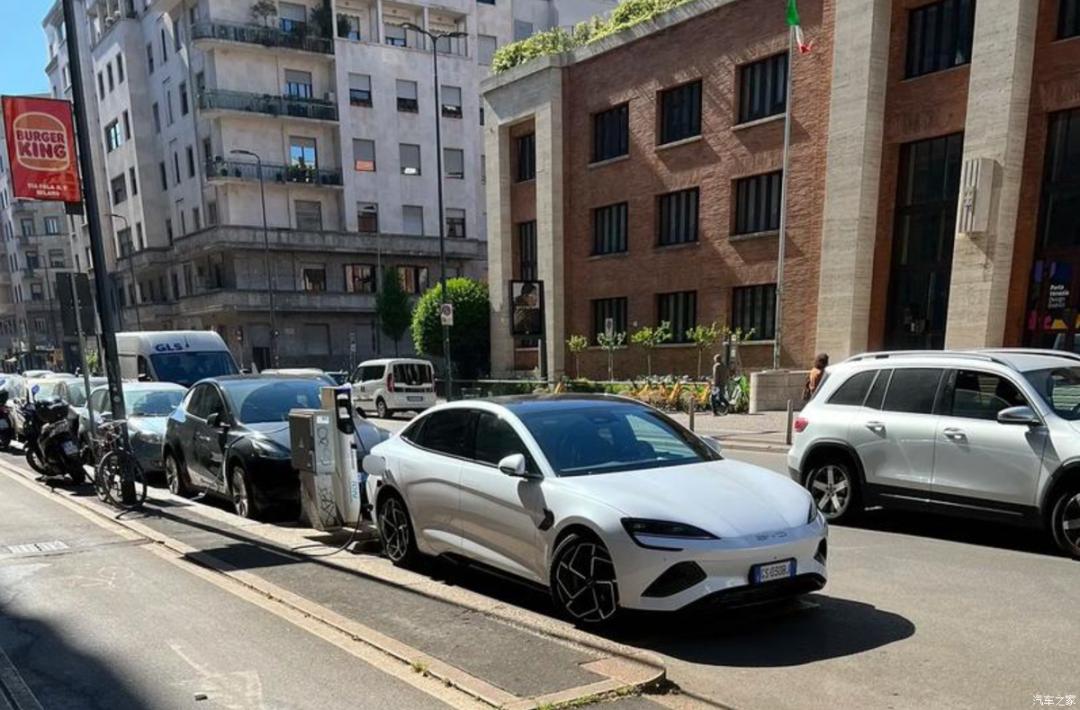
The market in the Americas is also opening up wider.
In 2025, Mexico surpassed Russia to become the largest market for Chinese automobile exports. However, its sudden move to impose a 50% tariff at the end of the year to please the US was a bit excessive.
BYD is also accelerating the construction of its local supply chain in Brazil and plans to become the top - selling automaker in Brazil by 2030.
Canada can't sit still either. Bloomberg reported that in January 2026, Canada reached an agreement with China, allowing Chinese automakers to export 49,000 electric vehicles to Canada at a preferential tariff rate of 6.1%.
Some local government officials also revealed that Canada is open to Chinese companies building automobile factories locally, but with some restrictions, such as using local software or establishing joint - venture companies with local enterprises. Look, it's so similar to China in the past when its automobile industry was underdeveloped.
The stubborn US was sued by BYD in January. BYD believes that the high tariffs imposed by the US on auto parts from Canada, Mexico, Brazil, etc. are illegal.
Also at the beginning of 2026, IM Motors, the high - end electric - vehicle brand of SAIC, successively entered the UAE and Tunisia. Grab, the largest ride - hailing and food - delivery platform in Southeast Asia, announced that it will become the exclusive local distributor of Hesai Technology, a Chinese lidar company.
Chinese cars are blooming in overseas markets.
Conclusion
The strong momentum of Chinese cars going global has made some people unhappy.
Whether it's the price and tariff barriers in Europe and the US or the subsidy - based guidance in some countries, the ultimate goal is to encourage Chinese cars to build factories locally, cooperate with local enterprises, hire local employees, and increase local tax revenue, rather than just making a quick profit.
Because of this, the growth of China's automobile export volume may continue to slow down in the future, but Chinese automakers and parts suppliers will take deeper roots overseas.
However, the more in - depth the localization overseas, the more diluted the cost and efficiency advantages that Chinese cars previously relied on will become. In the future, Chinese cars will have to compete head - on with overseas competitors in terms of brand, technology, and after - sales service.
The high - quality global expansion of Chinese cars may have truly begun now!
This article is from the WeChat official account "Autostinger" (ID: autostinger), written by Zhang Yuzhe, and is published by 36Kr with authorization.