Can robot leasing give birth to "super giants"? The problem is that production capacity doesn't allow it.
Last year during the Spring Festival Gala, Unitree's robots, dressed in floral-patterned cotton-padded jackets, danced the Yangge on stage, instantly igniting the race in the humanoid robot field. This year, even before the Spring Festival arrives, robot companies have already engaged in a fierce competition for a spot on the Spring Festival Gala.
There are reports that Zhipu Robotics initially offered 60 million yuan to secure the rights for the Spring Festival Gala, but Unitree directly raised the bid to 100 million yuan. As of now, four manufacturers, including Magic Atom, Galaxy General, Unitree, and Songyan Power, have successively announced that they will appear on the 2026 CCTV Spring Festival Gala. An industry insider revealed that five robot companies will appear on this year's gala, with each company contributing 100 million yuan.
While robot companies are making a splash on stage, the robot rental market is also bustling. Before the festival, rental companies not only saw a surge in orders and were busy fulfilling them across different regions but also witnessed the entry of large platforms into the market. Some time ago, the robot rental platform Qingtianzu, initiated by Zhipu and others, was officially launched. Less than a month later, another robot rental platform, Wanjiyizu, also made a high-profile debut.
They aim to become the "Didi" in the robot industry.
Can the Platform Dominate the "Rental Market"?
Last year, the after - effects of Unitree's Yangge dance influenced the humanoid robot rental market throughout the year. The demand was high, orders soared, and a large number of small and medium - sized merchants flocked in. They either purchased robots at high prices or hoarded equipment through agents, making substantial profits from the rental model. However, all this may come to an end with the entry of platform - based "players".
According to official disclosures, three weeks after the launch of "Qingtianzu", the number of registered users exceeded 200,000, and the average daily rental orders remained stable at over 200.
This is due to Qingtianzu's "1 - yuan flash rental" activity covering 10 cities. The platform's low - price strategy is undoubtedly a huge blow to small and medium - sized merchants.
For example, a Zhipu Lingxi X2 robot capable of dance performances and interactive conversations is quoted at 7,000 yuan per day by a rental practitioner, and it is even more expensive during holidays, costing over 10,000 yuan to rent. However, the same model on "Qingtianzu" is priced at 5,499 yuan per day. If rented for 30 days, the average daily cost is only 2,299 yuan.
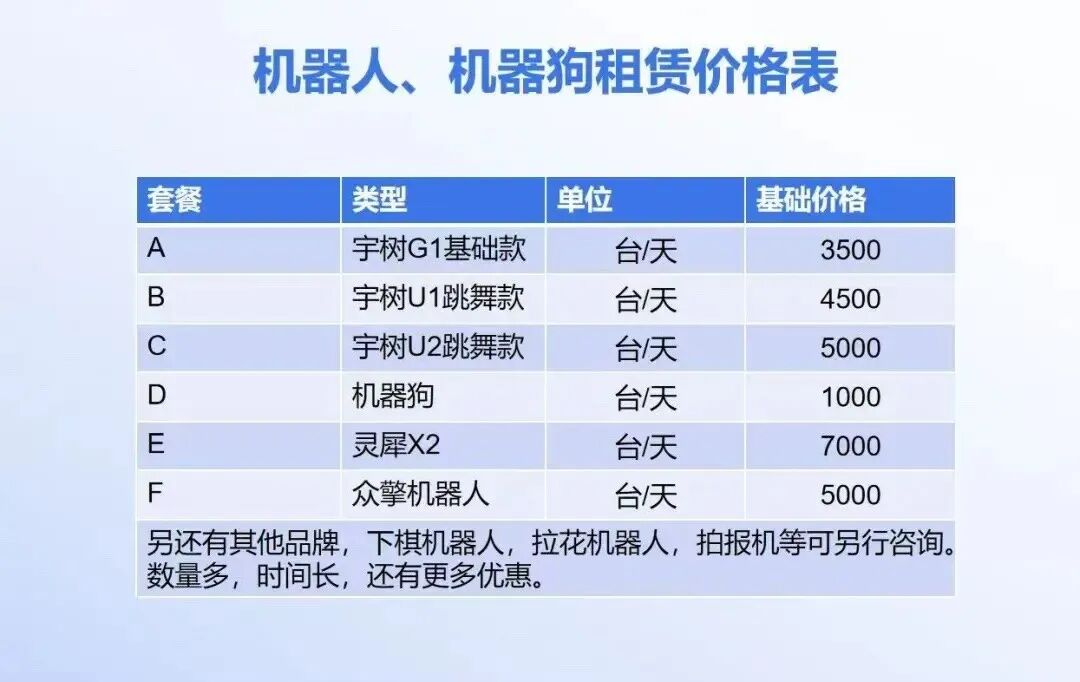
In the market dominated by small and medium - sized rental companies last year, price chaos has always been a major pain point in the industry. Although rental companies refer to each other, there is no unified pricing for the daily rental of robots in the industry, and brand manufacturers do not interfere. Therefore, the rental prices of robots fluctuate greatly, and there are cases of renting low - configuration robots at high prices. This has greatly affected the enthusiasm for renting in the market.
The entry of rental platforms will not only squeeze out the price inflation but also promote price rationality and stability through national - scale operations. Although the market share of the current platforms is not large, their prominent price advantages will obviously make consumers more inclined to choose the platforms.
However, this is not the key. Once the platforms establish a full - range of standardized services from custom development, professional operation to fault repair and after - sales service, it will cause a "dimensionality - reduction strike" on small and medium - sized rental companies.
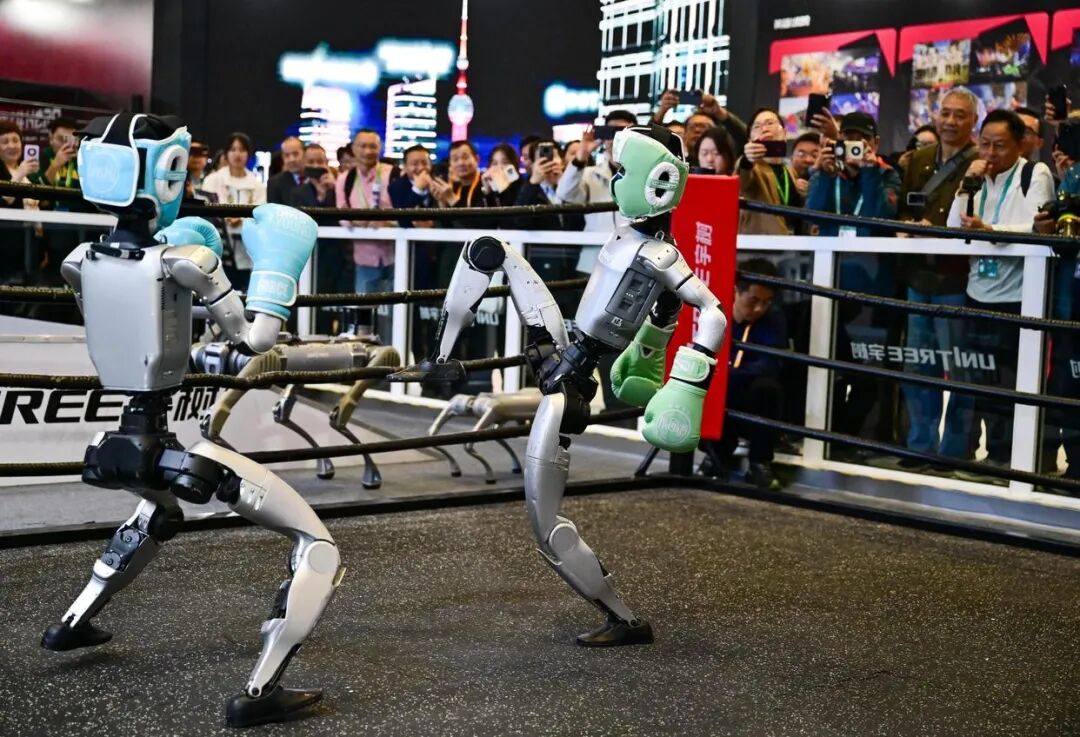
Looking back at last year, even for simple interactions and performances, the performance of humanoid robots in real physical environments was only mediocre. Multiple factors such as weather, ground conditions, and on - site order could have an impact, especially in emergency situations, which required intervention. This places high demands on the professional capabilities of operators and their teams, and scattered rental companies are naturally no match for teams with R & D capabilities.
The gap in custom - development capabilities is even greater. According to industry insiders, there are "possibly less than 50" commercial companies in the country with the ability to conduct secondary development of robots. More small and medium - sized rental companies simply buy off - the - shelf software. Platforms, backed by robot companies, have more resources to provide customized content and services.
An agent admitted that "this way of entry by (manufacturers) may have a direct impact on those merchants who have hoarded a dozen or dozens of robots for rental in the past."
However, the transition from dispersion to unity is an inevitable trend in the maturity of the industry.
Can Insufficient Production Capacity Undermine the Rental Business?
Due to the high price of humanoid robots, the rental business will exist for a long time. Once a platform can connect manufacturers with corporate customers and individual consumers in various industries, its development potential is imaginable.
The strong demand during the period approaching the Spring Festival provides a glimpse of this. A staff member said that his company has maintained cooperation with many well - known humanoid robot brands such as Unitree, Zhipu, Zhongqing, and Fourier. "Since the beginning of January 2026, we have hardly had any rest, and we receive new robot rental orders every day." Another industry practitioner also said that the month around the Spring Festival is the "peak season" for robot rentals, with the order volume reaching the annual peak.
However, the supply may not be able to keep up with the growth of demand. Last year, when the market first boomed, robots were in short supply. The official price of Unitree's G1 EDU version, which was 169,000 yuan, was speculated to 250,000 yuan, and the U2 model soared from 209,000 yuan to nearly 300,000 yuan, almost all being pre - orders.
A rental company said that it ordered a Zhongqing robot in February but didn't receive it until October.
This year doesn't seem optimistic either. According to a search by a reporter from the "Daily Economic News", most of the humanoid robots that were hot sellers during last year's "Double 11" will be delivered this year. The earliest delivery will start at the end of January this year, and the later ones will be delivered around the middle of next year. The reporter also learned from several humanoid robot manufacturers that the industry's supply model is mostly batch - by - batch delivery.
The problem of production capacity restricts the development speed of the humanoid robot industry and also affects the rental market. The crux of the problem is that it touches on the survival logic of the current robot rental business.
So far, the robot rental business is essentially just a business selling novelty. Currently, humanoid robots can only perform simple actions such as waving, shaking hands, and dancing, and their movement still relies on remote control, lacking real human - machine interaction capabilities. Most customers are willing to pay for them just for the novelty and to attract attention, especially those robots that are frequently in the spotlight and have high popularity, which can bring their own traffic.
If the production capacity cannot keep up, by the time these robots reach the rental companies, the popularity may have already faded. More importantly, insufficient production capacity will also limit the market's ability to form a stable demand for robot rentals.
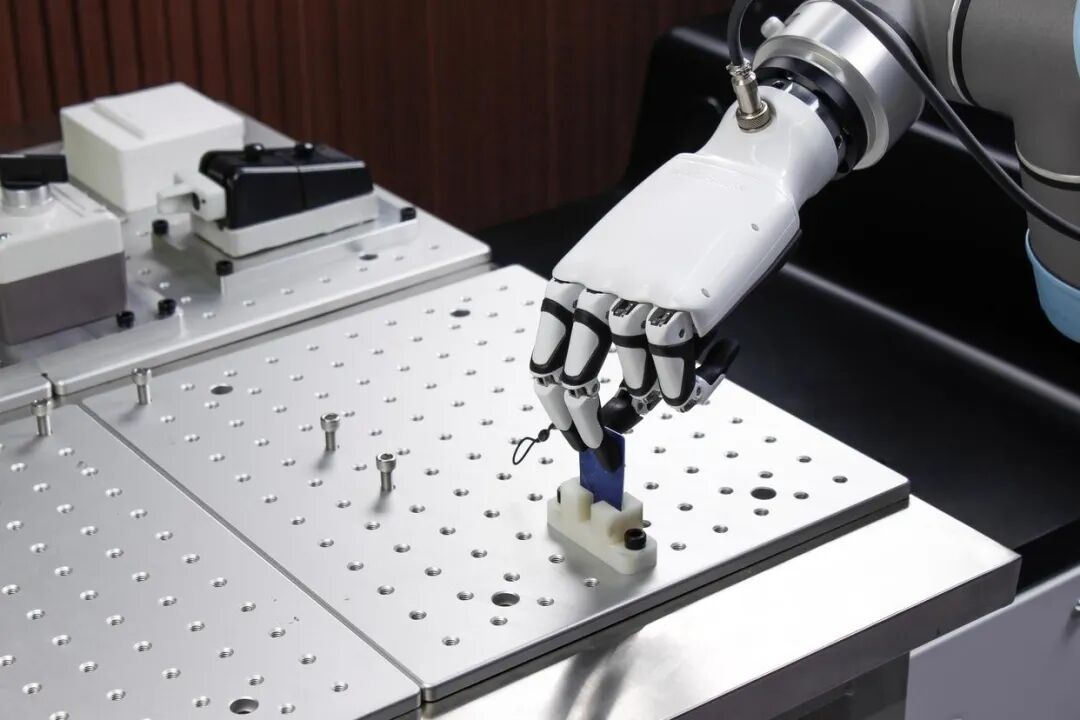
A high - level executive of a humanoid robot manufacturer, who wished to remain anonymous, revealed that "the industry is looking forward to large orders worth millions, but the talk of hundreds of thousands (of units) is just hype. The supply chain cannot increase the production volume that quickly." A report from Goldman Sachs is even more pessimistic for the industry. It predicts that the global shipments of humanoid robots will only reach 1.38 million in ten years (2035).
We can take Didi as a simple reference. As early as 2017, Cheng Wei revealed at the annual meeting that there were 20 million vehicles on the Didi platform.
Facing the needs of hundreds of millions of people, Didi has tens of millions of passenger cars to provide services. If the demand for humanoid robots from enterprises and individual consumers in the market explodes in the future, the figure of just over one million will be far from enough in the rental market. Of course, there is also a hidden crisis. Simple interactions, performances, or clowning around cannot support the public's novelty in the long run.
Without Penetrating the Consumer Market, the Platform Can Hardly Expand
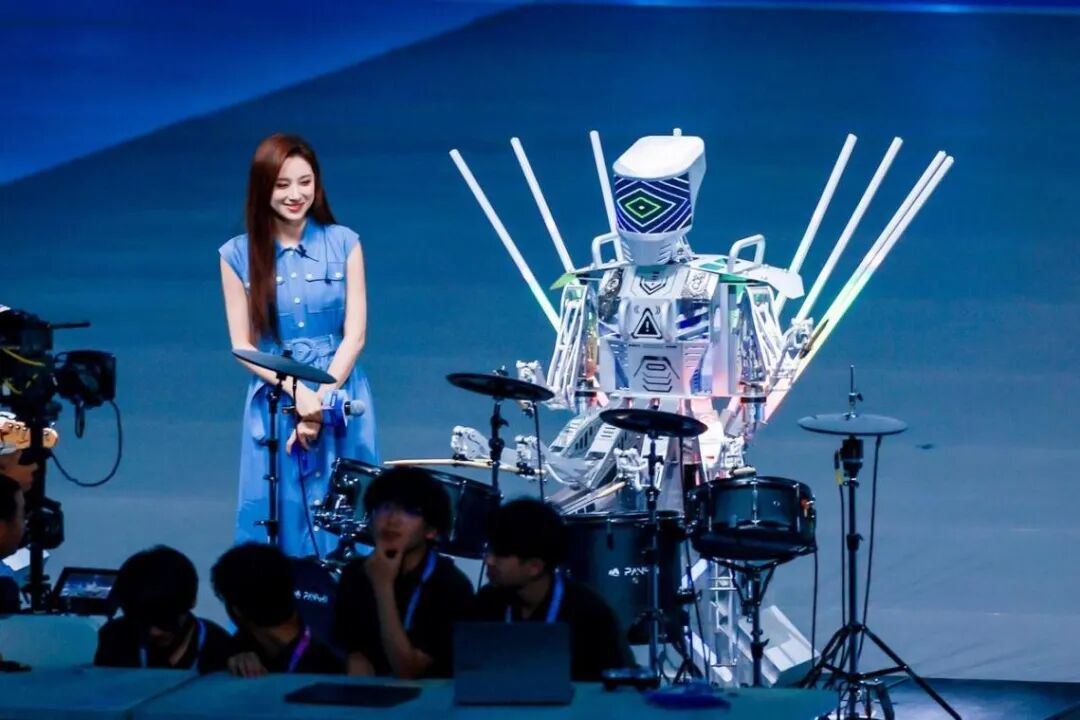
Dancing, doing somersaults, boxing... We can see humanoid robots on more and more stages. Although some voices claim that humanoid robots can only dance and clown around and will end up in a dead - end, during the long transition period of humanoid robots towards maturity, entertainment performances provide ideas for enterprises' commercial exploration.
From corporate annual meetings, university research to wedding ceremonies, campus freshmen welcomes, real - estate openings, and scenic - spot interactions, these seemingly scattered demands will all provide opportunities for humanoid robot demonstrations in the future.
However, for rental platforms to expand, the consumer market represented by individual consumers hides broader demand and the core driving force for large - scale development. As Li Yiyan, the CEO of Qingtianzu, said, "What Qingtianzu wants to do is to become the 'connector' and'service foundation' in the robot field. The trillion - level consumer market at the consumer end is the future of robots."
This is also the most concerning issue for the public. When will humanoid robots really enter our lives?
This is a difficult problem. Or, to be more pessimistic, we may not see such a scenario in the next two or three decades. Why? Consumers hope that future robots will be human - like, which gives a stronger sense of technology and can more easily act as companions. However, manufacturing humanoid robots is extremely complex. Just a pair of flexible legs can cost at least half of the total cost, or even more. At the same time, we also want them to be useful and felt in all aspects of our lives, which requires robots to have generalized and universal "intelligence".
Let's first look at the first problem. High costs lead to high prices. Even though renting can significantly lower the threshold for consumers to access humanoid robots, the product's pricing determines the rental price.
As previously stated by companies such as Tesla and Zhipu Robotics, the cost of humanoid robots needs to be controlled below 200,000 yuan for large - scale production. If large - scale production is achieved, the hardware cost of humanoid robots may be further reduced. But can it really reach the price range of "quasi - consumer electronics" products such as high - end smartphones and game consoles? Even if it can, how can humanoid robots make a trade - off between low cost and high performance?
Consumers don't want a price - cheap but functionally - rigid "iron lump".
Now let's look at the intelligence of humanoid robots. Why are there so many controversies about humanoid robots currently? Because the public hopes that humanoid robots will be useful, not just for performances. For example, they should be able to do housework, carry things, cook... Even we imagine that they should be all - round. However, it is still feasible to develop a specific humanoid robot for a segmented scenario by collecting data and strengthening training to improve the intelligence level. But to develop a general - purpose robot, it seems that only relying on the technological breakthrough of the underlying large - scale model cannot achieve this.
An investor also pointed out the paradox of segmented scenarios: "If you only focus on an extremely segmented scenario, you can do a good job by collecting a few hundred pieces of data. But this is both difficult to make money from and has limited value in the path towards 'general - purpose'. However, in China, you are forced to demonstrate commercialization capabilities, which is contradictory to your long - term goal of developing general - purpose robots at some levels."
The development of general - purpose robots has a long way to go, while the public's demand for useful humanoid robots is very urgent. When watching robot performances, the most common question from on - lookers is: Can it do housework or help with some simple work tasks? When they learn that the current functions of robots are mainly limited to basic interactions and performances, most people show disappointed expressions.
Perhaps, only when humanoid robots overcome the limitations of cost and technology and make a major breakthrough can the rental market truly prosper. Currently, the entire industry does not have the conditions to support the next "Didi - like" story.
This article is from the WeChat official account "Dao Zong You Li" (ID: daotmt). The author is Dao Zong. It is published by 36Kr with authorization.