For the new tech elites, the annual parties can't stop.
"The world is like a makeshift troupe, and the annual company party is our own Spring Festival Gala." This is a classic line from the movie *No Stopping the Year-End Party*.
As a product of modern companies, the annual company party not only reflects the fortune of an enterprise but also serves as a mirror reflecting the ups and downs in the business world.
In China's business history, the annual company party is a concentrated manifestation of a company's financial resources, strength, and cultural values. It is standard to have the top executive sing and give a speech, offer huge bonus pools, and hold events on a scale comparable to a concert. The glory of the annual company party is also related to booming industries, from real estate, finance, and large Internet companies to today's rising stars in the technology sector such as Dreame, Insta360, and Zhipu, without exception.
When Dreame held its annual company party like a concert for ten thousand people, Zhipu gave employees who won prizes in the event an equal amount of cash as a supplementary reward, and Insta360 rewarded employees with five commercial housing units in the Greater Bay Area, the generous annual company parties of these rising technology stars have become a new hot topic on the Internet.
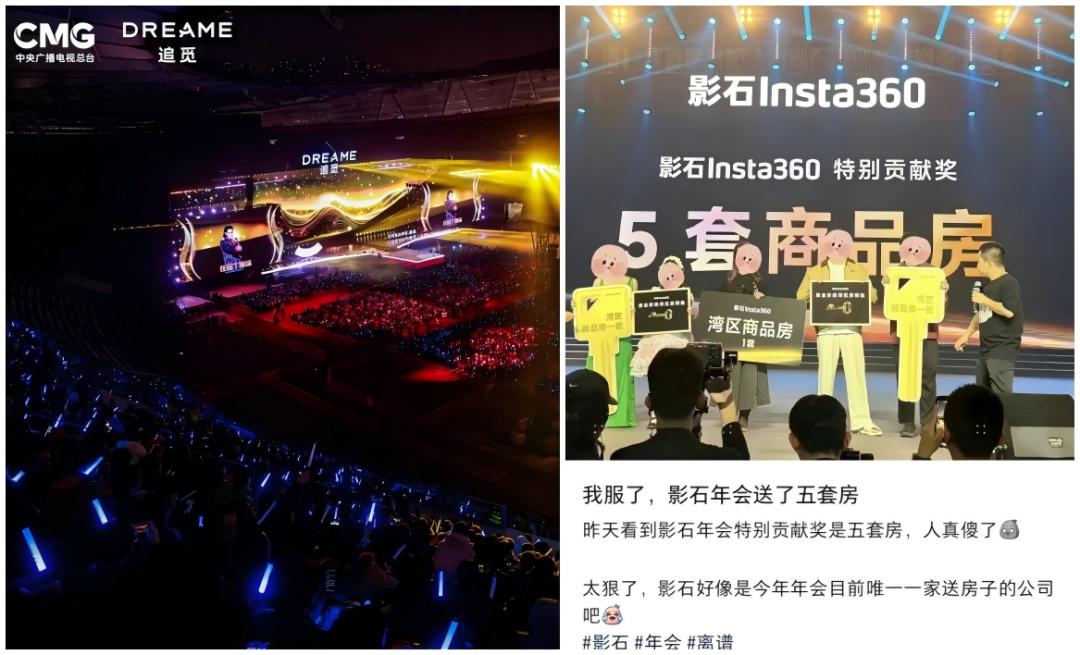
Other companies' annual company parties are indeed attractive, but the key lies not in the excitement of the party itself but in the underlying know - how you need to understand.
1. Changes in the Seating Order
If we compare the annual company parties of Chinese companies to a continuous banquet, the menu doesn't change much: competing for celebrities, prizes, scale, and ambition. What changes is just the people at the table.
There was a time when the two most - watched groups of people at the table were not today's rising technology stars but real - estate companies and large Internet companies.
Perhaps Wang Jianlin, the chairman of Wanda Group, understands song and dance shows and concerts better than Yu Hao of Dreame. Since the establishment of Wanda Group in 1988, the Wanda Spring Festival Gala has been a regular part of Wanda's annual company party. Xu Tan, a media person, wrote in the book *Innovation and Change*: "Wanda's annual company party is modeled after the Two Sessions, and the gala is modeled after the CCTV Spring Festival Gala. The directors of the Wanda Spring Festival Gala are at the level of deputy directors of CCTV and the chief directors of local Spring Festival Galas."
As people expected, Wang Jianlin's solo performance is always a must - have in the Spring Festival Gala. Many former Wanda employees still have a deep impression of his songs: *Farewell My Concubine* in 2015, *Fake Monk* in 2016, *Waiting* in 2017...
Later, the annual company parties of large Internet companies also had similar famous singing scenes: At Alibaba's 20th anniversary, Jack Ma with a punk dreadlock hairstyle gave a finale performance of *Blooming Life*; At Tencent's annual company parties over the years, Pony Ma, the founder, and the Tencent executive team singing together have become a classic part of the party.
The competition also extends to year - end bonuses and lottery pools.
In 2021, after Kuaishou went public, it gave each full - time employee a "universal award" of 100 shares of stock. Calculated based on Kuaishou's 16,300 employees at that time, the "universal award" alone cost nearly 500 million yuan. Momo gave each full - time employee an iPhone 12 Pro Max 256G as a New Year gift package.
Now, the glory of the annual company party no longer belongs to them but to two types of players.
First, a group of rising technology stars in fields such as AI, embodied intelligence, smart hardware, and intelligent driving have become the new faces at the continuous banquet.
MiniMax, an AI large - model company that went public not long ago, in addition to big prizes such as cash, mobile phones, and gold bars at its annual company party this year, also invited Liu Wei, the co - founder of Mihoyo and its angel investor, to attend. According to information obtained by "Silicon - based Research Lab", some AI startups have already distributed their year - end bonuses in January this year.
Among the embodied intelligence companies, according to Workplace Bonus, Zhipu set up 16 first - prizes (MacBook Pro), 36 second - prizes (iPhone 17 Pro Max), and 66 third - prizes (including Apple Watch Ultra 3, DJI drones, Chow Tai Fook gold necklaces, etc.) in the lottery session of its annual company party. Roughly estimated, the total value of the prizes is about one or two million yuan.
The annual company parties of manufacturers in the intelligent driving field, such as Horizon, are also quite large - scale. At Horizon's annual company party, the grand prize was a Xingtu ET5 and a Shenlan L06. There are also a number of hardware startups, such as Toolwood and Dreame. The first prize at Toolwood's annual company party was 100g of gold. According to Jiemian News, the total amount of Toolwood's year - end bonuses in 2025 increased by more than 50% compared to 2024.
Second, the semiconductor and gaming industries are still typical representatives that attach great importance to annual company parties and offer generous year - end incentives.
According to data from *Economic Observer*, more than 22 gaming companies have used gold as year - end rewards this year. In the semiconductor industry, Rockchip directly distributed cash at its annual company party, and the super grand prize was 160,000 yuan in cash.
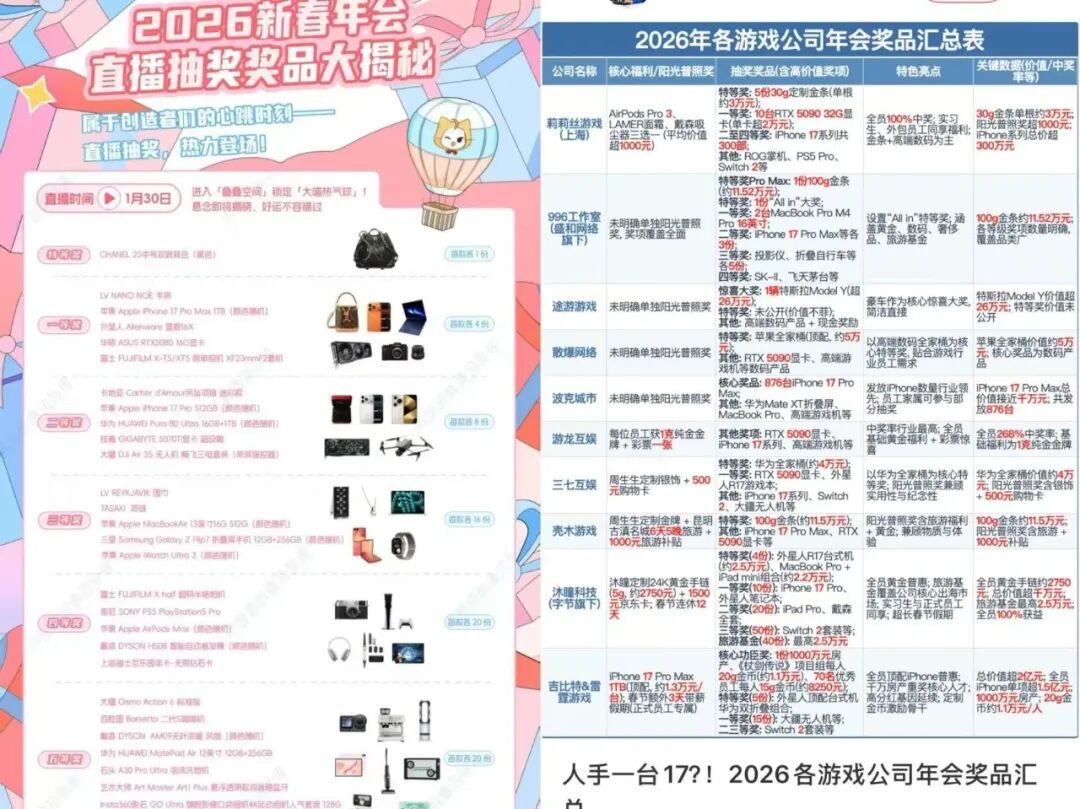
A summary of some gaming company annual party prizes. Image source: Xiaohongshu @Workplace in Henan
The annual company party hasn't disappeared; it's just that the people involved have changed.
2. The Art of Building an Image
As the hosts of the annual company party change, the question is, why do companies go to great lengths to hold annual company parties?
Zhang Yiming, the founder of ByteDance, who is extremely low - key when it comes to the annual company party, made a concise summary: "A company's annual company party shouldn't just be for self - entertainment; it should let the outside world see the company's work achievements."
A person who has long been in charge of corporate team - building business told "Silicon - based Research Lab" that an annual company party usually needs to have four elements: "happiness, touch, motivation, and direction", and "direction" is the most crucial one.
Referring to Zhang Yiming's summary, the annual company party has never been a product of self - entertainment but a result of careful design. There are actually two real meanings for technology companies to hold annual company parties in a grand manner:
One is to build an image of "caring for employees" to prepare for recruiting talents in the coming year. The other is to build an image for the CEO. The annual company party is often the best opportunity for top executives to convey the company's future direction to the outside world.
When it comes to building an image of caring for employees, the best storyteller might not be Yu Hao of Dreame or Liu Jingkang of Insta360, who have distinct personalities, but unexpectedly, it's Zhipu.
While robot companies are vying for a place in the Spring Festival Gala, Zhipu is winning people's hearts.
At its *Robot Fantastic Night*, an employee unexpectedly won the grand prize of the right to use a car. Less than 24 hours after the employee decided to give up the prize, Deng Taihua, the chairman of Zhipu, added a special session after the lottery session of the annual company party. He personally presented an equal amount of cash in front of a thousand employees, saying, "If employees have a big heart, the company can't be stingy." This not only praised the employee but also Zhipu, and the image of caring for employees was successfully built.
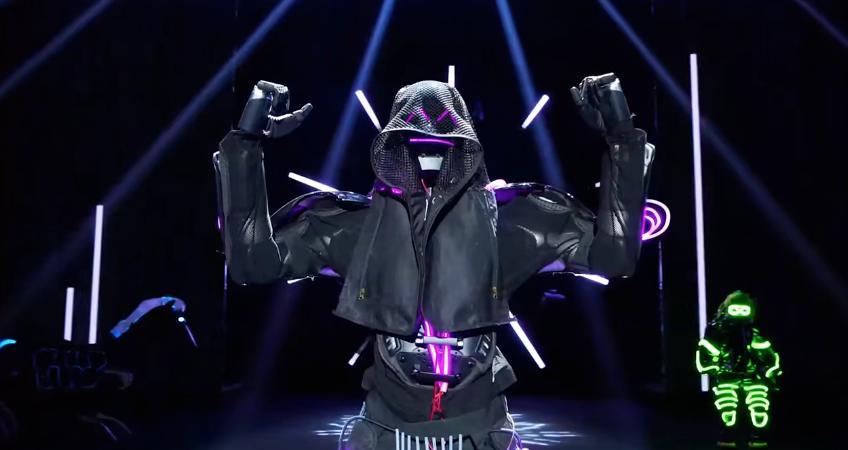
Zhipu's Robot Fantastic Night. Image source: Screenshot by the author
The reason for Zhipu to do so is simple. In the fierce battle for talent in the field of embodied intelligence, the competition has come out in the open. Both algorithm and hardware talents are in short supply. It's common for top - notch talents to have a dozen job offers in hand, and experienced veterans are even more sought - after. Ding Yan, the CTO of Luminn, once told a story that after the dissolution of a certain company, he was constantly contacted by companies and investors every day.
For leading companies like Zhipu, which have a clear business model and are in the expansion stage, they currently have to rely on recruiting new talents to consolidate their advantages. This annual company party just served as a free advertisement for Zhipu.
When it comes to building an image for the CEO, Yu Hao of Dreame and Liu Jingkang of Insta360 are undoubtedly the most vivid examples.
As a new generation of young entrepreneurs, both Yu Hao and Liu Jingkang were campus geeks. They both have the "crazy" trait of being bold in thinking and action and never hide their ambition to cross - boundaries.
The annual company party is sometimes a concentrated manifestation of a company's CEO's personality and values. For example, ByteDance, which never holds a grand annual company party, reflects Zhang Yiming's practical and romantic nature. Another example is Jensen Huang, who danced in a flowery Chinese - style jacket at the annual company party, which shows NVIDIA's emphasis on the Chinese market.
Similarly, many people don't understand why Dreame transformed its annual company party into a concert. But if we consider Yu Hao's and Dreame's cross - boundary thinking, such a bold and innovative annual company party is not that surprising.
Beyond the annual company party, what Yu Hao might want to emphasize more is Dreame's focus on the density of talent.
As early as 2022, in an interview, he mentioned the way to solve employees' job burnout: "Provide enough opportunities, such as letting experienced employees take on new tasks. In addition, whether you want to take a break or be a coach, you need to reach a consensus on new goals." Yu Hao is a person with a strong sense of purpose and competitiveness. An innovative annual company party can also help him find like - minded people.
Liu Jingkang is the same. Regarding the high - profile annual company party of Insta360, Liu Jingkang responded like this: "In many cases, to inspire high - end talents, a sense of achievement, honor, or value resonance is important, but direct material incentives are also crucial."
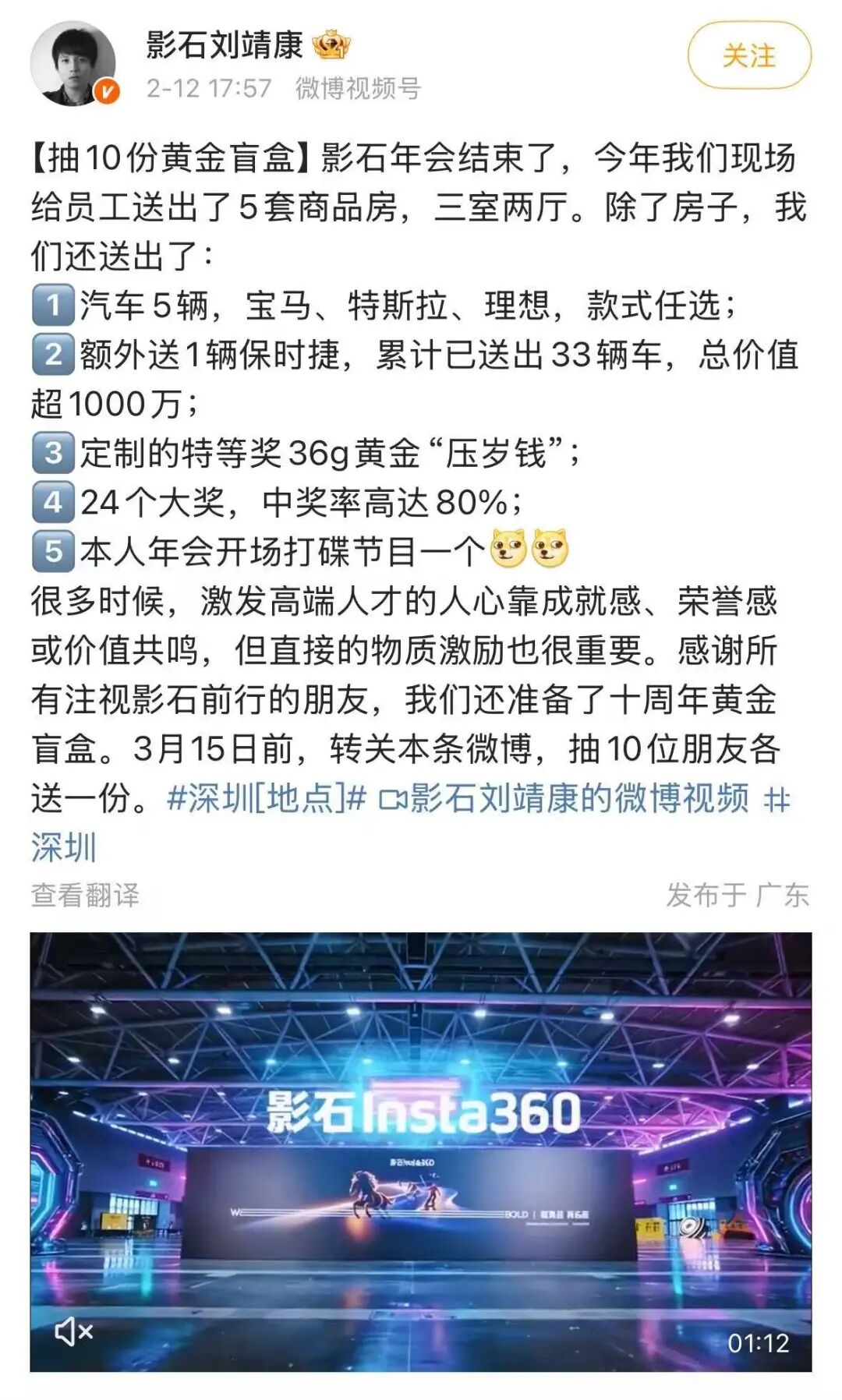
Image source: Weibo
In the past year, the rivalry between Insta360 and DJI has never stopped, from price wars to disputes over research report data. Insta360, which has survived among the giants, urgently needs a new victory to defend its position. That's why Liu Jingkang also showcased the new product "Luna" at the annual company party. The annual company party has become the best stage for Insta360 to demonstrate its new imagination and combat effectiveness.
From caring for employees to conveying the CEO's values, the annual company party is an art of building a corporate image.
3. New Changes, Old Overlaps
Whether it's the change in the "seating order" or the art of building an image, the annual company party has some new changes, but it still presents an old - fashioned overlap.
As part of a company's welfare culture, when technology companies invest more energy in the AI arms race, the annual company party will inevitably become part of efficiency. This is not only the choice of large Chinese companies but also the consensus of Silicon Valley companies.
In 2024, *The New York Times* observed that the welfare culture in Silicon Valley has basically disappeared. Companies such as Google and Meta have reduced or canceled various benefits, including massage services and vacation centers. This marks a transformation in the "welfare culture" that has prevailed in Silicon Valley over the past two decades. The era when companies relied on luxurious benefits to attract talents is coming to an end.
Senior white - collar workers are also starting to disenchant luxurious benefits. Tian Yuandong, who was laid off by Meta, said in his year - end summary: "Actually, I've thought that after working in the company for more than ten years, I'll have to leave one day. I can't stay in the company until I die. But due to various economic and family reasons, I still stayed. In the past one or two years, I've been acting with the mentality of 'I hope the company will fire me soon', and I've become more and more relaxed."
Image source: Tian Yuandong's Zhihu
In other words, as rising technology stars grow larger, they will inevitably face the realities of the adult world. A luxurious annual company party is not the key. The real issues are how to distribute money and manage the company as it grows in scale.
Interestingly, on the Internet, most white - collar workers measure the quality of a company by "what the universal award is", but managers are more concerned about whether the incentives are going to the right people. This is the first overlap: Ordinary people always empathize with ordinary people, while bosses are more concerned about the precise distribution of benefits.
In most corporate organizations, salaries are usually composed of "base salary + performance - based salary + bonus + welfare". The variable parts are often performance - based salary and bonus. That's why in many discussion posts about lottery results, behind the discussions about large year - end bonuses, you can always see white - collar workers asking: "What's the performance score?" Performance itself can create an overlap within a company.
In terms of salary management, the predecessors of rising technology stars used to learn from Huawei and ByteDance.
Li Auto is a typical example.
At the beginning of 2024, Li Xiang, the CEO of Li Auto, reposted a post saying "Li Auto's year - end bonus this year is quite generous" and mentioned: "We can't just learn Huawei's processes but ignore its benefit distribution. We insist on learning both. In 2023, when we exceeded the target, we distributed more bonuses; in 2022, when we didn't reach the target, we distributed fewer bonuses. We should reward the good and punish the bad. Only learning advanced processes but not advanced benefit distribution and not being clear about rewards and punishments is the biggest reason for organizational inefficiency."
Li Auto learned Huawei's PBC system, which emphasizes personal performance commitment and mainly includes organizational performance goals, personnel management goals, personal key tasks, and ability improvement plans. But last year, according to Shixiang, Li Auto abandoned the P