After experiencing the newly released GLM-5 by Zhipu, I finally understand why it has left Silicon Valley scratching its head.
Rumors about the mysterious "Pony Alpha" model have been swirling on the internet for a week.
Some say it's an alias of Claude 5, while others claim it's a secret weapon of a major tech company. Just now, the mystery has been solved: this new model codenamed "Pony Alpha" is actually Zhipu AI's big move for the Spring Festival - GLM-5.
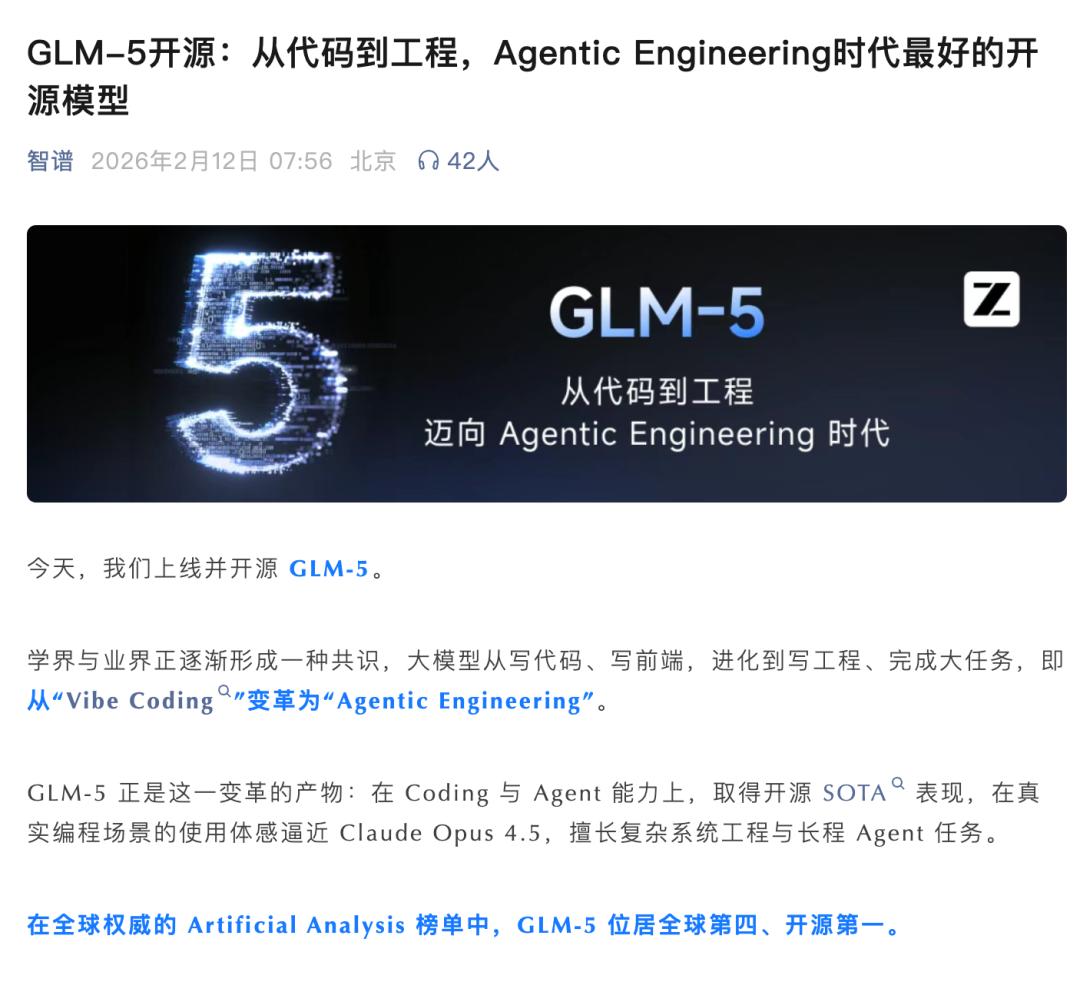
Screenshot of Zhipu's official WeChat account
Moreover, it has been directly open-sourced.
If 2025 was the year when AI learned to write code, then at the beginning of 2026, as Andrej Karpathy, the former AI director of Tesla, predicted, we may be on the verge of entering the era of "Agentic Engineering".
However, compared to GPT-5.3-Codex and Claude Opus 4.6, the first to turn this into an open-source infrastructure is the domestic model GLM-5.
Attached are the experience addresses:
- Z.ai: https://chat.z.ai
- Zhipu Qingyan APP/Web version: https://chatglm.cn
The "Pony Alpha" that deceived Silicon Valley is actually an alias of Zhipu's GLM-5
It's no longer a novelty for today's AI to write a Snake or Tetris game. To test it, we need to come up with something more challenging.
We presented GLM-5 with an extremely specific physical simulation requirement:
Create an interactive HTML, CSS, and JavaScript satellite system simulation program that simulates the process of a satellite sending signals to ground receivers. The simulation program should display a satellite orbiting the Earth and periodically sending signals, which will be received by multiple ground receivers.
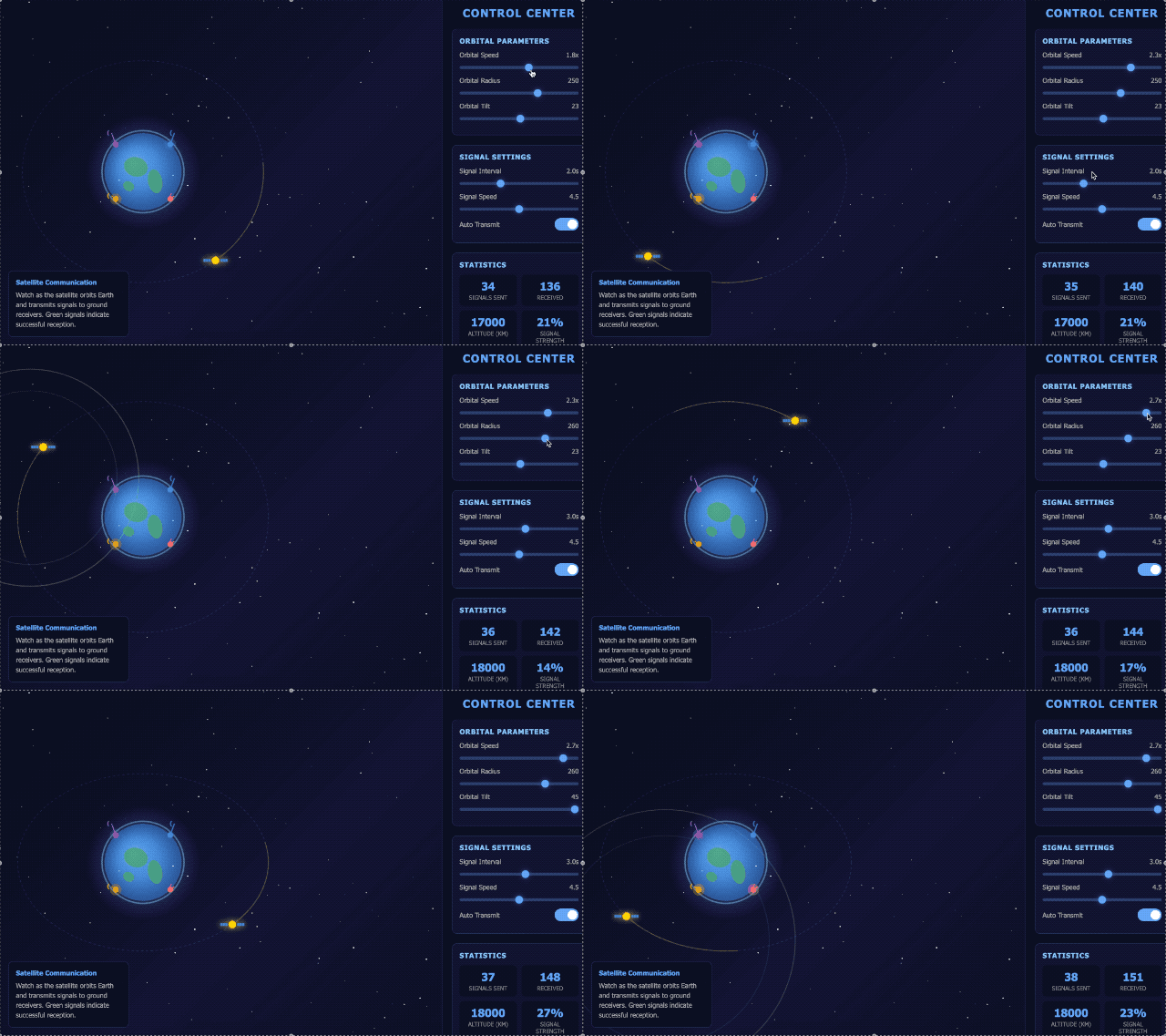
It didn't immediately provide the code. Instead, it "paused" for a moment (simulating the thinking process) and finally generated an HTML webpage according to our requirements. On the screen, the satellite wasn't just rotating; the signal transmission even had a ripple diffusion animation that visually metaphorized the Doppler effect.
It understood the physical laws behind the word "simulation," not just the action of "drawing a picture."
Then, we increased the difficulty.
A user named @scaling01 on X gave a very high evaluation: "Pony-Alpha is either AGI or it has memorized my SVG question bank."

To verify this, we tested an extremely abstract Python task: "Visually demonstrate the working principle of traffic lights on a one-way street, with vehicles entering at random rates."
In less than 3 minutes, a dynamic traffic flow simulation diagram appeared.
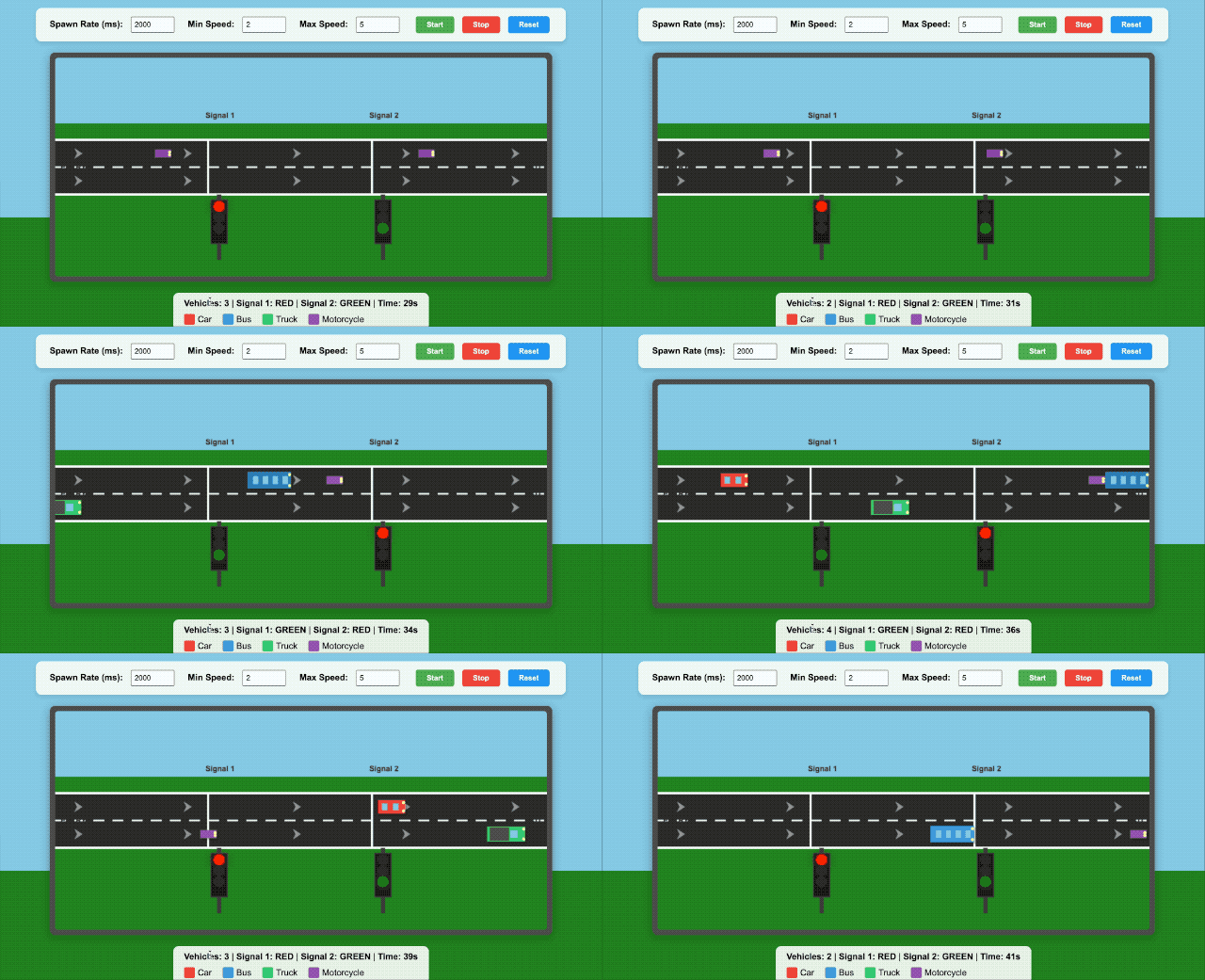
The logic was seamless: green lights allowed traffic to pass, red lights made vehicles queue up, and the randomness of vehicles accelerating and decelerating was also well-simulated. However, the aesthetics of this interface... well, let's just say it was a bit "crude."
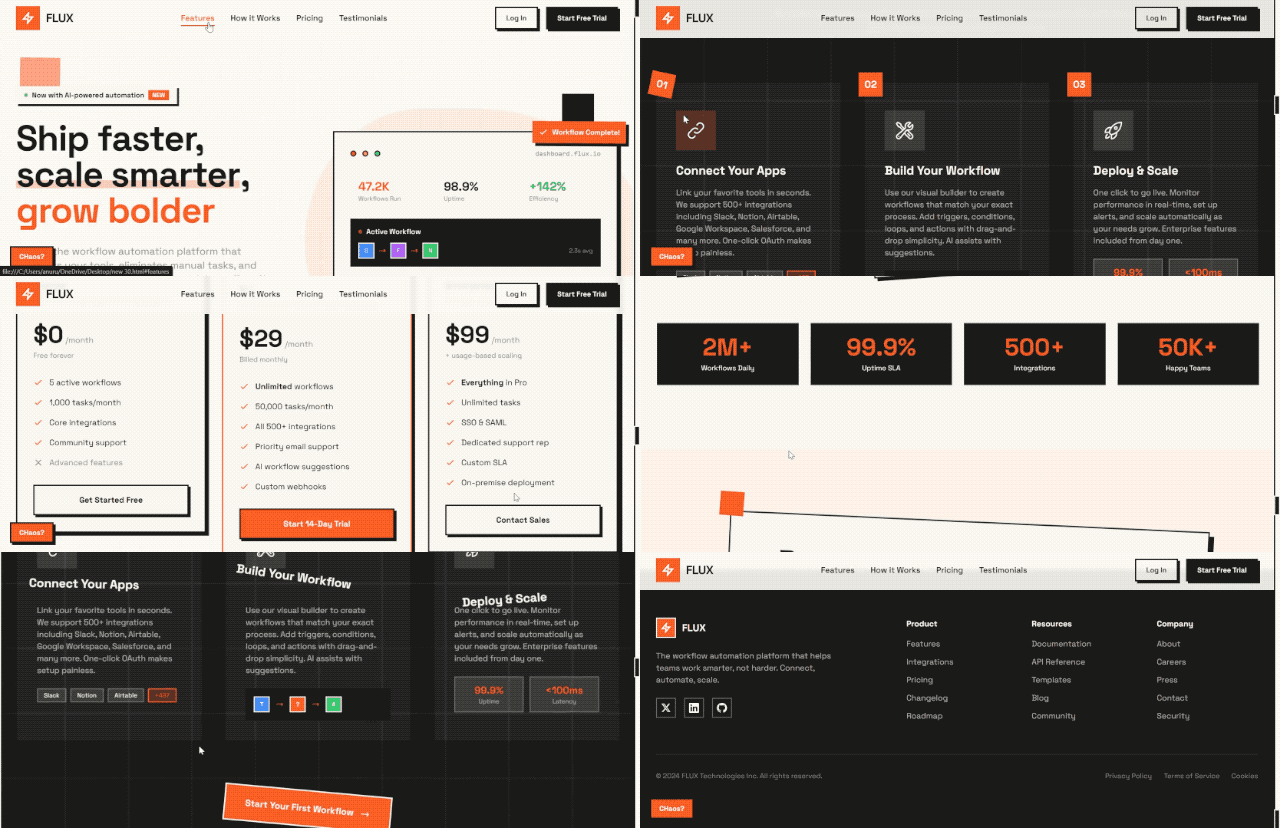
Even a netizen @anurudhsharmaa used it to generate a brand - new website with just one line of prompt.
Another netizen @zakarinoo7 generated a full - featured media player that supports MP4/MP3 decoding, playlist management, and even has a UI for dark mode. It only takes up 15MB after compilation.
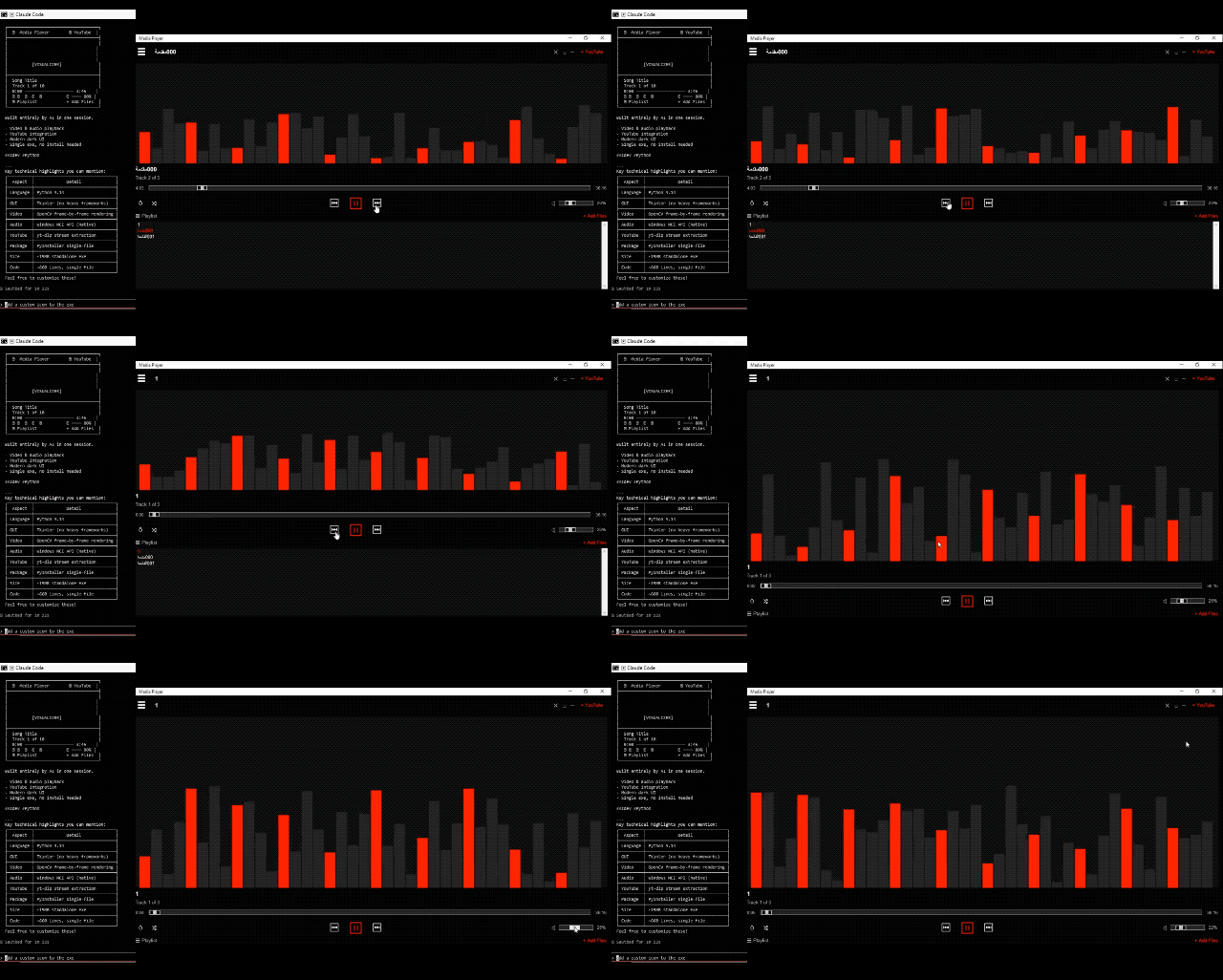
This sight made me extremely eager. So, I once again asked GLM-5 through Claude Code to create a stickman open - world game for me.
It didn't rush to write code. Instead, it took a very "human" approach, starting from the technology stack, core gameplay, and world style to gradually meet my requirements.
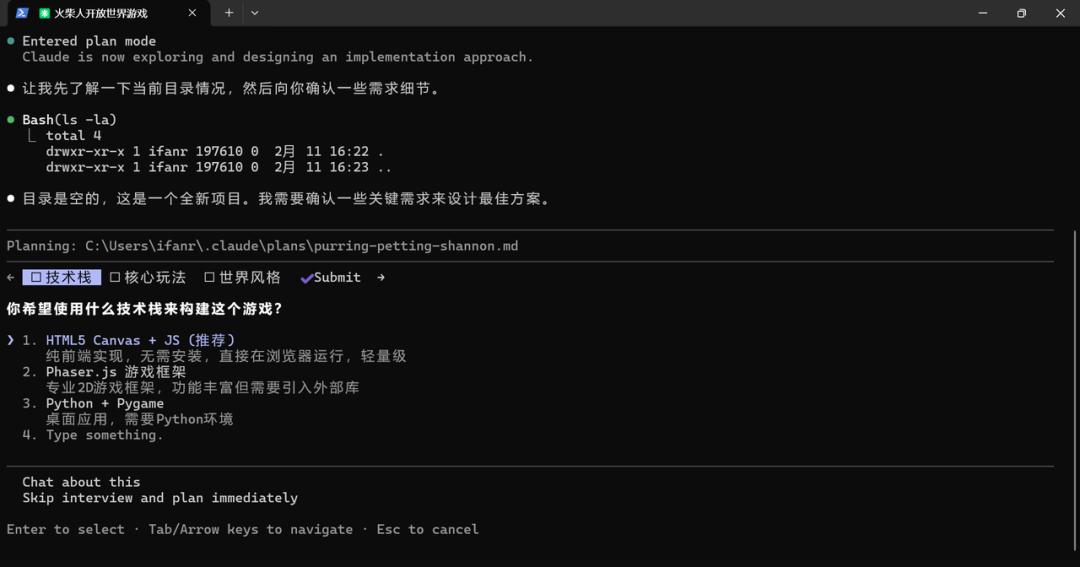
And during its "construction" process, I could be as picky as a demanding client and start adding new ideas to the original requirements at any time:
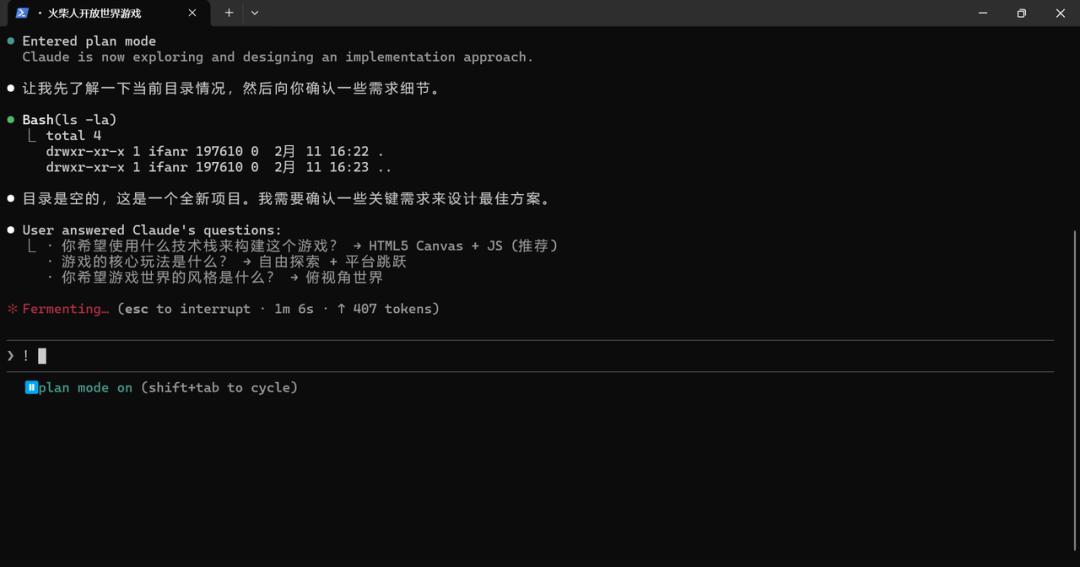
- Just running around the map is too boring. There should be an economic system, and gold coins should randomly appear on the ground.
- Add some action elements. Press the J key to shoot an arrow and the K key for melee attacks.
- Where should I put the items I pick up? Add a backpack UI and make it accessible by pressing the I key.
- The stickmen by the roadside shouldn't be just for show. I want to be able to talk to the NPCs.
When it finally ran, the effect could be described as "perfect":

Since it's claimed to be a system architect, after GLM-5 was launched on the official website, I also asked it to create a Mac system.
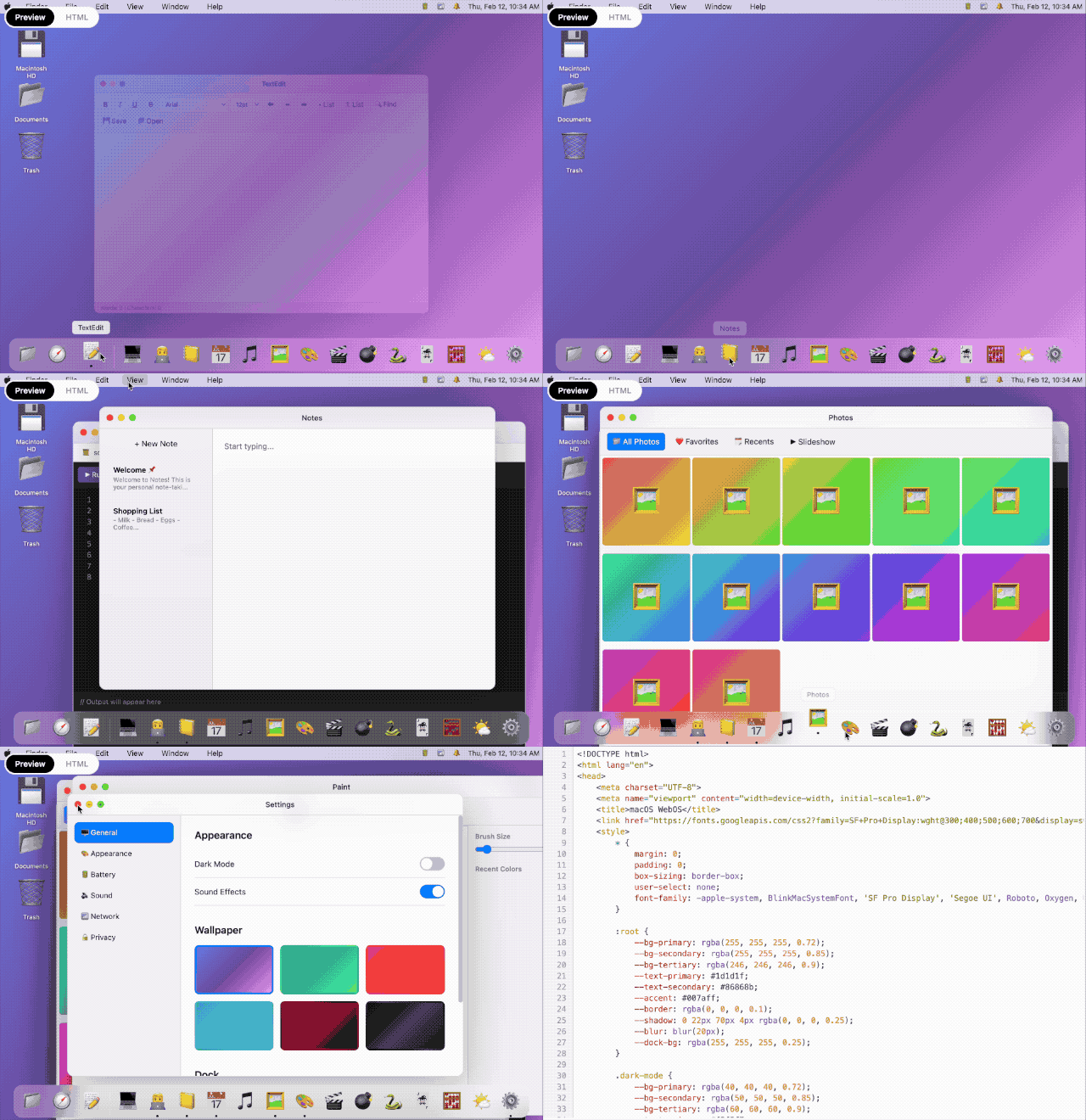
Although the overall result was a bit rough, the classic screen background, the synchronized time display on the top status bar, and the icon arrangement on the bottom Dock were all "drawn." And every application on it could actually be opened.
Adapting to half of the chip industry, this is GLM-5's "killer move"
Benchmark test results show that GLM-5 has achieved state - of - the - art (SOTA) performance in coding and agent capabilities in the open - source field.
Numbers don't lie. In the two most recognized and difficult programming leaderboards, SWE - bench - Verified and Terminal Bench 2.0, GLM-5 scored 77.8 and 56.2 respectively. In real - world programming scenarios, it's almost on par with Claude Opus 4.5.
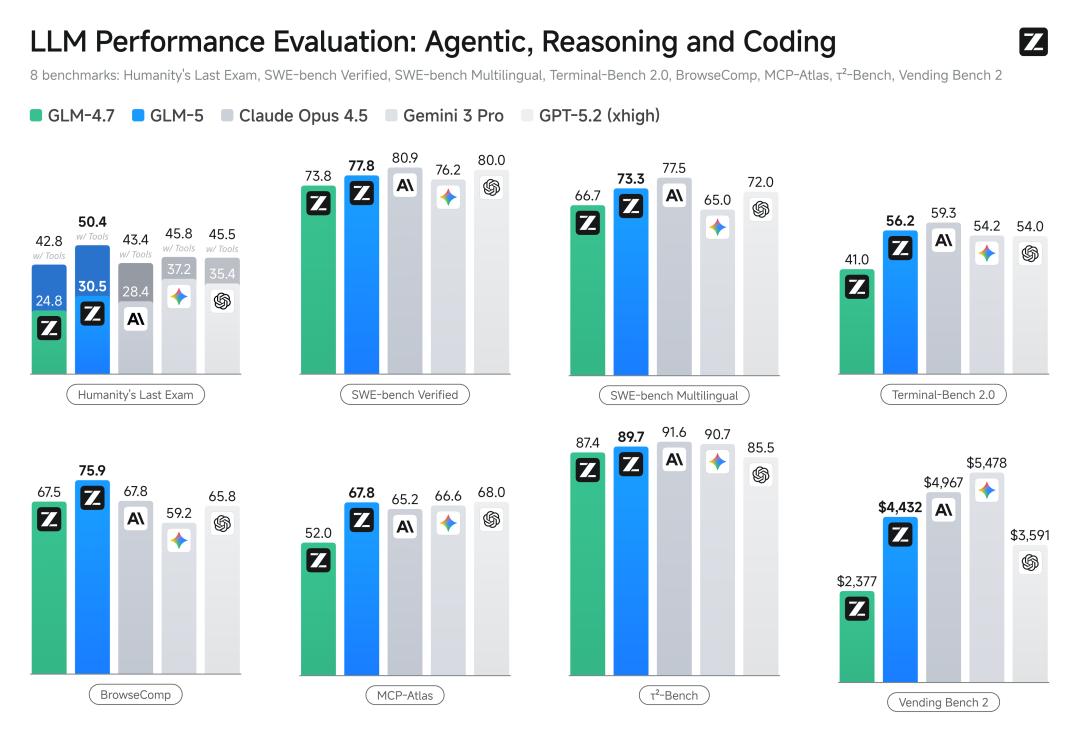
How can GLM-5 achieve this? Looking through the official report, behind a bunch of parameters, we found several key points: the MoE architecture and Asynchronous Reinforcement Learning (Asynchronous RL).
With a total parameter count of 744B and only 40B activated parameters, it's both smart and lightweight. But the real killer app is Zhipu's brand - new "Slime" framework.
To put it simply: Previously, model training was like "taking an exam," where you get a point for each correct answer, and the model memorizes questions desperately to get a high score. In contrast, GLM-5's training is like an "internship." It learns in an environment called Slime by completing a series of long - term projects, through continuous feedback and interaction.
In addition, it's the first to integrate DeepSeek Sparse Attention (sparse attention mechanism). This means that when dealing with context of hundreds of thousands of lines of code, it won't "get lost" and can significantly reduce deployment costs.
But what impressed me the most was the long list of acknowledgments at the bottom of the official announcement. Domestic large - scale models can now achieve stable operation with high throughput and low latency on domestic chip clusters.
Huawei Ascend, Moore Threads, Cambricon, Kunlunxin, Muxi, Suyuan, Hygon...
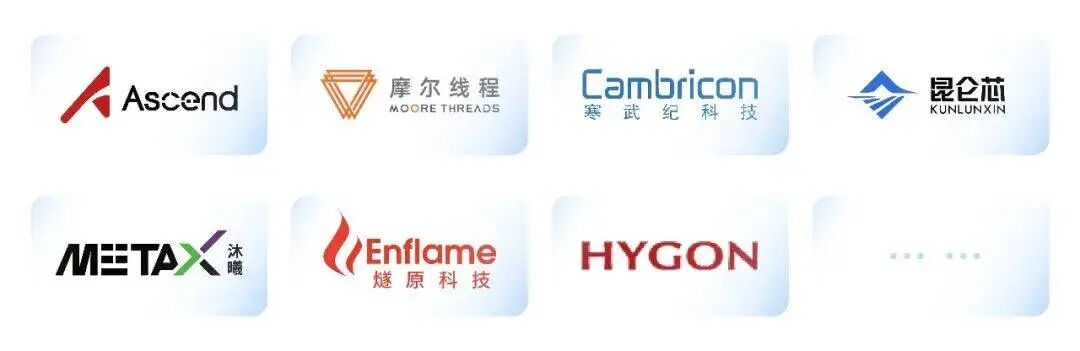
It feels like a general mobilizing troops.
This represents almost "half of the country" in the Chinese semiconductor industry. It means that the open - sourcing of GLM-5 is not just a victory at the software level. It marks that the domestic AI ecosystem - from the underlying chip computing power, to the intermediate frameworks, and then to the upper - layer models - has gradually established a complete closed - loop.
With the open - sourcing of GLM-5 and its integration with mainstream tools such as Claude Code and OpenCode, we may be standing at the threshold of Software Engineering 2.0.
The era of "Agentic Engineering" predicted by Andrej Karpathy, the former AI director of Tesla, is coming faster than expected. In the future, you may not need to build things brick by brick line by line. You just need to define the system, the aesthetics, and what is "fun" and "useful."
Then, watch as large - scale models like GLM-5, like foremen, direct the underlying computing power to build the skyscrapers.
The era of traditional "code farmers" may really be coming to an end.
But don't panic. This doesn't mean humans are useless. On the contrary, when AI takes care of the tedious implementation, your aesthetics, your judgment, and your ability to ask a good question will become humanity's last and strongest moat.
This article is from the WeChat official account "APPSO", written by APPSO, which discovers tomorrow's products. It is published by 36Kr with permission.