Google Chrome has a late-night update. Agents no longer need to "pretend" to be human. Has the last line of defense for the front end collapsed?
Today, the Google Chrome team dropped a bombshell: WebMCP (Web Model Context Protocol) has officially made its debut.
It allows AI agents to skip the "human user interface" and directly engage in in - depth interactions with existing websites and web applications.
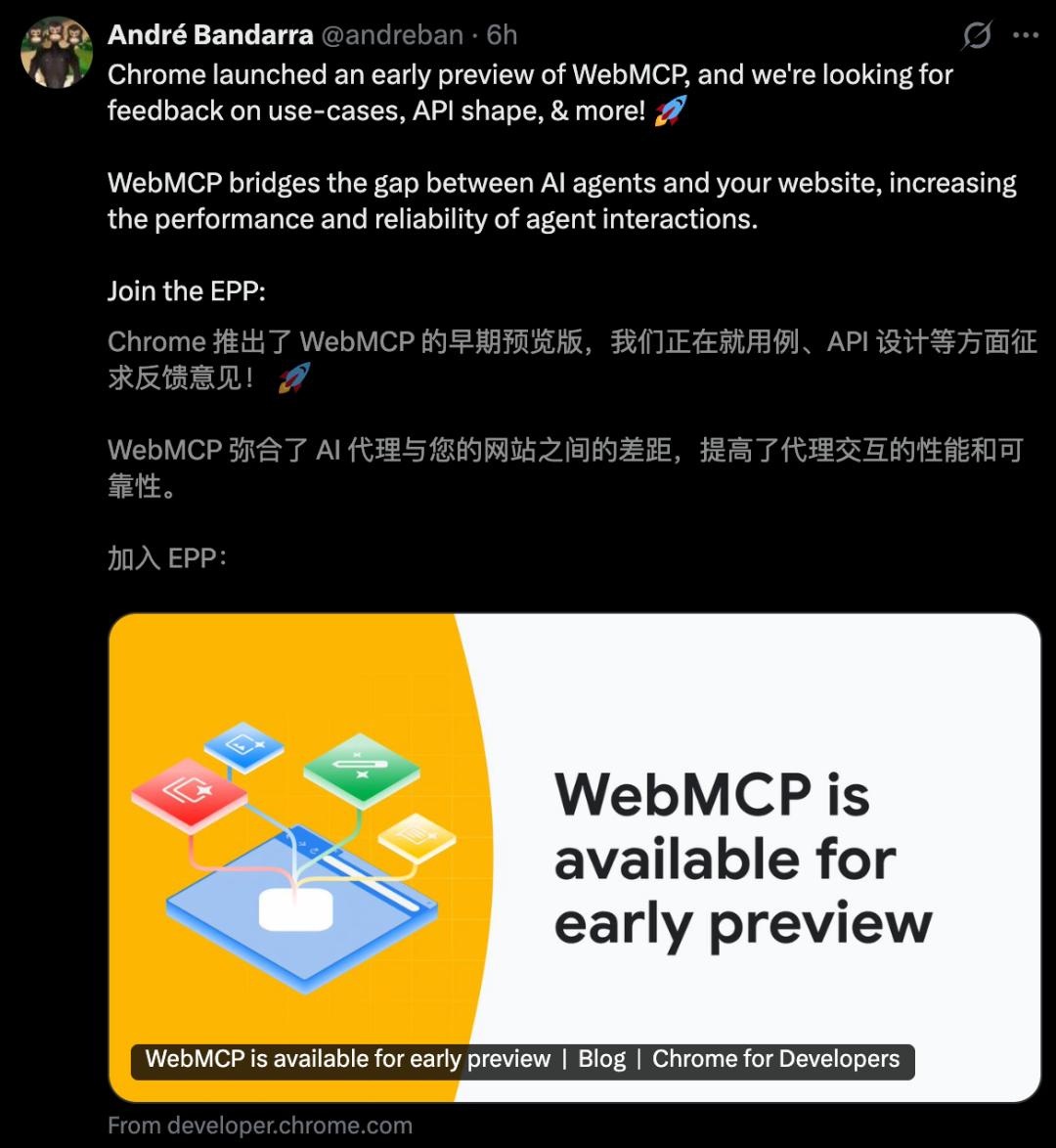
In the early preview version of Chrome 146, you can experience WebMCP by enabling specific flags.
This is like giving agents "superpowers". They no longer have to "pretend to be human" to view web pages, look for buttons, or click on links.
Through a single API: navigator.modelContext, AI can bypass the graphical interface and directly communicate with the core of web application services.
Suppose you want to book a flight. Instead of clicking on the screen, the agent will directly send commands to the airline's website through the underlying protocol and obtain the results directly.
In the words of developer Alex Volkov, "WebMCP is equivalent to the API in the UI."
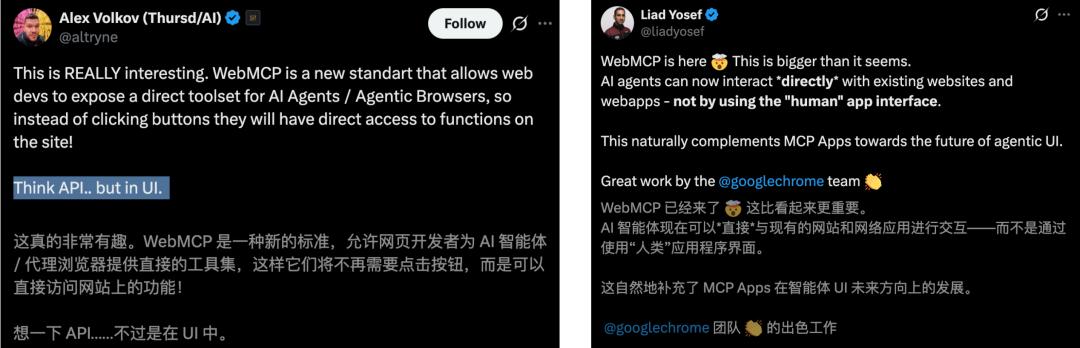
It can be said that the birth of WebMCP sends an extremely clear signal -
The underlying logic of AI agents interacting with web pages is undergoing a complete reshaping.
It has achieved a leap from "visual simulation" to "logical direct connection", bringing an end to the traditional web interaction paradigm.

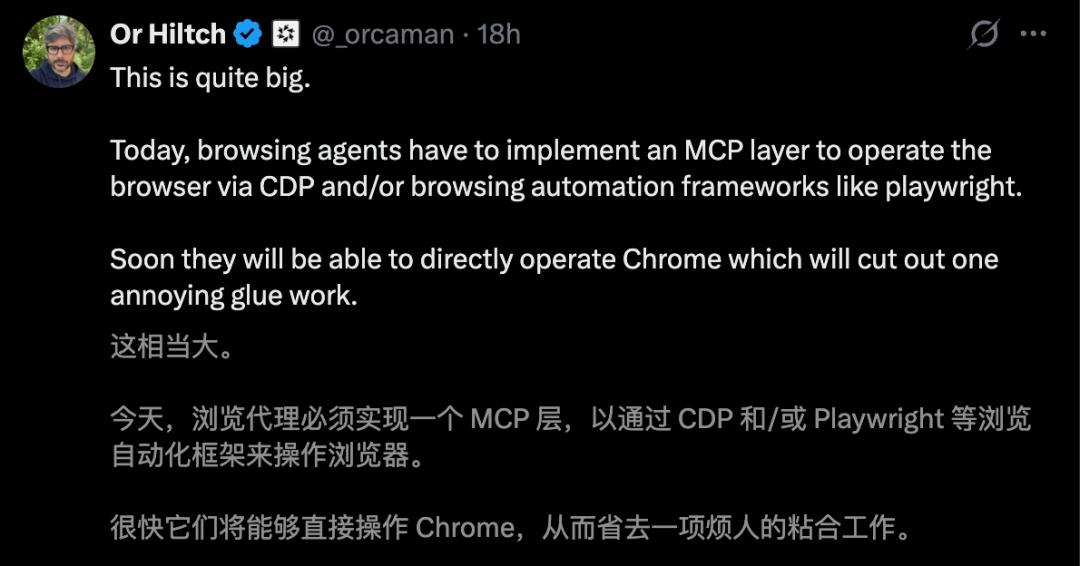
WebMCP Makes a Stunning Debut
Ushering in an Agent Interaction Revolution
Perhaps many people haven't realized the importance of WebMCP yet.
Its core lies in changing the way agents access services, giving them the "master key" to web pages.
In the past few weeks, the world has been going crazy for the popular OpenClaw. If the interaction further evolves in the future, it might trigger another major transformation.

You know, the way agents currently operate web pages is both clumsy and primitive, and the current integration methods are really "pathetic".
In essence, they are just simulating human behavior - taking screenshots, identifying the positions of buttons, simulating clicks, and DOM scraping...
This approach has obvious pain points:
- High cost: A simple search may consume thousands of tokens to process screenshots and parse pages.
- Low stability: Once a website is redesigned, the agent may "paralyze" because it can't find the buttons.
- Inefficient feedback: The agent has to repeatedly "look" at the screen to confirm whether the operation is successful.
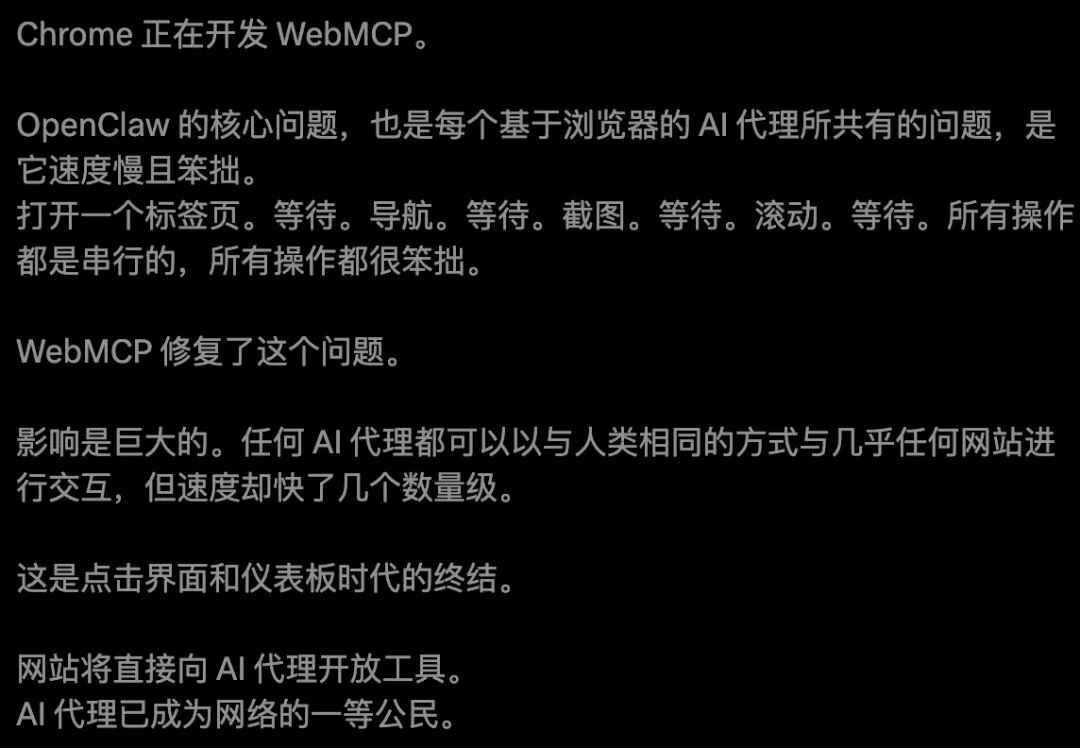
No More Pretending to Be Human, A Game - Changing Advantage
Now, with WebMCP, websites can directly open their service interfaces to AI. Agents can query and execute services directly without going through the "front - end visual interface".
WebMCP will replace the traditional "screen - scraping", enabling more stable and efficient page interactions and information retrieval.
As netizens put it, AI agents are becoming the "first - class citizens" of the network.
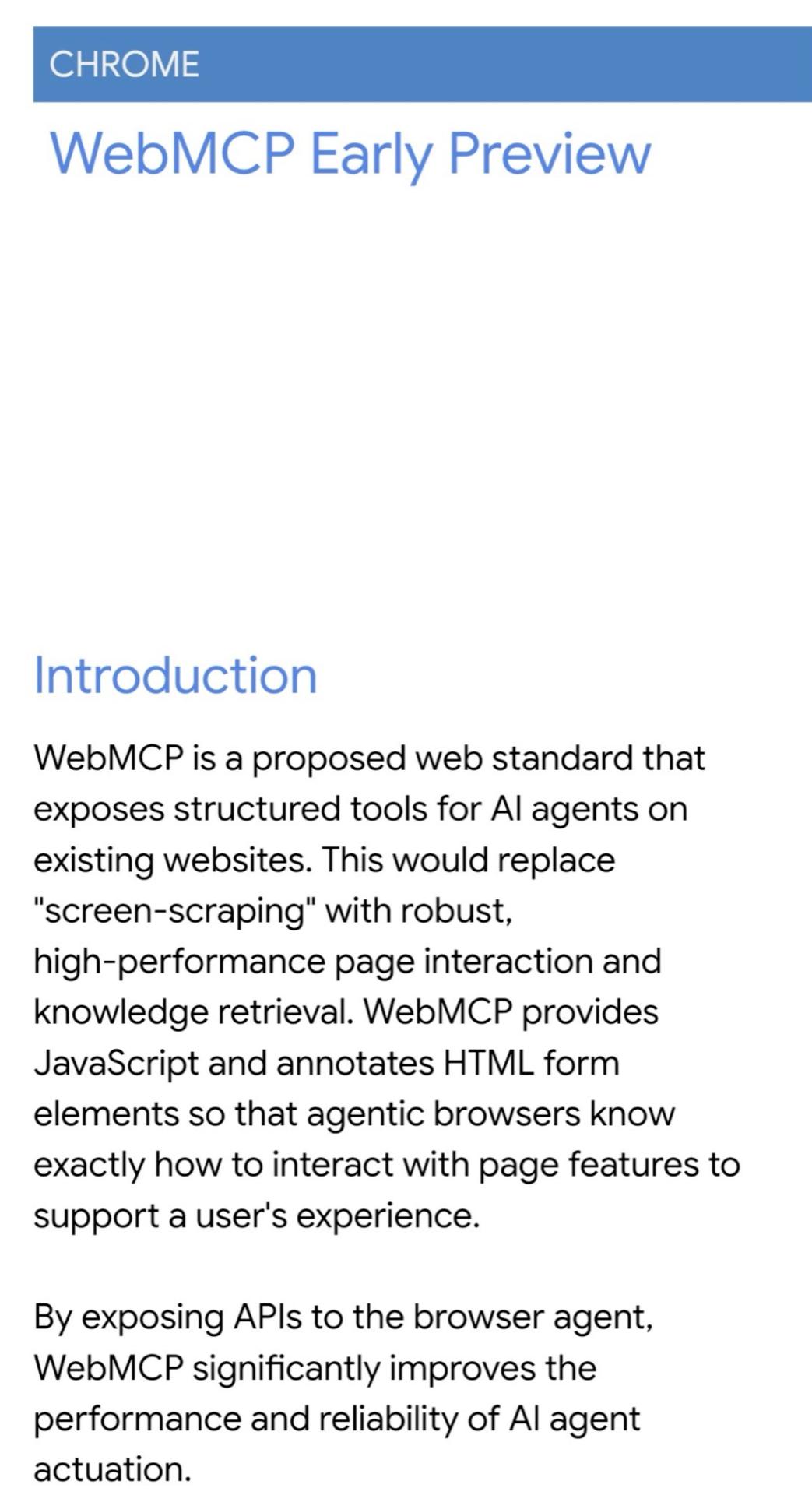
In the official blog of Google Chrome 146, two flexible API access methods are provided for developers:
- Declarative API: Execute standard operations that can be directly defined in HTML forms.
- Imperative API: Execute complex and more dynamic interactions that require JavaScript execution.
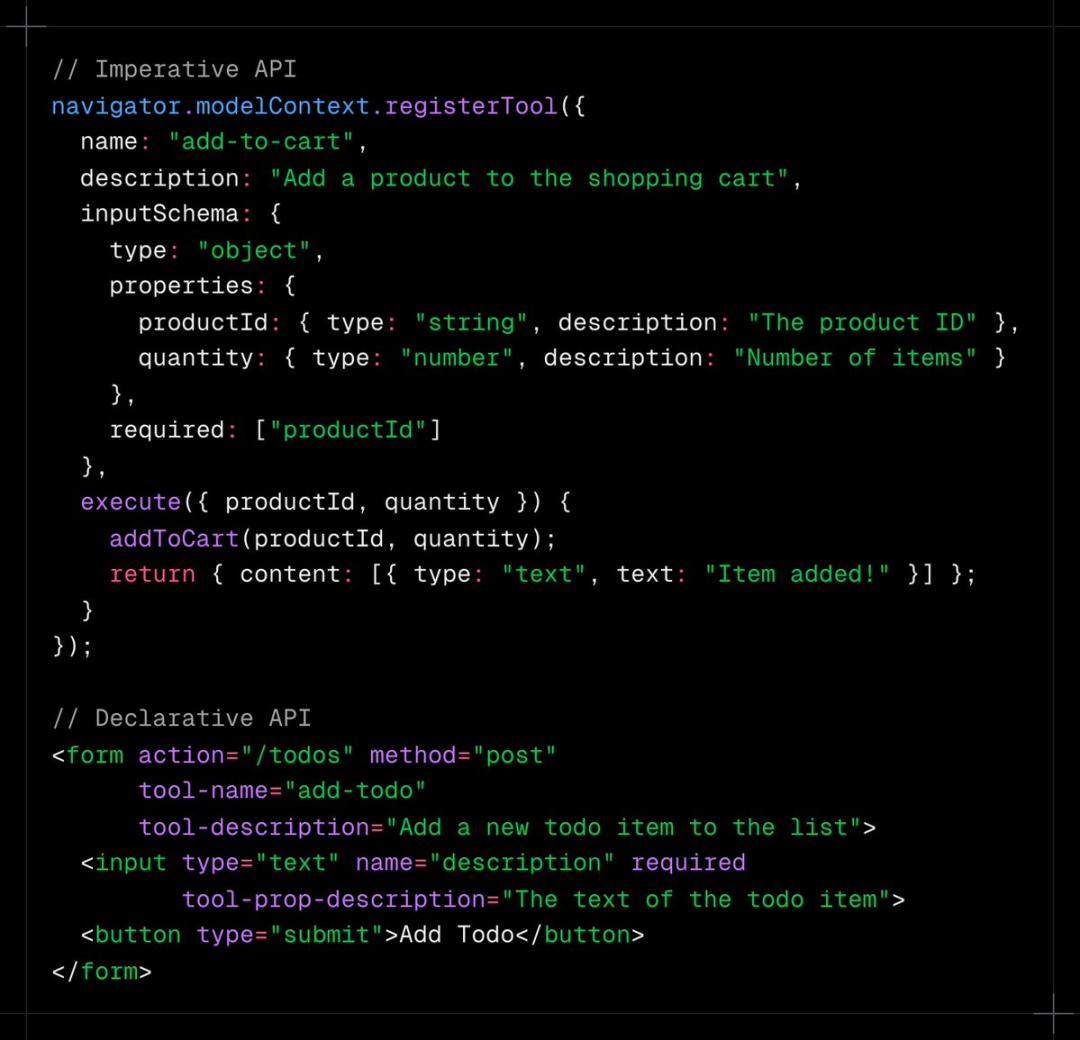
These two methods allow developers to provide a direct toolset for AI, enabling agents to skip visual recognition and directly access the structured functions behind the website.
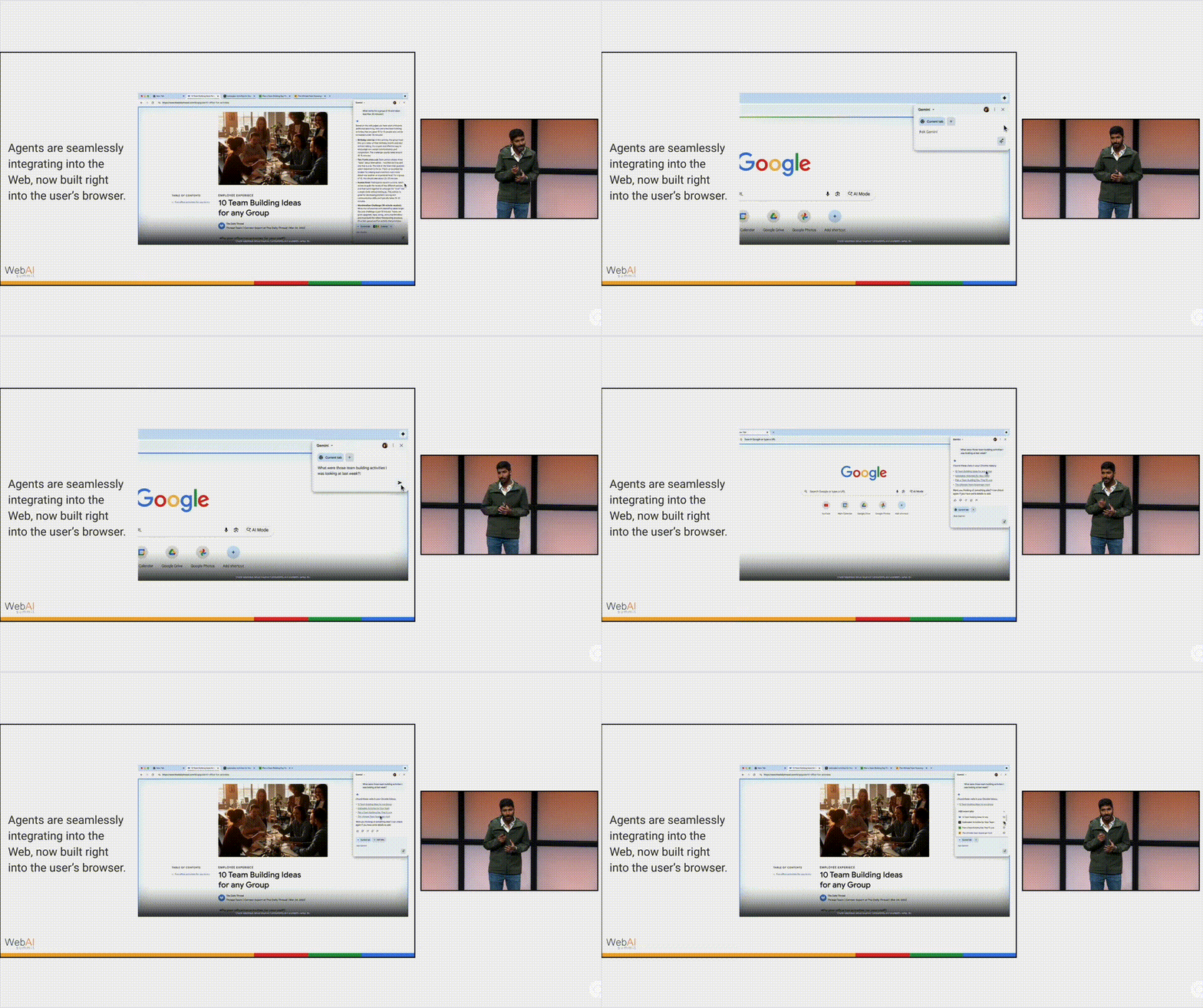
Previously, Google software engineer Khushal Sagar said in a speech that the goal of WebMCP is to become the USB - C interface in the field of AI applications.
It's not just about having agents replace users; it's about establishing a collaborative model:
- The user, the web page, and the agent share the interface and collaborate together.
- Agent - specific path: While designing the UI for humans, developers provide a structured API path for agents.
Two Tech Giants Join Forces
Are They Going to "Kill" the Front - End?
It's worth mentioning that WebMCP is not Google's solo show.
As early as August 13, 2025, developers from Google and Microsoft jointly submitted the WebMCP project on GitHub.
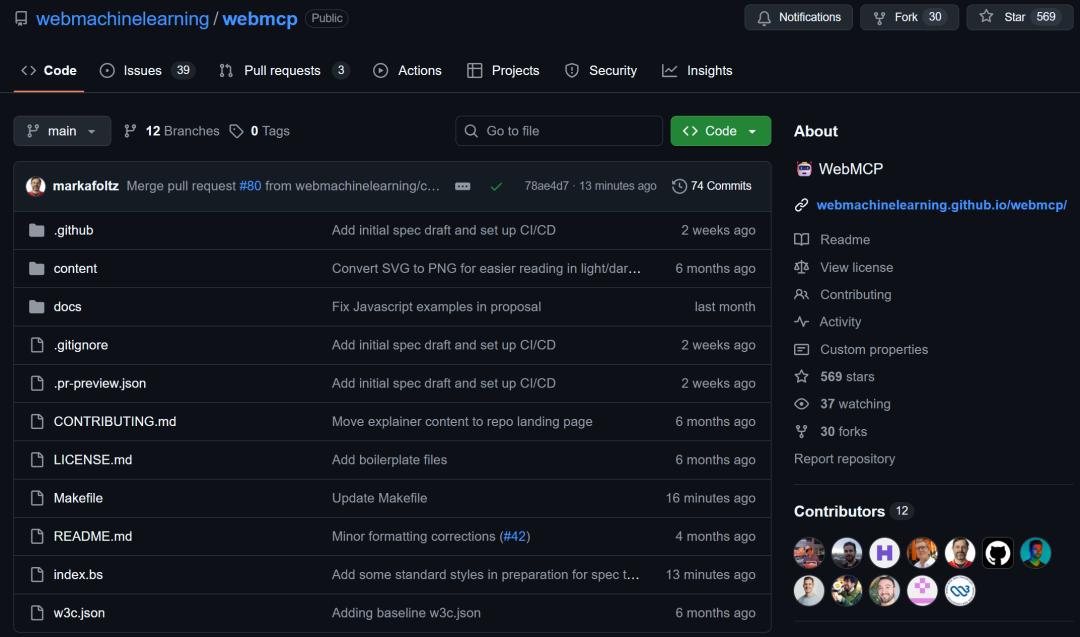
Open - source project: https://github.com/webmachinelearning/webmcp
Currently, AI agents are usually integrated with the backend through protocols such as MCP.
But for web developers, to open up website functions, they often have to write a backend server in Python or NodeJS instead of using the more familiar browser - side JS.
In the project introduction, WebMCP allows web pages to provide an "agent - specific channel" in the UI.
Different from backend integration, WebMCP tools are executed on the client - side and are only available after the agent loads the page.
The agent can still observe the page and simulate operations like a human, but with these tools, it can achieve its goals more directly and efficiently.
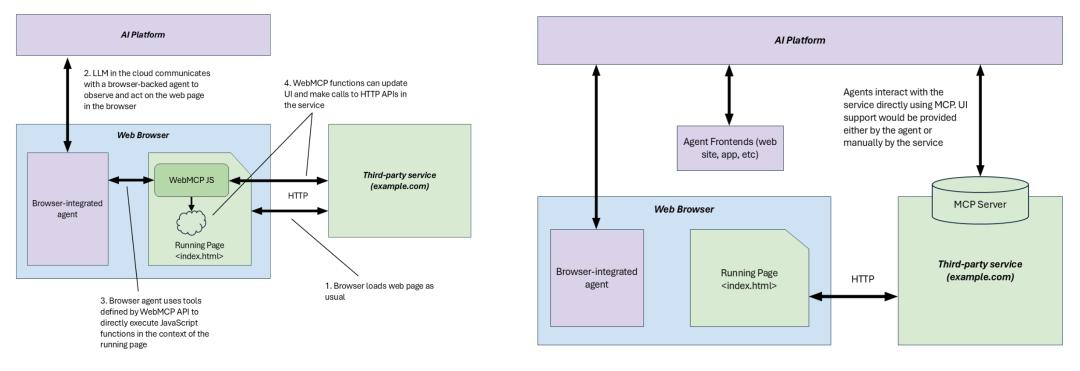
According to the official introduction, here are the three main advantages of WebMCP:
- Code reuse: Directly utilize existing front - end code.
- Unified interface: Users and agents share the same interface, simplifying authentication and state synchronization during interaction.
- A powerful tool for accessibility: Enables assistive technologies to perform higher - level page operations, not just simple clicks.
Furthermore, WebMCP allows users and agents to work side by side on the same web page interface, leveraging existing application logic while maintaining context sharing and user control.
Bypass All UIs, Rule the Web
So, what will agents evolve into in the future with the support of WebMCP?
Developers have envisioned three scenarios in advance: e - commerce, travel, and customer support.
First, in the future, our shopping experience may undergo a qualitative change.
With a single command, the agent no longer has to "rummage" through the page to find the coupon entrance. It can complete the order in seconds through WebMCP function calls.
It can easily find products, configure specific shopping options, and complete the entire checkout process.
In terms of travel, the agent can also become a more accurate booking expert, using structured data to search, filter results, and handle bookings.

By avoiding the interference of a cluttered UI, it can ensure the accuracy of search results every time and directly complete complex itinerary combinations in the background.
In addition, WebMCP can also be a bridge for automated services, allowing agents to automatically fill in necessary technical details to create detailed customer support service tickets.
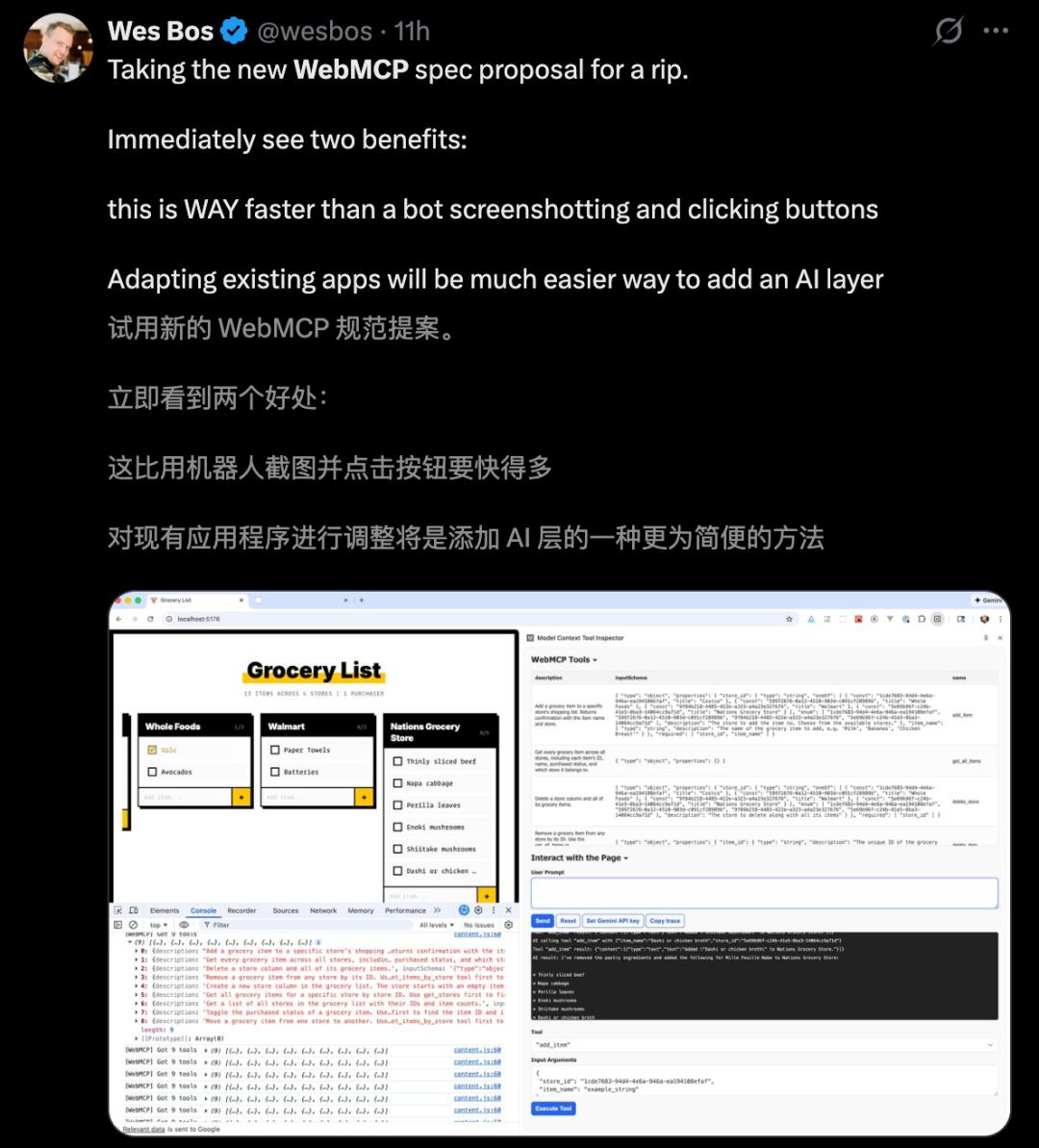
Developers who have tried it are amazed and immediately discovered two major benefits of WebMCP.
The Era of Layered Web Is Coming
Half for AI
Developer Nikoloz Turazashvili's latest article deeply explains what the emergence of WebMCP means for development.
If you've seen an AI agent using a website like a headless chicken - guessing which button is for checkout or struggling to figure out which box to fill in the passenger's name...
Actually, you've grasped the core pain point:
The current web UI is designed for humans, but agents need "structure".
This is exactly the problem WebMCP wants to solve. As mentioned before, it is a proposed web standard that allows websites to directly expose structured tools to agents within the browser.
In this way, agents can call real functions (with Schema) instead of brute - force scraping pages and hoping the DOM structure doesn't change.
Therefore, you can imagine it as an "MCP built into the browser tab".
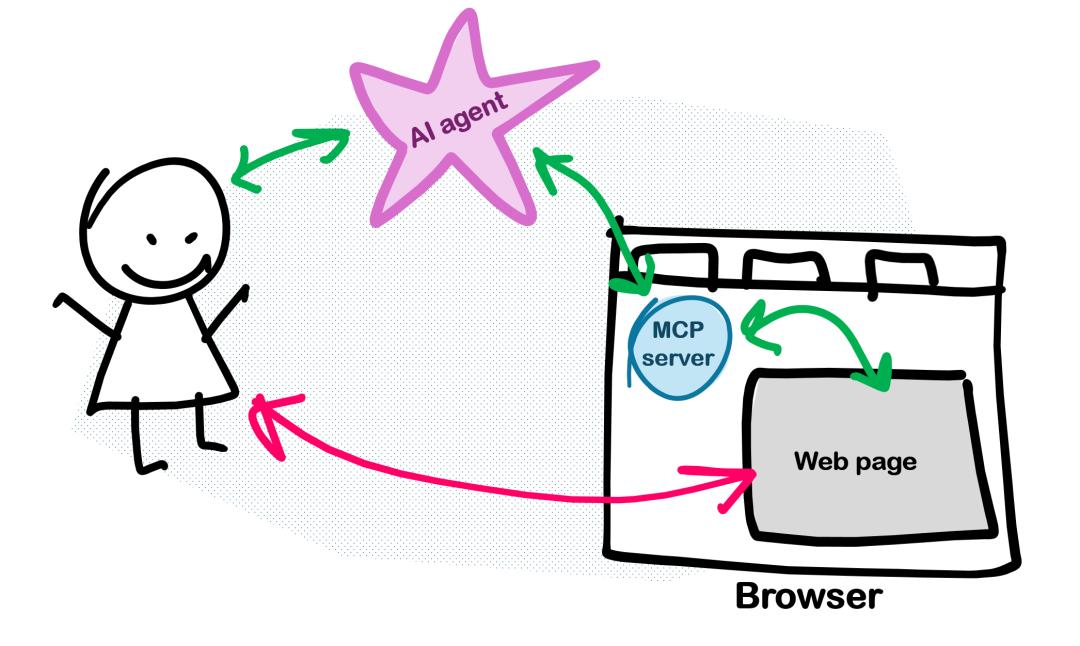
The core idea of WebMCP is to publish tools, not just pixels.
Rather than letting agents guess what a button does, it's better to clearly publish a contract on the built - website:
- Discovery: What tools are available on this page (checkout, filter_results, etc.)
- JSON Schemas: What the input/output specifically looks like (to reduce hallucinations)
- State: A consensus on the currently available content on the page
This changes the approach from "clicking randomly until getting lucky" to directly calling book_flight({ origin, destination, outboundDate… }).
WebMCP is basically saying - if agents are going to run inside the browser, the browser has to provide this handshake mechanism.
And from a product perspective, this is also a transfer of control: The website itself defines which operations are allowed and how the data should be transmitted.
If WebMCP really becomes a standard and mainstream browsers