AI solves the pain points of group travel and collaboration for pet owners. "Yuanban" is seeking seed-round financing.
There must have been a moment when you had this thought -
You want to see that dog that is no longer around. Not just looking at old photos in the album, but really having it appear on the living - room floor, walk around you, and let its tail brush against your ankle. You can go behind it to see the tuft of white hair at the tip of its tail; squat down to look it in the eye and call its name as you used to.
You want to touch the cat that your family has kept for three years. But you're in a university dorm a thousand kilometers away, and it's squatting on the windowsill of your parents' house. The time difference between you two is a seven - hour high - speed train ride and an inflexible class schedule. You can only call it through a video call, but it won't understand and won't come close to the camera.
You want to have a pet of your own. It should be furry, come over to rub against you when you get off work, and take a nap beside your legs on weekend afternoons. But you've done the math - the first - year cost of keeping a pet ranges from 5,000 to 8,000 yuan. Cat food, cat litter, vaccines, and sterilization - each expense is too much for a fresh graduate's salary to bear. You've read the rental contract - in shared apartments in big cities like Beijing, Shanghai, Guangzhou, and Shenzhen, more than 60% of landlords explicitly prohibit keeping pets. You've thought about the future - what if you change cities for work next year? Can it come with you if you go abroad to study? Who will it belong to if you break up?
There are no answers to these questions.
So you close the page of the adoption platform, keep scrolling through videos of pet bloggers, leave a comment saying "So cute" in the comment section, and then swipe to the next one.
This unfulfilled thought forms the most complete entrepreneurial motivation for an early - stage project called "Yuanban".
Two companionship modes to meet two types of emotional needs "blocked by reality"
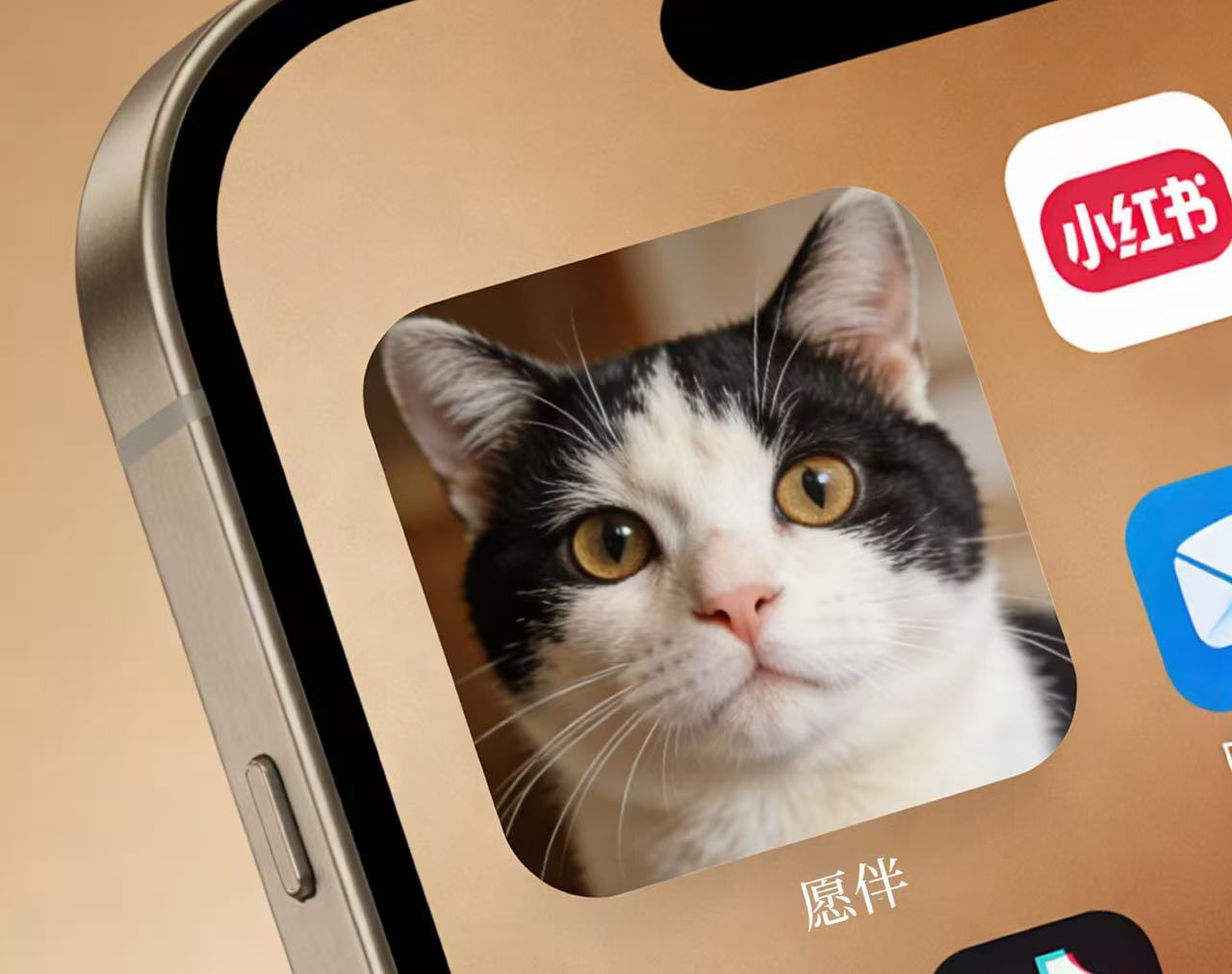
Yuanban is not a single - function tool. Its product architecture is centered around three core user scenarios, covering the entire spectrum of pet emotional companionship.
Mode 1: Digital keepsake - making pets that are no longer around or not by your side still "present"
Users upload 5 to 10 daily photos of their real pets, without the need for professional equipment or a fixed camera position.
The system uses its self - developed lightweight 3D reconstruction algorithm to generate a 3D digital clone that looks exactly like the real pet within 45 seconds. It has a complete skeletal binding and texture mapping, and supports 360 - degree free rotation and scaling.
You can go behind it to see the tuft of white hair at the tip of its tail that you've never seen in the photos.
You can squat down to look it in the eye and call its name as you used to.
You can lower your head to see the pads of its hind paws - details that 2D photos can never capture.
Many people fit this scenario.
There's Lin Jia, whose golden retriever passed away three years ago. There's Xiao Hang, who has a Ragdoll cat at his parents' house while he's studying at a university far away. There's the sales director who's on a one - month business trip and can only call his dog's name through a video call.
They don't need "memorials" or "reminiscences". They just want that living being, whether it's still alive or not, to appear within their reach at a certain moment.
Mode 2: Ideal pet - creating a never - existed life with a paragraph of text
In the second mode of Yuanban, there's no need to upload any photos.
Users only need to write a paragraph.
"Its name is Nian Gao. It's an orange cat. It loves to eat salmon and hates having its belly touched. Every morning, it will squat on the windowsill to watch the birds. When it acts coquettishly, it will tilt its head and paw at you. It's a bit aloof and doesn't like strangers very much. But if I work overtime until very late, it will squat at the door and wait for me."
This text is sent to Yuanban's natural language understanding engine.
The system extracts behavior preference tags from it - favorite food, parts it hates to be touched, and regular morning habits;
Extracts personality characteristic vectors - clingy index, aloof index, curiosity index, and tendency to protect the owner;
Extracts interaction response rules - whether it trots over or stands still and stares when called, whether it rubs against your hand or dodges when its belly is touched.
Then, these instructions are sent to the 3D generation pipeline.
45 seconds later, an orange cat appears on the user's phone screen.
It will squat in the direction of the windowsill - if the camera detects that there is really a window there.
If you reach out to touch its belly, it will dodge.
If you call "Nian Gao", it will tilt its head and paw at the edge of the screen.
The users who fit this scenario include Chen Shuo, whose shared apartment prohibits keeping pets.
There's Xiao Wan, who silently closes the adoption page after doing the math.
They are all those who "temporarily or permanently cannot enter into a real pet - keeping contract".
They didn't upload a single photo. But that cat is exactly what they've imagined in their hearts for three years.
As natural as shaking an album, but it's 360 - degree, true 3D, and doesn't require glasses
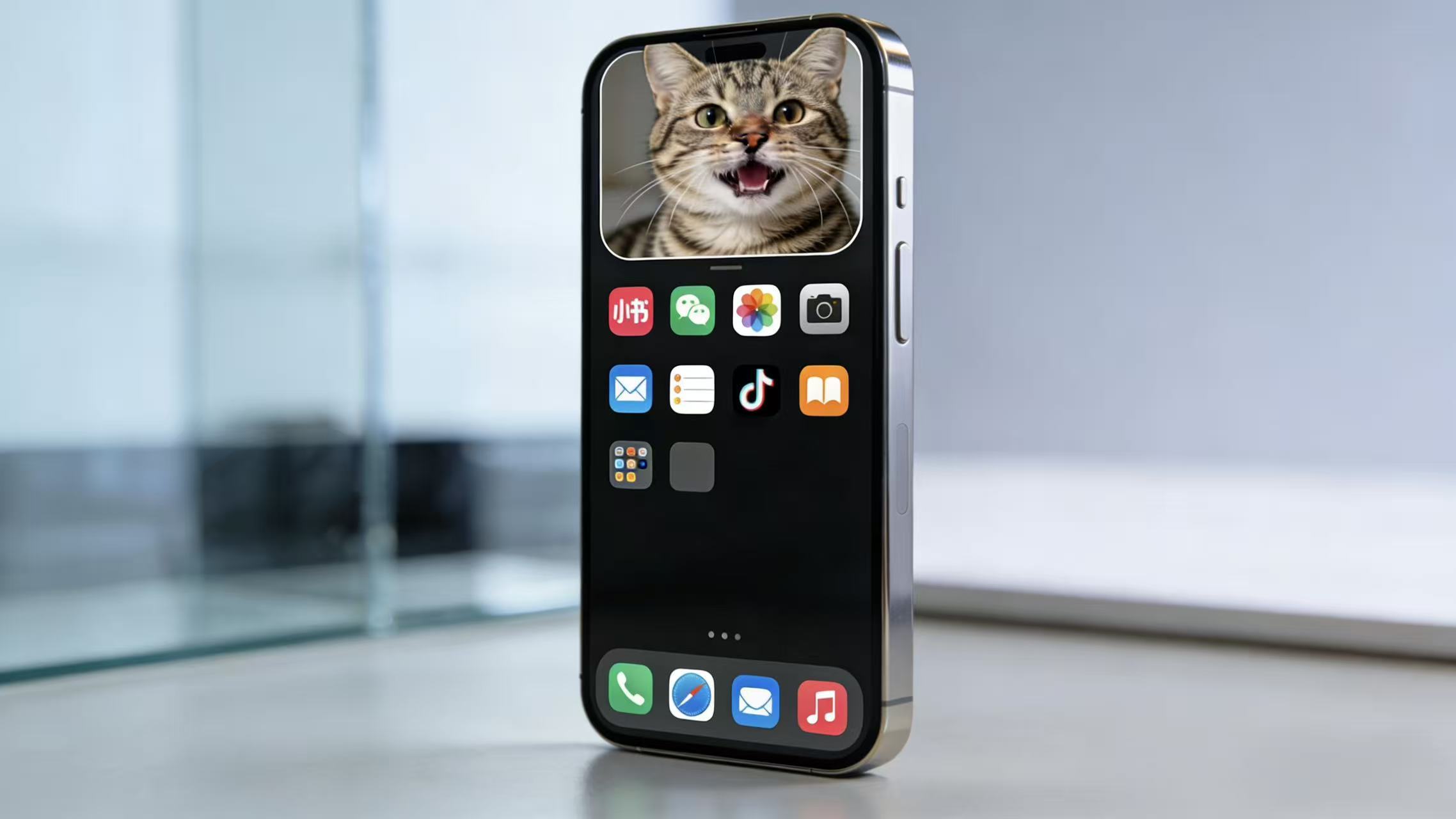
You must have tried that function on the latest iPhone.
Long - press on a photo of a pet, and it will be separated from the background. Shake your phone, and the light and shadow will change. That flat image seems to have a three - dimensional outline.
You instinctively turn your head to see its side - but the picture stops.
After all, it's just a photo. It won't show its back of the head, won't let you go behind it, and won't give you the illusion that "it's really there".
This "almost there" moment is the origin of all the experience designs of Yuanban.
It's not a fake 3D effect from plane cut - out.
Yuanban generates a complete 3D model. It has bones, textures, and a complete geometric structure that won't show flaws from any angle.
It's not a fixed - angle view that can only be seen from the front.
Yuanban supports 360 - degree free rotation and scaling. You can go behind it to see the curve of the tip of its tail, squat down to look it in the eye, and lower your head to see the pads of its hind paws - angles that can never be seen in 2D photos.
It doesn't require AR glasses or additional hardware.
All you need is the phone you use every day.
Open Yuanban and gently shake the screen.
The golden retriever that has passed away will appear on the living - room floor in the position it used to lie in most often.
The Ragdoll cat at your parents' house will poke its head out from the foot of your dorm bed.
The Nian Gao that you've never really had but have imagined in your mind for three years will squat on the windowsill of your rental apartment and tilt its head to look at you.
It is three - dimensional, so you can see the tuft of white hair at the tip of its tail when it turns around.
It is AR, so it really "is there" - the floor pattern passes under it, and the halo of the table lamp glows on the edge of its fur.
It doesn't require glasses, so it's as common as browsing your WeChat Moments and as accessible as ordering takeout.
This is Yuanban's full understanding of "low - threshold companionship": the way for digital life to enter the physical space should be as natural as swiping the screen, rather than adding another screen for it.
Zero - sunk - cost companionship: those who "can't afford, can't keep, or dare not keep" pets finally have an option
The founder of Yuanban found a long - ignored fact in 200 qualitative interviews in the early stage:
72% of the respondents who clearly stated that they "really like pets but can't keep them for the time being" were not hindered by "dislike" or "not wanting to take responsibility".
It is economic burden.
The first - year cost of keeping a pet is 5,000 - 8,000 yuan. Cat litter, cat food, vaccines, and sterilization - each expense is too much for a fresh graduate's salary to bear. When a pet gets sick, the cost of registration, examination, and medicine can easily reach thousands of yuan. This is not an expense that can be saved by "drinking a few less cups of milk tea".
It is residential restrictions.
In shared apartments in big cities like Beijing, Shanghai, Guangzhou, and Shenzhen, more than 60% of landlords explicitly prohibit keeping pets. If you want to keep a pet, you have to rent an entire apartment, which means doubling the monthly rent and the deposit. Not everyone can afford it. Many people don't even have a choice - shared accommodation is the only affordable option.
It is time scarcity.
People who commute 2.5 hours a day on average and work overtime for more than three days a week can hardly take care of themselves. They leave early and come back late, leaving the pet alone at home for more than ten hours; they travel on business frequently and have to find someone to feed the pet at home every now and then. It's not that they don't want to take responsibility, but the rhythm of reality simply can't support a responsibility contract that lasts for more than a decade.
It is also future uncertainty.
"What if I change cities for work next year?"
"Can it come with me if I go abroad to study?"
"Who will it belong to if I break up?"
"If the landlord suddenly says I can't keep it, where can I send it within three days?"
These questions are not unfounded worries. They are the thoughts that flash through the minds of every renter who keeps a pet in the middle of the night.
This is not an excuse. It is a real and short - term insoluble reality threshold.
Real pet - keeping is a responsibility contract that lasts for more than a decade. You invest money, time, space, and emotions, and in return, you get irreplaceable emotional feedback.
But the threshold of this contract blocks hundreds of millions of potential companionship needs.
Yuanban offers another option: zero - sunk - cost companionship.
No commitment is required. Open your phone when you want to accompany it, and put it aside when you're busy. It won't get hungry, won't get sick, and won't feel lonely from waiting.
No burden is required. You don't need to buy cat food every month, don't need to set aside a corner for a cat litter box, don't need to ask the landlord for permission, and don't need to worry about "what will happen to it when I'm gone".
It's always accessible and leaves no trace when you leave. It's there when you open your phone. Whether you change cities, countries, or lifestyles, it's in your phone, waiting for you to call its name.
This is not a substitute for a real pet.
This is a parallel form of companionship - it preserves the possibility of a connection with a furry life for those who temporarily or permanently cannot enter into a real pet - keeping contract.
A technical closed - loop completed by one person and a team being formed
Currently, Yuanban is being advanced full - time by the founder alone.
Liu Yunfei is a sophomore undergraduate student majoring in computer vision.
In the past three months, he independently completed the selection, reproduction, and mobile - end adaptation verification of the 3D reconstruction algorithm. With 5 to 10 non - calibrated photos as input, he can output an interactive 3D model within 45 seconds, with a texture resolution of 2K and support for 360 - degree free rotation.
He independently built the tandem architecture of the natural language understanding engine and the dynamic behavior tree. He completed the entire parsing link from "Nian Gao loves to eat salmon and hates having its belly touched" to personality vectors and interaction rules by himself.
He independently produced the first interactive demonstration Demo. On a test device equipped with a Snapdragon 8 - series chip, the AR interaction frame rate is stable at over 25 frames per second, with more than 30 sets of skeletal animations and over 50 types of emotional feedback combinations pre - set.
Investors asked him: How can you do it alone?
His answer was: "I first ran through the technical path with the minimum cost to prove that this can be done, and then I'll look for top - notch partners with clear division - of - labor requirements. Now that the Demo is available, the conversion rate of my contact with candidates is much higher than it was three months ago."
Currently, he is in in - depth communication with two technical candidates with backgrounds in leading large companies. It is expected that the core team will be established within one month after the funds are in place.
In addition, a technical expert from the AR team of a former mobile phone giant and a senior pet behavior consultant have served as advisors and participate in technical reviews and personality system design every week.
One person ran through the most difficult 3D verification.
Then he paved the way and waited for others to join.
Financing plan and vision
The plan for this round of financing is to raise 1.5 million yuan, offering 10% of the shares.
The funds will be mainly used for:
· Labor costs for algorithm engineers and Unity development engineers (700,000 yuan)
· GPU computing power and cloud storage server costs (300,000 yuan)
· Early - stage user testing and seed community operation (300,000 yuan)
· Basic software and hardware equipment and compliance filing (200,000 yuan)
It is expected that the MVP for iOS and Android will be launched within six months after the funds are in place, and a thousand - person internal test will be started.
On the first page of the product document, Liu Yunfei wrote the following paragraph:
"Yuanban doesn't try to replace any real cat or dog.
Technology can't reverse life and death.
It can't eliminate loneliness.
It can't shorten a thousand - kilometer distance.
It can't bear the economic cost, residential restrictions, and future uncertainty of pet - keeping for anyone.
It's just there at the moment when the real thing is out of reach -
In the familiar form, waiting for you to call its name."
That's the golden retriever that Lin Jia can no longer touch. But she can go behind it to see the tuft of white hair at the tip of its tail - an angle she never really looked at when it was alive.
That's the Ragdoll cat at home that Xiao Hang calls in his dorm. It's a thousand kilometers away and he can't get a leave. But he can make the cat appear at the foot of his bed every night.
That's Nian Gao, which Chen Shuo can't keep but created with words.