Silicon photonics, a major breakthrough
Silicon photonics technology is transforming data centers, and the biggest changes are yet to come.
Pluggable optical modules have been used in data centers for many years and dominate scale - out connections. The following figure shows Google's Jupiter network, which is used to interconnect thousands of Ironwood TPUs in the cluster. Most of the cables in the figure are yellow, representing single - mode fiber (SMF). Regarding scale - up, Jensen Huang, the CEO of NVIDIA, said last summer, "We should use copper cables for as long as possible." Most observers believe that copper cables can only be used for one or two more generations at most.

Figure 1: Google Jupiter Network
There are a large number of connections in scale - out networks. Each rack is equipped with a top - of - rack (TOR) Ethernet switch with more than 128 ports, and there are also 1 - 2 layers of scale - out networks above it. The number of links in scale - up is much larger. For example, in the Nvidia NVL72 rack, there are 18 switches, and each switch is directly connected to each of the 72 GPUs: 18 x 72 = 1296 links per rack. With larger - scale pods such as NVL144 and NVL576, the number of scale - up links per rack will also increase. Therefore, when scale - up adopts fiber optics, the fiber optic market will grow significantly.
At the Optical Fiber Communication Conference (OFC 2025), the fiber optic device market forecast released by OMDIA shows that the market size has grown from billions of dollars in 2003 (mainly used in the telecommunications field) to approximately $13 billion in 2023. After that, the growth rate will accelerate significantly, and it is expected to reach $25 billion by 2030, mainly due to the development of artificial intelligence networks. First, it is scale - out, and then scale - up in a few years. The latest forecast from CignalAI believes that the market size will reach $31 billion by 2029.
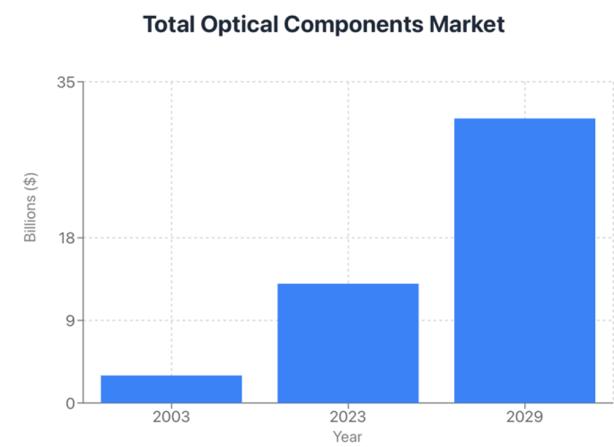
Figure 2: Total Market Size of Optical Devices
Optical components include:
Silicon photonics integrates originally discrete photonic devices into an improved CMOS process;
Lasers, silicon optical amplifiers (SOAs), and other devices manufactured based on III - V processes (such as indium phosphide (InP) and gallium arsenide (GaAs)), as well as packaging, optical fibers, connectors, and adapters, are used to provide connections between chips.
This article focuses on silicon photonics. Subsequent articles will discuss other key components.
How Light Transmits Data Between Chips
Copper cables in data centers are transitioning to fiber optics. The actual physical optical connection is achieved by fiber optic cables, which are usually "single - mode fibers" used to transmit single - mode or multi - wavelength light. The cladding can protect the fiber, but more importantly, the refractive index of the cladding is lower than that of the core, so that the light is concentrated in the fiber. The fiber optic cable market is large. Corning, the market leader, sells fiber optic products worth $6.8 billion annually. Meta recently reached a $6 billion agreement with Corning to continue supplying fiber optic cables in the next few years.
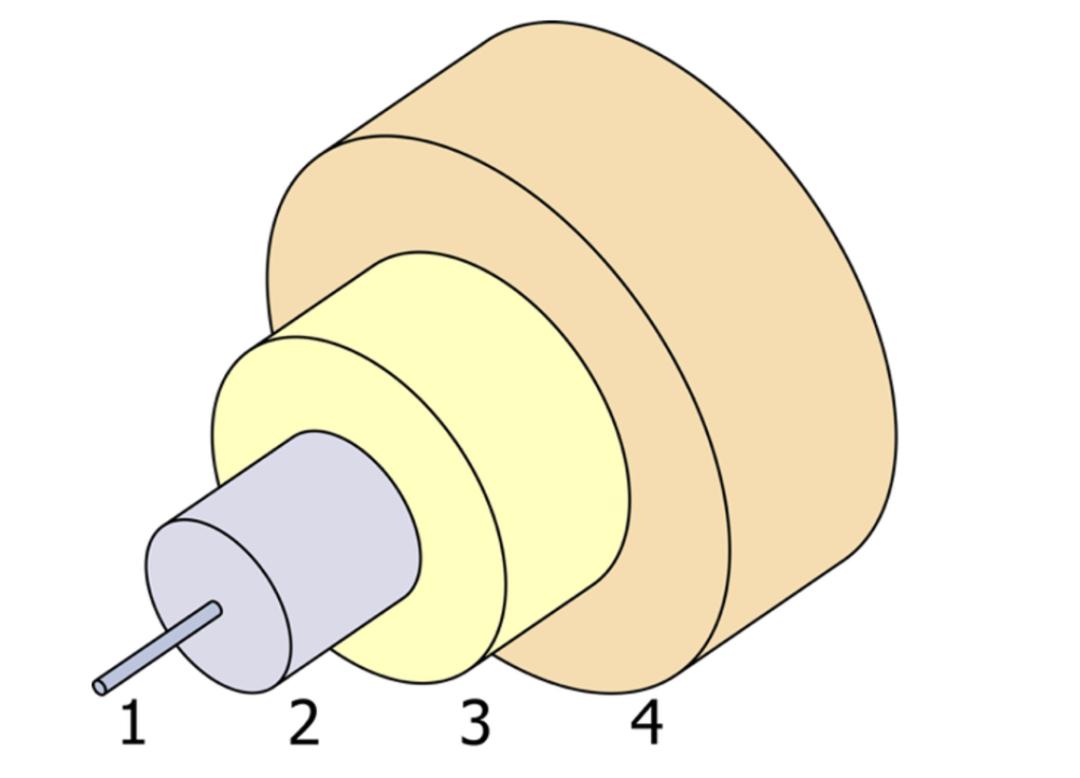
Figure 3: Single - mode Fiber Optic Cable - The actual fiber diameter is 8 - 9 microns, and the cable diameter is 2 - 3 millimeters
The actual optical fiber is made of glass and is extremely thin - only 9 microns, which is 1/100 of a millimeter. Such a small diameter allows the light to remain in a single - mode state, and silicon photonics takes advantage of this.
The wavelengths used in fiber optic communication are the O - band, E - band, S - band, C - band, and L - band because the signal loss in these bands in the fiber is relatively low. They are all in the infrared spectrum range.
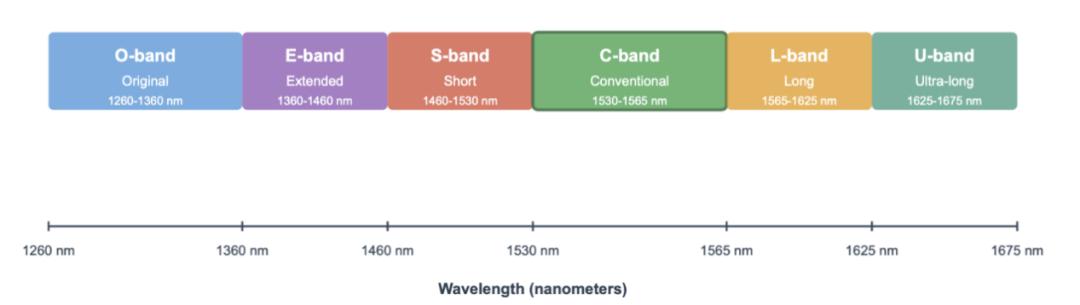
Figure 4: Optical Transmission Bands in Fiber Optics
Since the O - band has low transmission loss in silicon waveguides, it is used in the field of silicon photonics.
In the waveguides of optical fibers or chips, single - wavelength or multi - wavelength signals can be used. Multi - wavelength signals can be achieved in two ways: coarse wavelength division multiplexing (CWDM) and dense wavelength division multiplexing (DWDM). CWDM means that the wavelength intervals are relatively large; DWDM means that the wavelength intervals are relatively small. Both CWDM and DWDM can provide higher bandwidth, but their implementation challenges are different.
Note that although almost all optical fibers used for interconnection are SMF (single - mode fibers), they are not necessarily interoperable because light can be transmitted at single or multiple wavelengths, different wavelengths, and/or using different connectors.
Applications of Silicon Photonics
Pluggable Optical Devices
The main driving force of silicon photonics in the data center market at present is pluggable optical transceivers.
They are standardized hot - swappable devices. One end is connected to the electrical interface of the switch or server, and the other end is connected to the optical fiber. Compared with the copper cables they replace, they can transmit data from one switch/server to another at high speed through the optical fiber with higher bandwidth and lower power consumption.
The main components of pluggable optical transceivers include: 1) lasers; 2) CMOS chips with DSP functions and high - speed SerDes; and 3) silicon photonics chips. In these transceivers, silicon photonics modulators (usually Mach - Zehnder modulators) modulate the laser to superimpose the data from the CMOS chip. In addition, there are filters, couplers, garnets, lenses, and isolators. All these components are packaged in a standardized pluggable package.
Coherent's 2025 investor report predicts that the market for pluggable optical devices will grow from $6 billion in 2023 to $25 billion in 2030! By 2030, the market will mainly be dominated by 1.6T (1.6 terabits per second) and 3.2T data rates, and some slower traditional products will still be shipped.
Optical Circuit Switch (OCS)
Google has been using optical circuit switches (OCS) in Google Cloud for many years.
Different from other AI accelerators, Google's TPU does not require a switch and uses a three - dimensional routing structure to form a cluster of thousands of TPUs. Its top - of - rack (TOR) switch uses pluggable optical modules and is connected to the OCS layer, enabling the reconfiguration of the top - level interconnection of the entire data center. This is crucial for redundancy, reliability, and network reconfiguration in response to changing workloads. Google's solution uses MEMS (micro - electro - mechanical systems) mirrors, which can receive hundreds of input optical fibers and direct the optical path to any one of the hundreds of output optical fibers.
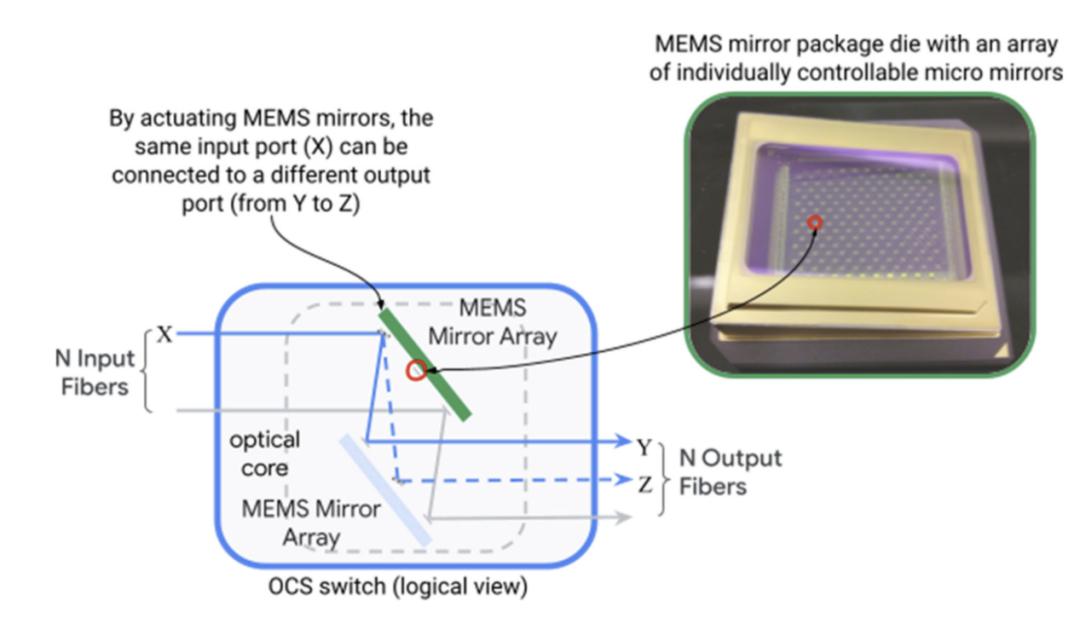
Figure 5: Google OCS Uses MEMS Mirrors to Route/Switch Light
Lumentum and Coherent also currently offer OCS technology, using MEMS (Lumentum) and liquid crystals (Coherent) respectively. At a financial conference in December 2025, Coherent's CEO said, "We are very optimistic about OCS." Last summer, they predicted that the total addressable market (TAM) for OCS would exceed $2 billion, but now seeing increasing customer interest and a wider range of applications, they have raised their TAM estimate to over $3 billion.
Several startups are using more compact silicon photonics technology to develop "two - dimensional" optical communication systems (OCS). These companies include iPronics, nEye, and Salience. They are all conducting proof - of - concept sample tests (nEye and Salience) or delivering their first products (iPronics). These technologies may ultimately be more economical or reliable than existing architectures. These high - density solutions may also enable OCS to be used in scale - out connections, first for redundancy/reliability, then for full GPU - to - full GPU OCS connections, and may even replace silicon packet switches for scale - out one day.
Co - packaged Optics (CPO)
CPO can achieve higher density and lower power consumption than pluggable optics.
As Nvidia and Broadcom announced in 2025 that they would launch Ethernet scale - out switches using co - packaged optics to reduce switching power consumption, CPO has begun to erode the market share of pluggable switches.
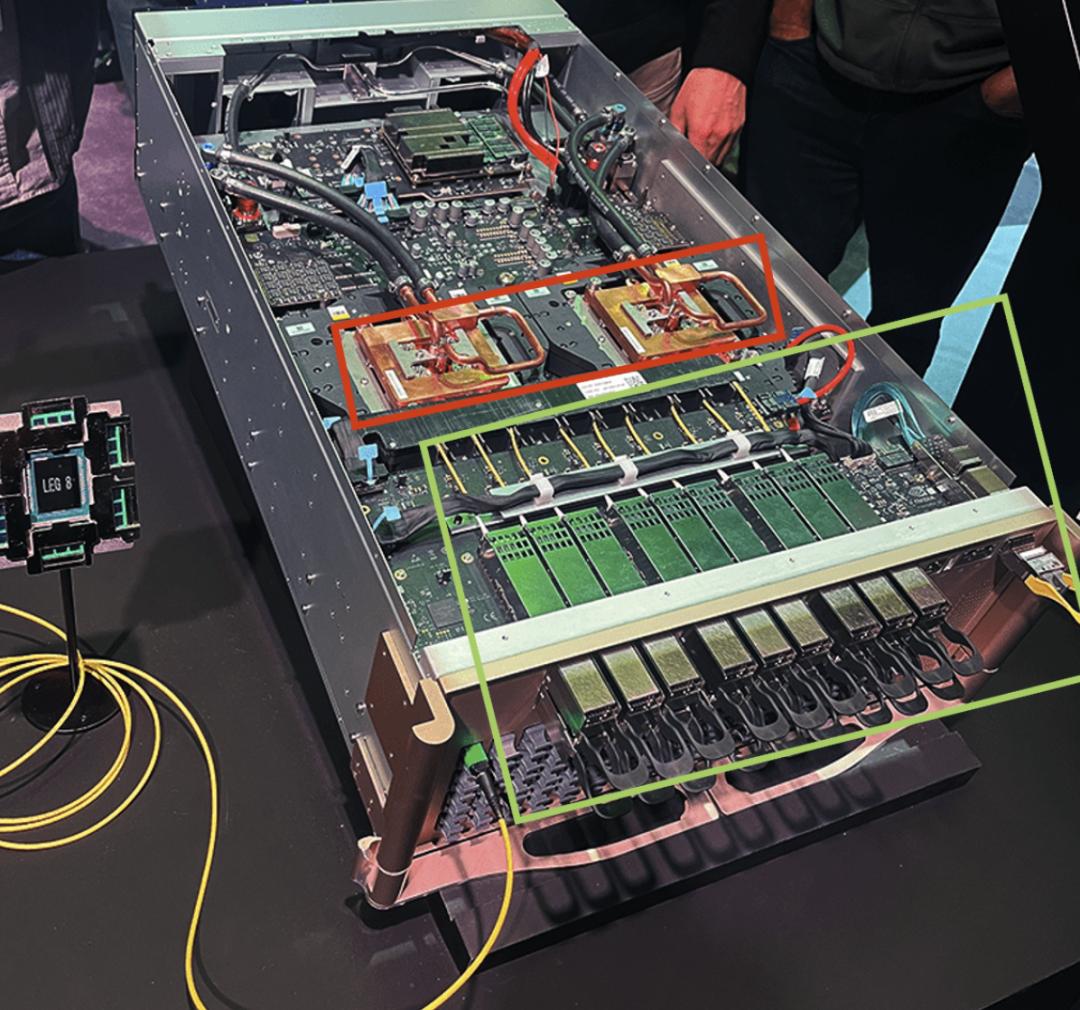
Figure 6: Nvidia Spectrum - X Scale - out Switch (with CPO)
The switches are two chips (in the red box in the figure above), covered with a liquid - cooled housing on top. The four thick black cables protruding from the top are the liquid - cooling inlet and outlet lines. The pluggable lasers (in the green box in the figure above) are located on top of the box at the bottom of the picture to provide the signal carrier. There are a total of 9 lasers, and each box may contain 8 lasers. You can see 9 yellow cables connecting the lasers to the switch chips. The lasers are designed to be pluggable because they have a relatively high failure rate, so they can be easily replaced in case of failure without replacing the entire switch. Only one input optical fiber - the yellow cable - is connected in the lower left corner. You can see many other optical fiber connectors. The optical fiber connections from the I/O panel to the chips must be located below where we can't see.
The energy - saving advantage of CPO (only one - third of that of pluggable optics) is significant for large - scale applications because each rack usually has more than 1000 connections. Nvidia, Broadcom, Ayar Labs, Celestial (recently acquired by Marvell), Lightmatter, and Ranovus are all working on developing CPO solutions.
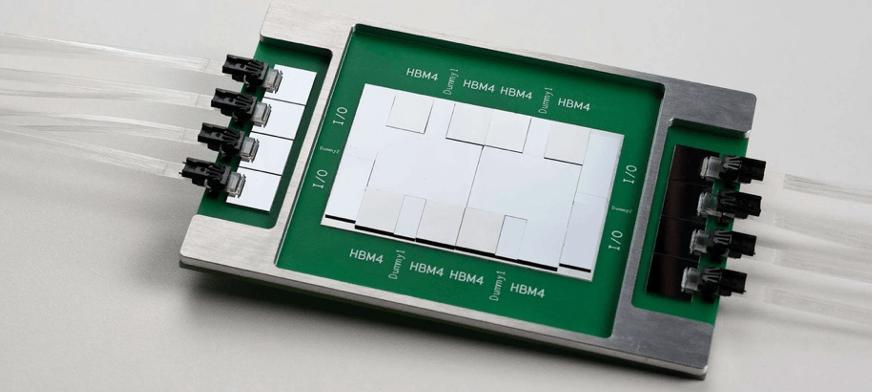
Figure 7: Schematic Diagram of an AI Accelerator with CPO
Today, all GPUs/XPU/AI accelerators use copper cables for connection. As Jensen Huang of Nvidia pointed out, the current trend is to use copper cables for as long as possible. However, the performance improvement of copper cables is approaching the point of diminishing returns. Higher performance will result in a too - short connection distance, thereby increasing the error rate. Optical fiber connections will enable AI accelerators to continuously improve the interconnection bandwidth with lower latency and larger chip capacity.
Ayar Labs and Alchip demonstrated a concept diagram of an AI accelerator based on CPO at the end of last year. The accelerator and HBM chips are located on the silicon interposer, while the optical engine chips (8 are shown in the figure, containing more than 256 optical fibers) are mounted on the organic substrate. In the future, the optical engine will be directly mounted on the interposer.
Silicon Photonics Foundry, with Great Potential
Compared with CMOS, the current scale of silicon photonics manufacturing is small, but silicon photonics device foundries will experience significant growth, and TSMC may become the first.
The current major silicon photonics chip foundries are GlobalFoundries (which recently acquired AMF) and Tower Semiconductor. There are also some smaller manufacturers, such as imec, which provides prototyping services, LioniX in the Netherlands, and Silterra in Malaysia. TSMC, Samsung, and UMC are all developing silicon photonics chip technology for their foundry products.
After GlobalFoundries (GF) acquired AMF, it claimed to have become the world's number one silicon photonics (SiPho) foundry. It is expected that SiPho revenue will be close to $300 million in 2026 and will exceed $1 billion by the end of this decade. Kevin Soukup, vice - president and general manager of GF's silicon photonics division, said that they have two wafer fabs in Singapore, mainly focusing on the C - band and L - band, mainly for long - haul coherent applications. One is the AMF wafer fab they acquired, and the other is their larger original wafer fab, which also uses the AMF process. With the larger wafer fab, they can significantly increase production capacity to meet the needs of long - haul customers.
In Malta, their SiPho wafer fab focuses on pluggable transceivers and co - packaged optics. They have a process that can manufacture 45nm CMOS and radio frequency and/or silicon photonics devices on the chip. They can also manufacture SiPho chips without CMOS. They use the advanced equipment of their 12nm FinFET process to manufacture low - loss waveguides. They also have a technology similar to TSMC's COUPE process, which integrates the electrical interface chip (EIC) and the photonic integrated chip (PIC) into a single chip. They support edge and top connections for fiber input, but different from COUPE, they use optical mirrors for top connection, reflecting the light at a 90 - degree angle to the edge connection, eliminating the need for grating couplers. This gives them an advantage in the broadband field because grating couplers have difficulty handling broadband signals. Soukup said that their customers have "integrated" GF's CPO technology into their designs for scale - out and scale - up.
GF also predicts that in 2026, the revenue of the world's second - ranked silicon phosphide wafer foundry will be about $200 million, the third about $100 million, and the fourth about $50 million. Adding the revenues of these three factories and estimating the revenues of the remaining factories, the total revenue of silicon phosphide wafer foundries in 2026 will be less than $1 billion per year. This is less than 1% of TSMC's annual revenue.
Tower Semi seems to be the world's second - largest silicon photonics device foundry. It is reported that Tower Semiconductor's PH18 SiPho wafer foundry solution is designed to meet the growing demand for the O - band and C - band data center interconnection market. This platform is provided by