Spend 19,999 yuan on a Samsung triple-foldable phone: Is it being a fool or a practical choice for daily life?
All Thanks to the System
This is a Samsung phone that “requires a premium”.
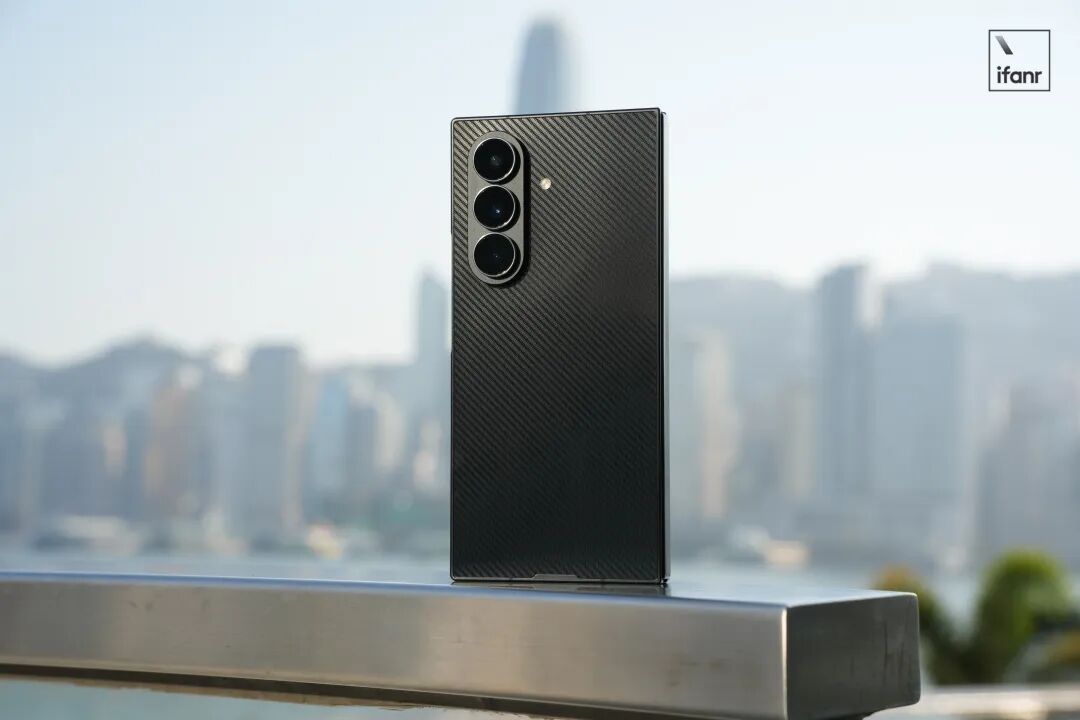
With the official release of the Galaxy Z TriFold in December last year, the category of triple - folding phones finally welcomed its second long - awaited competitor.
After reviewing the Galaxy Z Fold7, Mate XTs, and Mate X7 last year, the main feeling when switching to the Galaxy Z TriFold was just one thing: it's finally here.
The second leading player in the industry.
Design: Advanced yet Rough
As a long - time user of foldable phones, in my opinion, the Samsung Galaxy Z TriFold is the first foldable phone that can truly be described as never tiring to use over time.
The greatest market significance of the Samsung Galaxy Z TriFold is not just to enrich the triple - folding category, but also to finally bring an age - old question to the forefront:
What on earth is the use of a triple - folding phone?
As the most expensive and technologically advanced mobile phone products at present, triple - folding phones are usually associated with keywords like “prestigious” and “high - end”, making it difficult for you to notice other factors.
However, Samsung's triple - folding phone seems to be trying hard to break away from this impression.
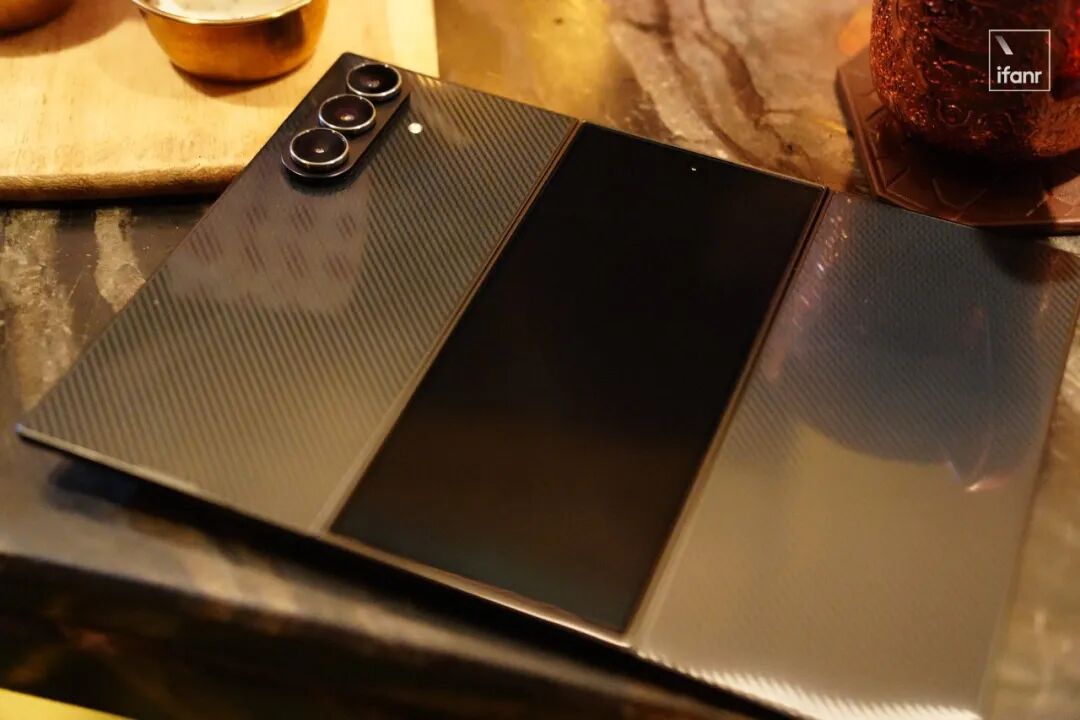
After all, both the visual feedback and Samsung's marketing efforts strive to position the Galaxy Z TriFold as an “efficiency tool” and a solution where 1 + 1+ 1 > 3.
The bad news is that Samsung's triple - folding phone is extremely low - key in terms of appearance design. It only comes in black, has few decorative elements, and is so simple that it's almost plain.
The good news is that after getting rid of all factors related to face - saving, status, and symbolic meaning, the Samsung Galaxy Z TriFold has indeed proven one thing:
This is by far the foldable phone with the strongest tool attributes.
First of all, the Galaxy Z TriFold has very obvious tool attributes in terms of its hardware CMF.
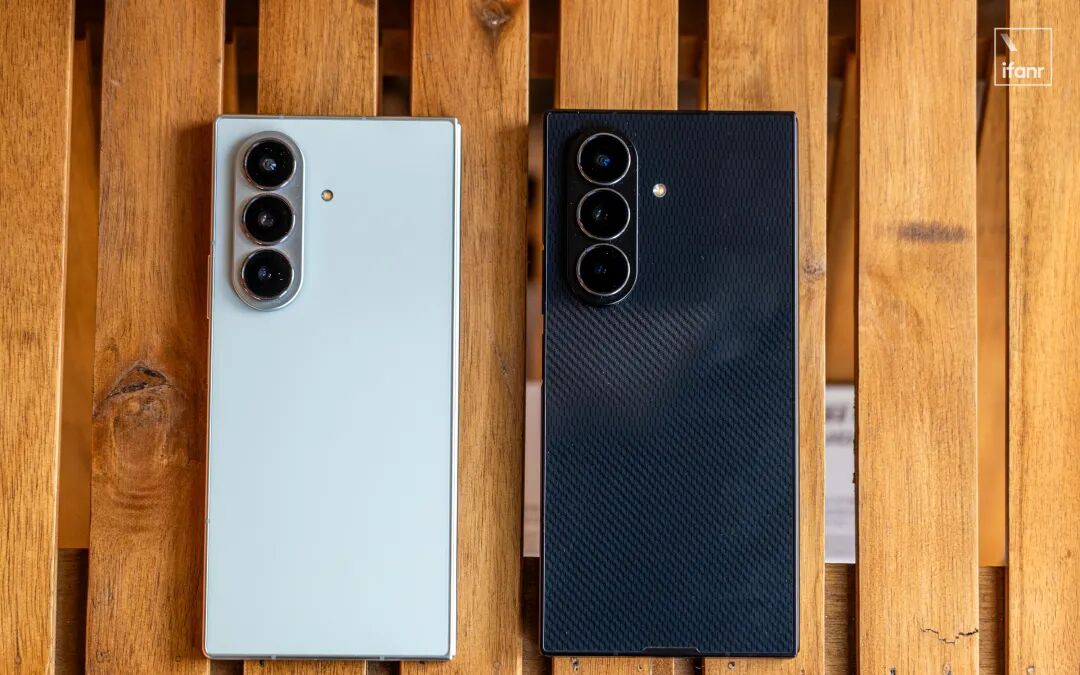
Whether it's the “polymer” back panel with a carbon - fiber texture or the third section of the body that has been deliberately widened for easy opening, it has a very different design orientation from other foldable phones on the market.
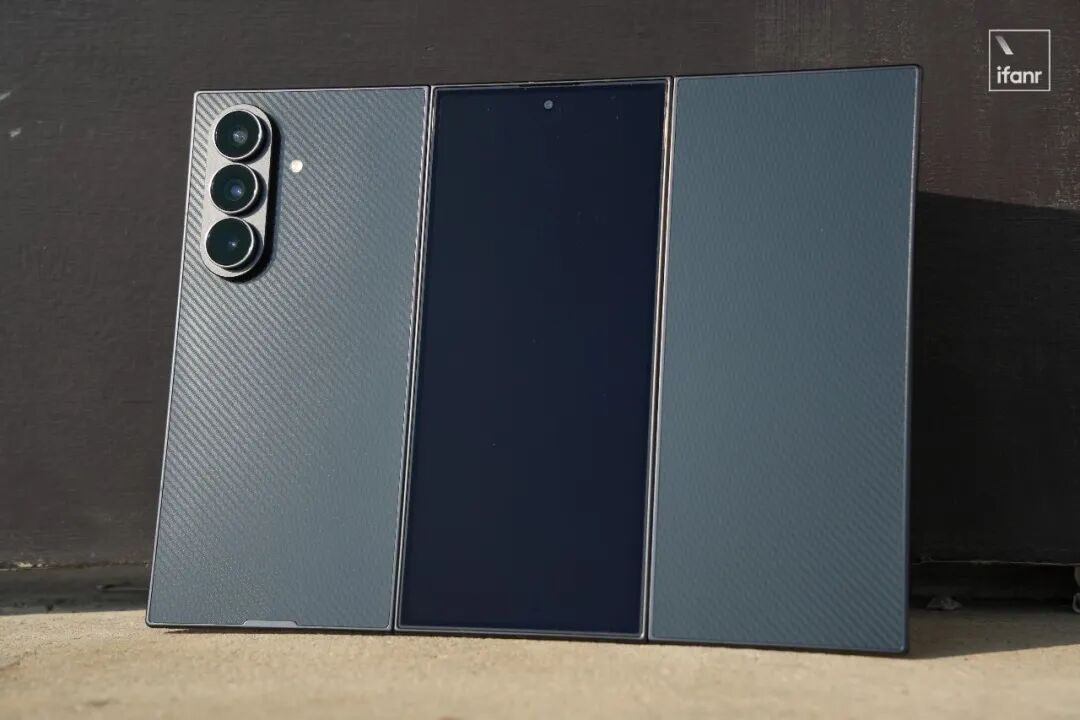
In other words, the Galaxy Z TriFold is a bit like an extreme track car like the Ariel Atom — abandoning most aesthetic pursuits for the sake of hardware attributes, giving a feeling of being both advanced and rough.
The problem with the Z TriFold is the same as that of such track toys: the performance is indeed excellent, but it definitely won't be as eye - catching as the supercars next to it when made into a poster.
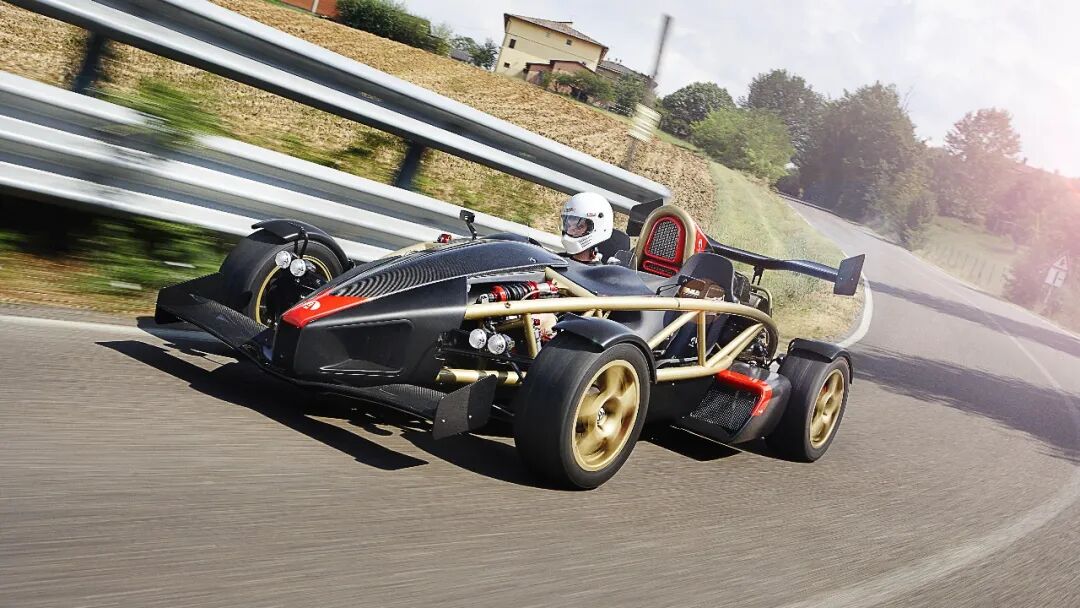
▲ Image | Top Gear
Meanwhile, this pursuit of functionality also extends to the configuration selection of the Z TriFold. Samsung has come up with the highest - specification combination that can currently be packed into a foldable screen: a specially - tuned Snapdragon 8 Elite, 16GB of RAM, and the 200 - megapixel main camera that's almost become Samsung's signature —
Although this combination is essentially a copy of the Z Fold7's hardware list, Samsung is at least honest and hasn't cut the configuration due to excuses like “the space in the triple - folding body is more limited”.
It even offers the 45W Super Fast Charging 2.0 exclusive to the Ultra series, as well as a comparable to competitors 5600mAh battery.
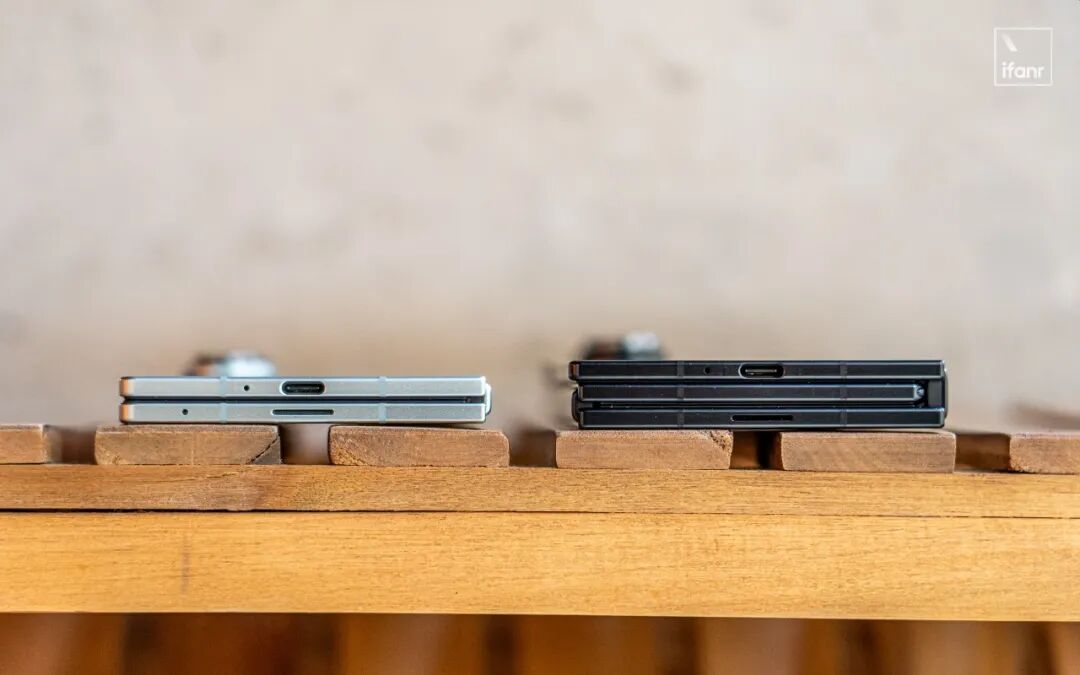
However, compared to the back panel that easily gets fingerprint smudges no matter how you hold it, what's even more noticeable is the weight of the Galaxy Z TriFold.
Not only does Samsung's family - style right - angled bezel design make it look heavy, the bare weight of the Z TriFold (including the film) also reaches 310 grams, and it will be close to 350g after putting on the official stand case:
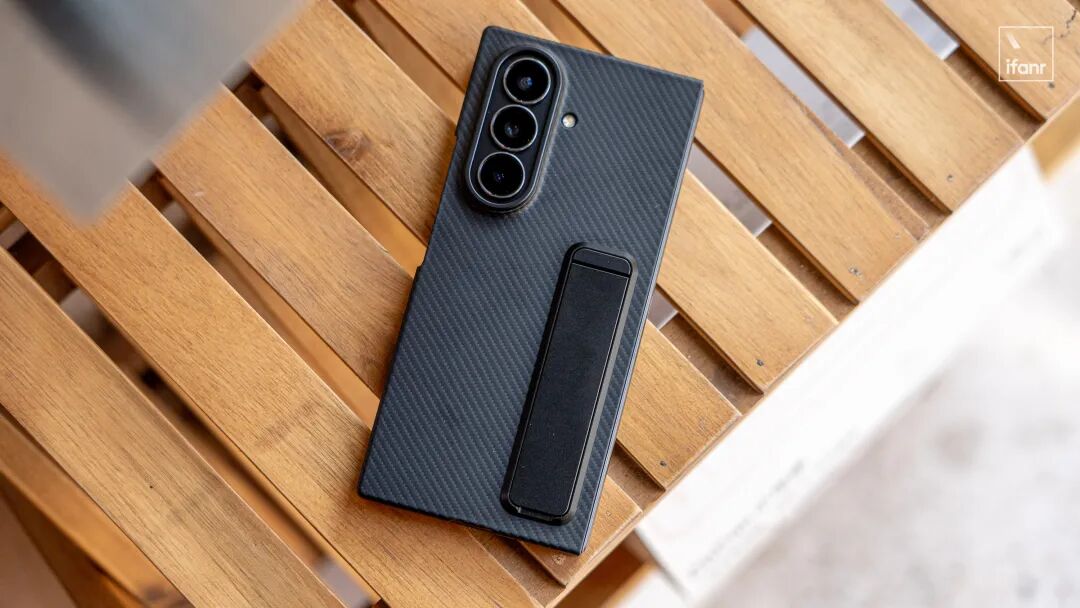
Even if you just hold the Z TriFold and the Z Fold7 together and feel their weights, you can clearly feel the heft of the triple - folding phone, and the appearance design further enhances this sense of heaviness.
Therefore, during the period when I used it alongside the iPhone Air, the weight of the Z TriFold was the most uncomfortable aspect.
Efficiency: One More Fold, Double the Functionality
But if we put the weight aside and simply look at how much the 10 - inch screen can improve the daily usage experience, the results are also very significant —
The improvement in usage efficiency of the triple - folding phone compared to the double - folding phone is even more tangible than that of the double - folding phone compared to the regular straight - bar phone.
The main reason is that the aspect ratio of the triple - folding phone is completely different from that of the double - folding phone.
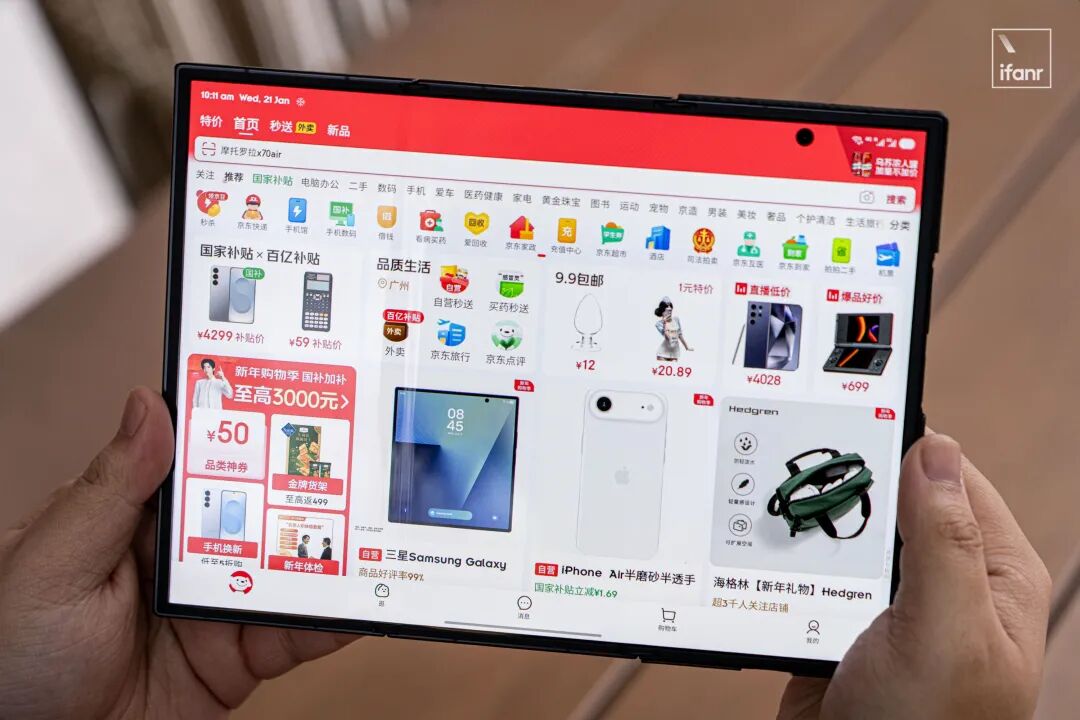
Although compared to the 8 - inch inner screen of the Z Fold7, the 10 - inch screen of the Z TriFold doesn't seem significantly larger in terms of numbers, the increase in the aspect ratio from 10:9 to 4:3 means a full 50% increase in the display area, expanding from 204cm² to 305cm².
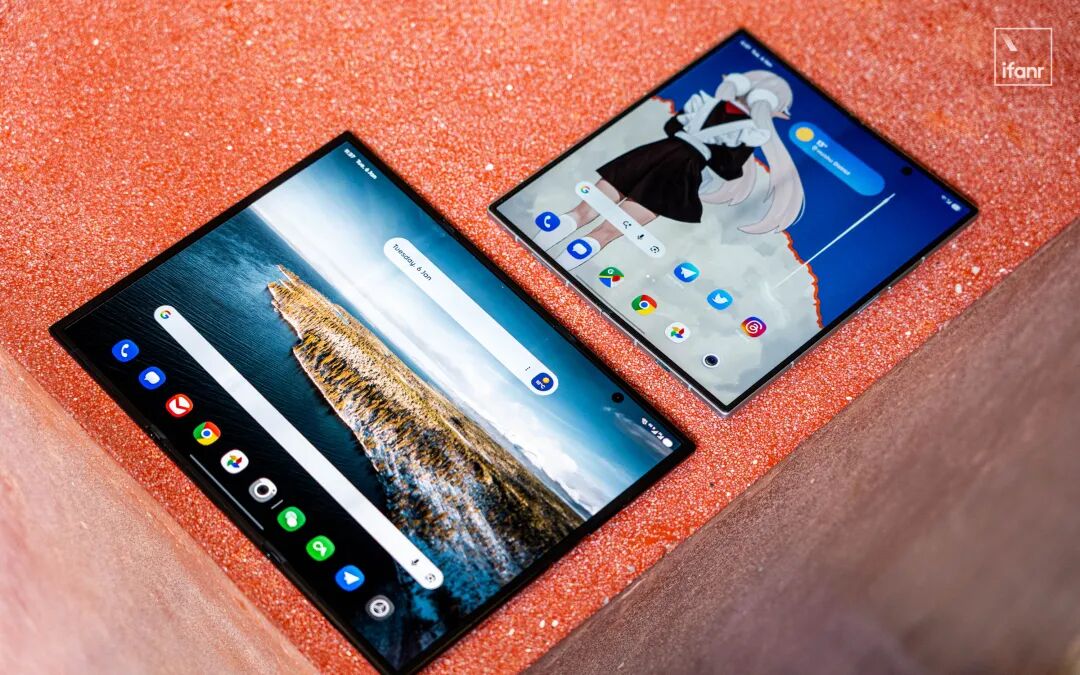
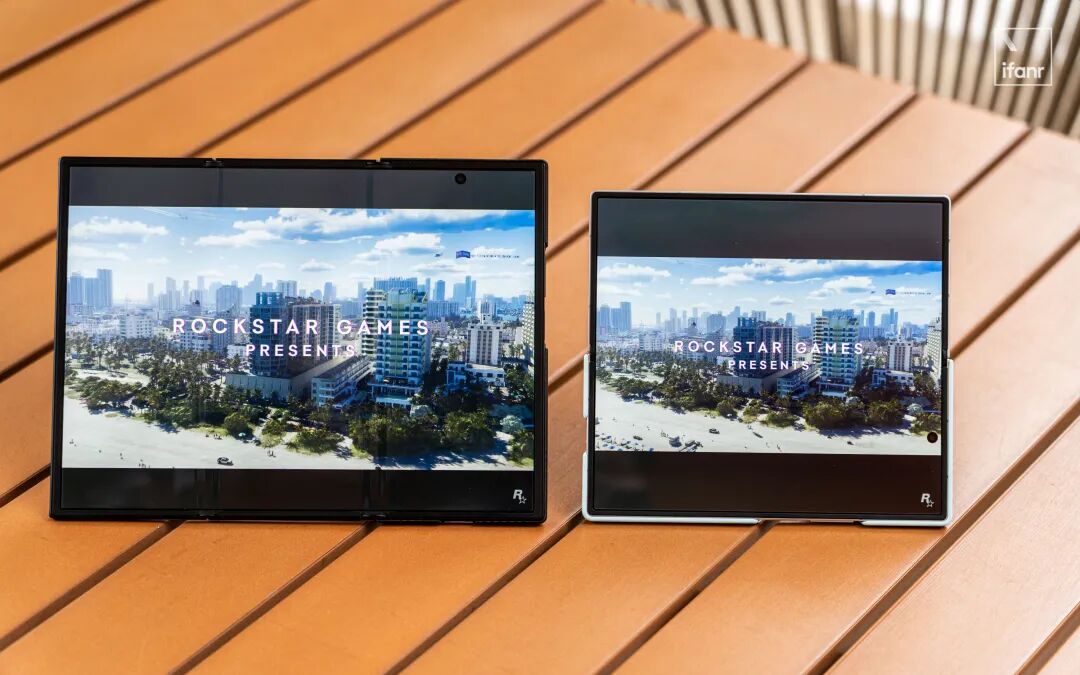
The most intuitive result of this “non - proportional expansion” is that when watching the most common widescreen videos, the Z TriFold has a much larger actual display area than double - folding and straight - bar phones:
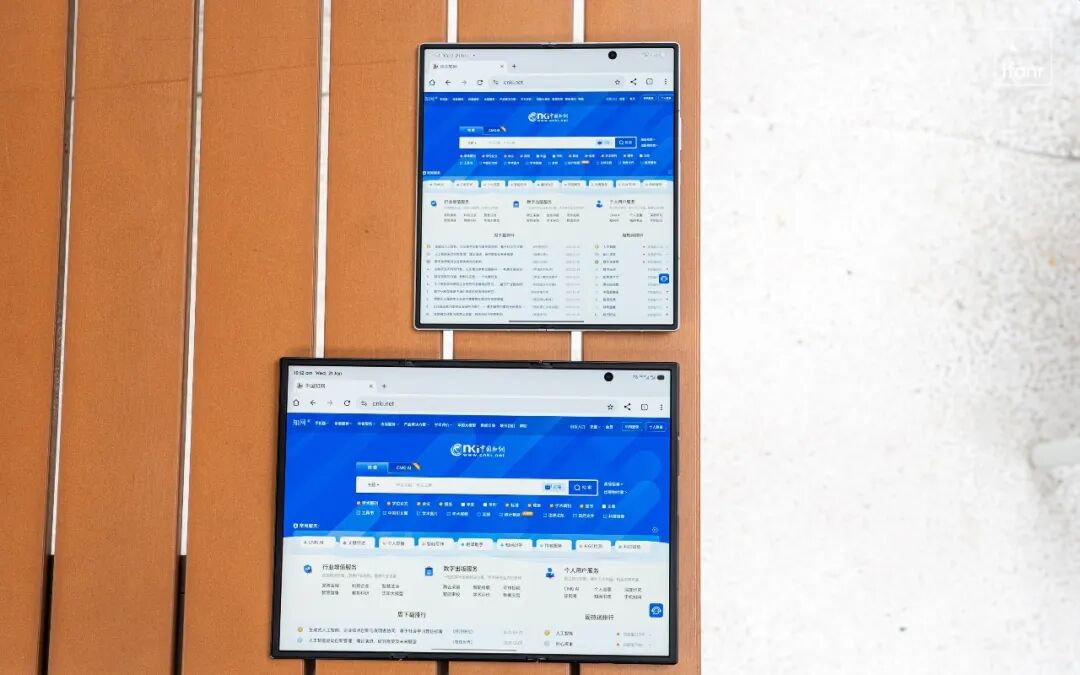
Even some websites that have a very poor user experience on mobile devices — such as a well - known academic paper website — will become much more user - friendly on the Z TriFold in terms of area and aspect ratio, and its usage efficiency is even better than that of double - folding phones:
What many people overlook is that the Z TriFold also has an additional “portrait - mode” usage scenario compared to the Z Fold7 — not using the outer screen, but holding it vertically as a 10 - inch small tablet:
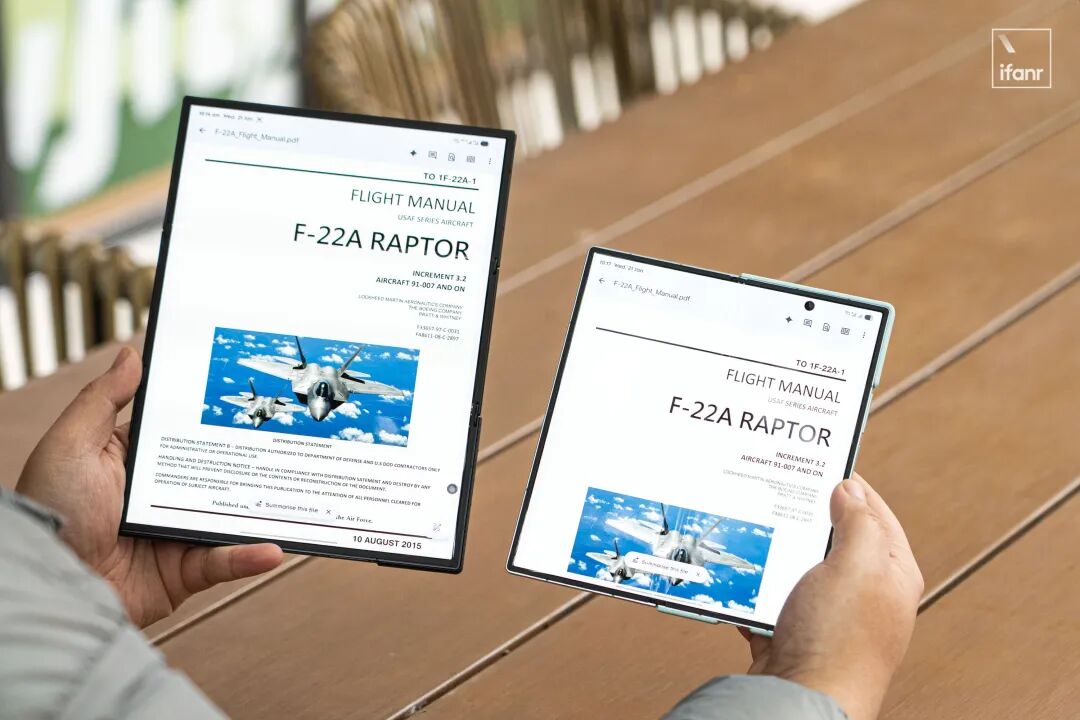
At this time, many PDF documents that are too small to view on a regular phone or not fully displayed on a double - folding phone can be completely shown on the vertical 4:3 screen, and you can see the details clearly without zooming in.
For a “research - oriented” editor who often needs to consult technical standard documents, the experience of using the Z TriFold as a PDF reader is almost perfect, and the only drawback is that it no longer supports the S - Pen.
Besides reading PDFs or enjoying scrolling through the Threads timeline, having a 10 - inch Youtube Shorts screen that can be unfolded at any time is also a very unique experience.
However, this kind of enjoyable experience also has its drawbacks. It's easier to get addicted to scrolling through short videos.
In addition, Samsung's OneUI also plays an indispensable role in the usage experience of the Z TriFold. After all, Samsung has a complete Android foundation and has very flexible third - party solutions when encountering incompatible apps:
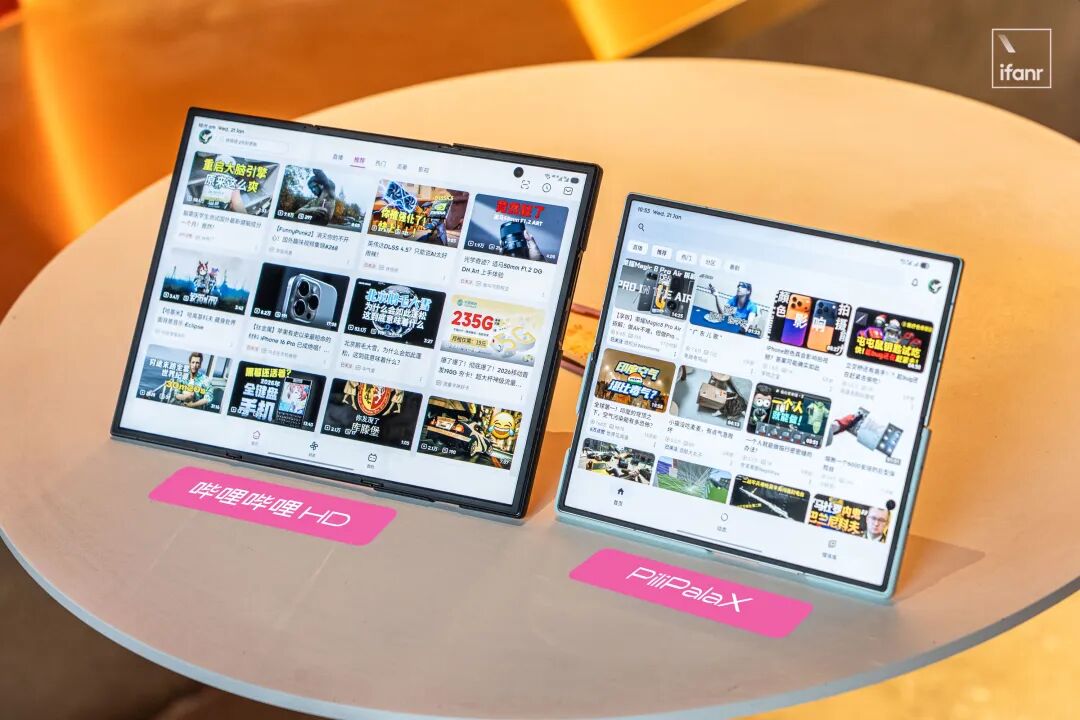
▲ Bilibili HD (left) and the third - party client PiliPalaX (right)
More importantly, after several system updates, Samsung has completed all the GoodLock plugins on the Z TriFold. The full - fledged One Hand Operation+ (OHO+) has played a role that was never imagined before.
In a nutshell, OHO+ has for the first time given the triple - folding phone the convenience of one - handed use.
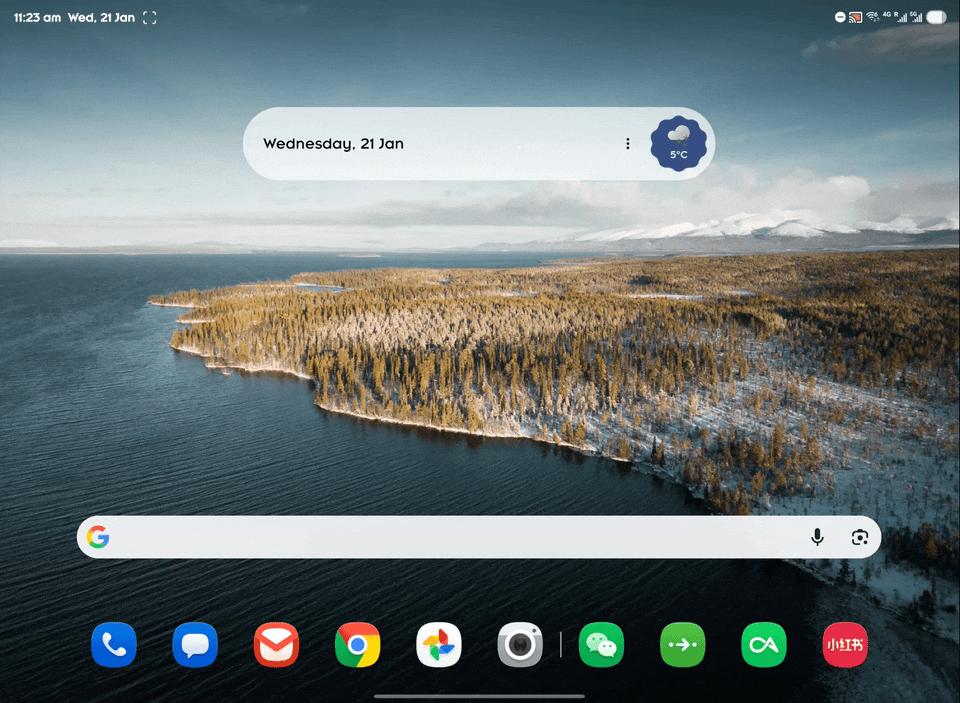
With just simple settings, you can quickly call up a small touchpad by swiping on the side. You can click on buttons and links on the diagonal of the screen with just a move of your thumb, without changing your grip or raising your hand.
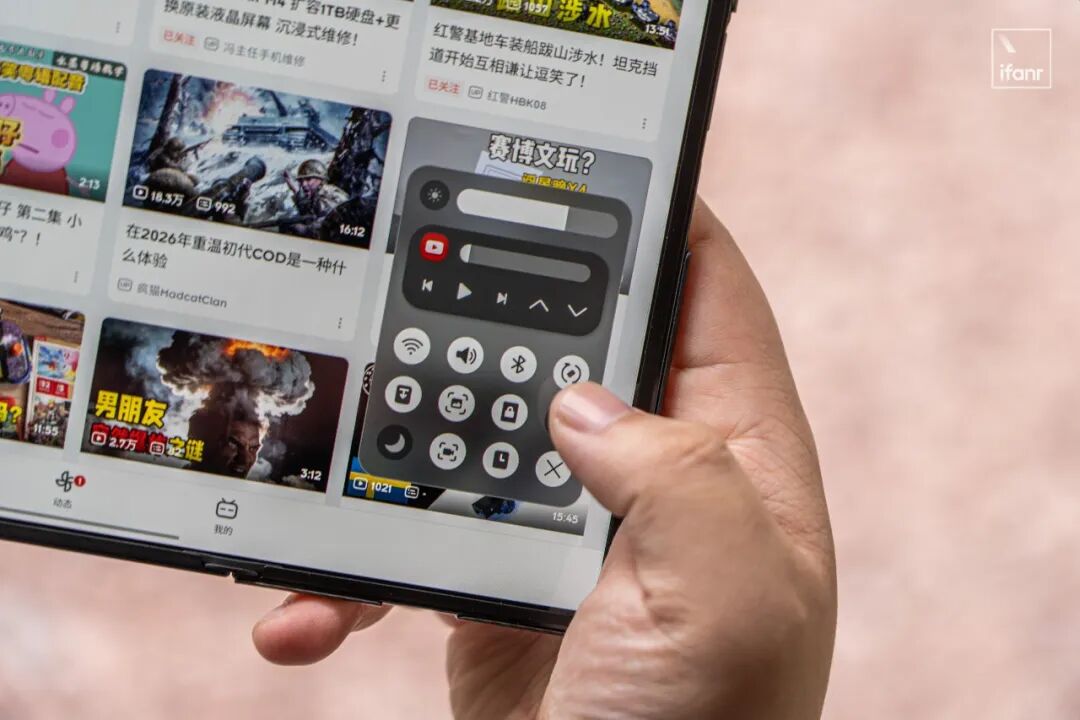
The convenient menu bar in OHO+ also has the same effect. As a “control center” that can be called up with one finger and covered by your thumb, it completely solves the problem of having to frequently reach out to open the control center:
However, it has to be said that as Samsung's first mass - produced triple - folding product, the Z TriFold still shows the inexperience typical of first - generation products in the most crucial aspect of “screen quality” —
It's really stingy for a giant standing at the top of the global flexible screen supply chain.
The inner - screen resolution of the Samsung Z TriFold is 1584 × 2160, with a PPI of only 269, which is quite unsatisfactory by 2025 standards.
As a phone that starts at 20,000 yuan, I think it should at least have the same 368 PPI as the Z Fold7's inner screen:
