As silicon approaches its limits, this startup is entering the new arena of atomic-level chips.
In the 1960s, Gordon Moore, one of the founders of Intel, proposed in an observational review report that, with costs remaining basically unchanged, the number of transistors on a chip would approximately double every 18 - 24 months, leading to an exponential increase in computing power.
The rapid development of the semiconductor industry over the past half - century has continuously verified this "Moore's Law". People generally feel that mobile phones are faster, computers are more powerful, and they are becoming cheaper over time.
However, in fact, as chip components are getting smaller and more densely packed, the traditional evolution logic of "Moore's Law" is gradually "failing".
Especially when the process advances to the 3 - nanometer node and below, silicon - based materials are approaching their physical limits at the nanoscale. The room for performance improvement through simple structural innovation is becoming increasingly limited, and the core logic of Moore's Law is facing fundamental challenges.
Against this backdrop, the global semiconductor industry is simultaneously pursuing two paths. One is "extending Moore", which involves continuing to approach the limits within the silicon system through structural innovation. The other is "beyond Moore", which involves seeking next - generation technologies through new materials, new architectures, and new computing paradigms. Two - dimensional semiconductors are one of the most promising directions in the latter approach.
Two - dimensional semiconductors refer to new semiconductor materials with a channel thickness of only one or a few atomic layers. The atomic - scale thickness brings stronger gate control capabilities, lower leakage currents, and better power consumption performance. They are expected to continue to drive the evolution of device performance without relying on extremely complex structures.
But the key question is whether such atomic - scale semiconductor materials can be made into chips.
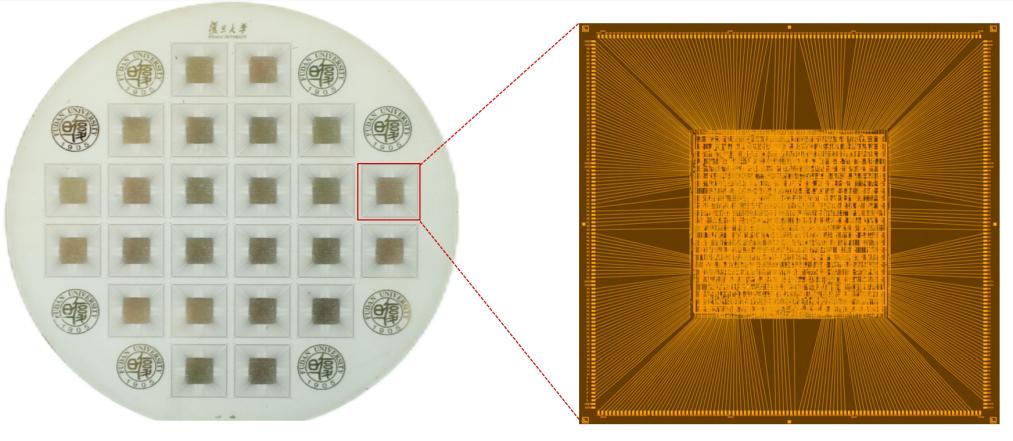
A team from Fudan University has provided a preliminary answer to this question. In April 2025, after a decade of scientific research, the joint team of Zhou Peng and Bao Wenzhong from the State Key Laboratory of Integrated Chip and System at Fudan University successfully developed the world's first 32 - bit RISC - V architecture microprocessor "WUJI" based on two - dimensional semiconductor materials. This achievement overcame the bottleneck in the engineering of two - dimensional semiconductor electronics and achieved an integration of 5900 transistors based on two - dimensional semiconductor materials for the first time.
But in the view of the founding team, this is far from the end.
"The 'WUJI' chip only represents the ceiling achieved through academic research paradigms. What we need to do next is to develop two - dimensional semiconductor materials with an engineering mindset and promote their real industrialization," said Bao Wenzhong, a researcher at the School of Microelectronics of Fudan University and the founder of Yuanji Micro - Technology (Shanghai) Co., Ltd. in an interview. "WUJI" is more of a starting point to verify the technical feasibility. The real challenge lies in how to promote two - dimensional semiconductors from scientific research prototypes with thousands of transistors to CMOS chips with a complexity of millions of gates or even higher, and how to cross the industrial threshold in terms of yield, cost, and process stability.
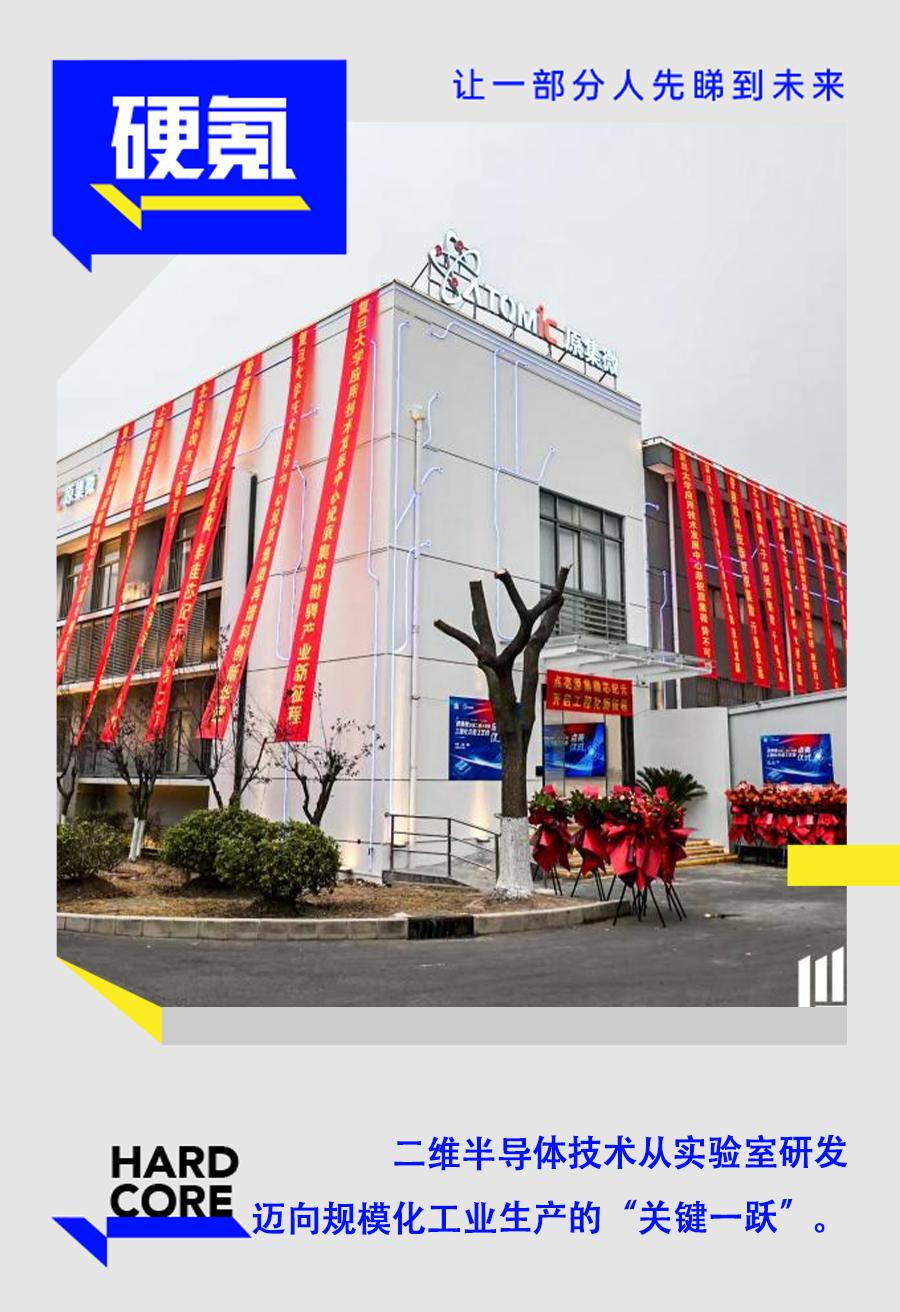
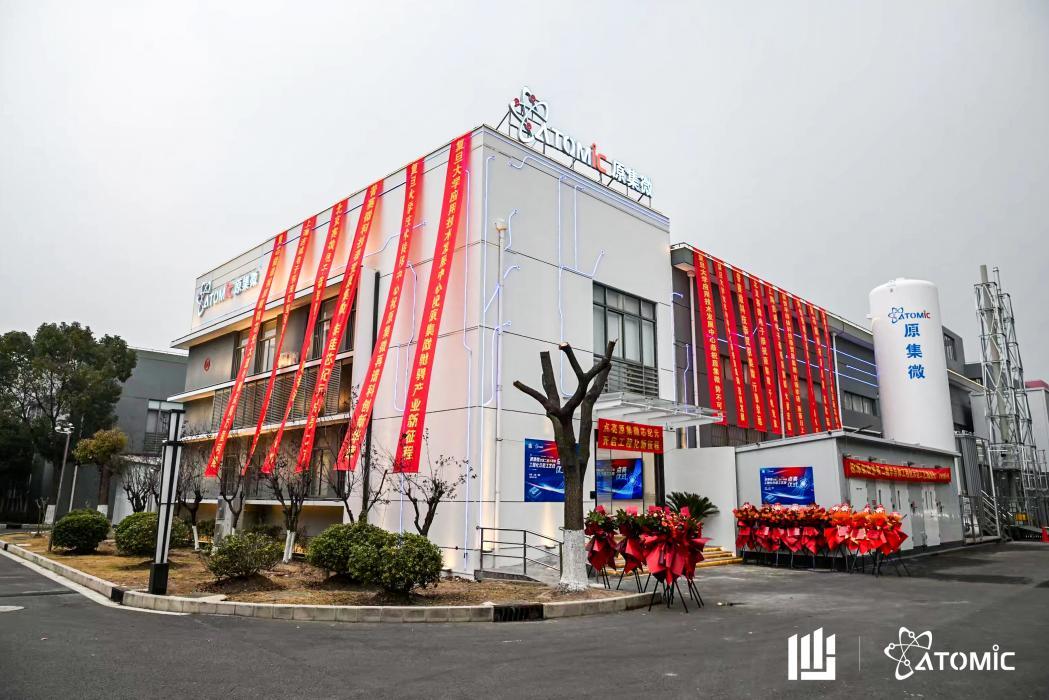
In June 2025, after successfully completing a seed round and a pre - angel round of financing, Yuanji Micro - Technology started the construction of the first two - dimensional semiconductor engineering verification demonstration process line in China. In October of the same year, its first batch of core equipment was officially installed. By December, it received nearly 100 million yuan in angel - round financing. Currently, the demonstration line has been officially launched in Chuansha New Town, Pudong New Area, Shanghai. As the first two - dimensional semiconductor integrated circuit engineering demonstration line in China, it will witness the 'key leap' of China's two - dimensional semiconductor technology from laboratory research to large - scale industrial production.
In recent years, global semiconductor giants such as TSMC, Samsung, and Intel have listed two - dimensional semiconductors as the most likely crystal channel materials to replace silicon after the 1 - nanometer node and have demonstrated their independently developed prototype devices. "Once this field enters the industrial competition, the next few years will be a critical window period. If China only attaches importance to it at the scientific research level and does not promptly start the construction of engineering platforms and promote industrialization, the scientific research advantages accumulated over the years will soon be wiped out, and the gap will be quickly widened by the engineering resource advantages of semiconductor giants. Therefore, we front - line scientists cannot stay in our comfort zones but should step forward and take the initiative to shoulder the heavy responsibility of industrial implementation, completing the 'last mile' from the laboratory to the production line." Bao Wenzhong introduced.
In this exclusive interview with Bao Wenzhong, we tried to answer the most fundamental questions: Among the many "post - Moore era" technology routes, what is the irreplaceability of two - dimensional semiconductors? What are the most difficult technical bottlenecks to cross from the laboratory to engineering? Where are the opportunities and risks for Chinese teams during the window period of accelerating international competition? And what does this newly launched engineering demonstration production line really mean?
The following is the transcript of the interview, edited by 36Kr:
36Kr: In the "post - Moore era", are there any other technology routes? Why do you think two - dimensional semiconductors are the most critical one? What is the irreplaceability of two - dimensional semiconductors?
Bao Wenzhong: The core of extending Moore's Law is to continue to make transistors smaller and more powerful, which is also the direction being pursued by wafer foundries such as Samsung, TSMC, Intel, and SMIC. On the one hand, continuous miniaturization within the plane has entered the realm of atomic - scale manufacturing, and the use of EUV lithography machines is crucial. On the other hand, the evolution towards three - dimensional structures, such as multi - layer gate - all - around transistors (GAA) and the CFET structure, which stacks NMOS - GAA and PMOS - GAA vertically, is also considered one of the ultimate forms for logic process miniaturization below the 1 - nanometer process.
The problem is that the cost - effectiveness of extending Moore's Law is rapidly declining. As transistor structures and processes become more and more complex, the performance improvement is limited, and it is more difficult to control the yield. The marginal benefit of input and output is approaching zero. The advantage of two - dimensional semiconductors is that they do not require complex nanoscale processing. They are channel materials with atomic - scale thickness themselves, enabling precise global electronic control within the plane corresponding to the gate electrode, providing a low - resistance two - dimensional "highway" for the controllable flow of electrons. This makes it easier to miniaturize transistor sizes, especially significantly simplifies the process flow, thereby reducing costs and improving yield.
36Kr: You started researching two - dimensional transistors in 2006. Previously, two - dimensional semiconductors were more like an "academic frontier" rather than an "industrial direction". At what stage did you truly believe that two - dimensional semiconductors could be applied at the chip level?
Bao Wenzhong: First, from the perspective of the so - called "first principles", the "ultimate form" of a transistor that switches between "0" and "1" by controlling current should be a channel material with atomic - scale thickness to achieve the optimal state of speed and power consumption.
But the key lies in proving that two - dimensional semiconductors outperform silicon materials in terms of performance at the nanoscale. This consensus has gradually formed in recent years through the joint efforts of the academic and industrial circles. More than 10 years ago, during my post - doctoral period, I mainly studied two - dimensional transistors with relatively large sizes. However, I always believed that as long as the process and equipment were in place, the problem of size reduction could be solved. After returning to Fudan in 2015, I began to systematically promote engineering: first, making discrete devices based on wafer - scale two - dimensional materials; second, developing the front - end and back - end processes for their integrated circuits, and trying to be compatible with silicon - based processes and equipment as much as possible. In recent years, I have increasingly found that the conditions for engineering promotion are gradually maturing.
36Kr: "WUJI" is the world's first 32 - bit RISC - V architecture processor based on two - dimensional semiconductor materials. After the release of this achievement, what are the real problems that the team needs to solve next?
Bao Wenzhong: The "WUJI" chip currently integrates more than 5900 transistors, but the channel size is still in the micron range. In essence, it is still a logic circuit composed of NMOS, not a complete CMOS chip. Therefore, we openly admit that the overall performance parameters of the "WUJI" chip are still far behind those of advanced silicon - based chips, equivalent to the level of Intel's 8080 processor in the last century. For the industrial circle, it is more like a scientific research achievement "proving that two - dimensional semiconductors can be used for system - level logic". Compared with the mature silicon - based ecosystem and products, its industrialization process is still in the early stage.
However, it is obviously unfair to directly compare any new semiconductor with the "giant" silicon material at its incubation stage. Therefore, after the company was established, my first consideration was how to make the industrial circle accept two - dimensional semiconductors. First, we need to shift from NMOS to CMOS. At the same time, relying on more advanced lithography conditions, we need to reduce the transistor size to the hundred - nanometer level or even smaller. Eventually, when two - dimensional semiconductor chips reach an industry - acceptable threshold in terms of integration, performance, yield, and reliability, the industrial circle will truly pay attention and participate.
36Kr: What does the currently built engineering demonstration production line mean?
Bao Wenzhong: The silicon - based process node corresponding to this demonstration production line is approximately 180 nanometers. From today's perspective, it is indeed a relatively "old" process, roughly equivalent to the level around 2000. However, for a startup, this is a relatively controllable choice in terms of investment and risk.
Our goal is to first fully implement the two - dimensional semiconductor CMOS process at the 180 - nanometer silicon - based node. On the basis of the previous thousands of transistors, we aim to achieve an integration scale of millions of gates and at least be able to produce logic chips such as single - chip microcomputers or megabit - level memory units. If we can achieve stable tape - outs and a certain yield at this node, it will be a breakthrough that will attract high attention from the industrial circle.
36Kr: Globally, the United States, Europe, and leading companies such as TSMC are all deploying two - dimensional semiconductors. How do you view the opportunity window for Chinese teams?
Bao Wenzhong: First of all, we don't engage in this field just because others are deploying it; that would still be a follow - up approach. From a scientific research perspective, China started very early in the field of two - dimensional semiconductors and has a solid foundation. Chinese academia has conducted in - depth research on the materials, physics, and chemical properties of two - dimensional semiconductors and is even leading in some aspects. The real challenge now lies in engineering. Turning a new semiconductor material into a mass - producible integrated circuit is a systematic project that can no longer be independently completed by university research teams.
Therefore, in this brand - new two - dimensional semiconductor track, the whole world is currently on the same starting line. Moreover, the core focus of international semiconductor giants still remains on silicon - based technologies. However, once they turn to two - dimensional semiconductors, they will develop very rapidly due to their resource advantages. Therefore, the next few years are a critical window period. If China only attaches importance to it at the scientific research level and does not promptly promote industrialization and the construction of engineering platforms, the gap may be quickly widened. This is why we chose to step out of the laboratory and be the first to "taste the crab".
For the startup team of Yuanji Micro - Technology, this is an exploration in uncharted territory and an adventurous journey full of unknowns. However, as long as we move forward silently and firmly, we believe that we will surely leave our mark in the long river of time.
36Kr: The team introduced AI - driven integrated process optimization during the R & D process. What specific problems does this method solve?
Bao Wenzhong: Yes, AI - assisted collaboration is a commonly used method in international advanced processes. As the transistor size continues to shrink, ensuring that hundreds of billions or even trillions of transistors on a single chip have consistent electrical characteristics is one of the most challenging aspects of advanced processes. Moreover, the current chip manufacturing process often involves more than 2000 process steps, and it may even exceed 3000 steps in the future. In such a complex process, achieving an overall yield of over 60% is extremely difficult. Traditionally, this mainly relies on an extremely experienced engineering team to repeatedly trial - and - error. For a startup like ours, it is impossible to repeat the more than 50 - year optimization process of silicon - based processes over several decades and with trillions of dollars in investment. The introduction of AI can significantly accelerate the optimization process. As the production line operates, we will also continuously collect more process data to further improve the effectiveness of the AI model.
36Kr: Based on the existing technology accumulation and the demonstration production line, what are the company's plans for promoting the fully domestic process and standard system of two - dimensional semiconductors?
Bao Wenzhong: Next, Yuanji Micro - Technology will focus on promoting the construction of process specifications and standards for the characterization and measurement of two - dimensional materials, enabling upstream material manufacturers, equipment manufacturers, and downstream packaging and design enterprises to collaborate around two - dimensional semiconductors. Currently, the industrial ecosystem of two - dimensional semiconductors is still very incomplete, and there are not many material, equipment, packaging, and circuit design enterprises truly suitable for two - dimensional semiconductors.
Standard construction is an important part of industrialization. We also plan to participate in the formulation of two - dimensional semiconductor - related standards together with multiple universities and research teams, which is still a blank area at present. Moreover, for the development of two - dimensional semiconductors, we must stand on the shoulders of the silicon - based industry. We should not only learn from the silicon - based process flow and equipment material system but also quickly integrate into the silicon - based standard system and industrial ecosystem.
36Kr: What is the most core use of this round of financing for the company? Which fields will the funds be mainly invested in?
Bao Wenzhong: The core investment directions are mainly the expansion of the talent team, the construction of clean rooms, the procurement of process equipment, and process R & D. These investments also mean greater pressure and challenges, but we believe that this path is more conducive to achieving long - term technological accumulation and industrial breakthroughs, thereby promoting two - dimensional semiconductors to move from the laboratory to industrialization more quickly - enabling our accumulated two - dimensional custom processes to be more efficiently coordinated and adapted to mainstream industrial equipment, accelerating the iteration of integrated processes, thereby improving yield and manufacturing efficiency, and truly achieving the leap from the "experimental line" to the "production line".
This article is from the WeChat official account "36Kr", and is published by 36Kr with authorization.