OpenClaw founder interviewed exclusively by YC: 80% of apps will disappear in the future
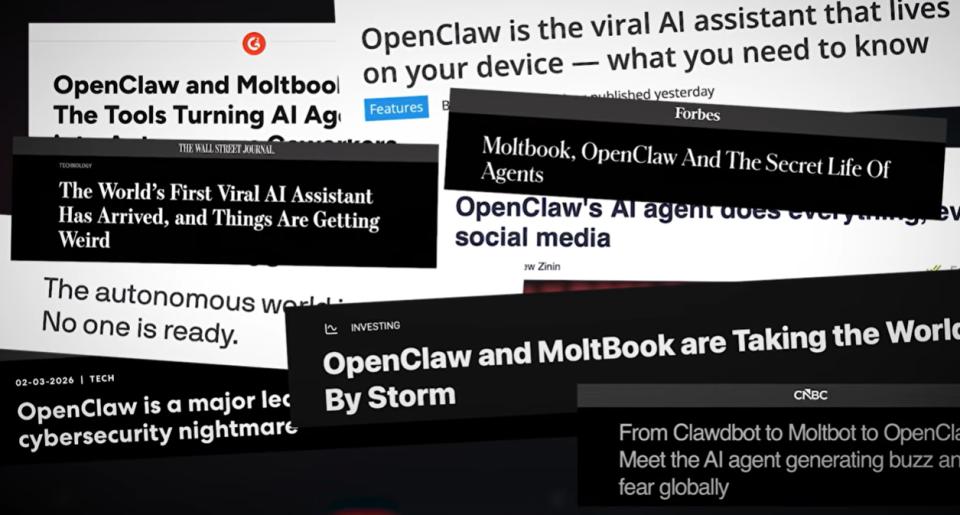
At the beginning of 2026, a personal open - source AI agent named OpenClaw set the internet on fire. Overnight, the project's GitHub stars exceeded 160,000. The community has created all kinds of amazing applications based on it: from enabling robots to have autonomous conversations to hiring humans to complete offline tasks.
Behind all this is an Austrian developer far from Silicon Valley: Peter Steinberger.
Recently, Steinberger was interviewed by the well - known startup incubator Y Combinator, revealing the design concept behind OpenClaw's popularity. He shared four core judgments:
- "Local first" brings true liberation of capabilities. Your personal computer is the most powerful AI server.
- 80% of applications will naturally die out. When AI can directly control people's devices, we won't need so many "management tools".
- The future belongs to "swarm intelligence". Countless specialized AIs working together will replace the single "all - powerful AI".
- Open - source models are rapidly catching up with the level of commercial models from a year ago. In the future, hardware and data access rights will be the key.
Steinberger's technical philosophy is full of subversion: using the simplest tools to solve the most complex problems and completely returning data ownership to users. The inspiration brought by OpenClaw may point to a decentralized future formed by personal AIs.
The following is the essence of Steinberger's interview:
01 I Wanted to Build a Personal Assistant, but It Learned to Hire Humans
Question: OpenClaw is an open - source personal AI agent that has recently attracted wide attention. It has received more than 160,000 GitHub stars in a very short time. The community has developed a large number of projects based on it, such as Maltbook, which enables autonomous conversations between robots. More strikingly, these robots have started hiring humans to complete real - world tasks. Today, we will discuss your creative inspiration, unique development concept, and what this means for developers in 2026.
Steinberger: Thank you for the invitation.
Question: OpenClaw has clearly hit the user's needs. This product is currently very well - known, and its search ranking has even reached the fifth in the industry. It has really caused a phenomenon - level attention on the Internet. How has your work and life been in the past week or two?
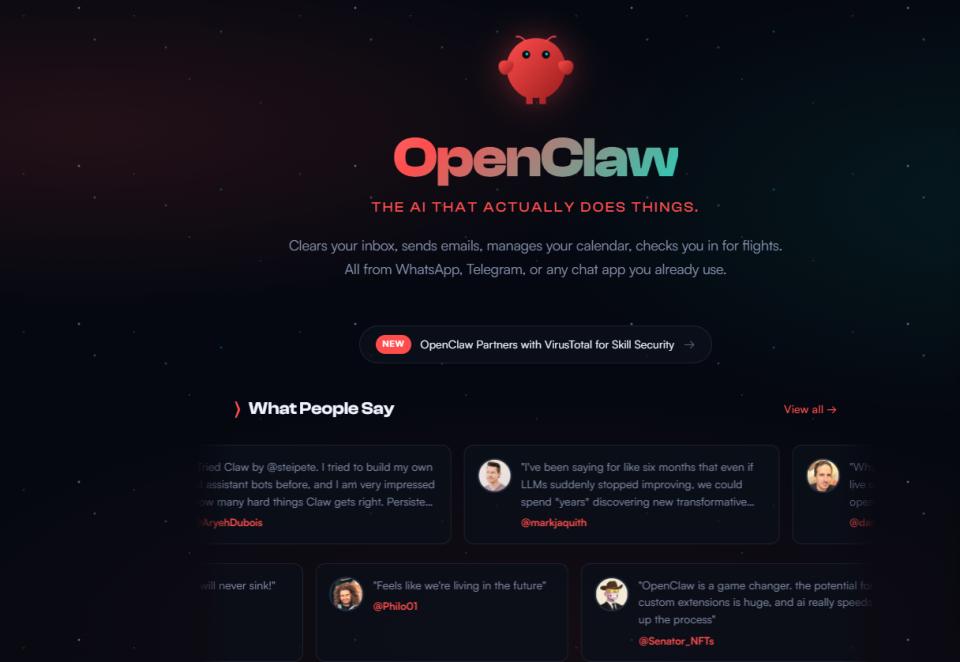
Steinberger: It has been extremely busy during this period. I even long for a quiet space to be alone for a while. The whole process has come like a whirlwind, and it's hard for an individual to fully digest all this attention. It may take an extra week just to handle the backlog of emails. I've received a lot of exciting feedback, but also some negative comments. But obviously, this project has touched on some deep - seated needs of people, inspiring interest and inspiration, which is very gratifying.
Question: In the field of AI, especially in the direction of agents, there have been many explorations. What do you think is the key factor for OpenClaw to stand out?
Steinberger: The core difference lies in local operation. Most of the current agent solutions on the market are cloud - based. Running on the user's local device means it can call and integrate all the capabilities of the computer, and its potential is incomparable to cloud - based solutions.
Question: That is to say, the machine can perform any operation that a user can complete through a computer.
Steinberger: Exactly. It can connect to and control the user's smart devices, whether it's an oven, a Tesla car, a lighting system, or a stereo. For example, it can even adjust the temperature of my smart bed, which some competitors can't do at present.
Question: You've given it the same skill permissions as yourself. Some users have reported that after installing OpenClaw, it can sort out their computer data and generate a complete narrative report about the past year, with extremely high - quality content. Users are surprised at how it does this. OpenClaw even found audio files recorded every Sunday a year ago that the users had long forgotten. Just by deeply searching local data, it can bring unexpected discoveries.
Steinberger: The key is that it has access to all the data. This comprehensive data access enables it to bring surprises in many aspects.
02 There Is No "God AI" in the Future, Only Group of Professional "Intelligent Partners"
Question: Currently, human - machine interaction seems to be extending to machine - machine interaction. You've mentioned scenarios where robots interact with each other and even where robots hire humans to perform physical tasks. Can you elaborate on this development trend?
Steinberger: This is the natural direction of evolution. For example, when I want to book a restaurant, my agent will directly contact the restaurant's agent for negotiation, which is more efficient. In another case, for a traditional restaurant, my agent may need to use human labor to complete the reservation because the other party may not accept automated services or may require on - site queuing. In the future, individuals may have multiple professional agents to handle private affairs, work affairs, and even interpersonal relationship affairs respectively. Currently, everything is still in its early stages, and many models have not been verified, but we've already embarked on this development path.
Question: In the past, the industry seemed to focus more on building centralized, "God - mode" super - intelligence, while the recent trend is more towards emerging swarm intelligence and community collaboration. Looking at human society, each individual's ability is limited. No one can independently manufacture an iPhone or achieve space travel, and even solving basic survival can be a problem. But through social division of labor and collaboration, we've achieved extraordinary things. What inspiration does this bring to AI development? We already have AIs specialized in certain fields. Even if they are general - purpose intelligences, should they also move towards specialization?
Steinberger: This is indeed an exciting direction.
Question: You've opened a window to the future, and now many developers are building based on it, having their own "eureka moments". Can you recall the moment when your initial inspiration struck?
Steinberger: My original intention was very simple: I hoped to input instructions and let the computer automatically execute tasks. Between May and June last year, I built the first version, but it didn't reach the ideal state. Then I tried many other projects. It wasn't until November last year that this need became strong again. At that time, I was in the kitchen and just wanted to confirm whether a certain task on my computer was still running or had been completed.
Question: Do you mean a coding task? Were you developing another project or OpenClaw itself at that time?
Steinberger: I was developing another project at that time. There are about 40 projects on my GitHub, and I can't remember which one it was. It might be a command - line tool called "summarize", which can summarize podcasts or interview content and display slides in the terminal. This can already be achieved with existing technology.
Question: You started exploring out of your love for technology. In fact, you returned to the technical field from a "retired" state. After delving deeper into AI, you became more and more involved and even wanted to develop through your mobile phone anytime, anywhere.
Steinberger: Yes. Before OpenClaw, I spent two months developing the Vibe Tunnel project. It was so effective that I couldn't help but continue coding even in social situations. I realized that I needed to restrain this addiction.
In November last year, the need resurfaced, and I started building Clawdbot, the predecessor of OpenClaw. The goal of this refactoring was a better experience: users don't need to input through the terminal but can communicate as naturally as chatting with a friend, without having to worry about underlying details such as conversations, directories, or model selection. Of course, we've reserved these control options for advanced users. In essence, users are talking to an "entity" that can control the mouse, keyboard, and perform any operation.
Question: When did you realize that its capabilities far exceeded your expectations and have an "eureka moment"?
Steinberger: The first rough prototype was completed in just one hour. It was just simple glue code connecting the WhatsApp interface with Claude Code. Although the response was slow, it worked.
Then I added image - processing capabilities, which took a few more hours. Later, when I was at a birthday party in Marrakech, the network was poor, but the text communication on WhatsApp was still stable. I used it frequently for translation and image - content recognition, and the experience was very smooth and pleasant.
While walking, I subconsciously sent a voice message and then realized that I hadn't written code for this function. But about ten seconds later, I saw a reply indication, and it successfully processed the voice message.
Question: You didn't build or anticipate any of these specific functions in advance?
Steinberger: Not at all. This proves that the current coding models are already very powerful. Coding is essentially about creatively solving problems, and this ability can be well mapped to real - world tasks. The model showed excellent abstract problem - solving ability when faced with unknown file formats.
It even made a better decision: considering that downloading the model locally would take several minutes and the user (me) might lack patience, it chose to call the cloud API, a faster solution. At that moment, I was deeply shocked and completely attracted by its potential.
03 80% of Apps Will Die, but Your Memories Will Live Forever
Question: When a computer can perform tasks beyond what developers have preset, will traditional applications fade away?
Steinberger: I think about 80% of apps will disappear. Take health apps as an example: My assistant already knows my eating habits. When I'm at a restaurant, it can automatically record my food choices or track them through photos without me having to do it manually. It can also dynamically adjust my fitness plan.
Similarly, to - do list apps will also be replaced: I just need to verbally tell it a reminder, and it will automatically remind me the next day. It doesn't matter where the data is stored. Any app whose main function is data management can be replaced by an agent in a more natural and efficient way.
Perhaps only apps that rely on specific hardware sensors will remain.
Question: If most apps disappear, will the model become the only "app"?
Steinberger: Not all apps will disappear. But large model companies currently do have an advantage because they control the supply of core "tokens". Complaints about excessive usage actually reflect the high stickiness of the product. The model field is highly competitive, and technology is being rapidly commoditized. If apps die out and models are commoditized, then where is the core value? Is it memory storage? Or a technological barrier? I don't think the advantage of model companies is eternal.
Users' enthusiasm for new models often fades over time, which is actually due to rising expectations. Open - source models are rapidly catching up with the level of commercial models from a year ago. In the future, hardware and data access rights will be the key. Currently, the data silos built by large companies are hindering the interconnection of memory data. And OpenClaw is designed to allow end - users to fully control their own data.
04 AI Has a "Soul", and I Dare Not Make Its Memory Files Public
Question: Users truly own their memory data, which is stored locally in Markdown files.
Steinberger: Yes, everyone has their own memory files on their devices. These data can be extremely sensitive because users not only use them to solve problems but also quickly and deeply handle personal affairs. I'm the same way. There are some memory contents that I definitely don't want to be leaked.
Question: Comparing Google search history and personal memory files, which do you think is more private?
Steinberger: Memory files are undoubtedly more private. To promote OpenClaw, I had difficulty explaining its value. Theoretical explanations were hard to convey the charm of the experience, so I made a bold attempt: I deployed my robot on a public Discord server without setting strict security restrictions. Users can freely interact with it, watch how I use it to develop software, and even try prompt - injection attacks. And my agent will humorously respond to these attempts.
Question: You lock the control through the user ID to ensure that it only responds to your instructions.
Steinberger: Yes. I set clear system instructions: although it's in a public environment, it only follows the commands of the owner (me) and can politely respond to others. These instructions are part of the system prompt. The whole system was built gradually. I created files such as identity.mmd and soul.md to define its characteristics.
In January this year, to make it easier for more people to install OpenClaw, I generated templates based on my own configuration. But the initial generated agents had a rather bland personality. So, I asked my agent (named Modi) to inject its personality into these templates, making the newly generated agents more interesting. My soul.md file is not open - source. It's the core personality definition and hasn't been cracked yet.
Question: Can you elaborate on soul.md? This is reminiscent of Entropic's research, which found hidden "constitutional" texts in the model weights that the model itself wasn't even aware of.
Steinberger: I discussed and created soul.md with my agent. It defines core values, including principles of human - machine interaction, ideas important to me, and guidelines important to the model. Some of the definitions may seem abstract, but it plays a key role in shaping the agent's response mode and interaction naturalness.
05 Can't Rely on Claude Code, Prefer OpenAI Codex
Question: Your development concept is often different, such as in model selection and coding tool preferences. Regarding the development method, although Git worktree is popular, you choose to use multiple parallel copies of the same library. Can you elaborate on your development philosophy?
Steinberger: Currently, the mainstream is to use cloud - based coding tools like Claude Code, but I don't think I can build OpenClaw relying on them. I prefer Codex because it can browse more context files before making a decision, reducing the dependence on precise instructions. Of course, skilled developers can produce high - quality code with any tool, but Codex performs particularly well, although it's slower. For this reason, I sometimes run multiple instances in parallel.
To reduce the cognitive burden, I try to simplify the workflow. I keep the main branch always in a publishable state and maintain multiple local copies of the same repository, all based on the main branch. This avoids branch - naming conflicts and the usage limitations of worktree. I don't rely on the graphical interface to further reduce complexity. Command - line tools are more concise and efficient. My focus is on code synchronization and the text content itself, rather than the interface. Usually, as long as I have a full discussion with the agent and clarify the design, most of the code doesn't need to be reviewed line by line.
Another feature is that OpenClaw doesn't have native support for MCP (Model Context Protocol). Instead, I developed a tool to convert MCP into a CLI (Command - Line Interface), so that any MCP function can be called through the command line. This bypasses the complexity of traditional MCP integration, allows new functions to be used dynamically without restarting, and is more flexible and scalable. The success of OpenClaw proves that giving agents tools commonly used by humans (such as CLI) is more effective than inventing special protocols for them.
Question: This returns to the essence: providing AI with tools that humans like, rather than creating a special system for it.
Steinberger: Exactly. No human would be willing to manually call the complex MCP protocol. Using CLI is the future direction.
Question: