The price soars sixfold. Claude launches the ultra-fast mode early in the morning, leaving netizens in an uproar: It's even more ruthless than OpenAI.
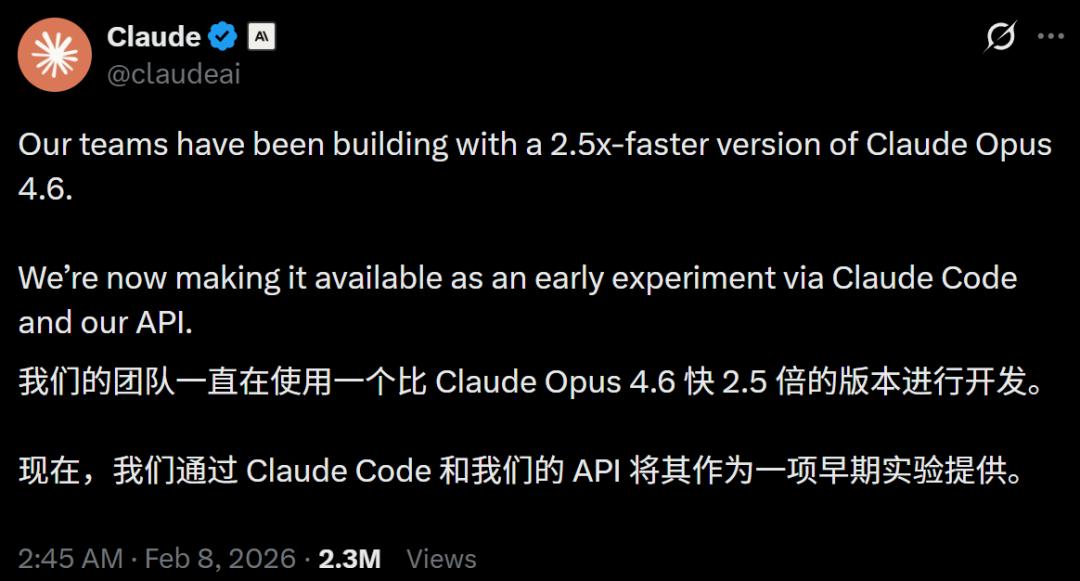
Just now (on February 8th), Claude Opus 4.6 launched a Fast mode.
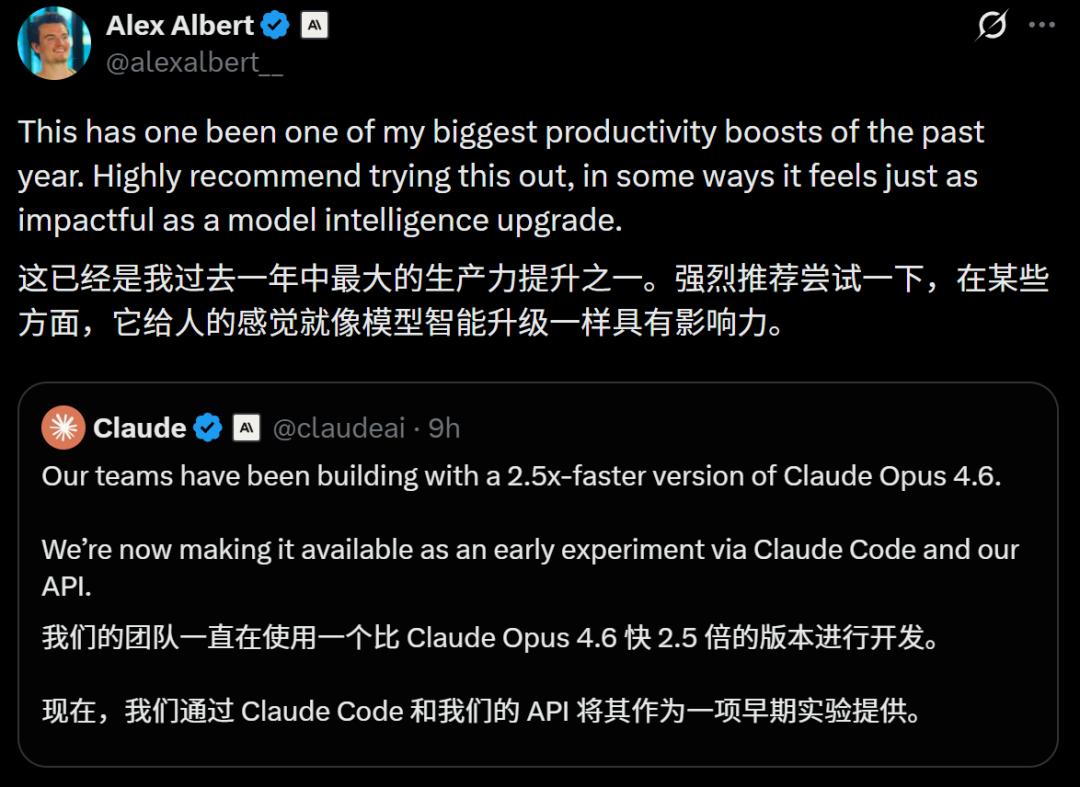
The performance remains the same, but the speed has reached 2.5 times that of the normal mode!
The official said that the Fast mode is now available in Claude Code and the API.
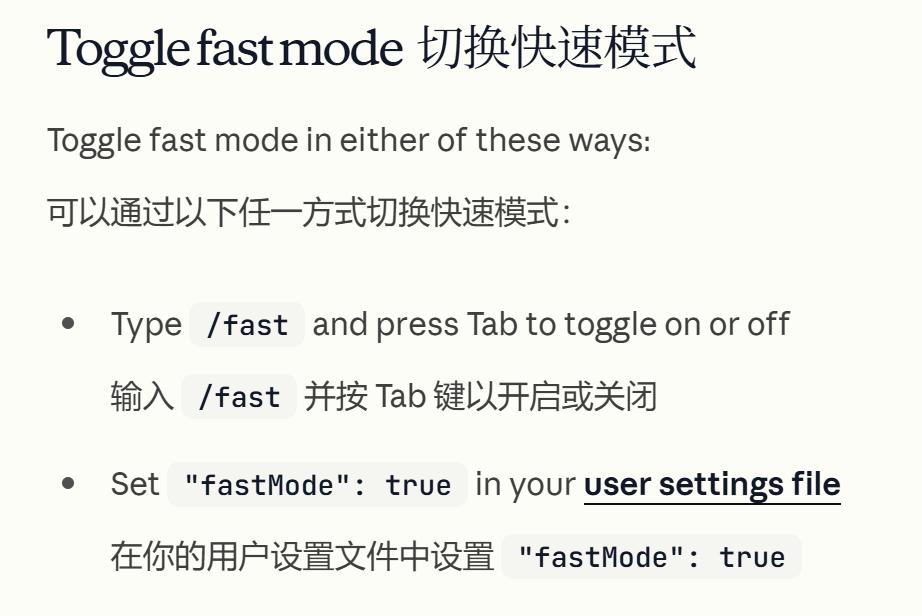
Switching is also easy: In the Claude Code command line, enter /fast. A small lightning icon will appear next to the prompt, and the Fast Mode will start immediately. Enter /fast again to turn it off.
It's that simple, no complex configuration, no additional installation steps. The same operation applies to the VS Code extension.
It seemed like an ordinary release at first, but as soon as the news came out, the community exploded.
The reason is simple - it's too expensive!
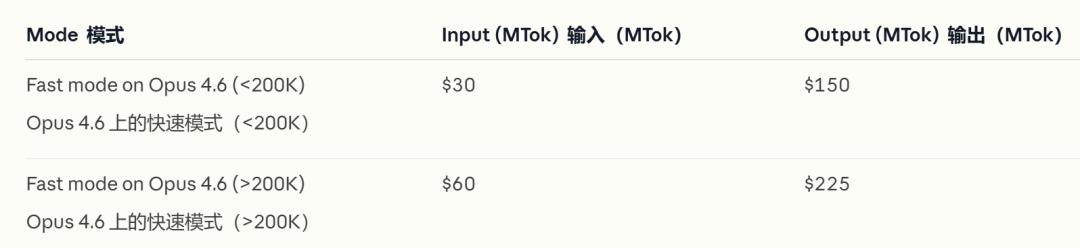
This new Fast Mode is indeed faster, but the price is also incredibly high. The output price of Opus 4.6 in the standard mode is $25 per million tokens, while the Fast Mode soars directly to $150.
That's a full six times more!
It's worth mentioning that the fees for the Fast Mode are not deducted from your subscription quota.
Even if you still have most of your monthly subscription quota left, once you turn on the Fast Mode, starting from the first token, you will be charged separately at the Fast Mode price, with no deductions.
It operates through a completely independent "extra consumption" channel.
So, after spending so much money, can you buy a smarter AI?
The answer is no.
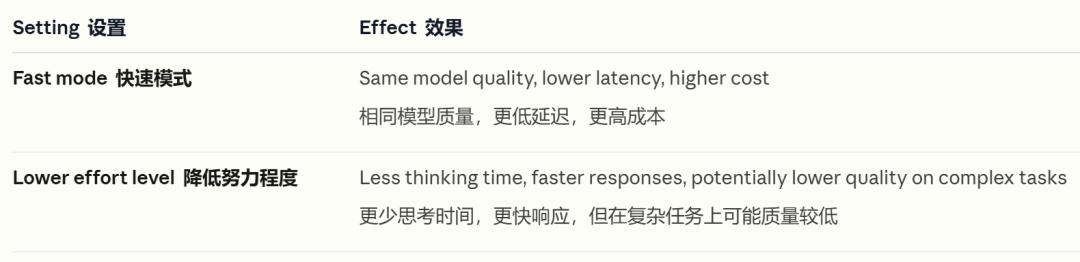
Anthropic has made it clear that the Fast Mode still runs on the same Opus 4.6, with the same model weights, the same intelligence level, and the same quality of responses.
The standard API pricing for Claude Opus 4.6 is $5 per million tokens for input and $25 per million tokens for output.
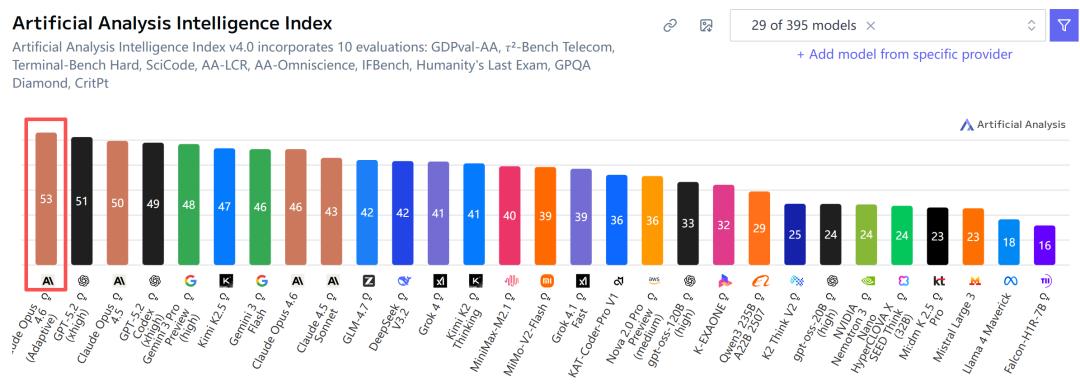
This price is not cheap among cutting - edge models. Anthropic itself admits that Opus 4.6 is one of the most expensive models on the Artificial Analysis Intelligence Index ranking.
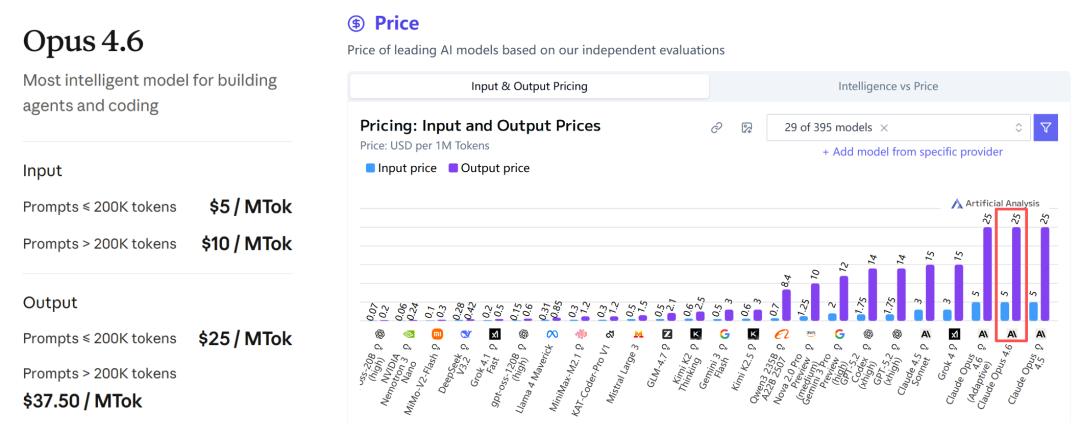
The pricing for the Fast Mode is $30 per million tokens for input and $150 per million tokens for output.
You read that right. The input price is six times higher, and the output price is also six times higher.
What's even more shocking is the long - context scenario.
Opus 4.6 is Anthropic's first Opus - level model to support a 1 - million - token context in the beta phase. When your input exceeds 200,000 tokens, the price in the standard mode almost doubles (input: $10, output: $37.5).
The Fast Mode also almost doubles - input: $60 per million tokens, output: $225 per million tokens!
It can be called the "Hermès of the token world".

Some netizens assert that such a high pricing will cause Anthropic to lose a large number of users.

Netizens exclaimed that such pricing is a joke.
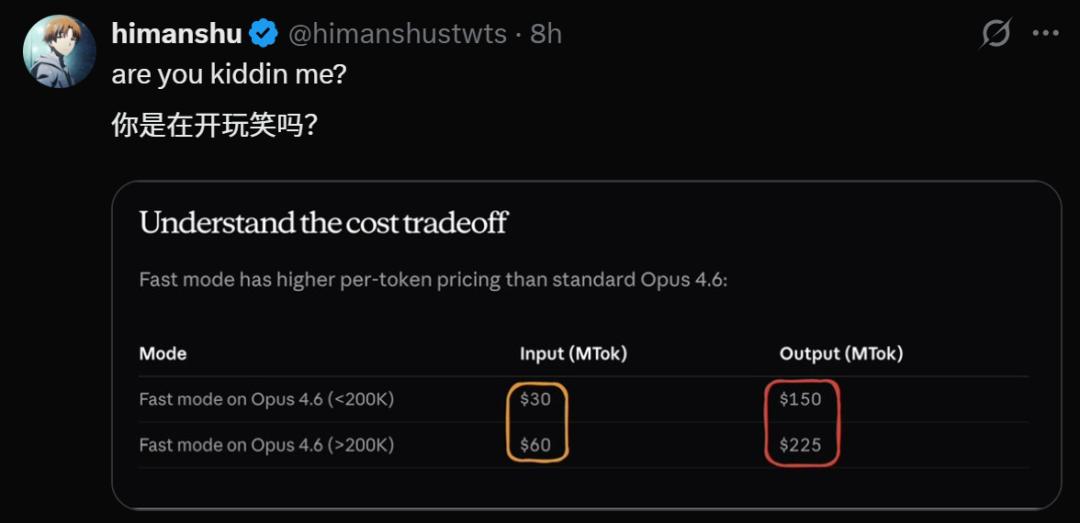
Losses and bankruptcy have never come so fast.

Anthropic engineer Alex Albert believes that this is one of the greatest productivity boosts in the past year for him.
He emphasizes that in some aspects, the feeling of high speed is as impactful as an improvement in the model's intelligence.
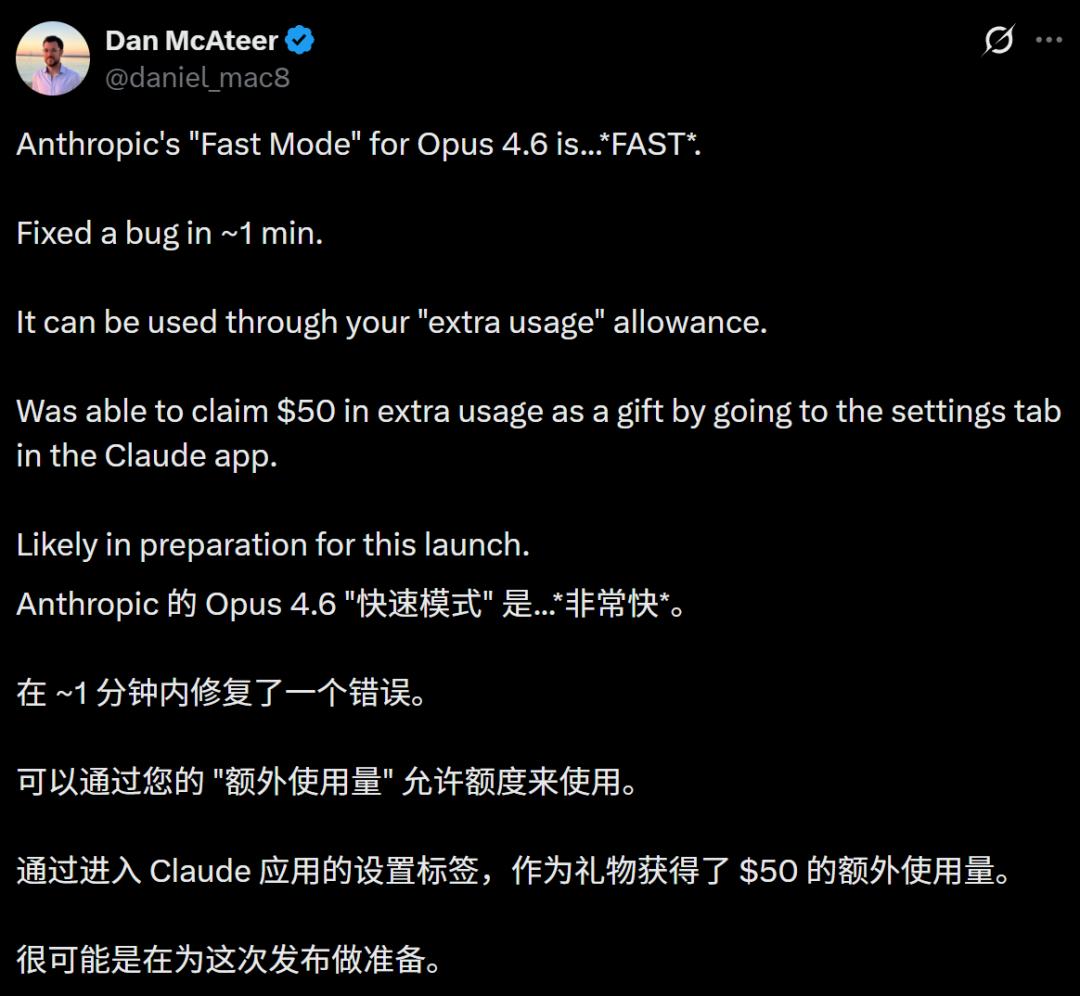
AI engineer Dan McAteer said that the Fast Mode is really "very fast" and can fix a bug in just one minute.
Why?
If the model behind the Fast Mode is mediocre, the market won't accept its six - times - higher price.
But it has to be said that Opus 4.6 is really powerful.
It might be the most powerful large - language model in terms of comprehensive strength so far.
The Intelligence Index v4.0 released by Artificial Analysis is one of the most comprehensive evaluations of AI models in the industry at present. It covers 10 evaluations, including GDPval - AA (Agent Practical Affairs), Terminal - Bench Hard (Agent Programming), SciCode (Scientific Coding), and Humanity's Last Exam (Multidisciplinary Reasoning).
On this list, Claude Opus 4.6 ranked first overall with a score of 53 points, leading OpenAI's GPT - 5.2 (xhigh) by two points.
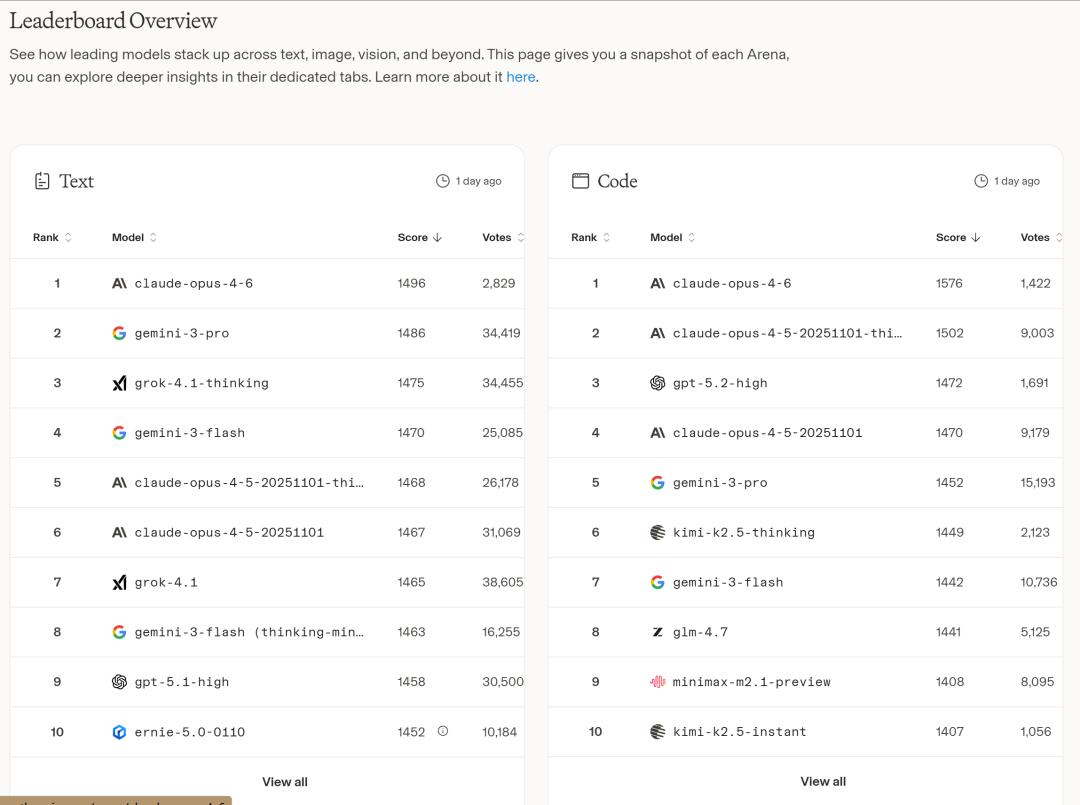
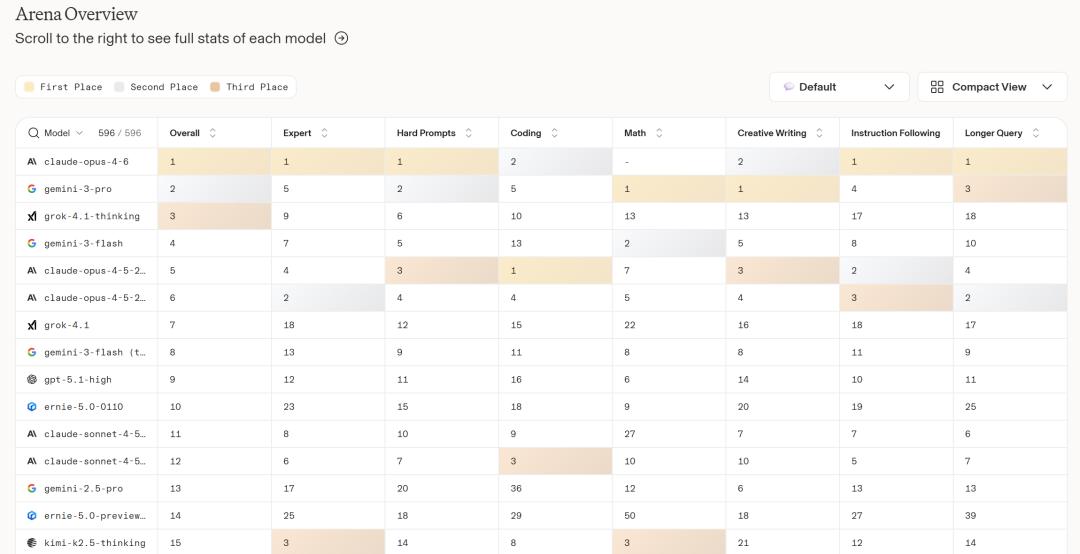
Take a look at the "Large Model Arena" platform on Arena.ai, which ranks models through tens of thousands of blind tests by real humans.
Opus 4.6 topped the rankings in all three arenas: Code, Text, and Expert.
In the Code Arena, its score soared by 106 points compared to its predecessor, Opus 4.5. This improvement far exceeds the lead that Opus 4.5 had over Sonnet 3.7.
In the Text Arena, it scored 1496 points, outperforming Google's Gemini 3 Pro. In the Expert Arena, it led the second - place model by about 50 points, a significant gap.
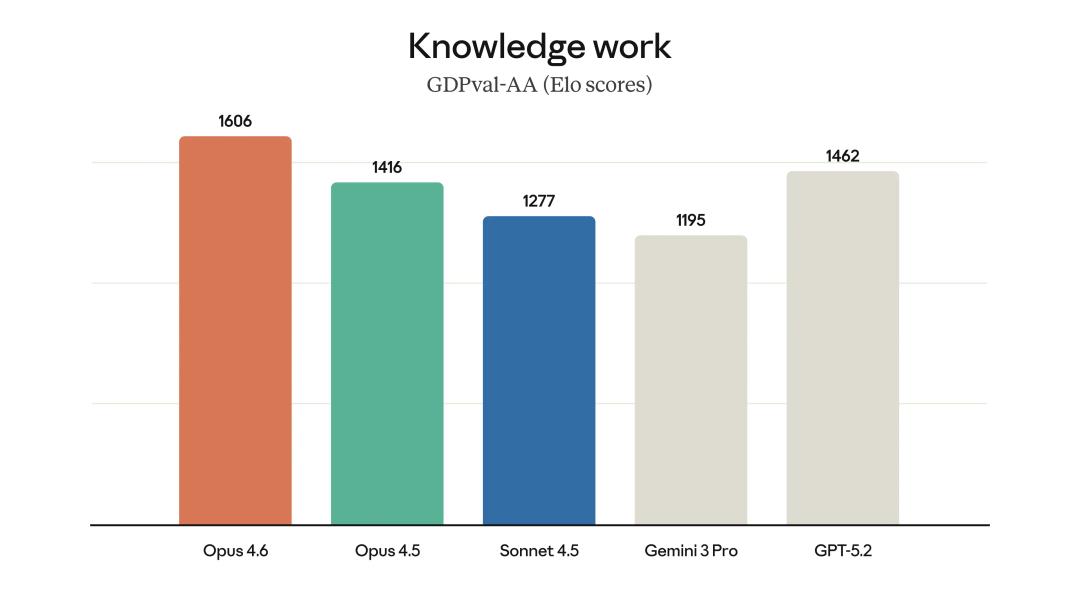
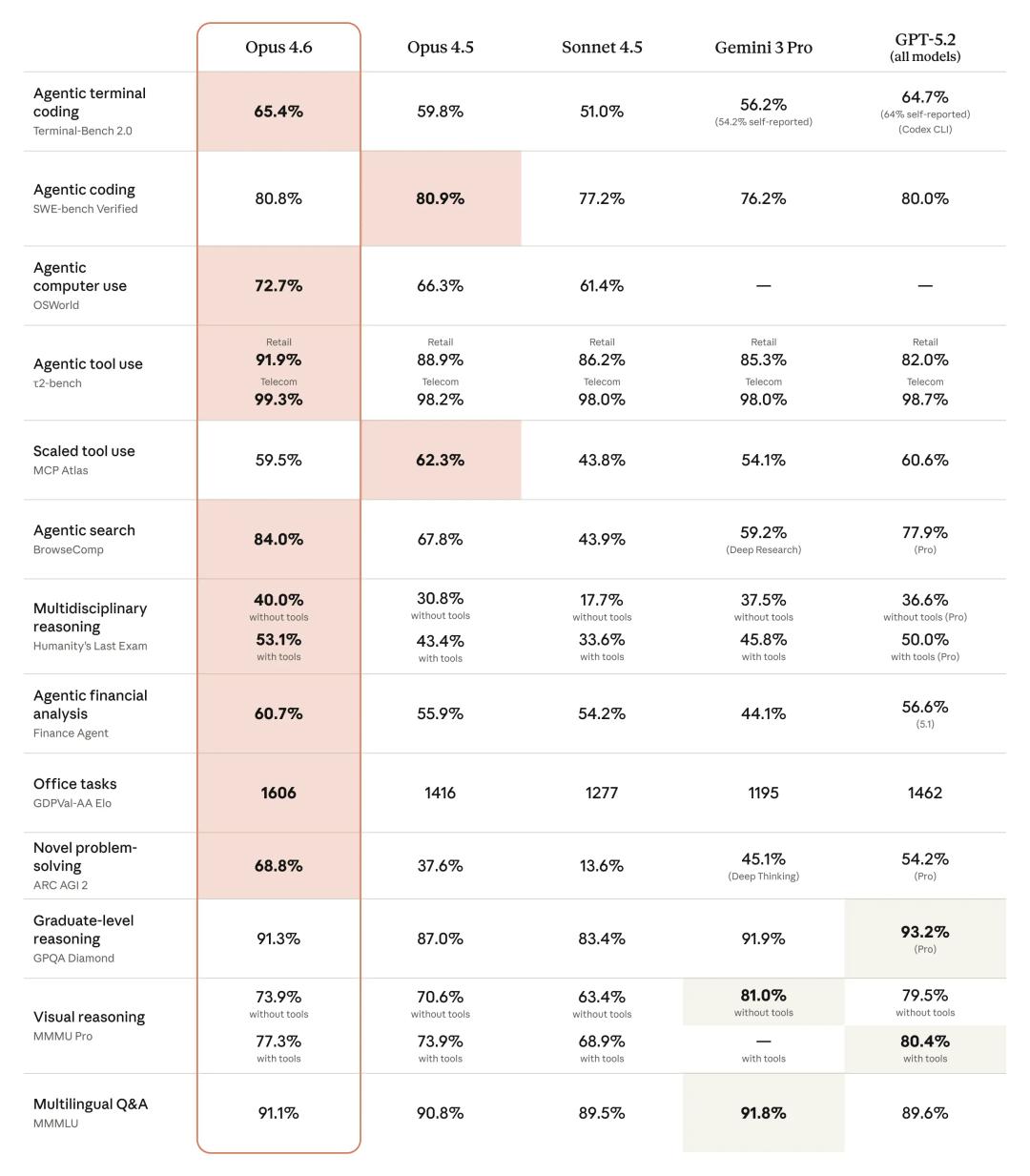
In the GDPval - AA knowledge - work performance evaluation, Opus 4.6's Elo score was 1606, about 144 points higher than GPT - 5.2 and 190 points higher than the previous generation, Opus 4.5.
This gap is not just a "slight advantage" but a generational difference in magnitude.
Looking more specifically at the hardcore indicators: In the Terminal - Bench 2.0 Agent Programming evaluation, Opus 4.6 scored a high 65.4%, ranking first among all models.
In the ARC - AGI - 2 (Abstract Reasoning) test, its score jumped from 37.6% in the previous generation to 68.8%, almost doubling.
But what really excites developers are two breakthroughs at the engineering level.
The first is the context window.
Opus 4.6 is Anthropic's first Opus - level model to support a 1 - million - token context in the beta phase. The previous generation, Opus 4.5, had a limit of 200,000 tokens.
This means you can upload an entire large - scale codebase at once without worrying about the model "forgetting" the previous content.
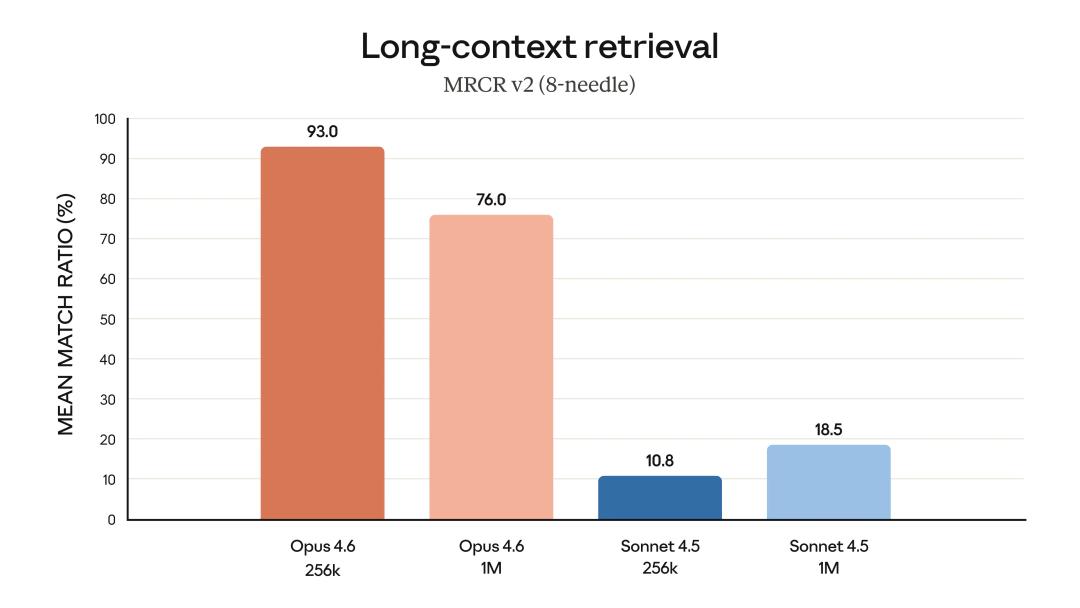
In the MRCR v2 long - context "needle - in - a - haystack" test, Opus 4.6 scored 76%, while its sibling model, Sonnet 4.5, only scored 18.5%.
A common pain point for AI models is "context decay" - the longer the conversation, the more confused the model becomes.
Opus 4.6 almost eliminates this problem.
The second is the self - correction ability.
During the process of writing code with Claude Code, Anthropic's internal team found that Opus 4.6 can independently judge the difficulty distribution of tasks without being prompted - it moves forward quickly in simple parts, thinks deeply in complex parts, and shows better judgment in ambiguous situations.
It will more carefully review its own reasoning process before finalizing an answer and actively discard unreasonable paths.
This ability is particularly evident in code review and debugging.
Anthropic even achieved a feat with a "team of agents" composed of 16 Opus 4.6 models: With almost no human intervention, they wrote a C compiler with 100,000 lines of code in Rust from scratch. Eventually, it successfully compiled the Linux 6.9 kernel and could run Doom and PostgreSQL.
The entire process consumed nearly 2 billion input tokens and cost about $20,000 in API fees.
This experiment is not for show.
It proves that when the model is smart enough, the context is long enough, and the reasoning is deep enough, AI can already independently complete complex system engineering tasks that previously only senior engineer teams could handle.
